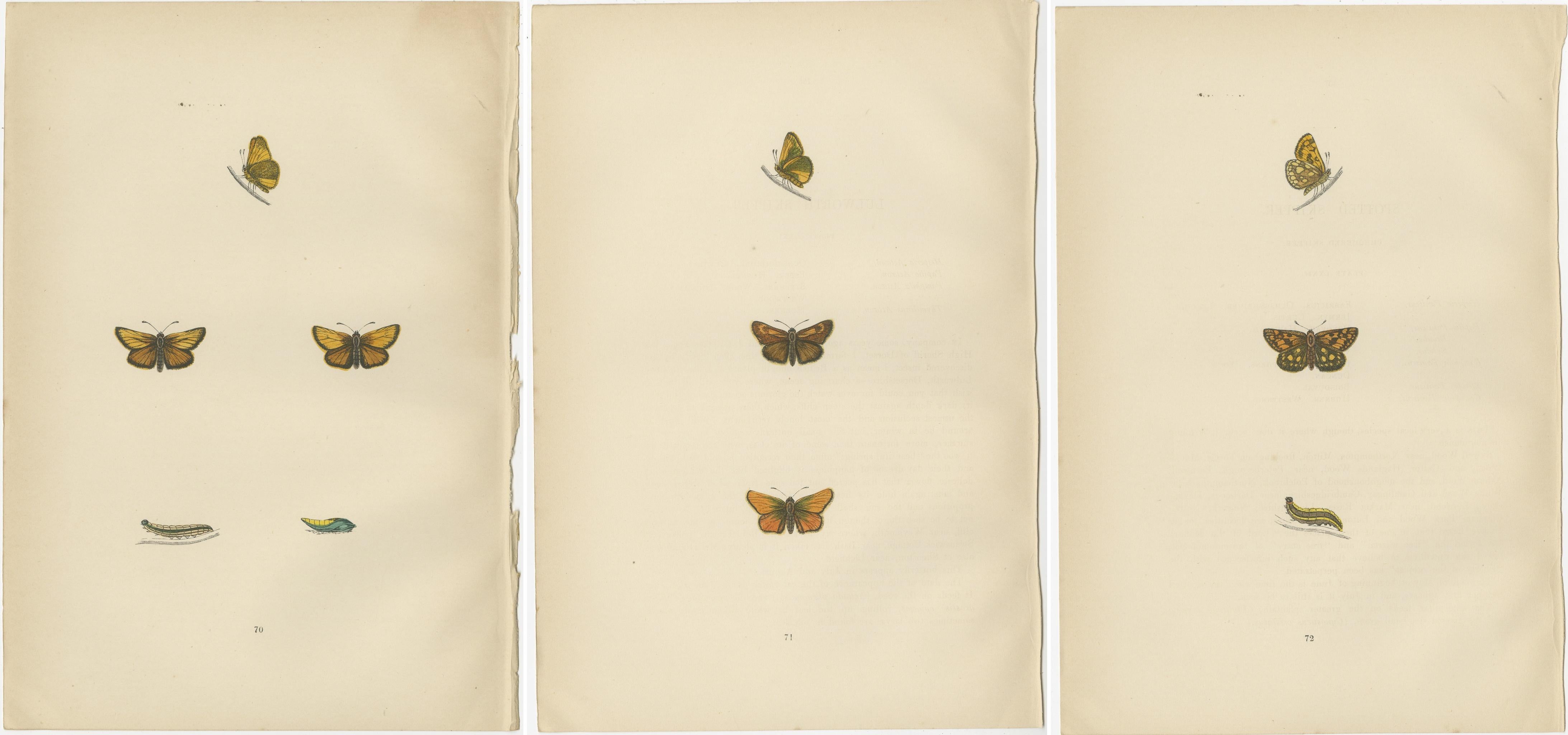
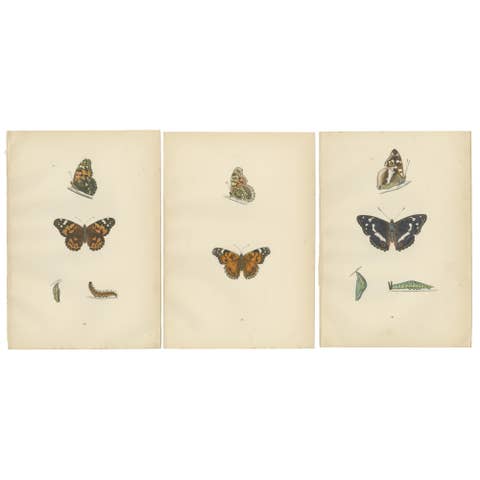
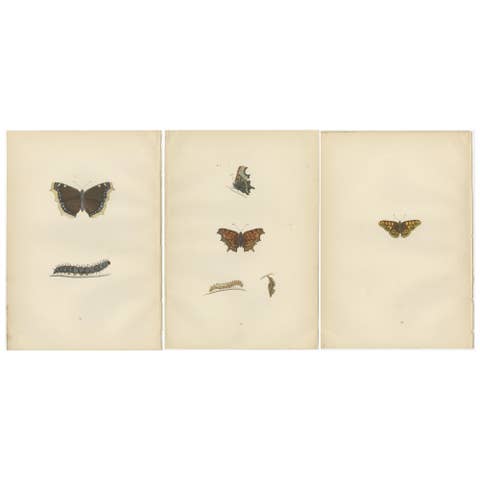
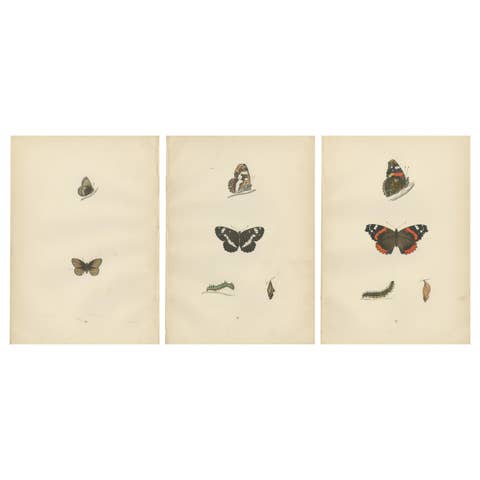
Brushstrokes and Butterflies: The Artistic Legacy of Morris's Skippers, 1890
€ 240
One of a kind: this is the sheet in the photographs. Ships from Langweer, the Netherlands.
Date
1890
Sheet size
25.4 × 17.3 cm (10.0 × 6.8 in)
Condition
Good
Reference
BG-13260-70, BG-13260-71, BG-13260-72
Condition
given age, general age-related toning. Some small spots.. Please study scan carefully.
About this sheet
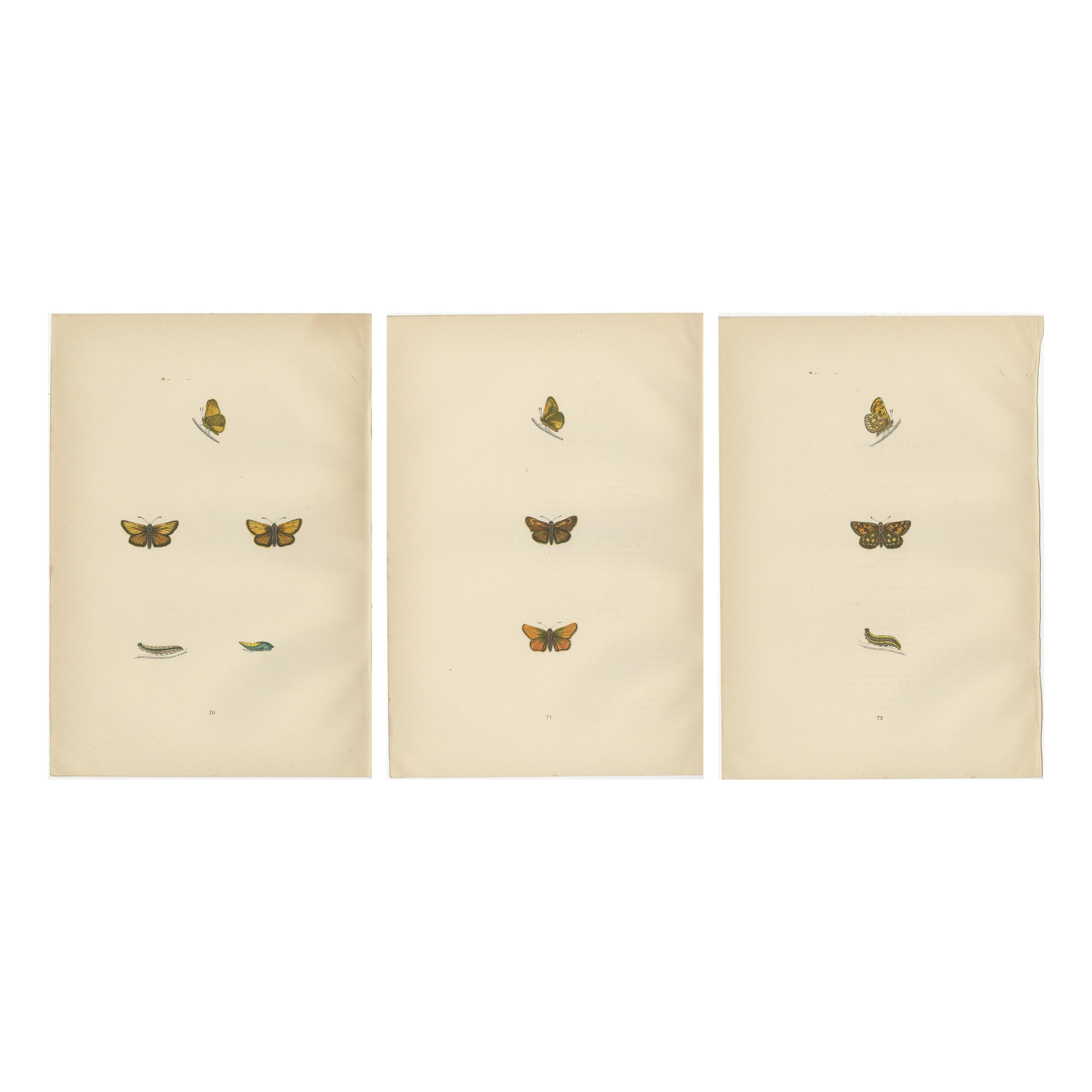
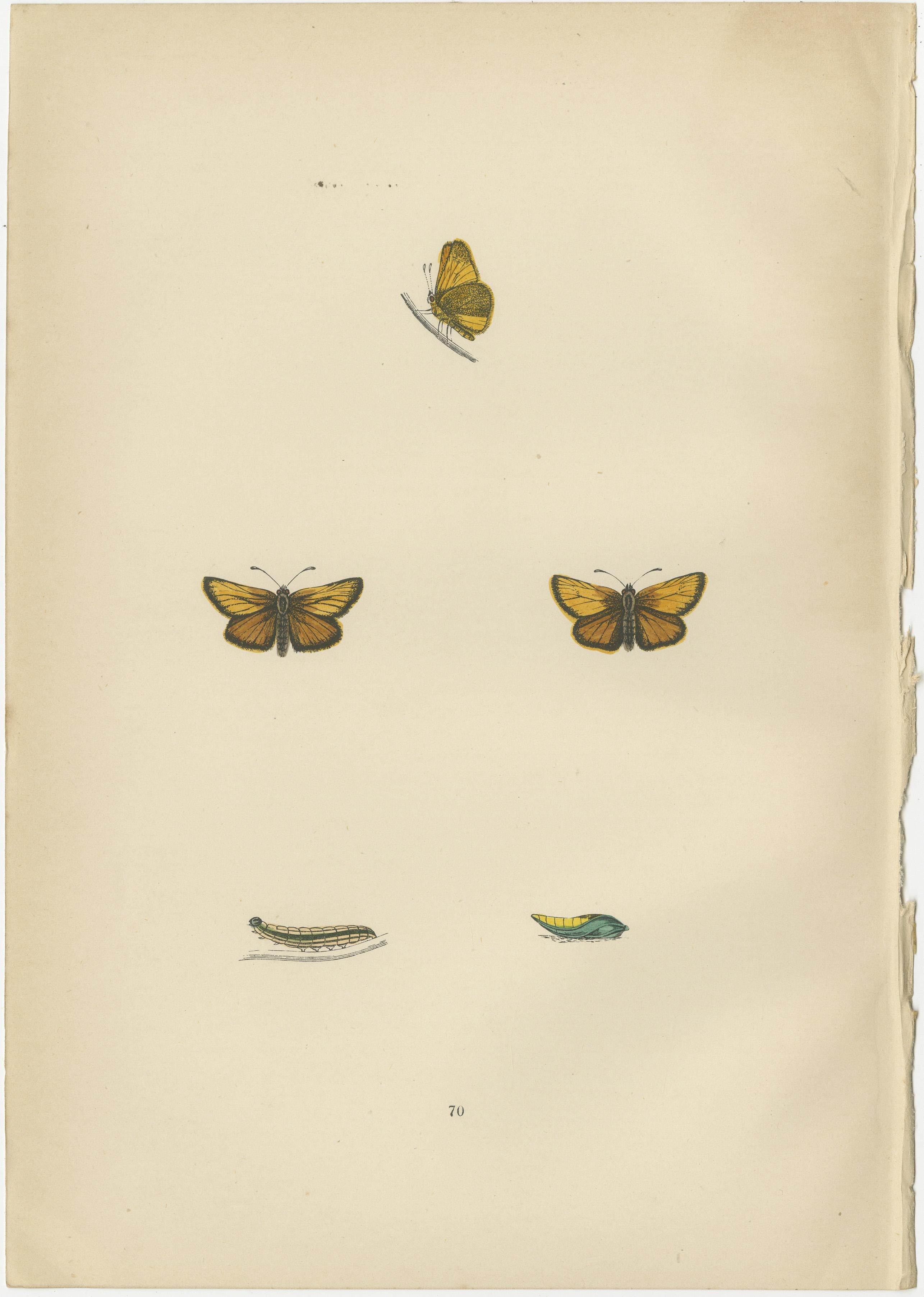
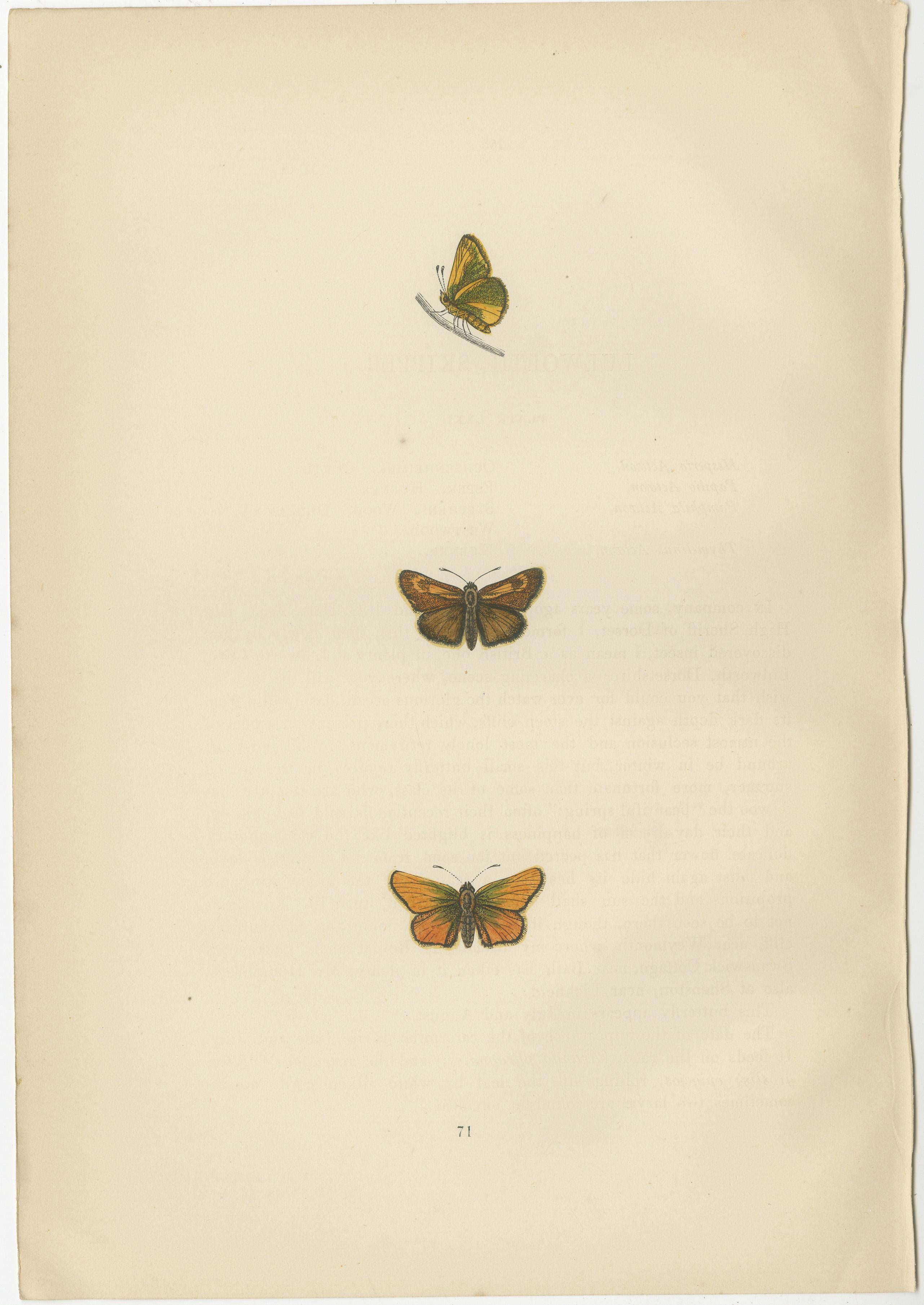
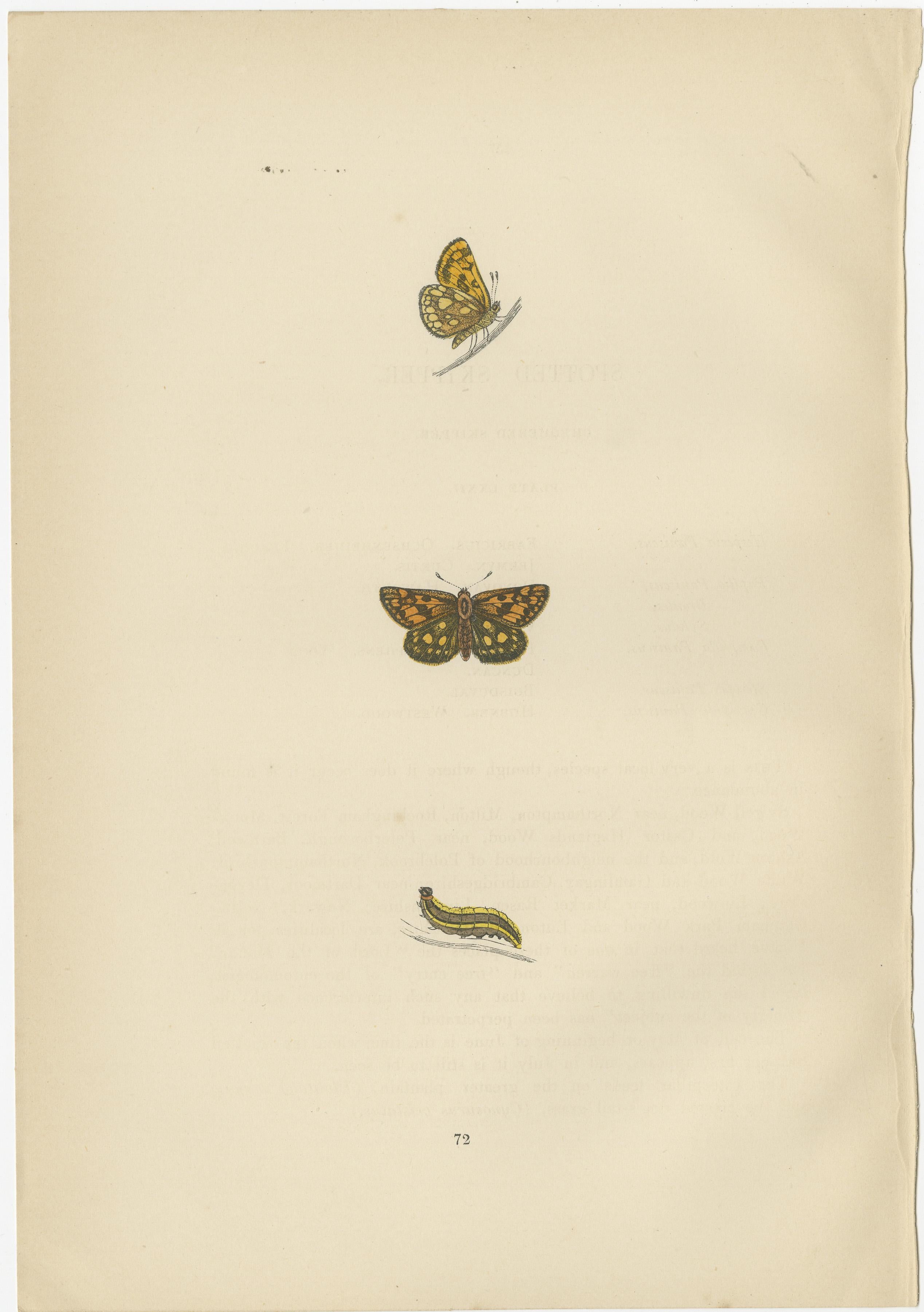
The butterflies featured in the plates from "A History of British Butterflies" by Morris are:
1. **Dingy Skipper (Erynnis tages):** This small butterfly has a wingspan of about 30 mm and is often mistaken for a moth due to its muted brown and gray colors that allow it to blend seamlessly with its habitat, typically chalk grassland, heathland, and coastal areas in Britain. The pattern of white spots on its forewings can vary greatly. An interesting adaptation of the Dingy Skipper is its larval food preference for leguminous plants like bird's-foot trefoil and horseshoe vetch, which are abundant in its natural habitats. Its caterpillars create a shelter by folding plant leaves with silk, where they also hibernate.
2. **Large Skipper (Ochlodes sylvanus):** Exhibiting a wingspan of 30 to 35 mm, the Large Skipper's wings are orange-brown with a dusting of brown scales and distinct, darker wing vein markings. Found in grassy habitats throughout the UK, it’s most active on sunny days. The males have a dark, diagonal scent brand on their forewings, used for attracting females. The Large Skipper's caterpillars feed on grasses, particularly cock's-foot, creating a shelter by folding the grass blade with silk.
3. **Silver-Spotted Skipper (Hesperia comma):** A small, distinctive butterfly with a wingspan of 27 to 34 mm, it has brown wings with a checkered pattern and, as its name suggests, silver spots on the underside of its hindwings. The silver spots are thought to play a role in thermoregulation and predator deterrence. This butterfly is found in dry, chalk grasslands where its caterpillars feed on sheep's fescue and other grasses. It's known for its rapid and erratic flight patterns.
These butterflies are fascinating not just for their beauty, but also for their ecological adaptations to their environments. They play important roles in their ecosystems, acting as pollinators and as part of the food web. The illustrations in Morris's work, given their detail and artistry, have been crucial for historical documentation and continue to be valued for both their aesthetic and scientific contributions.