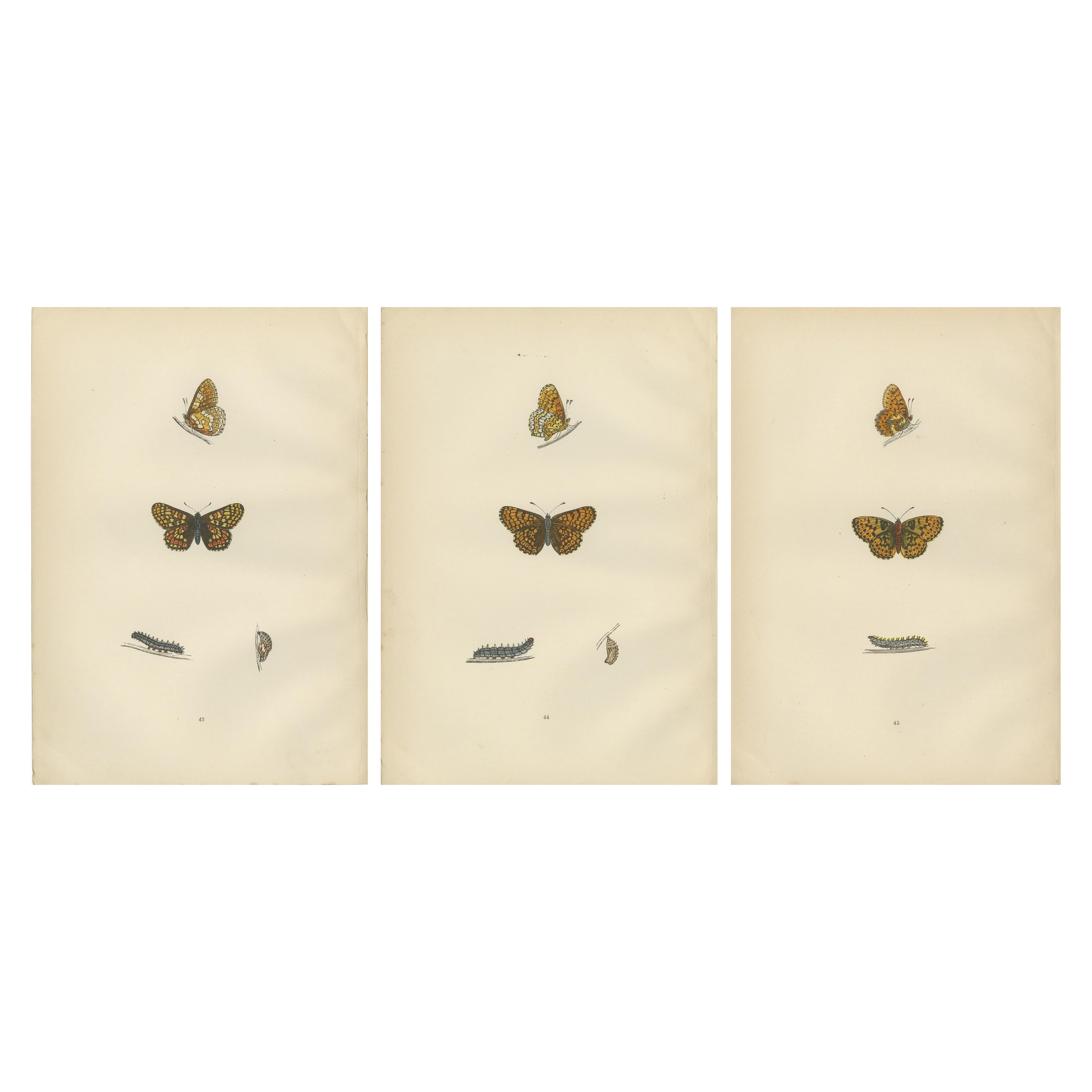
Winged Elegance: A Fritillary Collection from Morris's 1890 British Butterflies
€ 190
One of a kind: this is the sheet in the photographs. Ships from Langweer, the Netherlands.
Date
1890
Sheet size
25.4 × 17.3 cm (10.0 × 6.8 in)
Condition
Good
Reference
BG-13260-43, BG-13260-44, BG-13260-45
Condition
given age, general age-related toning. Some small spots.. Please study scan carefully.
About this sheet
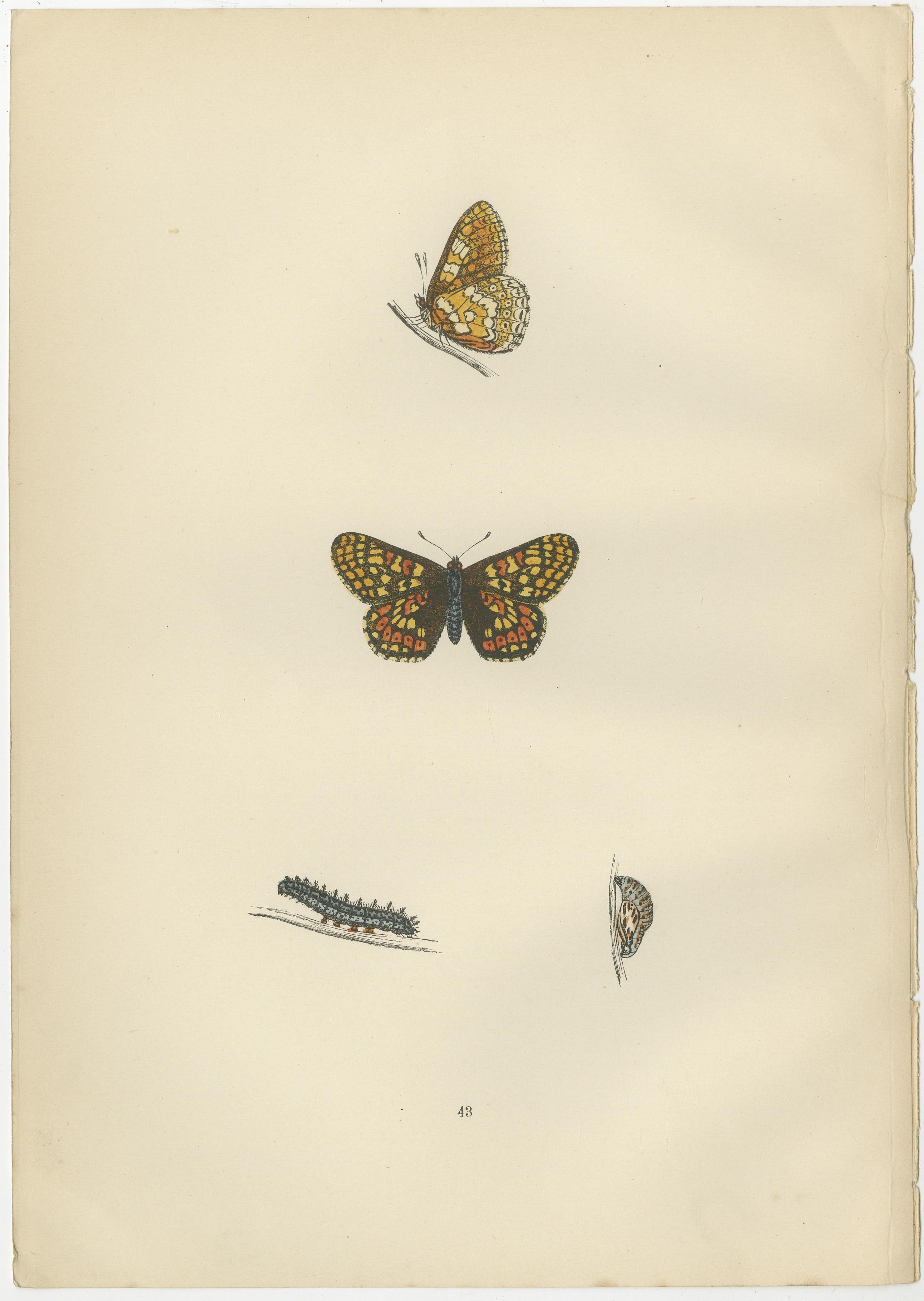
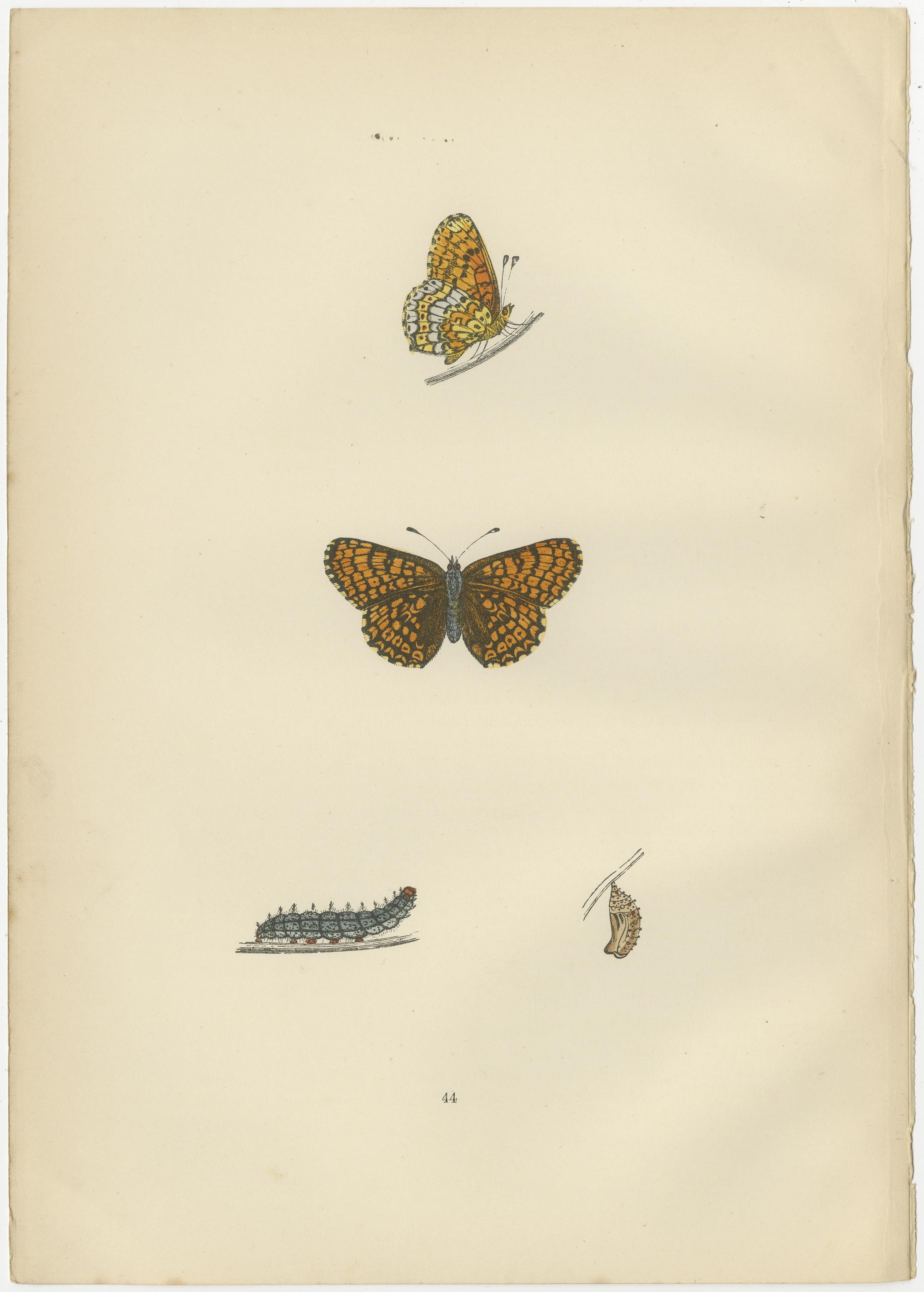
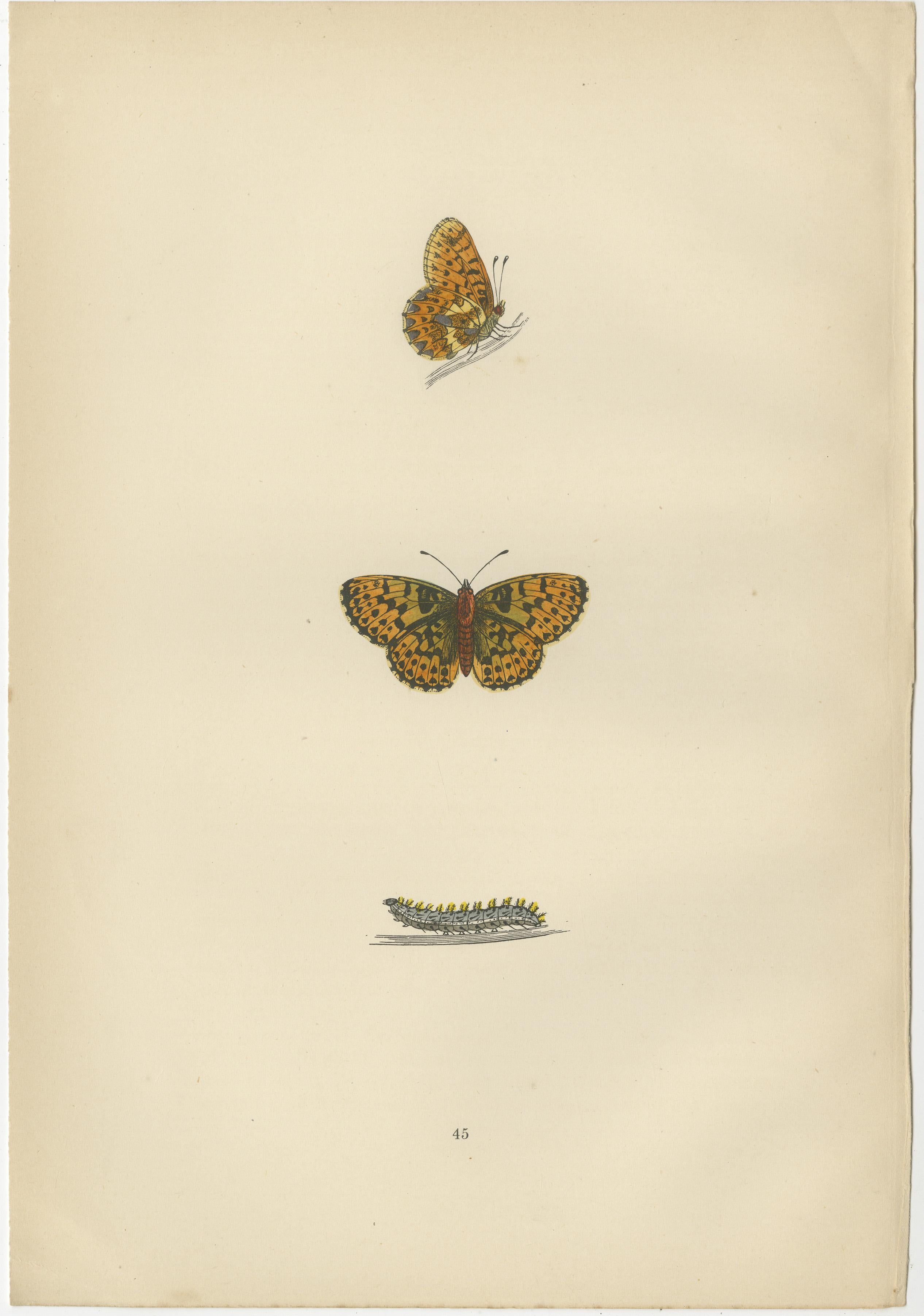
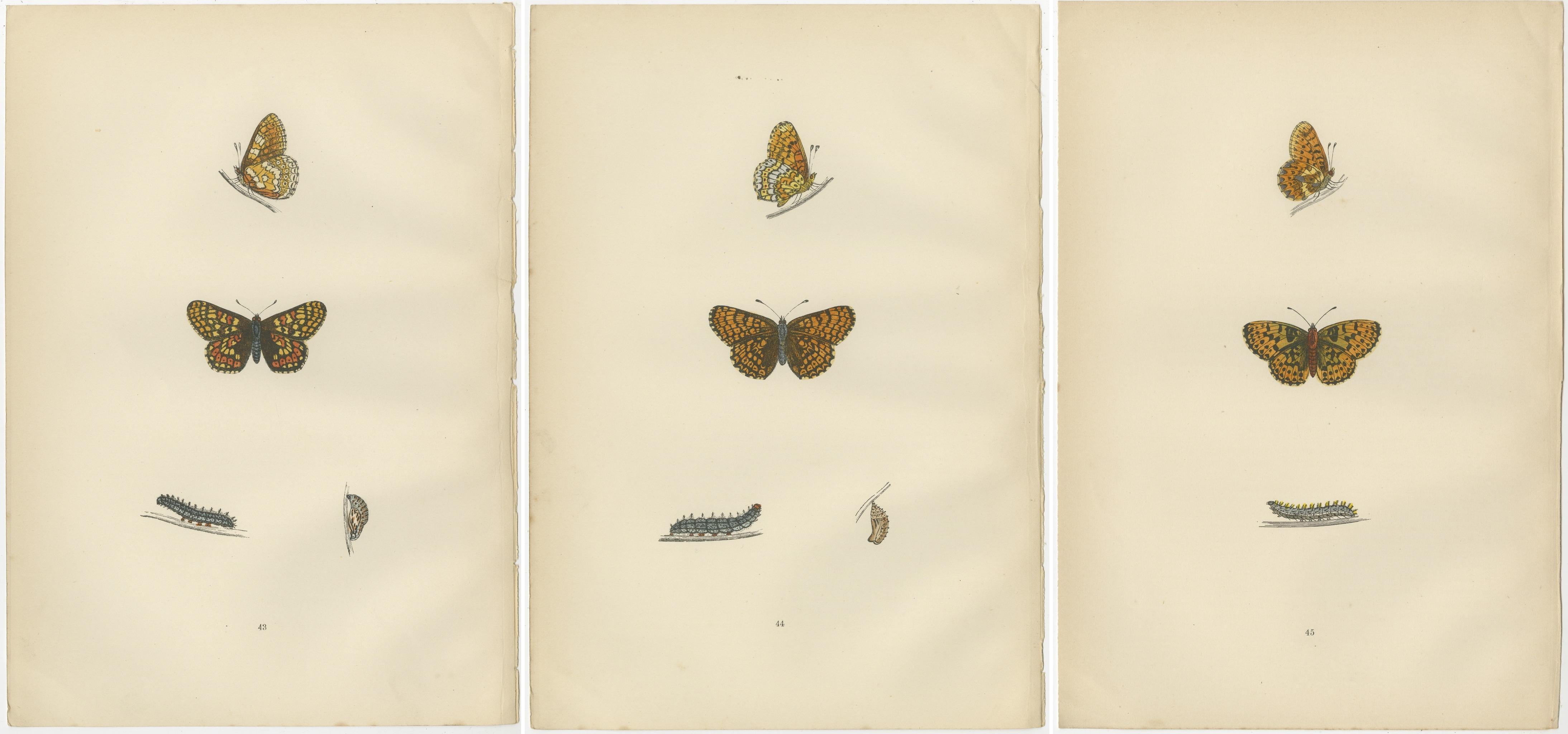
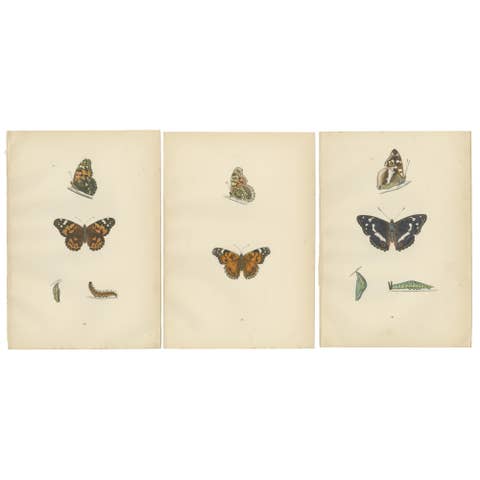
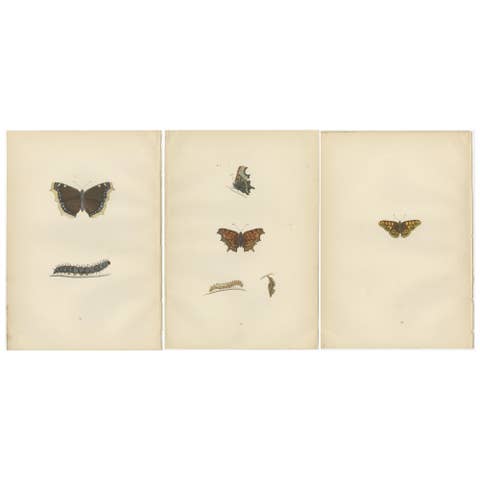
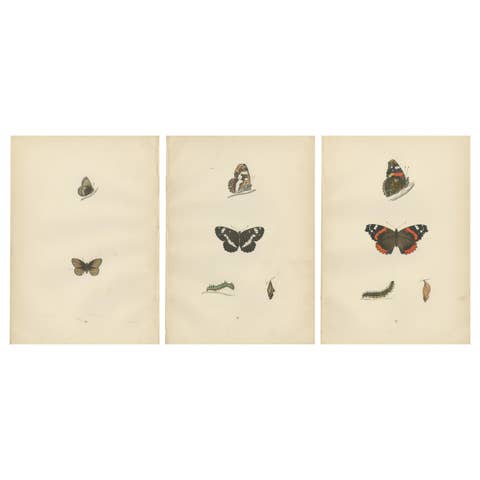
The butterflies depicted in these plates, the Greasy Fritillary, Glanville Fritillary, and Pearl-Bordered Fritillary, are all members of the Fritillary subgroup, which is part of the Nymphalidae family. They are known for their distinctive checkered patterns on their wings.
1. **Greasy Fritillary (Melitaea didyma)**: This butterfly typically has orange wings with black spots and a few white highlights. The borders are usually darker, sometimes with a row of white spots. The term "greasy" might refer to the less vivid, almost greasy-looking coloration of the wings compared to other fritillaries. It’s not commonly found in Britain anymore, adding a historical significance to your plate.
2. **Glanville Fritillary (Melitaea cinxia)**: It features a tessellated pattern of orange, brown, and yellow with black markings, creating a stunning mosaic-like effect on the wings. The edges of the wings have a distinctive checkerboard pattern with white spots. This species is named after Lady Eleanor Glanville, a 17th-century English entomologist. They have a very limited distribution in the UK, found mainly on the Isle of Wight and a few other locations, making them quite special.
3. **Pearl-Bordered Fritillary (Boloria euphrosyne)**: It is easily identifiable by the pearl-like spots on the underside of its wings, bordered by black and with a background of orange and brown. These “pearls” are a unique feature among British butterflies, which lends the species its name. The pearl-bordered fritillary is of particular interest due to its rapid decline in recent years, sparking conservation efforts.
What makes these plates interesting is not only their biological and ecological significance but also their historical and artistic value. Hand-coloured plates from the 19th century reflect a time when such illustrations were the primary method for recording and sharing scientific knowledge about species. Each plate is both a work of art and a scientific document, capturing the intricate details that define each species. These butterflies represent both the beauty of the natural world and the history of entomology in Britain. The fact that some of these species are now rare or have diminished in numbers adds an element of urgency and conservation importance to these images.