Life Cycle of Moths and Caterpillars: Stages of Transformation, Bertuch, 1805
€ 130
One of a kind: this is the sheet in the photographs. Ships from Langweer, the Netherlands.
Date
1805
Sheet size
23 × 19 cm (9.1 × 7.5 in)
Condition
Good
Reference
BG-14000-86
Condition
Good condition with clean lines and vibrant hand coloring. Minor foxing near the edges and light age toning, typical for its age.
About this sheet
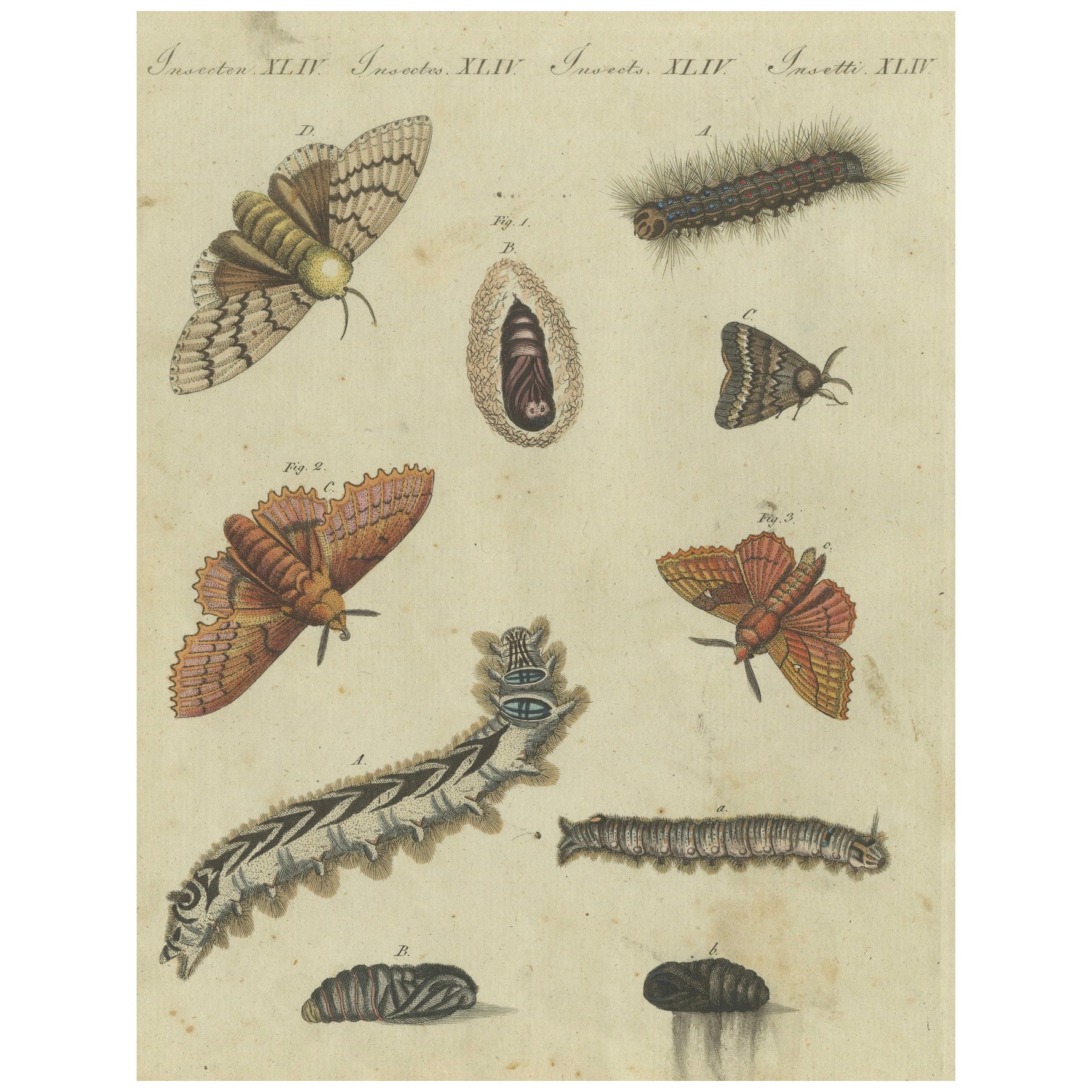
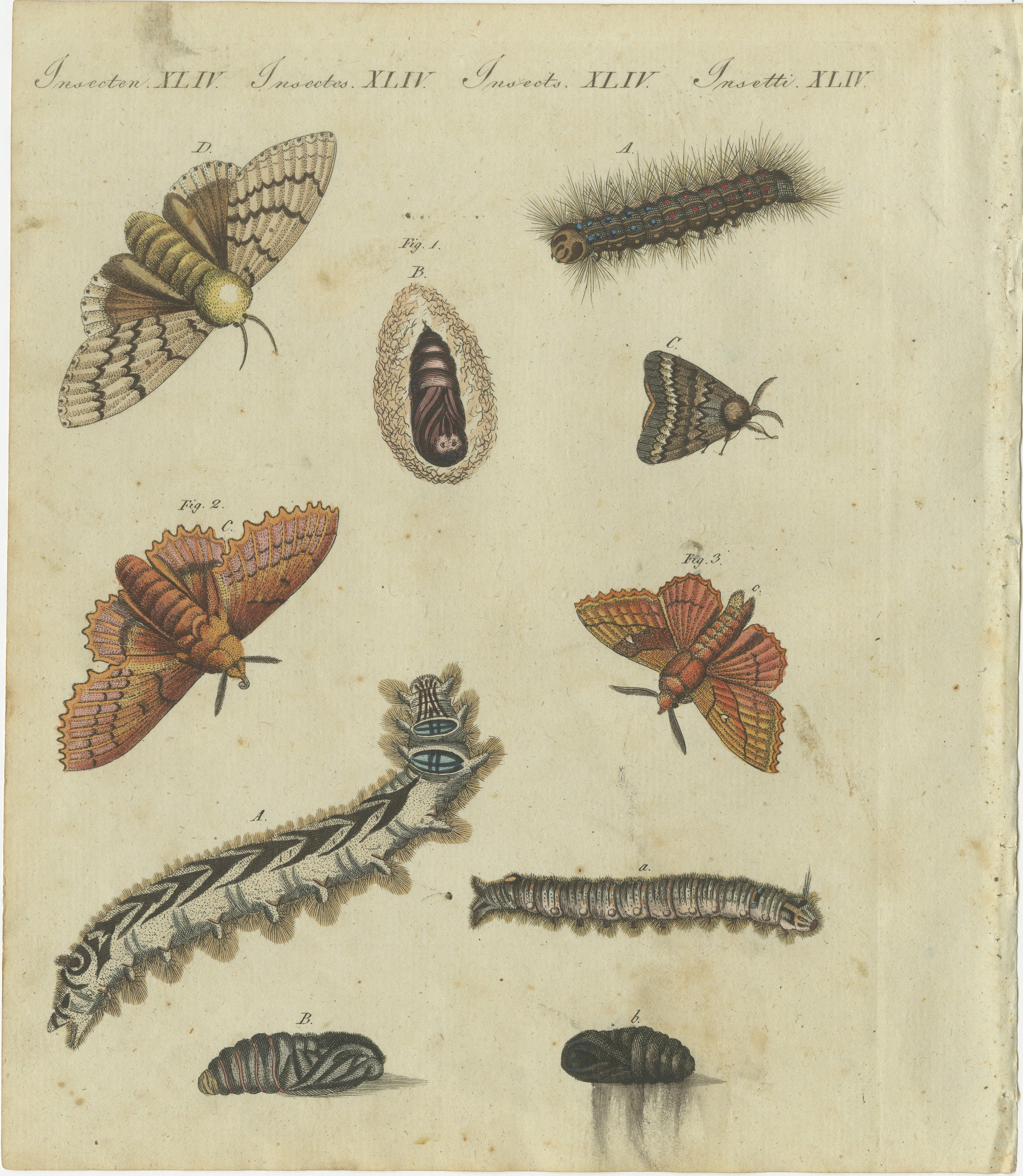
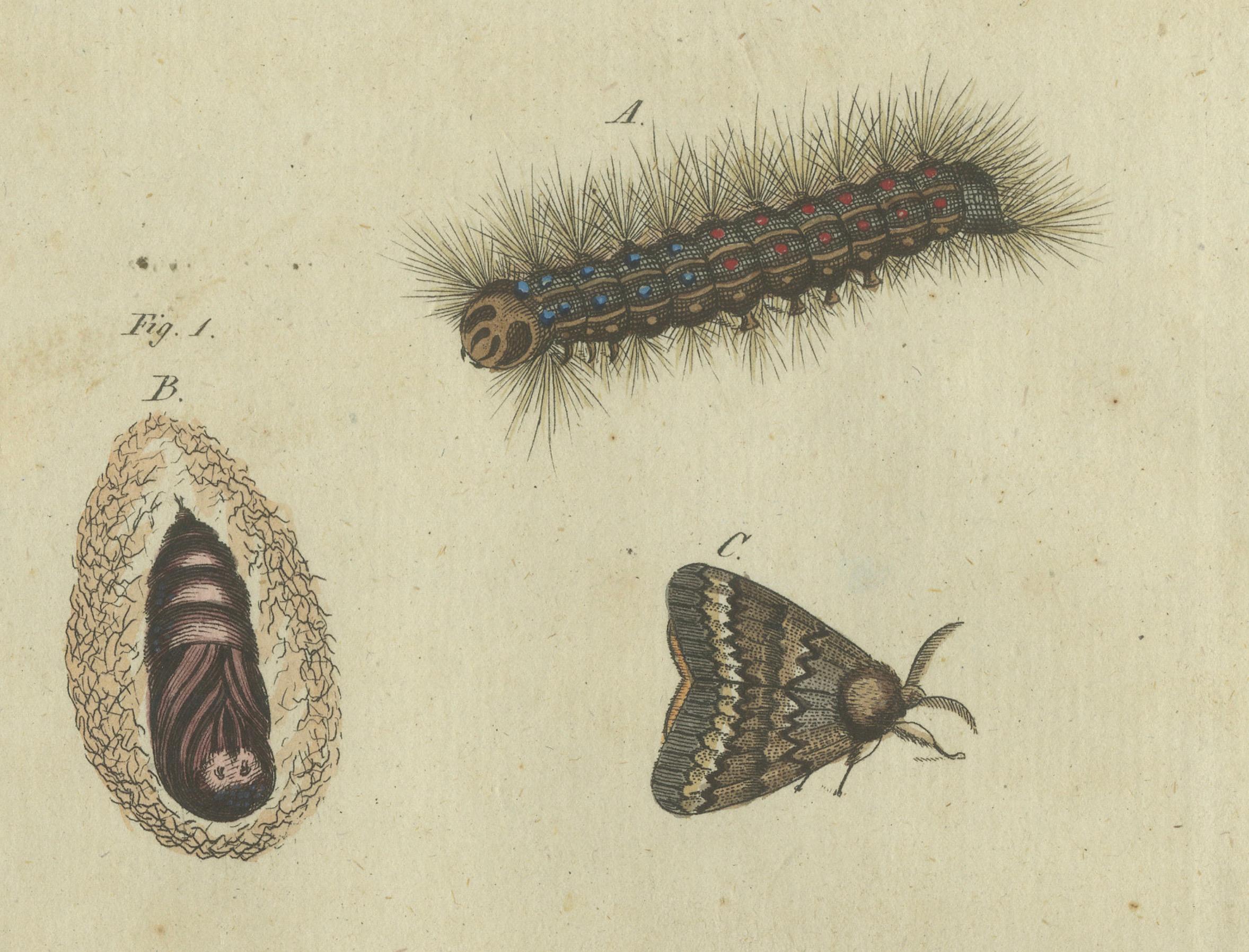
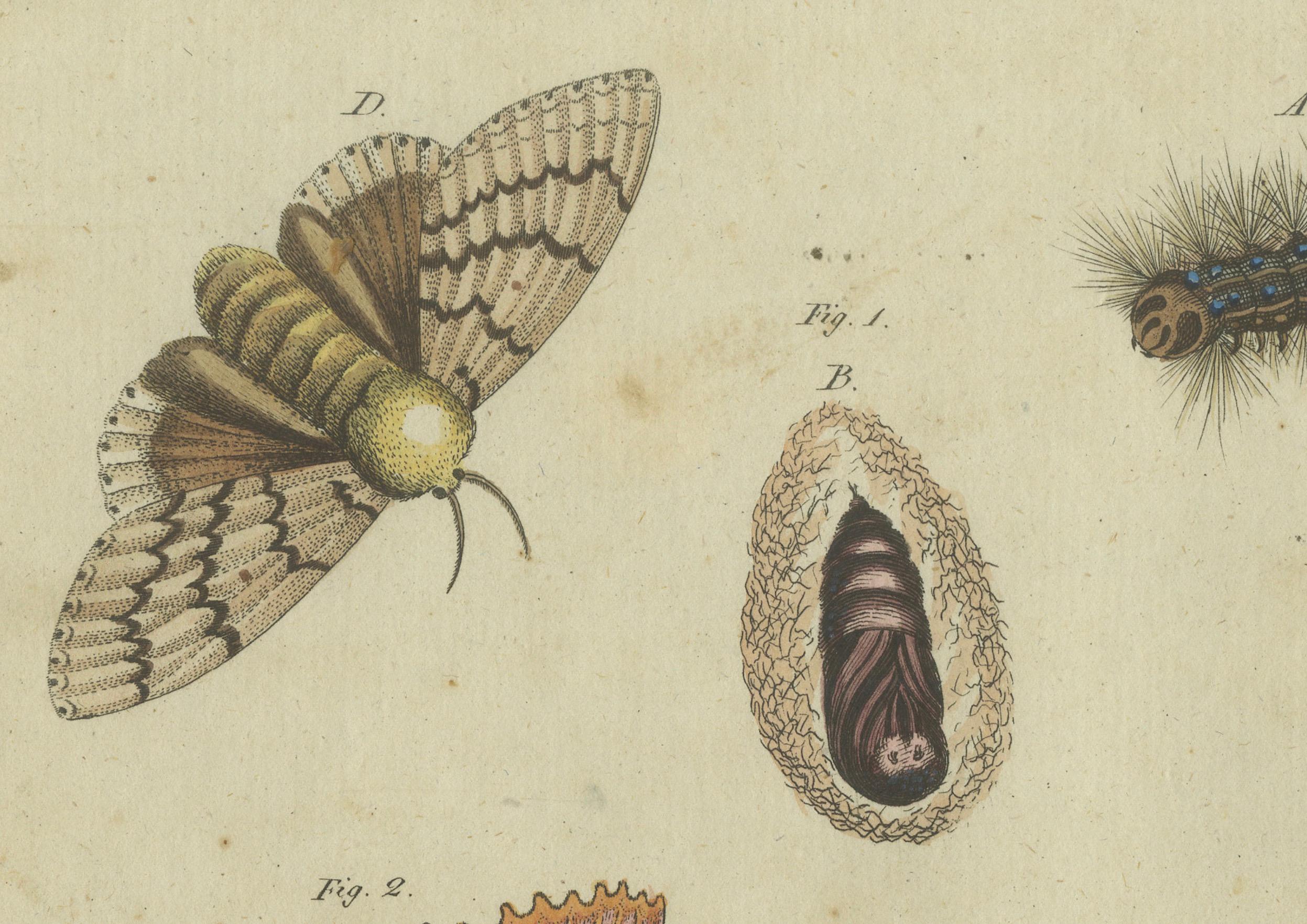
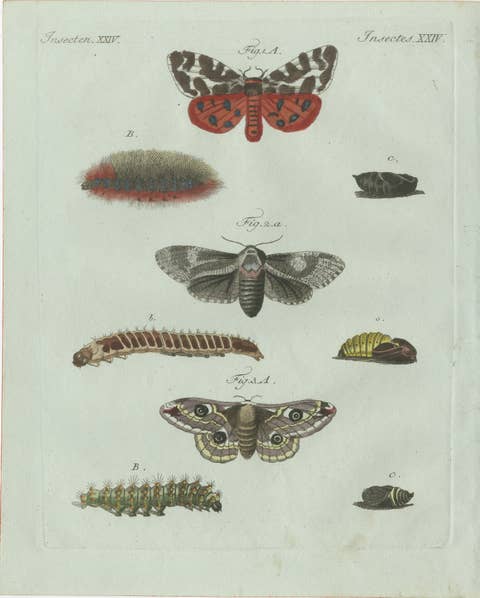
Gypsy moth, Lymantria dispar 1, lappet moth, Gastropacha quercifolia 2, and plum lappet moth, Odonestis pruni 3, with caterpillar and pupa.
Title: "Life Cycle of Moths and Caterpillars: Stages of Transformation, Bertuch, 1805"
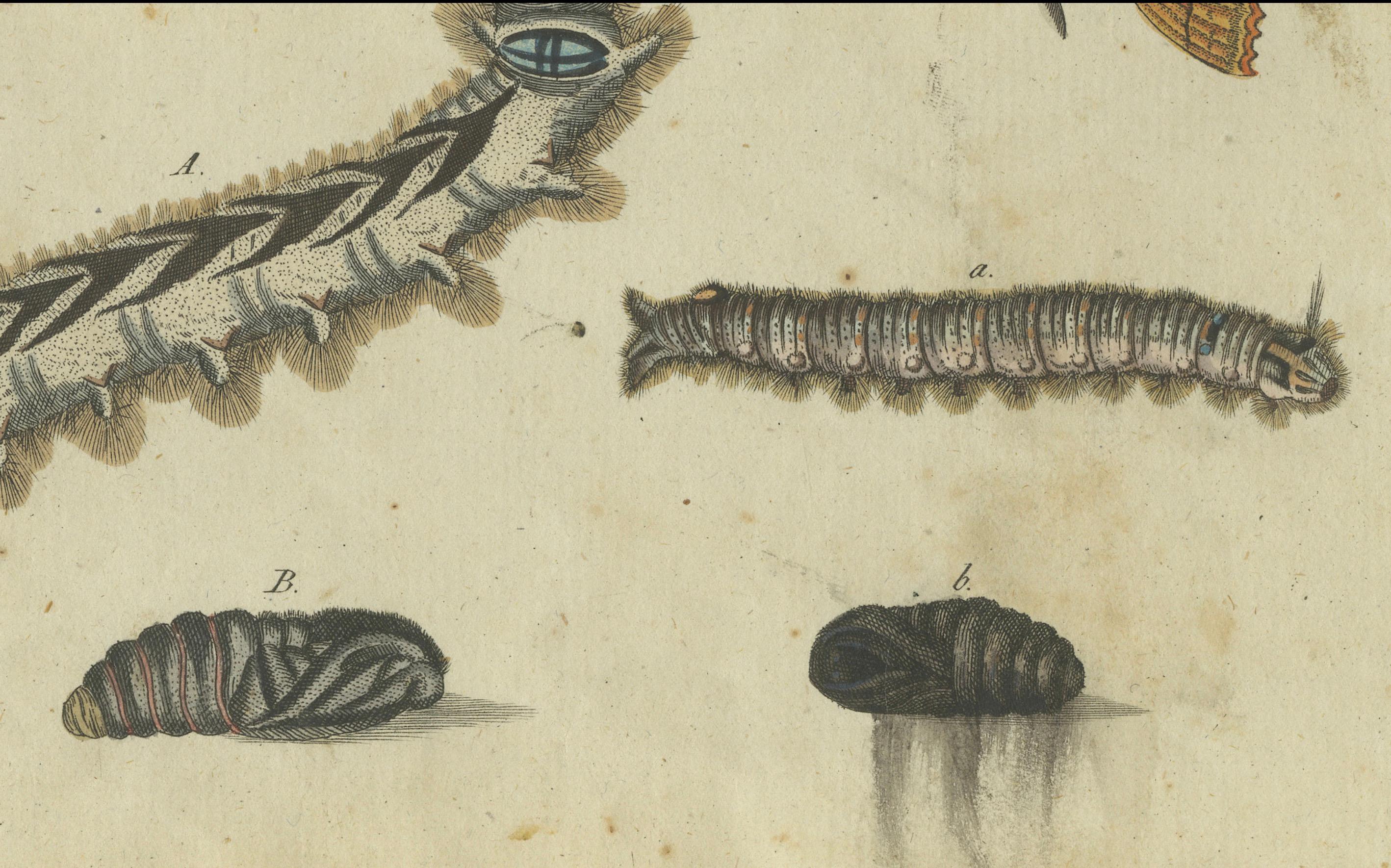
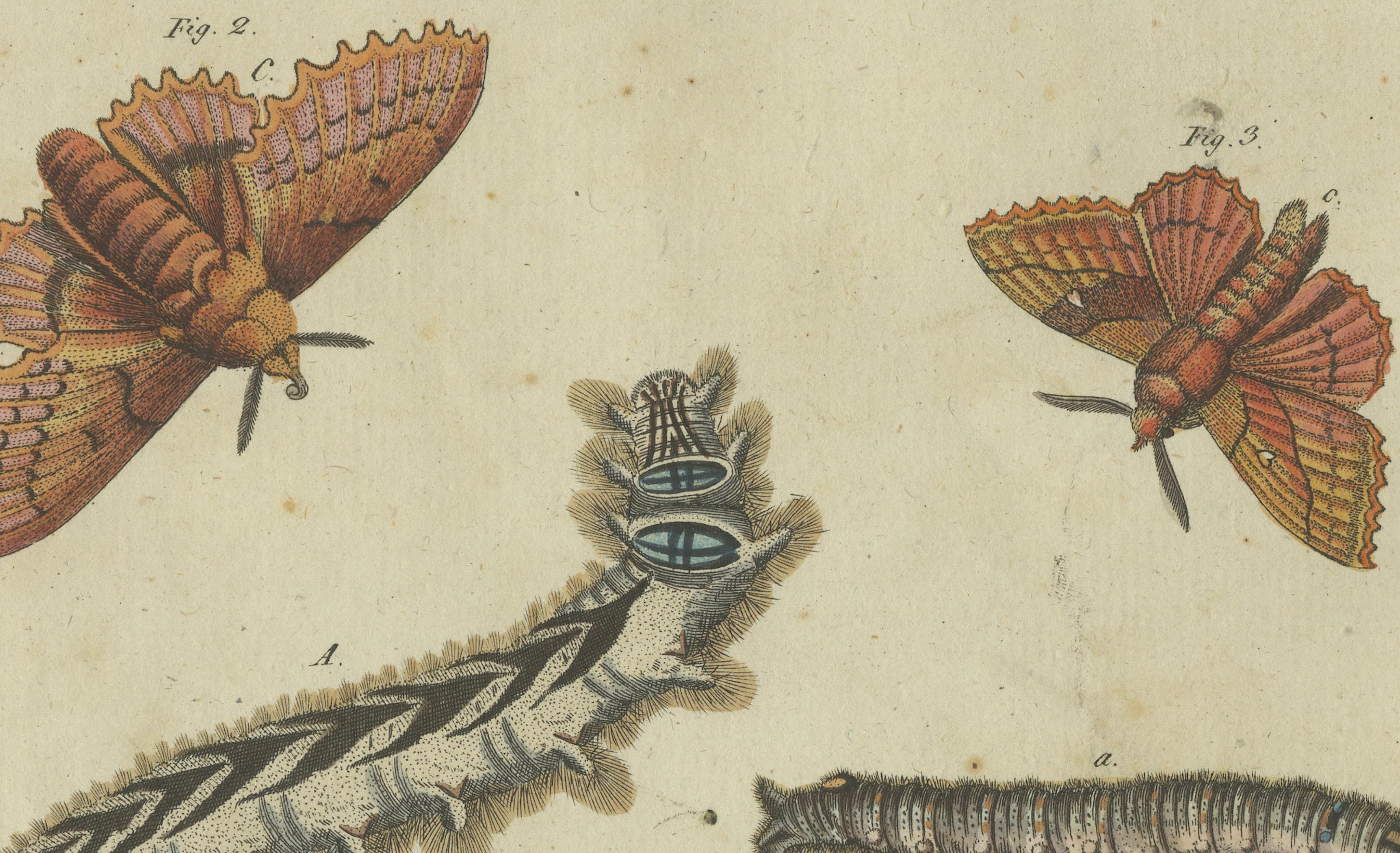
Description This intricately hand-colored copperplate engraving offers a captivating exploration of the life cycles of various moth species, depicting their development from caterpillar to cocoon to adult moth. Each figure is meticulously labeled, highlighting the distinctive stages of transformation. The upper section features vibrant caterpillars (Fig. 1, A) with their detailed textures and patterns, while the midsection showcases their protective cocoons (Fig. 1, B). The completed metamorphosis is revealed in the stunning moths (Figs. 2 and 3), adorned with vivid colors and intricate wing patterns.
Drawn from Friedrich Johann Bertuch’s renowned *Bilderbuch für Kinder* (Picture Book for Children), published in Weimar in 1805, this plate combines artistic excellence with scientific precision. Bertuch’s 12-volume encyclopedia aimed to educate young minds by illustrating natural history in an engaging and visually stunning manner. This engraving exemplifies his mission, capturing the natural world in a manner that is both informative and aesthetically pleasing.
The hand-applied coloring enhances the natural beauty of the specimens, making the engraving a valuable artifact for collectors of entomological art and early educational illustrations. It offers a fascinating glimpse into the scientific understanding and artistic practices of the early 19th century.
Condition Report Good condition with clean lines and vibrant hand coloring. Minor foxing near the edges and light age toning, typical for its age.
### Framing Tip Opt for a frame in dark wood or antique gold to emphasize the vivid colors and intricate details. Pair with a neutral cream or beige mat to create a timeless and elegant display that highlights the scientific artistry of the piece.