Intricate Arachnids and Insects: Hand-Colored Engraving Published in 1805
€ 99
Original antique · The actual sheet photographed · Certificate of authenticity on request · Sold unframed · Worldwide shipping from € 15 (rates)
Date
1805
Sheet size
23 × 19 cm (9.1 × 7.5 in)
Condition
Good
Reference
BG-14000-38
What the condition grades mean
Excellent
Bright and clean, with no faults worth mentioning.
Very good
Only light signs of age, such as faint toning.
Good
Normal signs of age for a sheet of this period: toning, some foxing, small marks or neat old repairs.
Fair
Clear faults such as staining, tears or repairs, priced to match.
Every fault we see is written in the condition note, and the whole sheet is shown uncropped in the photos.
Condition
The engraving is well-preserved with age-related foxing due to age and handling and light discoloration typical of its time. The paper remains stable, and the colors are vibrant, retaining their original charm. Please review the images for further condition details.
About this sheet
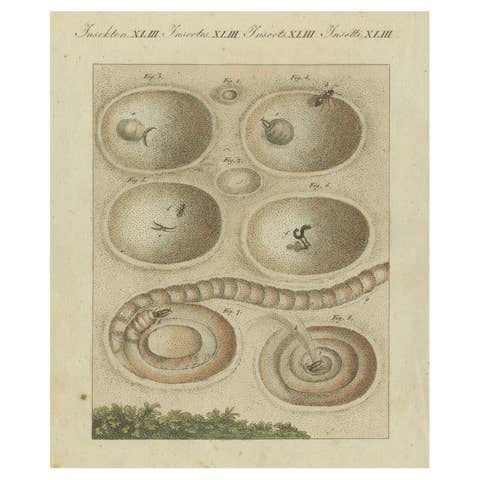
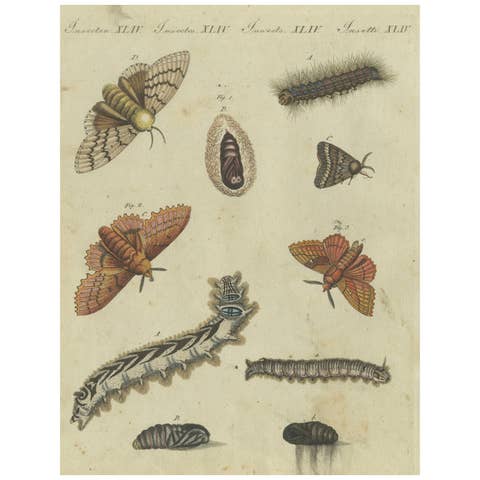
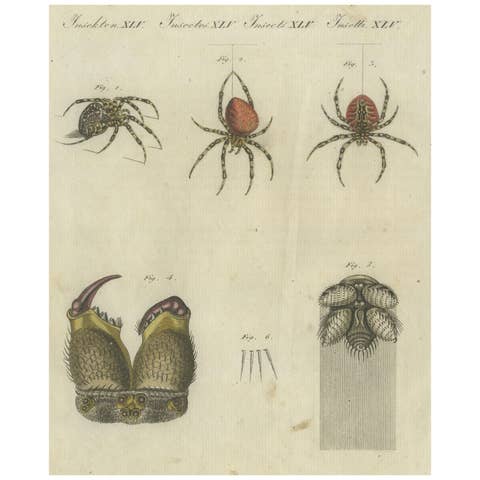
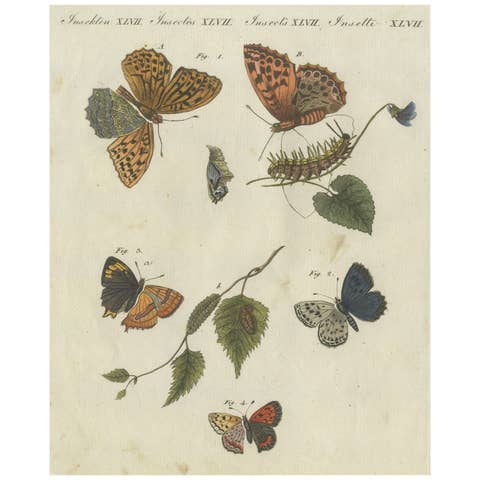
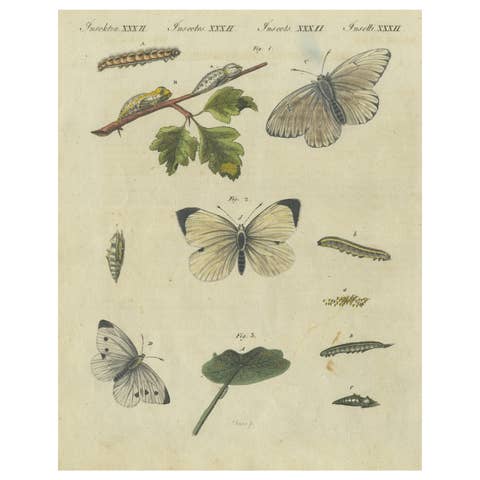
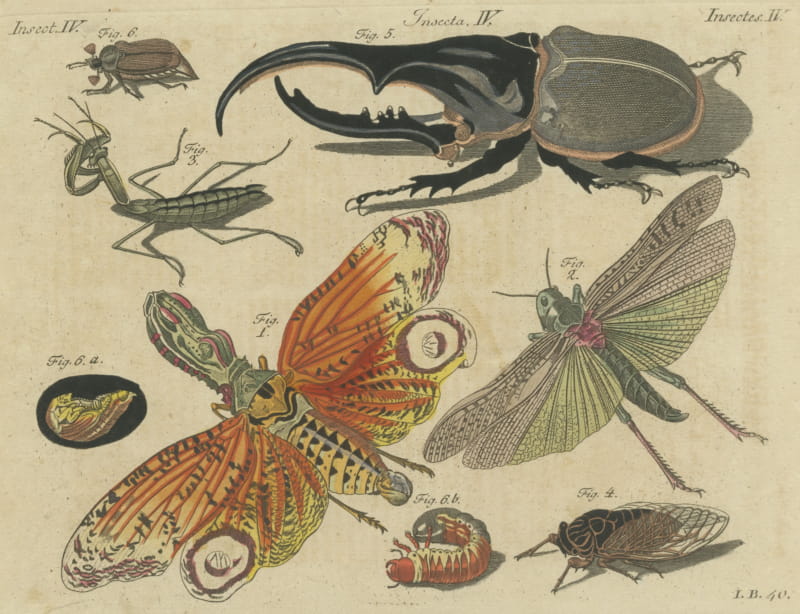
This detailed engraving, part of an early 19th-century natural history compendium, depicts a fascinating array of arachnids and insects. The meticulously hand-colored illustrations showcase the diversity and complexity of these small creatures, each labeled with precision. The plate includes a variety of species, from spiders and mites to scorpions and aquatic crustaceans, illustrating both terrestrial and aquatic life forms.
The plate provides a snapshot of the naturalist's dedication to documenting biodiversity during the 19th century, serving as both a scientific resource and a work of art.
The engraving is well-preserved with age-related foxing due to age and handling and light discoloration typical of its time. The paper remains stable, and the colors are vibrant, retaining their original charm.
Advice on presentation: 1. Frame the engraving in a simple wooden or black frame to emphasize its scientific and artistic elements. Use an acid-free cream-colored mat to protect and enhance the artwork. 2. Consider displaying this engraving alongside other natural history prints for a thematic gallery wall or collection. 3. If framing is not preferred, store the piece in an archival-quality portfolio to ensure its longevity while allowing for careful study. 4. Add a descriptive plaque or caption below the engraving to highlight its scientific and artistic significance.
This piece is ideal for collectors, natural history enthusiasts, or educational institutions seeking to showcase the intersection of art and science in the 19th century.