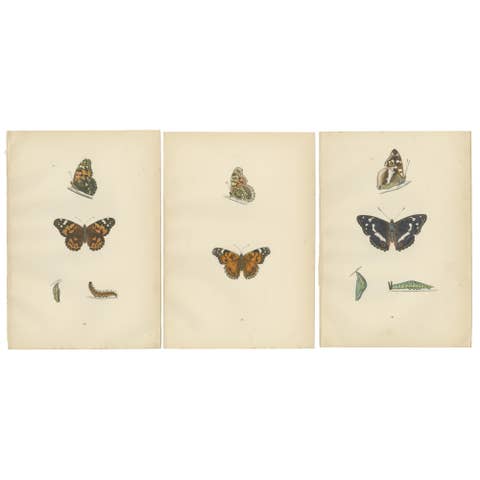
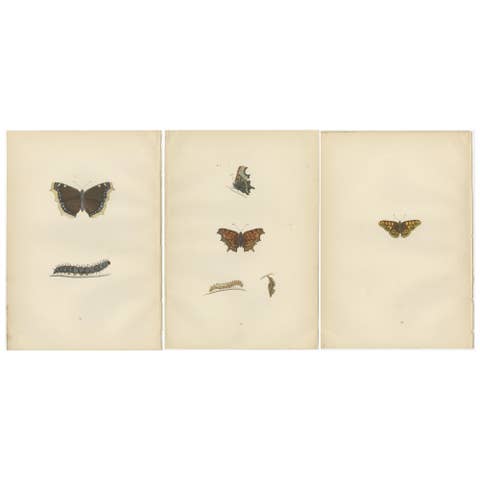
Evolutions of Elegance: A Victorian Trio of British Butterflies, 1890
€ 190
One of a kind: this is the sheet in the photographs. Ships from Langweer, the Netherlands.
Date
1890
Sheet size
25.4 × 17.3 cm (10.0 × 6.8 in)
Condition
Good
Reference
BG-13260-1, BG-13260-2, BG-13260-3
Condition
given age, general age-related toning. Some small spots and some offset on the first page. Please study scan carefully.
About this sheet
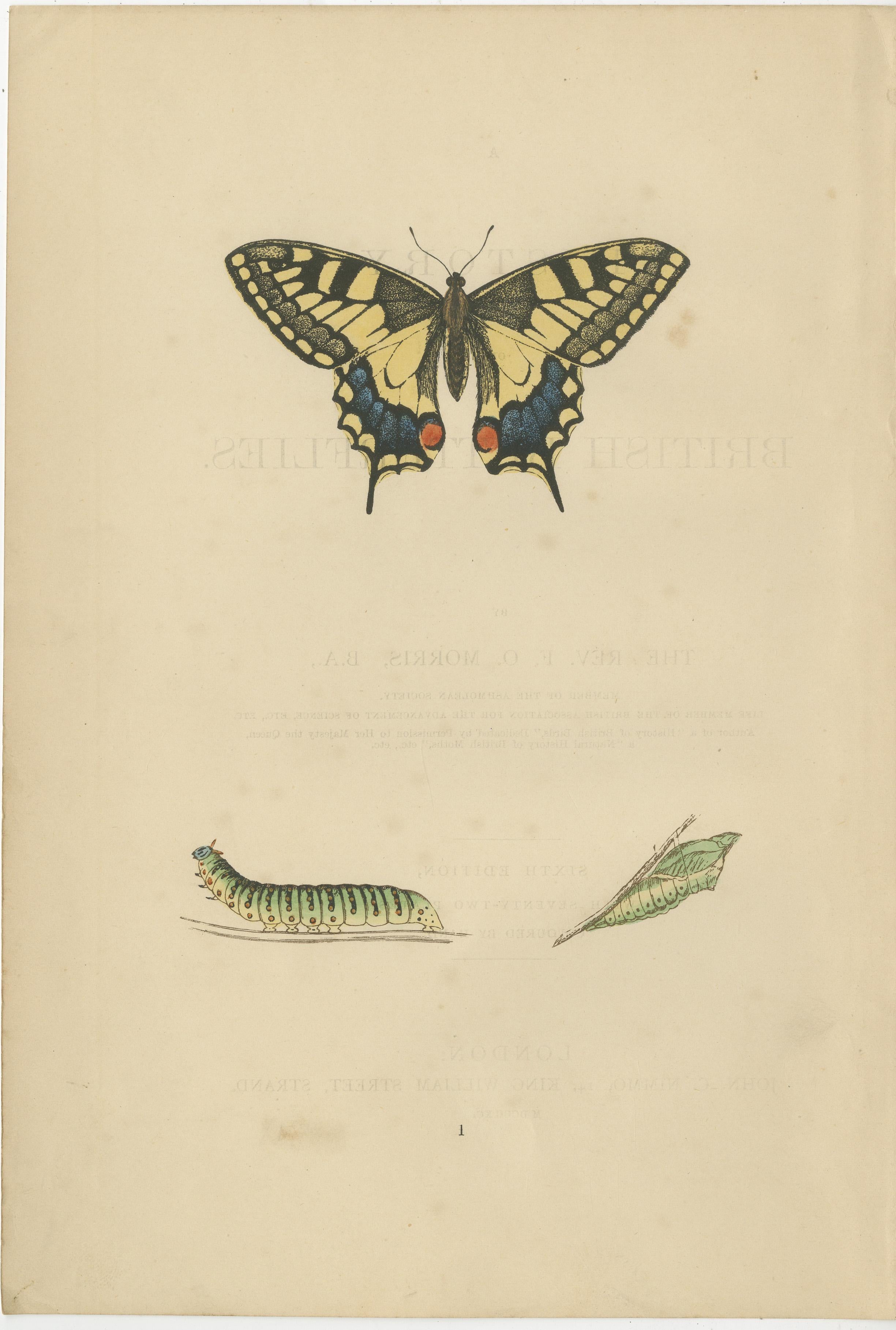
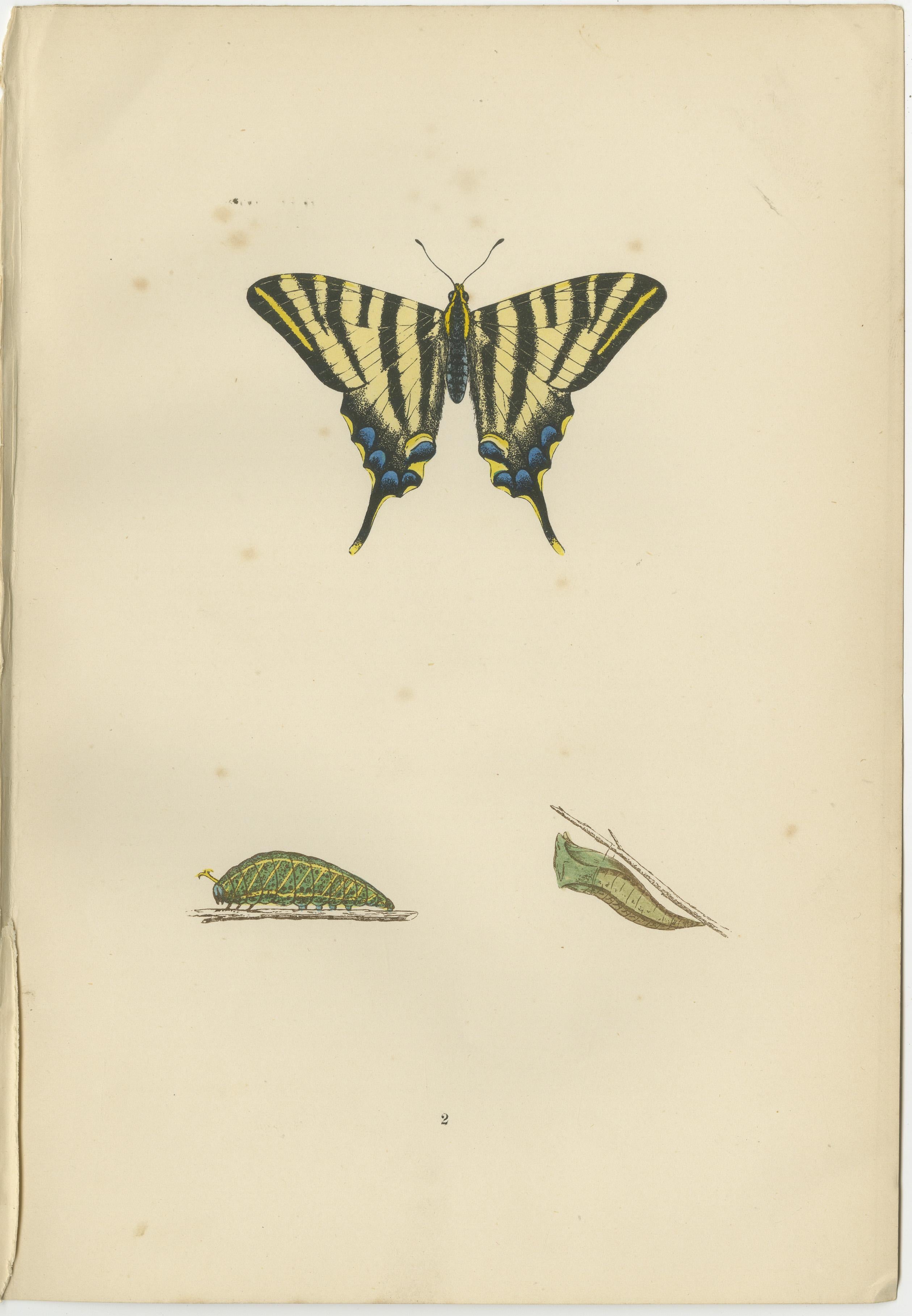
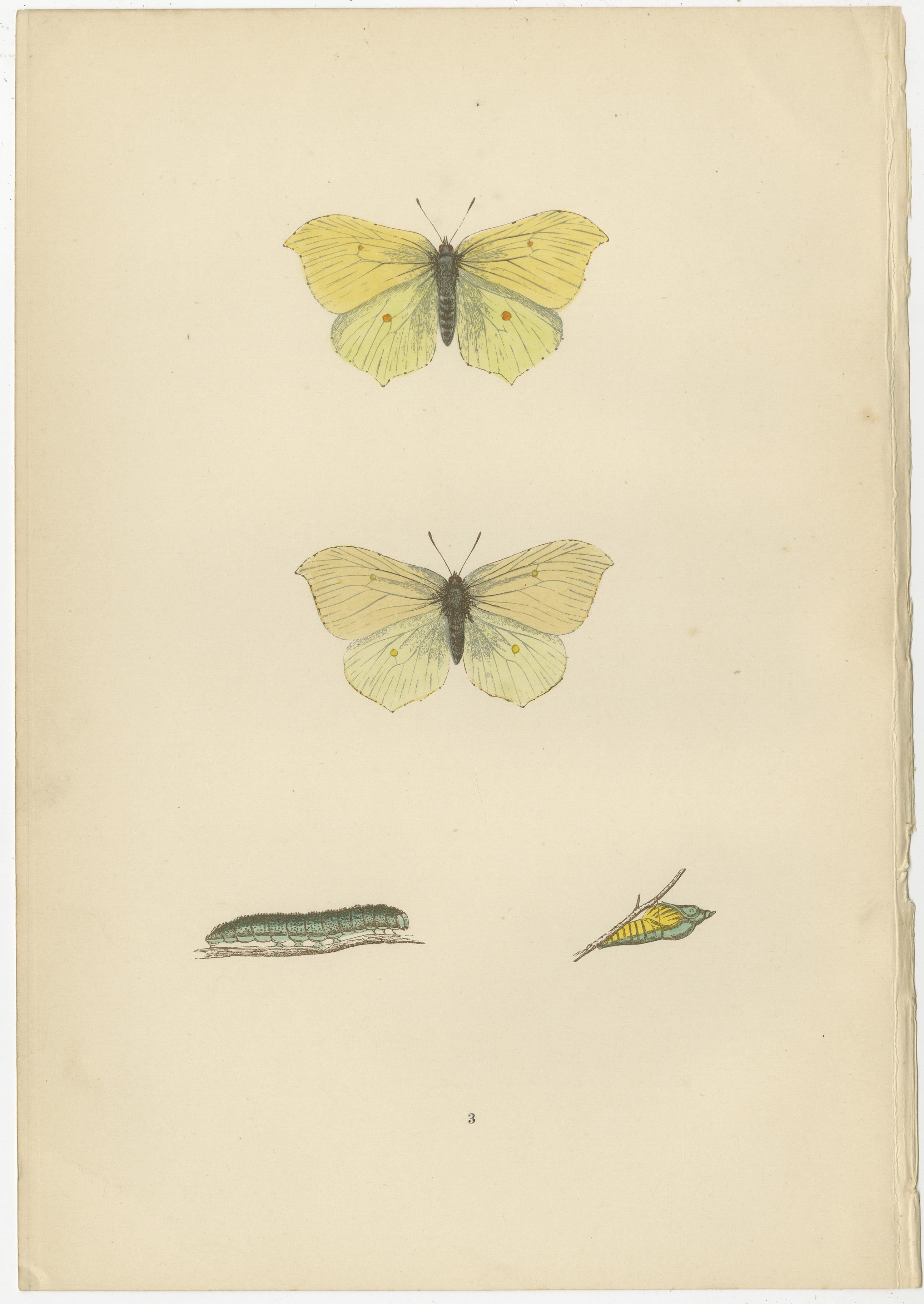
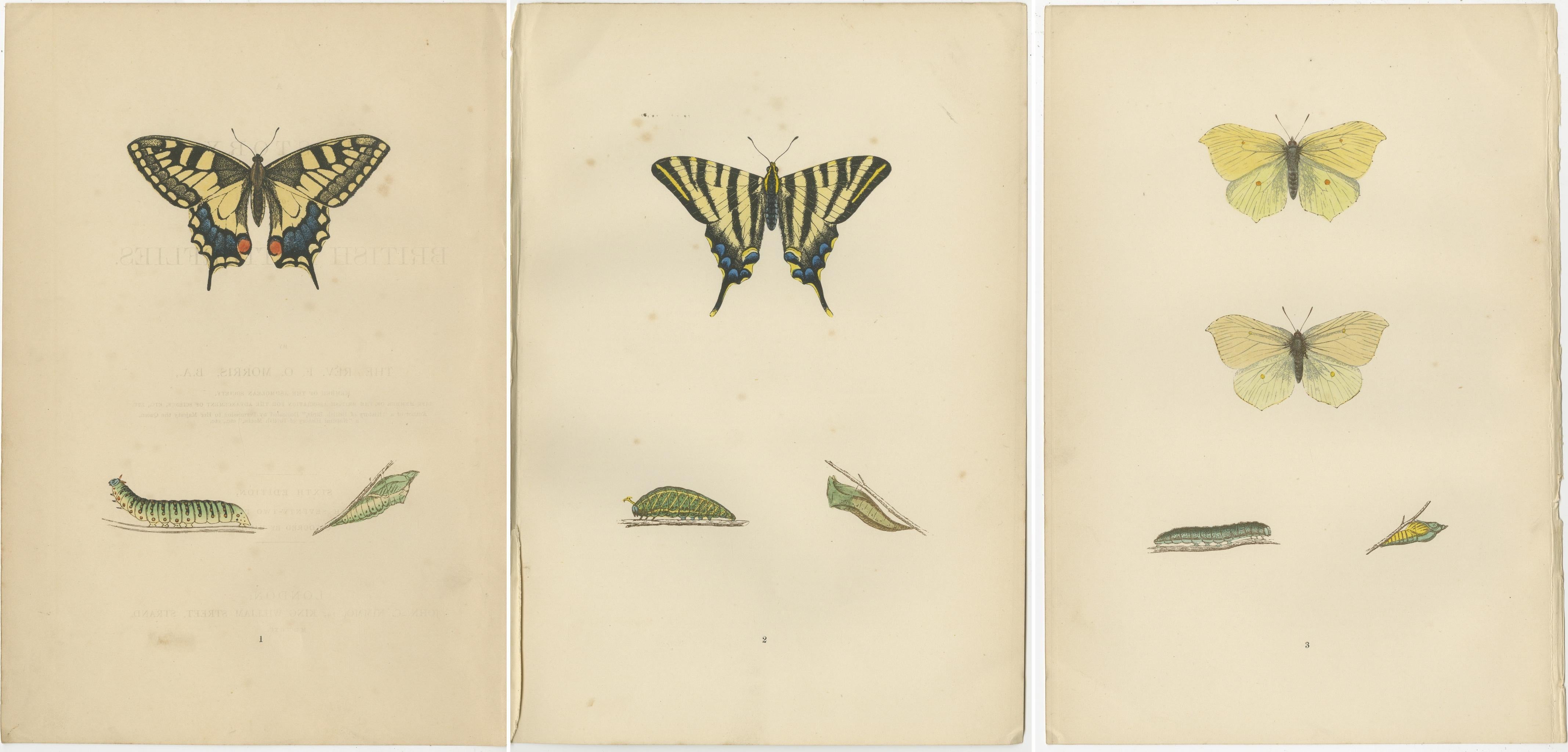
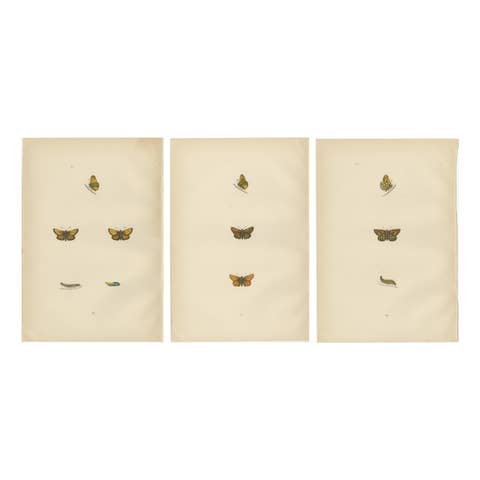
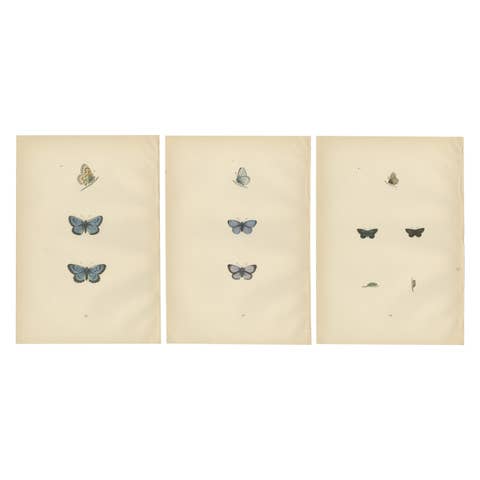
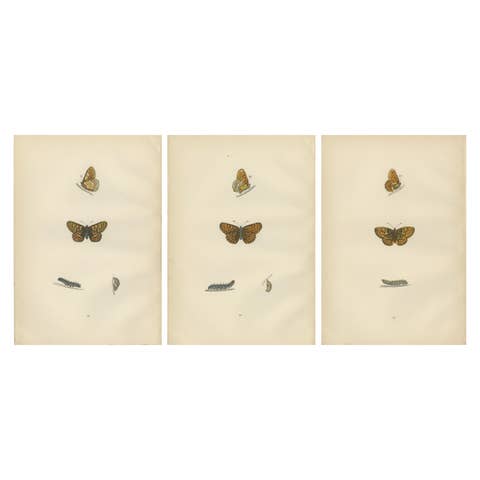
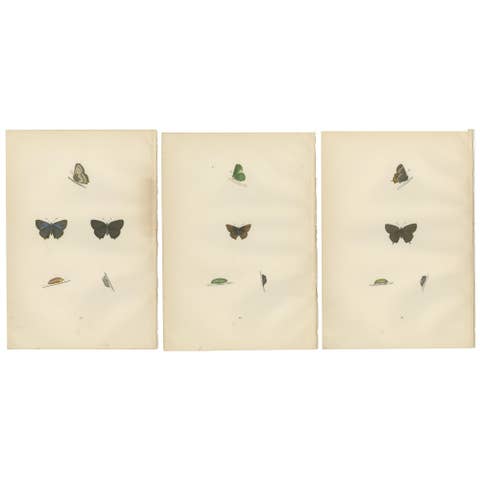
Three original hand-colored plates from the sixth edition of 'A History of British Butterflies' by Morris, which date back to 1890.
A closer look at each of the species depicted:
1. **The Swallow Tail (Papilio machaon)**: This butterfly is easily identifiable by its large size, yellow and black striped wings, and distinctive tail-like extensions on the hindwings. The wings also feature blue and red eye-spots near the tails. The Swallow Tail is interesting because it is one of the largest of British butterflies and its caterpillars are equally striking, with black and green stripes punctuated by orange spots.
2. **The Scarce Swallow Tail (Iphiclides podalirius)**: Similar in appearance to the Swallow Tail, this species can be distinguished by its lighter coloration and larger, more prominent blue spots on the hindwings. The forewings also have a more defined black border. It’s considered “scarce” because it’s less commonly found in Britain and is more continental in its distribution.
3. **The Brimstone (Gonepteryx rhamni)**: The Brimstone butterfly has wings that are a pale yellow for males and a more greenish-white for females, which are somewhat leaf-shaped, helping in camouflage. It is one of the longest-lived butterflies, capable of surviving up to a year. It’s notable for being a harbinger of spring, often one of the first butterflies to be seen flying in the new year.
Each of these butterflies plays a role in the ecosystem as pollinators. The detailed illustrations provide not only an artistic representation but also a scientific record of the appearance of these species, which is quite invaluable for historical reference and comparison with current populations. The hand-colored aspect of these plates makes them particularly special as they represent a combination of scientific and artistic endeavors from the Victorian era.