About this sheet
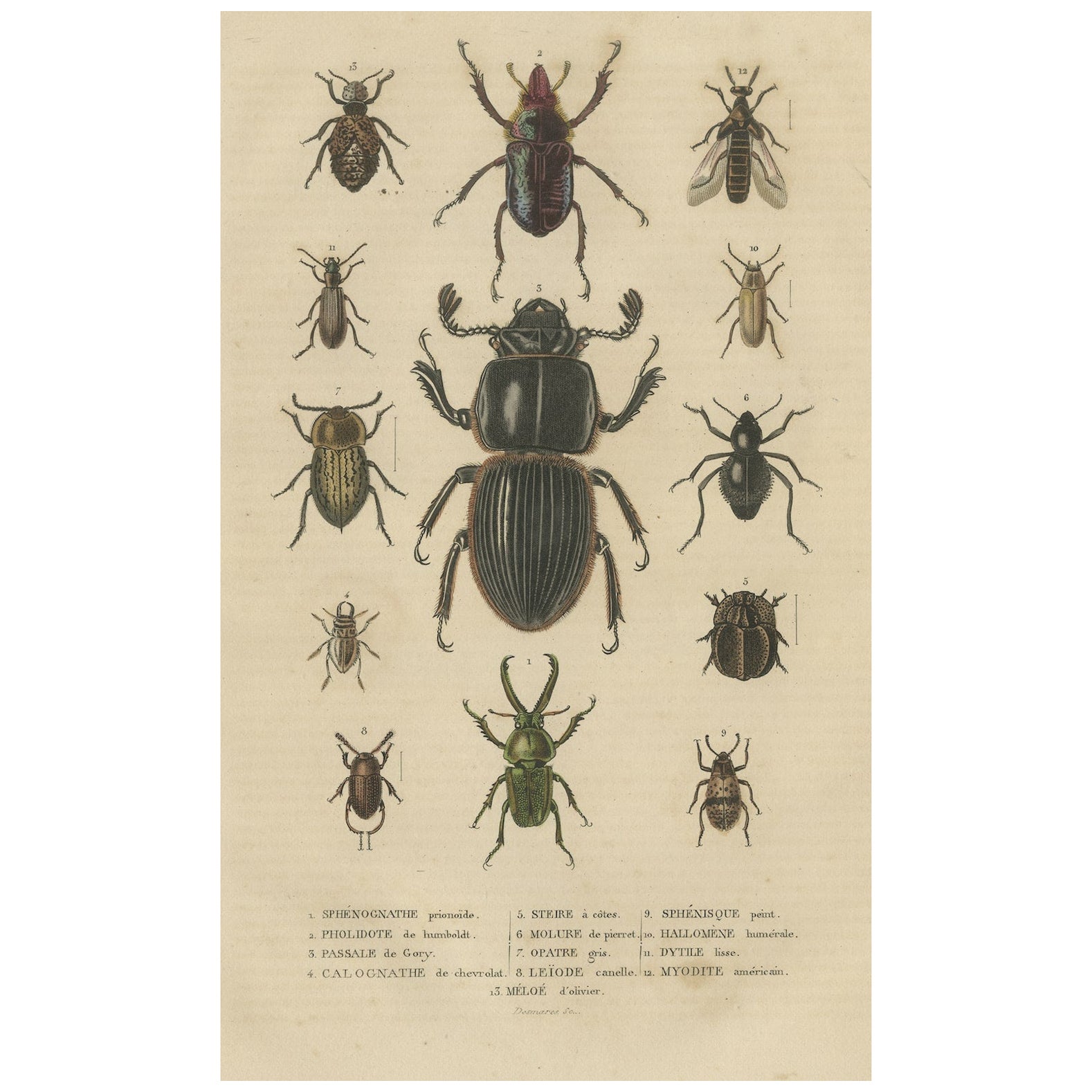
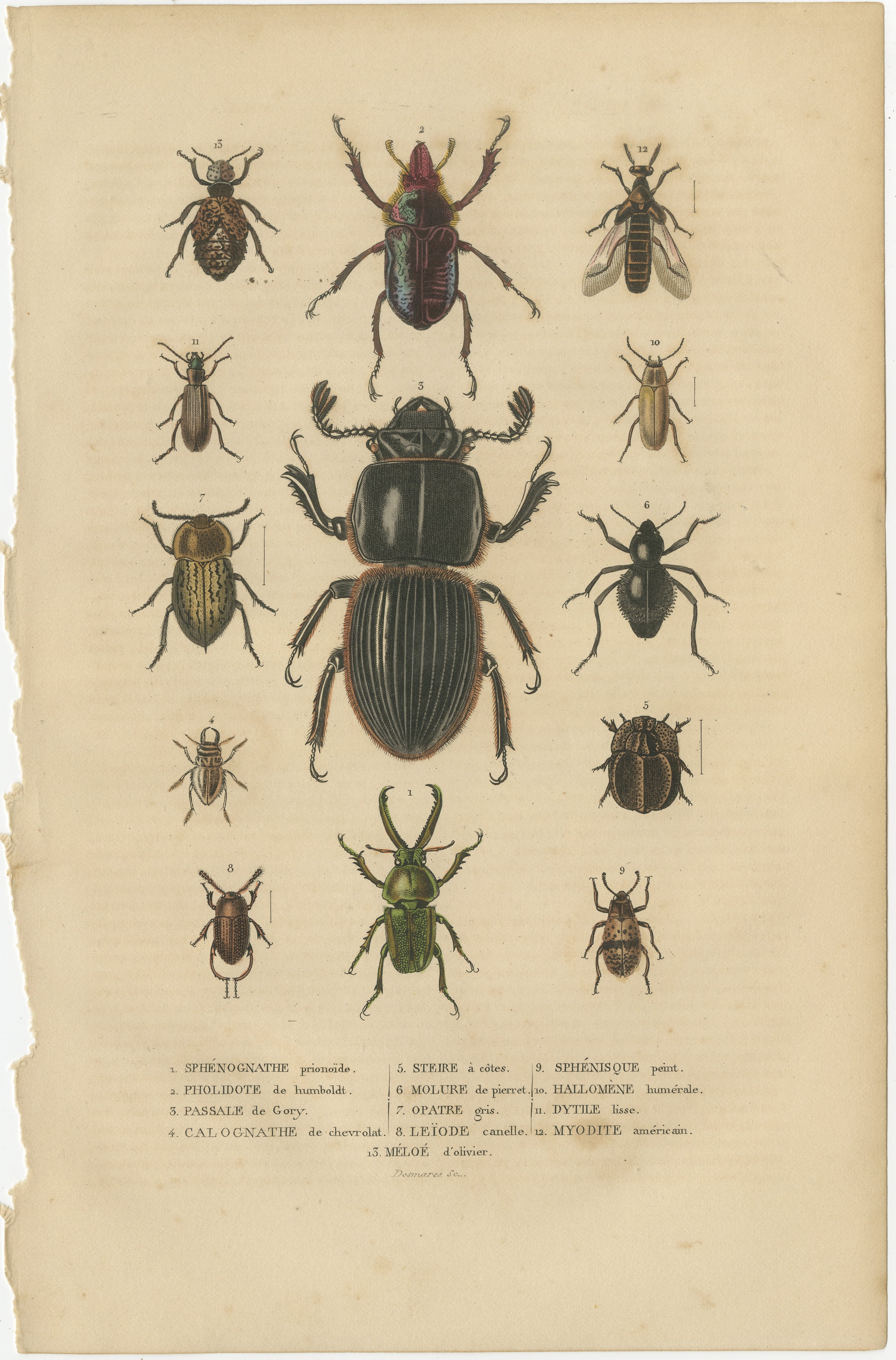
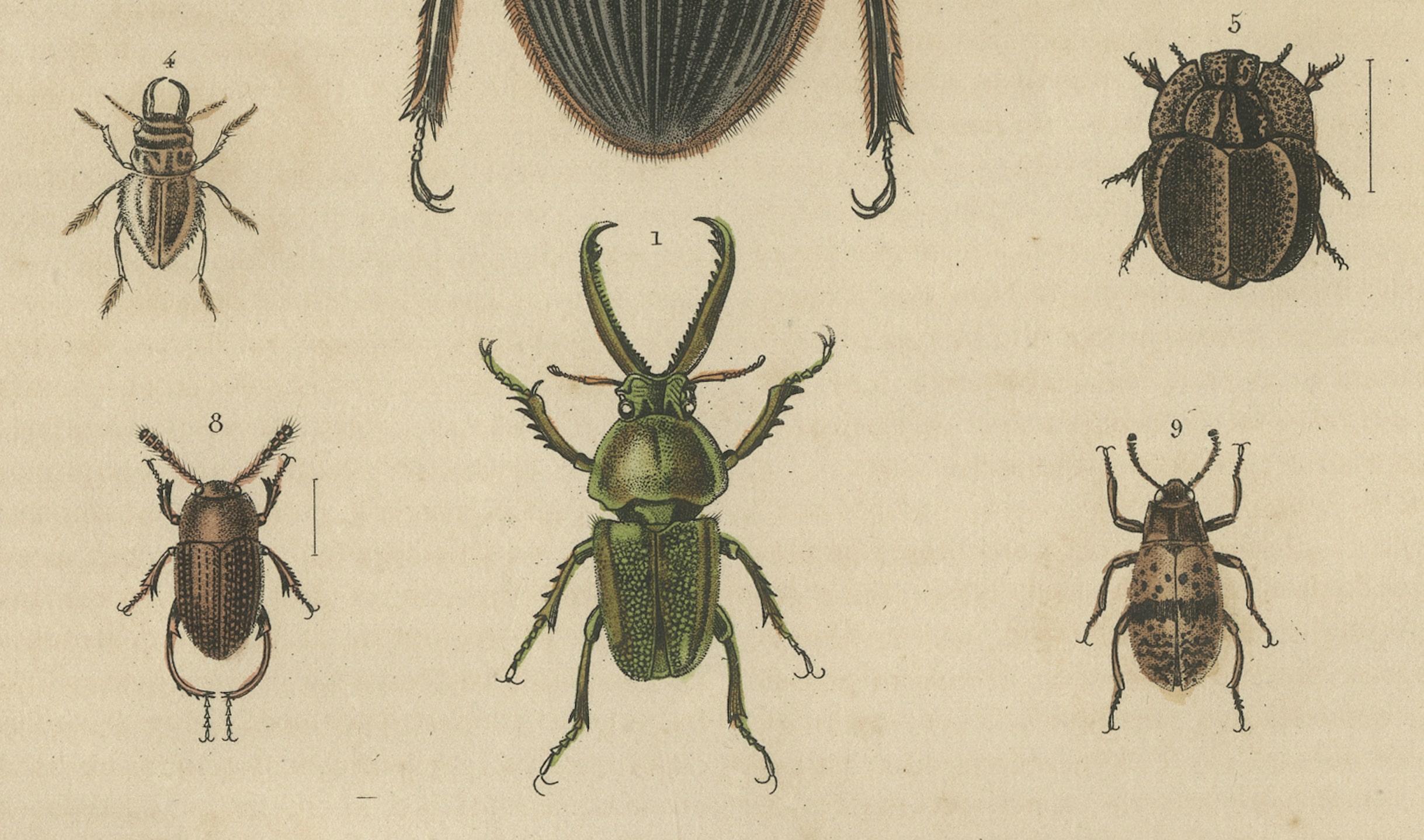
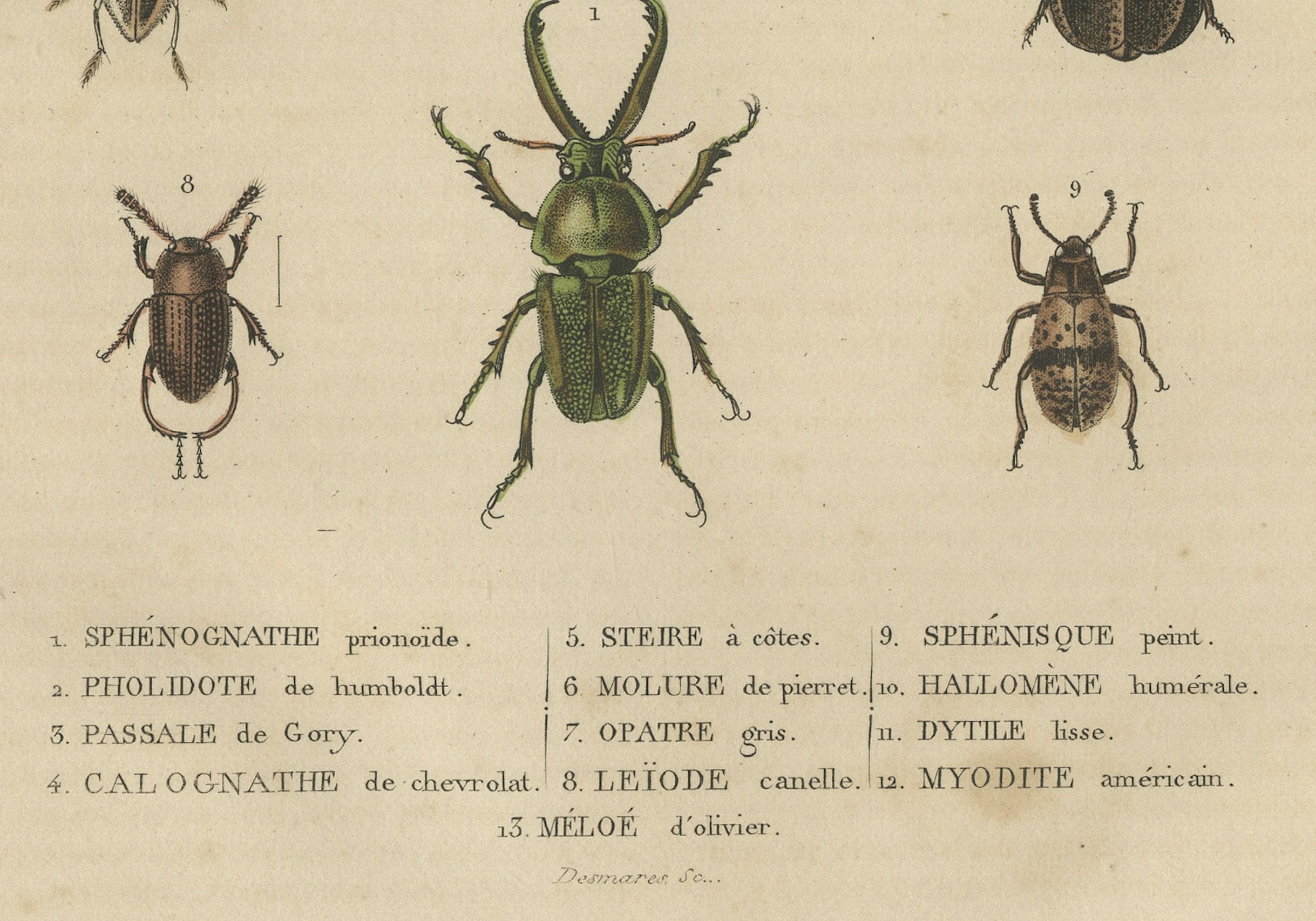
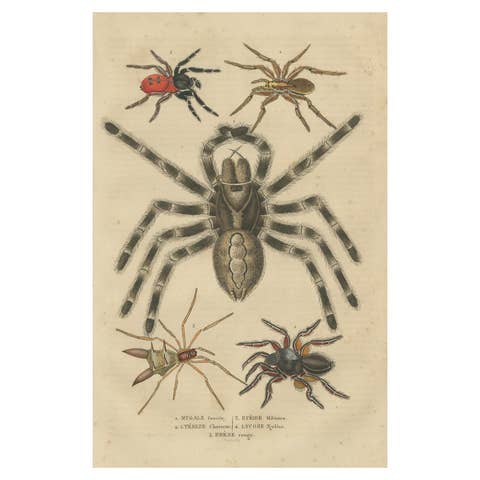
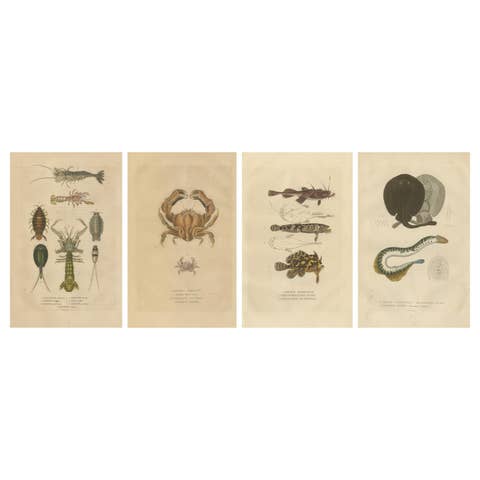
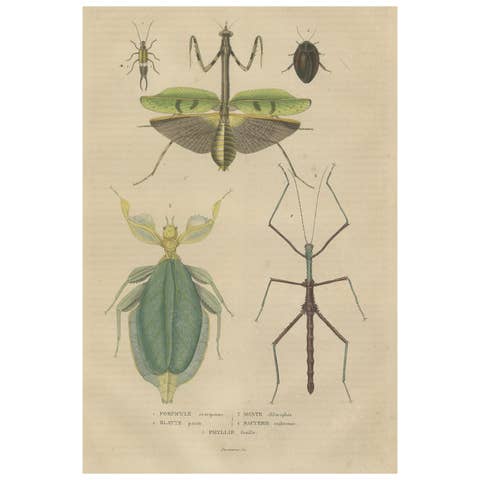
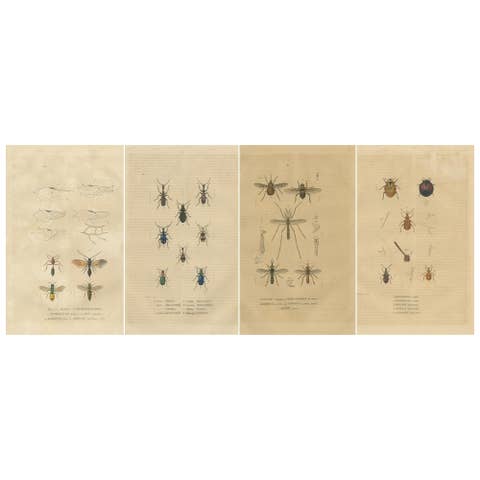
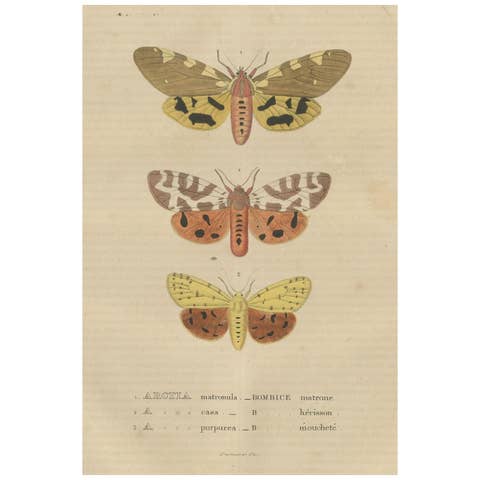
Antique hand-colored print depicting various beetles. Each beetle is meticulously illustrated, likely hand-colored after printing, which was the style of the mid-19th century scientific illustrations. The image includes a key at the bottom, which provides the names of the beetles in French, such as "SPHENOQNCATHE primordie" and "PHILODTE de humboldt," among others. (see below).
These illustrations were part of an entomological reference in "Dictionnaire Classique des Sciences Naturelles" by Pierre Auguste Joseph Drapiez. These beetles would have been represented to aid in the scientific study and categorization of insect species. Given the detail and the quality of the illustrations, these plates were valuable educational tools for scholars and enthusiasts of natural history at the time.
The condition of the print suggests it has been preserved with some signs of aging, such as yellowing and spotting, which adds to its antique charm. The precision of the drawings indicates a high level of scientific rigor in depicting the anatomical features of each beetle, which would have been crucial for the scientific community's efforts to classify and understand the vast diversity of insect life.
The print is a typical representation of entomological studies from the 18th and 19th centuries, where detailed illustrations were crucial for the study and classification of living creatures.
This print not only serves as a scientific record but also as a work of art, reflecting the dual interests of the Victorian era in both natural history and illustration. It is a remarkable piece that would be a significant addition to any collection of natural history art or an elegant decorative piece for those with a taste for the historic and the natural world.
The style of the illustration is reminiscent of 19th-century scientific prints, which were often used in natural history books to document various species.
More info on the book in which it was published:
The 'Dictionnaire Classique des Sciences Naturelles' by Pierre Auguste Joseph Drapiez stands as a remarkable testament to 19th-century natural sciences. Published in Brussels in 1845, this work represents an expansive collation of knowledge, building upon the pioneering works of Buffon, Daubenton, Lacepede, Cuvier, de Jussieu, and other influential naturalists.
The prints within this compendium likely showcase a rich amalgamation of artistic precision and scientific accuracy. Drapiez, himself a Belgian naturalist, would have aimed for detailed representations of flora, fauna, and scientific phenomena, mirroring the illustrative styles prevalent during his time. Given the era's emphasis on illustration, these prints were likely engraved meticulously, possibly portraying intricate anatomical details or lifelike depictions of the natural world.
With Drapiez's background in natural history, the prints might bear testament to his commitment to scientific authenticity, aiming to educate and inspire scholars and enthusiasts alike. These engravings would have complemented the text, offering visual aids that elucidate the concepts and specimens discussed in the volume.
Overall, the prints of 'Dictionnaire Classique des Sciences Naturelles' likely serve as both artistic representations and invaluable scientific resources, encapsulating the essence of 19th-century natural history exploration and documentation.
More details about the beetles:
The names are listed in French. Here is a translation and identification where possible:
1. **SPHENOQNCATHE primordie** - This name does not correspond to a current scientific name and may be an outdated or misspelled term. It could be a historic or archaic name that has since changed.
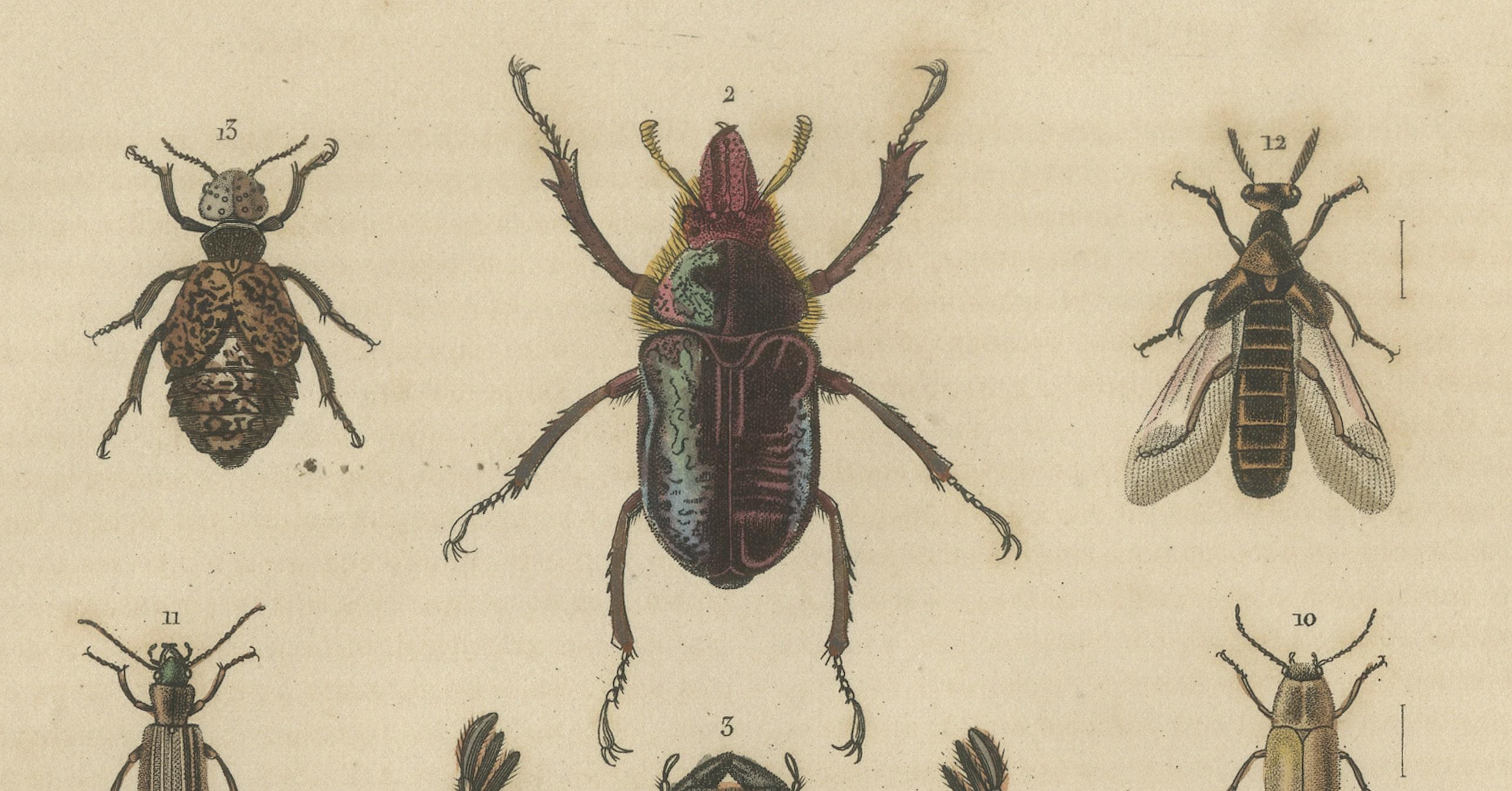
2. **PHILODTE de humboldt** - This likely refers to a beetle named in honor of Alexander von Humboldt, but the name does not correspond to modern nomenclature.
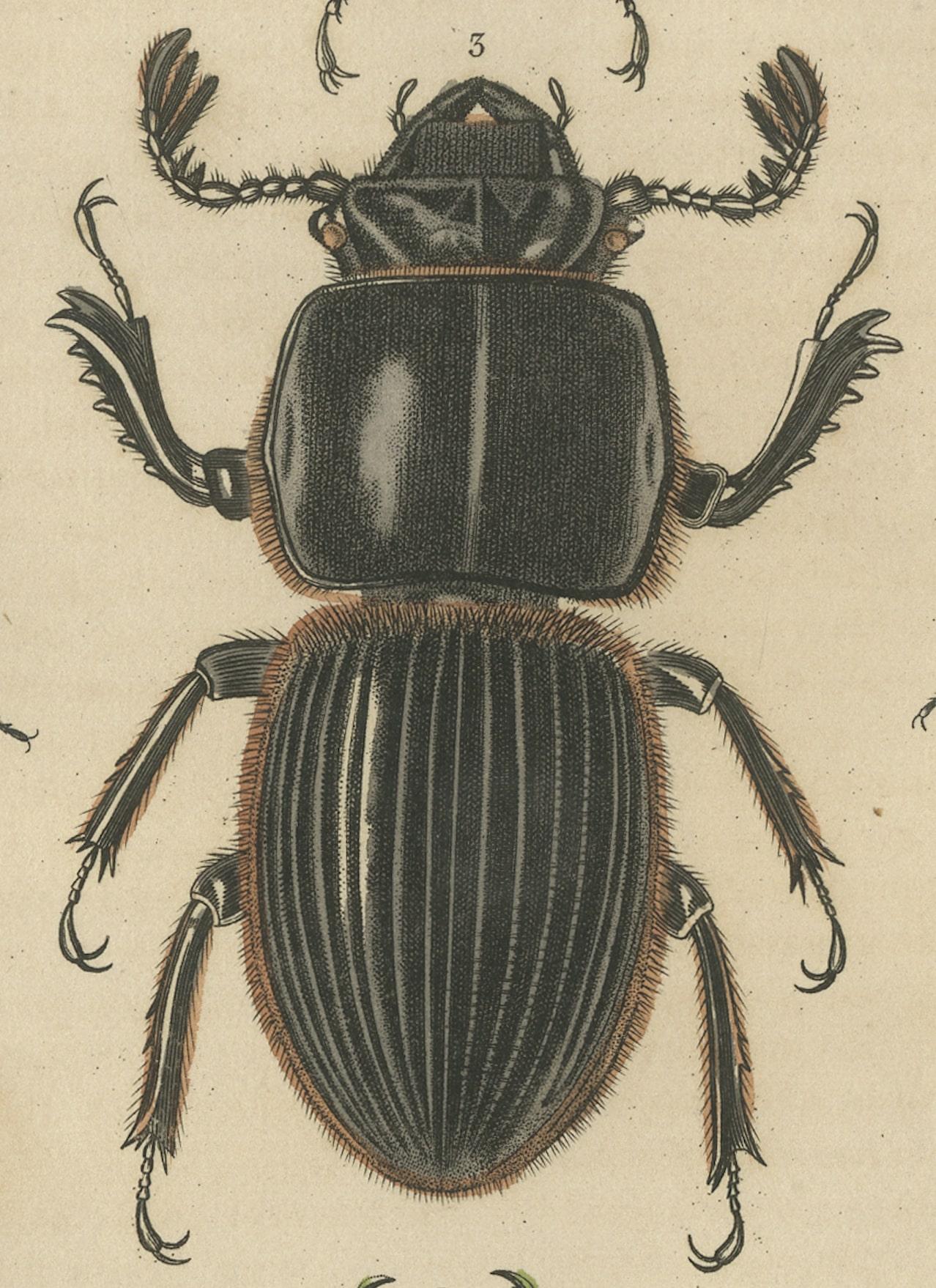
3. **PASSALIE de Gory** - Passalidae is a family of beetles, also known as bess beetles or patent-leather beetles. "de Gory" could refer to the person who described the species or a specific species within this family.
4. **CALCONATHE du cheval** - This name is not recognizable in modern entomological taxonomy and might be an archaic term or a specific common name that has since fallen out of use.
5. **STIRE à côtés** - The word "stire" is not identifiable as a modern scientific term; it might be an outdated or misspelled name for a type of beetle.
6. **MOULRE de pierrt.** - This could be an incorrectly transcribed or an old-fashioned name for a beetle species, unrecognizable in contemporary taxonomy.
7. **OPATRE gris** - "Opatre" could be an old name for a group of beetles, possibly meant to be "Opatrum," which is a genus within the family Tenebrionidae. "Gris" means gray in French.
8. **LEJODE canelle** - This name is not immediately identifiable in the context of modern entomology.
9. **SPHENISQUE peint.** - "Sphenisque" does not correspond to a current beetle genus, and "peint" means...