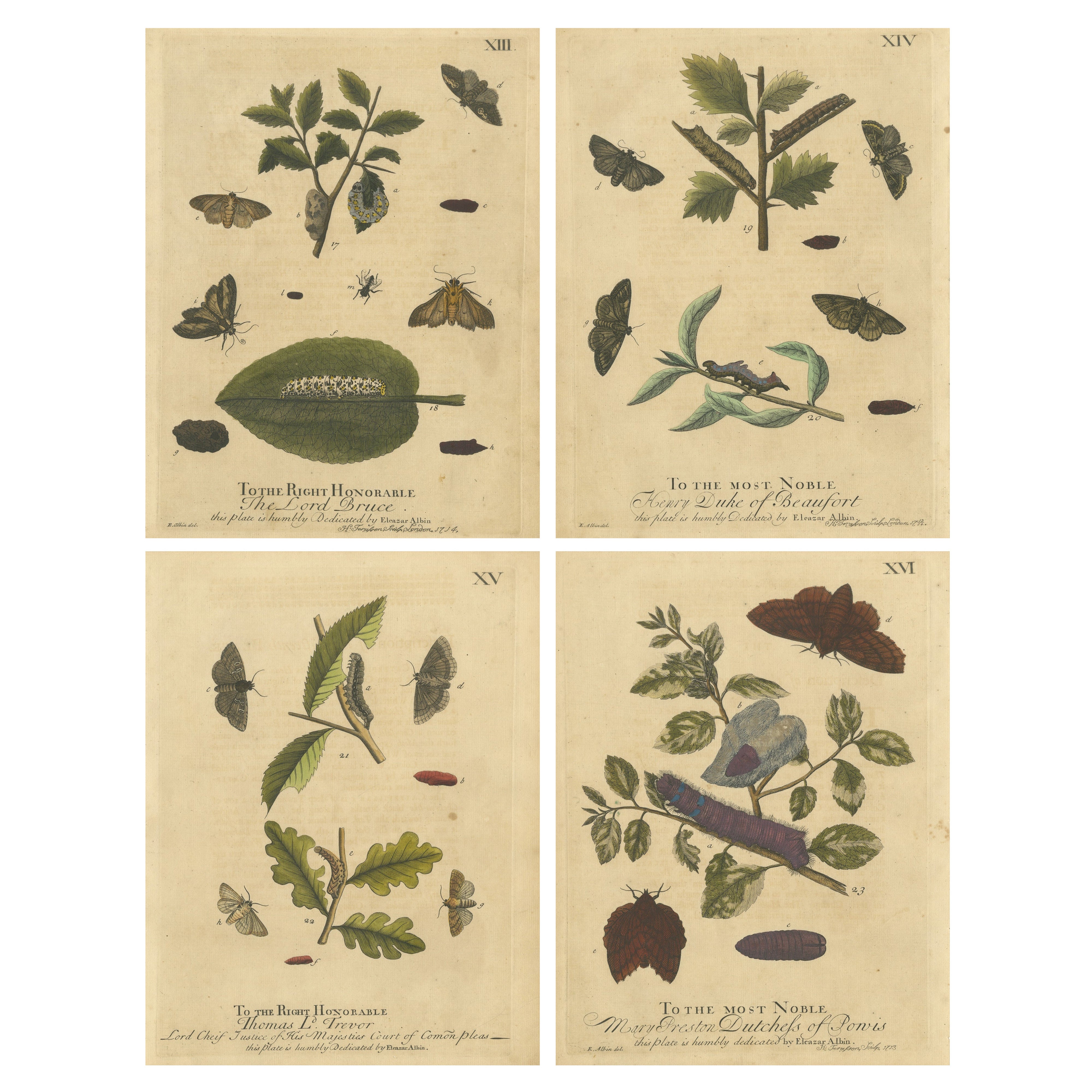
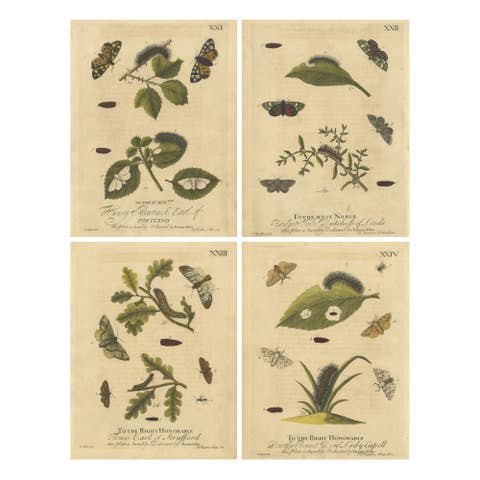
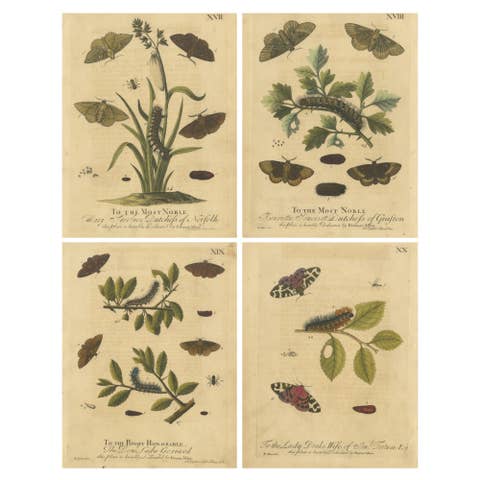
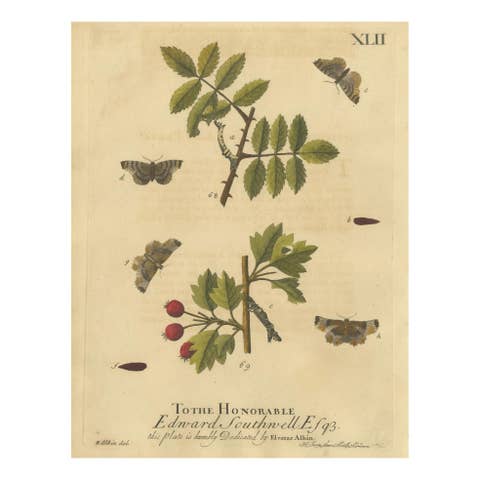
One of a kind: this is the sheet in the photographs. Ships from Langweer, the Netherlands.
Date
1720
Sheet size
28.3 × 22.1 cm (11.1 × 8.7 in)
Condition
Good
Reference
BG-14185-13, -14, 15, -16
Condition
Light overall toning consistent with early 18th-century paper. Hand coloring remains clear and well defined. Minor scattered spotting and gentle age wear. Overall very good condition for prints of this age.
About this sheet
English Moths & Caterpillars – Buff-tip, Winter Moth & Allies, Albin 1720
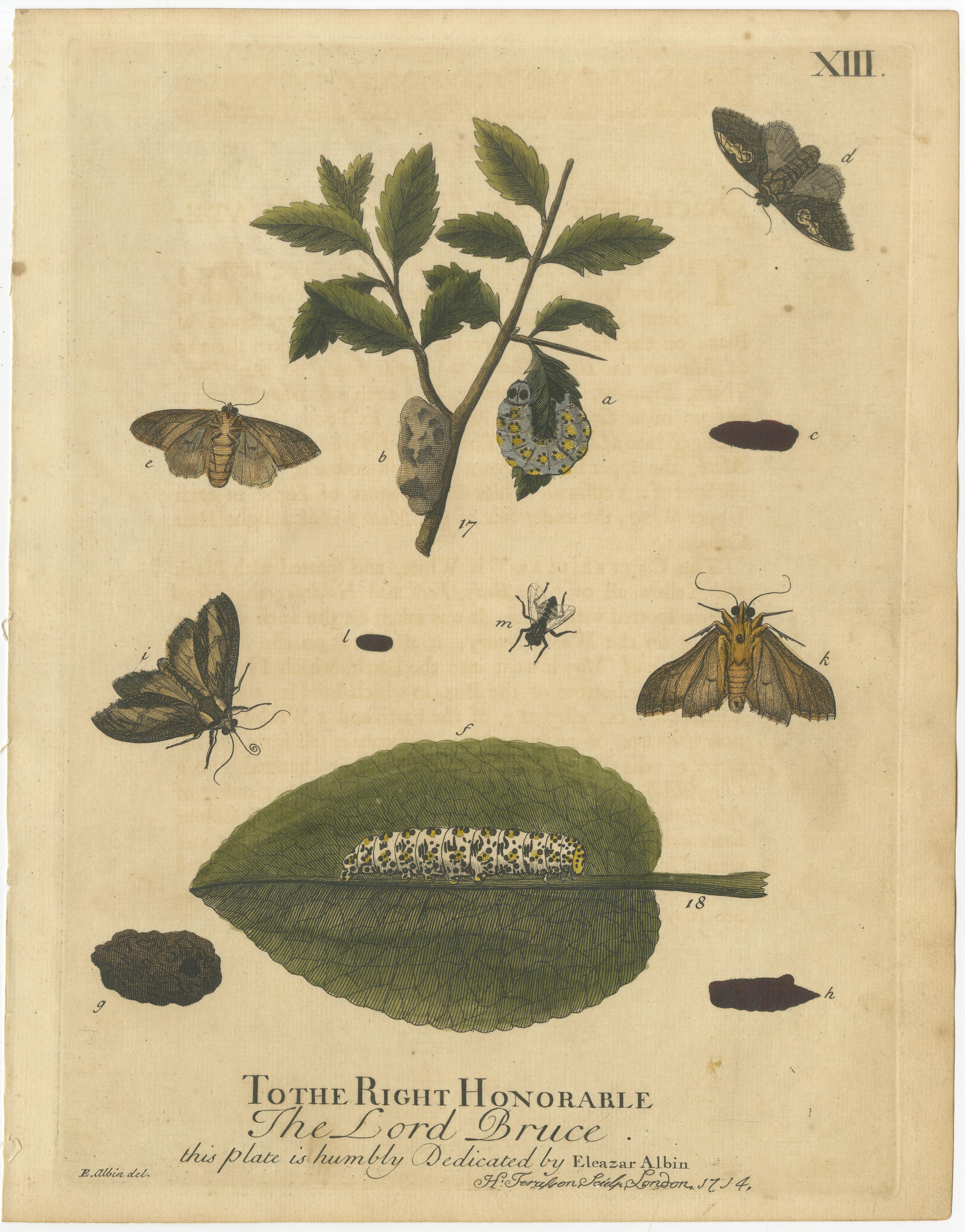
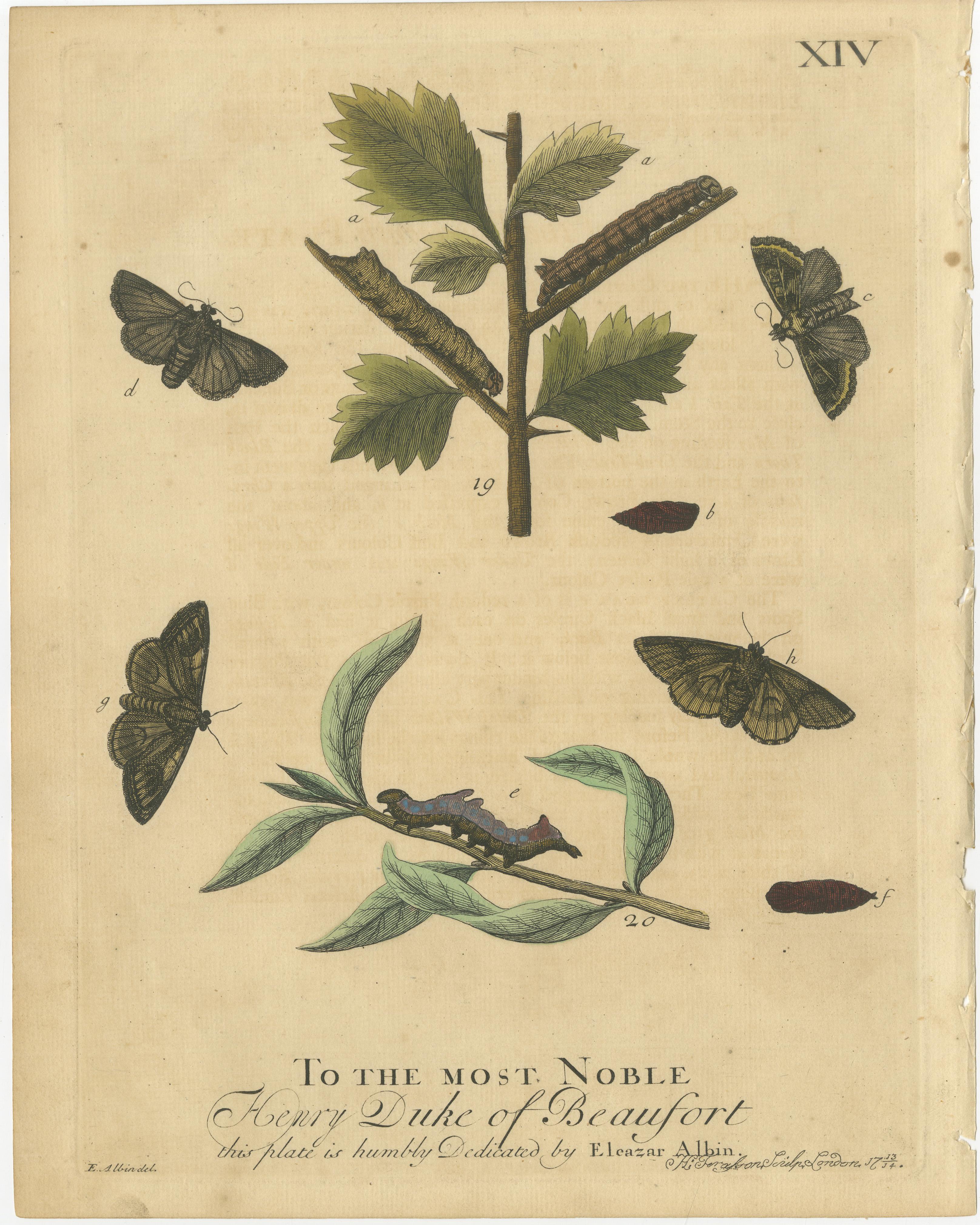
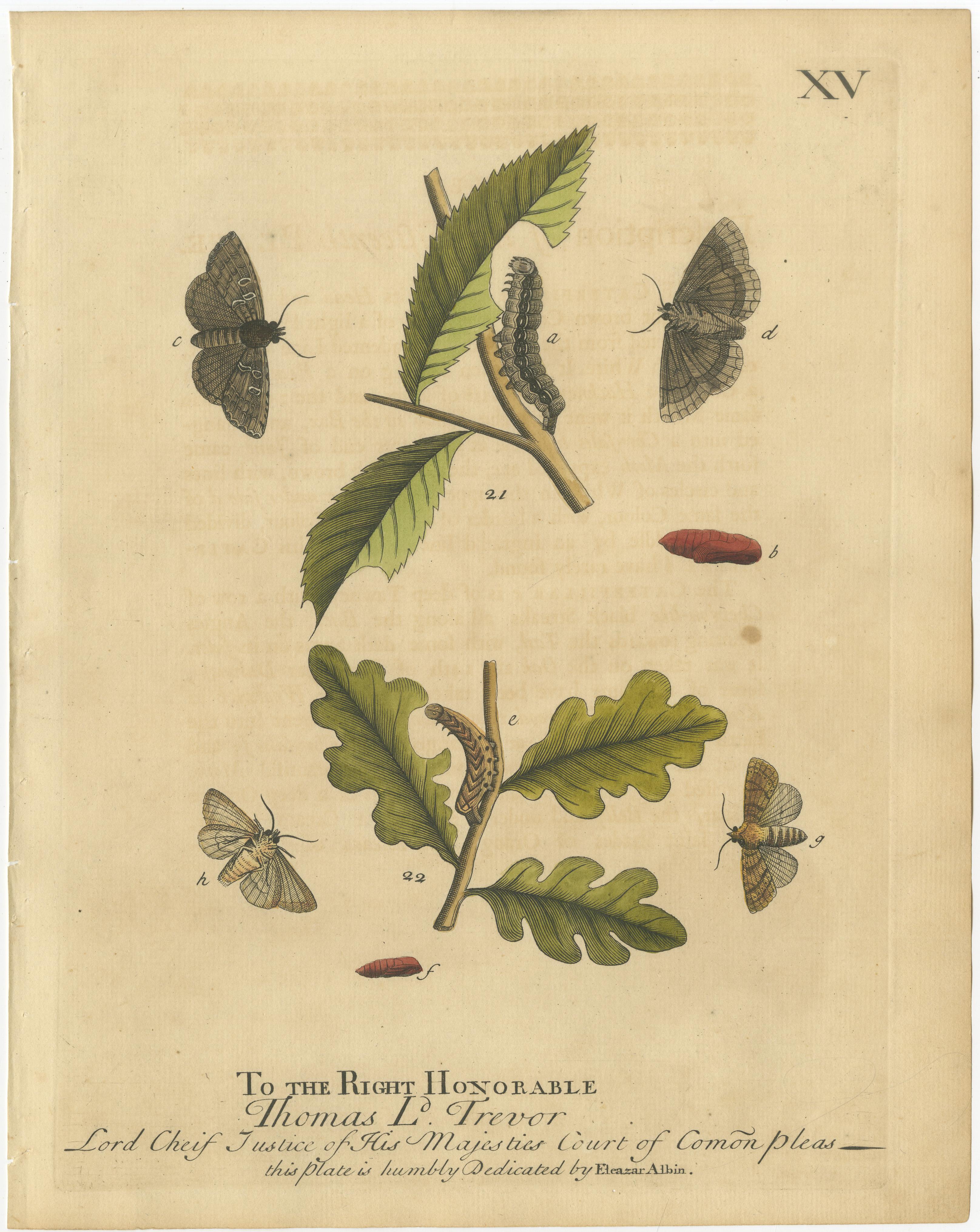
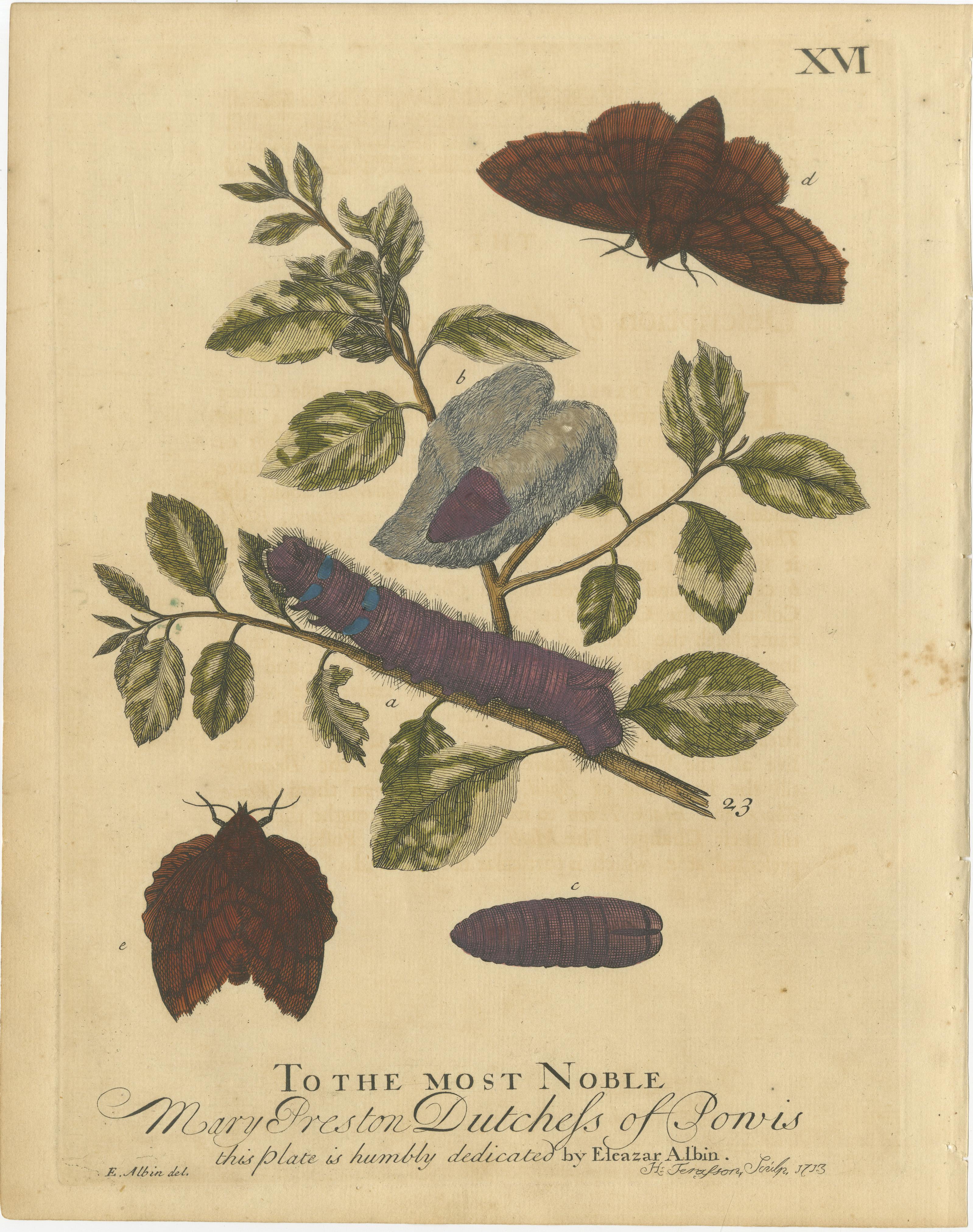
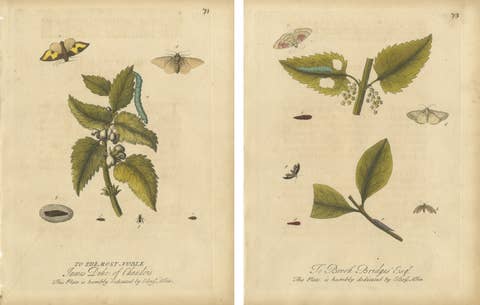
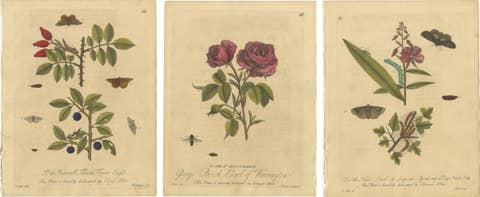
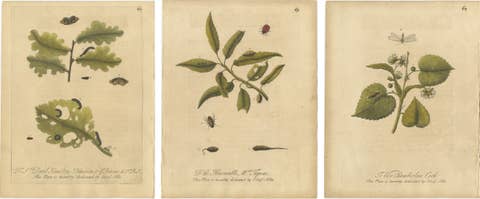
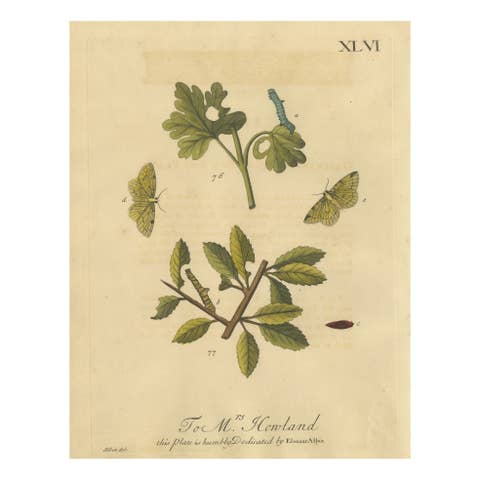
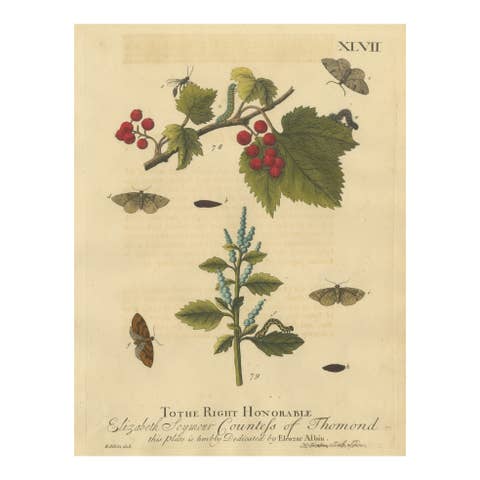
This original early 18th-century set of four hand-colored engraved plates comes from A Natural History of English Insects, written, illustrated, engraved, and exactly colored by Eleazar Albin and published in London in 1720. The plates are numbered XIII–XVI and depict a varied group of English moths shown together with their caterpillars, chrysalides, and host plants, illustrating successive stages of transformation with clarity and restraint.
The insects illustrated include well-known British species such as the Buff-tip Moth, Winter Moth, and closely related nocturnal moths associated with deciduous trees and shrubs. Several plates emphasize the caterpillar stage, shown feeding on leaves, while others present adult moths in flight or at rest. Chrysalides are carefully included to complete the life cycle, reflecting Albin’s systematic approach to natural history.
These plates exemplify Albin’s ability to combine scientific accuracy with decorative balance. The compositions are open and uncluttered, allowing each insect and botanical element to be studied individually while maintaining a harmonious overall arrangement. The subdued yet confident hand coloring enhances the engraved line and gives the plates a calm, timeless presence.
Offered together as four consecutive plates, this set preserves the original sequence of the book and forms a cohesive group well suited to collectors of early entomology, British natural history, or interior designers seeking authentic early 18th-century works with subtle color and strong visual structure.
Condition Light overall toning consistent with early 18th-century paper. Hand coloring remains clear and well defined. Minor scattered spotting and gentle age wear. Overall very good condition for prints of this age.
Framing tips These plates work well in dark wood or black frames with wide cream or soft off-white mats. Displayed together, they create a refined and scholarly natural history presentation.
Technique: Copper engraving with original hand coloring Maker: Eleazar Albin, London, 1720