About this sheet
Antique Botanical Insect Engravings with Caterpillars and Ladybirds — Albin 1720
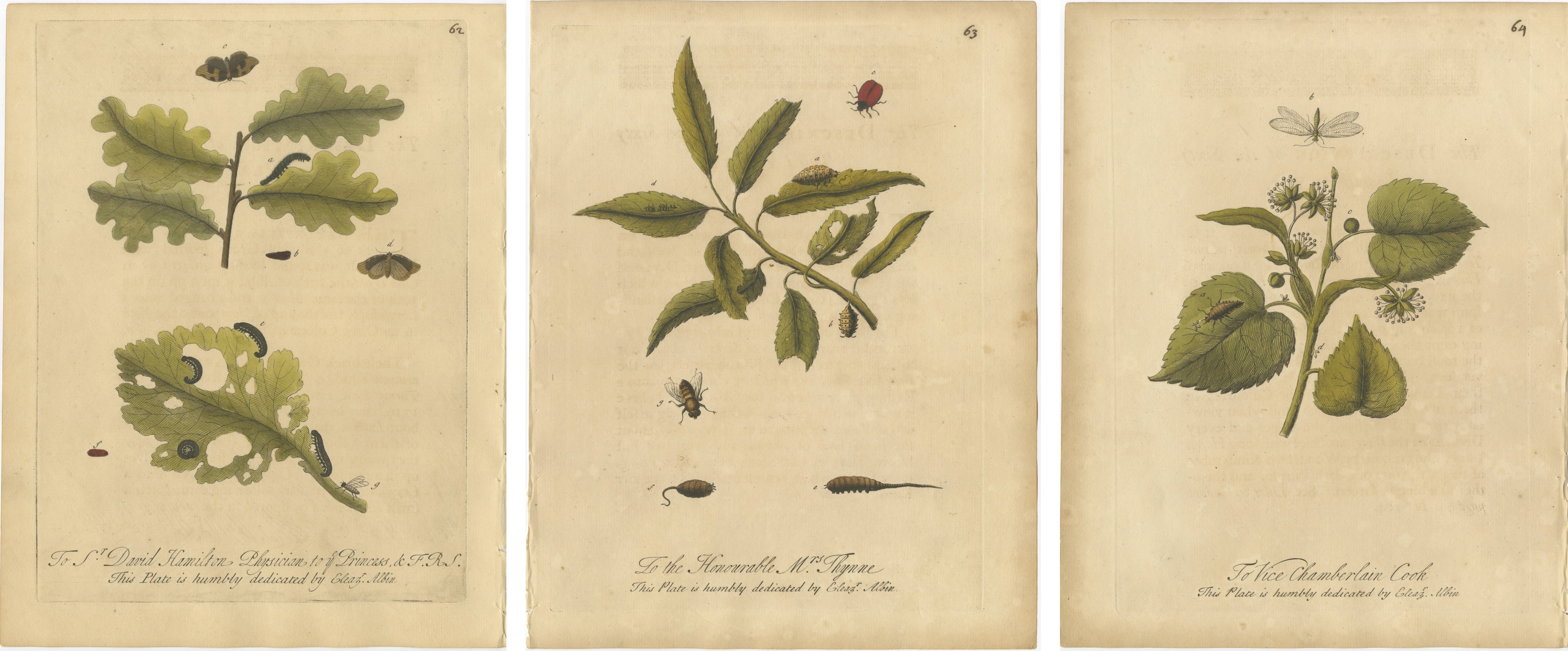
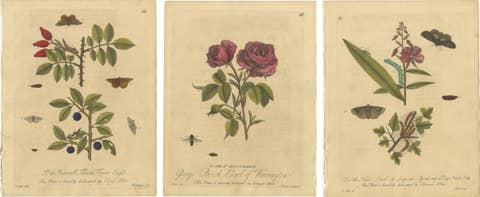
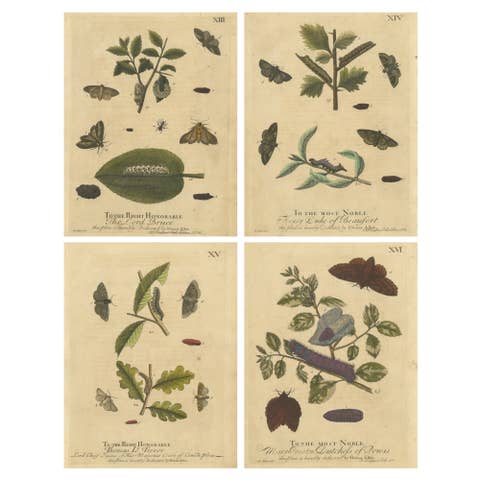
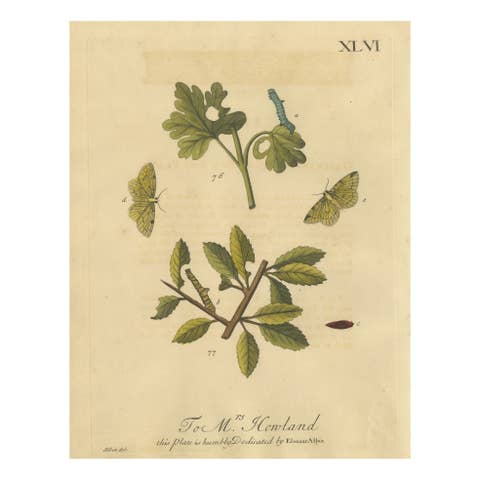
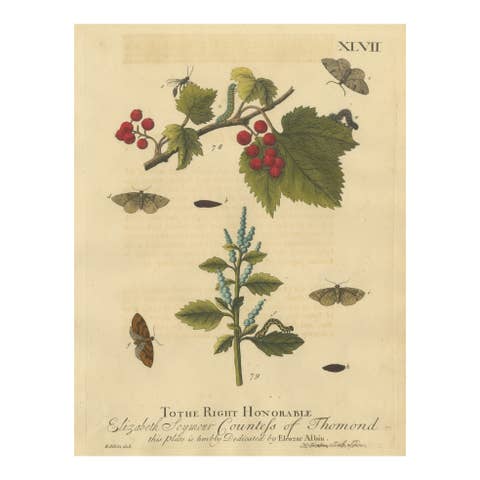
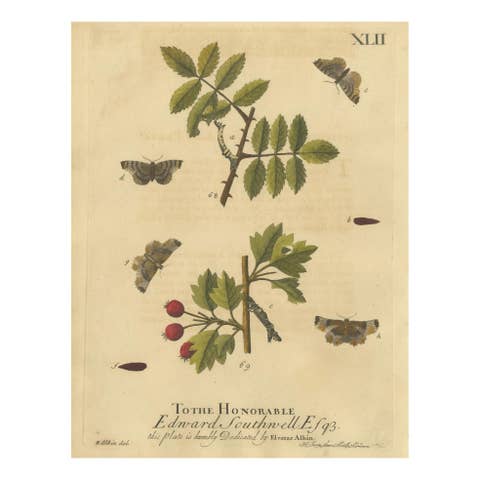
This attractive decorative set of three hand-colored copper engravings originates from the first edition of A Natural History of English Insects, published in London in 1720 by the English naturalist and illustrator Eleazar Albin. The work is regarded as one of the earliest systematic illustrated studies of British insects and represents an important milestone in the development of entomology during the early Enlightenment. Albin’s engravings combine scientific observation with a refined decorative style, depicting insects together with the plants that sustain them.
Each plate presents insects at different stages of development—caterpillar, chrysalis, and adult—placed in direct relation to their host plants. This ecological approach was innovative for the period and reflects the growing scientific interest in life cycles and the relationships between species and their environments.
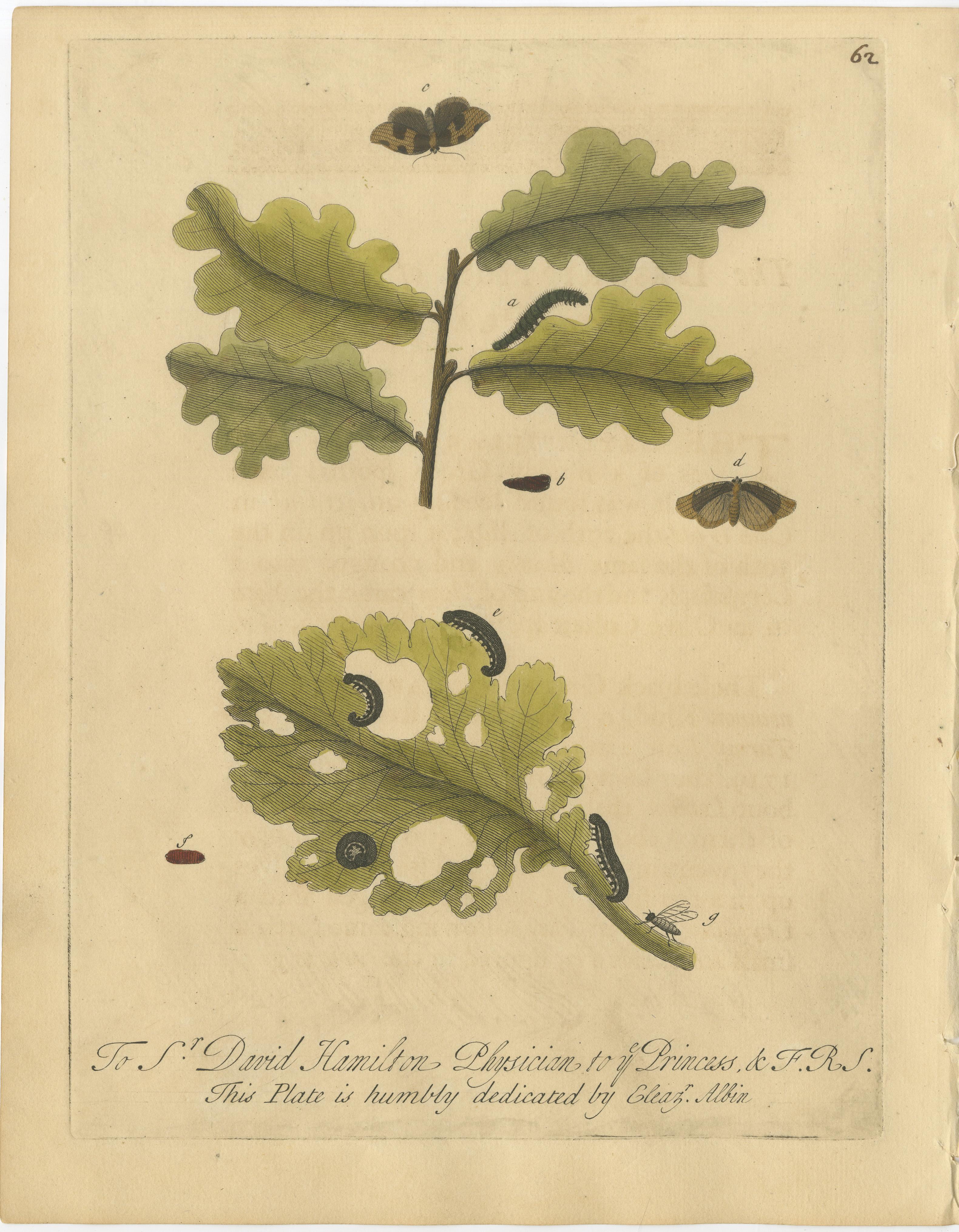
The first plate shows several caterpillars feeding on oak leaves (Quercus species). The composition includes multiple stages of development including caterpillars, chrysalis, and adult moths. Albin carefully records the characteristic feeding patterns in the leaves, illustrating the interaction between insect and plant.
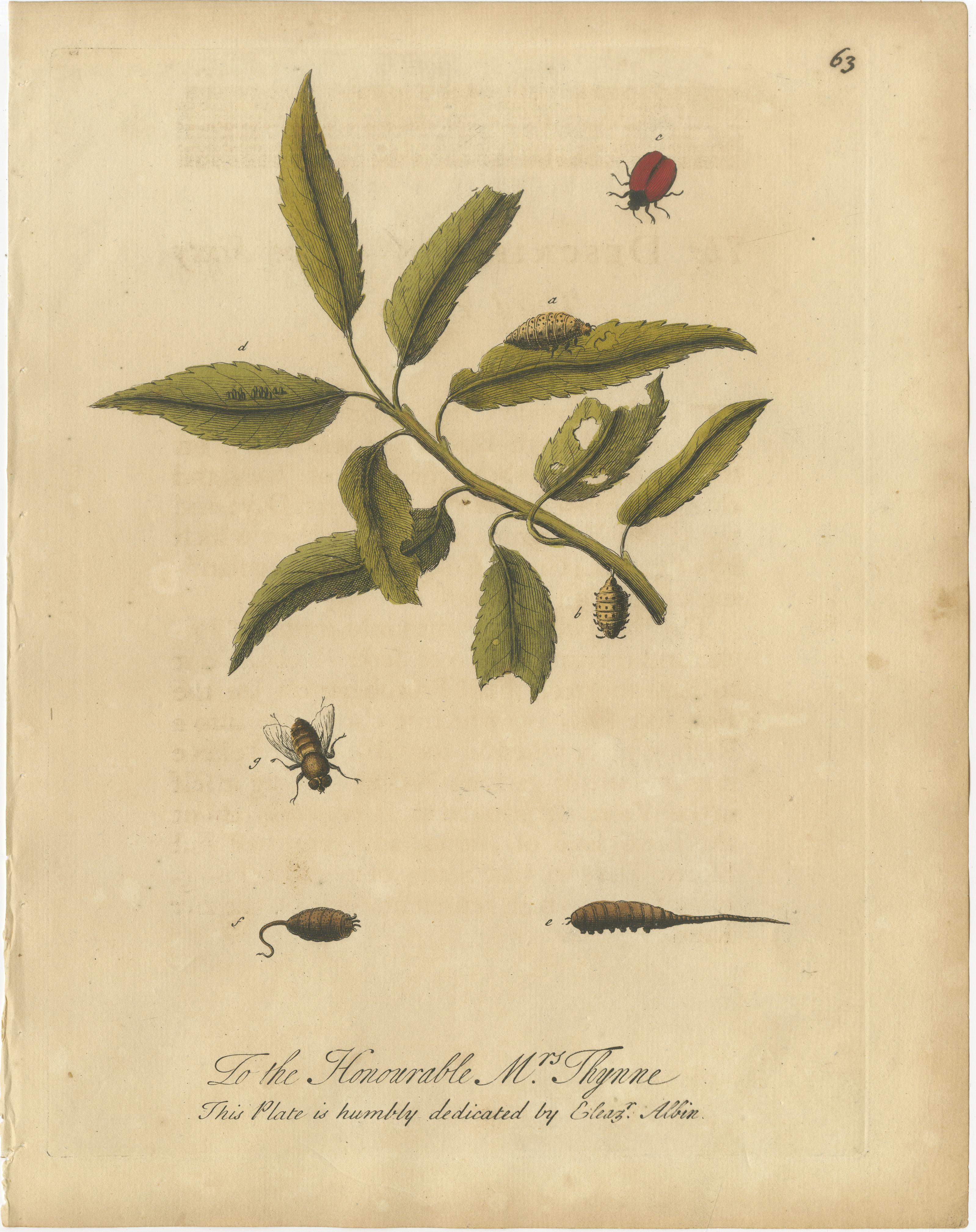
The second plate features insects associated with a slender-leaved shrub or small tree branch. Caterpillars appear feeding on the foliage while nearby are shown larval stages and small flying insects. A red ladybird beetle (Coccinellidae) appears near the upper part of the composition, adding a vivid accent to the botanical scene.
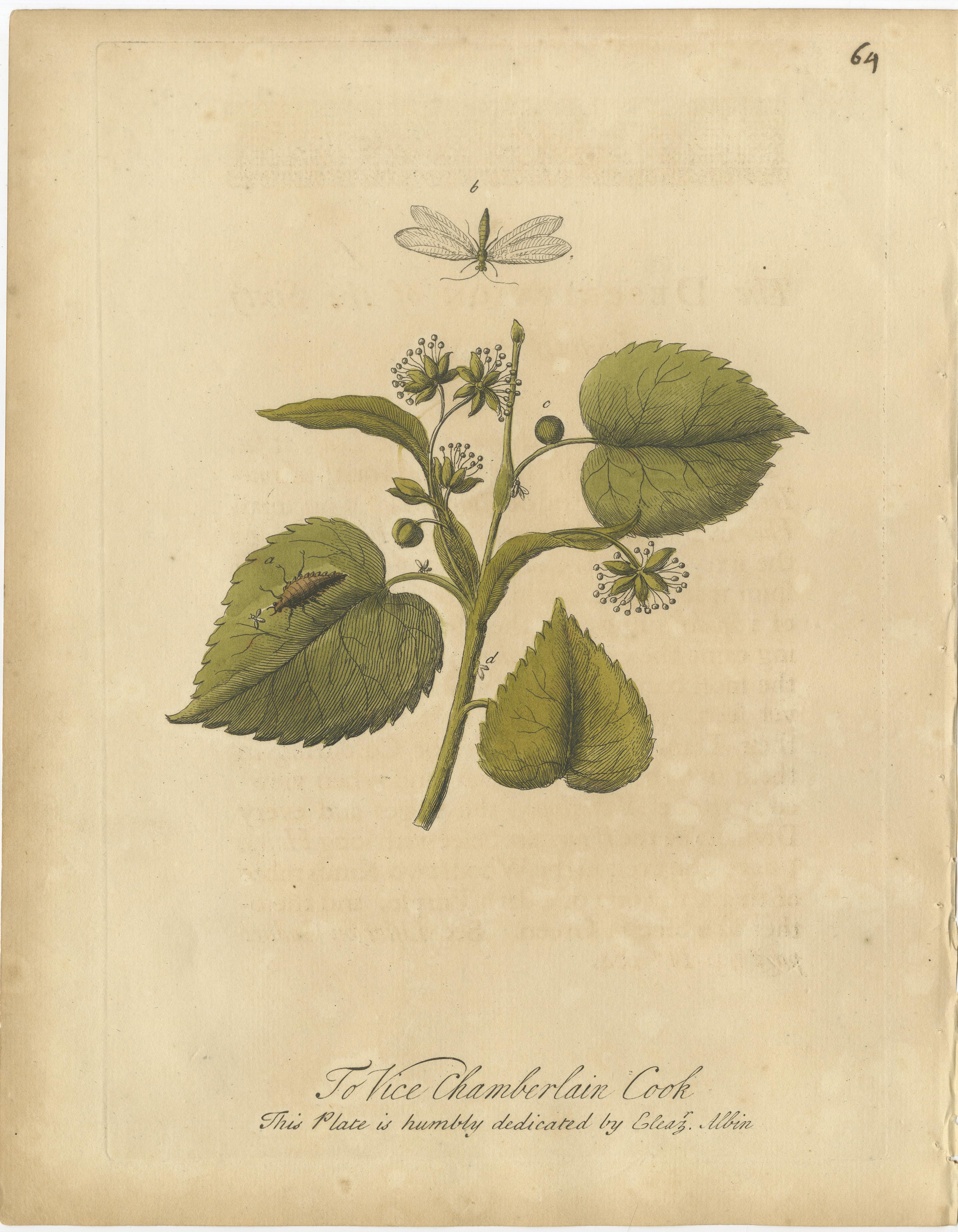
The third plate depicts a flowering plant accompanied by a dragonfly and a caterpillar feeding on one of the leaves. The delicate flowers and rounded leaves create a balanced composition typical of Albin’s natural history illustrations, combining botanical detail with insect study.
At the lower margin of each sheet appears an engraved dedication, a characteristic feature of Albin’s publication reflecting the Enlightenment-era system of patronage that supported scientific publishing.
The plates are dedicated respectively to:
Sir David Hamilton — Scottish physician who served as doctor to Queen Anne and was a Fellow of the Royal Society.
The Honourable Mr. Thynne — A member of the prominent Thynne family of Longleat, an influential English aristocratic family connected with politics and patronage.
Vice Chamberlain Cook — A court official who served in the royal household, holding the office of Vice Chamberlain.
Printed in London in 1720, these engravings represent first edition plates from one of the earliest illustrated surveys of British insect life. Albin’s work helped establish the visual tradition of entomological illustration and remains highly valued today both for its scientific importance and its decorative elegance. Sets such as this are particularly sought after by collectors and interior designers for their harmonious combination of botanical and zoological imagery.
Condition report: Good condition for early 18th-century natural history engravings. Light age toning consistent with period paper. Minor edge wear and occasional faint marks. Plate impressions remain clear.
Framing tips: These prints display beautifully as a set of three. Dark walnut or black frames with generous ivory or warm cream matting enhance the delicate hand coloring and complement the warm tone of the historic paper. The group works especially well in studies, libraries, or interiors with natural history themes.
Technique: Copper engraving with original hand coloring
Maker: Eleazar Albin, London, 1720