About this sheet
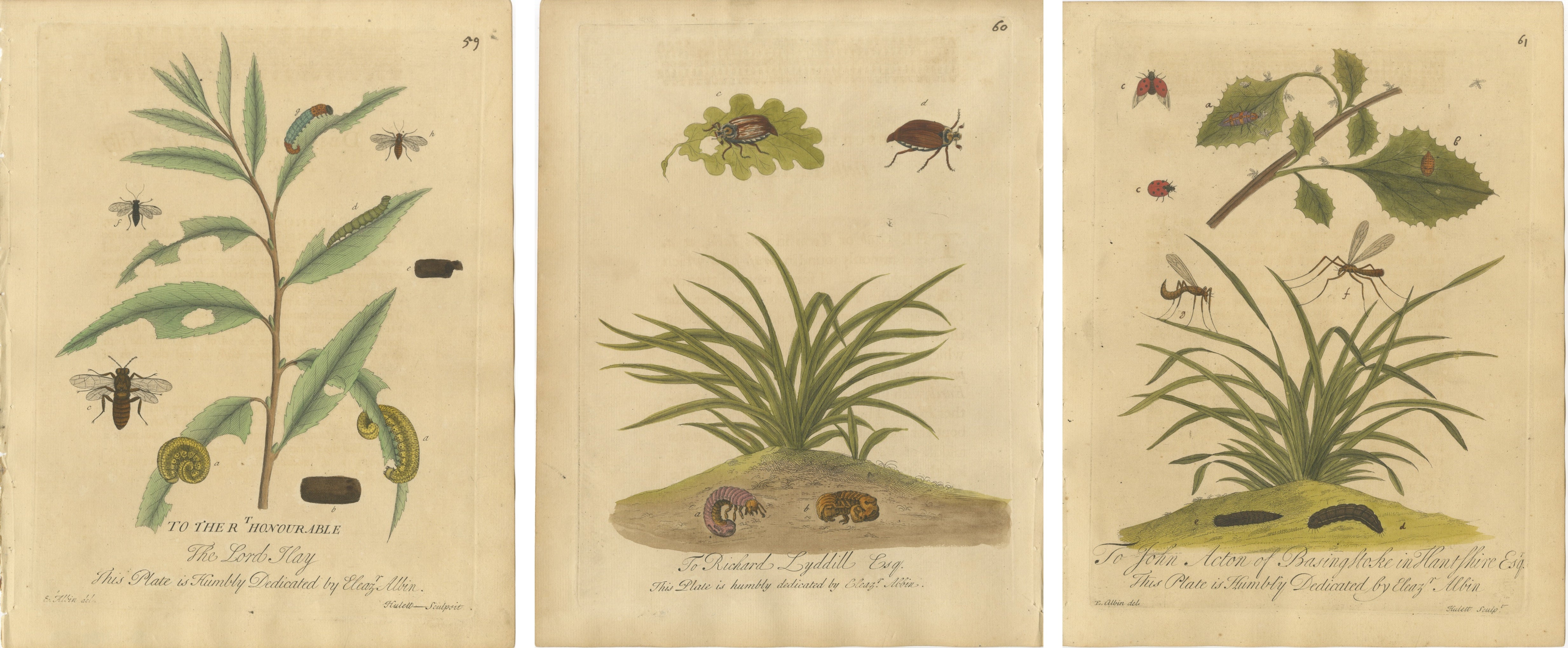
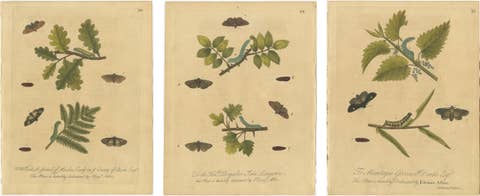
Decorative Set of Three Early Insect Engravings with Plants — Eleazar Albin 1720
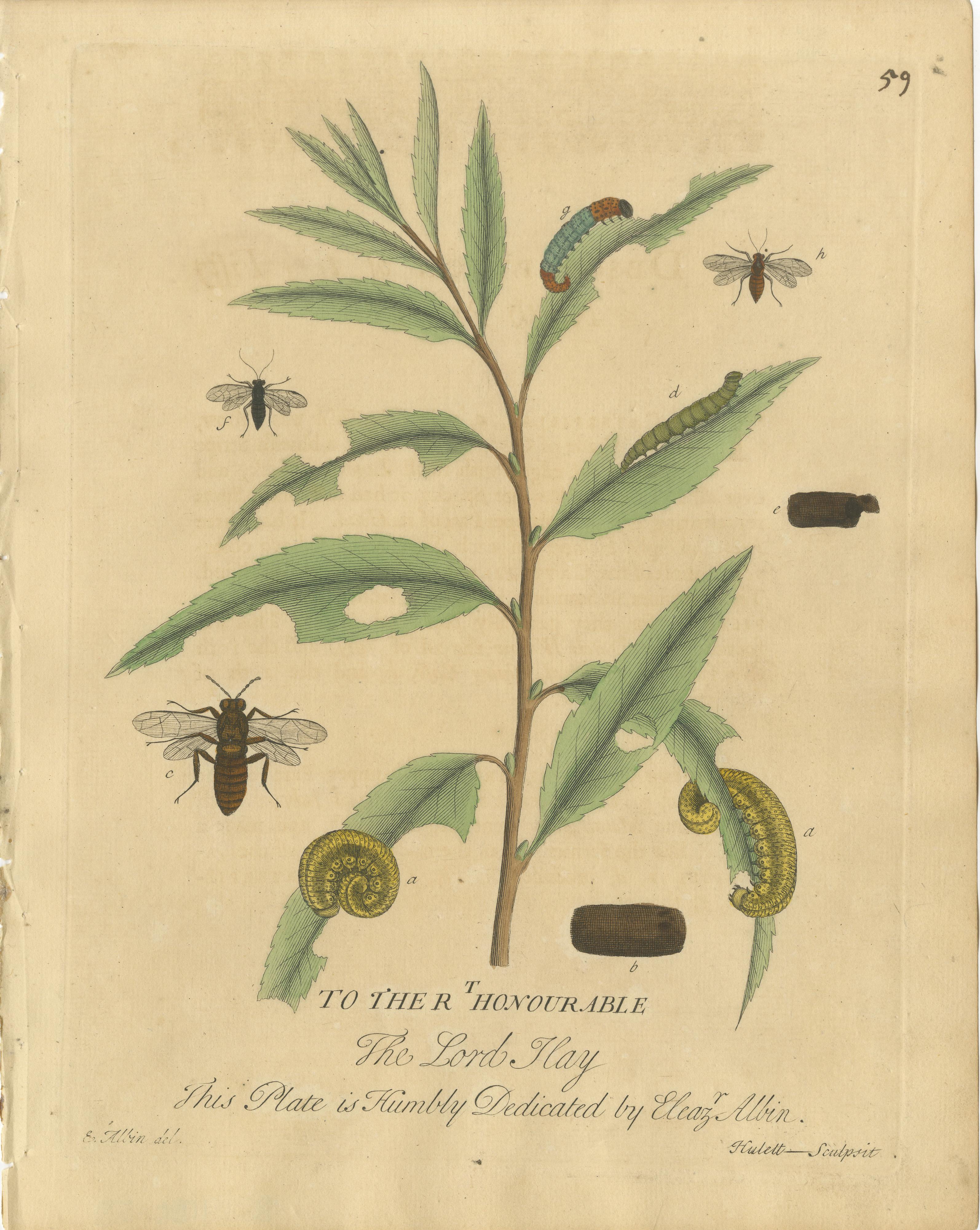
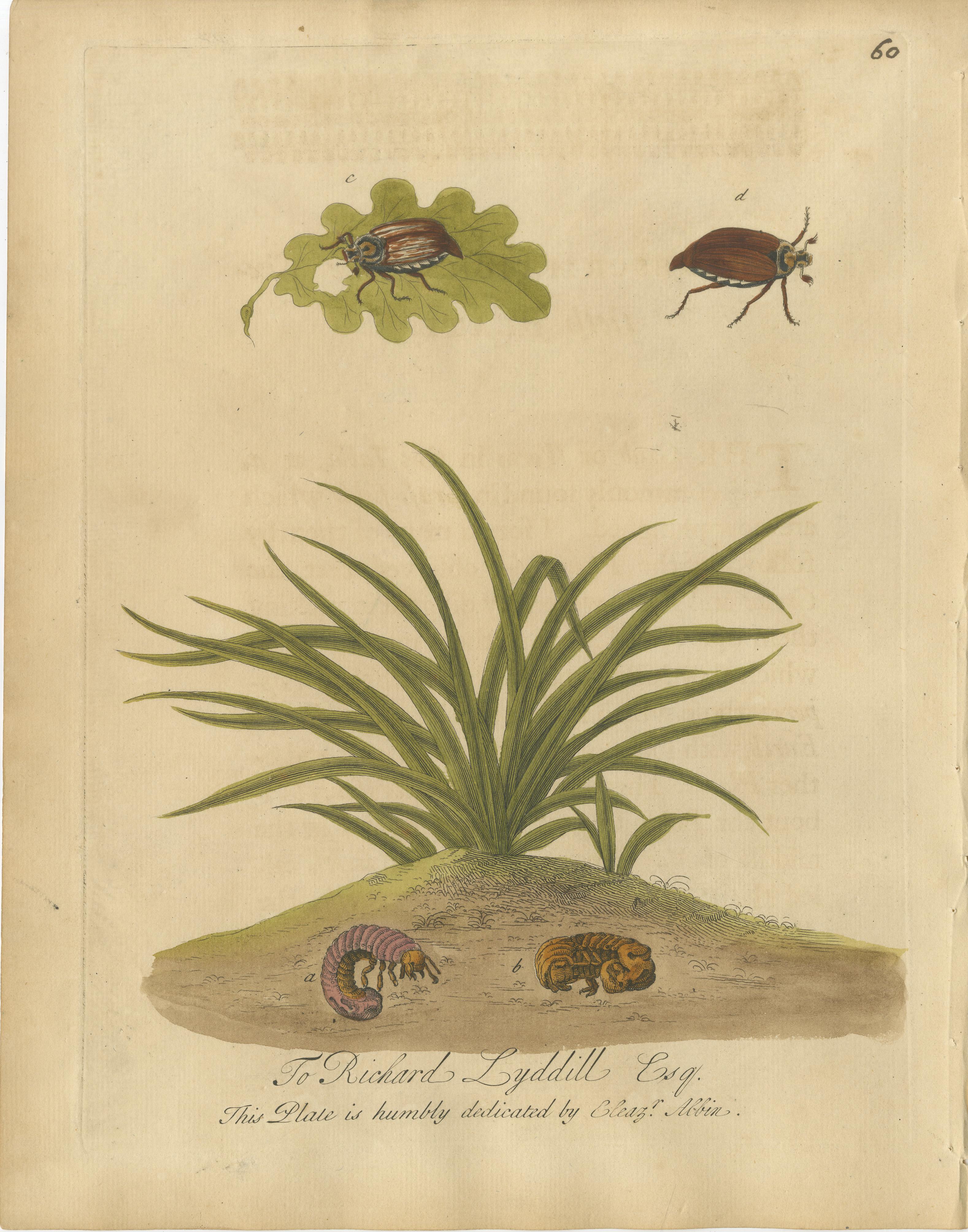
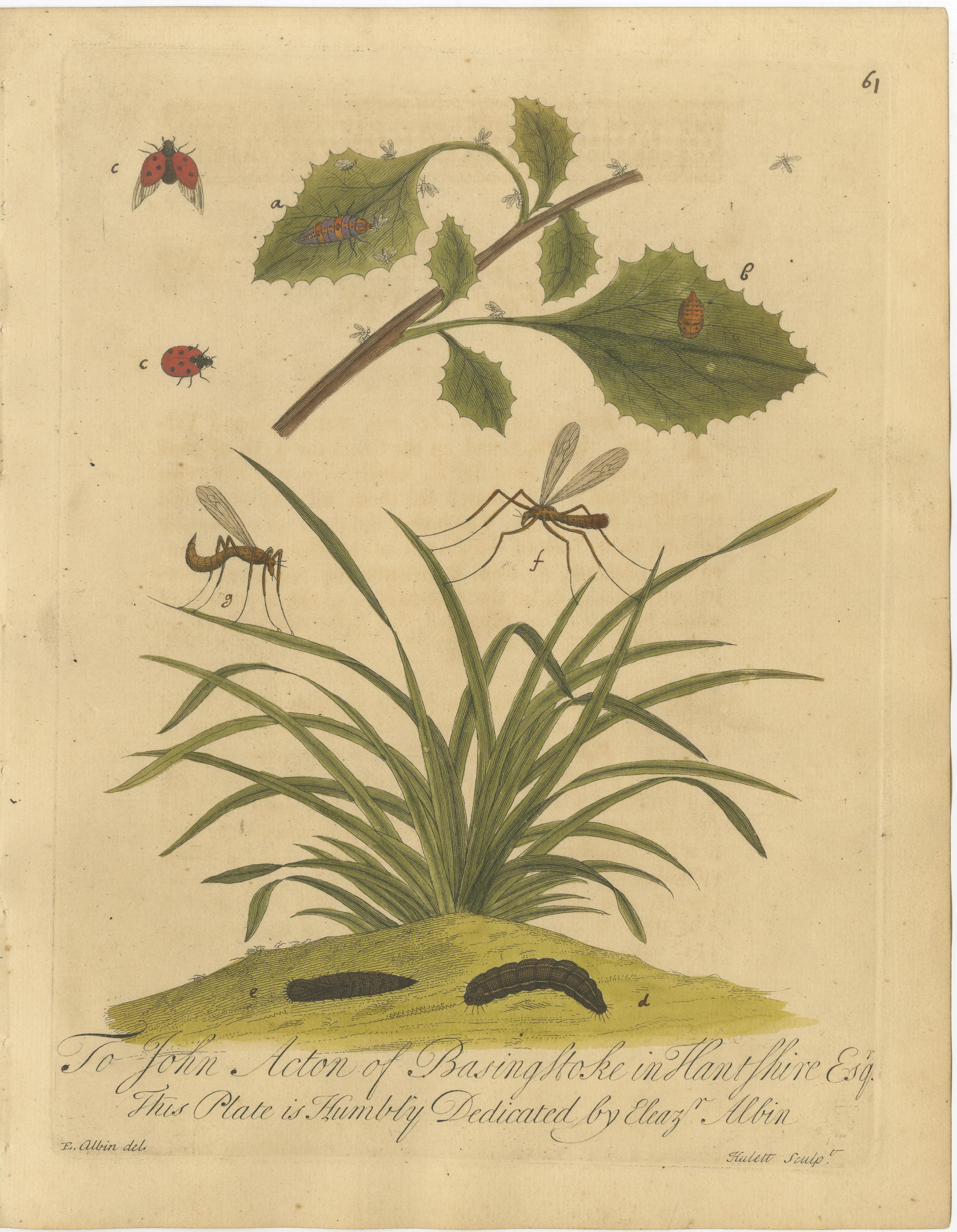
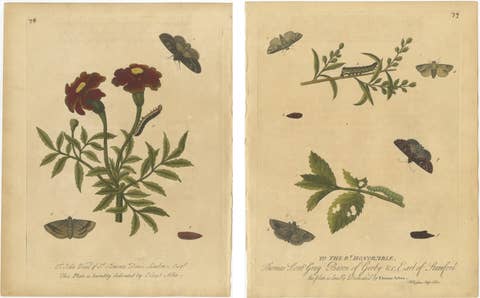
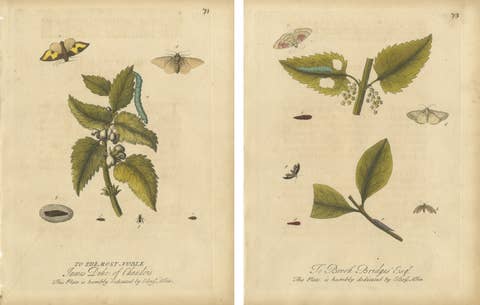
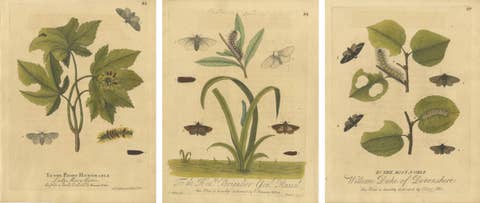
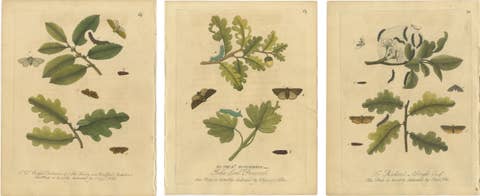
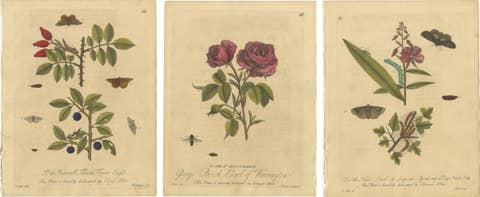
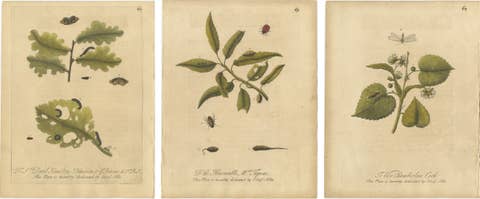
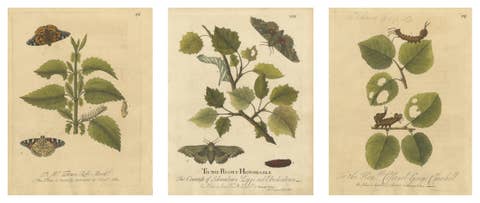
This decorative set of three hand-colored copper engravings originates from the first edition of A Natural History of English Insects, published in London in 1720 by the pioneering English naturalist and illustrator Eleazar Albin. The work is widely considered one of the earliest systematic illustrated studies of British insects and played an important role in the development of entomology during the early Enlightenment. Albin combined careful observation with refined artistic presentation, depicting insects together with the plants on which they live and feed.
These plates are characteristic of Albin’s style, presenting insects in various stages of development — larva, chrysalis, and adult — alongside their natural botanical environments. The elegant compositions create visually balanced natural-history scenes that are both scientifically informative and highly decorative.
The first plate illustrates several stages of a moth life cycle together with caterpillars feeding on a slender-leaved plant, likely a species of willow or related shrub. The plate includes the caterpillar, chrysalis, and adult moth, along with several small flying insects such as bees or wasps. This arrangement reflects Albin’s interest in presenting insect development within its ecological setting.
The second plate focuses on ground-dwelling insects and beetles associated with grasses. A cluster of grass-like plants rises from a small mound of earth beneath which several larvae or grubs are shown. Above the plant appear two beetles in adult form, illustrating the transformation from larva to adult.
The third plate depicts a lively composition of insects associated with broad leaves and grasses. Several ladybirds (ladybugs) are shown alongside a spider, a long-legged crane fly, and caterpillars feeding on the foliage. The plate beautifully captures the diversity of small creatures that inhabit a single plant environment.
At the foot of each sheet is an engraved dedication, a distinctive feature of Albin’s publication reflecting the Enlightenment-era patronage system that supported natural history publishing.
The three plates are dedicated respectively to:
Lord Hay — John Hay, 2nd Marquess of Tweeddale (1695–1762), a Scottish nobleman, soldier, and statesman who served as Secretary of State for Scotland.
Richard Lyddill, Esq. — A British gentleman and patron associated with London scientific and publishing circles in the early 18th century.
John Acton of Basingstoke in Hampshire, Esq. — A member of the Acton family of Hampshire, a landed gentry family active in local government and public life.
Printed in London in 1720, these engravings represent first edition plates from one of the earliest illustrated surveys of British insect life. Albin’s work helped establish the visual tradition of entomological illustration and remains highly valued today both for its scientific significance and for its refined decorative quality. Sets such as this are particularly appealing to collectors and interior designers for their harmonious balance of botanical and zoological subjects.
Condition report: Good condition for early 18th-century natural history engravings. Light age toning consistent with period paper. Minor edge wear and occasional faint marks. Plate impressions remain clear and well defined.
Framing tips: These prints work beautifully as a set of three. Dark walnut or black frames with generous ivory or warm cream matting highlight the delicate hand coloring and complement the warm tone of the historic paper. Displayed together, the set creates an elegant natural history grouping suitable for studies, libraries, or classic interiors.