About this sheet
English Moths and Caterpillars on Hawthorn and Flowering Plant, Antique Print 1720
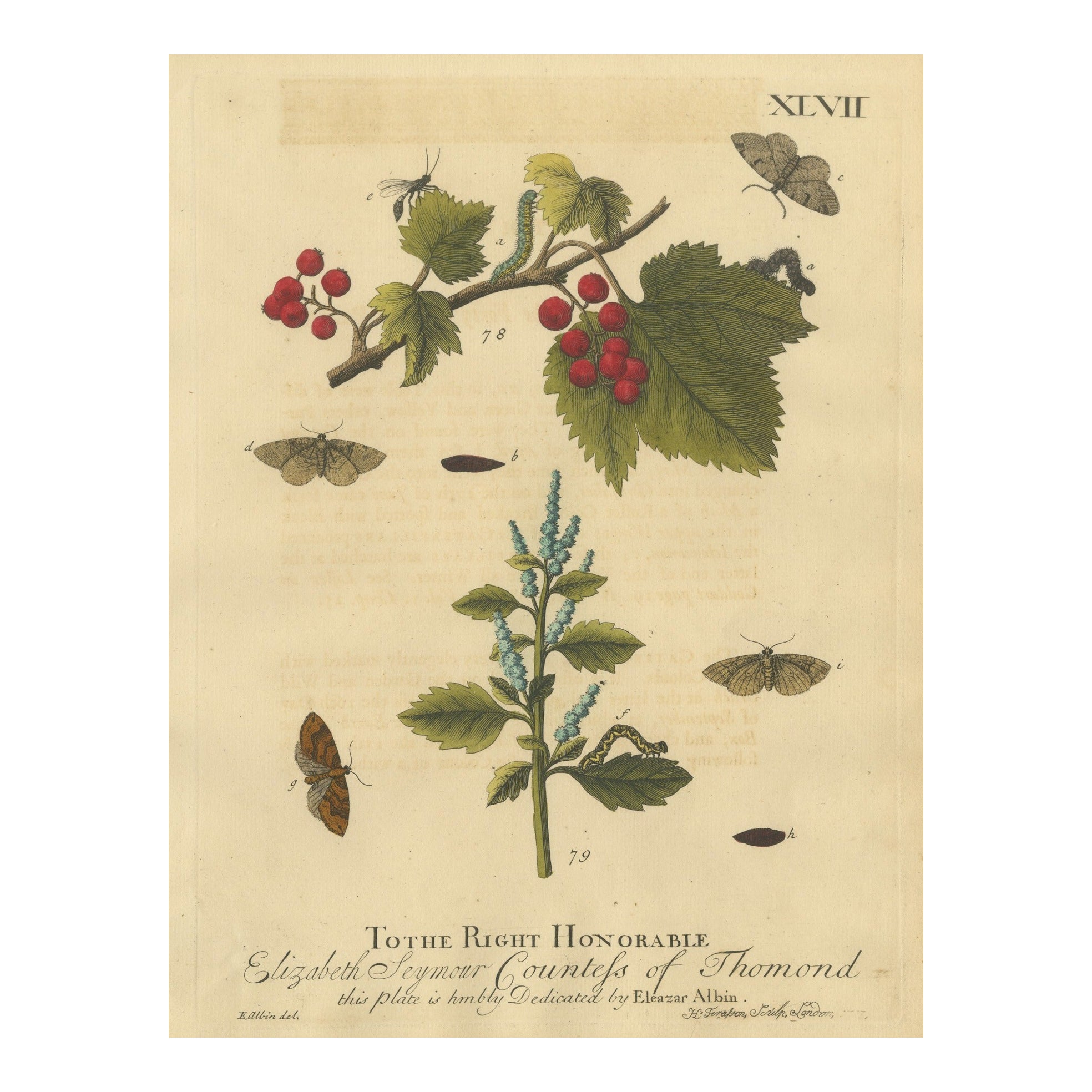
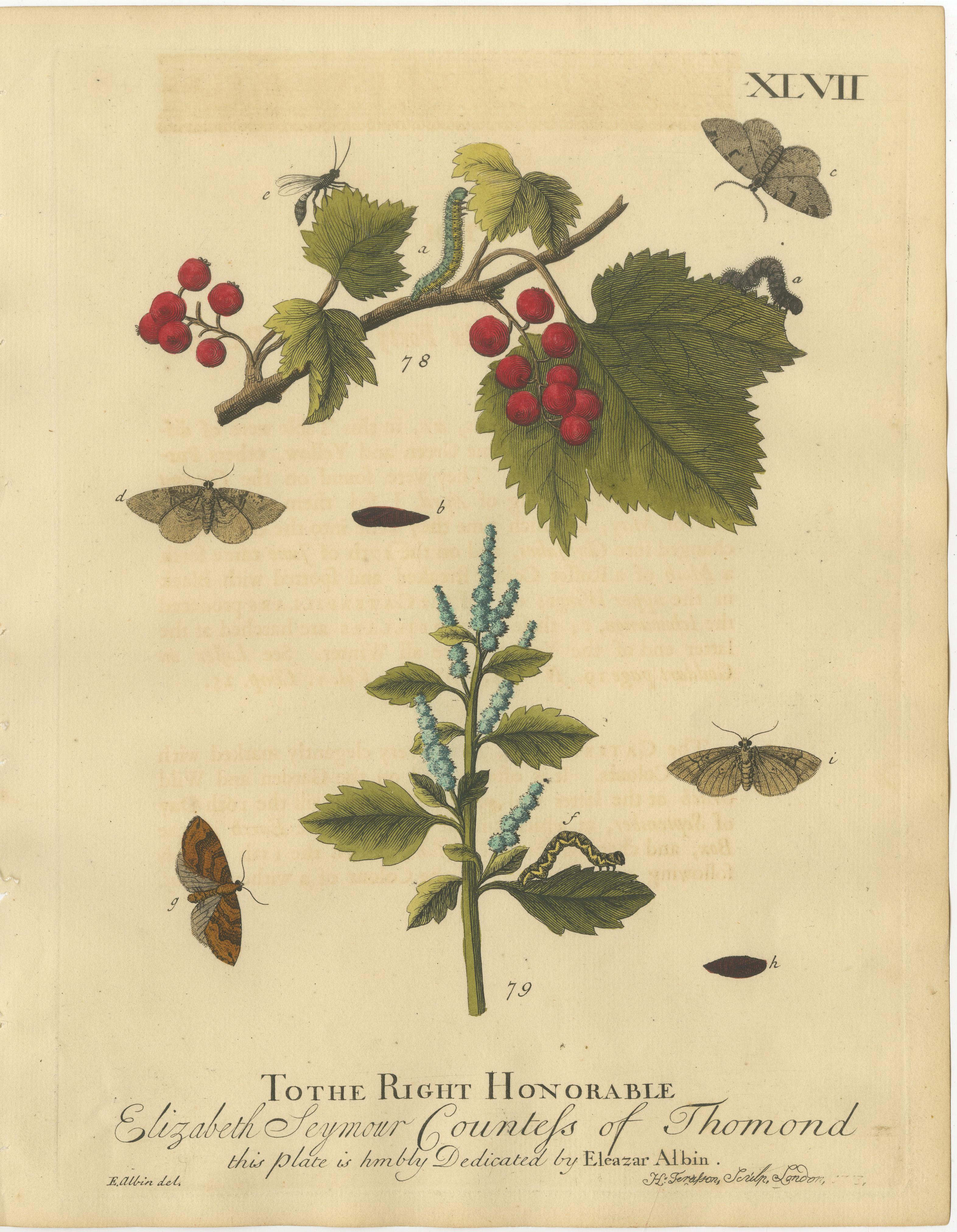
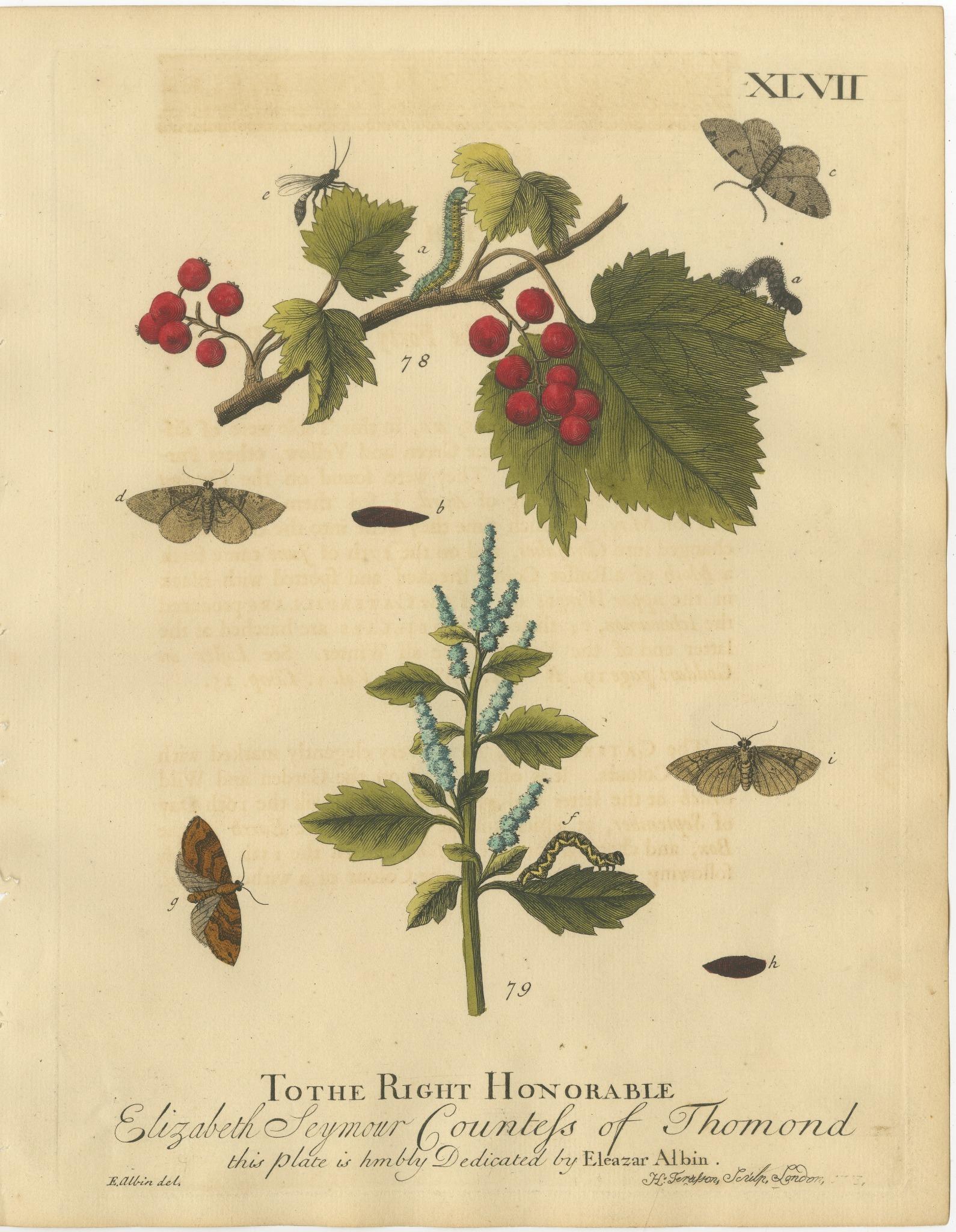
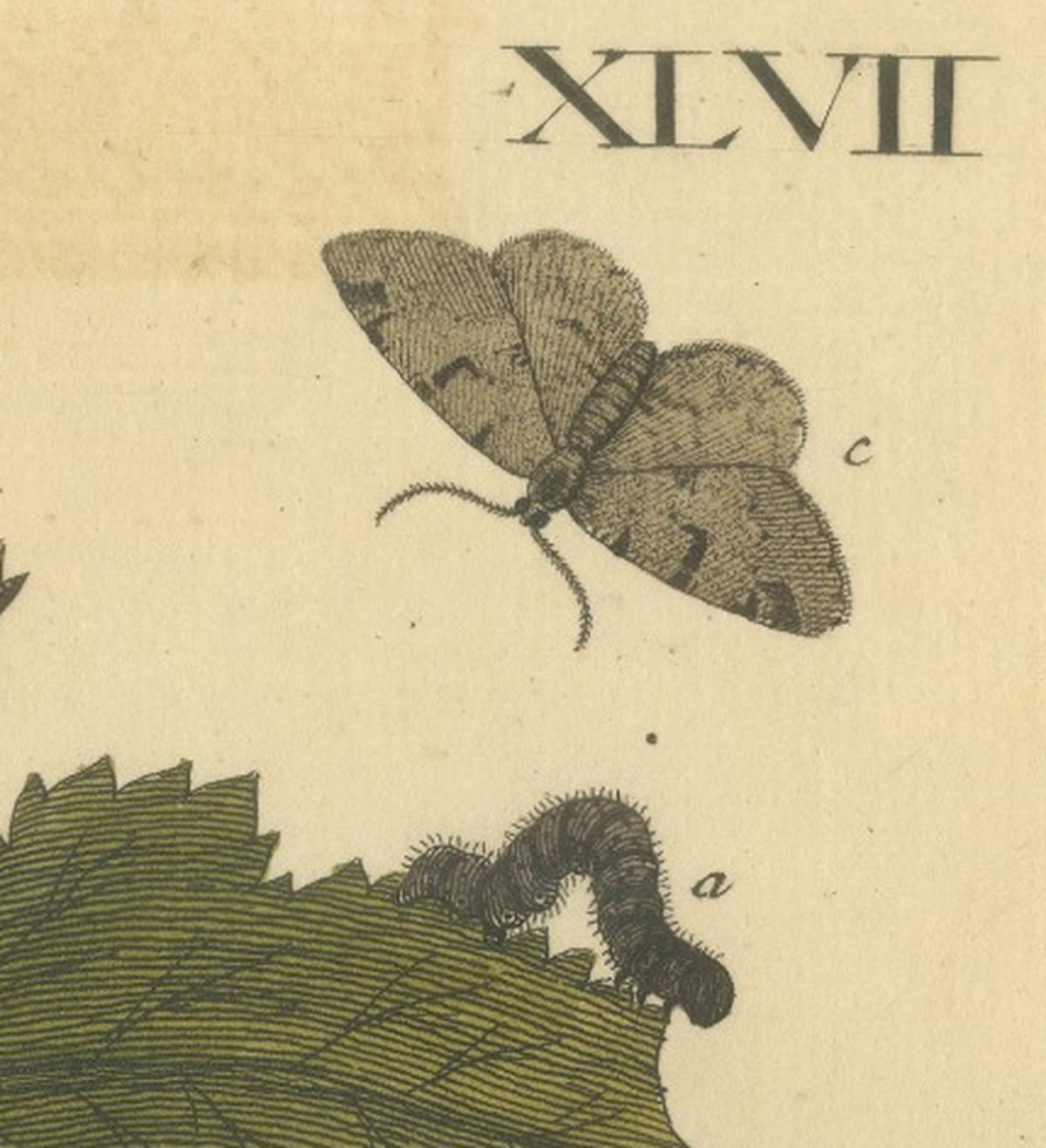
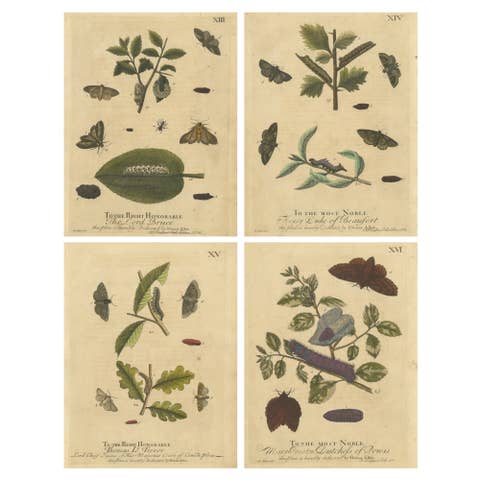
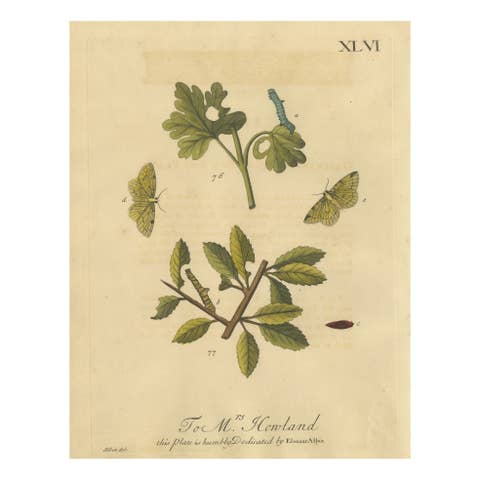
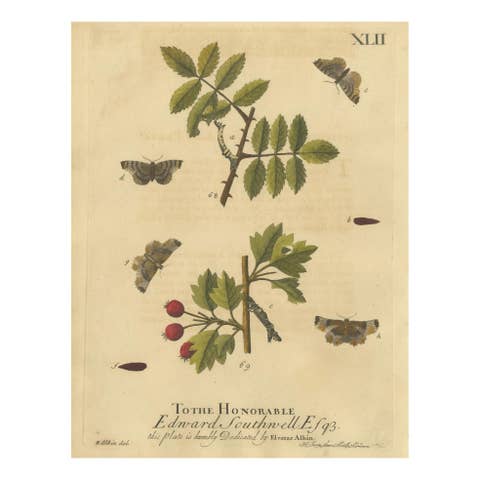
Published in London in 1720, this original hand-colored copper engraving forms part of Eleazar Albin’s celebrated work A Natural History of English Insects, one of the foundational publications of early British entomology. The plate illustrates moths, caterpillars, and pupae arranged around two host plants, combining botanical accuracy with close observation of insect life cycles.
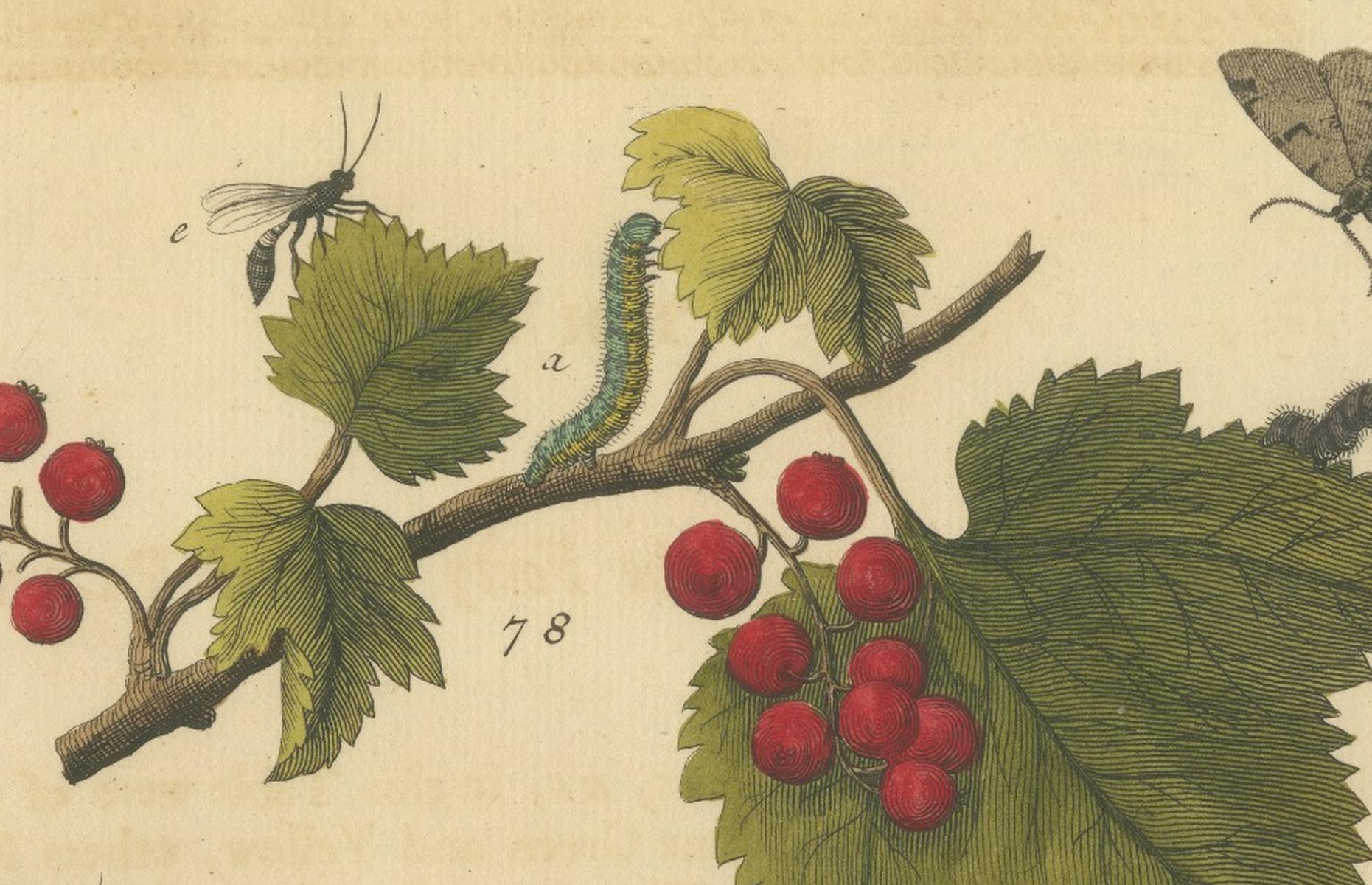
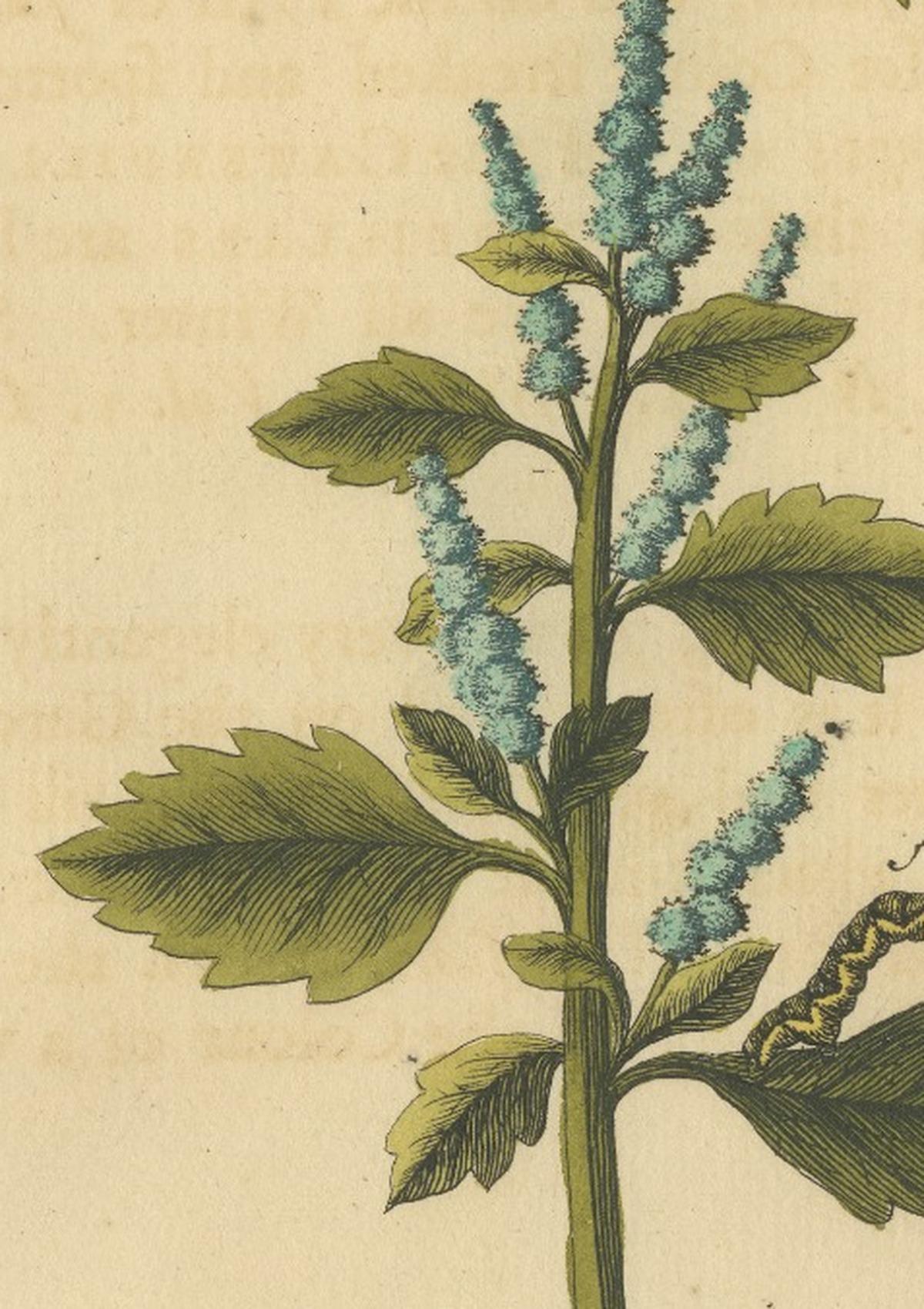
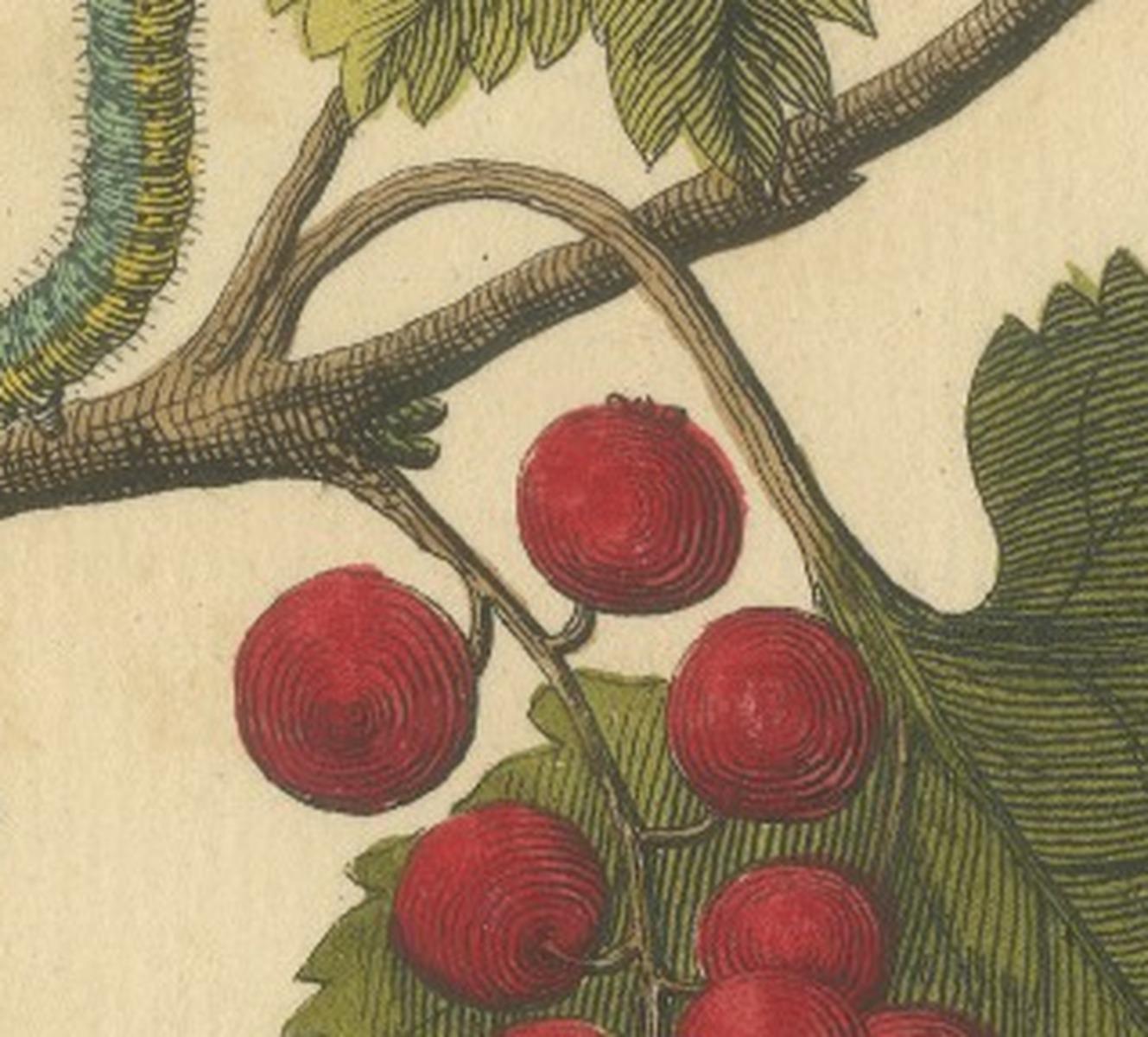
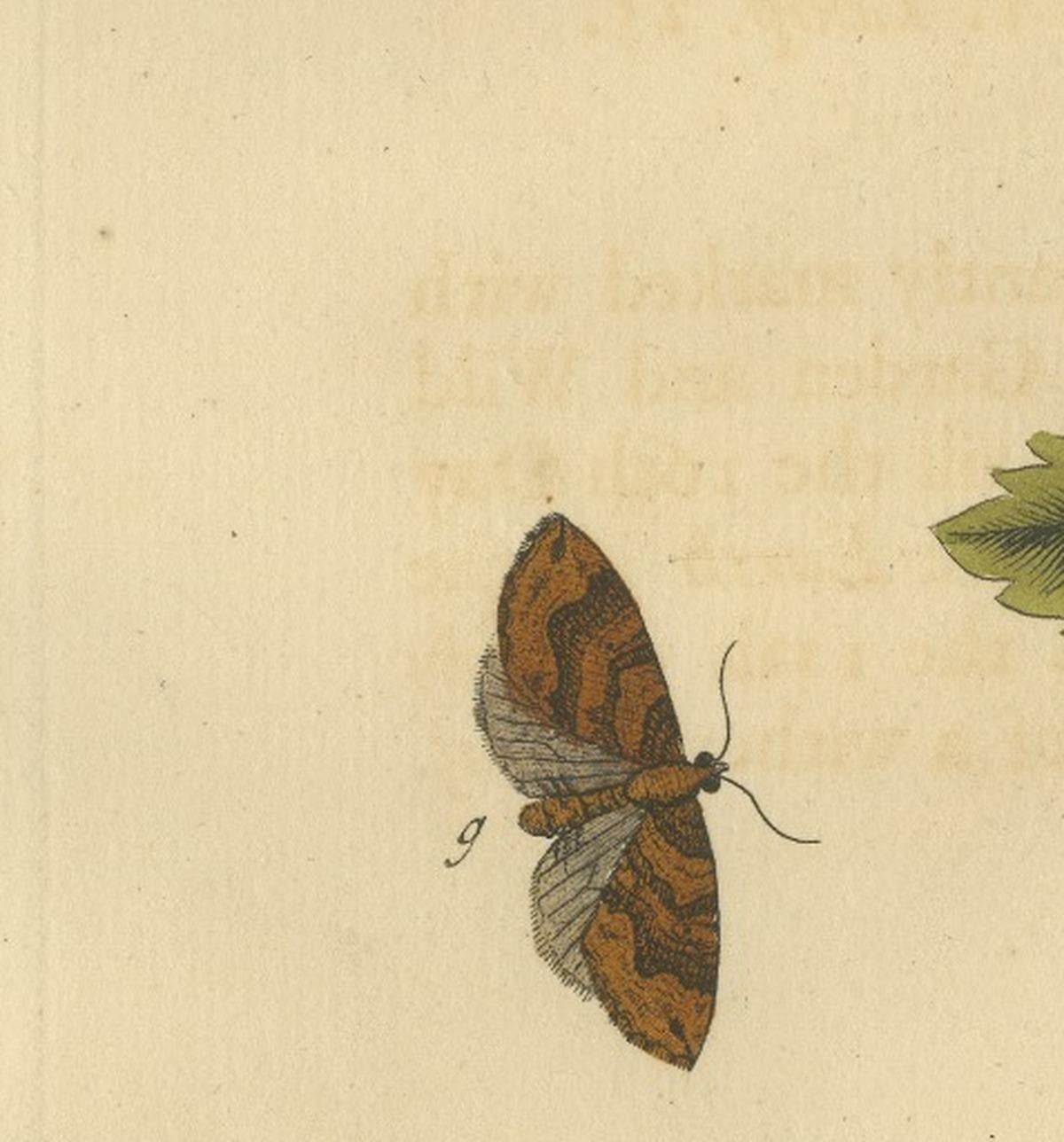
The upper section shows insects associated with hawthorn, including caterpillars feeding among leaves and berries, while winged moths are depicted in various stages and poses. Below, a second plant with blue flowering spikes is shown with additional larvae and adult moths, presenting a comparative view of species linked to different host plants. This method of arrangement is characteristic of Albin’s approach, balancing scientific clarity with visual harmony.
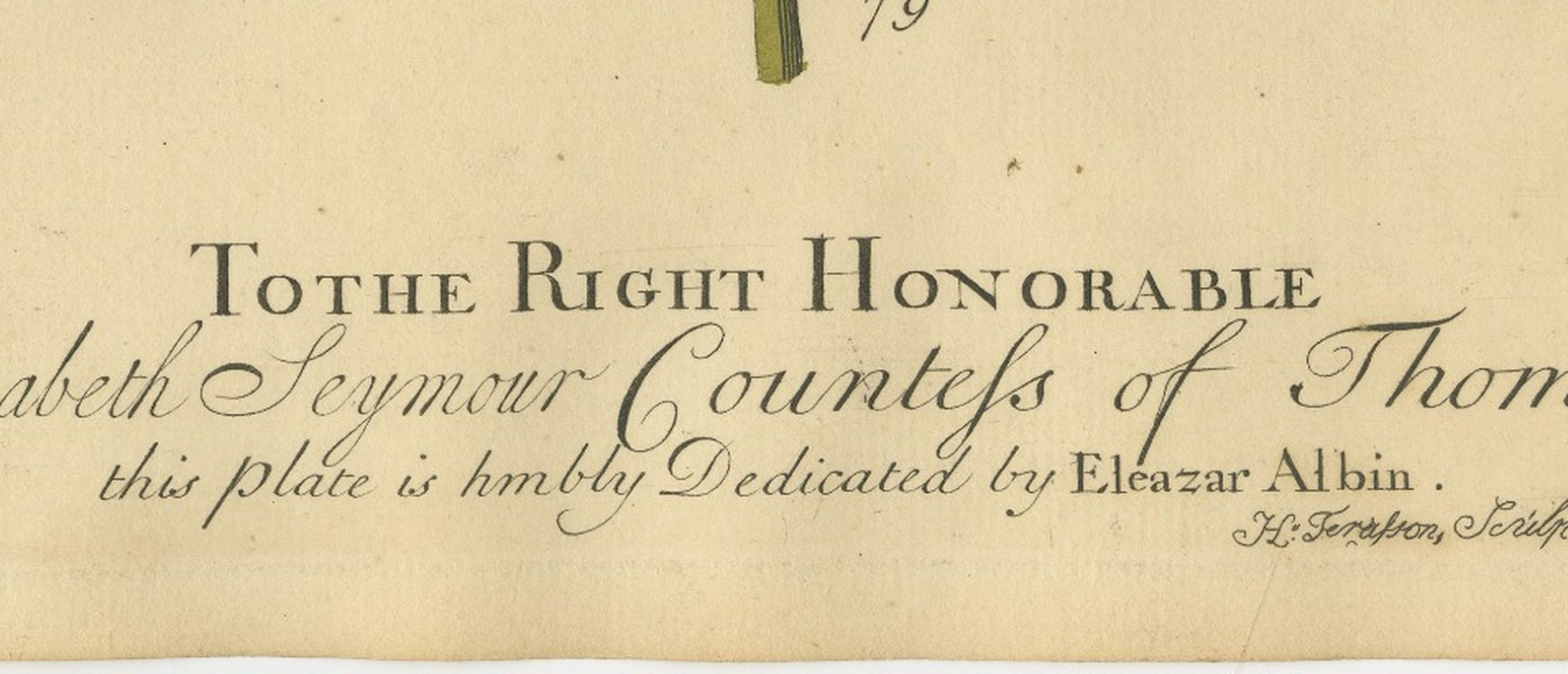
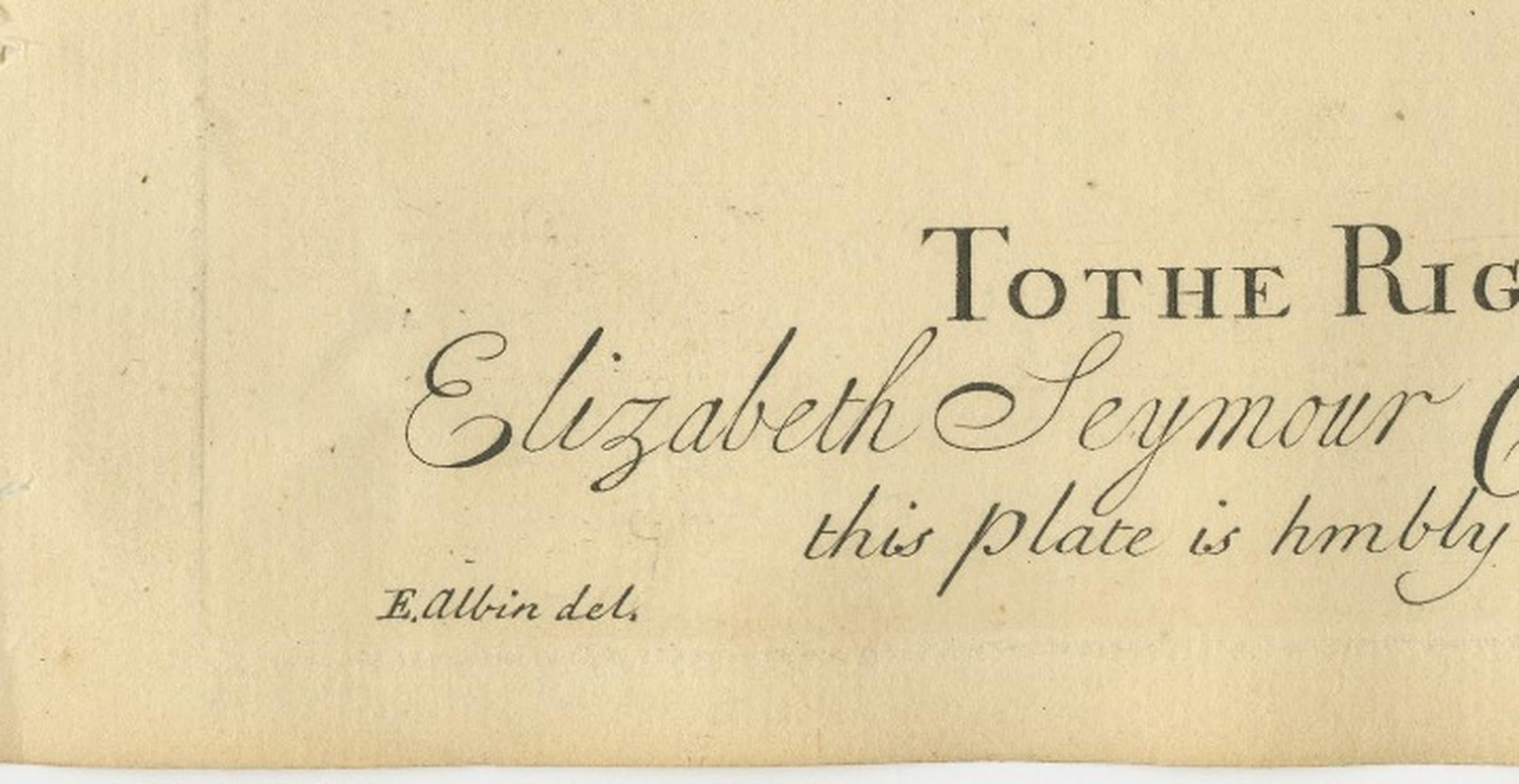
The plate is dedicated “To the Right Honorable Elizabeth Seymour Countess of Thomond,” reflecting the aristocratic patronage that supported natural history publishing in early 18th-century England. Such dedications underscore the social networks behind works of scientific illustration during the Georgian period and enhance the historical significance of the sheet.
The engraving retains its original hand coloring, with rich reds in the berries, fresh green foliage, and delicately tinted insects. Fine engraved linework remains clearly visible throughout, giving the composition both documentary value and strong decorative appeal. Albin’s plates are highly regarded by collectors of natural history, entomology, and botanical illustration, as well as by interior designers seeking authentic 18th-century decorative prints.
Condition
Light to moderate age-related toning consistent with age. Minor edge wear from original binding. The impression is strong and the hand coloring remains clear and well preserved.
Framing tips
Dark walnut or ebonized frames with an ivory or warm off-white mat emphasize the engraving’s antique character. For lighter interiors, natural oak or pale wood frames with museum-white matting work well. UV-protective glazing is recommended. Sold unframed.
Technique: Copper engraving with original hand coloring
Maker: Eleazar Albin, London, 1720