About this sheet
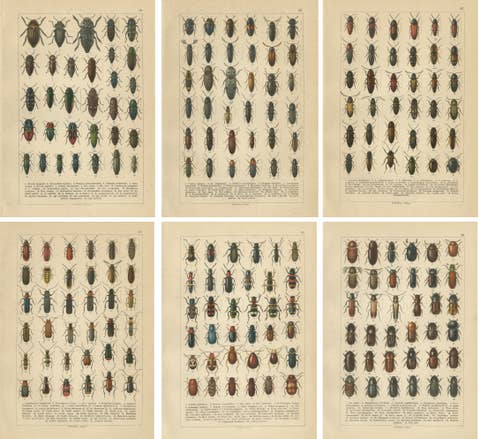
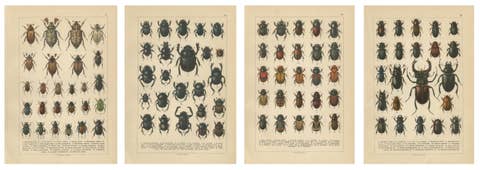
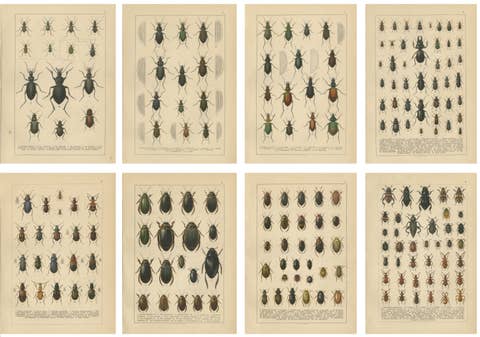
Antique Beetle Chromolithographs, European Species Plates 41–48, Calwer 1893
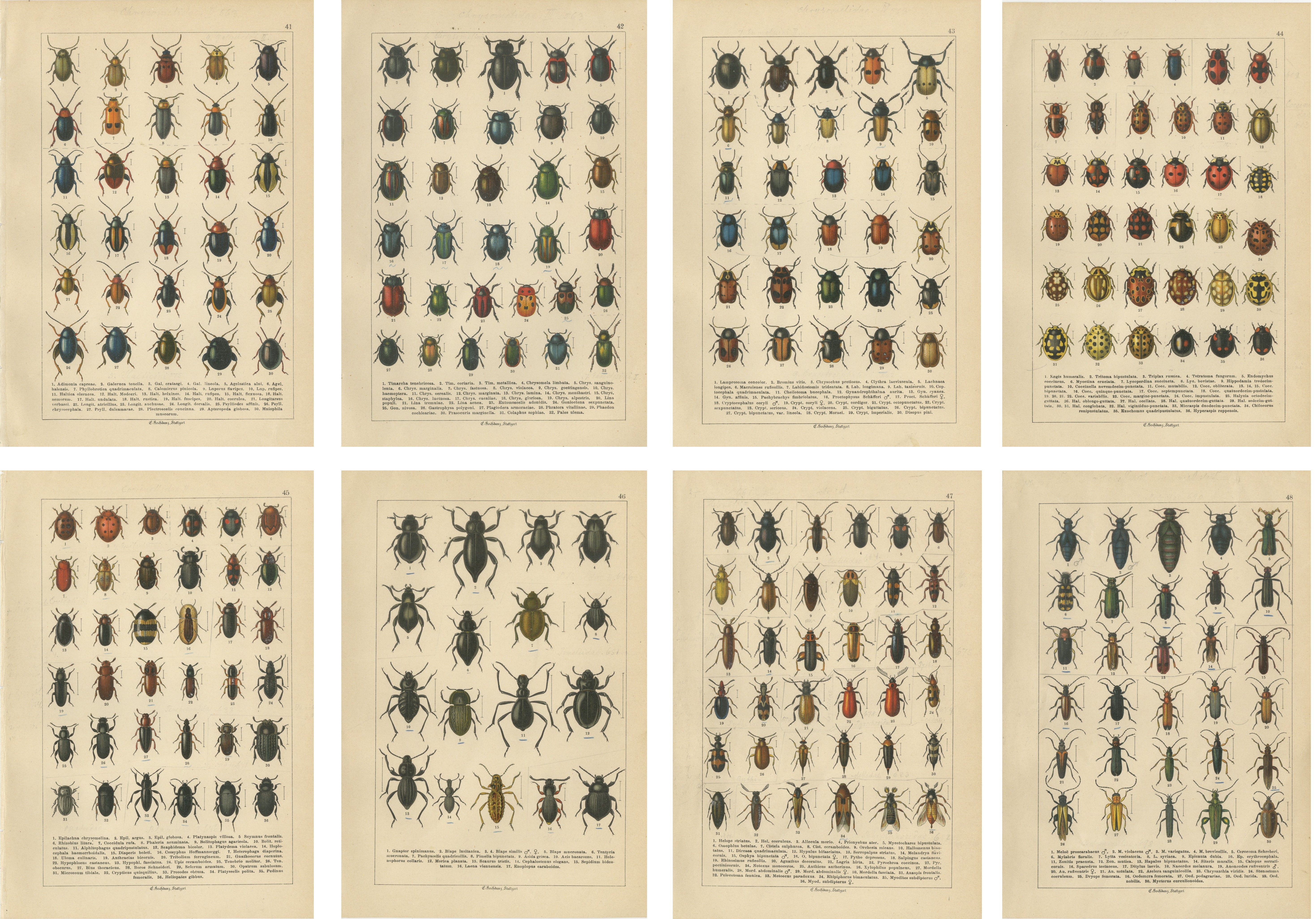
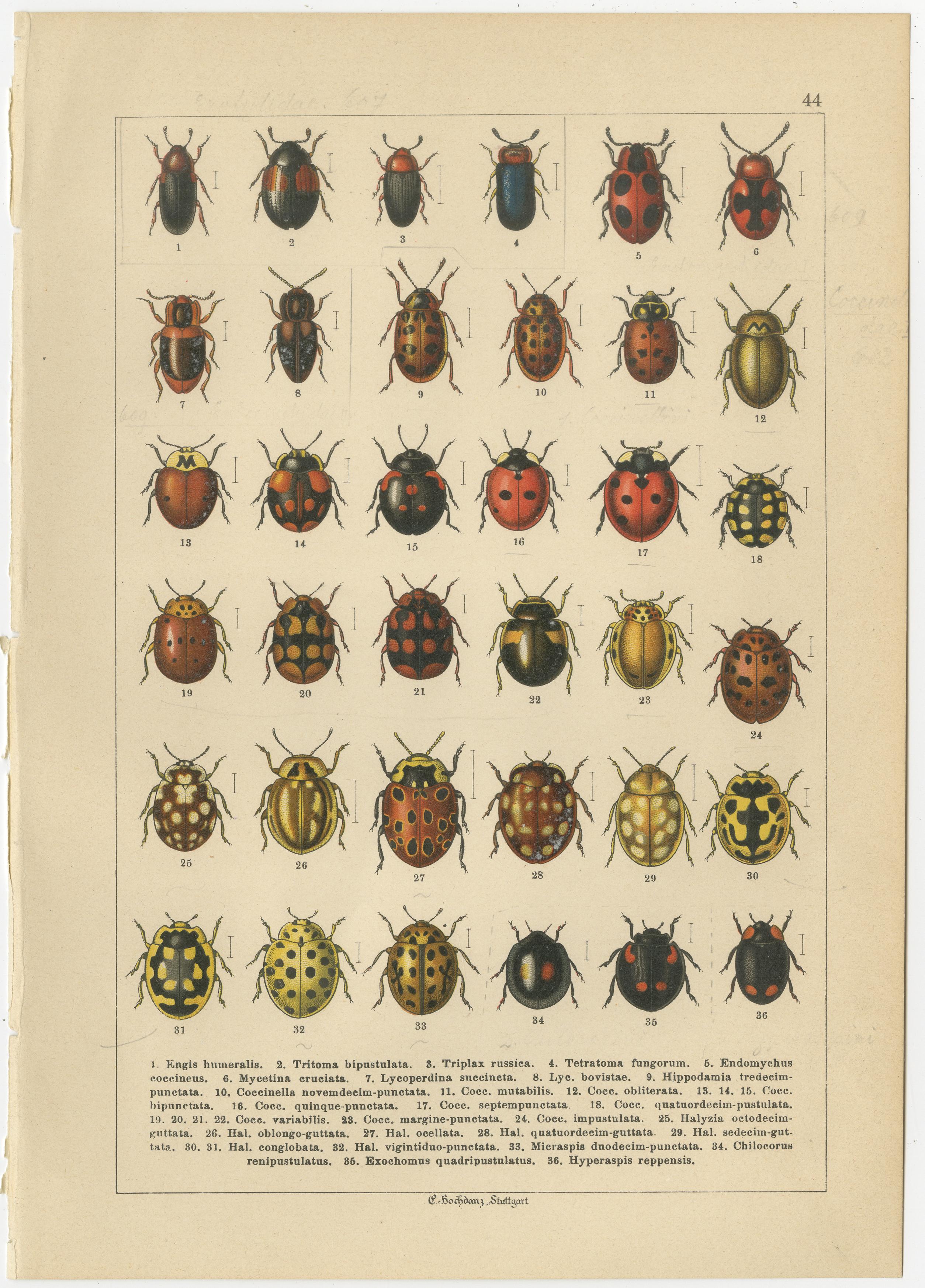
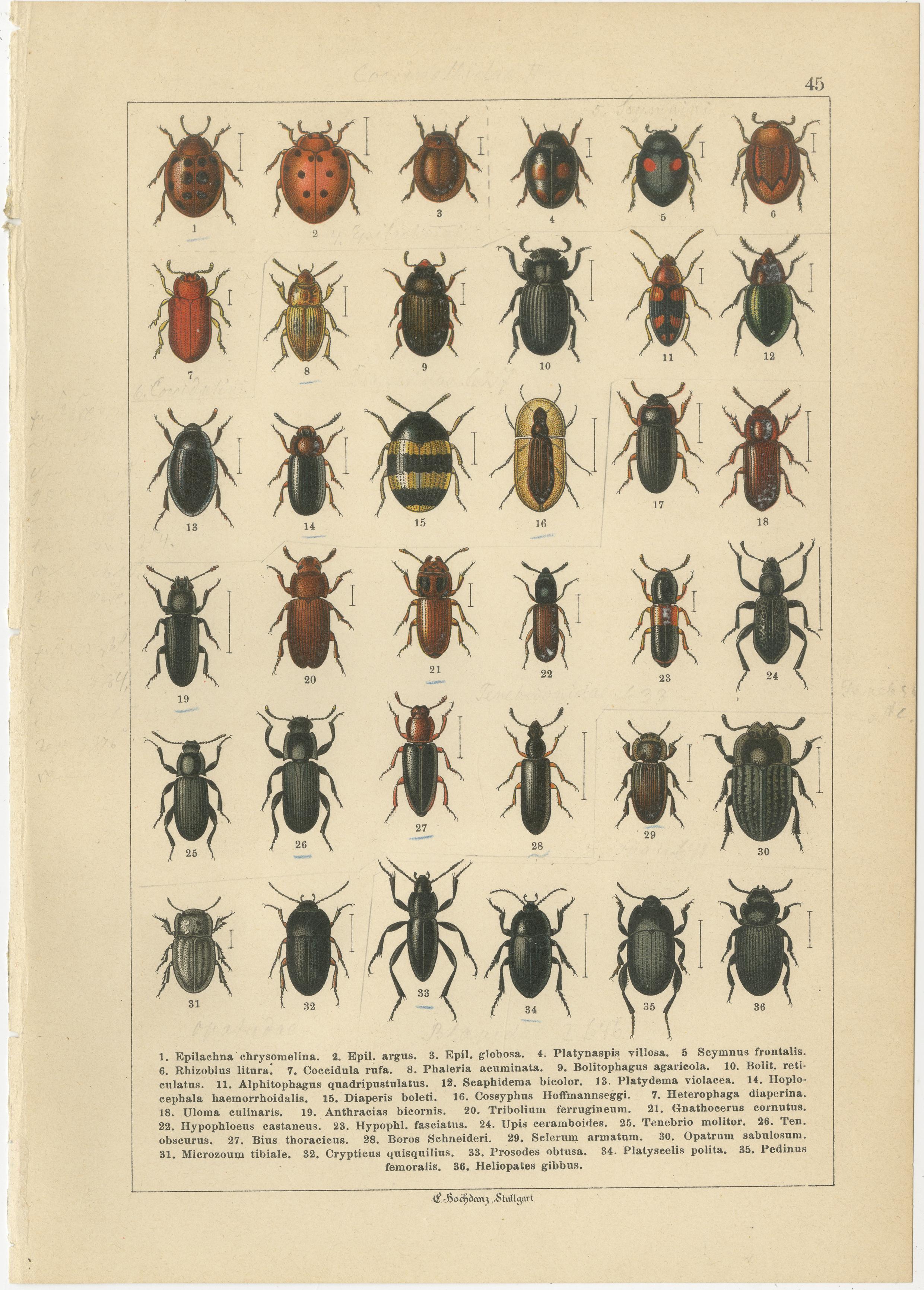
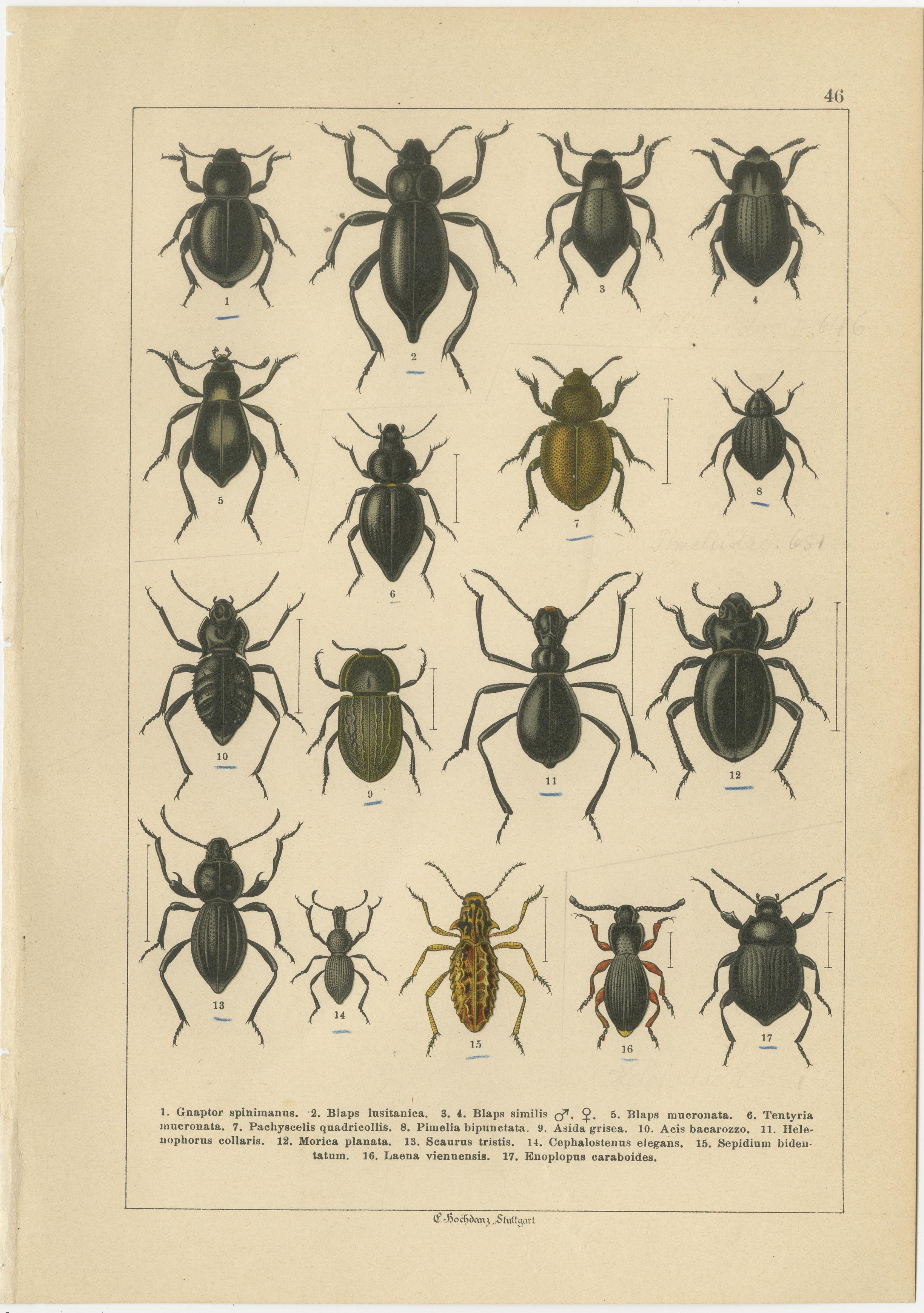
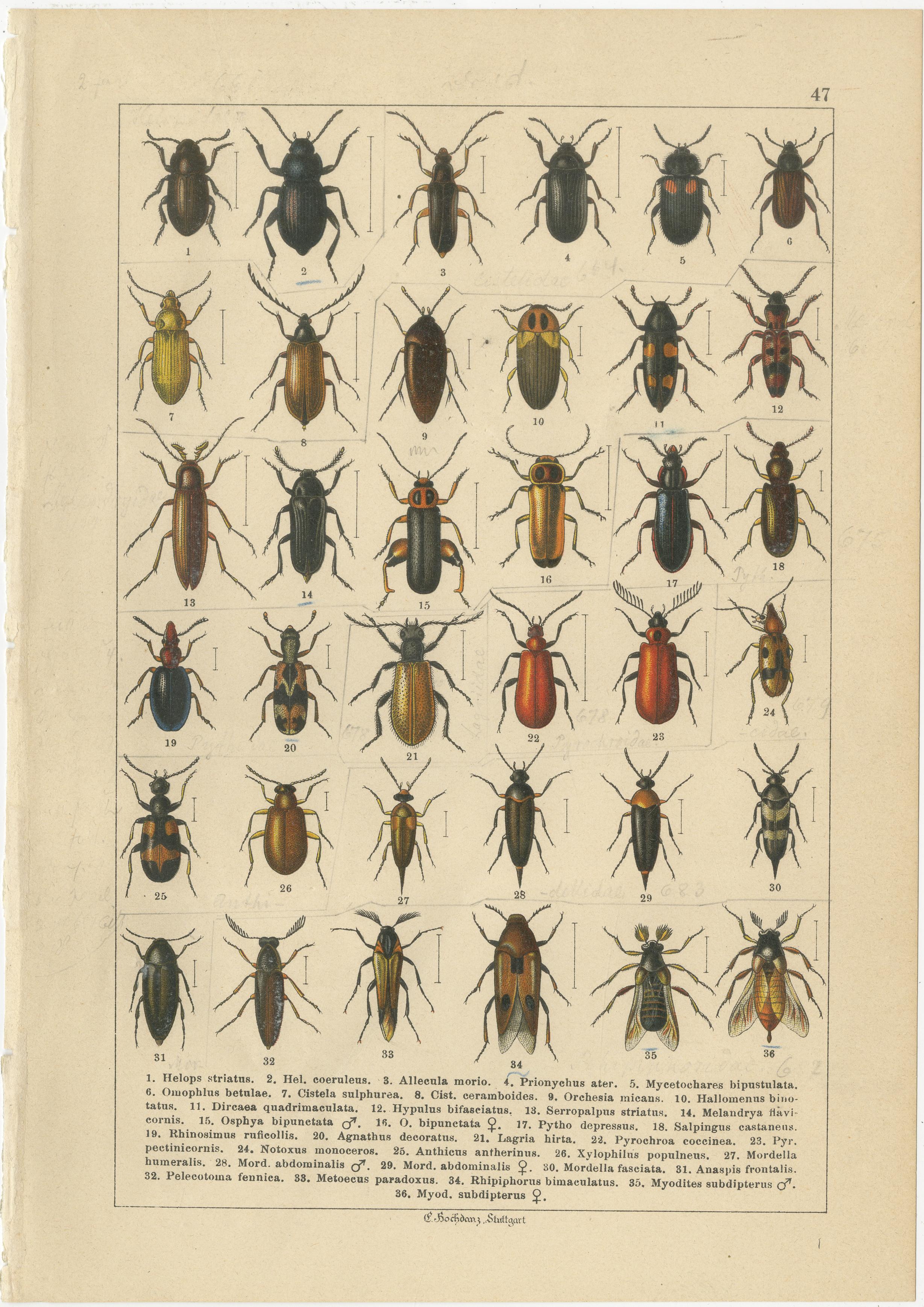
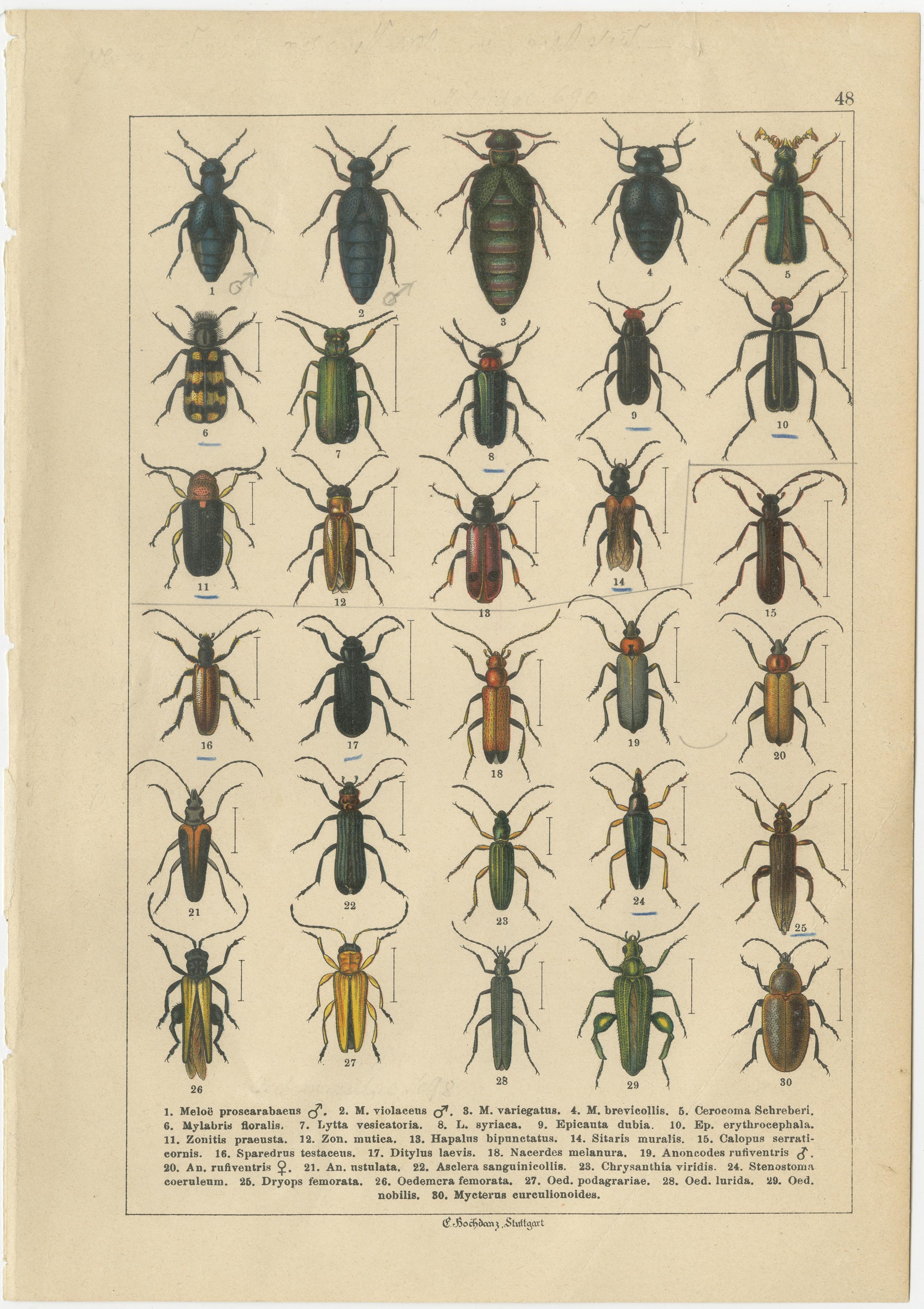
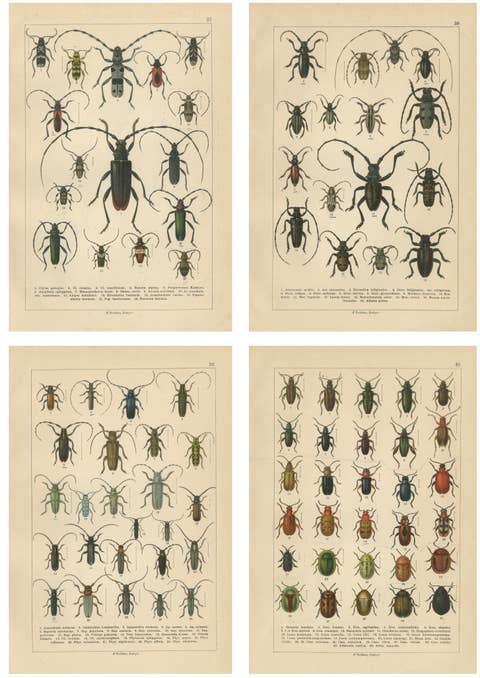
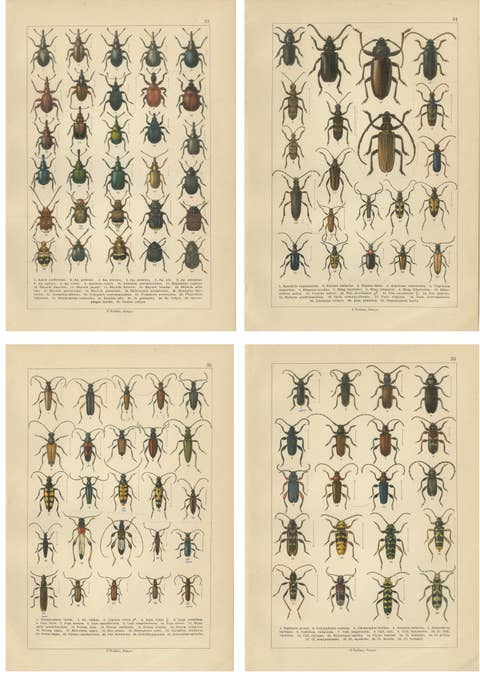
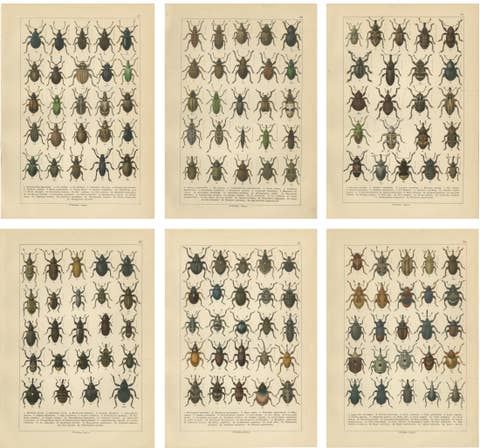
An extensive and visually captivating set of eight late 19th-century natural history plates depicting a wide spectrum of European beetles, drawn from the celebrated German entomological work Käferbuch – Naturgeschichte der Käfer Europas by C. G. Calwer. Published in Stuttgart by Julius Hoffmann in the expanded fifth edition of 1893, and edited by Professor Dr. G. Jäger with revisions by Dr. G. Stierlin, this work was intended “Zum Handgebrauche für Sammler” (for practical use by collectors) and became one of the most widely used illustrated beetle references of its time.
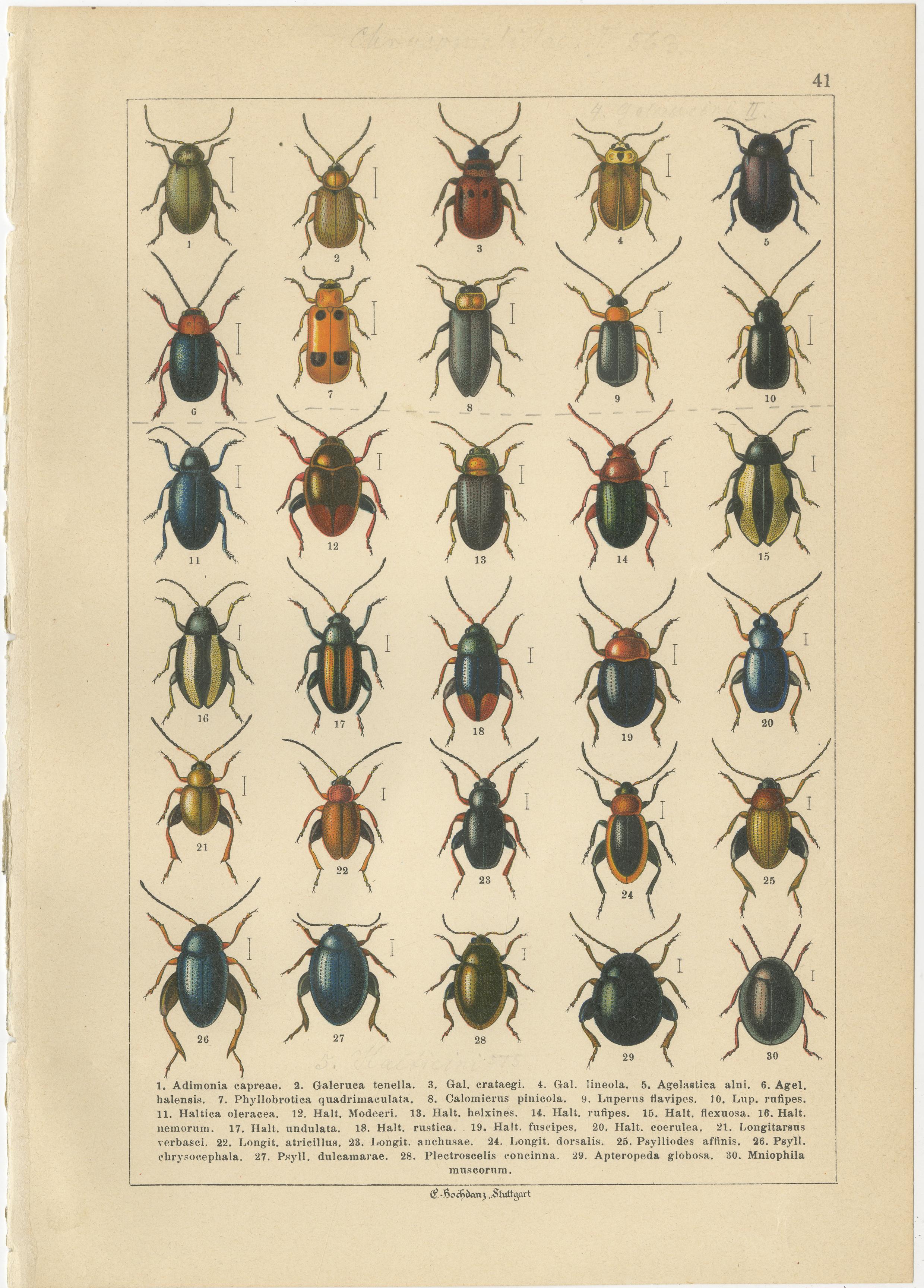
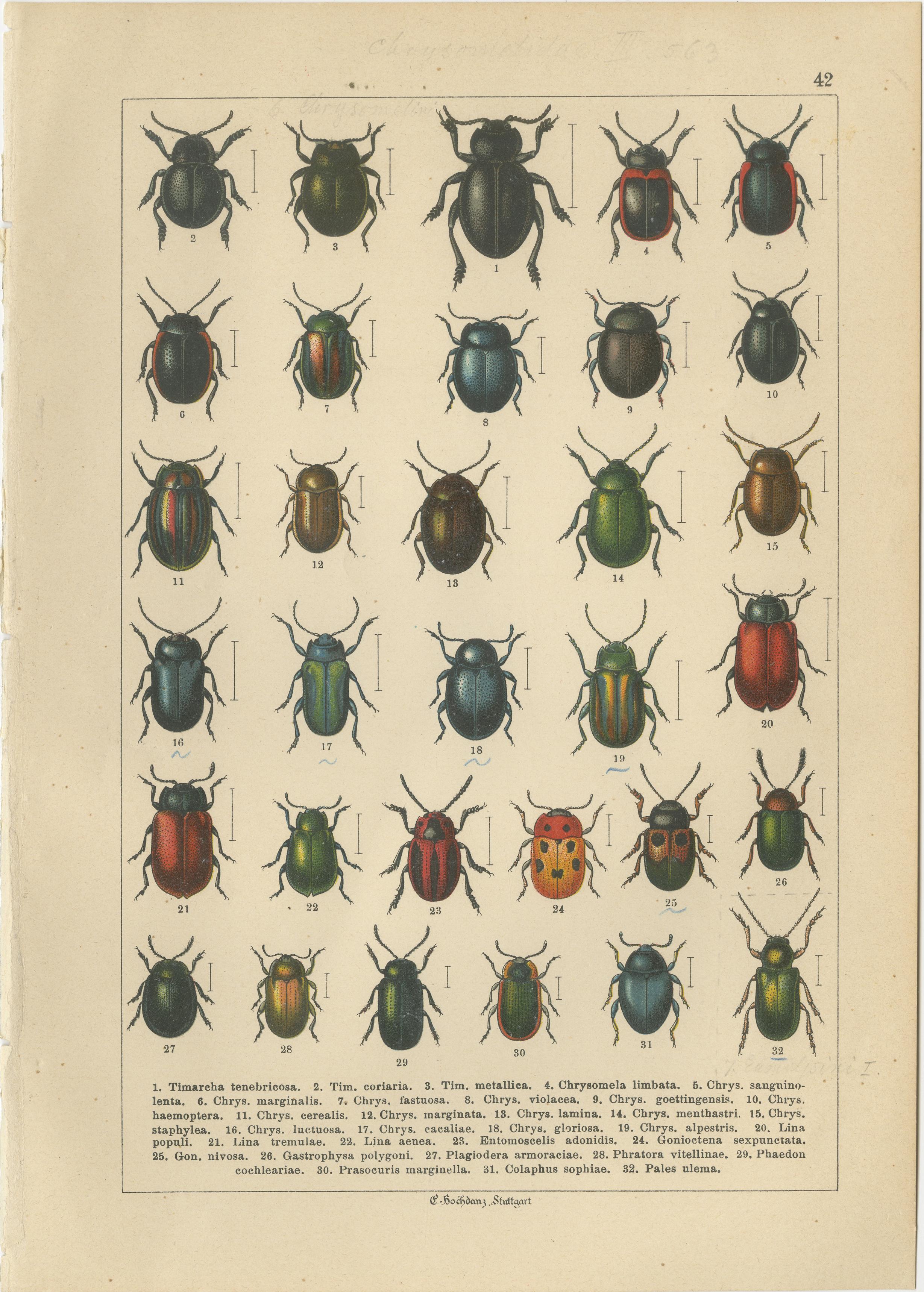
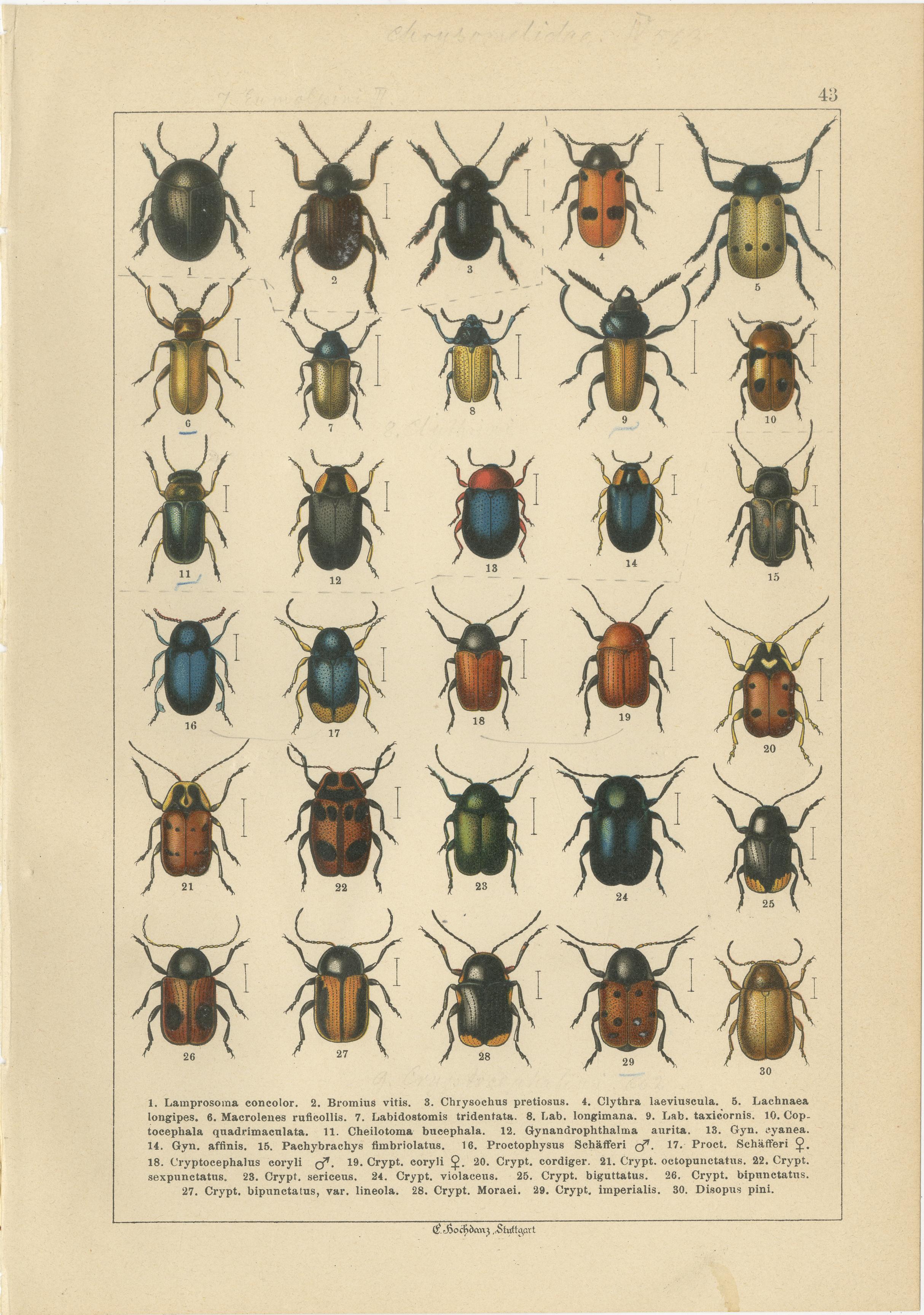
This particular group (plates 41–48) presents an impressive overview of beetle diversity across several families, including leaf beetles (Chrysomelidae), ladybird beetles (Coccinellidae), darkling beetles (Tenebrionidae), blister beetles (Meloidae), and others. The plates move from vividly colored, rounded forms to more robust and sculptural species, offering both scientific variety and strong decorative contrast.
Among the many species illustrated are Phyllobrotica quadrimaculata (Four-spotted leaf beetle), Galeruca lineola (Elm leaf beetle), Haltica oleracea (Flea beetle), and Longitarsus species (Small jumping leaf beetles), all known for their compact forms and agricultural relevance. The set also includes Cassida species (Tortoise beetles), admired for their shield-like, often translucent forms in greens and golds.
A particularly striking section is devoted to ladybird beetles (ladybugs), including Coccinella septempunctata (Seven-spot ladybird), Adalia bipunctata (Two-spot ladybird), and Halyzia sedecimguttata (Orange ladybird), whose bold red, orange, and yellow colorations create a vivid visual rhythm across the plates. These are complemented by darker-toned Tenebrionidae such as Blaps and Pimelia species (darkling beetles), with sculptural, matte black bodies.
Further variety is introduced through Meloë (Oil beetles), Lytta vesicatoria (Spanish fly), and other blister beetles, as well as long-bodied and soft-winged species that add elegance and movement to the compositions. Each plate is arranged in a precise grid, with specimens carefully numbered and isolated, reflecting the scientific rigor of 19th-century taxonomy while creating a harmonious visual structure.
The chromolithographic technique brings out a rich palette of metallic greens, deep blacks, warm reds, and golden hues, all printed with remarkable clarity. Together, these eight plates form a comprehensive and decorative survey of European beetle life, ideal for collectors, natural history enthusiasts, and interior designers alike.
Displayed as a 2×4 arrangement, the set creates a museum-quality wall composition with both educational depth and strong aesthetic impact, perfectly suited for libraries, studies, or refined contemporary interiors.
Condition report:
Good antique condition with age-related toning and light foxing consistent with late 19th-century paper. Minor edge wear and handling marks present, with occasional slight irregularities along the margins from original binding. Colors remain strong, vibrant, and well-preserved throughout the set.
Framing tips:
This set is best presented as a cohesive group in identical frames. Dark walnut or ebonized frames paired with warm ivory mats will enhance the tonal richness and unify the composition. A 2×4 grid layout creates a structured and elegant presentation, while maintaining visual clarity and balance. Floating mounts can further highlight the full sheets and their antique character.
Note:
These prints are original antique chromolithographs and not reproductions. They are offered unframed.
Technique: Chromolithograph
Maker: C. G. Calwer, Germany, published Julius Hoffmann, Stuttgart, 1893