About this sheet
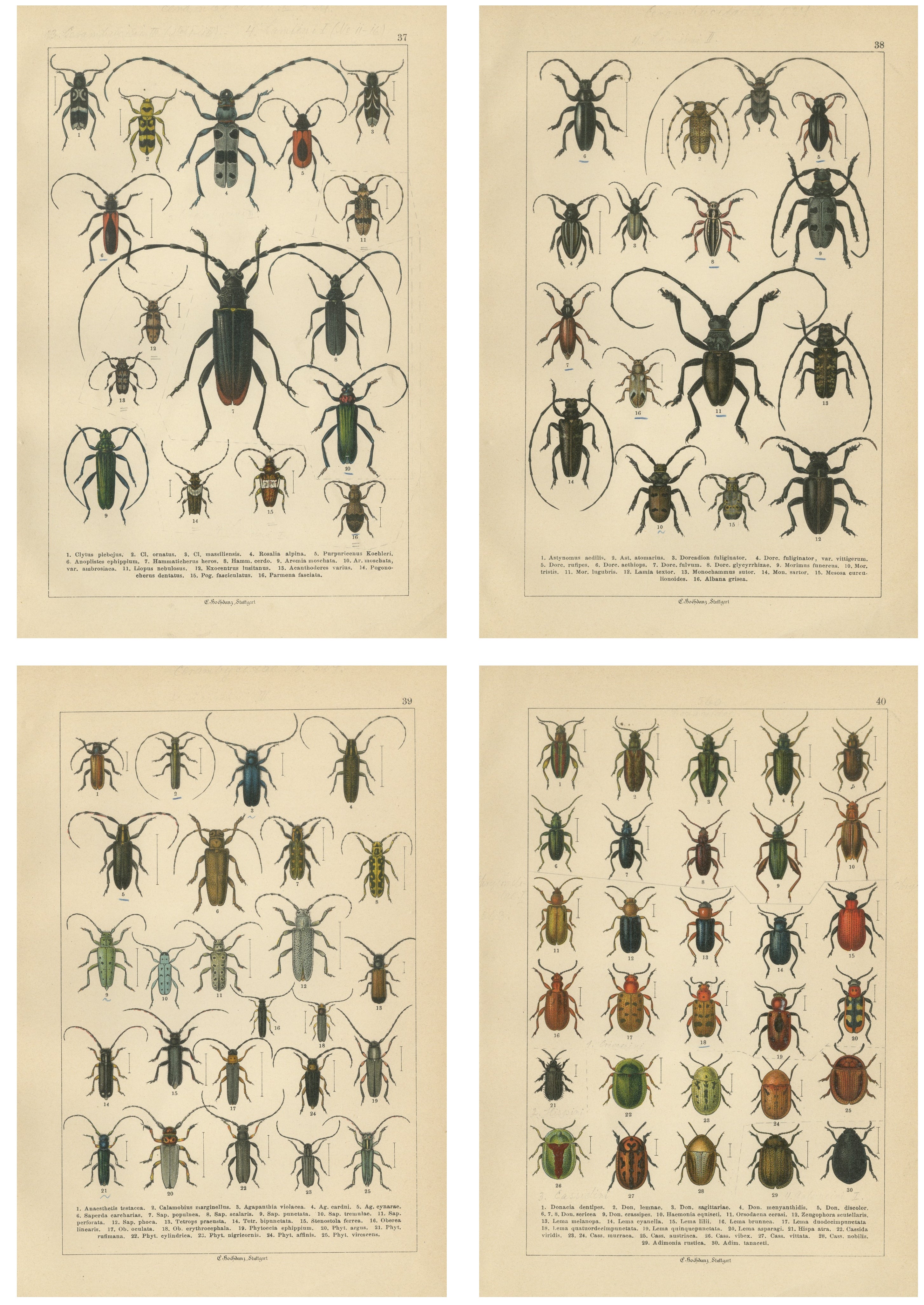
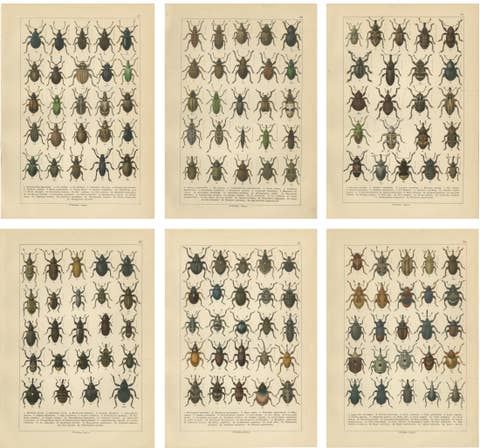
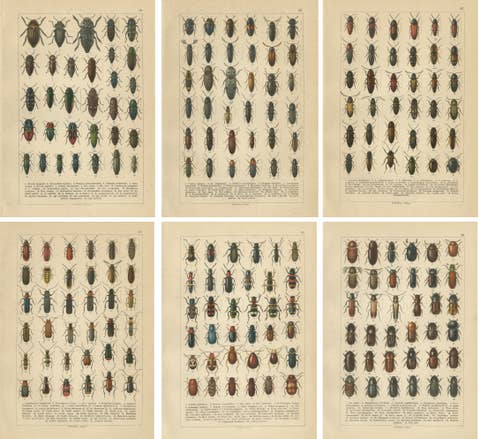
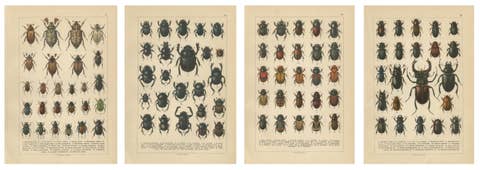
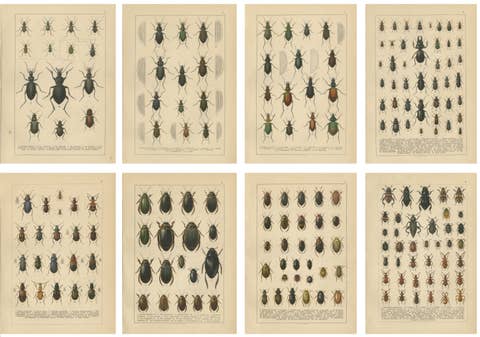
Antique Beetle Chromolithographs, European Species Plates 37–40, Calwer 1893
A visually rich and scientifically important set of four late 19th-century natural history plates depicting a wide range of European beetles, drawn from the renowned German entomological work *Käferbuch – Naturgeschichte der Käfer Europas* by C. G. Calwer. Published in Stuttgart by Julius Hoffmann in the expanded fifth edition of 1893, and edited by Professor Dr. G. Jäger with revisions by Dr. G. Stierlin, this work stands as one of the most influential illustrated beetle guides of its time, intended “Zum Handgebrauche für Sammler” (for practical use by collectors).
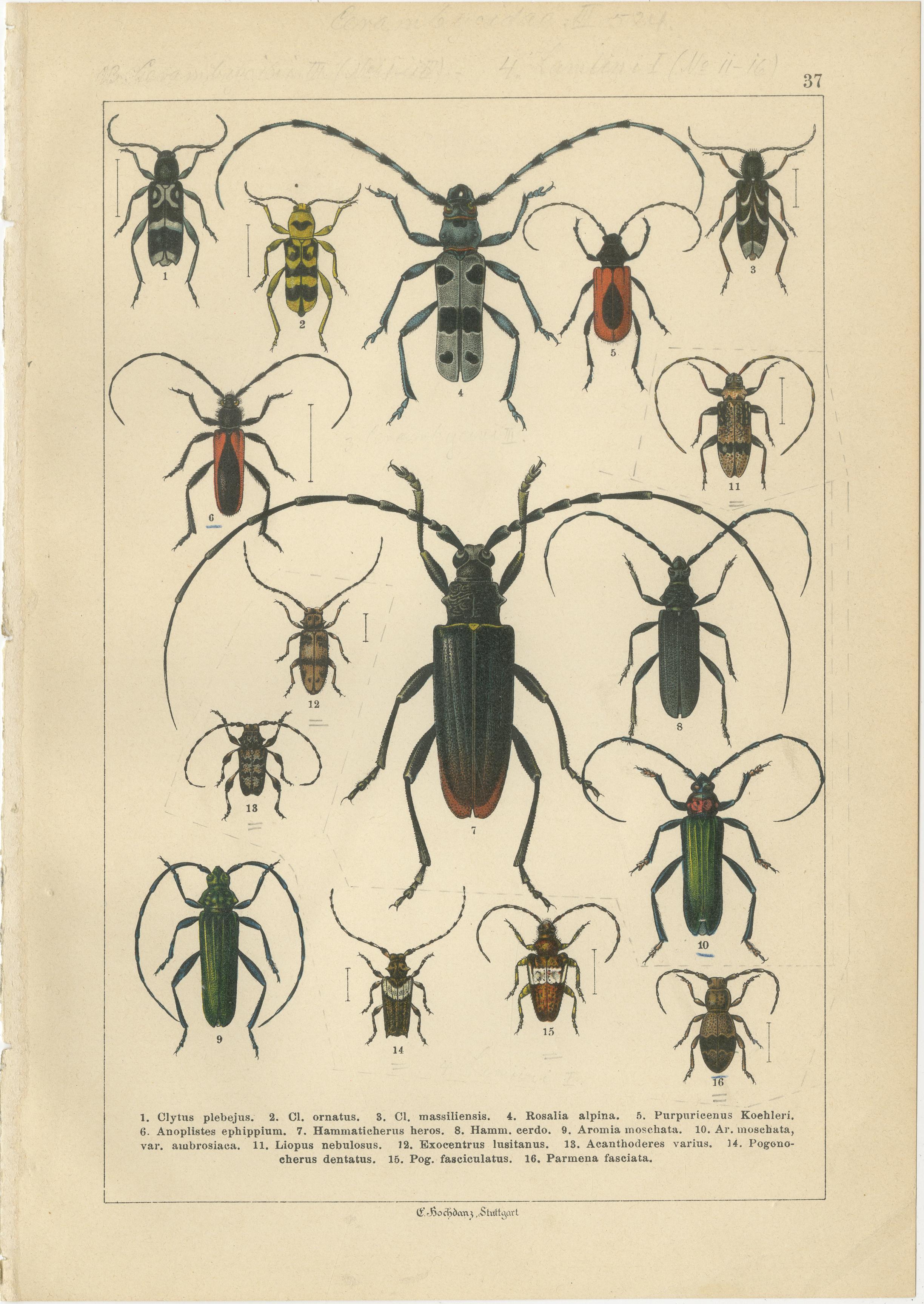
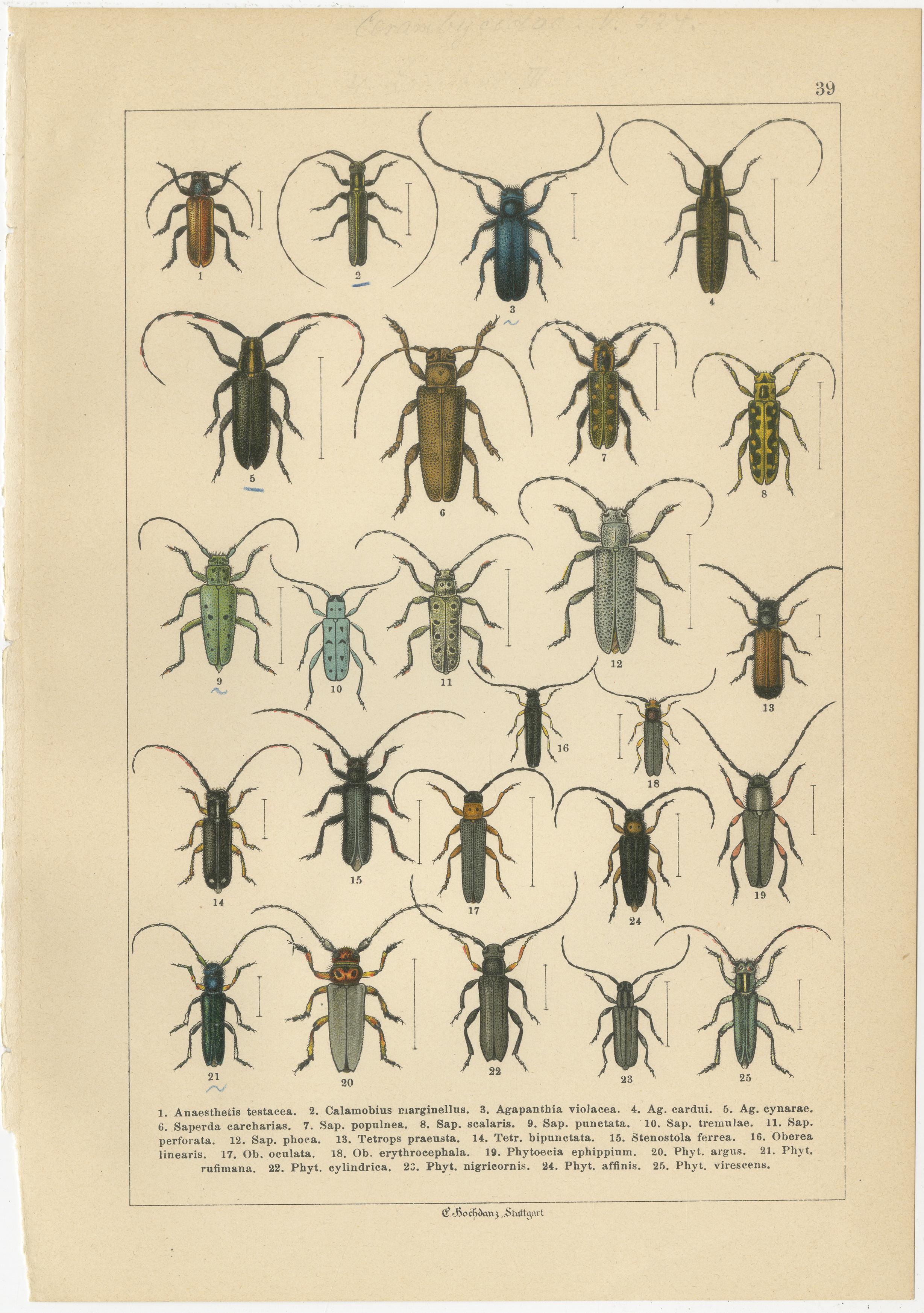
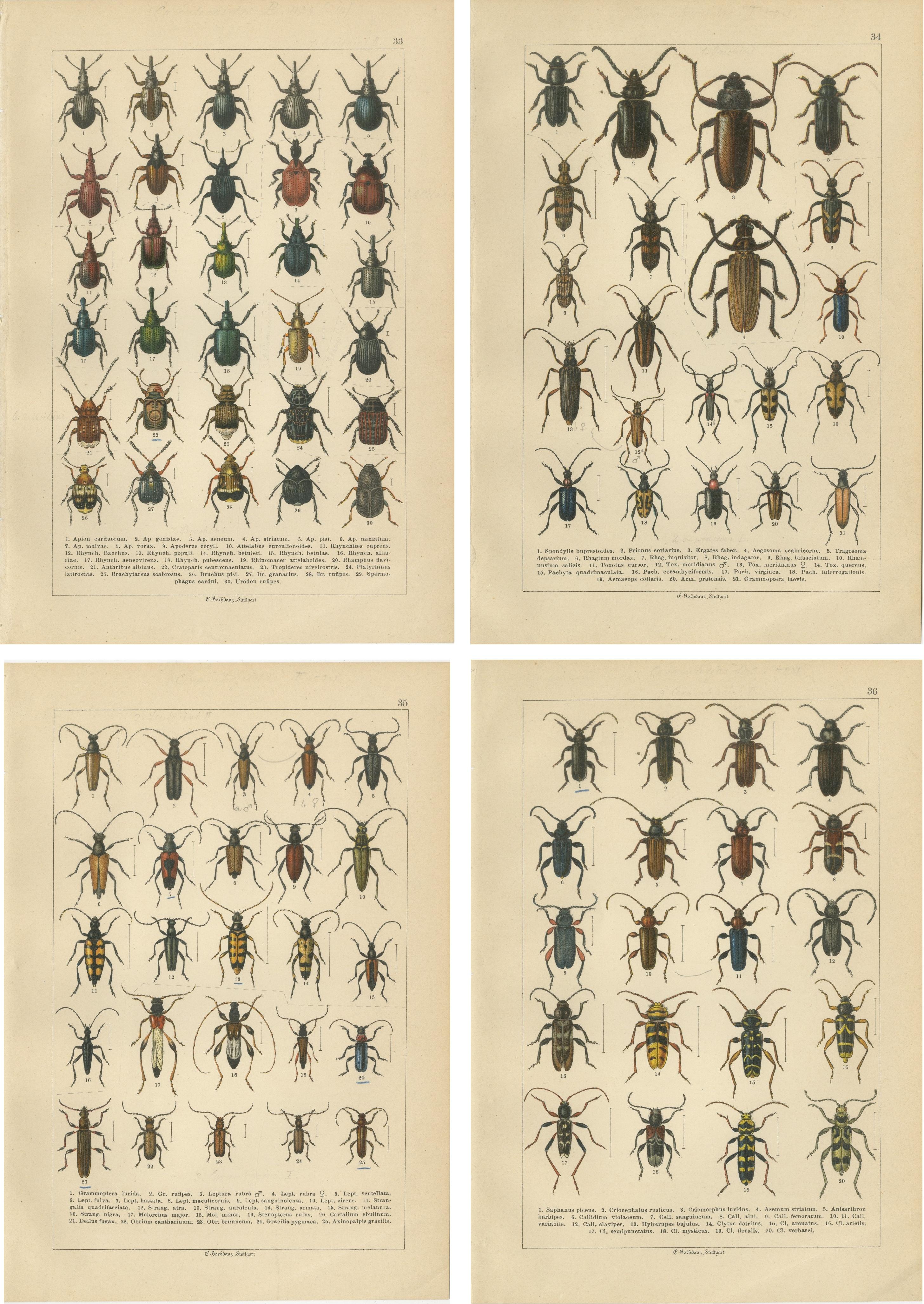
This particular group (plates 37–40) offers an exceptional overview of beetle diversity, ranging from the elegant longhorn beetles (Cerambycidae) to leaf beetles (Chrysomelidae) and related families. Among the species illustrated are Rosalia alpina (Alpine longhorn beetle), Purpuricenus koehleri (Red longhorn beetle), Aromia moschata (Musk beetle), and Clytus arietis (Wasp beetle), all admired for their striking coloration and distinctive forms.
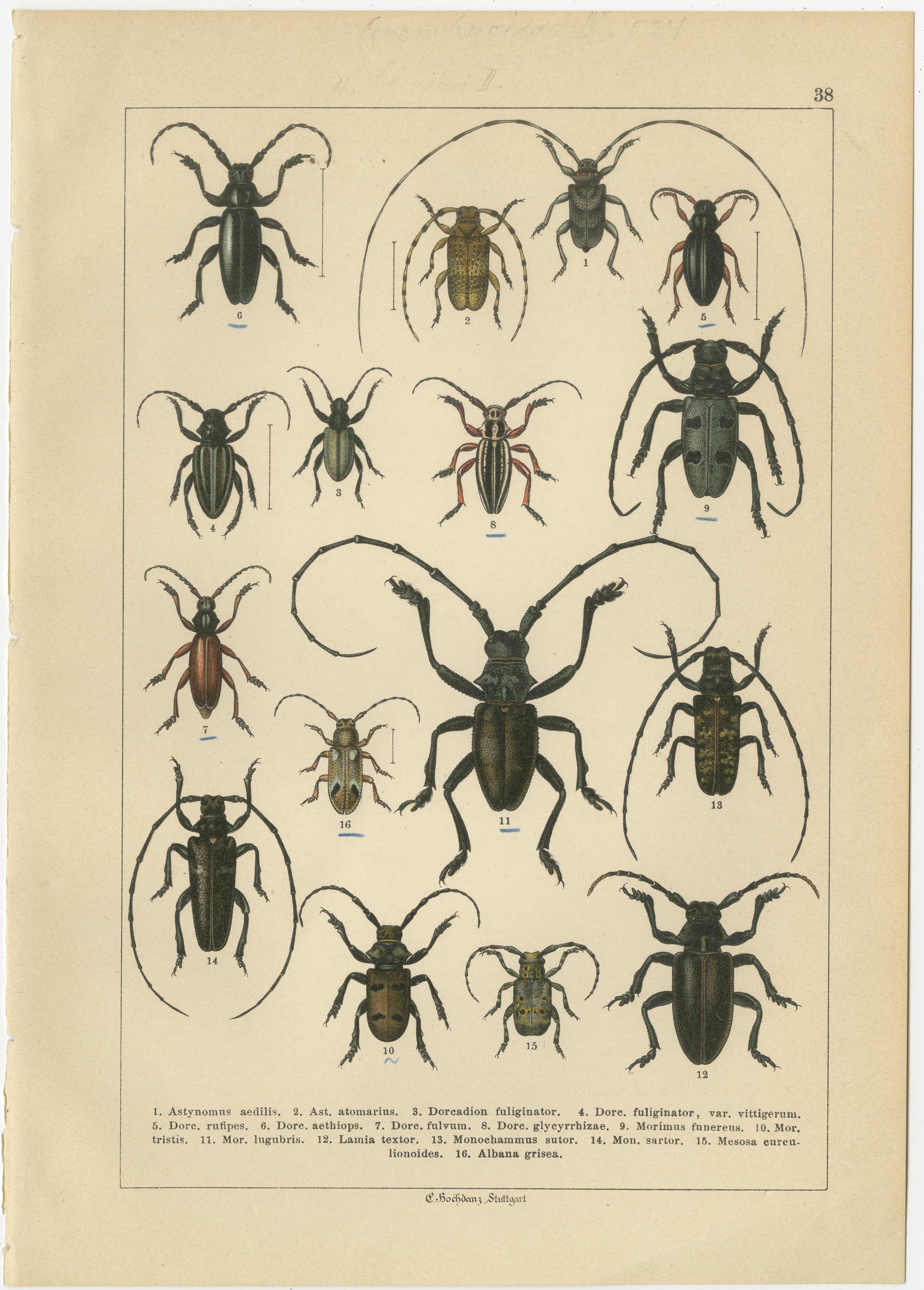
The set also includes species such as Acanthoderes varius (a patterned longhorn beetle), Monochamus sutor (Pine sawyer beetle), Lamia textor (Weaver beetle), and Morimus funereus (Dusky longhorn beetle), alongside Dorcadion species (earth-boring longhorn beetles) and Agapanthia violacea (Violet longhorn beetle).
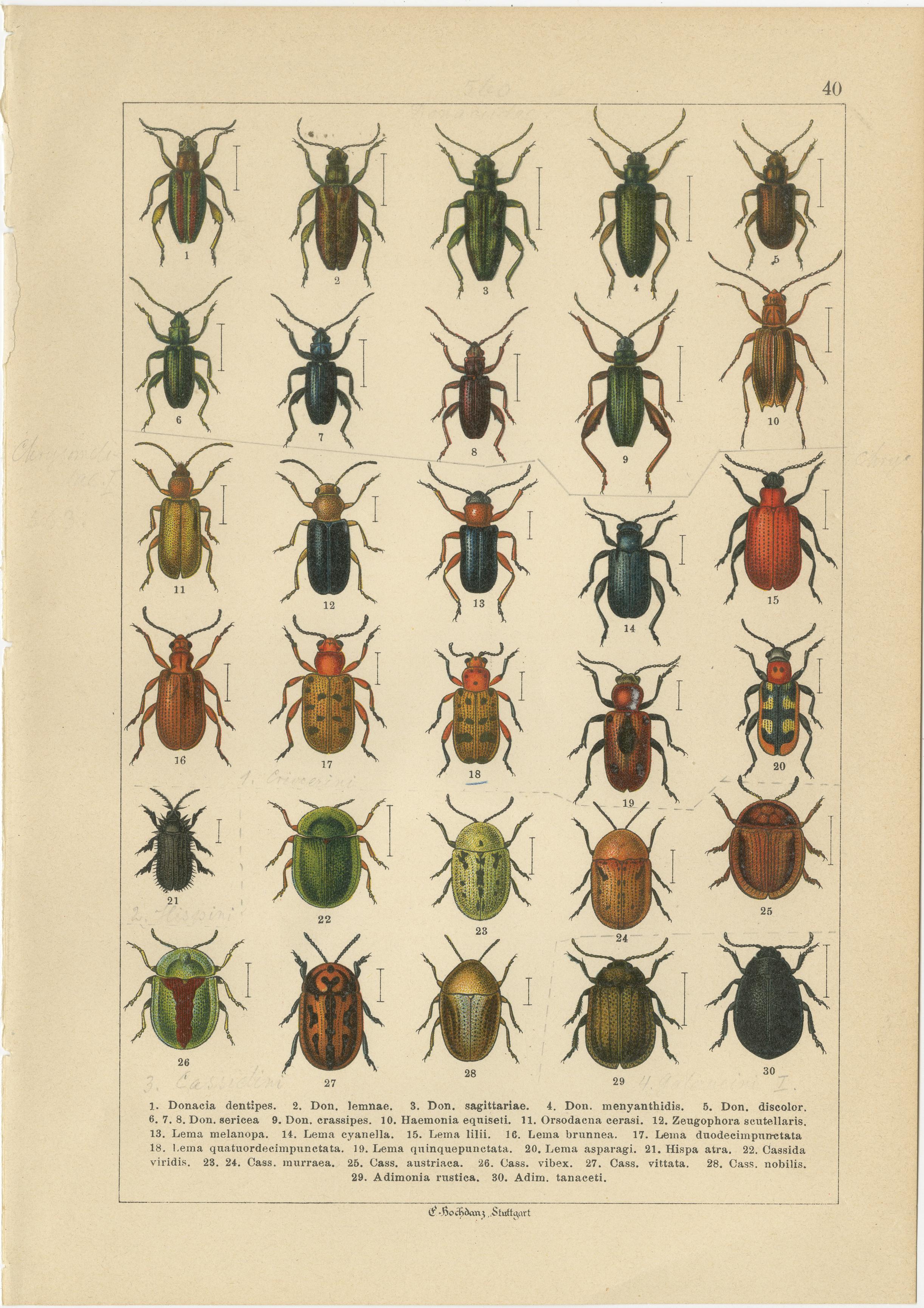
Plate 40 introduces a vibrant array of leaf beetles, including Donacia species (Reed beetles), Lema species (Shining leaf beetles), Cassida species (Tortoise beetles), and Zeugophora scutellaris (a small leaf beetle), showcasing rounded forms and brilliant metallic greens, reds, and golds. These species contrast beautifully with the elongated silhouettes of the longhorn beetles in the preceding plates.
Executed in fine chromolithography, the prints display a refined palette of earthy tones, metallic greens, warm reds, and deep blacks. Each specimen is carefully isolated and numbered, arranged in structured grids that emphasize comparative study while creating a strong decorative rhythm. The combination of scientific clarity and aesthetic balance makes these plates particularly desirable for both collectors and interior designers.
This set is ideal for creating a cohesive gallery wall, offering both variety and harmony. Displayed together in a 2×2 arrangement, the prints provide a compelling visual narrative of European beetle diversity, blending natural history with timeless decorative appeal.
Condition report:
Good antique condition with age-related toning and light foxing consistent with late 19th-century paper. Minor edge wear and handling marks visible, with some slight irregularities along the margins from original binding. Colors remain strong and well-preserved.
Framing tips:
These prints are best presented as a unified set in identical frames. Dark walnut or ebonized frames paired with warm ivory or off-white mats will enhance the richness of the colors. A 2×2 grid arrangement creates a balanced and elegant wall composition, while floating mounts can highlight the full sheets and their antique character.
Note:
These prints are original antique chromolithographs and not reproductions. They are offered unframed.
Technique: Chromolithograph
Maker: C. G. Calwer, Germany, published Julius Hoffmann, Stuttgart, 1893