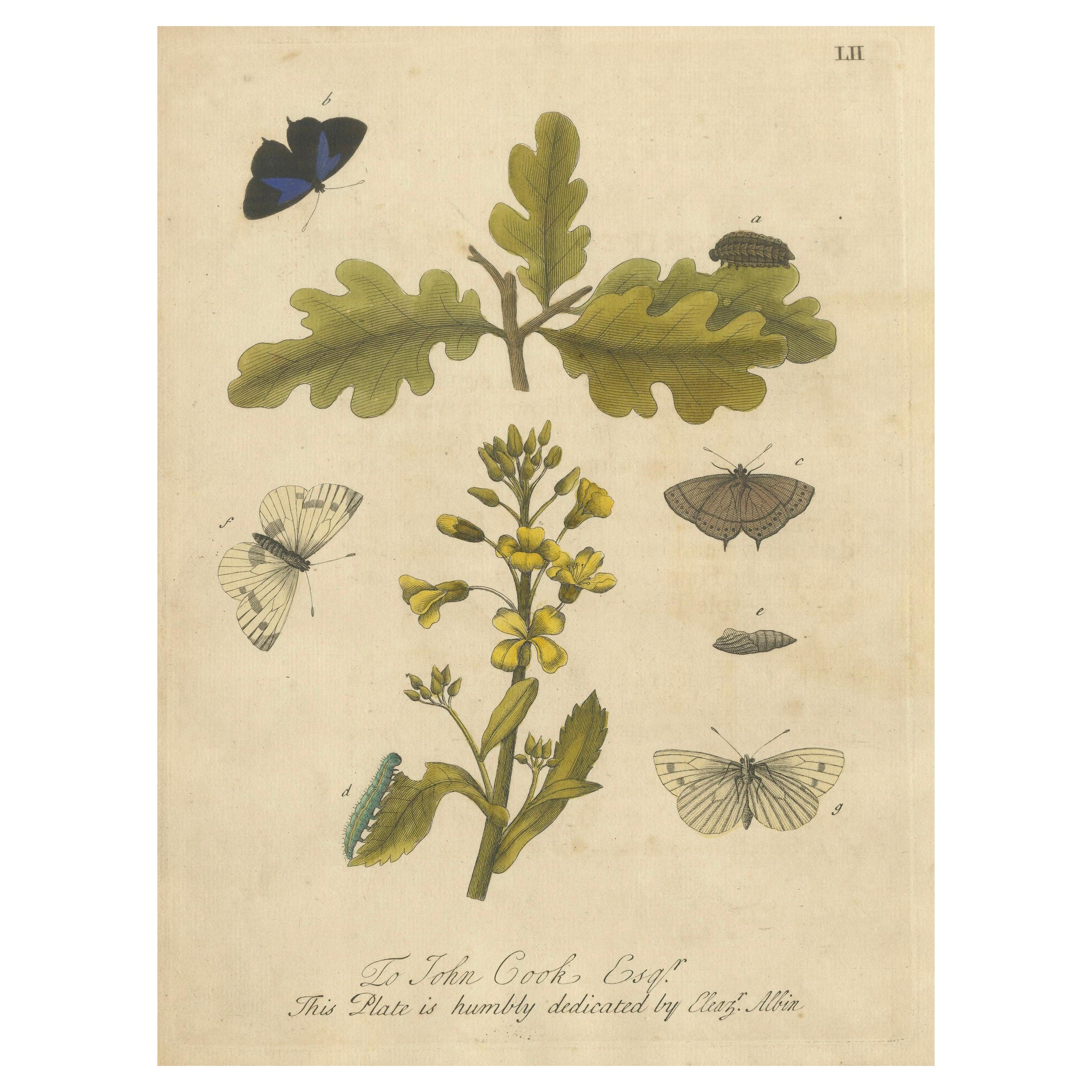
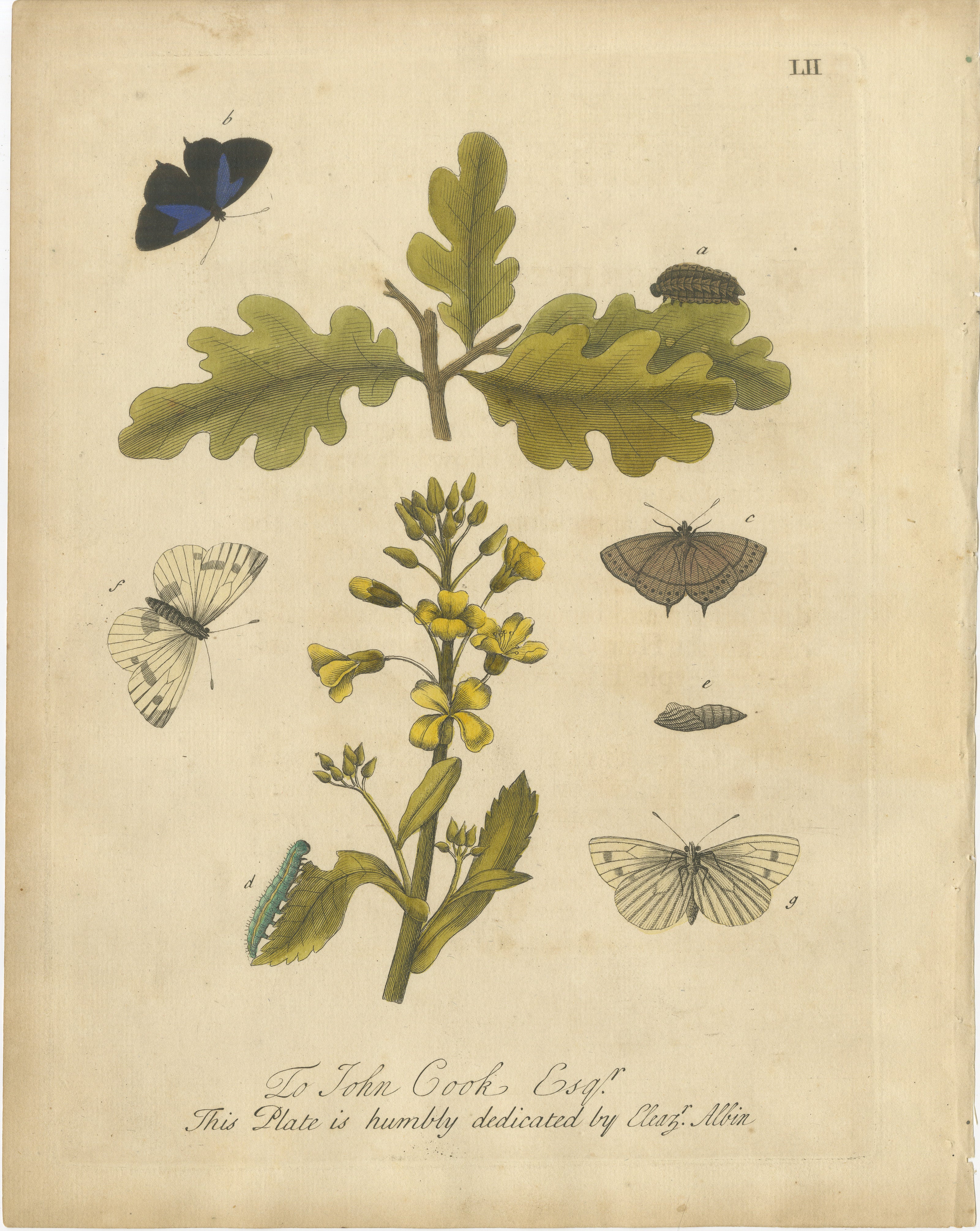
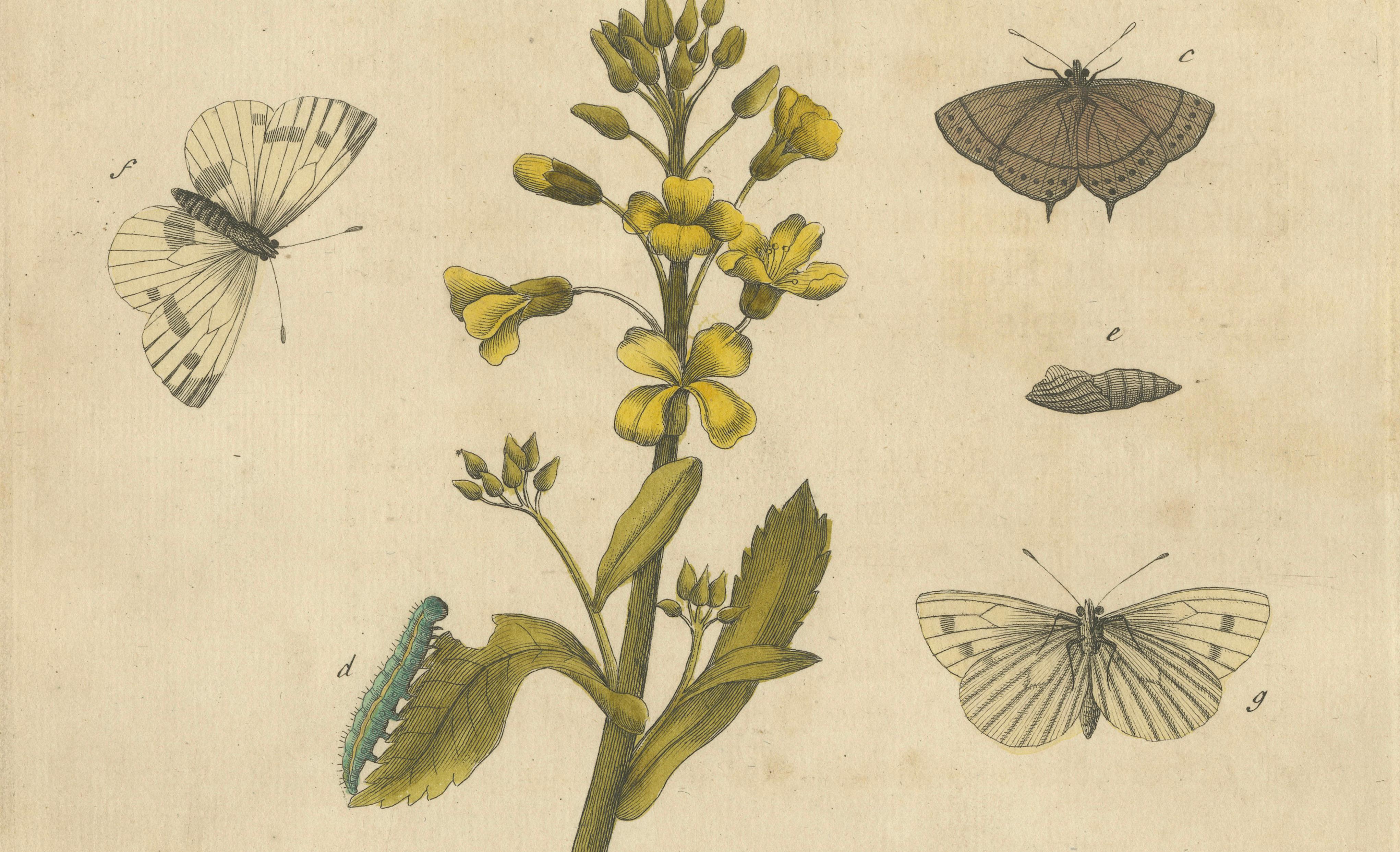
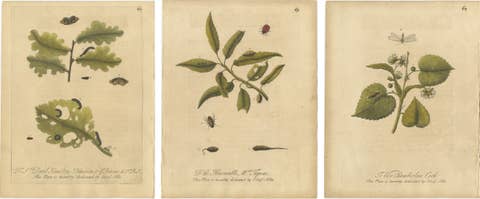
Butterfly Life Cycle on Oak & Wallflower – Albin Hand-Colored Engraving, 1720
€ 275
Original antique · The actual sheet photographed · Certificate of authenticity on request · Sold unframed · Worldwide shipping from € 15 (rates)
Date
1720
Mapmaker / artist
Eleazar Albin, London, 1720
Technique
Copper engraving with original hand coloring
Sheet size
28.3 × 22.1 cm (11.1 × 8.7 in)
Condition
Good
Reference
BG-14185-52
What the condition grades mean
Excellent
Bright and clean, with no faults worth mentioning.
Very good
Only light signs of age, such as faint toning.
Good
Normal signs of age for a sheet of this period: toning, some foxing, small marks or neat old repairs.
Fair
Clear faults such as staining, tears or repairs, priced to match.
Every fault we see is written in the condition note, and the whole sheet is shown uncropped in the photos.
Condition
Good condition for an early 18th-century engraving. Light age toning and scattered minor spotting to the paper, with gentle handling wear along the margins. Plate mark visible. Original hand coloring remains clear and well preserved.
About this sheet
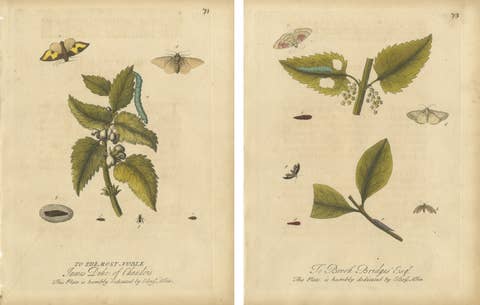
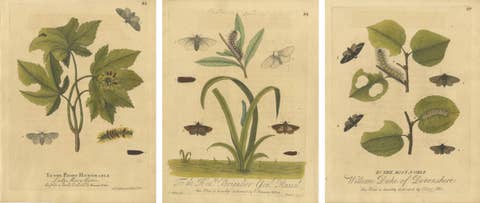
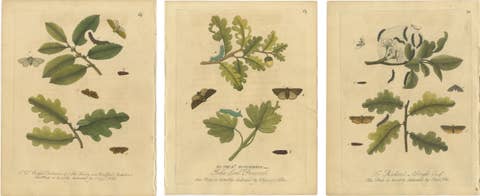
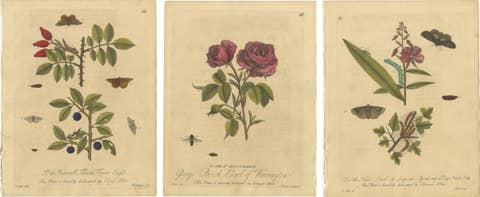
Butterfly Life Cycle on Oak & Wallflower – Eleazar Albin Hand-Colored Engraving, 1720
This finely hand-colored copper engraving was published in London in 1720 as part of A Natural History of English Insects, the influential entomological work by Eleazar Albin. Albin’s publication is regarded as one of the foundational illustrated studies of British insects, notable for its careful observation of species shown through their full life cycles and in direct relationship to their host plants.
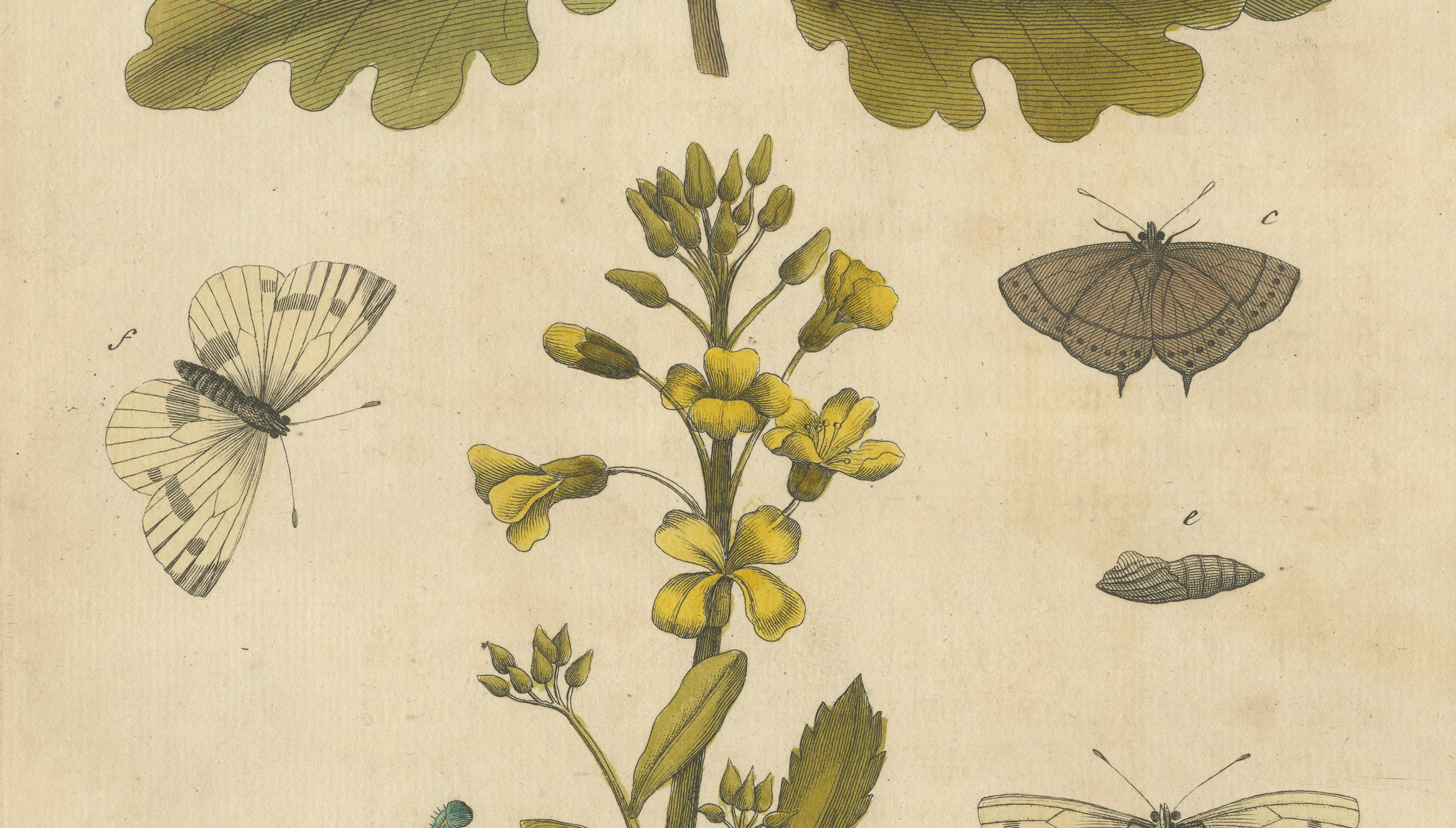
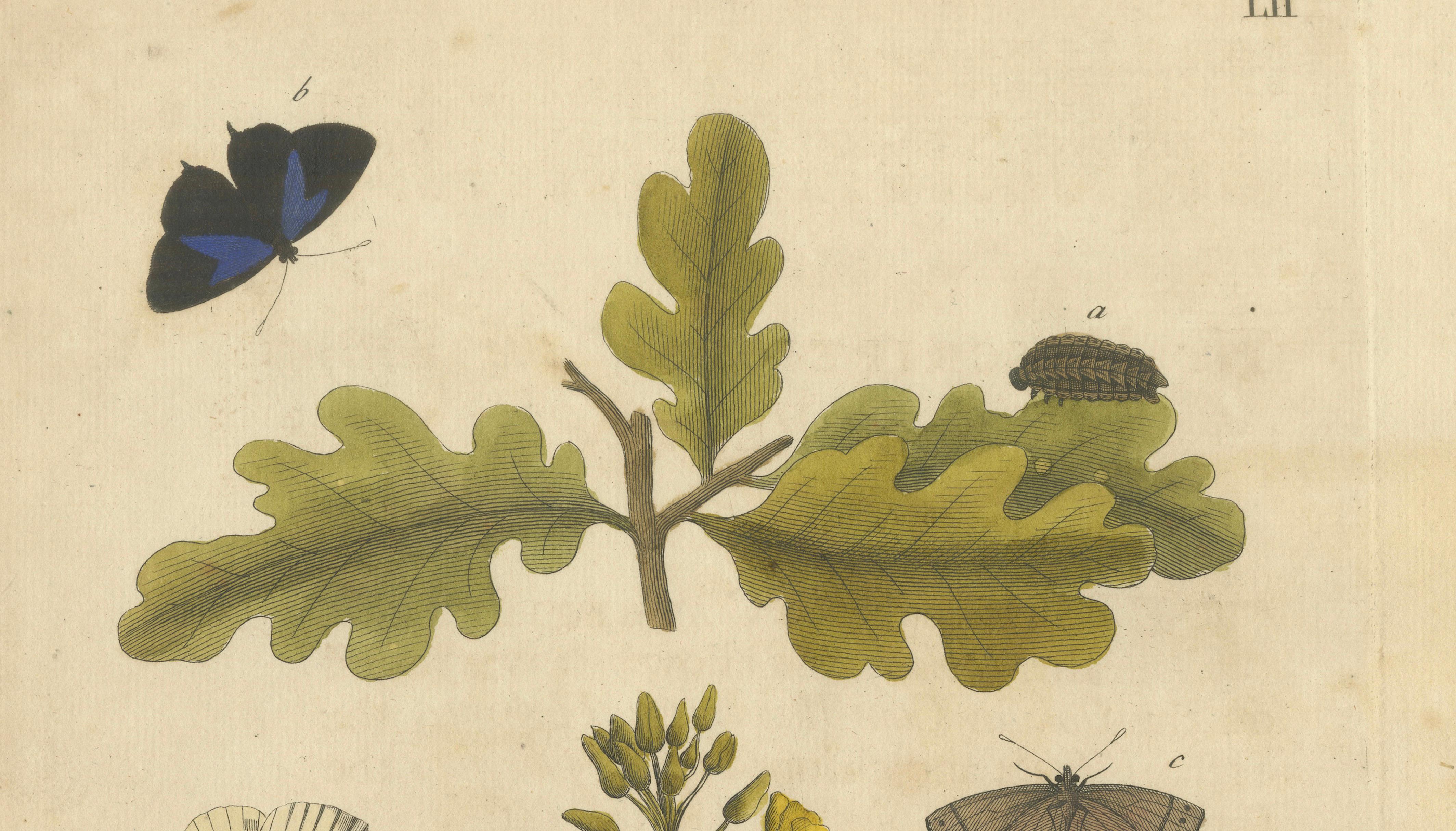
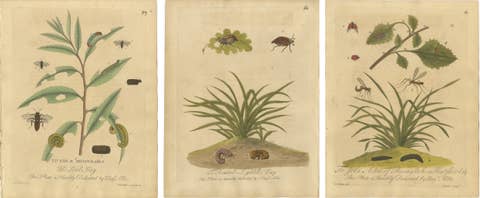
The plate depicts several butterflies and moths at different stages—caterpillar, chrysalis, and adult—arranged around oak leaves and a flowering wallflower plant. The composition exemplifies Albin’s distinctive method of integrating insects with their natural environment, rather than presenting them as isolated specimens. The oak leaves, with their lobed forms, and the upright flowering wallflower provide a strong botanical framework, while the insects are rendered with clarity and restraint, balancing scientific documentation with decorative appeal.
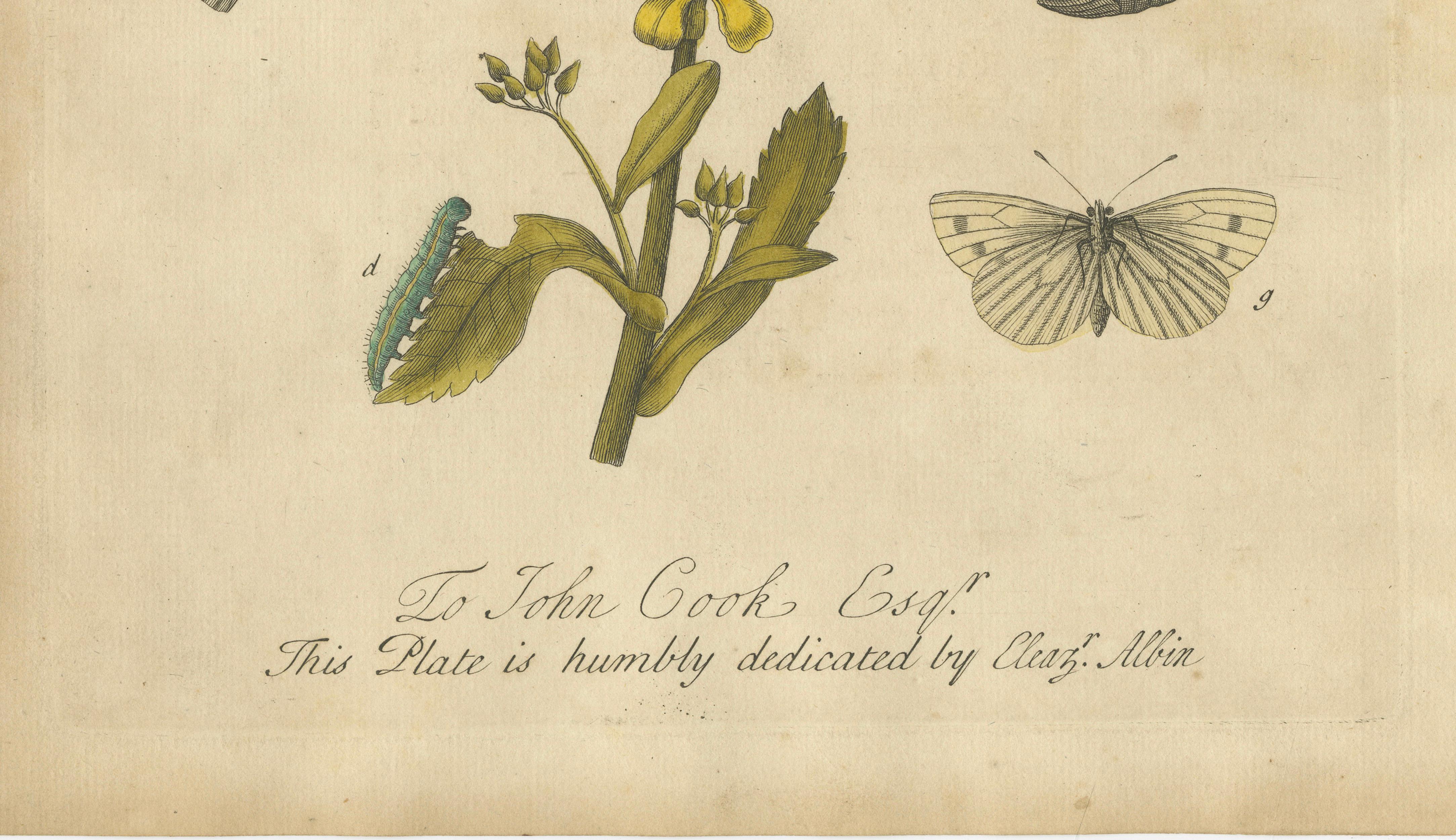
At the foot of the sheet is the engraved dedication: “To John Cook, Esq.r, This Plate is humbly dedicated by Eleaz.r Albin.” Such dedications are a defining feature of Albin’s work and reflect the Enlightenment-era system of patronage that supported natural history publishing. The presence of a named dedicatee adds historical depth and is particularly valued by collectors, as it situates the plate within the social and intellectual networks of early 18th-century Britain.
The engraving is executed with crisp line work and original hand coloring applied in subtle tones of green, yellow, and brown. The overall aesthetic is elegant and understated, making the print equally suitable for a scholarly collection or for display in a refined interior. Albin’s plates are increasingly sought after for their combination of early scientific importance, decorative quality, and relative rarity on the market.
Condition report: Good condition for an early 18th-century engraving. Light age toning and scattered minor spotting to the paper, with gentle handling wear along the margins. Plate mark visible. Original hand coloring remains clear and well preserved.
Framing tips: This engraving benefits from a generous ivory or warm off-white mat that allows the plate mark and dedication to remain visible. A dark walnut, ebonized, or antique gilt frame complements the botanical greens and the softly aged paper tone, creating a refined and timeless presentation suitable for both classic and contemporary interiors.