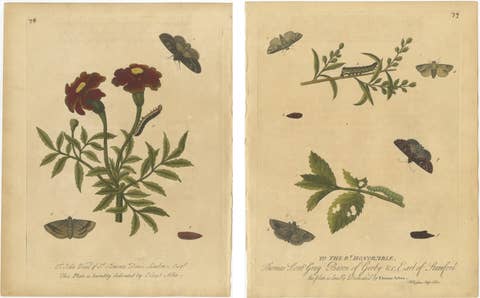
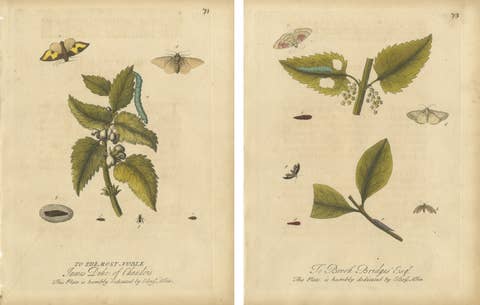
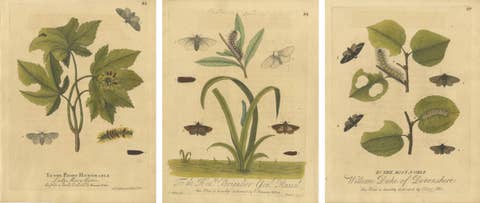
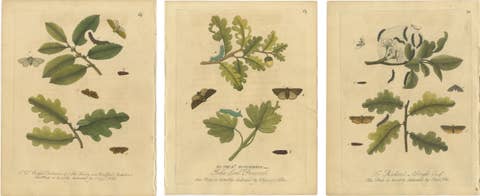
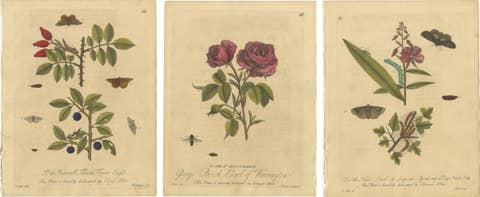
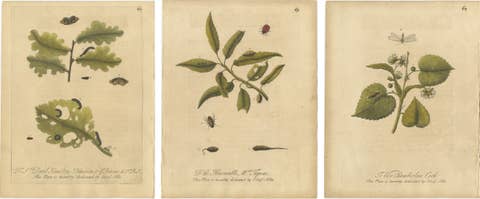
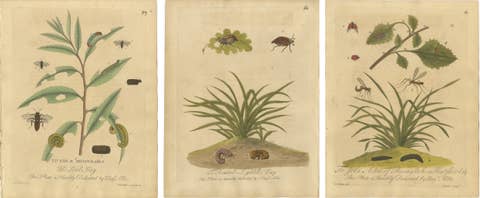
Butterfly Life Cycle on Flowering Plant – Albin Hand-Colored Engraving, ca.1720
€ 310
Original antique · The actual sheet photographed · Certificate of authenticity on request · Sold unframed · Worldwide shipping from € 15 (rates)
Date
1720
Sheet size
28.3 × 22.1 cm (11.1 × 8.7 in)
Condition
Good
Reference
BG-14185-51
What the condition grades mean
Excellent
Bright and clean, with no faults worth mentioning.
Very good
Only light signs of age, such as faint toning.
Good
Normal signs of age for a sheet of this period: toning, some foxing, small marks or neat old repairs.
Fair
Clear faults such as staining, tears or repairs, priced to match.
Every fault we see is written in the condition note, and the whole sheet is shown uncropped in the photos.
Condition
Good condition for an early 18th-century engraving. Light age toning to the paper, minor spotting, and soft handling wear at the margins. Plate mark visible. Colors remain clear and well preserved.
About this sheet
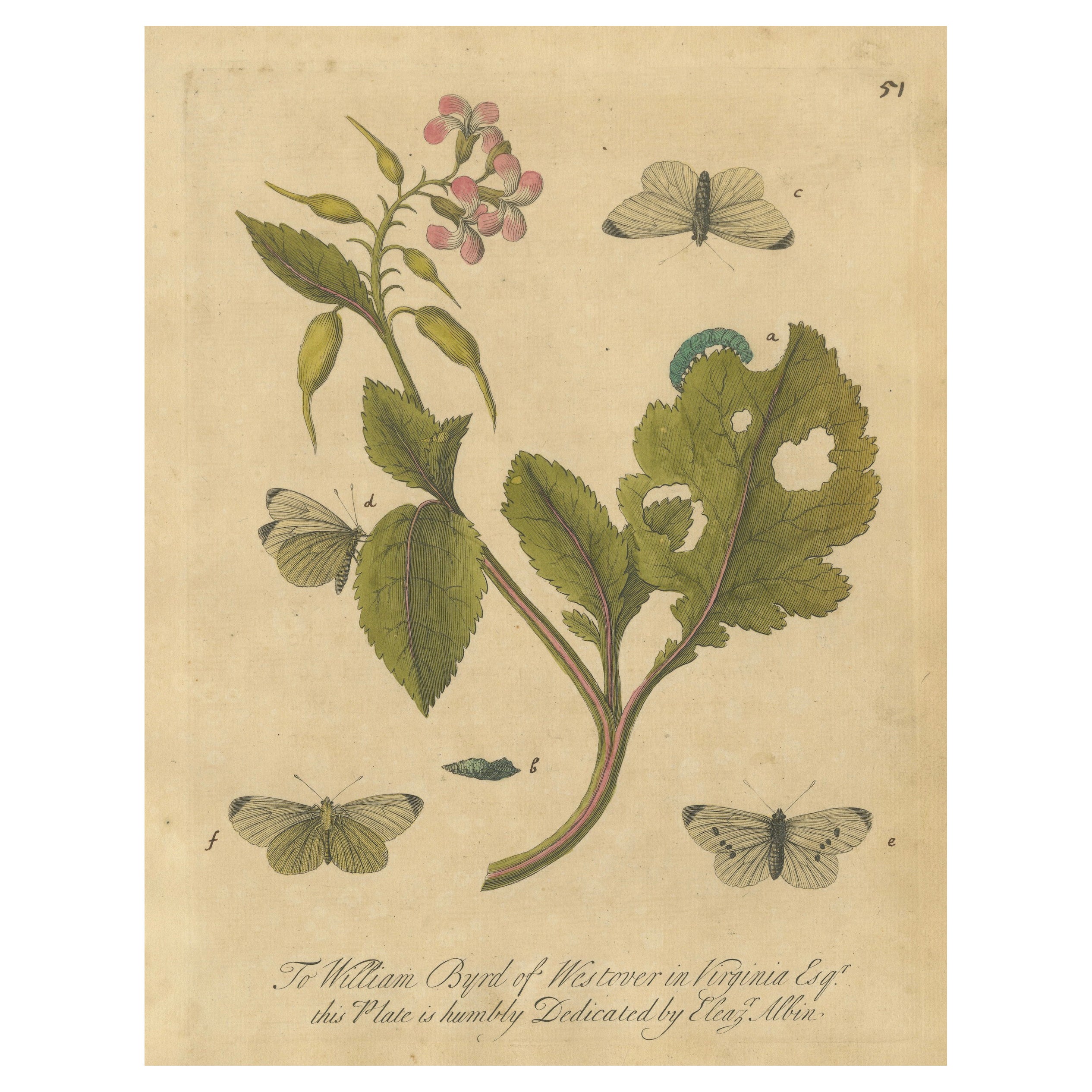
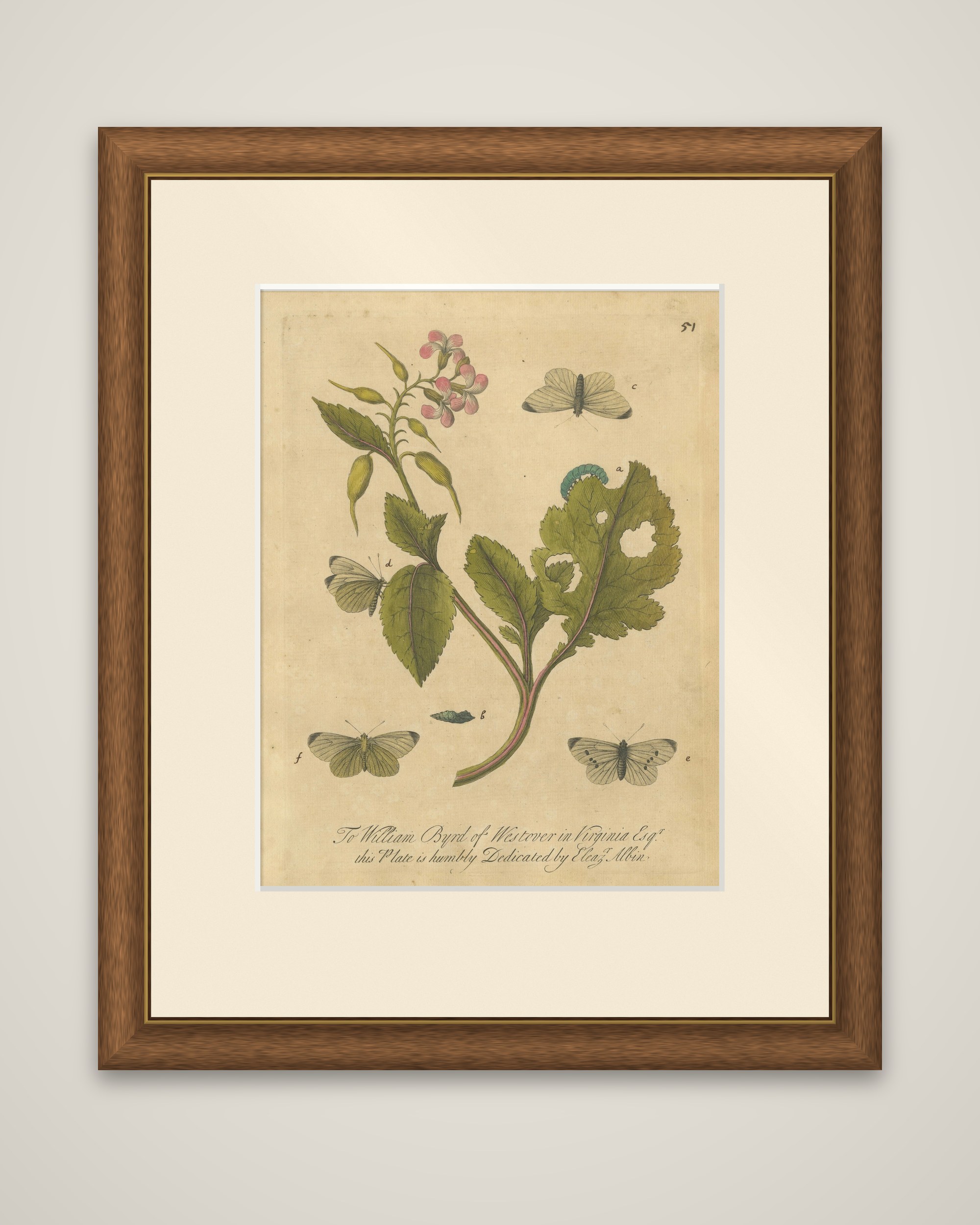
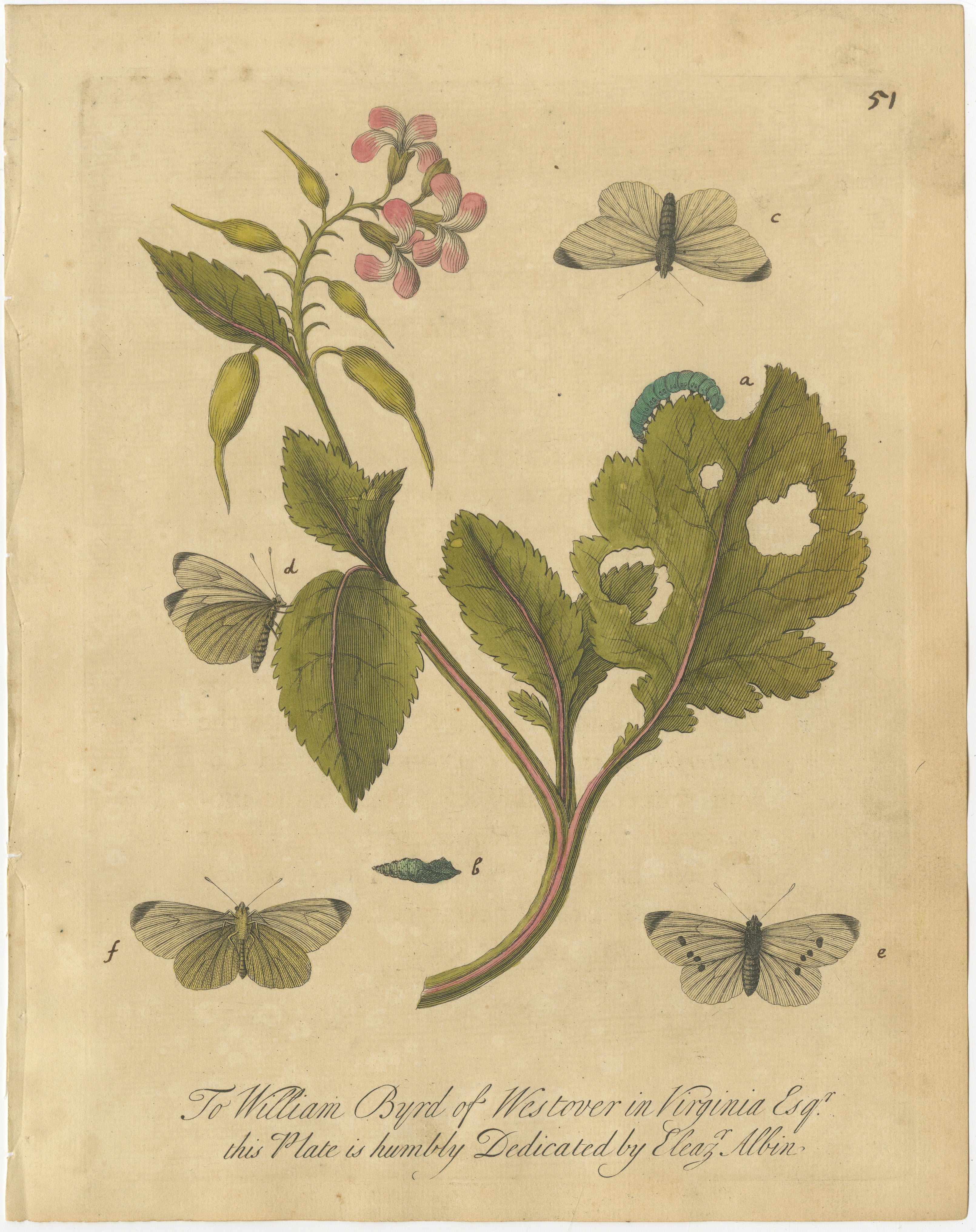
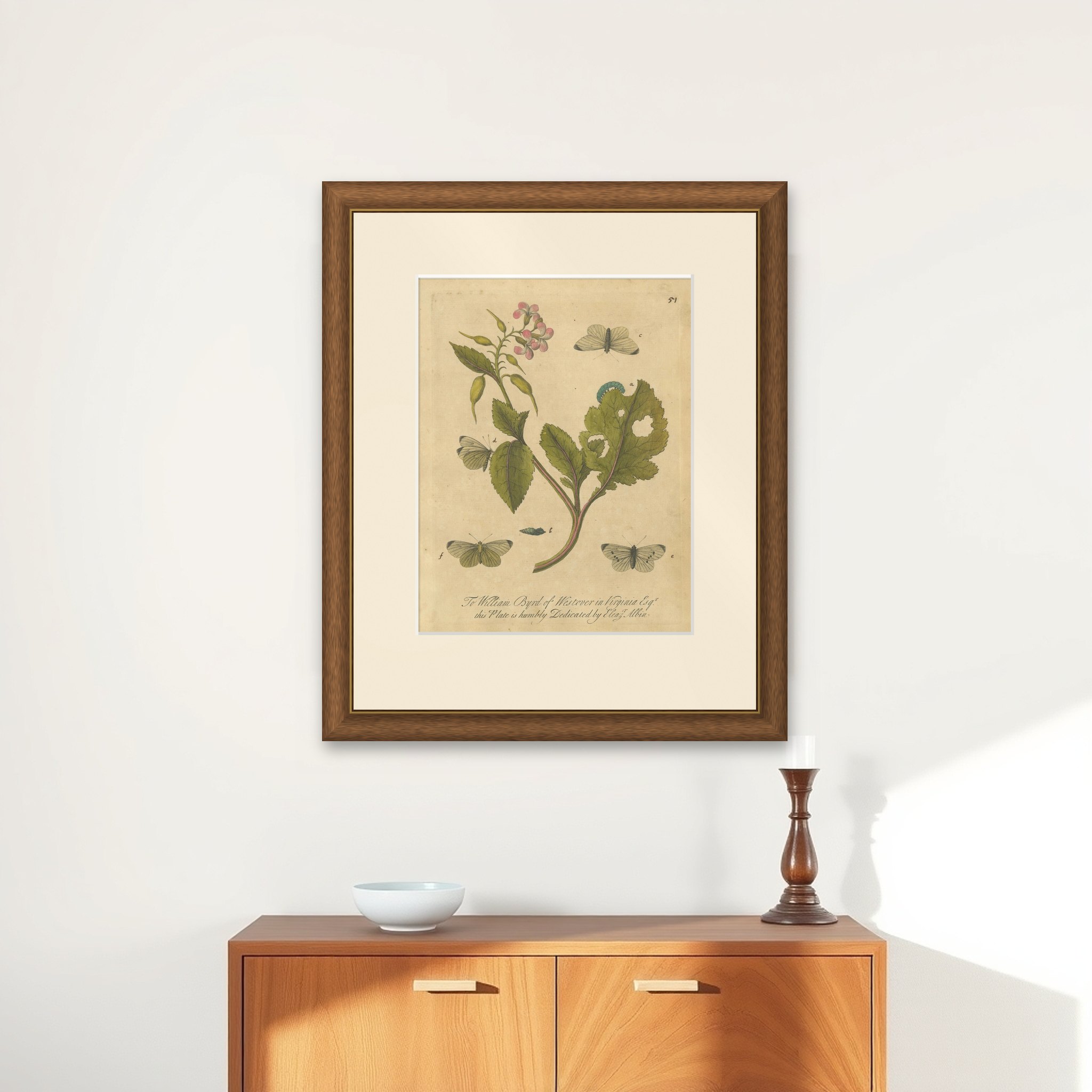
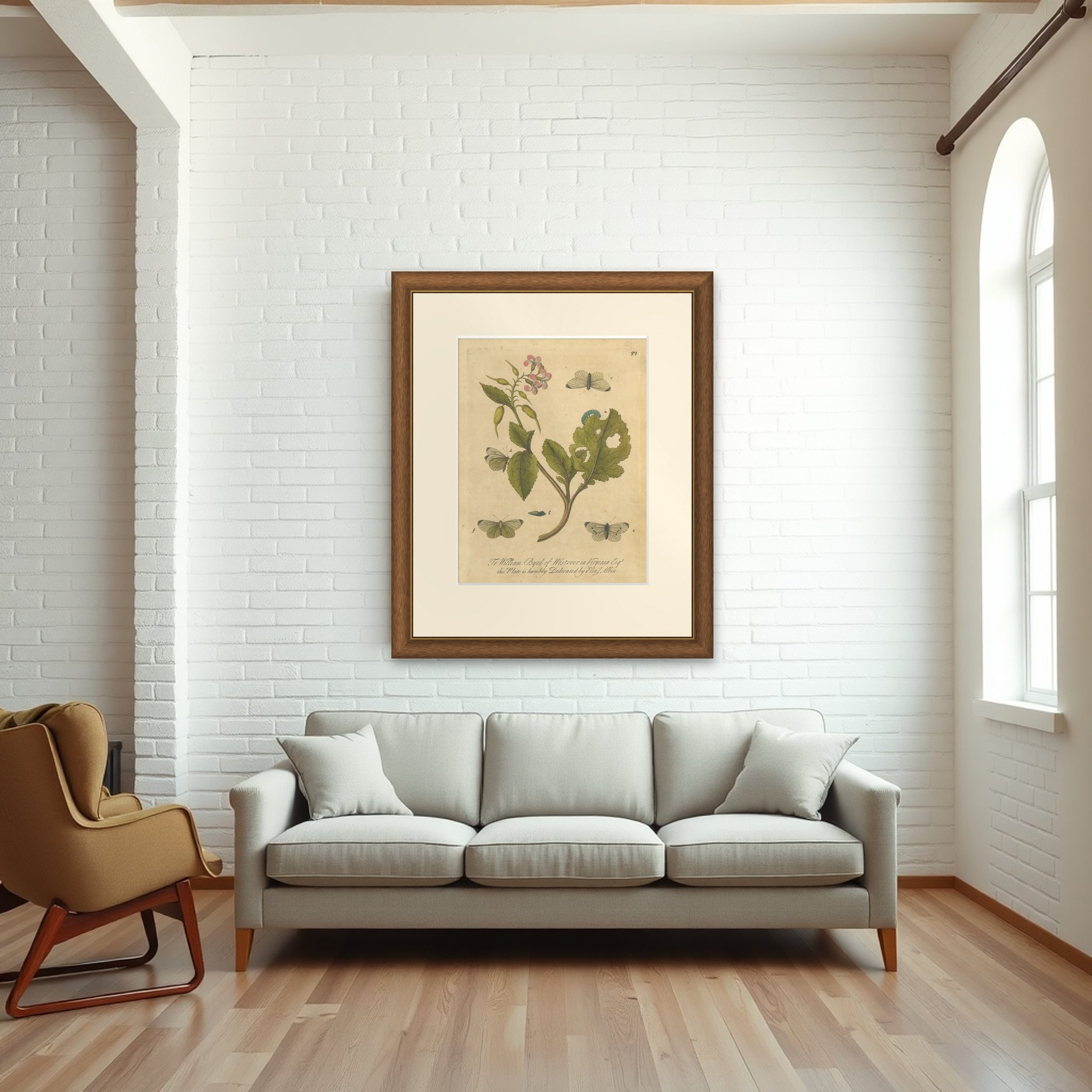
A butterfly and its host plant from A Natural History of English Insects by Eleazar Albin, an original copper engraving published in London in 1720 with period hand color. The plate number 51 is engraved in the upper right corner.
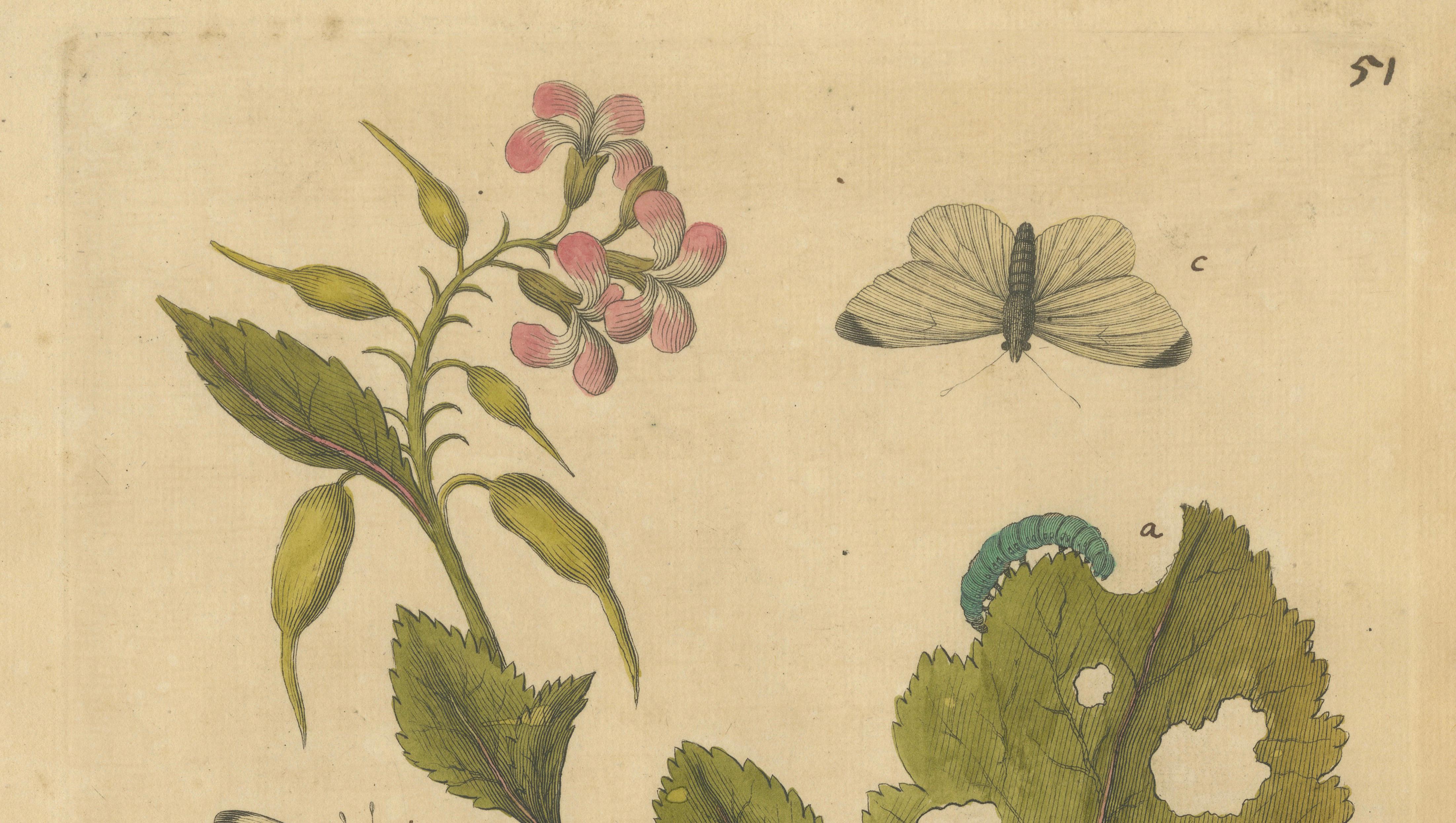
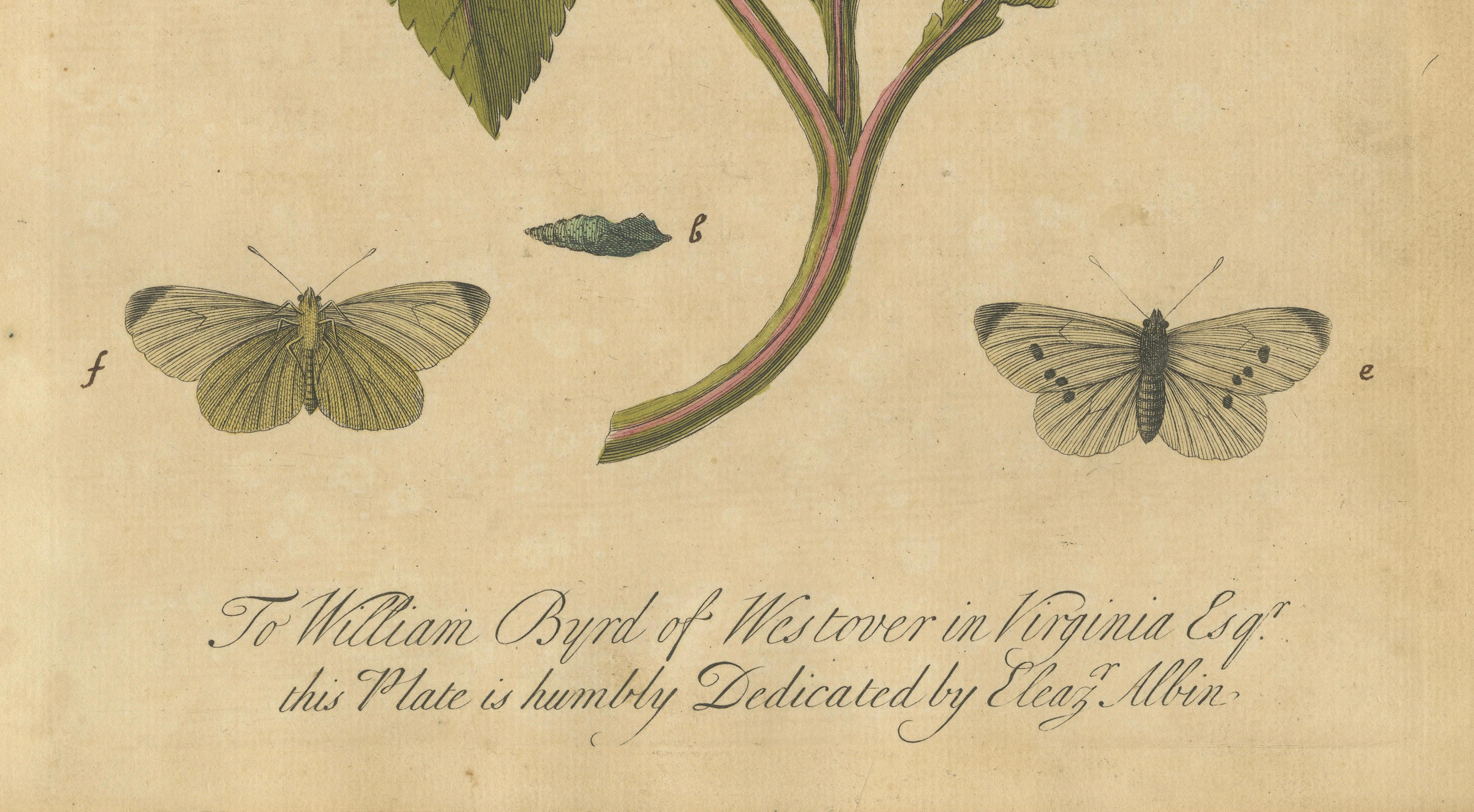
The plate follows the insect through its life cycle on the plant. A blue-green caterpillar (lettered a) feeds on a large leaf already eaten through with holes, a small chrysalis (b) lies below the stem, and four adult butterflies (c, d, e and f) are shown in different positions around the plant, which is drawn with a spray of pink flowers, seed pods and serrated leaves. Albin was among the first English naturalists to show insects on the plants they fed on, rather than as isolated specimens.
The engraved dedication at the foot reads "To William Byrd of Westover in Virginia Esqr. this Plate is humbly Dedicated by Elea[zar] Albin." William Byrd II was a Virginia planter, colonial official and writer, and the dedication links this English natural history plate to colonial Virginia. The subject itself is English, so the Virginia connection lies in the dedicatee alone.