About this sheet
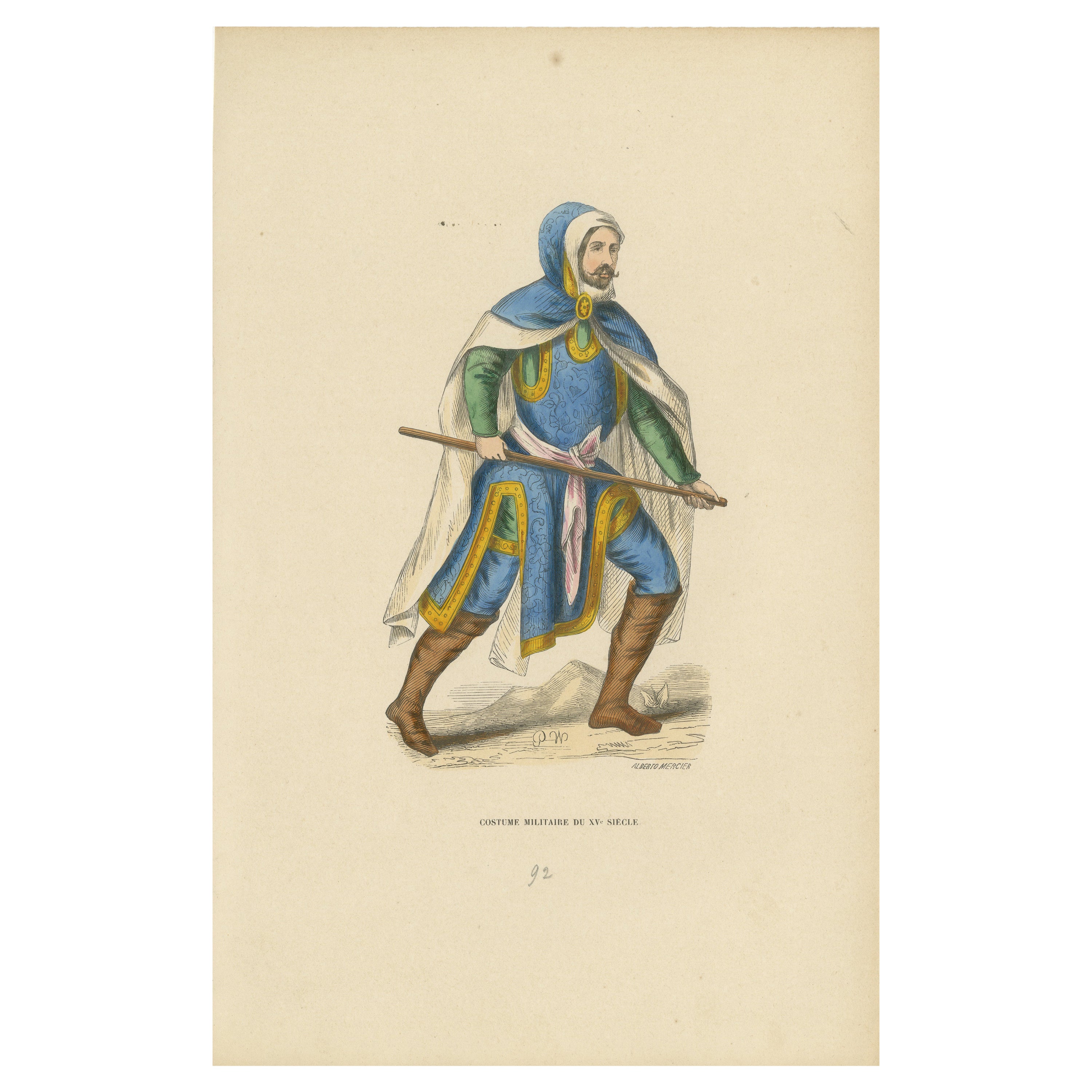
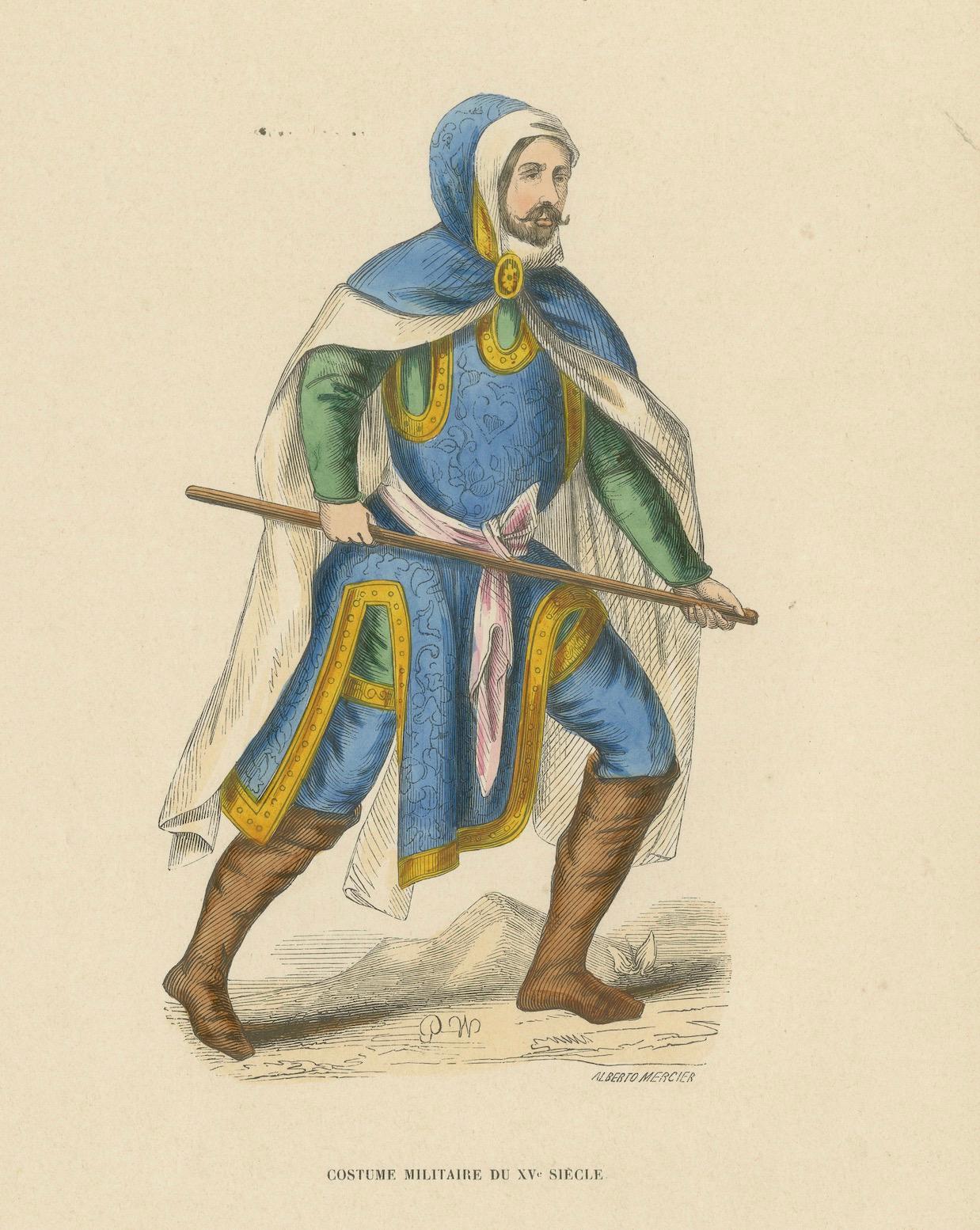
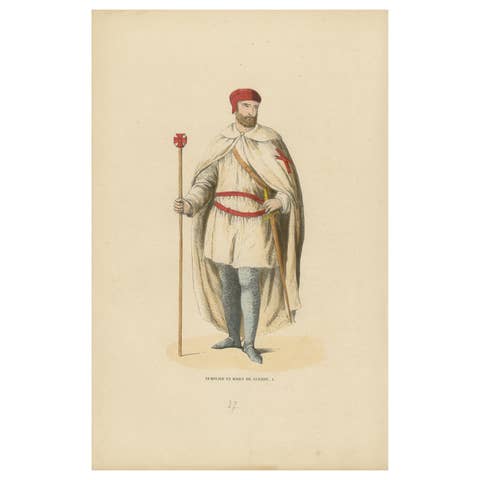
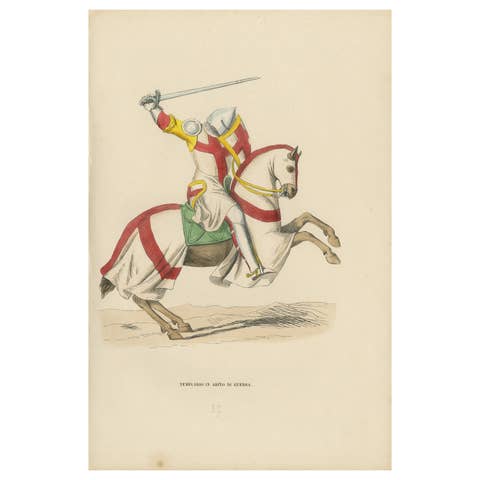
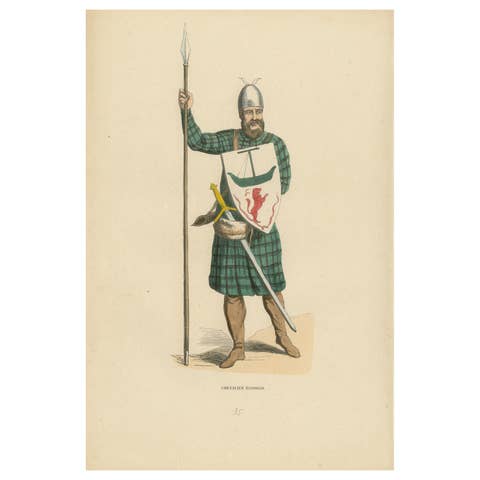
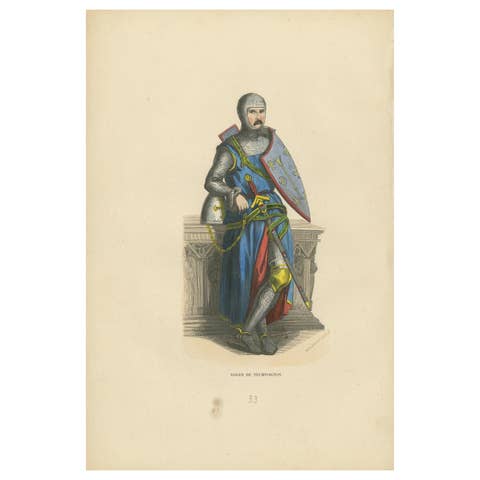
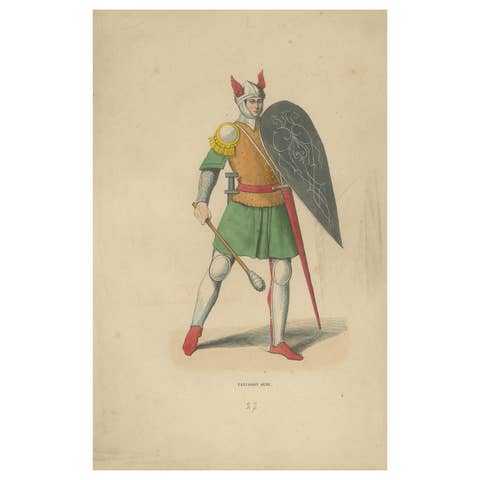
This original handcolored historical illustration presents a military figure from the 15th century, clad in an ornate costume that showcases both functionality and the aesthetic sensibilities of the time. The figure stands with a commanding presence, holding a staff that indicates his readiness and status as a person of authority.
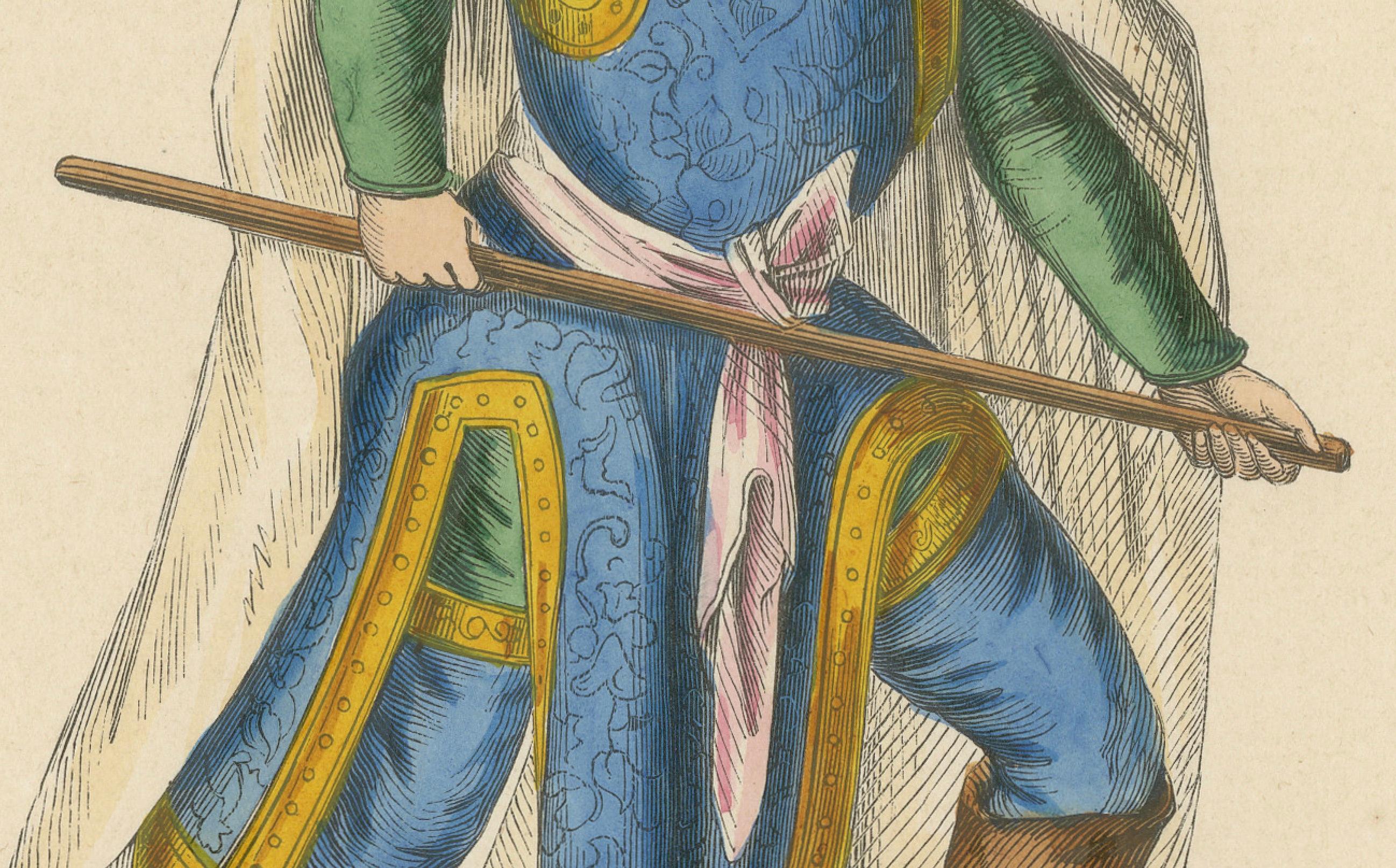
His outfit is richly decorated with intricate patterns and bold, contrasting colors. The deep blue tunic is both practical for mobility and striking to the eye, adorned with golden circular embellishments that catch the light, indicating a rank of distinction. Over this, a white cloak with a blue lining drapes elegantly, perhaps indicating a rank or a specific role within the military hierarchy.
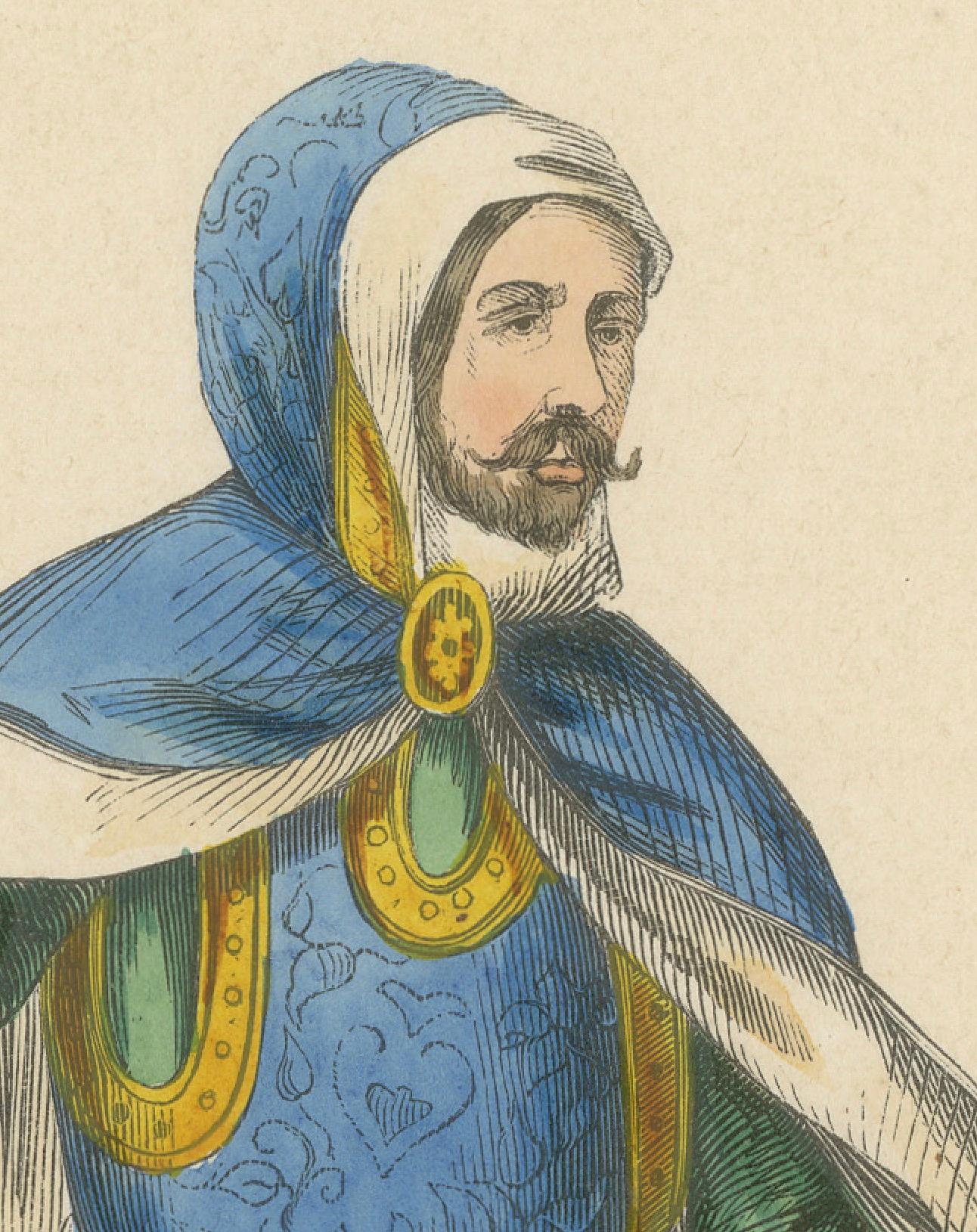
The headgear, a blue hood with golden accents, serves the dual purpose of protection and symbol of status. The large, decorative clasps at the shoulder not only secure his cloak but also serve as a display of wealth and power.
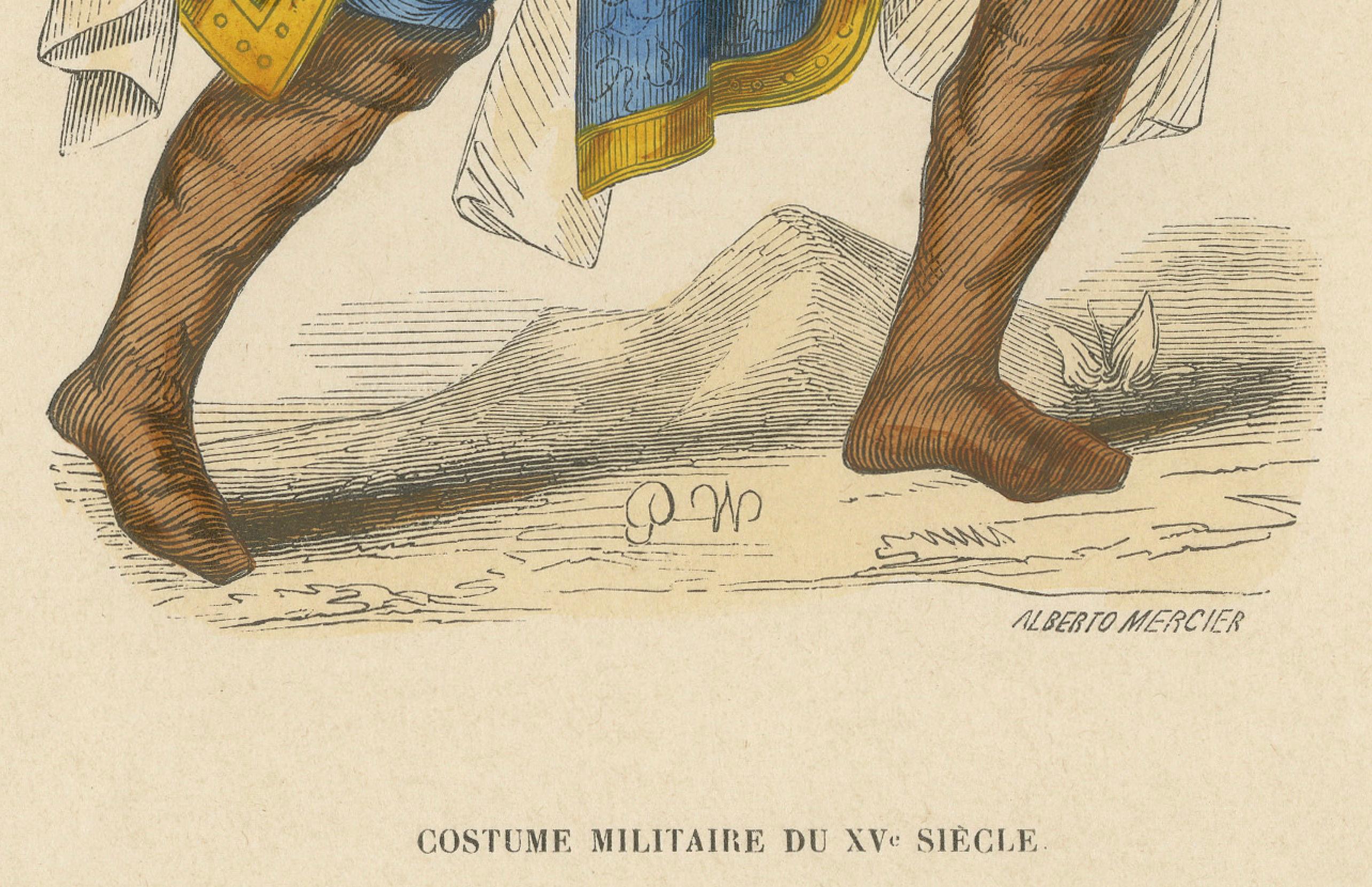
His leggings are armored for protection, with patterns that complement the grandeur of his tunic. The soft pink sash around his waist adds a touch of color to the ensemble, perhaps signifying a particular allegiance or order within the military.
This portrayal is a window into the martial fashion of the period, where even the warriors dressed with an eye for detail that went beyond mere protection, embedding symbolism and status into every thread of their attire. It reflects the importance of visual impact on the battlefield, where one's appearance could inspire both allies and intimidate opponents.
The colors have a nice glow over them. Historically, egg whites, known as glair, and sometimes egg yolk were indeed used in illumination and painting, particularly in manuscripts, to give colors a brighter appearance and to add a sheen or gloss to the work. This technique was quite common during the Middle Ages and into the Renaissance.
Egg whites can be applied as a varnish over pigments to enhance their brightness and to protect the colors. This application could make the colors appear more vivid and also add a slight glossy sheen to the surface of the image.
Egg yolk, on the other hand, was commonly used as a binding agent in paint. It forms the basis of tempera paint, a medium that was widely used before the advent of oil painting. Egg yolk helps to create a durable and long-lasting color that adheres well to various surfaces.
In the context of the print from 1847, it's less likely that egg whites or yolks were used directly on the print, as by that time, commercial printing processes would have been more advanced and less reliant on such manual methods. However, if this print is a representation of an earlier style or is meant to mimic the appearance of hand-painted manuscripts, the original artists might have employed techniques or materials that gave a similar effect to those achieved with egg-based binders and varnishes.