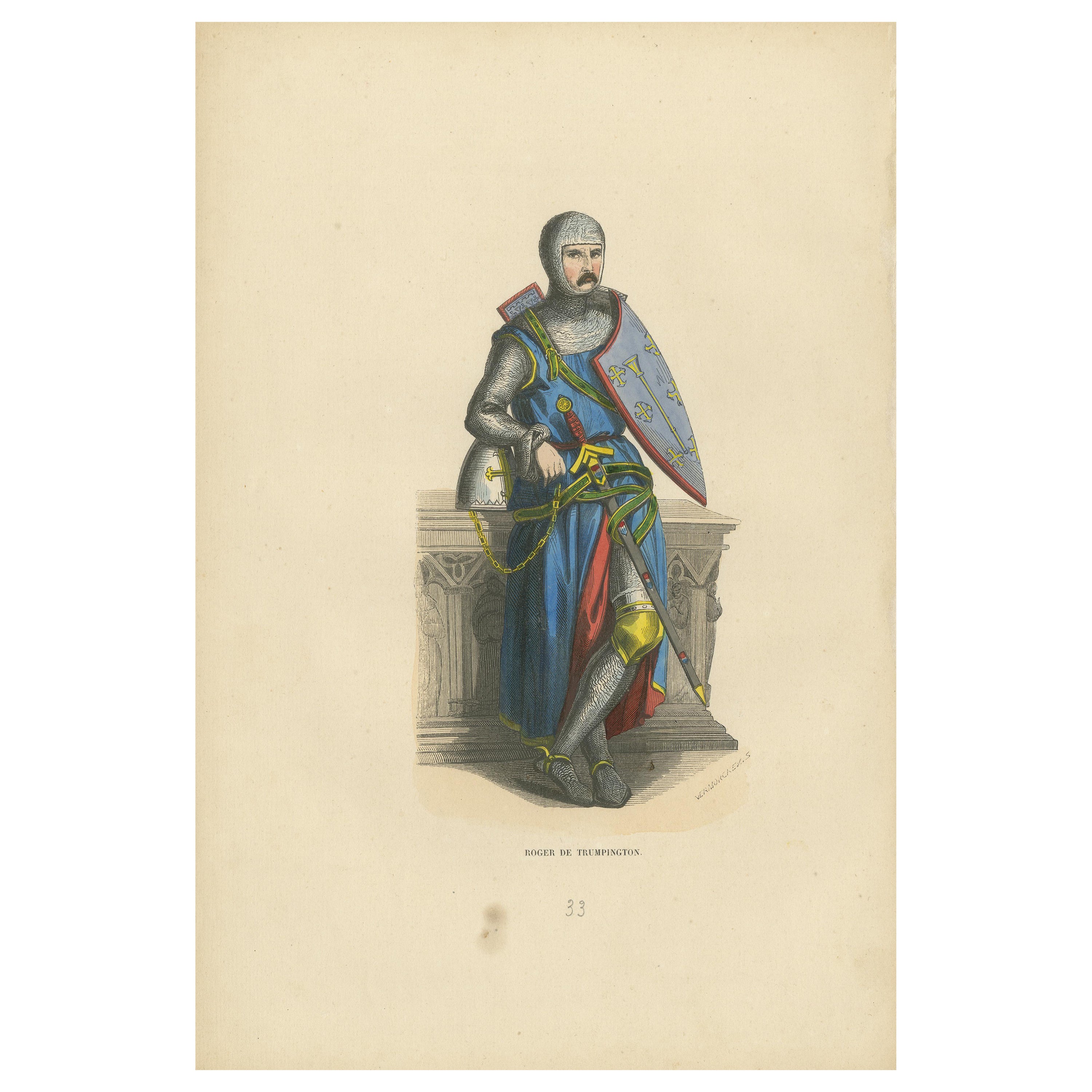
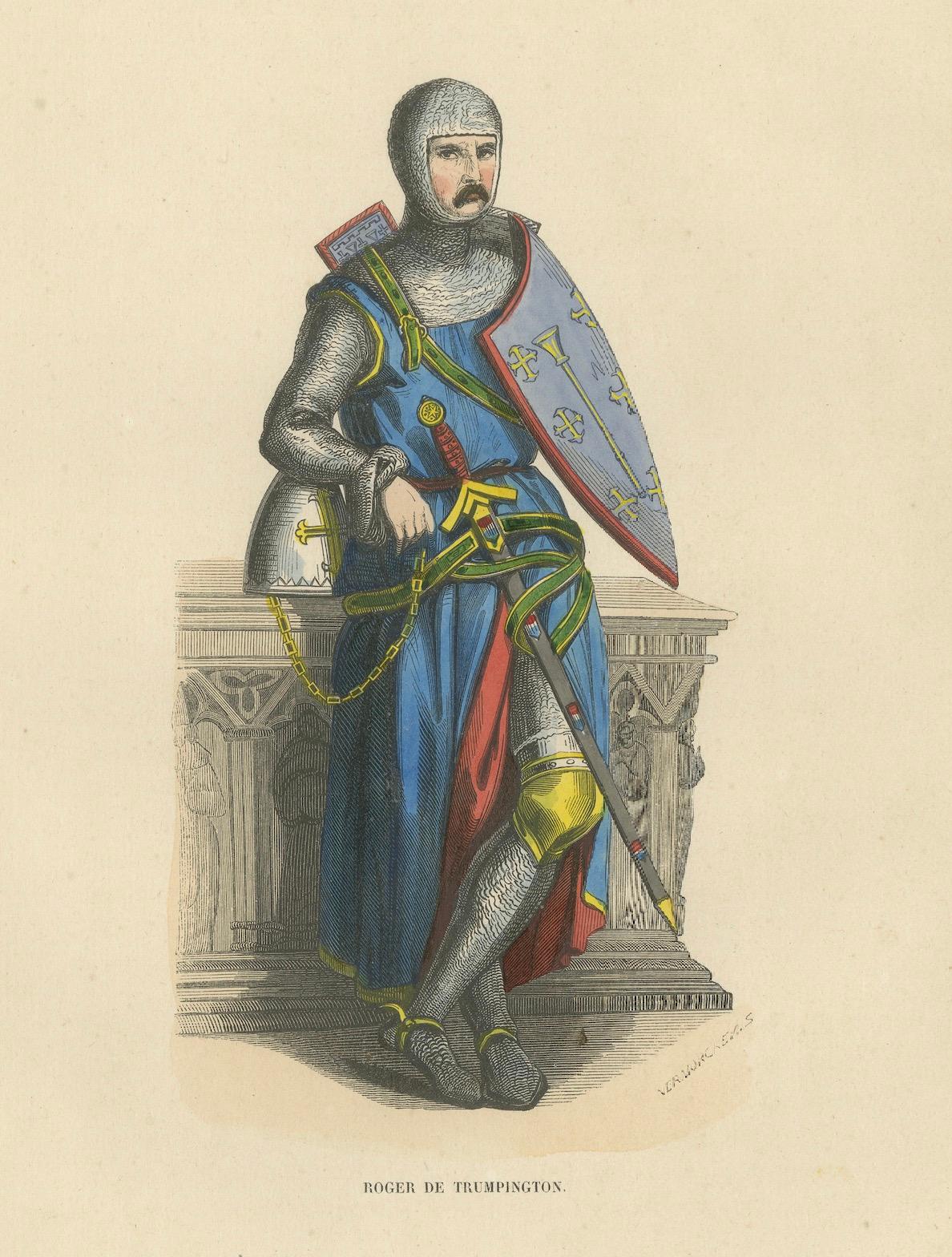
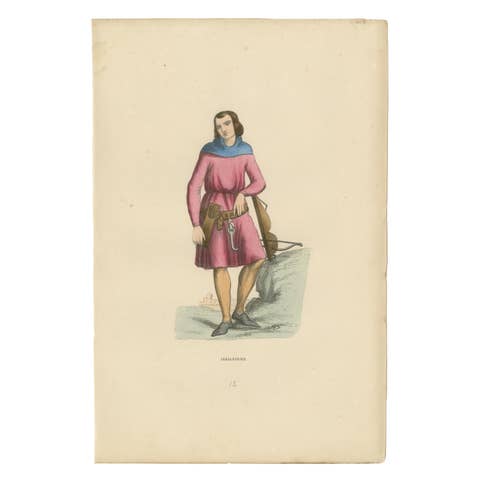
The Crusader's Rest: Sir Roger de Trumpington in Armored Repose, 1847
€ 190
One of a kind: this is the sheet in the photographs. Ships from Langweer, the Netherlands.
Date
1847
Sheet size
27 × 18 cm (10.6 × 7.1 in)
Condition
Good
Reference
BG-13635-24
Condition
Good. Overal very light toning and light soiling but the image itself clean except for one brown spot, and hand-colored almost 200 years ago and still in expliciet colors. Aged paper with typically warm, yellowish-brown hue, mostly around the edges.
About this sheet
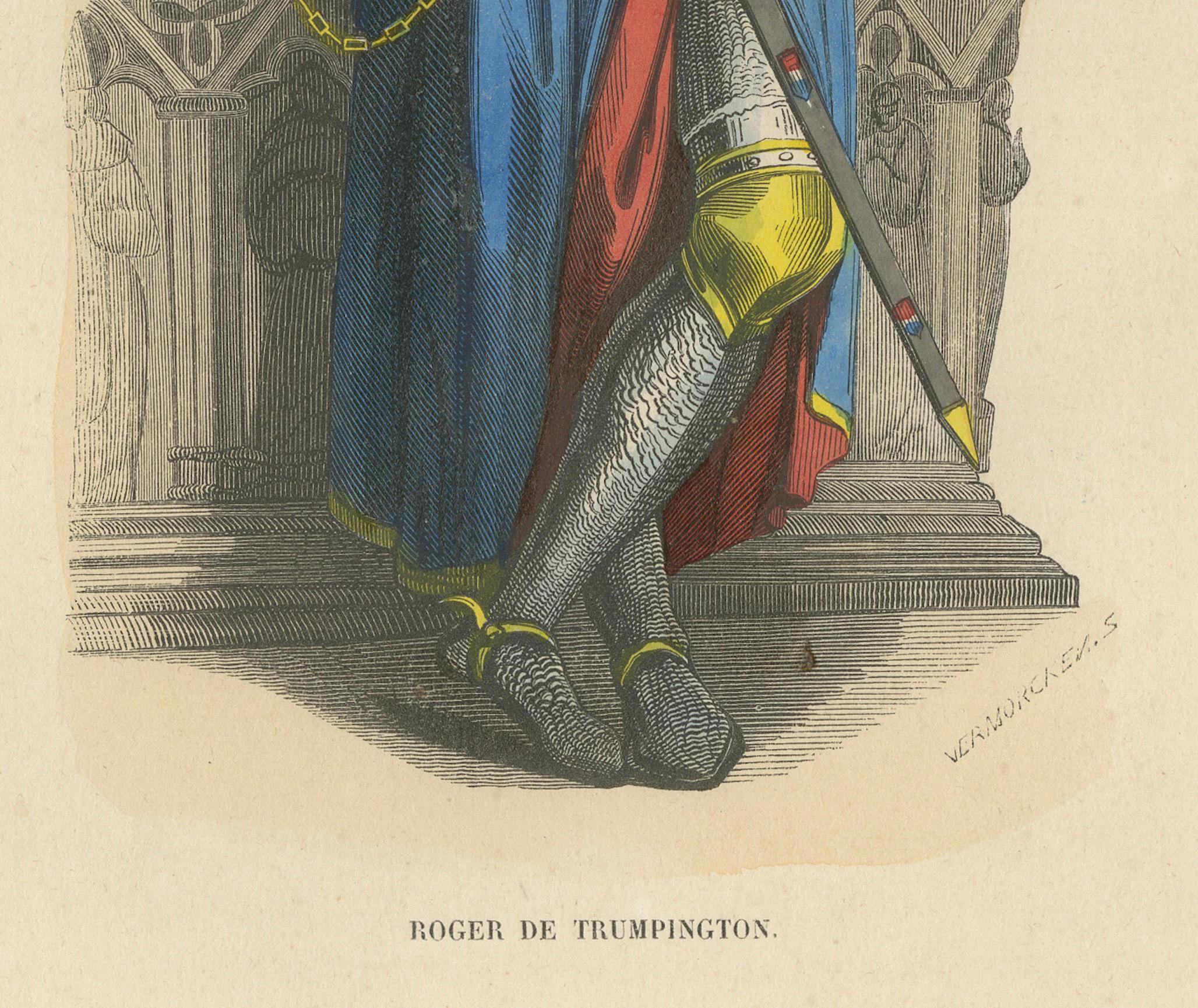
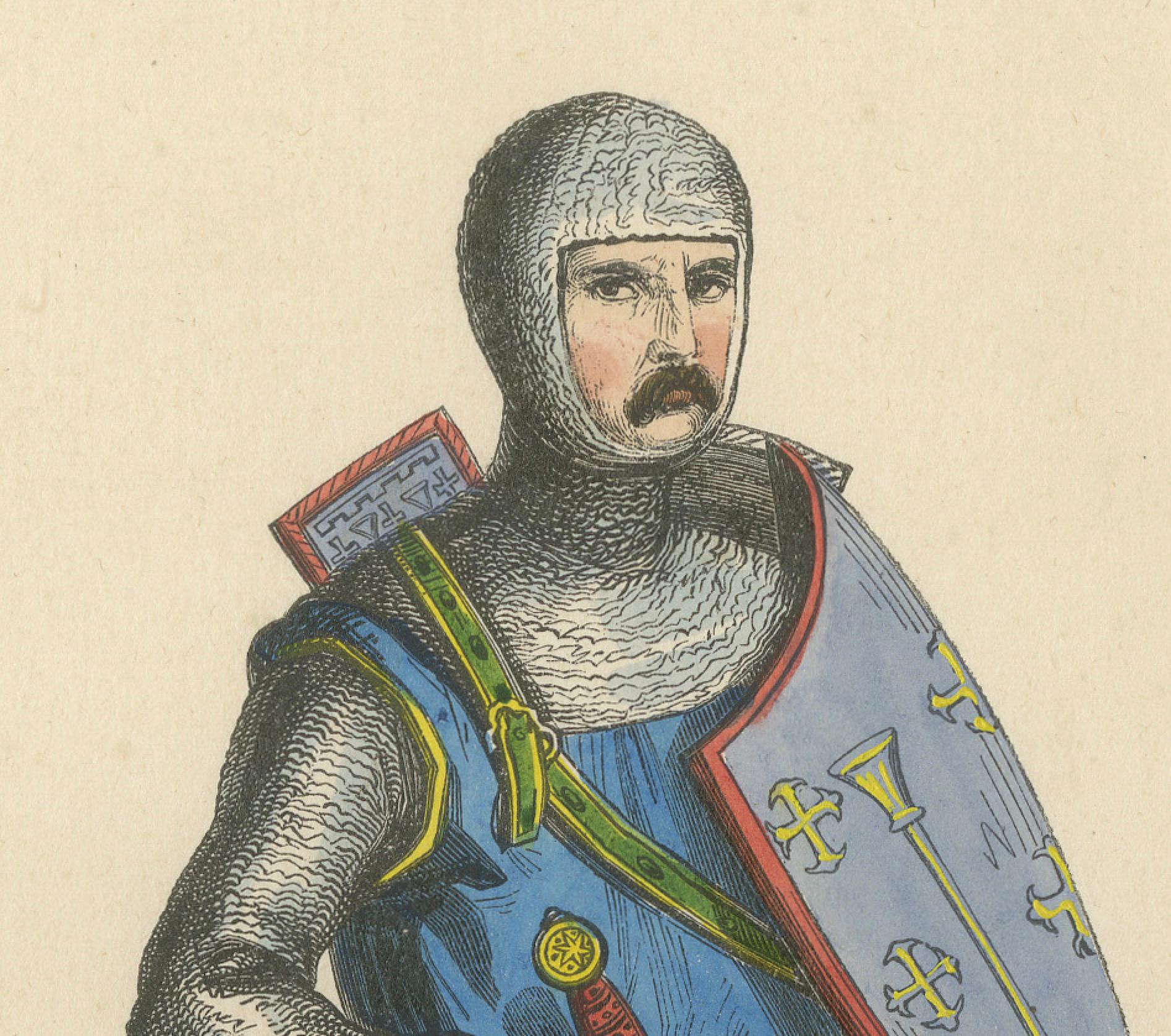
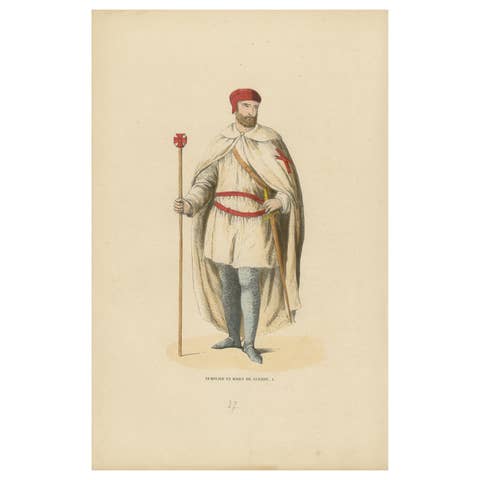
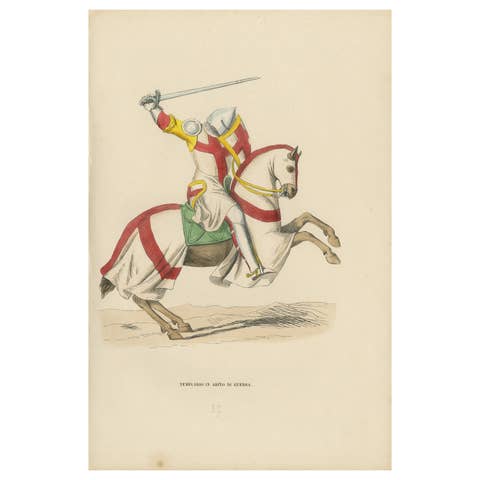
This old handcolored print depicts a figure named "Roger de Trumpington," historically associated with the Trumpington family, an English family with notable ancestry. The figure is portrayed in full armor, indicative of his status as a knight or nobleman prepared for battle.
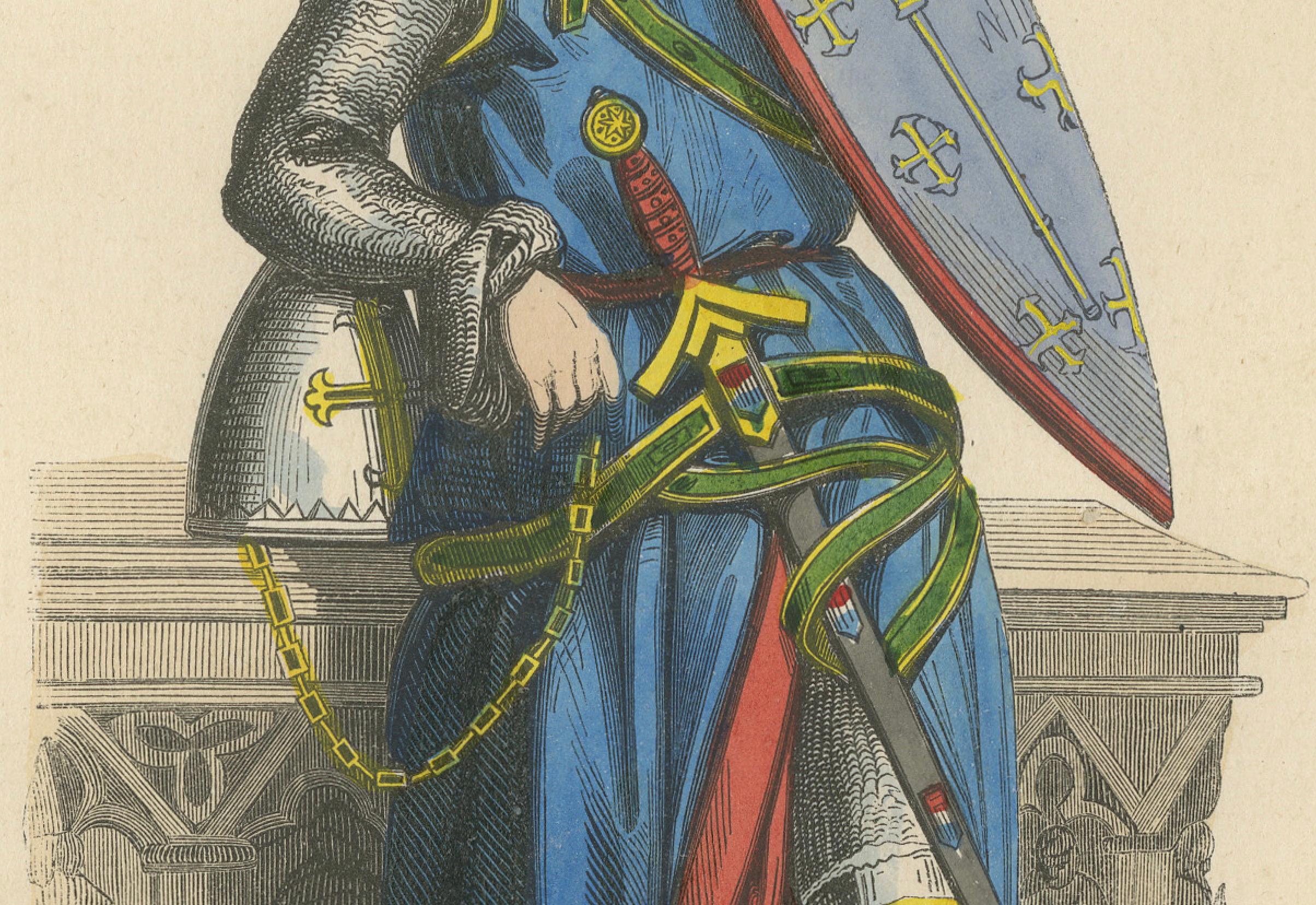
He is wearing a chain mail hauberk with a surcoat emblazoned with heraldic symbols over it, which would identify his lineage or affiliation. The surcoat features a prominent display of crosses, possibly indicating participation in a crusade or a religious connection. His helmet is off, suggesting that he is not in immediate combat, and he has a sword sheathed at his side, showing his readiness for battle.
The blue and red colors of his surcoat are vibrant and would stand out on a battlefield or in a tournament. The golden belt around his waist could denote a rank of nobility, and the gauntlets on his hands are part of his battle-ready attire.
The title alludes to the historical context of the Crusades and the chivalric tradition of the era.
More about the vivid colors of this original hand-colored antique print:
Egg whites can be applied as a varnish over pigments to enhance their brightness and to protect the colors. This application could make the colors appear more vivid and also add a slight glossy sheen to the surface of the image.
Egg yolk, on the other hand, was commonly used as a binding agent in paint. It forms the basis of tempera paint, a medium that was widely used before the advent of oil painting. Egg yolk helps to create a durable and long-lasting color that adheres well to various surfaces.
In the context of the print from 1847, it's less likely that egg whites or yolks were used directly on the print, as by that time, commercial printing processes would have been more advanced and less reliant on such manual methods. However, if this print is a representation of an earlier style or is meant to mimic the appearance of hand-painted manuscripts, the original artists might have employed techniques or materials that gave a similar effect to those achieved with egg-based binders and varnishes.