About this sheet
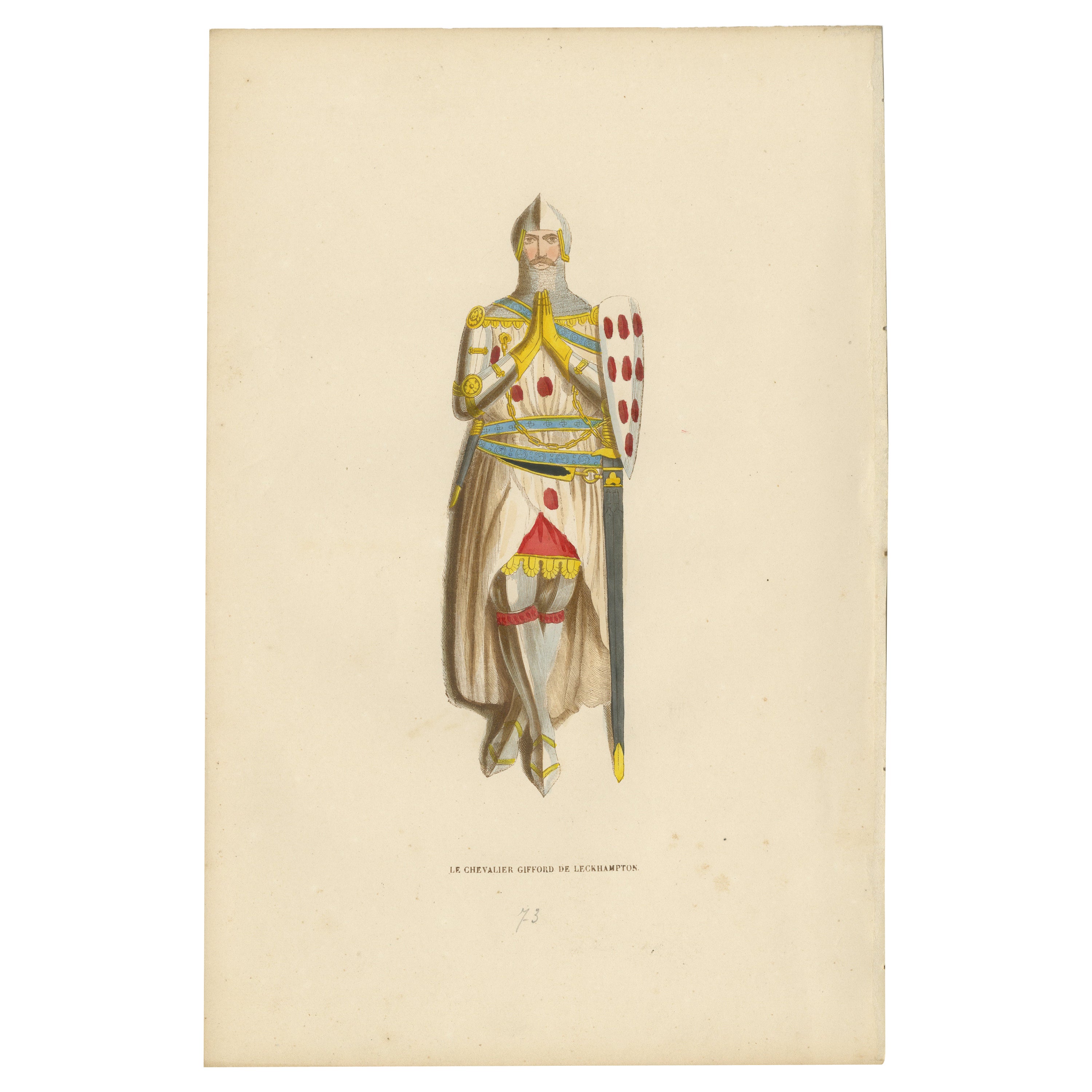
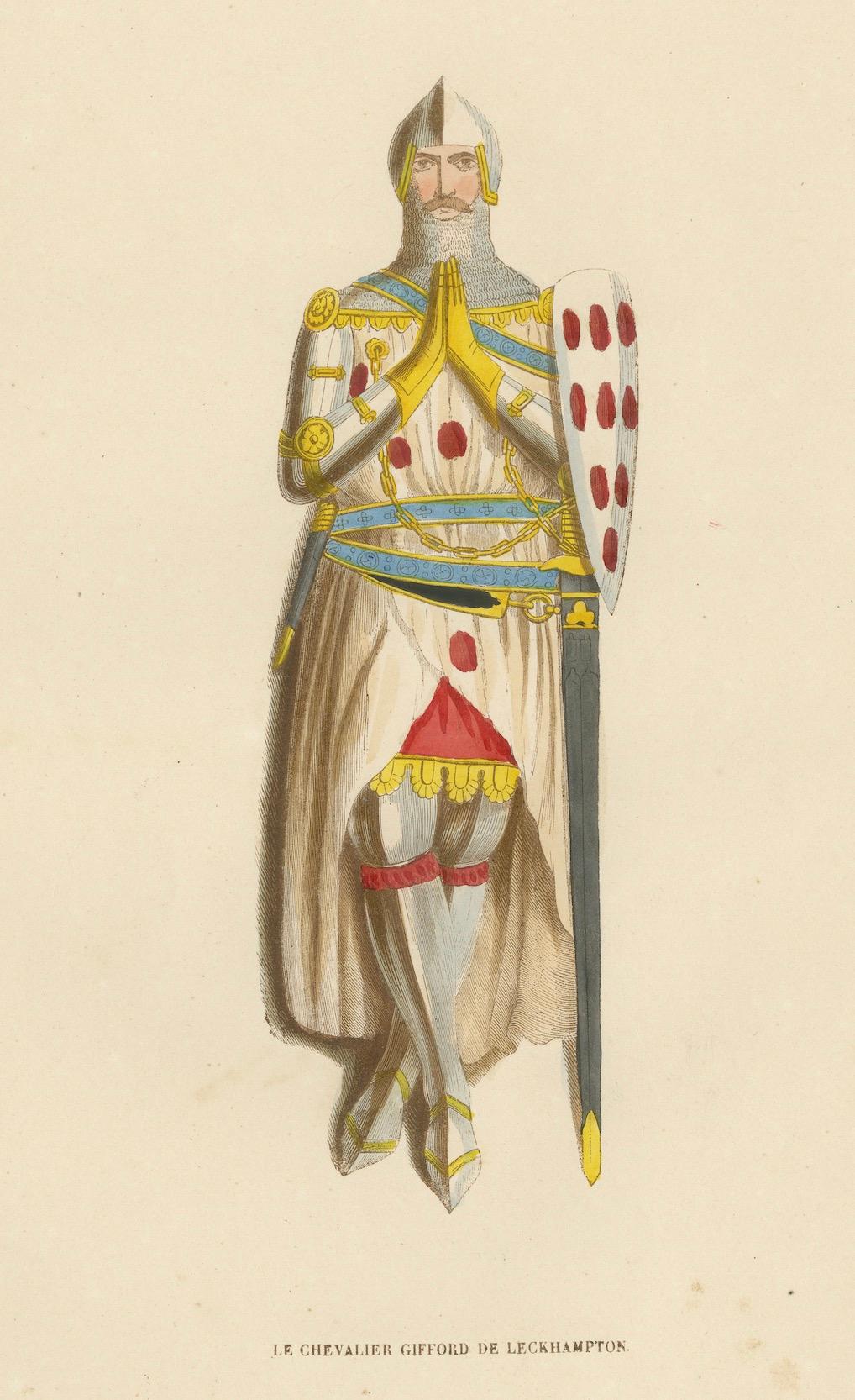
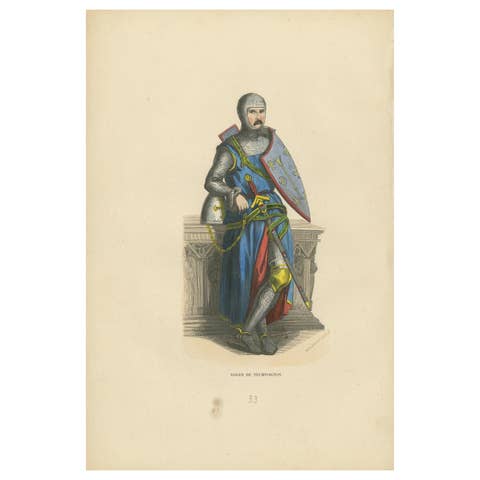
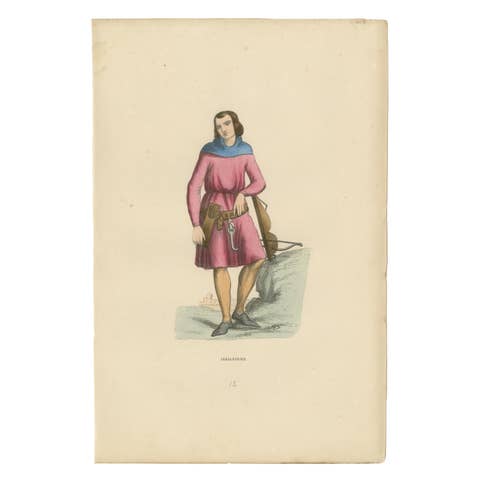
This print portrays the knight Gifford de Léchampton in full regalia, standing proudly as a personification of medieval chivalry and martial prowess. His armor is both functional and ornate, indicating his status as a high-ranking knight and his wealth.
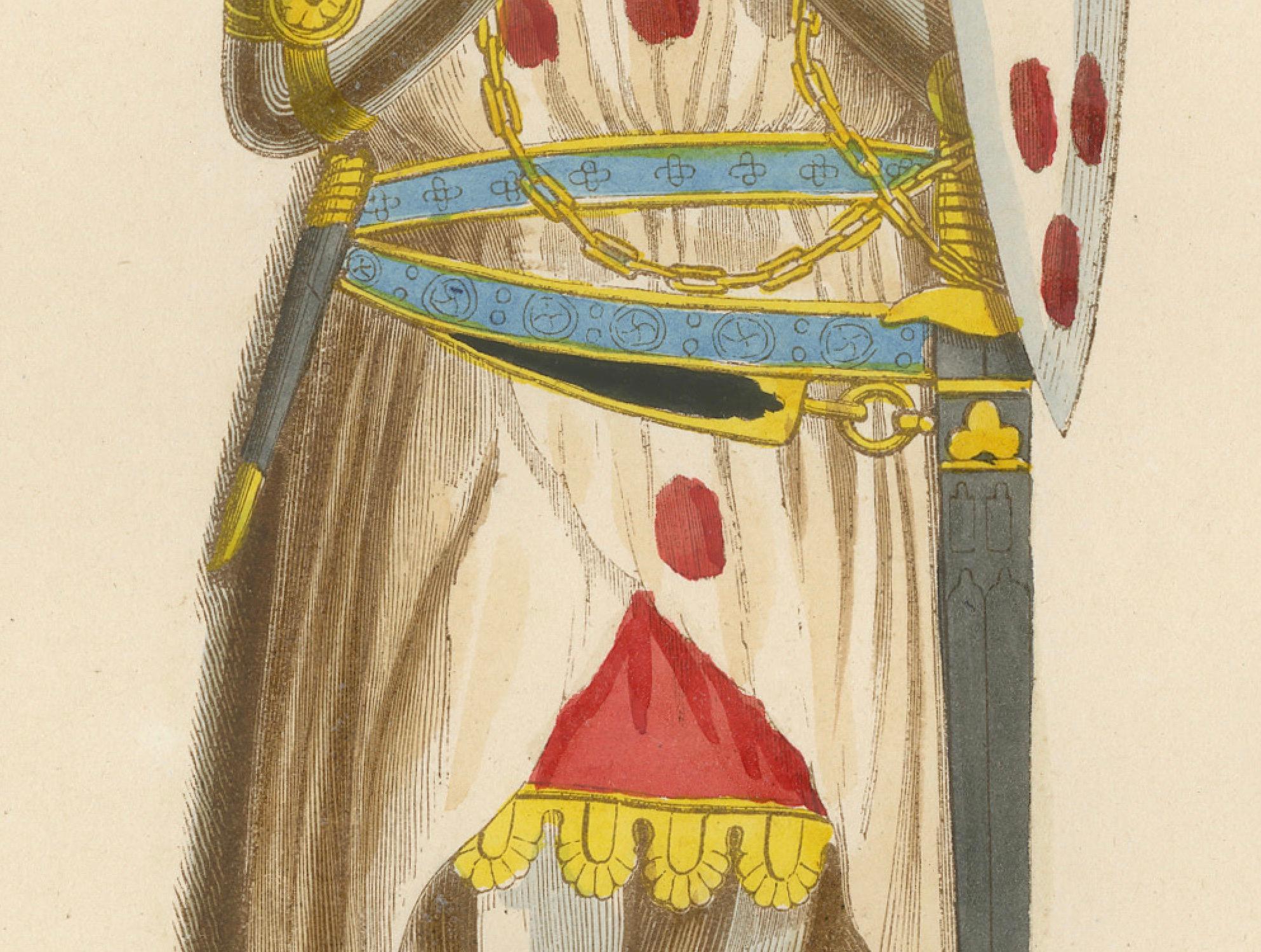
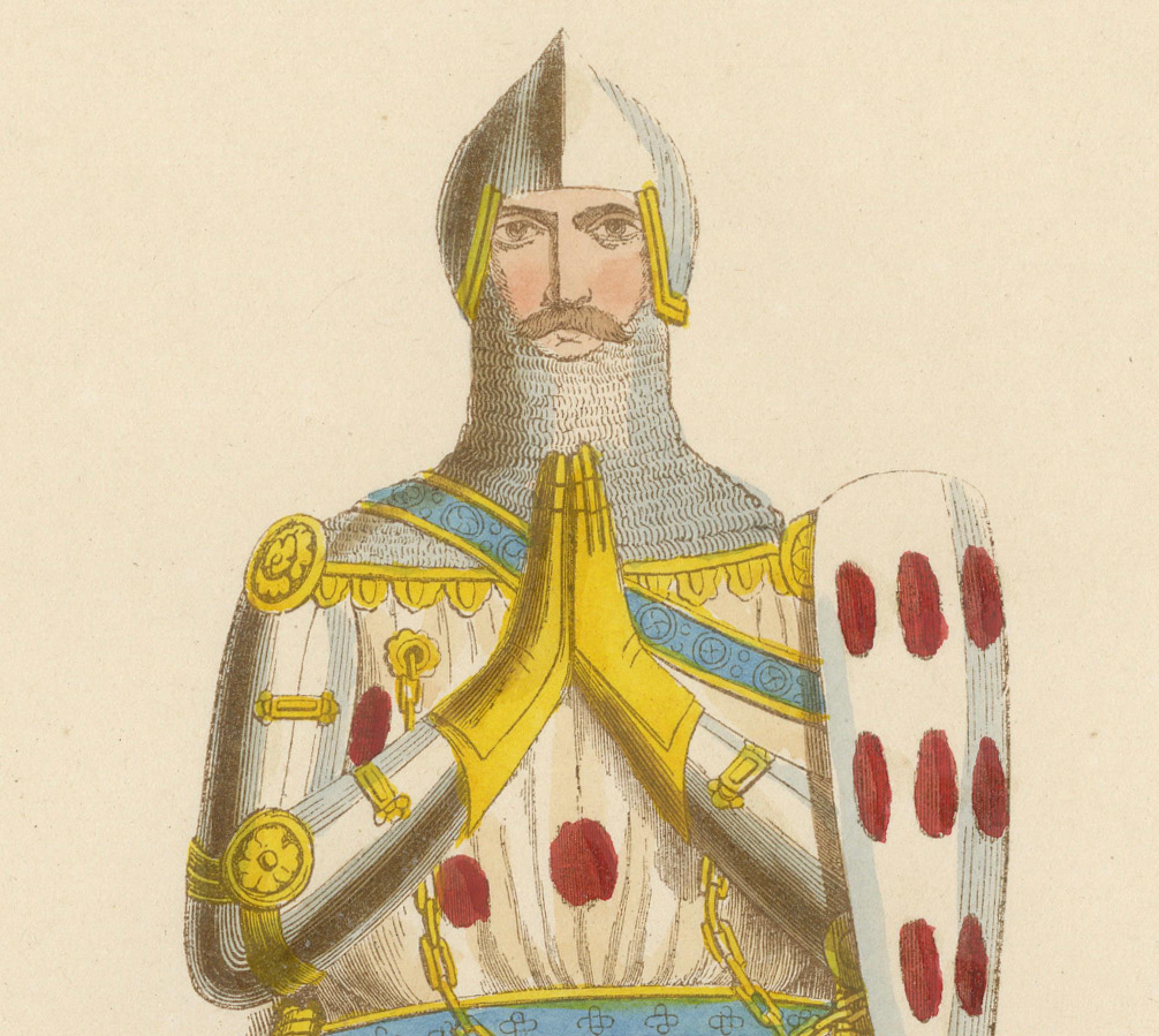
He is clad in a surcoat emblazoned with his coat of arms, a display of his noble lineage. The surcoat is richly decorated with a pattern of ermine spots and geometric shapes, typical of heraldic designs. The ermine fur, along with the red and gold colors, symbolizes his nobility, while the blue sash across his chest could represent a specific chivalric order or honor.
The knight's shield carries the same heraldic colors and motifs, reinforcing his identity and allegiances. His helmet is of a simple conical design, practical for battle, and is adorned with a narrow crown-like embellishment, which could denote a particular rank or achievement.
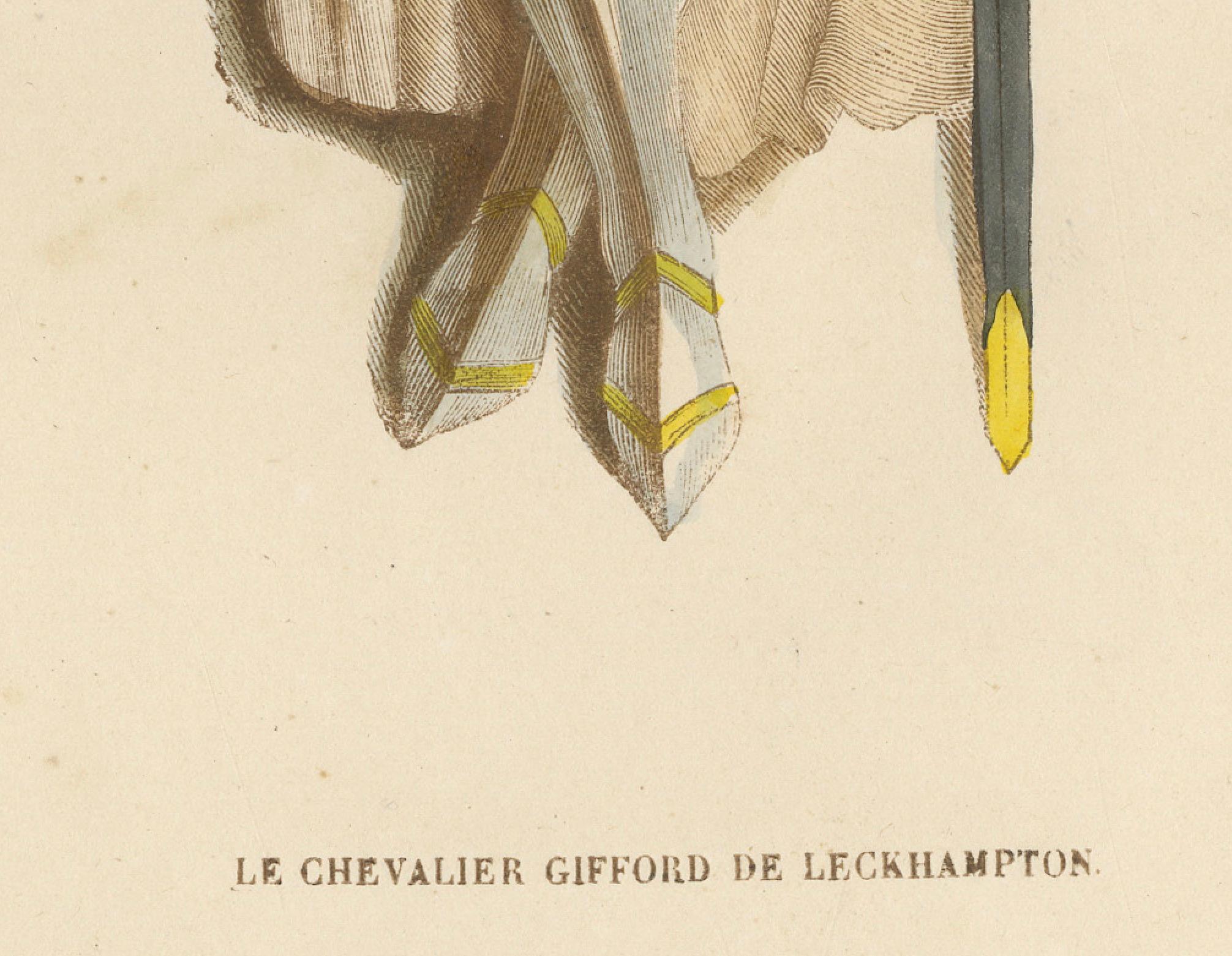
Gifford's legs are protected by mail chausses, and his feet are shod in pointed sabatons. The sword at his side is long and straight, suitable for a knight of his era, and his hand rests on its hilt, ready for action.
His gaze is directed forward, exuding confidence and a sense of duty. The expression on his face is calm and resolute, characteristic of a knight ready to defend his cause and honor.
The background is minimal, drawing focus to the figure and his elaborate attire. This image captures the romanticized ideal of knighthood prevalent during the medieval period—a combination of nobility, combat readiness, and a life dedicated to the codes of chivalry.
The colors have a nice glow over them. Historically, egg whites, known as glair, and sometimes egg yolk were indeed used in illumination and painting, particularly in manuscripts, to give colors a brighter appearance and to add a sheen or gloss to the work. This technique was quite common during the Middle Ages and into the Renaissance.
Egg whites can be applied as a varnish over pigments to enhance their brightness and to protect the colors. This application could make the colors appear more vivid and also add a slight glossy sheen to the surface of the image.
Egg yolk, on the other hand, was commonly used as a binding agent in paint. It forms the basis of tempera paint, a medium that was widely used before the advent of oil painting. Egg yolk helps to create a durable and long-lasting color that adheres well to various surfaces.
In the context of the print from 1847, it's less likely that egg whites or yolks were used directly on the print, as by that time, commercial printing processes would have been more advanced and less reliant on such manual methods. However, if this print is a representation of an earlier style or is meant to mimic the appearance of hand-painted manuscripts, the original artists might have employed techniques or materials that gave a similar effect to those achieved with egg-based binders and varnishes.