About this sheet
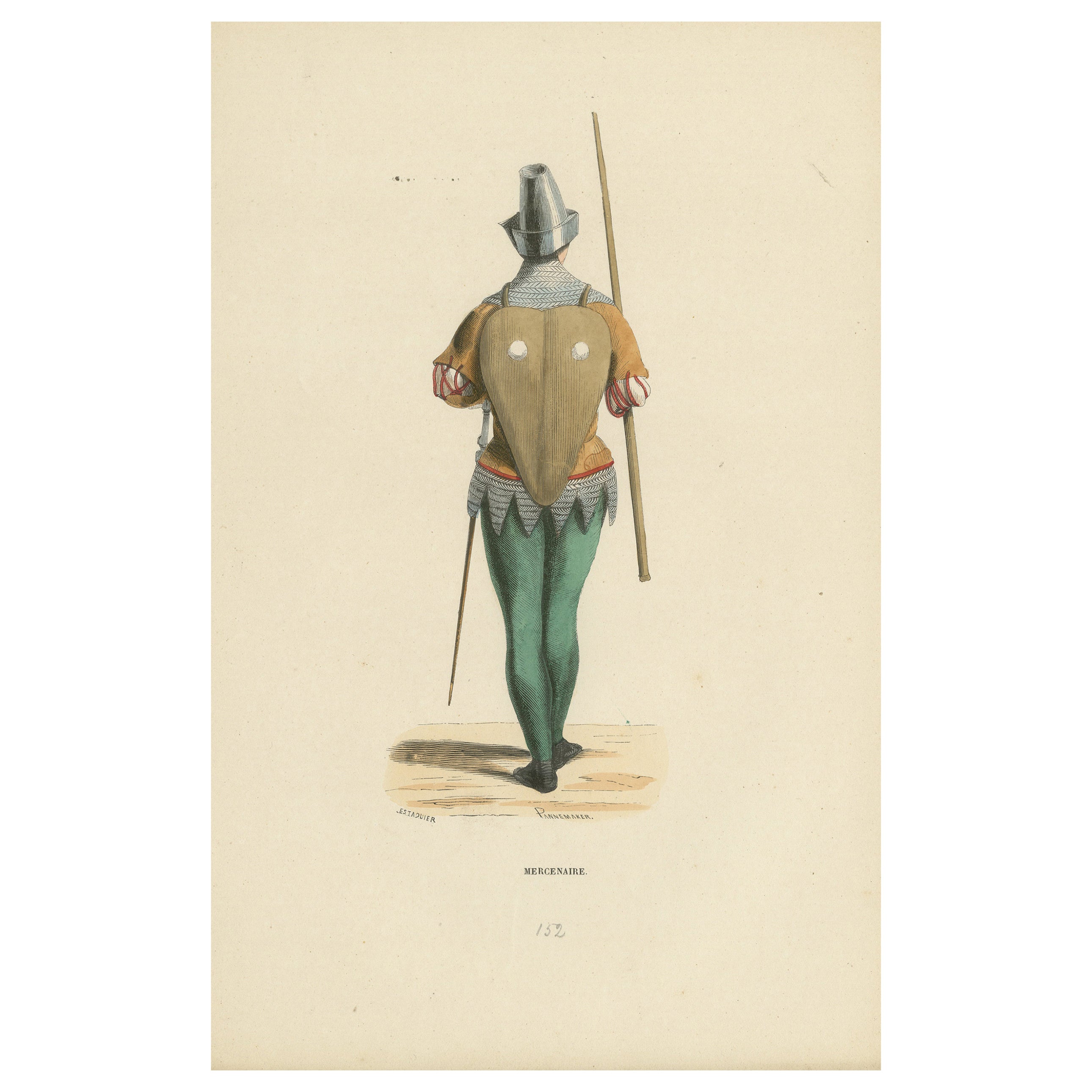
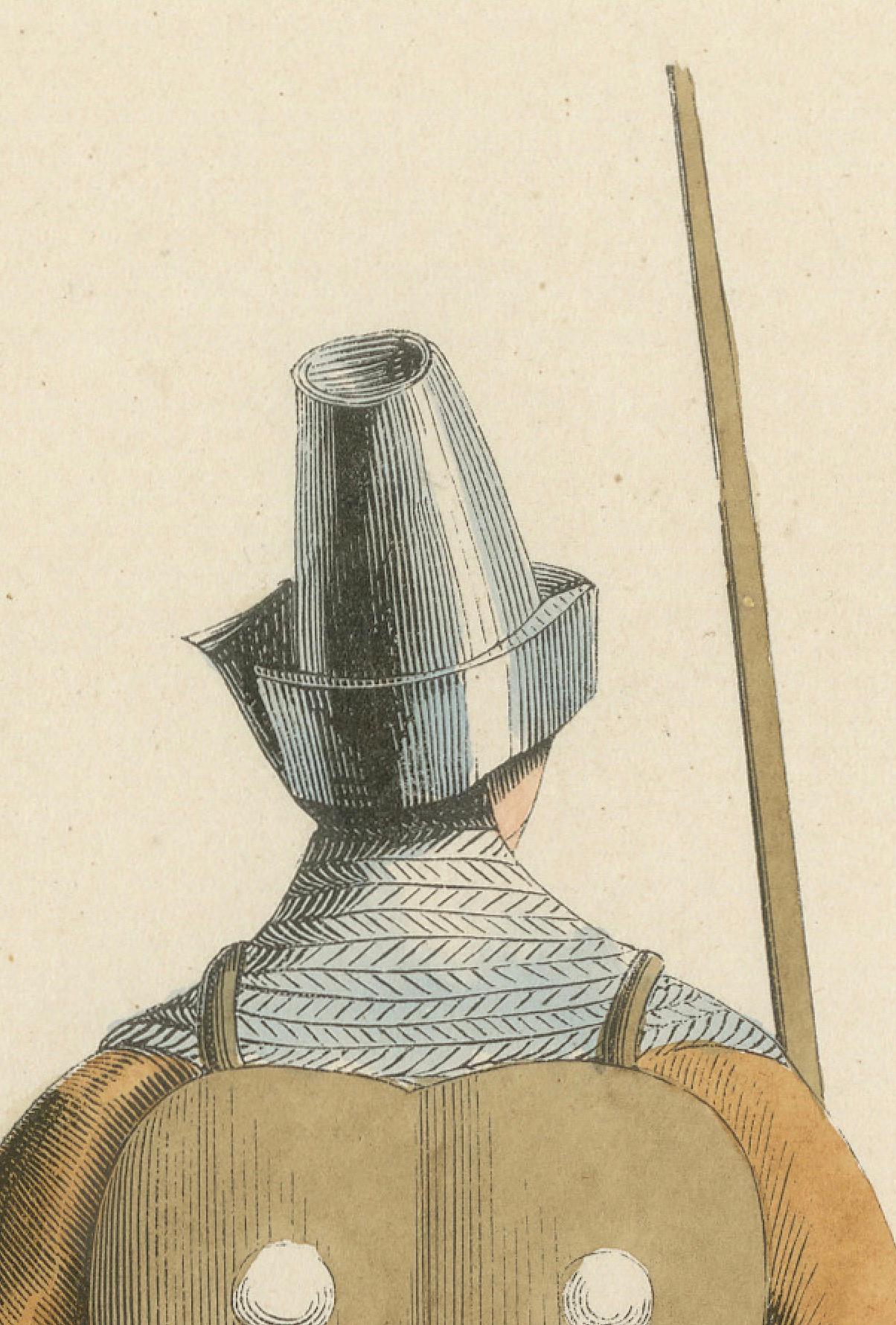
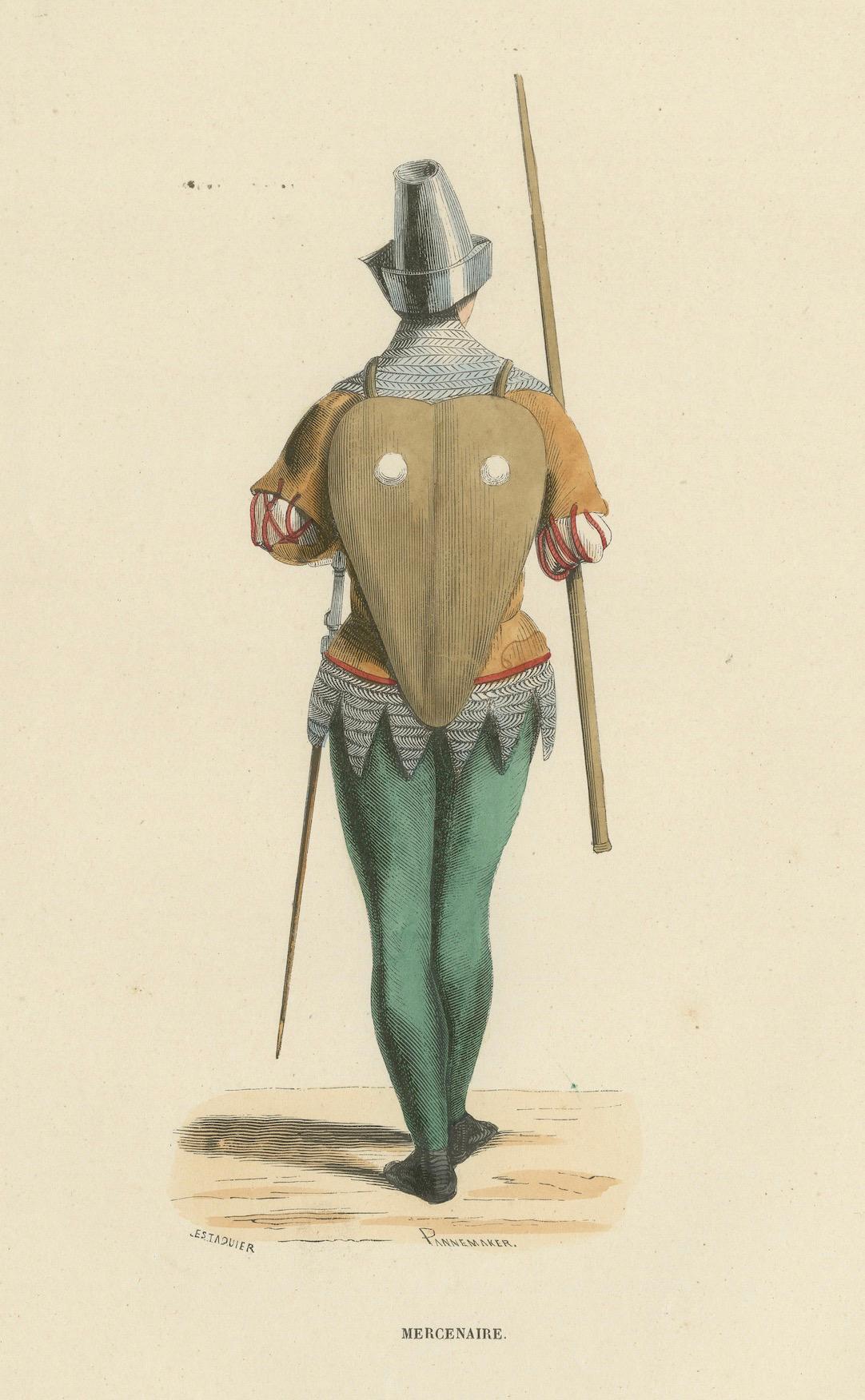
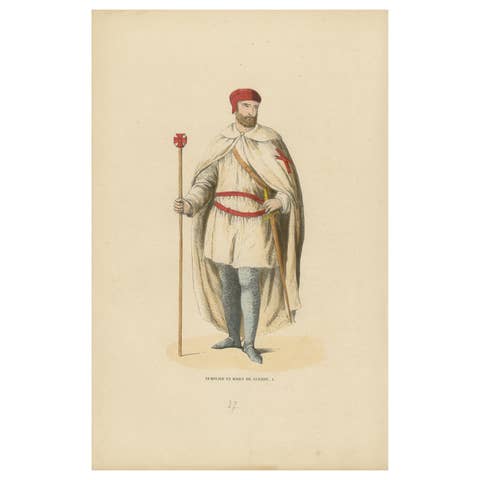
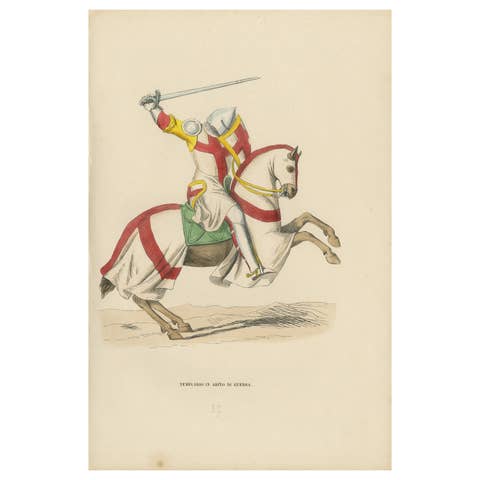
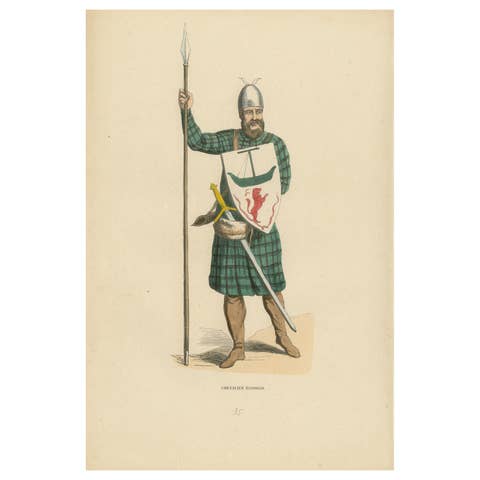
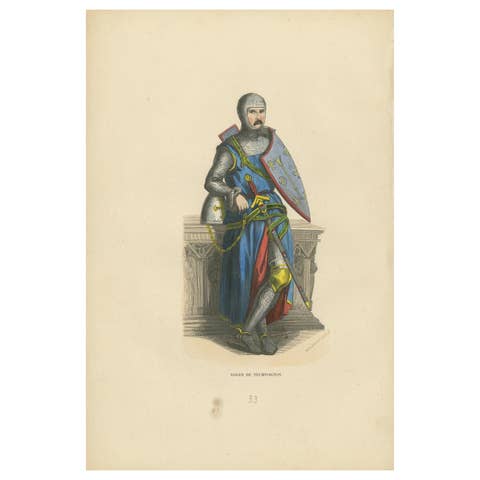
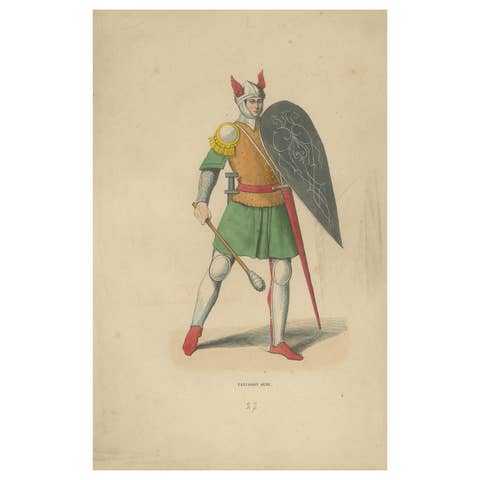
This lithograph from the "Costume du Moyen Âge" series, dated 1847, showcases the practical and robust attire of a mercenary from the Middle Ages. The illustration provides a rear view of the mercenary, emphasizing the protective elements of his armor. He is equipped with a metal helmet of conical shape, typical of the period for its straightforward construction and efficiency in deflecting blows.
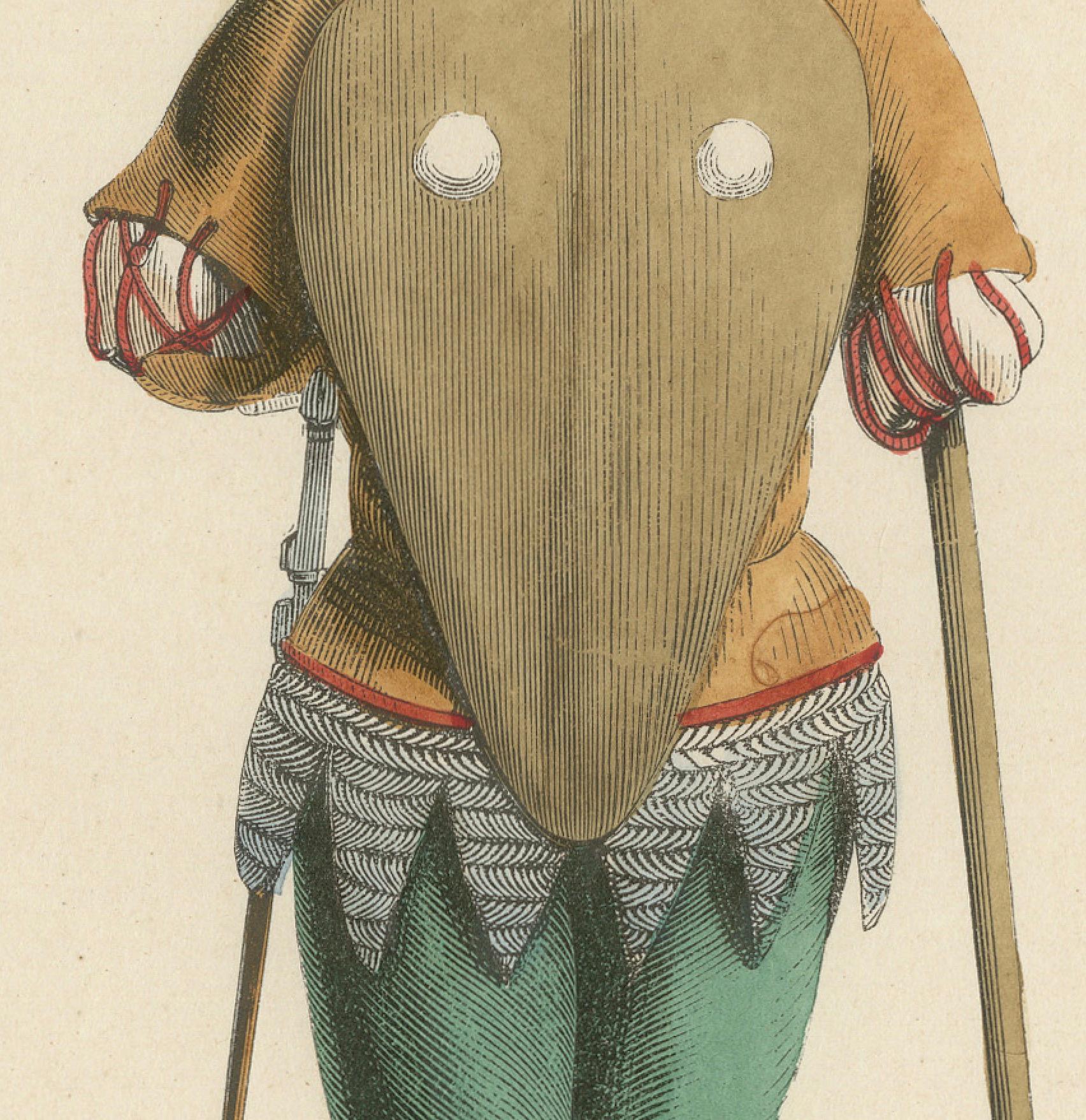
His body is clad in a gambeson, a padded defensive jacket worn as armor, which is colored in a subdued shade of gold, signifying durability and the no-nonsense approach of a soldier-for-hire. Over the gambeson, he wears a hauberk of chainmail, providing a crucial layer of defense. The hauberk includes a coif that would protect the neck and shoulders.
Distinctive red accents are visible at the elbows, adding a touch of individuality to the otherwise utilitarian ensemble. The mercenary's lower attire consists of tight-fitting hose in a rich shade of green, allowing for flexibility and agility in movement, which are secured with decorative points at the waist.
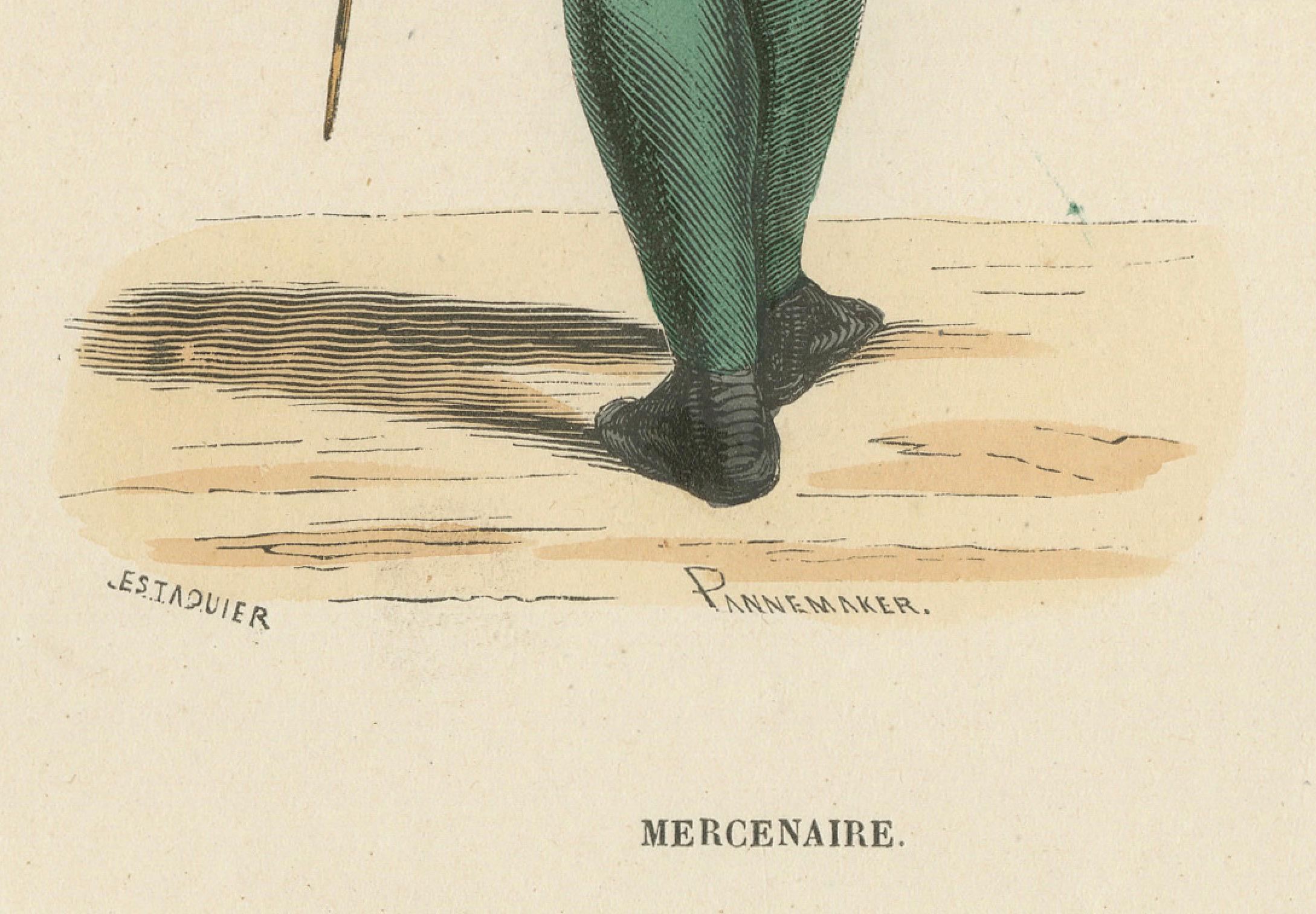
Completing his attire are practical, sturdy shoes suited for marching and combat. In his hand, he holds a long spear, his weapon of choice, indicating his readiness for battle.
This image not only captures the typical military attire of a mercenary but also conveys the transient and often precarious life of a medieval soldier. The lithograph is a study in the fusion of function and form, illustrating the necessity of protection in warfare and the personal style of a professional warrior of the time.
The colors have a nice glow over them. Historically, egg whites, known as glair, and sometimes egg yolk were indeed used in illumination and painting, particularly in manuscripts, to give colors a brighter appearance and to add a sheen or gloss to the work. This technique was quite common during the Middle Ages and into the Renaissance.
Egg whites can be applied as a varnish over pigments to enhance their brightness and to protect the colors. This application could make the colors appear more vivid and also add a slight glossy sheen to the surface of the image.
Egg yolk, on the other hand, was commonly used as a binding agent in paint. It forms the basis of tempera paint, a medium that was widely used before the advent of oil painting. Egg yolk helps to create a durable and long-lasting color that adheres well to various surfaces.
In the context of the print from 1847, it's less likely that egg whites or yolks were used directly on the print, as by that time, commercial printing processes would have been more advanced and less reliant on such manual methods. However, if this print is a representation of an earlier style or is meant to mimic the appearance of hand-painted manuscripts, the original artists might have employed techniques or materials that gave a similar effect to those achieved with egg-based binders and varnishes.