About this sheet
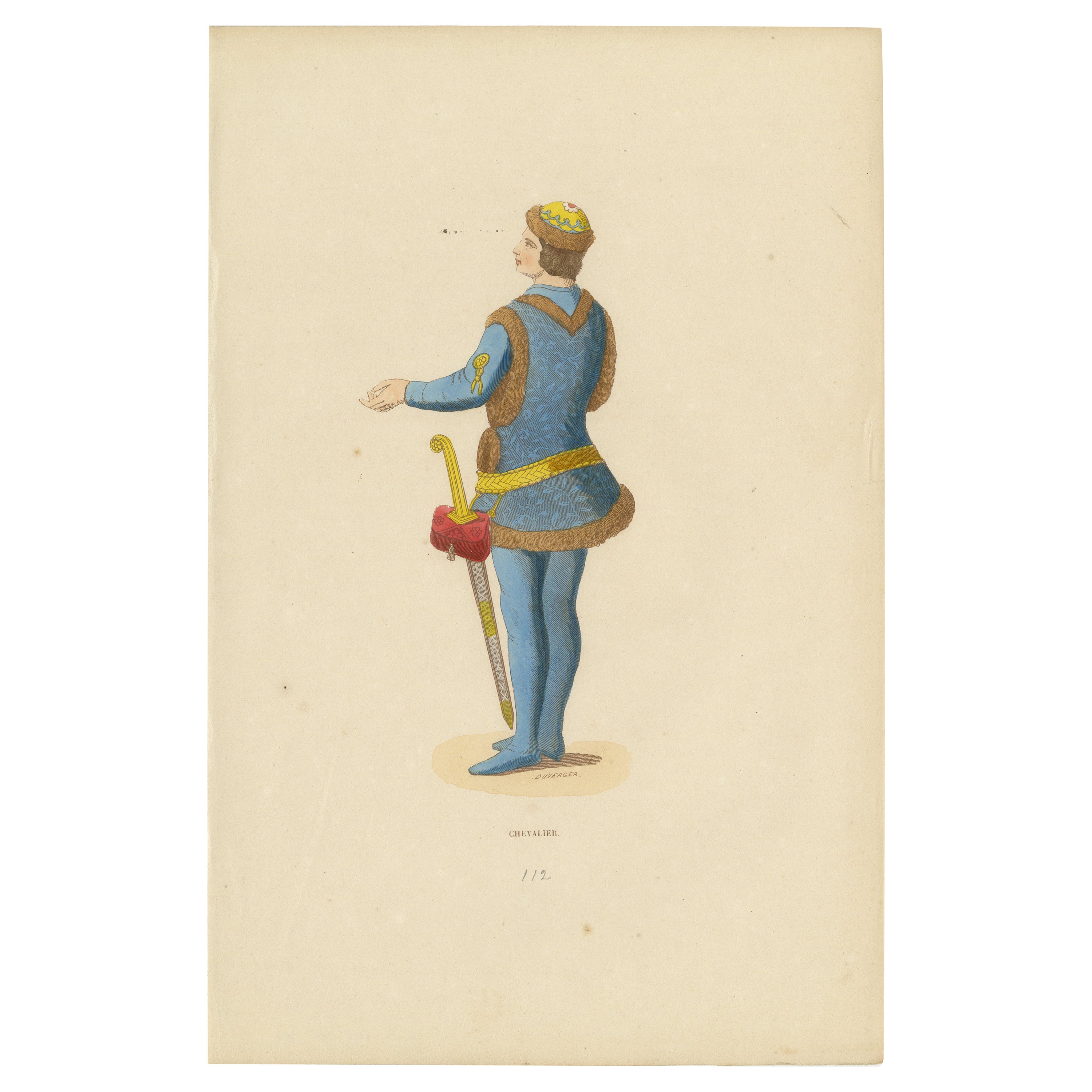
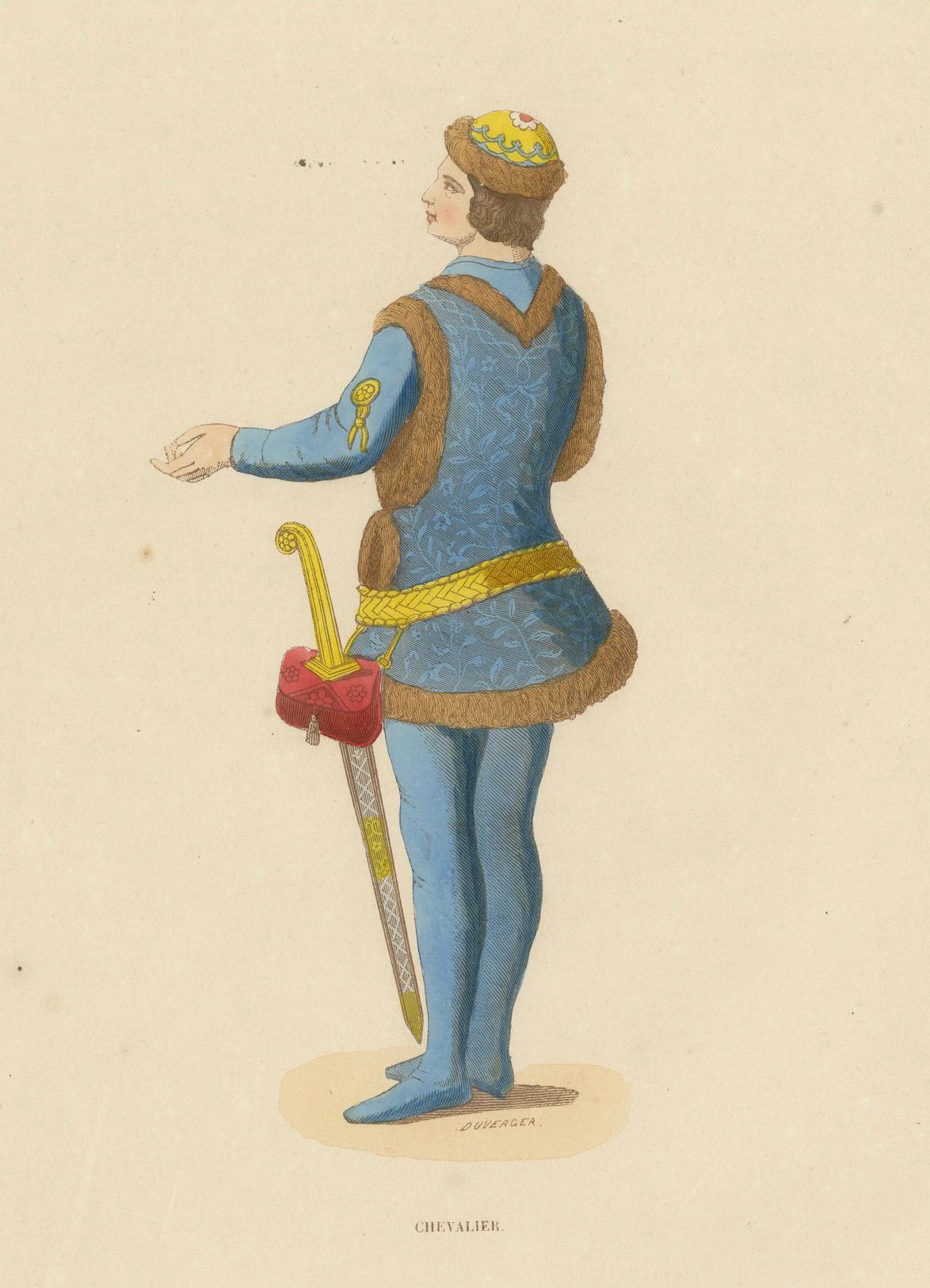
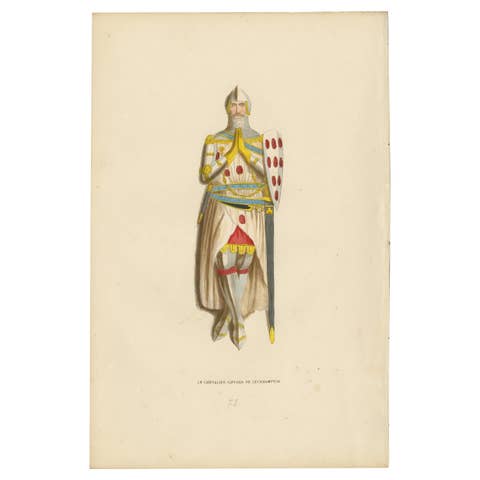
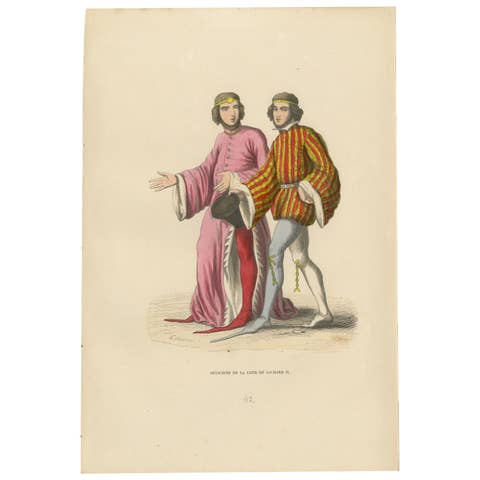
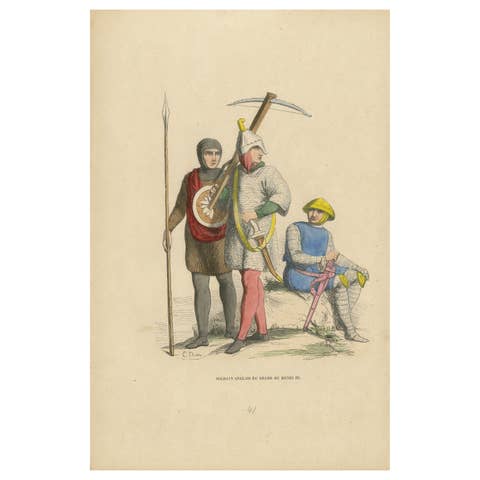
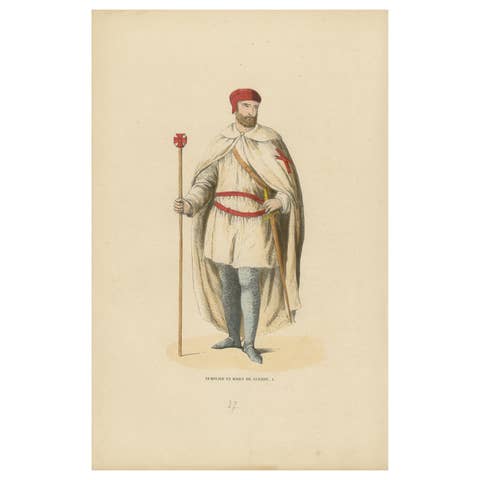
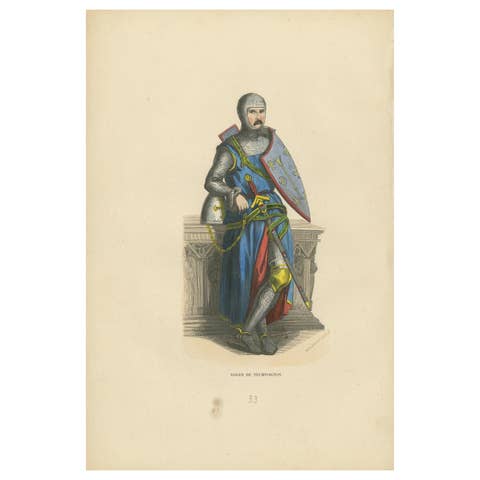
This 1847 hand-colored engraving from the "Costume du Moyen Age" series depicts a "Chevalier," the French term for a knight. The image illustrates the noble bearing and elaborate attire characteristic of the medieval knighthood.
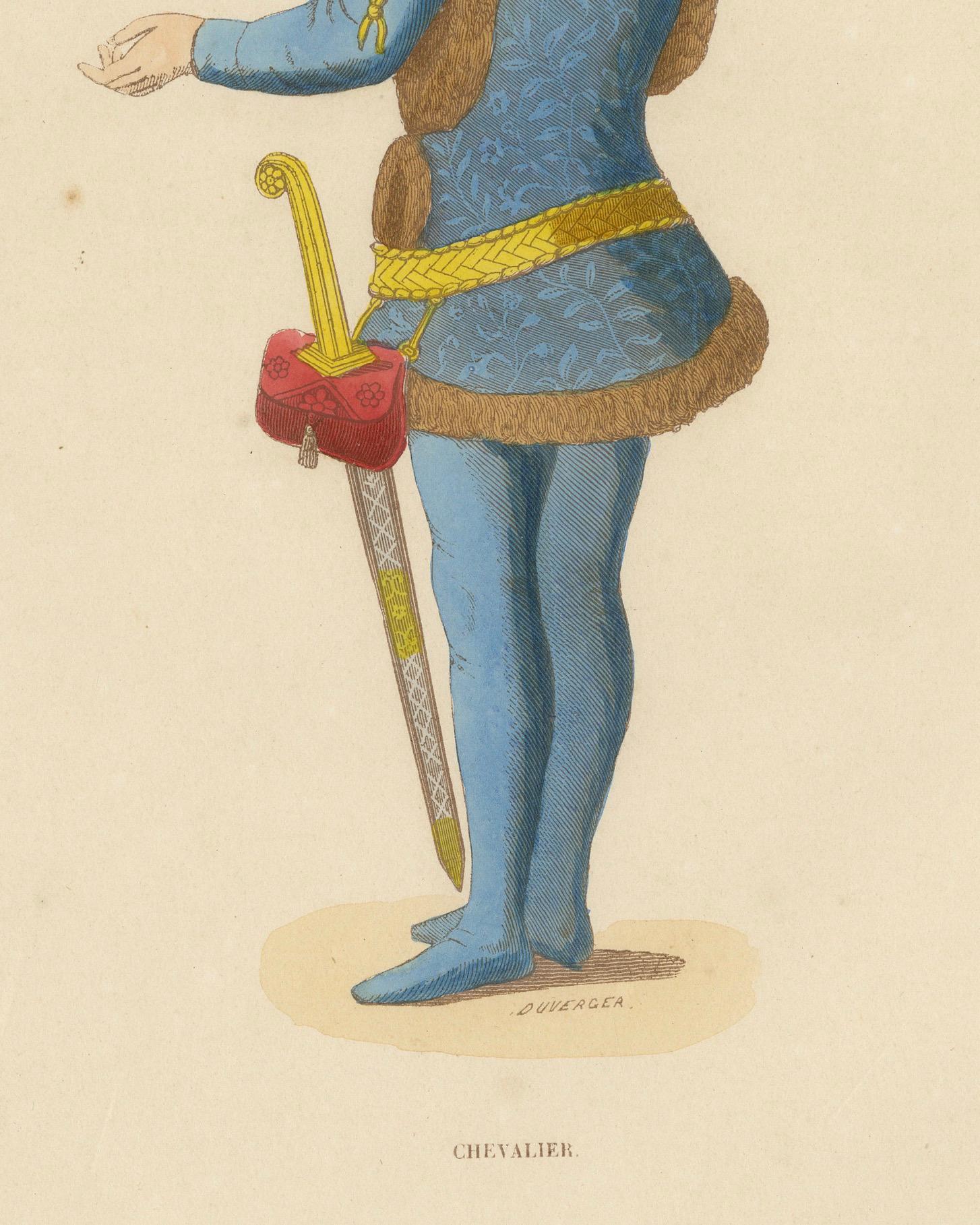
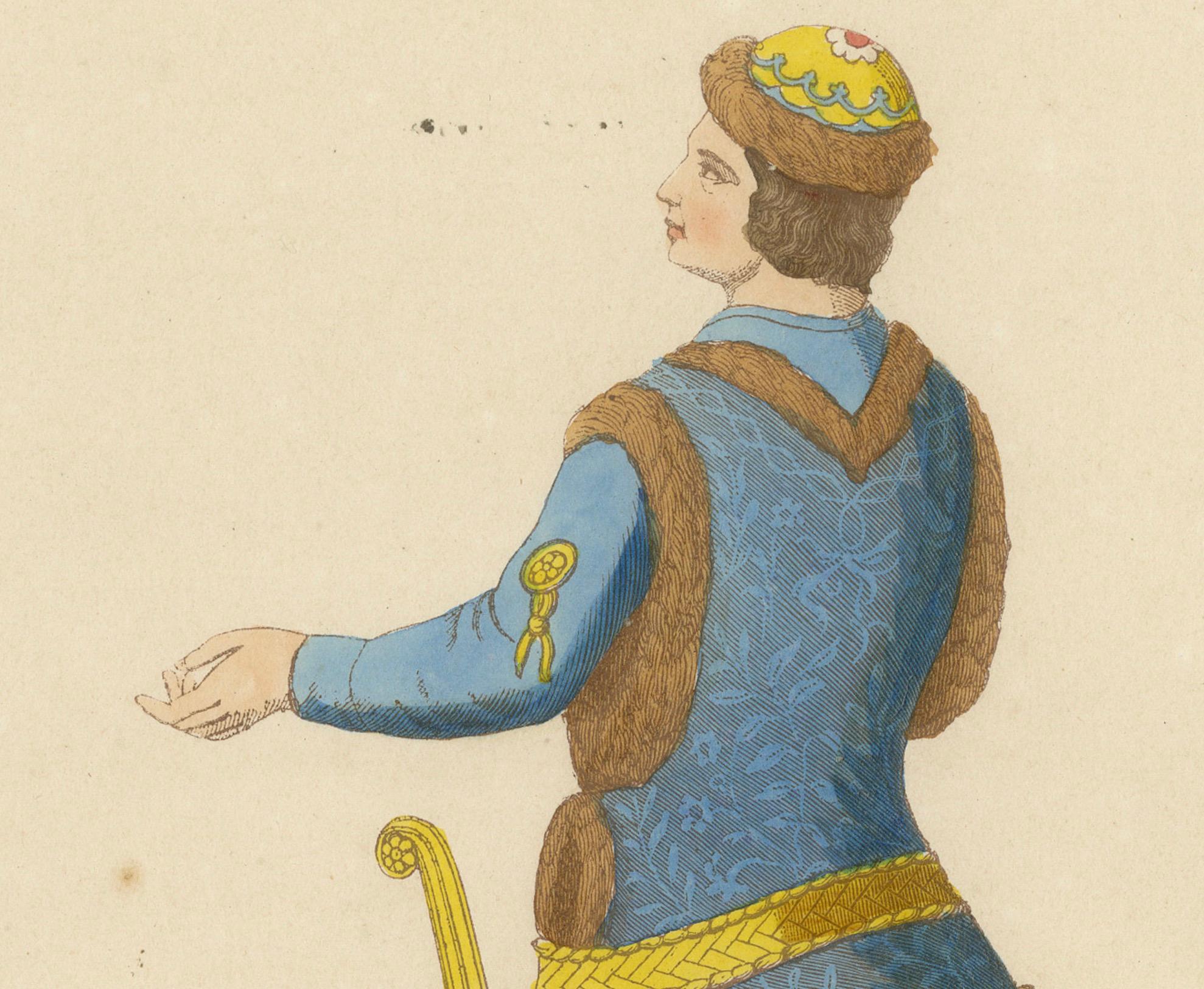
The knight is clad in a blue tunic with a decorative pattern, which likely signifies his status and heraldry. The tunic is edged with fur, a luxurious detail that also provides warmth. His attire is fitted closely to his body, indicating the tailored fit that was fashionable among the higher echelons of medieval society.
Around his waist, a yellow belt cinches the tunic, from which hangs a sheathed sword with a red scabbard, hinting at his readiness for battle or jousting. The hilt of the sword is detailed, suggesting it is a weapon of quality befitting a knight.
His head is adorned with a cap decorated with a pattern that matches the embellishments on his tunic, possibly indicating his loyalty to a liege or his personal coat of arms. His posture is confident, with one arm extended, perhaps in a gesture of greeting or command.
The knight's hose are also blue, and his shoes appear to be practical for walking or riding. The overall appearance of the knight, with his hand on the sword and his assertive stance, captures the essence of the chivalric ideals of courage, honor, and readiness to serve one's sovereign or cause.
This illustration provides a window into the romanticized vision of knighthood that was prevalent in the 19th-century historical revival and interpretation of medieval culture.
The colors have a nice glow over them. Historically, egg whites, known as glair, and sometimes egg yolk were indeed used in illumination and painting, particularly in manuscripts, to give colors a brighter appearance and to add a sheen or gloss to the work. This technique was quite common during the Middle Ages and into the Renaissance.
Egg whites can be applied as a varnish over pigments to enhance their brightness and to protect the colors. This application could make the colors appear more vivid and also add a slight glossy sheen to the surface of the image.
Egg yolk, on the other hand, was commonly used as a binding agent in paint. It forms the basis of tempera paint, a medium that was widely used before the advent of oil painting. Egg yolk helps to create a durable and long-lasting color that adheres well to various surfaces.
In the context of the print from 1847, it's less likely that egg whites or yolks were used directly on the print, as by that time, commercial printing processes would have been more advanced and less reliant on such manual methods. However, if this print is a representation of an earlier style or is meant to mimic the appearance of hand-painted manuscripts, the original artists might have employed techniques or materials that gave a similar effect to those achieved with egg-based binders and varnishes.