About this sheet
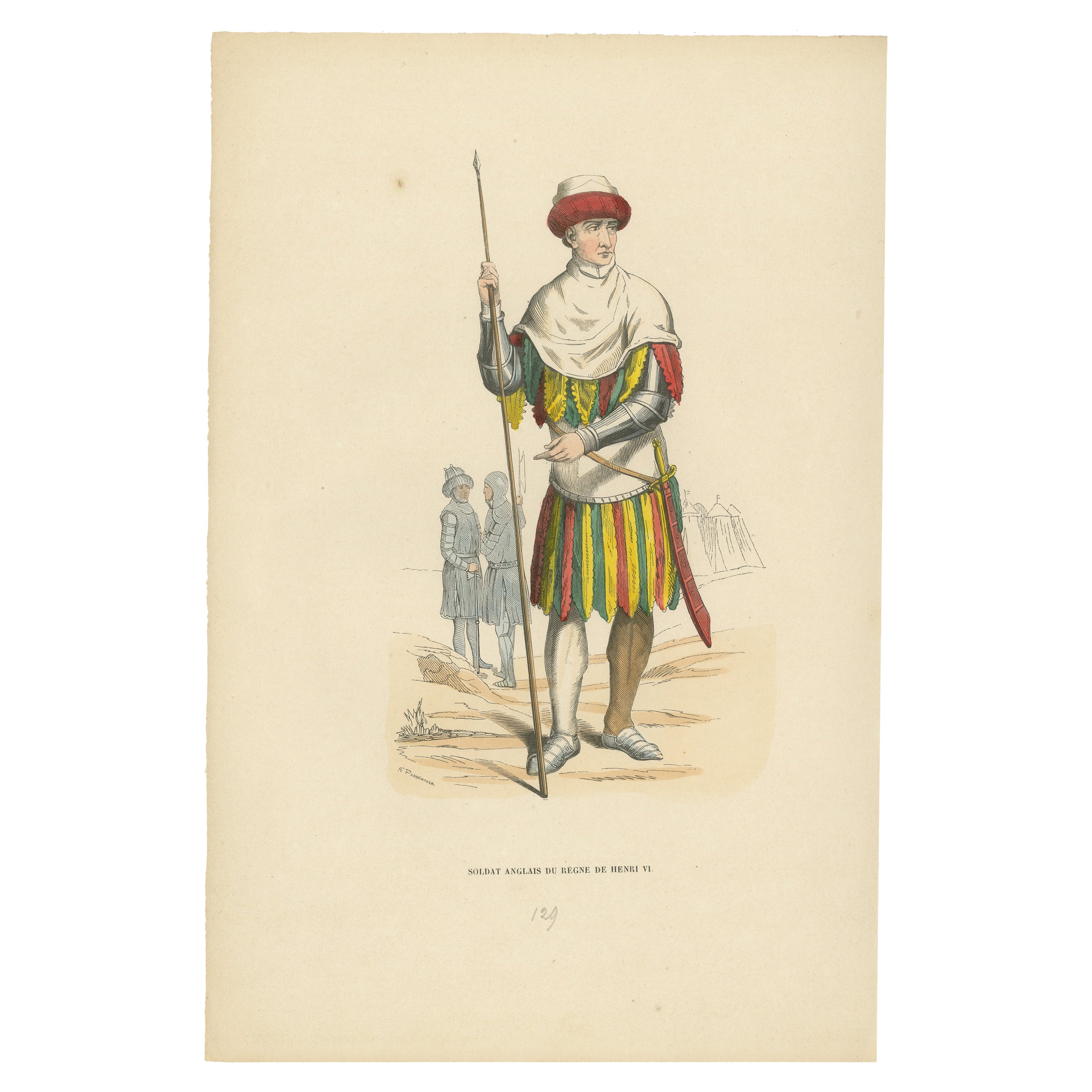
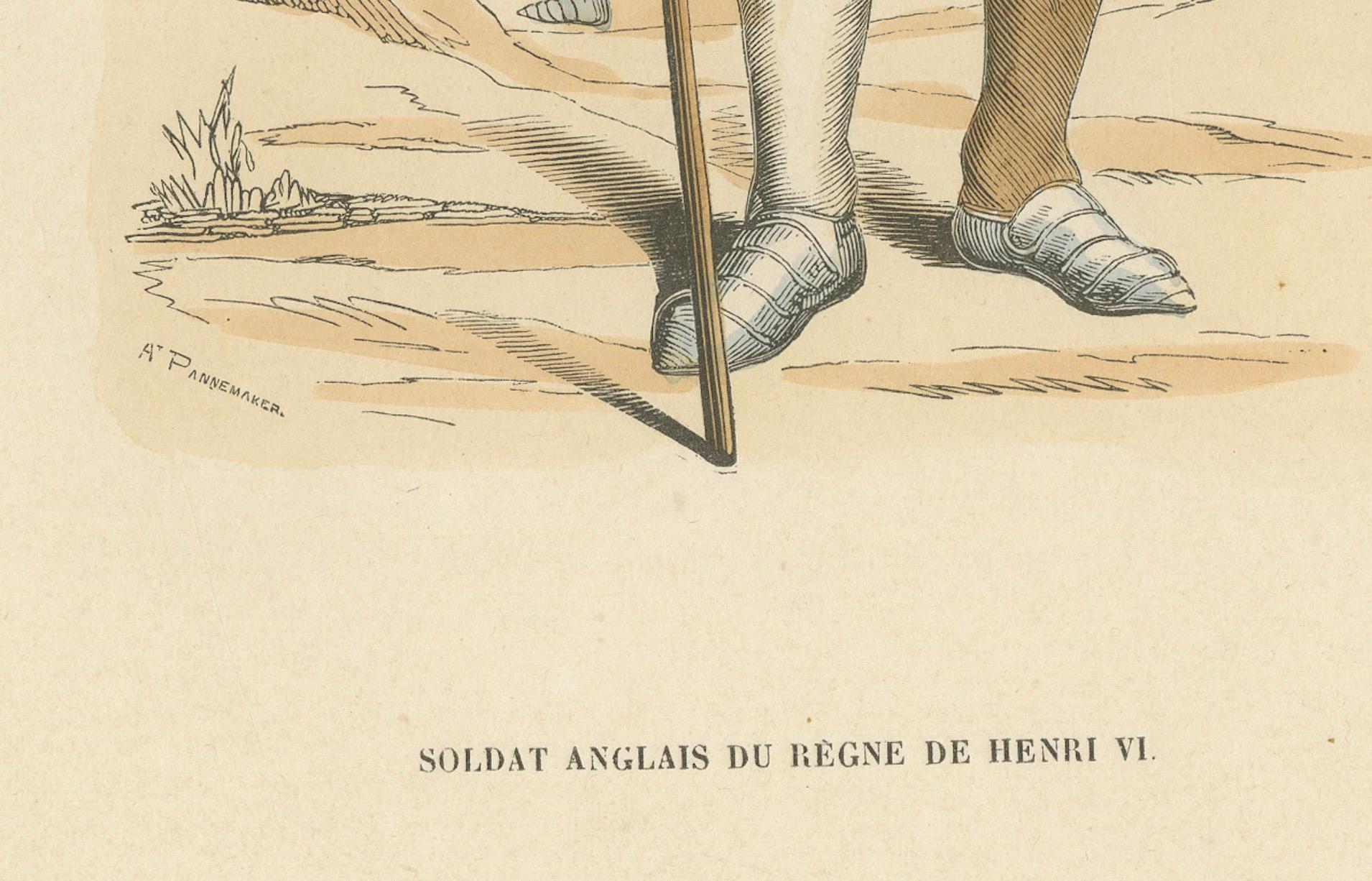
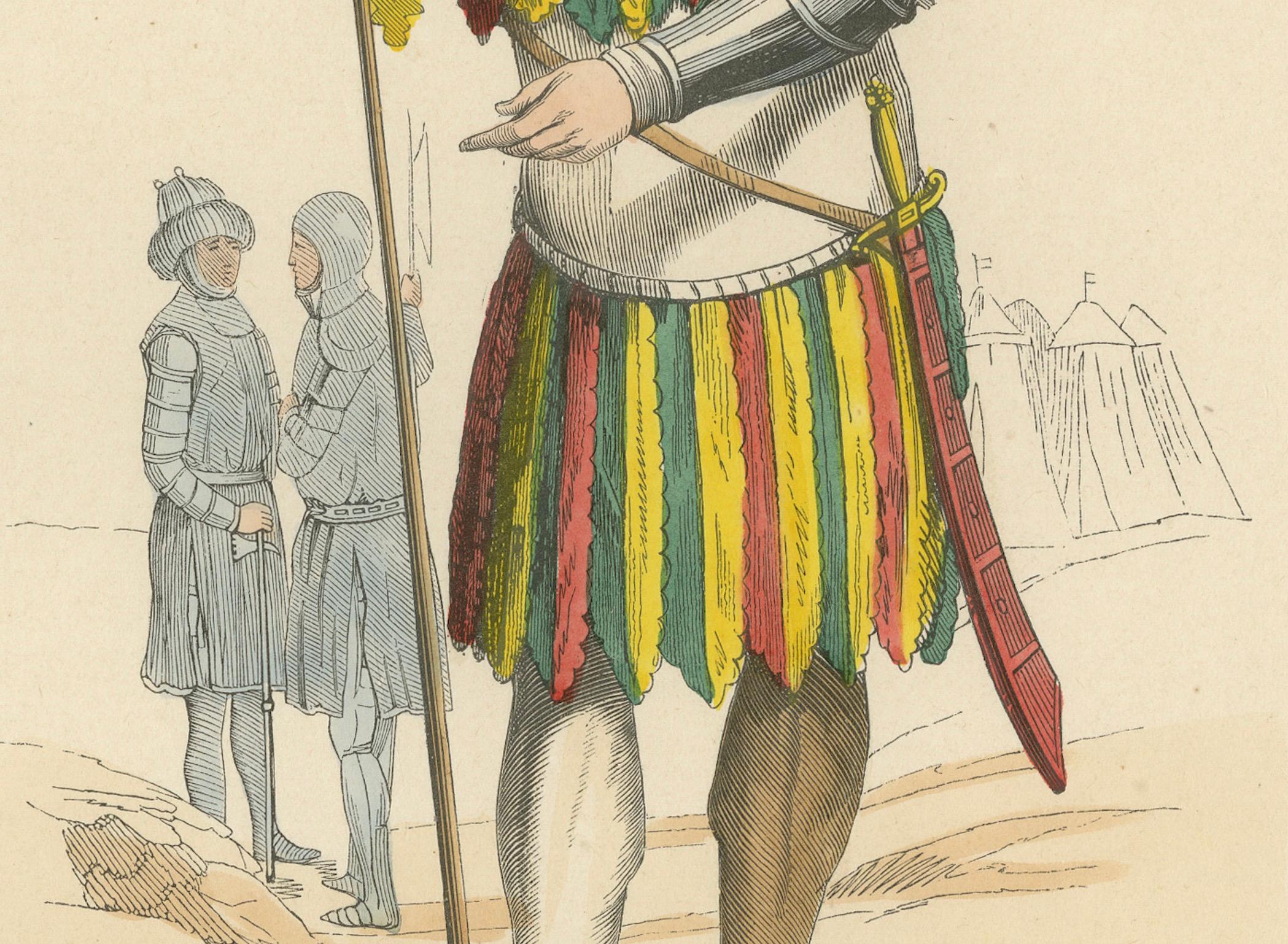
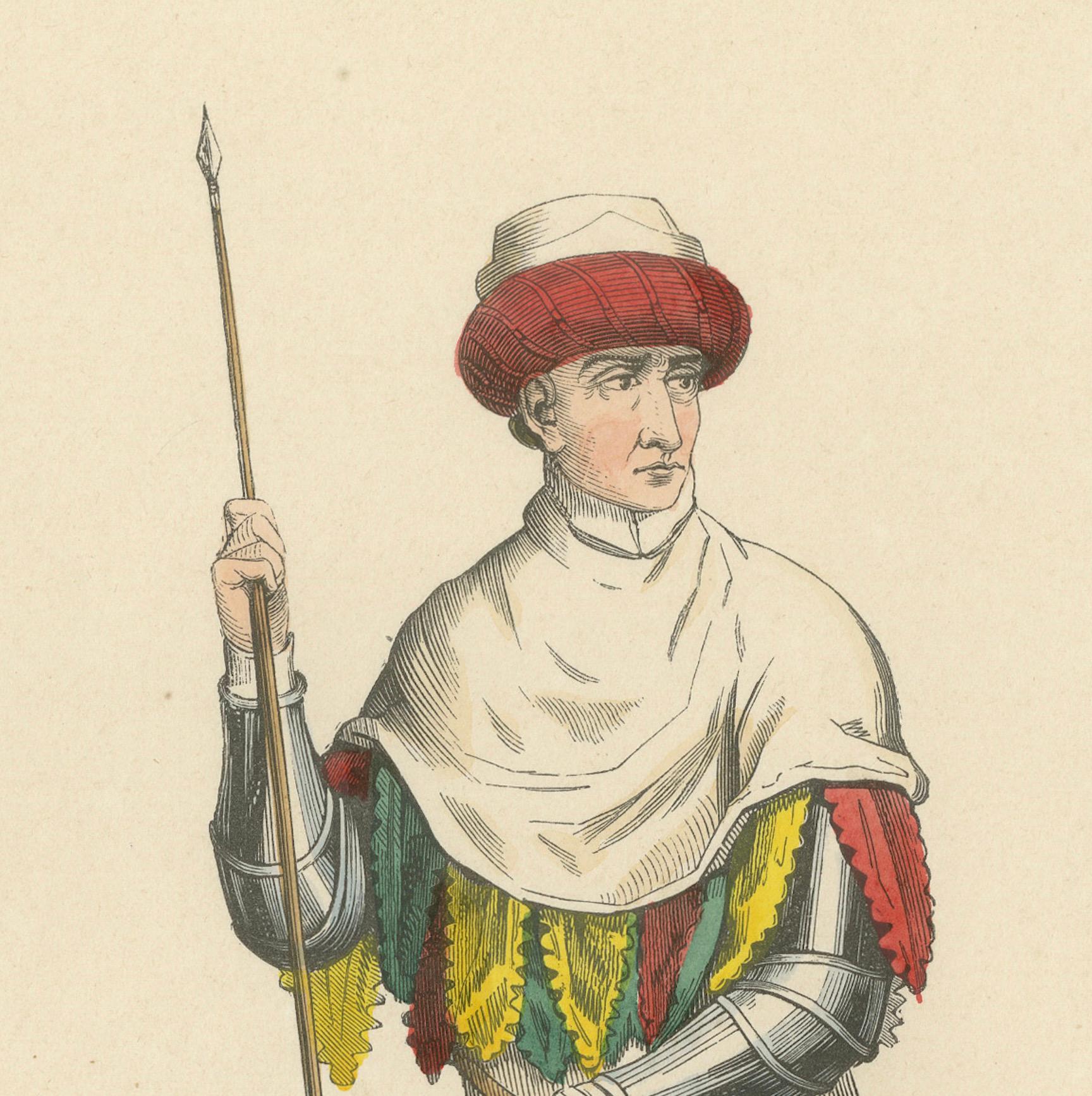
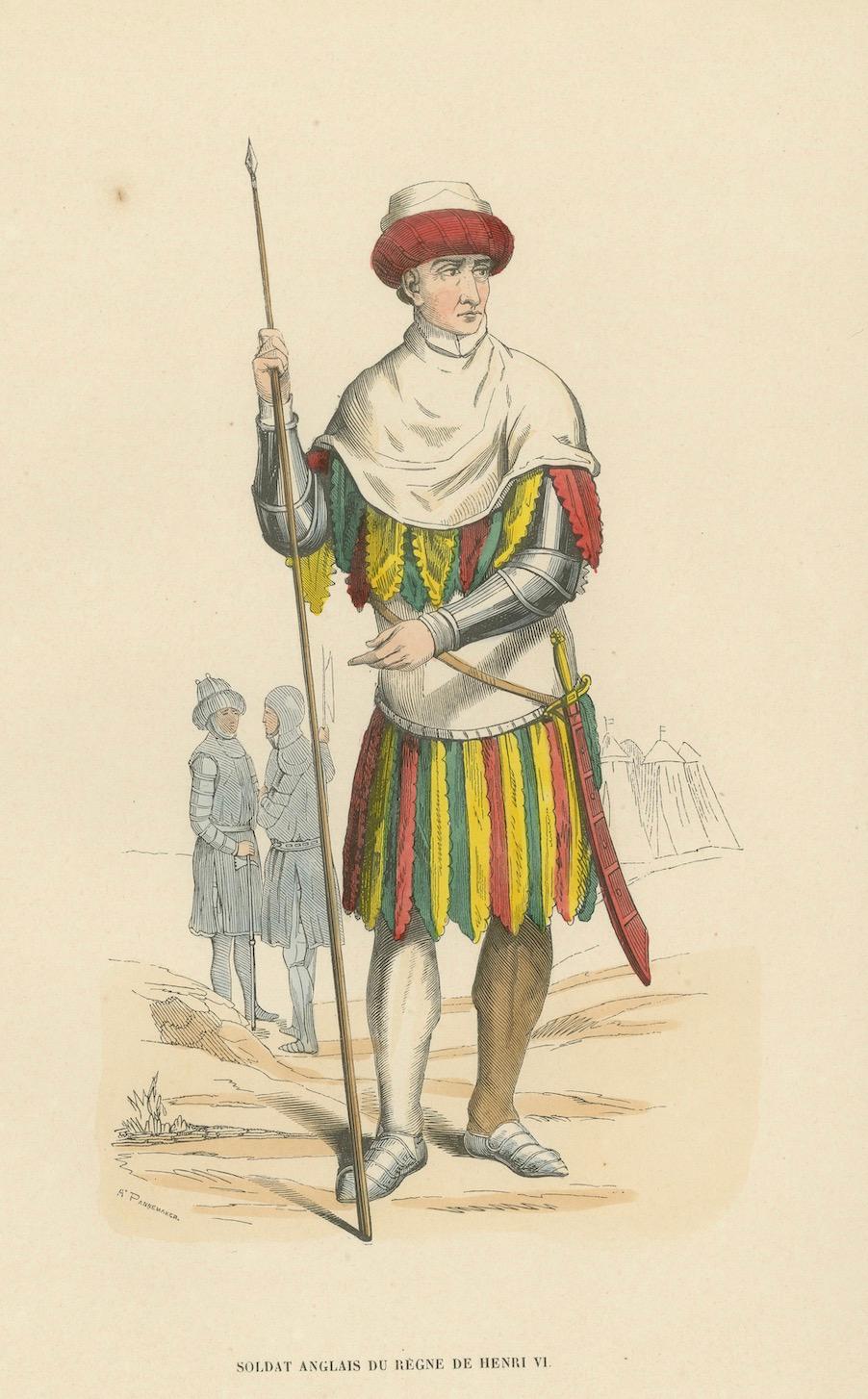
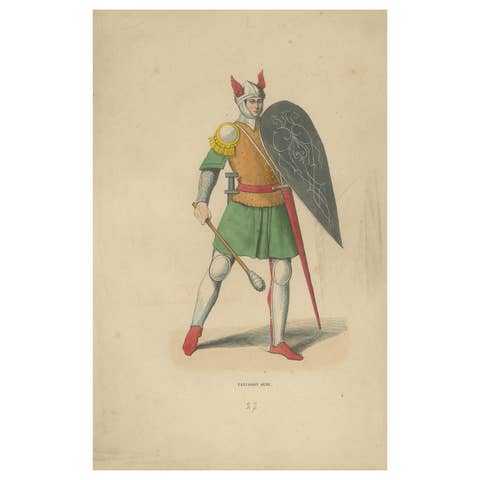
This 1847 lithograph from "Costume du Moyen Âge" portrays a soldier from the English army during the reign of Henry VI, characterized by his distinctive military attire. The soldier stands with an assertive posture, holding a long spear in his left hand, a weapon indicating his readiness for battle. He is dressed in a short tunic with vibrant vertical stripes in red, yellow, and green, perhaps signifying his allegiance to a particular noble house or military unit.
His protective gear is partially visible beneath the colorful tunic, with chainmail covering his arms and legs, and metal gauntlets on his hands, providing a glimpse into the practical aspects of medieval warfare attire. On his head, he wears a red cap with a brim turned up, a style typical of the era, which adds a sense of individuality to his martial figure.
In the background, two other soldiers can be seen, suggesting that he is part of a larger military force. The landscape is barren and simple, directing the viewer's focus to the soldier and his equipment. This illustration is a window into the military fashion and equipment of the time, demonstrating how attire and armaments were both functional and indicative of the soldier's role within the feudal hierarchy.
As with the other works in this collection, this lithograph is a meticulously researched representation of the clothing and martial posture of a soldier in the Middle Ages, offering valuable insight into the military history and material culture of the period. It serves as a testament to the detailed study of period manuscripts, paintings, and artifacts that has allowed for such accurate historical reconstructions.
The colors have a nice glow over them. Historically, egg whites, known as glair, and sometimes egg yolk were indeed used in illumination and painting, particularly in manuscripts, to give colors a brighter appearance and to add a sheen or gloss to the work. This technique was quite common during the Middle Ages and into the Renaissance.
Egg whites can be applied as a varnish over pigments to enhance their brightness and to protect the colors. This application could make the colors appear more vivid and also add a slight glossy sheen to the surface of the image.
Egg yolk, on the other hand, was commonly used as a binding agent in paint. It forms the basis of tempera paint, a medium that was widely used before the advent of oil painting. Egg yolk helps to create a durable and long-lasting color that adheres well to various surfaces.
In the context of the print from 1847, it's less likely that egg whites or yolks were used directly on the print, as by that time, commercial printing processes would have been more advanced and less reliant on such manual methods. However, if this print is a representation of an earlier style or is meant to mimic the appearance of hand-painted manuscripts, the original artists might have employed techniques or materials that gave a similar effect to those achieved with egg-based binders and varnishes.