About this sheet
L’Armée, La Garde Impériale, 1856 – concertina with 20 costume plates
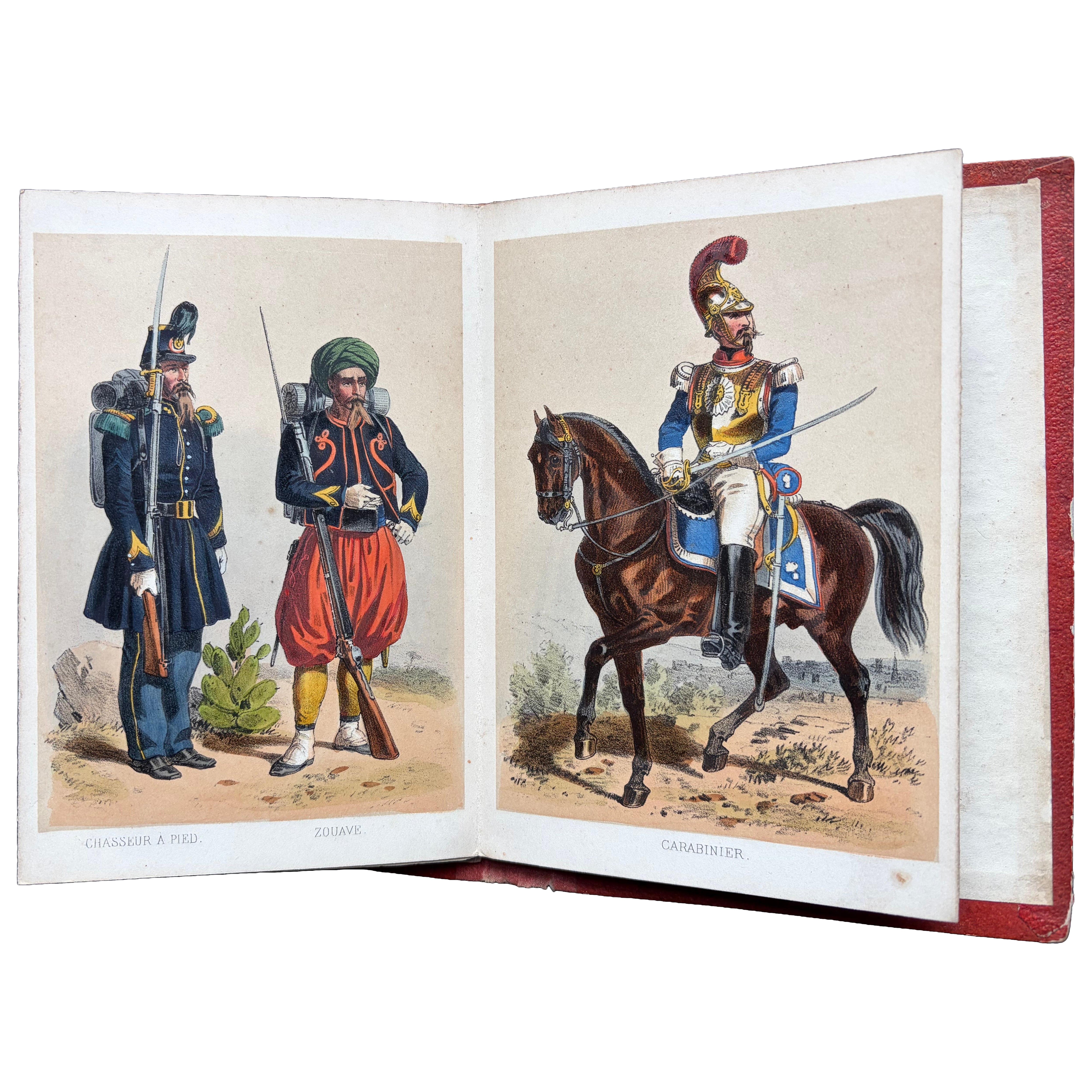
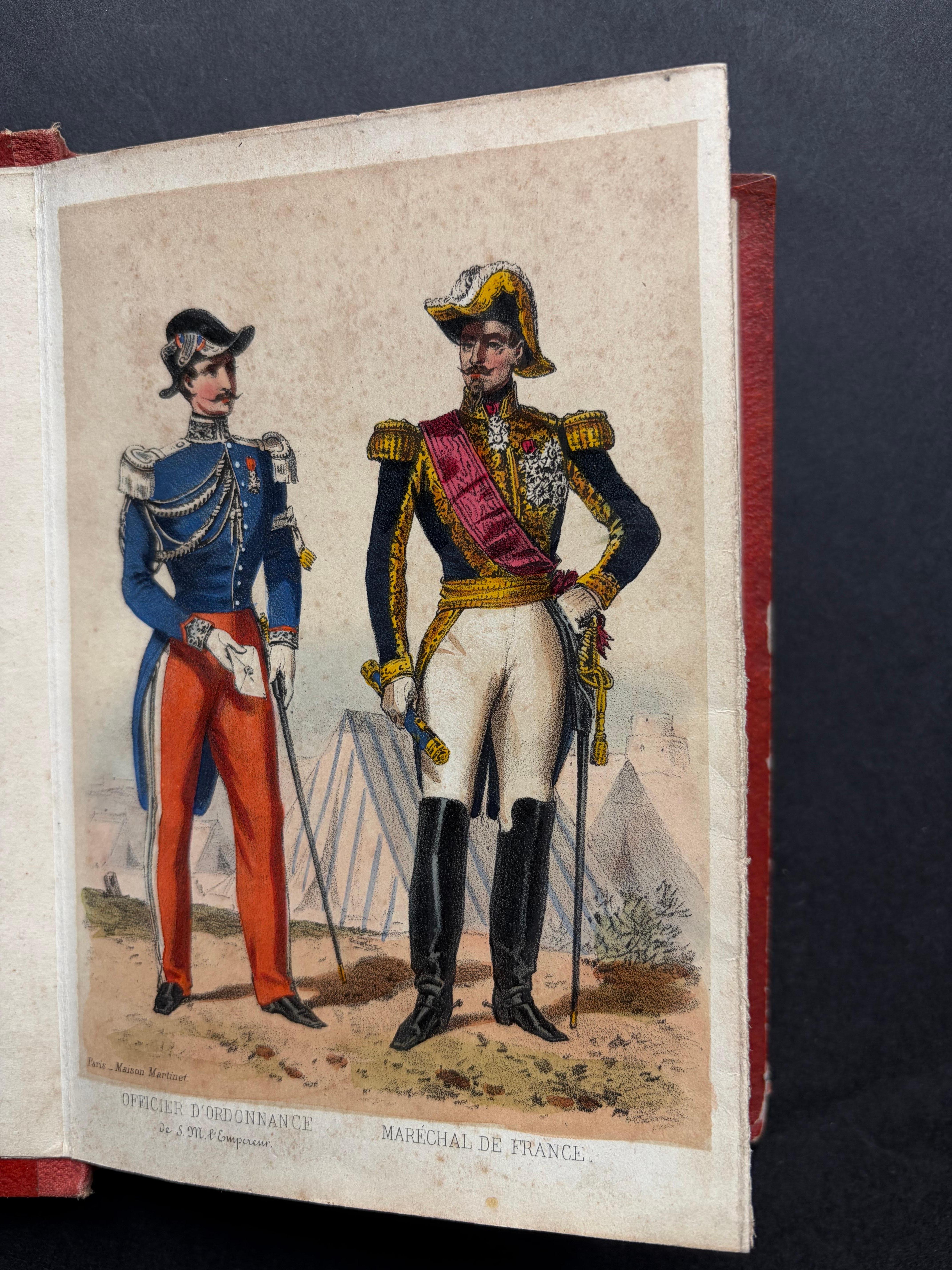
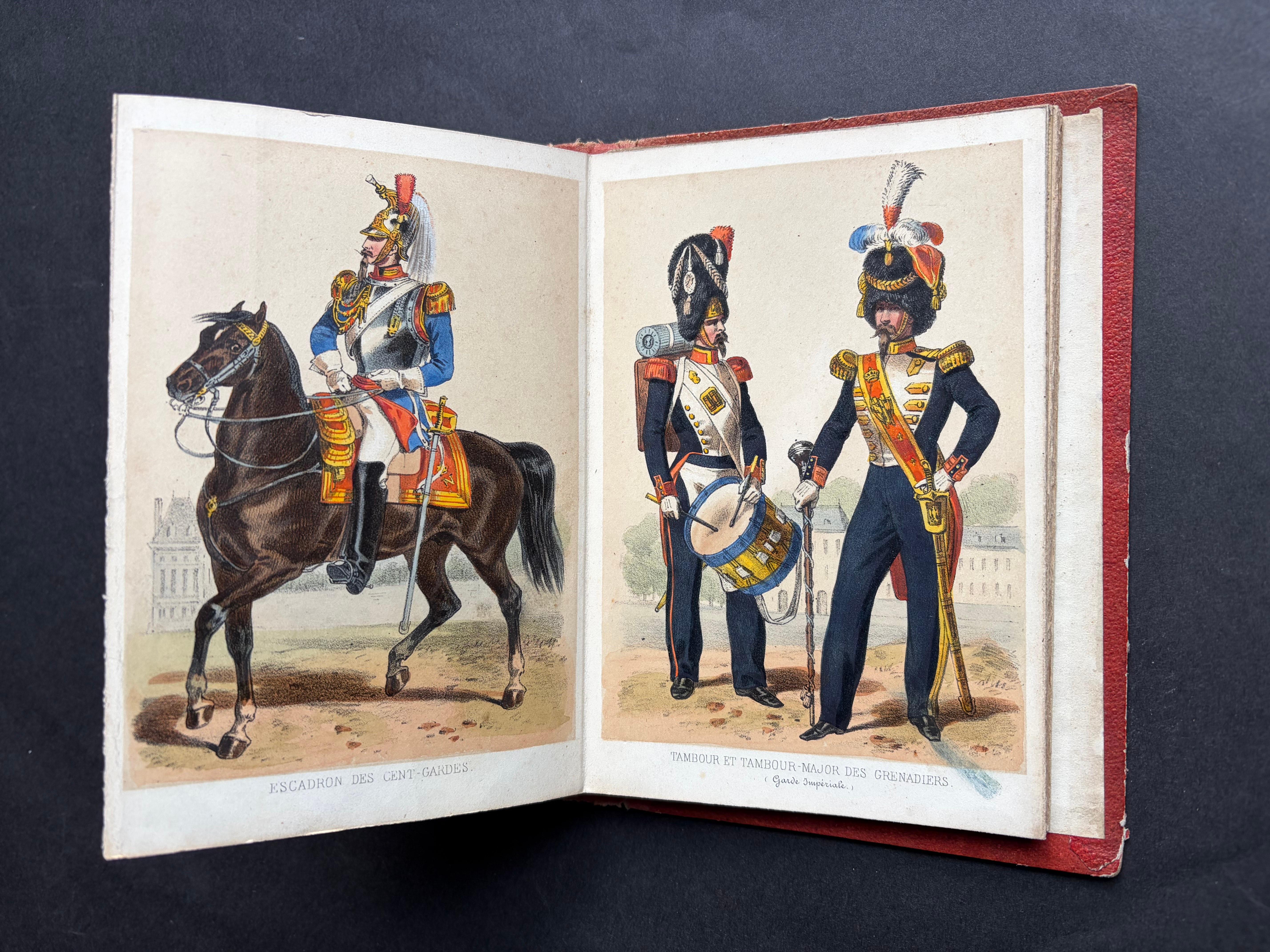
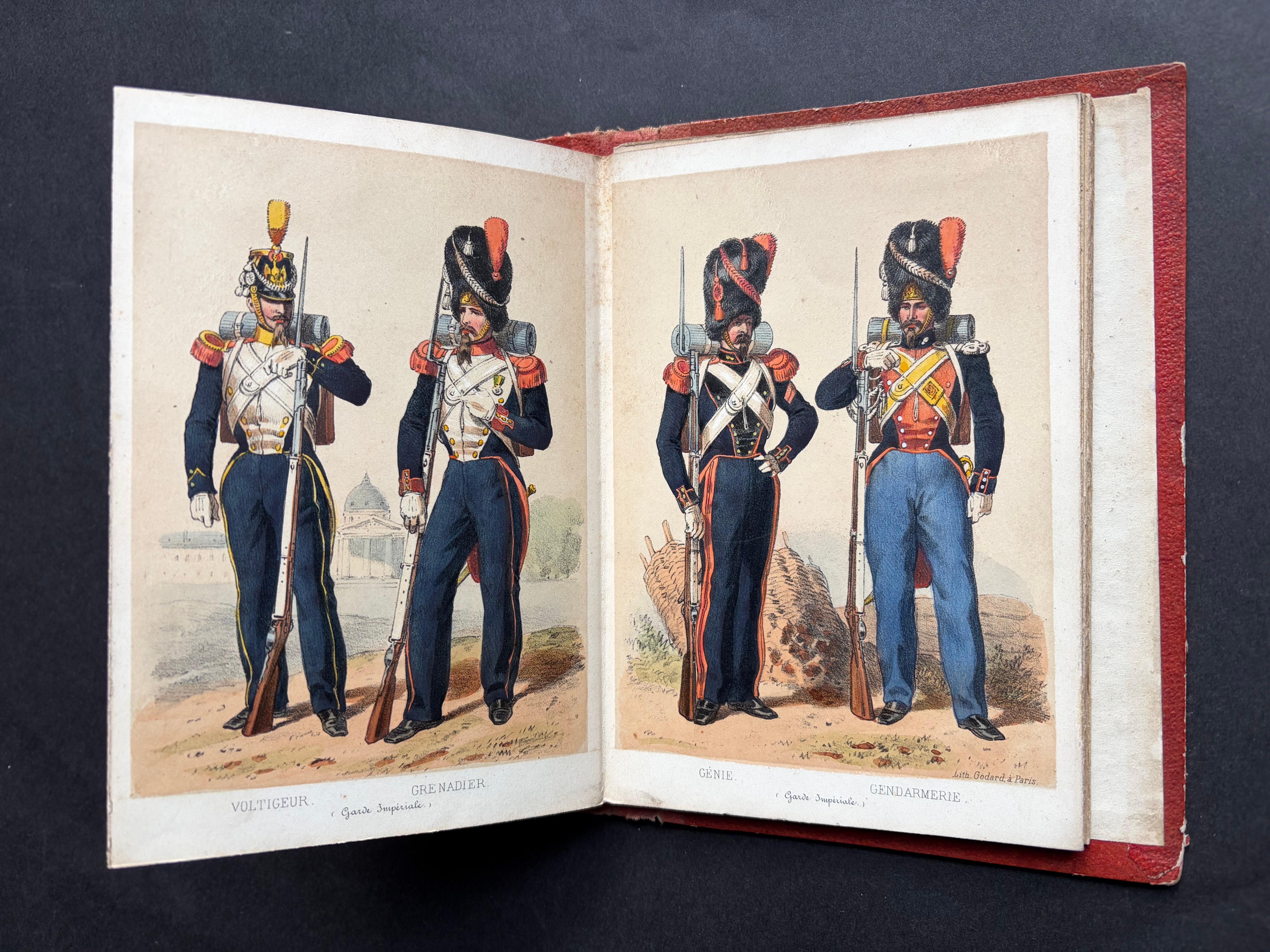
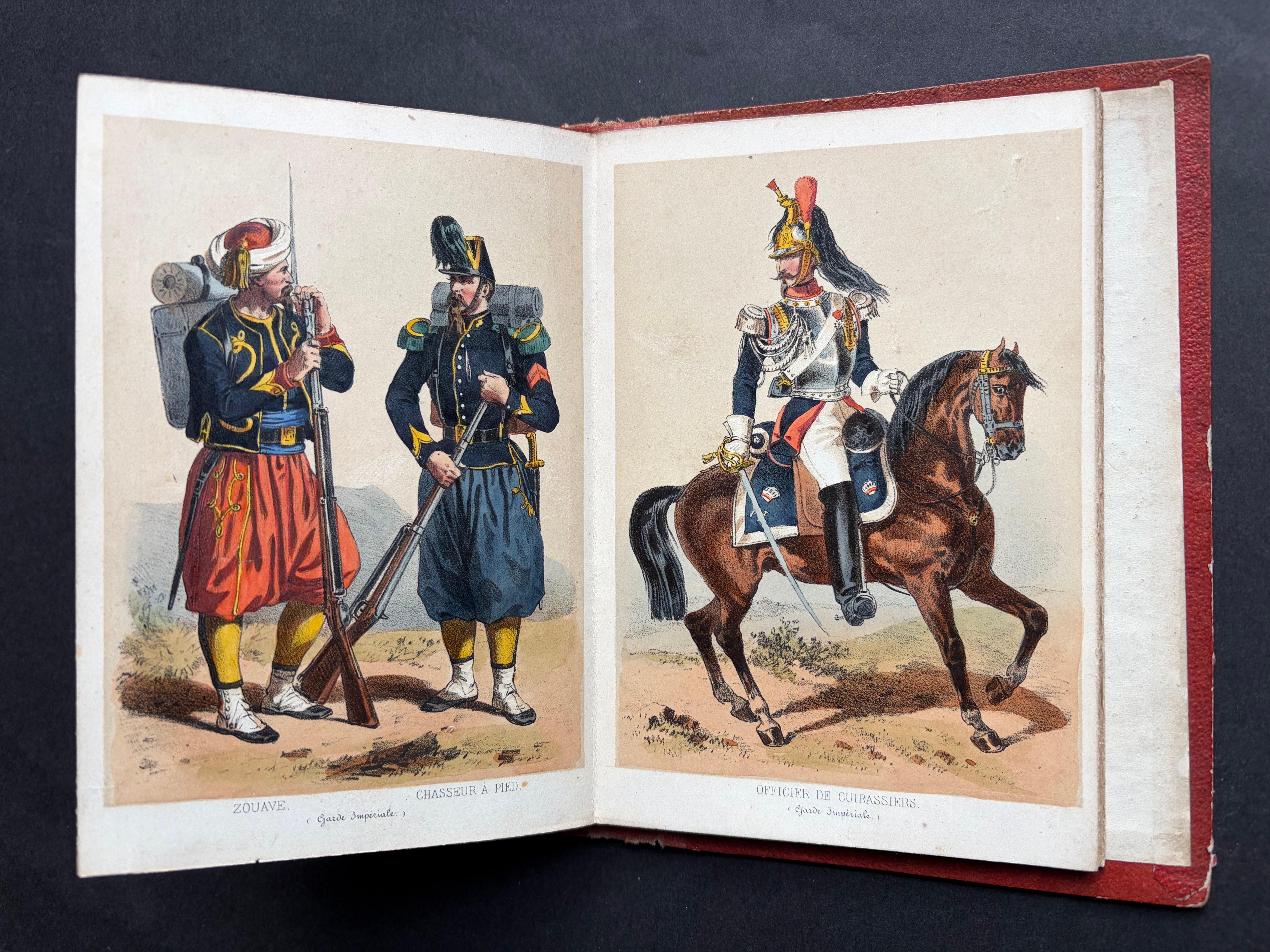
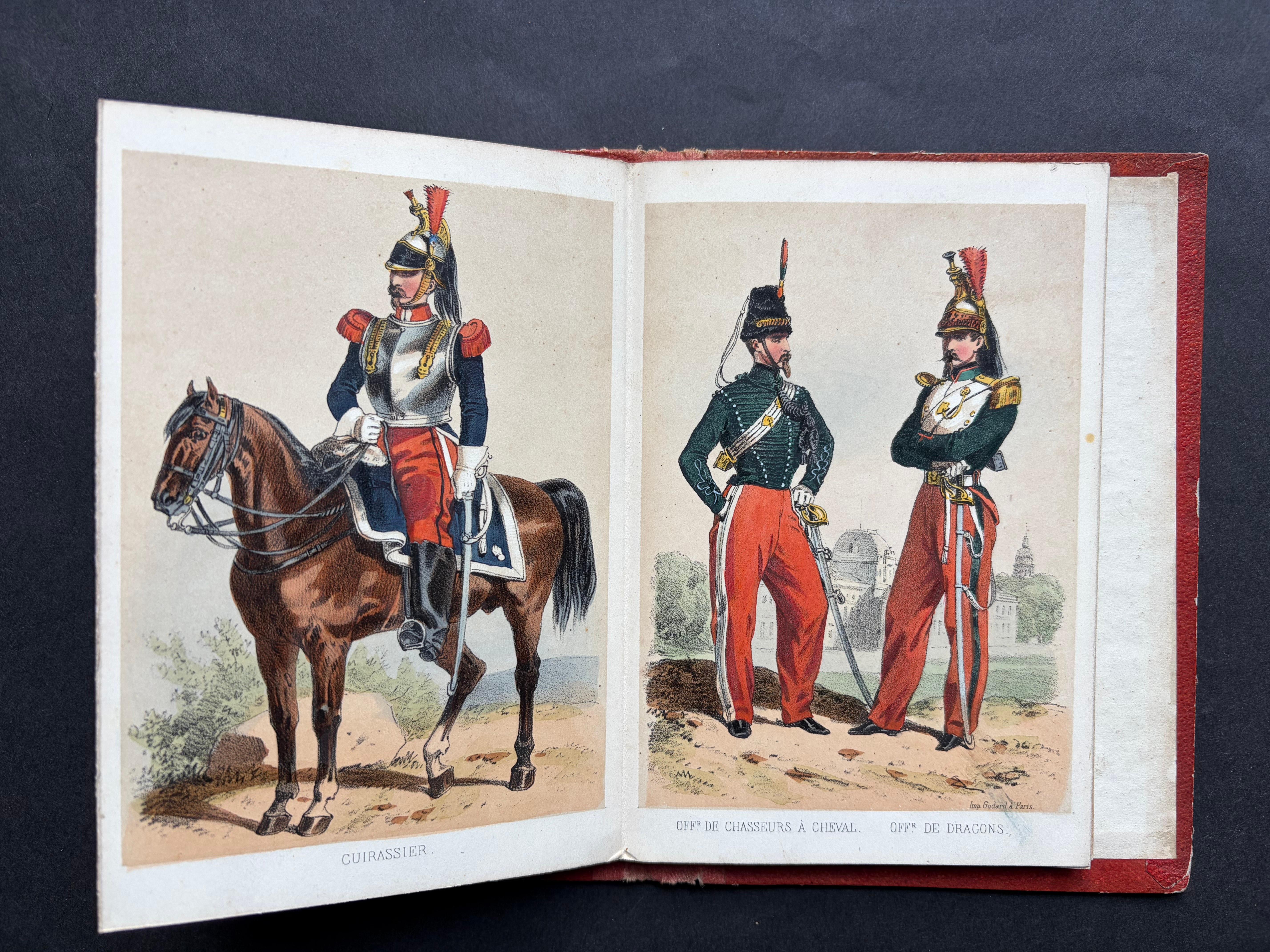
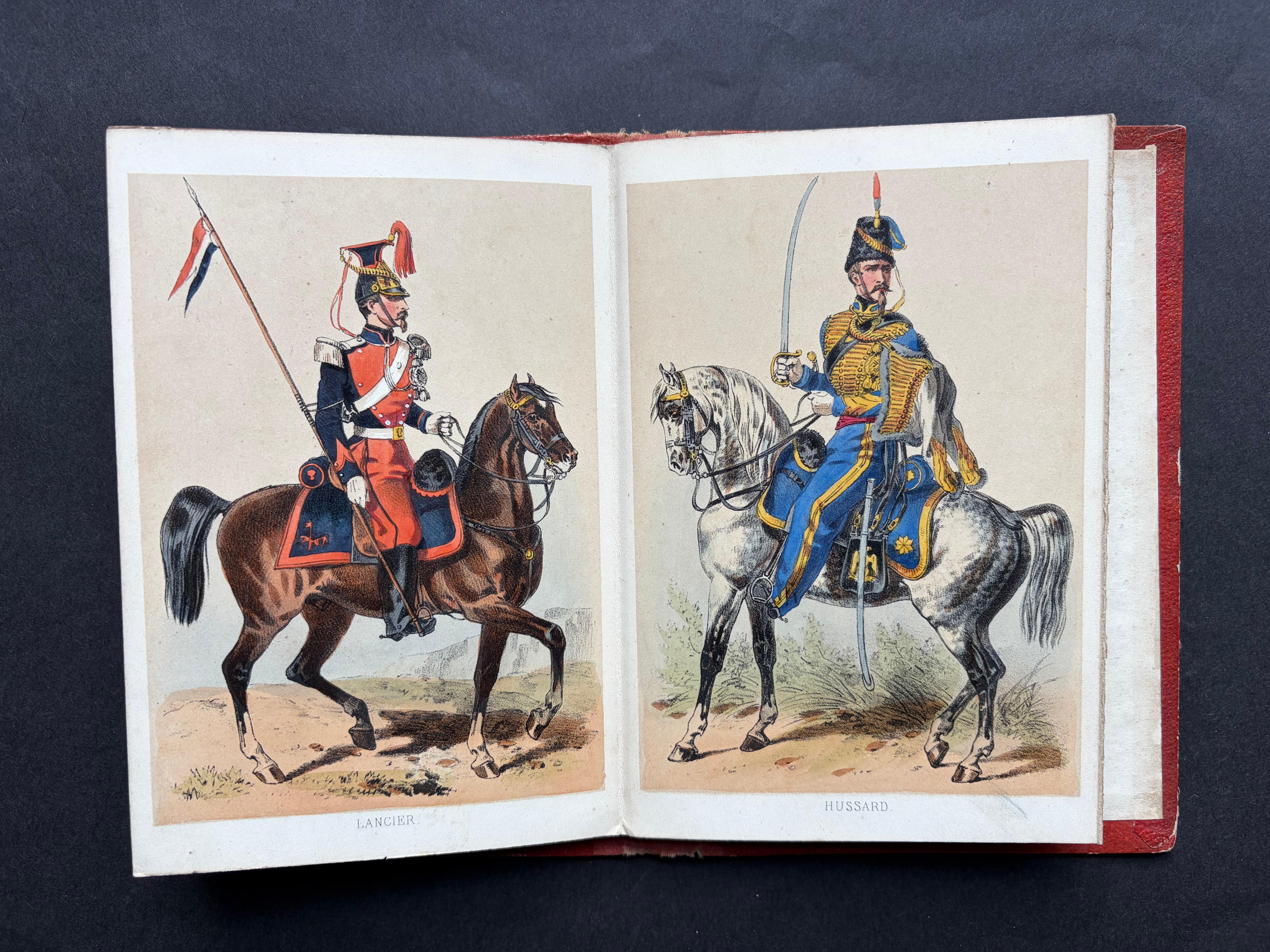
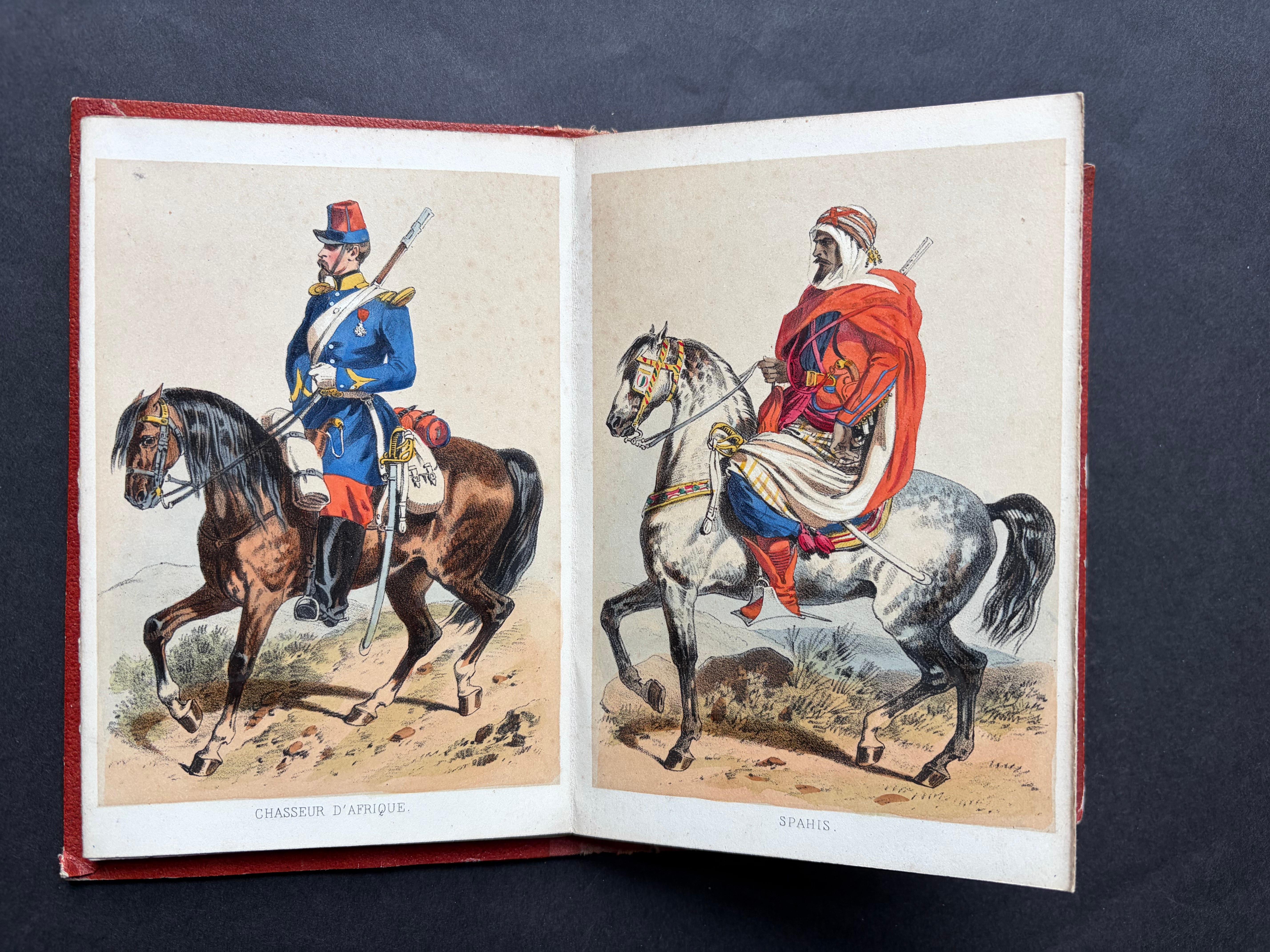
A scarce mid-19th century French concertina album, titled L’Armée, La Garde Impériale, 1856. Published in Paris, though without credited illustrator or printer, it is strongly reminiscent of the work of Gustave de Ridder, who executed similar military costume series for Martinet. The leporello format contains 20 panels, each presenting officers of the Imperial Guard in vivid lithographs, tinted and finished with partial hand coloring. Eleven of the plates feature a single mounted officer, while nine depict paired officers or military characters.
The richness of the uniforms is striking: brilliant blues, deep reds, and bright golds are highlighted through the delicate hand-applied coloring, evoking the pomp and splendor of Napoleon III’s Imperial Guard. Among the ranks represented are elite and exotic units such as the Zouaves, whose North African-inspired dress became one of the most colorful emblems of the mid-19th century French army. Other panels present lancers, grenadiers, chasseurs, and cuirassiers, all shown in carefully detailed attire, often with dramatic plumes, sashes, and regalia.
This format—concertina or leporello—was especially popular in Paris during the Second Empire, intended both as a pictorial celebration of military pageantry and as a collectible souvenir. Martinet issued a variety of similar titles, some bearing earlier dates; this 1856 example reflects the height of the Crimean War era, when France’s military prestige was on display.
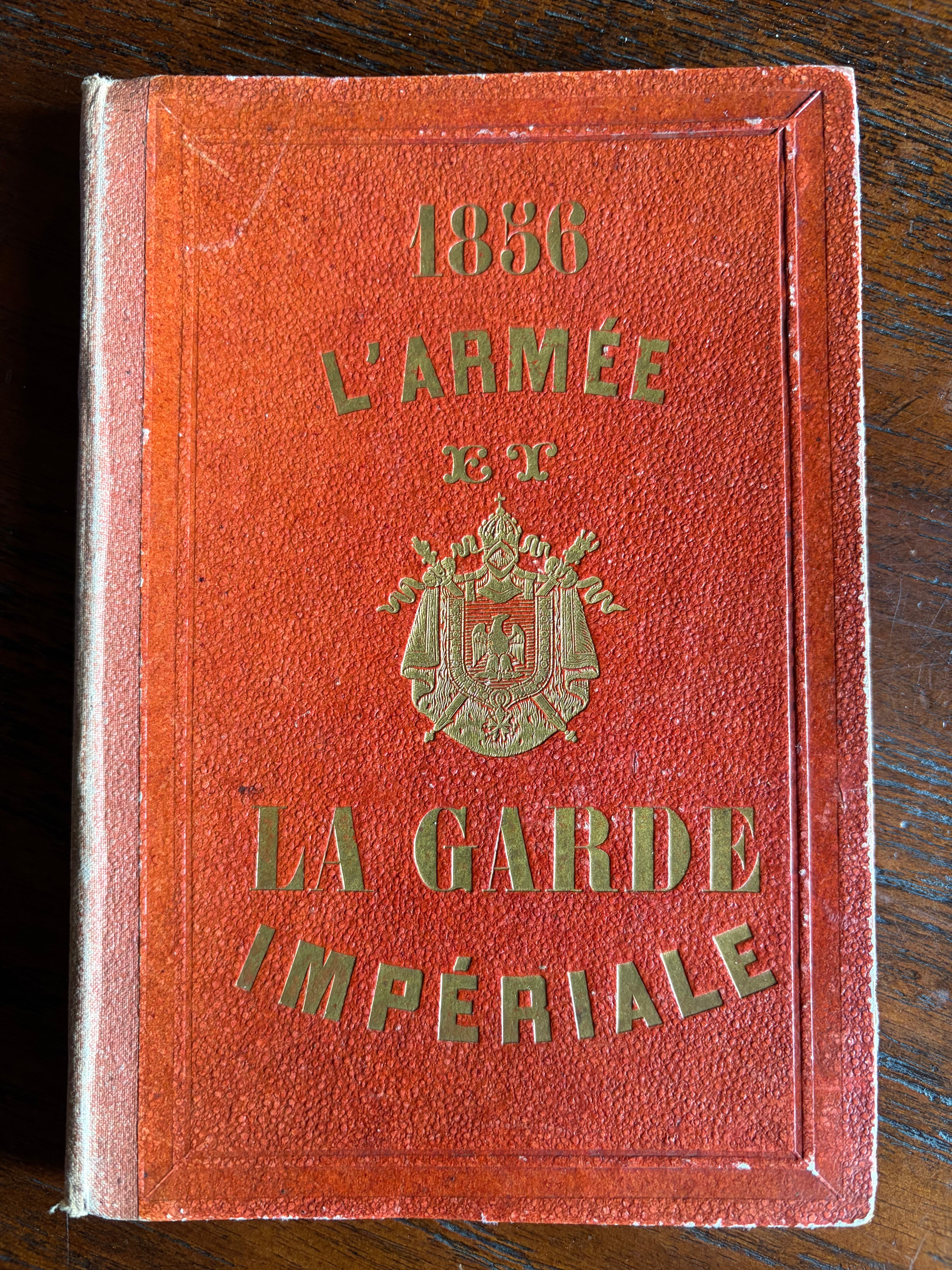
The album closes into red embossed cloth boards, gilt-stamped with title, date, and imperial arms to the upper cover. When folded, the album measures 17 by 11.5 cm. Unfolded, it reveals the complete series of 20 connected plates.
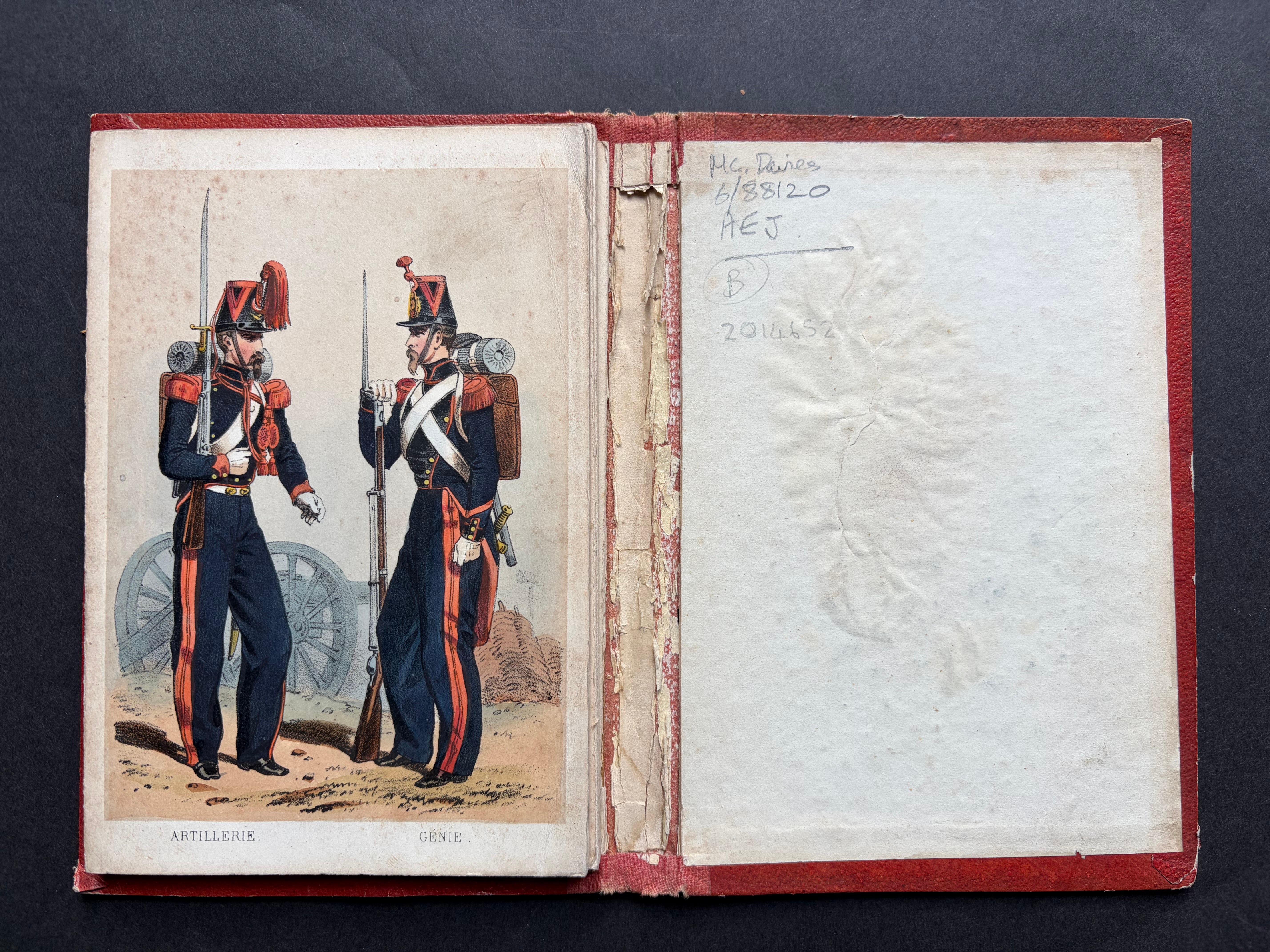
Condition report: The red cloth binding shows noticeable wear, particularly on the back cover where the cloth is largely torn away. The spine is detached from the concertina, though the plates themselves remain attached. The gilt title and armorial design on the upper cover are still clear and attractive. The lithographs retain their brightness, and the hand-coloring remains fresh, giving the uniforms strong visual impact.
Framing tips: Individual panels or pairs can be removed and framed for display, but the rarity of the intact concertina favors preserving it as a whole. If displayed open, a shadowbox frame with UV-protective glass would protect the colors while allowing several panels to be visible.
Technique: Lithographs with tinting and partial hand coloring
Maker: Published in Paris, c.1856, attributed to Gustave de Ridder (illustrator)