About this sheet
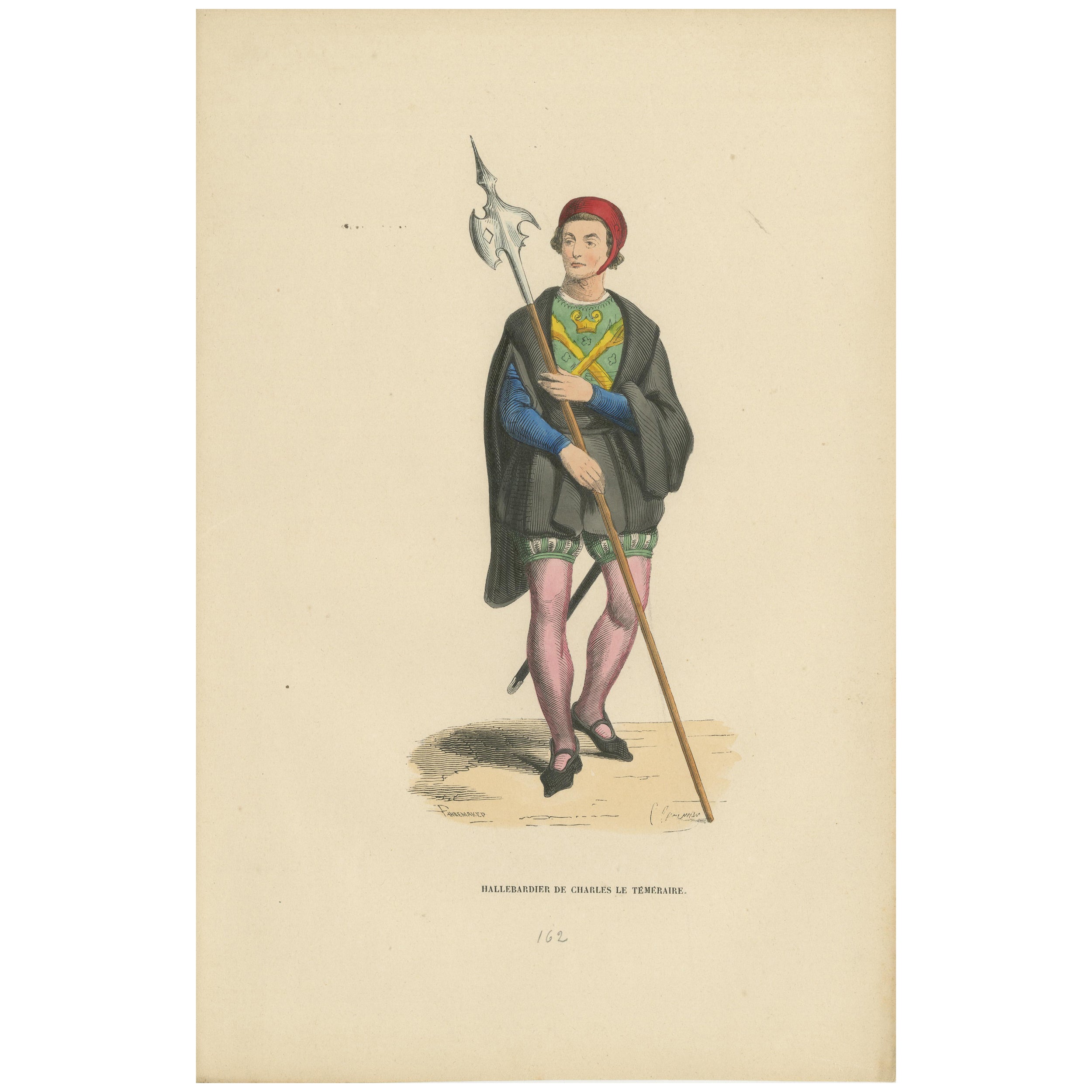
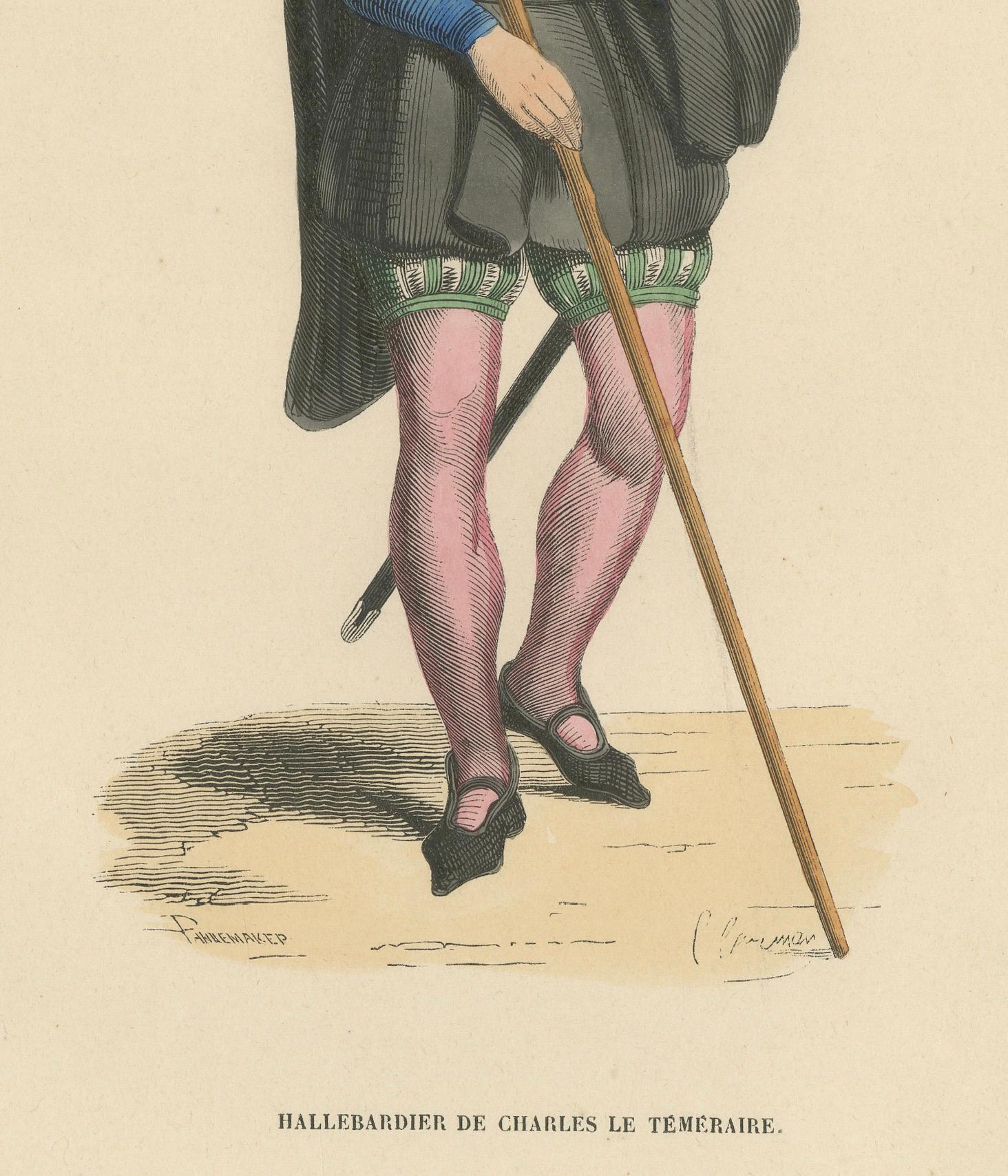
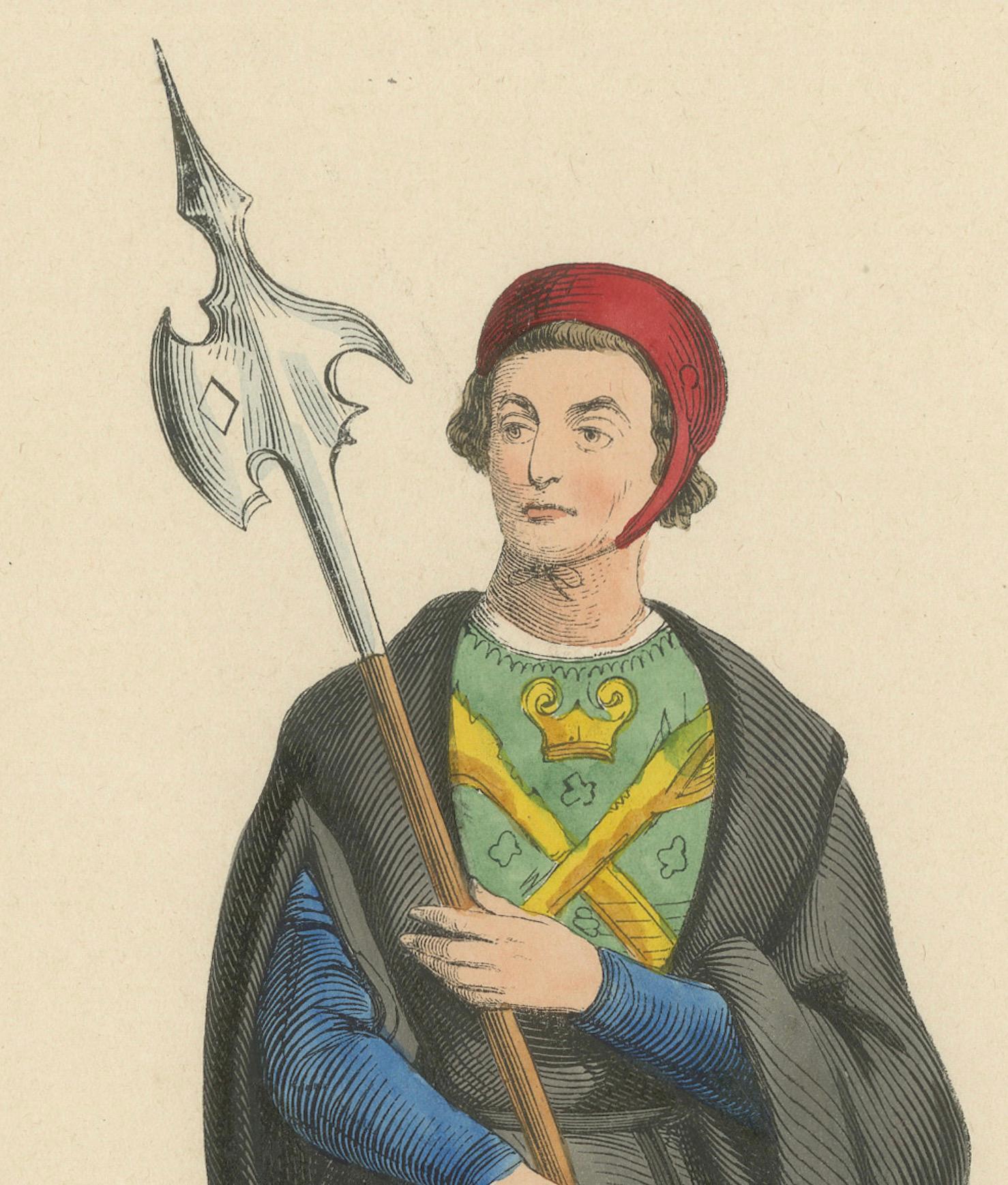
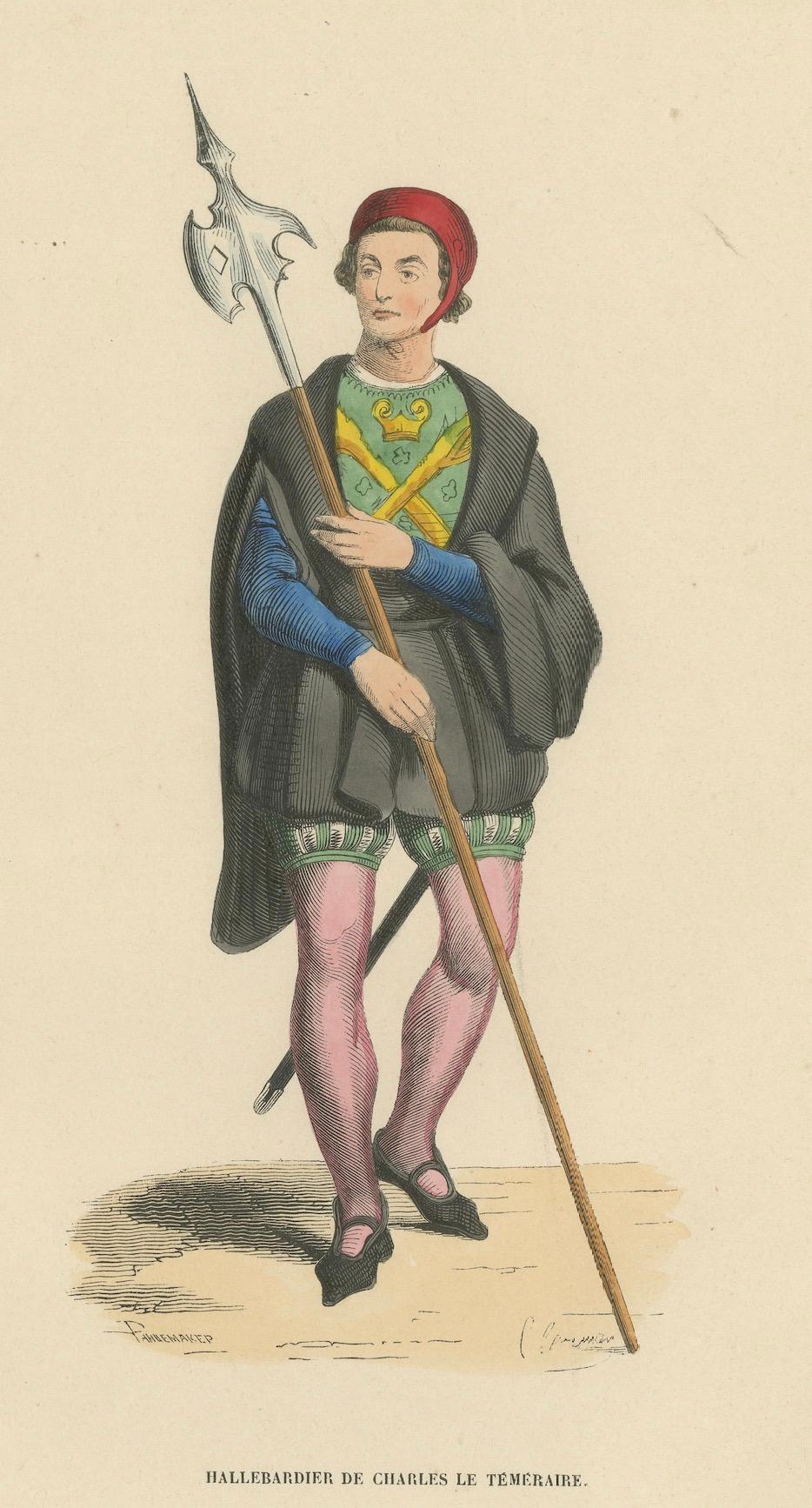
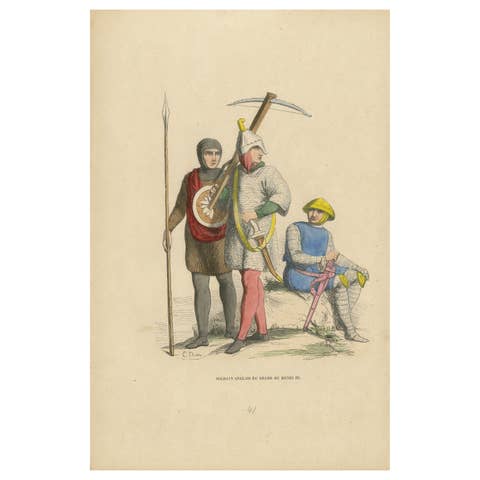
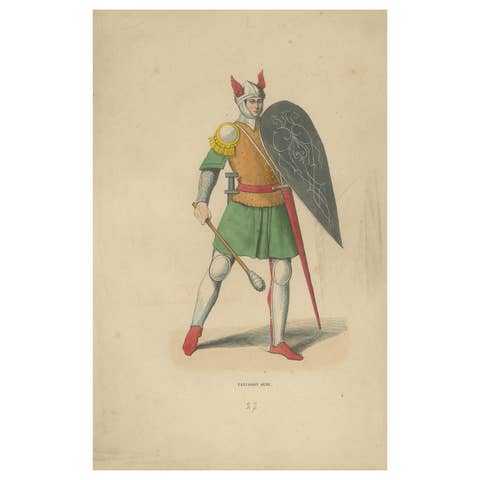
This antique print for sale portrays a halberdier from the time of Charles the Bold, also known as Charles the Rash, who was Duke of Burgundy from 1467 to 1477. The halberdier is dressed in a traditional military garb indicative of the late Middle Ages. He stands poised with a halberd, a combined spear and battle-axe weapon that was a common part of the infantry's arsenal during that period.
His attire is both functional and symbolic, featuring a tabard with what appears to be a heraldic emblem over a chainmail armor suit, which suggests his allegiance and his role in the duke's forces. The leggings are a striking pink, a color that may signify his rank or company within the military hierarchy. His footwear, the historical pointed poulaines, reinforces the era's fashion. The halberdier's helmet, known as a sallet, is simple yet effective, providing protection while allowing for visibility.
The flag he carries bears the keys of Saint Peter, symbolizing authority and perhaps a connection to the Burgundian state's ecclesiastical ties. The overall presentation of the figure conveys a sense of readiness and duty, as halberdiers were often used to protect royalty and nobility or to serve as officers in battle, commanding other troops.
The image is likely a part of a historical series, given the sequential numbering at the bottom, and serves as a detailed representation of the military attire and armaments from the era of Charles the Bold.
The colors have a nice glow over them. Historically, egg whites, known as glair, and sometimes egg yolk were indeed used in illumination and painting, particularly in manuscripts, to give colors a brighter appearance and to add a sheen or gloss to the work. This technique was quite common during the Middle Ages and into the Renaissance.
Egg whites can be applied as a varnish over pigments to enhance their brightness and to protect the colors. This application could make the colors appear more vivid and also add a slight glossy sheen to the surface of the image.
Egg whites can be applied as a varnish over pigments to enhance their brightness and to protect the colors. This application could make the colors appear more vivid and also add a slight glossy sheen to the surface of the image.
Egg yolk, on the other hand, was commonly used as a binding agent in paint. It forms the basis of tempera paint, a medium that was widely used before the advent of oil painting. Egg yolk helps to create a durable and long-lasting color that adheres well to various surfaces.
In the context of the print from 1847, it's less likely that egg whites or yolks were used directly on the print, as by that time, commercial printing processes would have been more advanced and less reliant on such manual methods. However, if this print is a representation of an earlier style or is meant to mimic the appearance of hand-painted manuscripts, the original artists might have employed techniques or materials that gave a similar effect to those achieved with egg-based binders and varnishes.