About this sheet
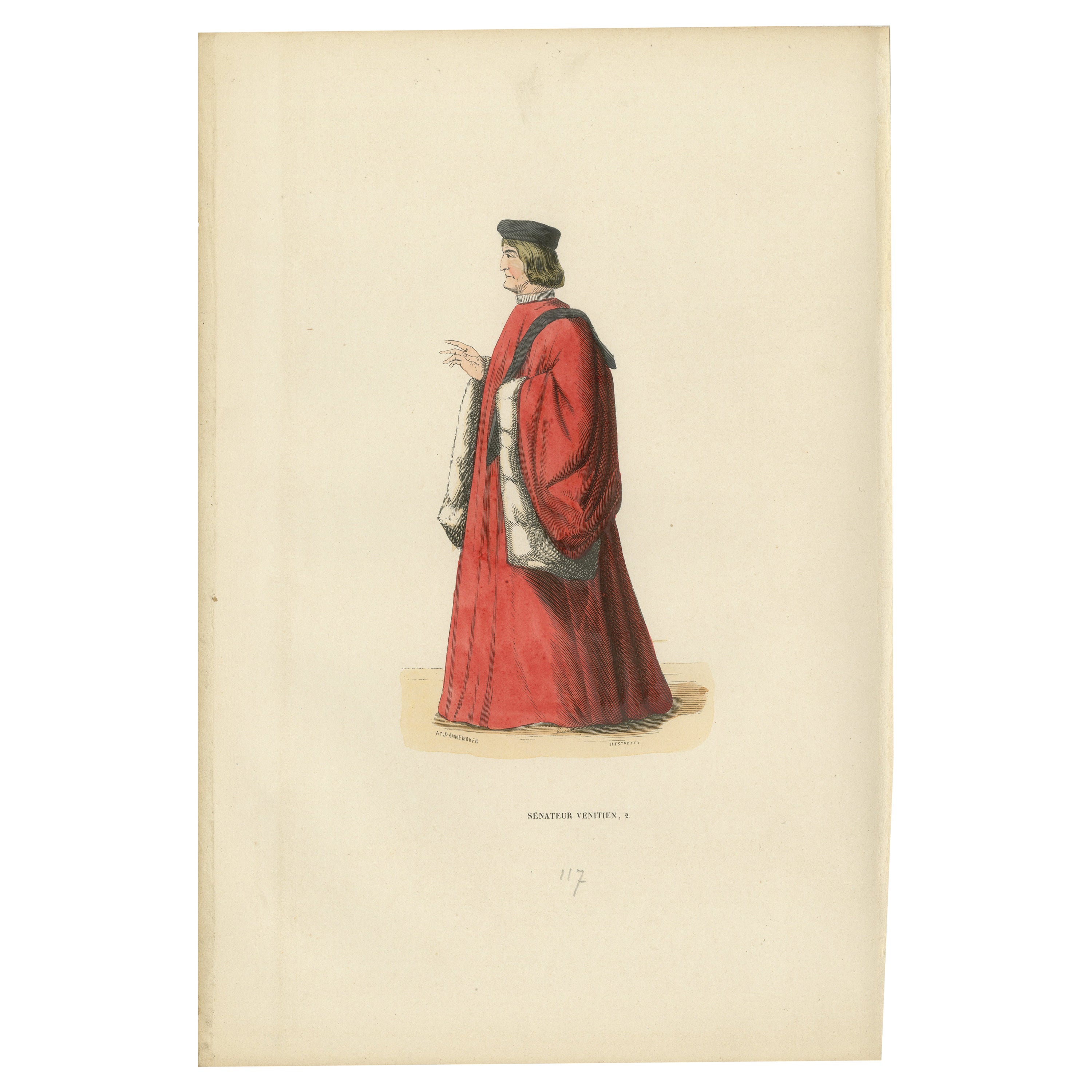
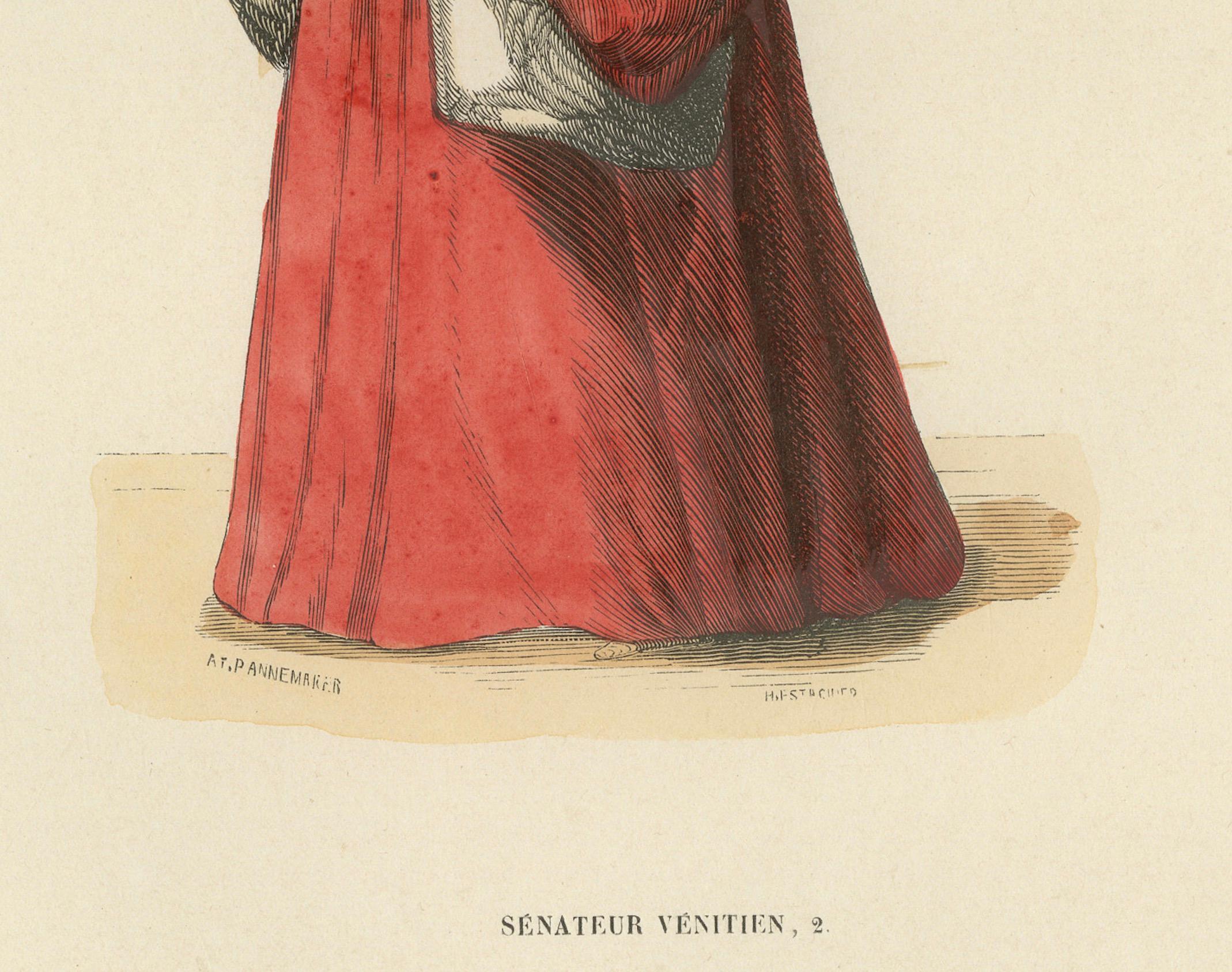
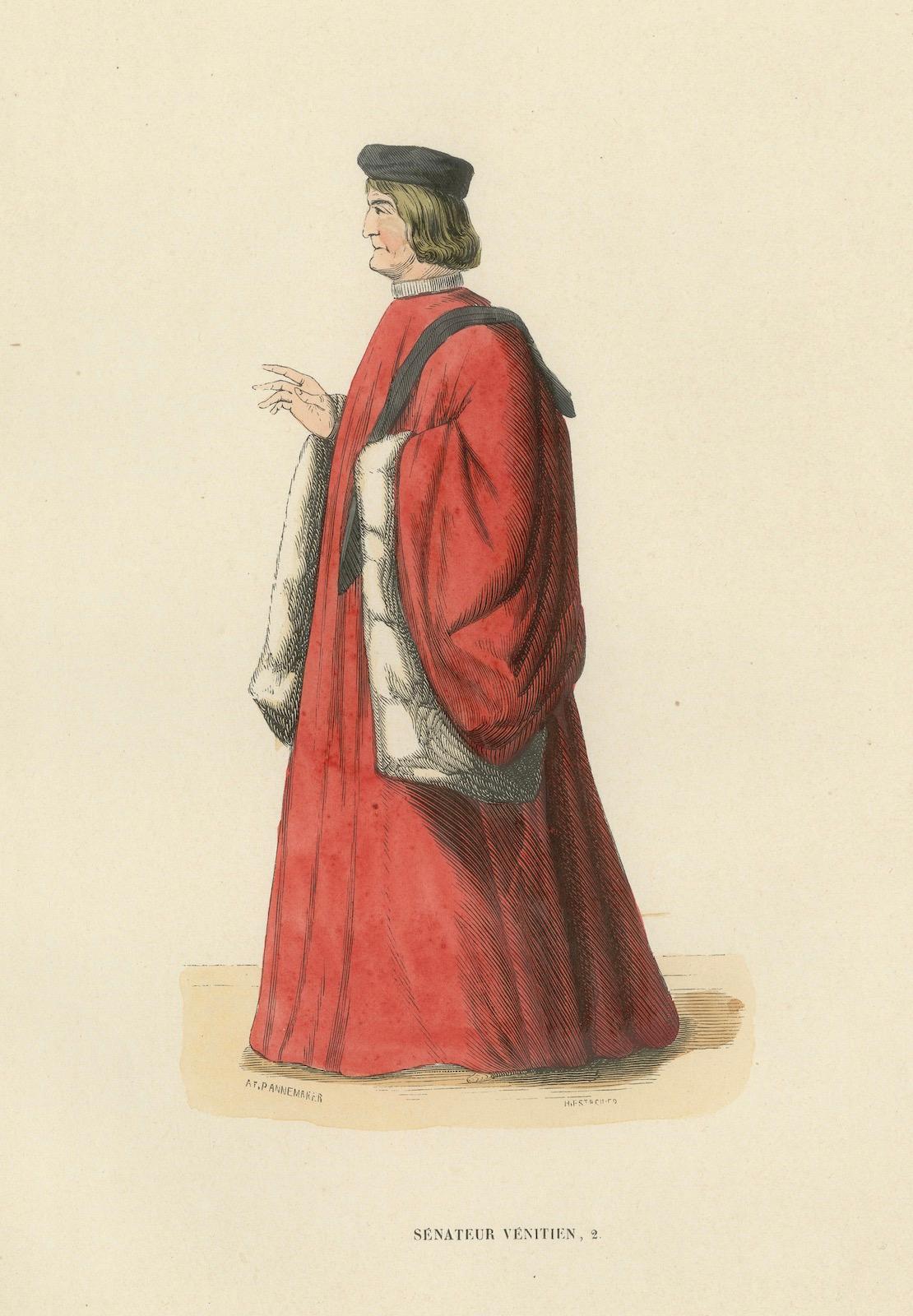
"Sénateur Vénitien" (Venetian Senator)
This hand-colored engraving from the 1847 series "Costume du Moyen Age" depicts a Venetian senator, a prominent political figure from the Republic of Venice. The title "Sénateur Vénitien" indicates a specific focus on the historical attire of a member of the Venetian Senate, the governing body of the republic.
The senator is garbed in a long, flowing red robe, a color often associated with power and authority in the medieval period. The robe is rich and voluminous, suggesting the wealth and importance of his office. The edges of the robe and the sleeves are lined with fur, which adds to the garment's opulence and also reflects the need for warmth in the draughty chambers where he would have conducted his duties.
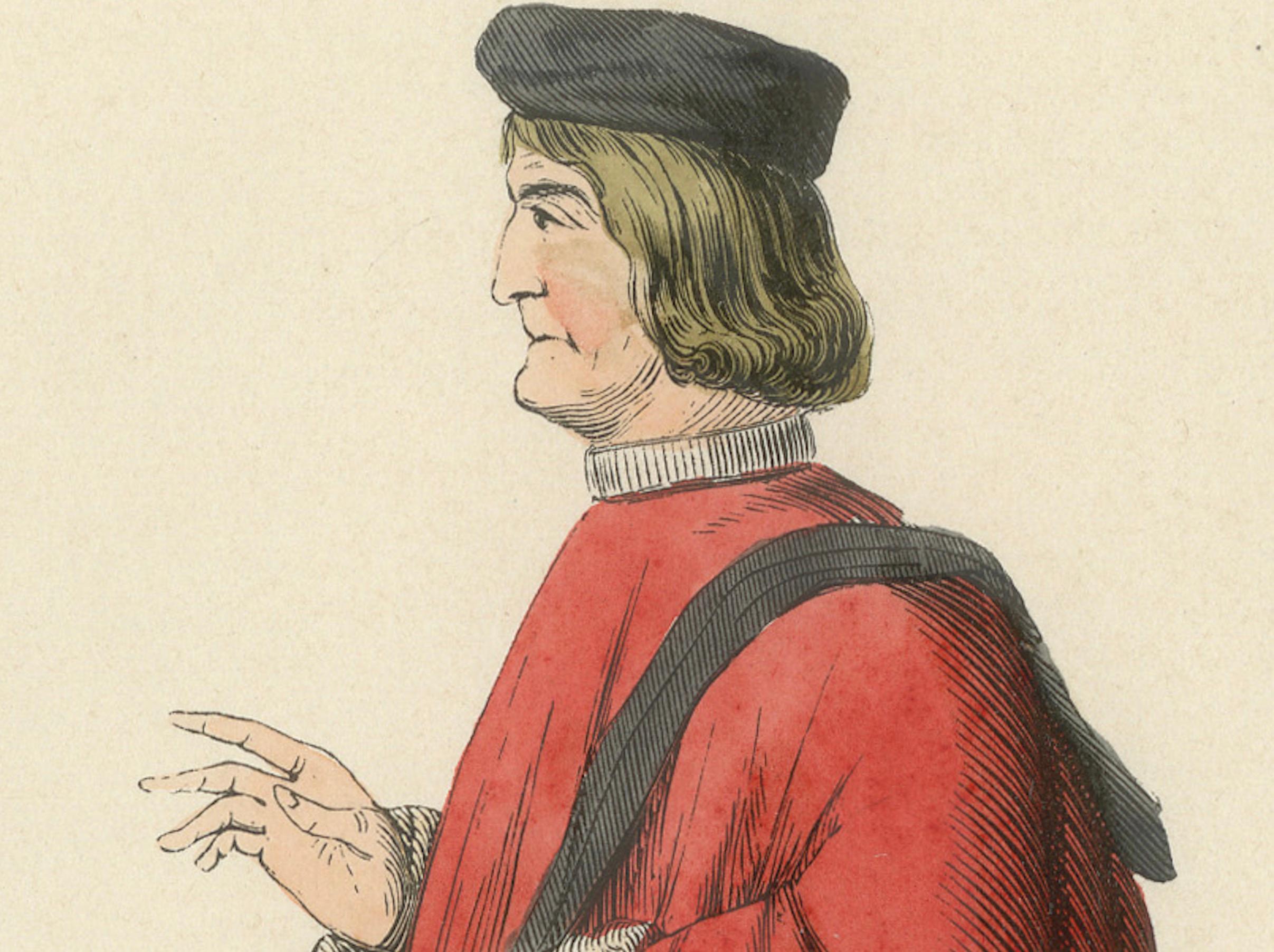
He wears a dark blue undergarment that peeks from the open front of the robe, and a simple yet elegant black cap sits upon his head, a common headpiece for men of his stature during this period.
The senator's hands are delicately poised in a gesture that may be in the midst of debate or oration, a common practice within the senate as they discussed the affairs of the state. His facial expression is solemn and contemplative, befitting a man engaged in the serious business of governance.
This image captures the elegance and dignity of a Venetian senator, offering insight into the sartorial splendor of one of the most powerful maritime republics of the medieval world.
The colors have a nice glow over them. Historically, egg whites, known as glair, and sometimes egg yolk were indeed used in illumination and painting, particularly in manuscripts, to give colors a brighter appearance and to add a sheen or gloss to the work. This technique was quite common during the Middle Ages and into the Renaissance.
Egg whites can be applied as a varnish over pigments to enhance their brightness and to protect the colors. This application could make the colors appear more vivid and also add a slight glossy sheen to the surface of the image.
Egg yolk, on the other hand, was commonly used as a binding agent in paint. It forms the basis of tempera paint, a medium that was widely used before the advent of oil painting. Egg yolk helps to create a durable and long-lasting color that adheres well to various surfaces.
In the context of the print from 1847, it's less likely that egg whites or yolks were used directly on the print, as by that time, commercial printing processes would have been more advanced and less reliant on such manual methods. However, if this print is a representation of an earlier style or is meant to mimic the appearance of hand-painted manuscripts, the original artists might have employed techniques or materials that gave a similar effect to those achieved with egg-based binders and varnishes.