Perspective View of a Cannon Foundry – 18th-Century Hand-Colored Optical Print
€ 390
One of a kind: this is the sheet in the photographs. Ships from Langweer, the Netherlands.
Sheet size
34.7 × 47.3 cm (13.7 × 18.6 in)
Condition
Fair
Reference
BG-12333-1
Condition
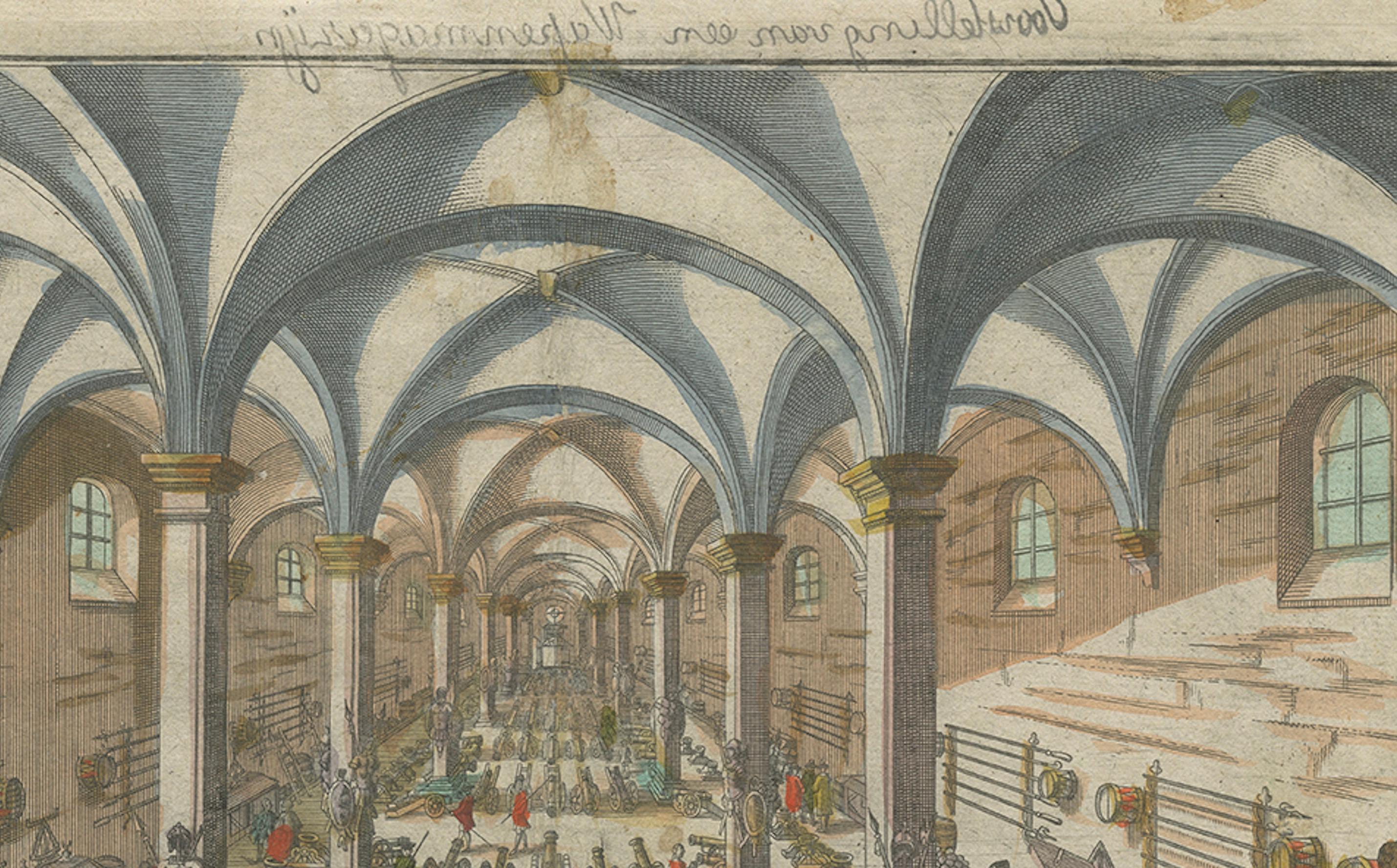
Fair condition with strong coloring and a clear impression. Signs of age, including some handling creases and edge wear, particularly near the corners and middle fold. Minor toning in upper margin and a handwritten annotation in reverse at the top.
About this sheet
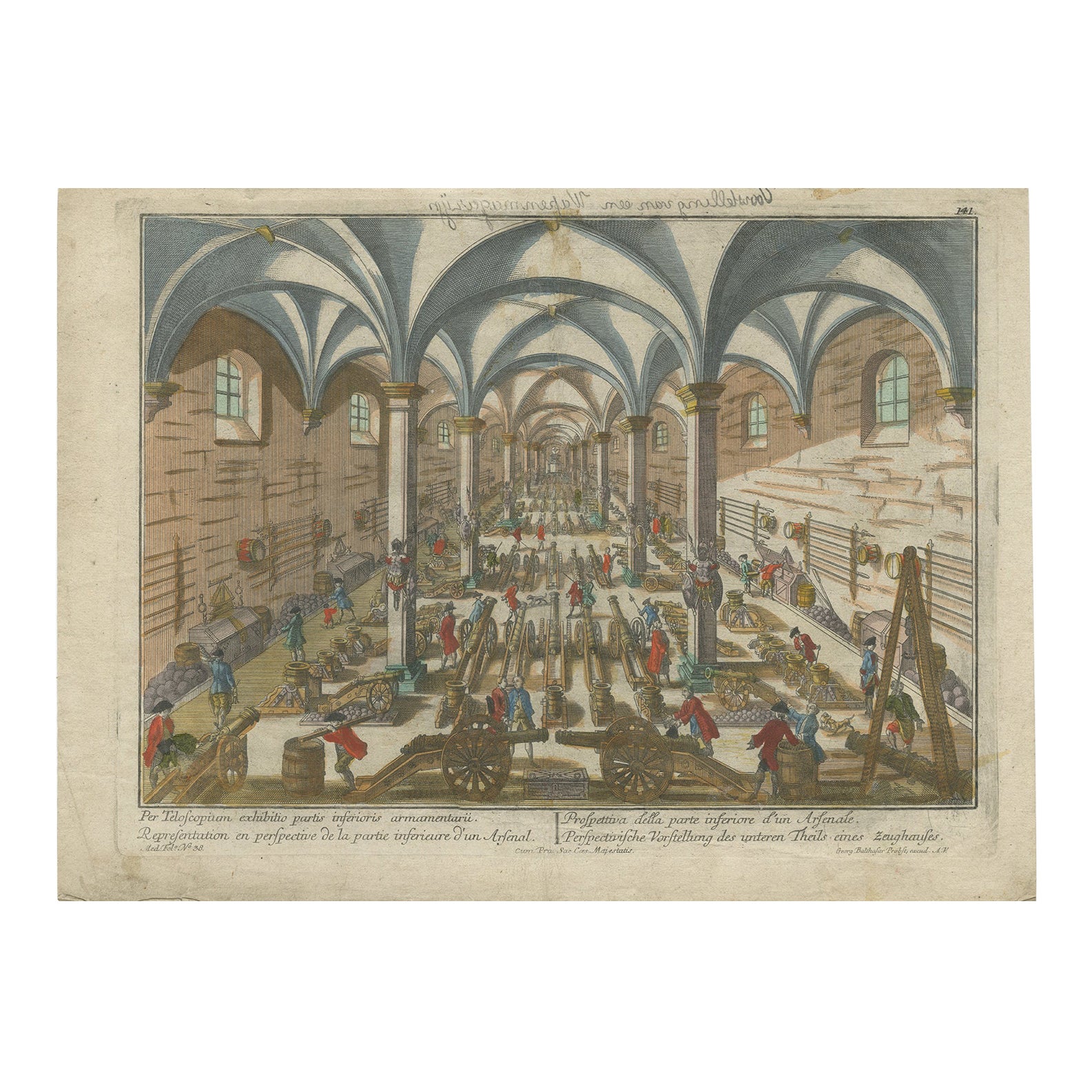
Perspective View of a Cannon Foundry – 18th-Century Hand-Colored Optical Print
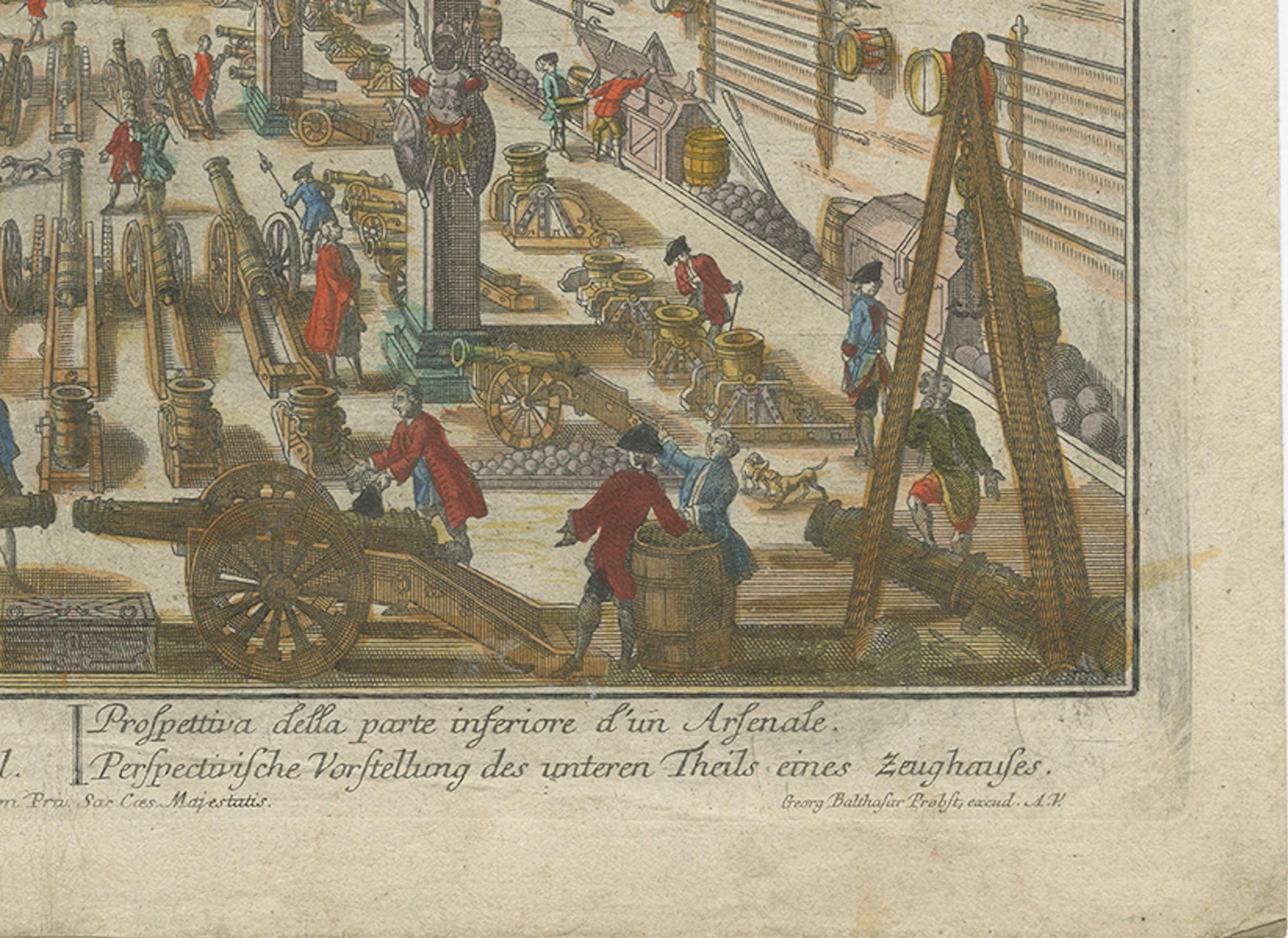
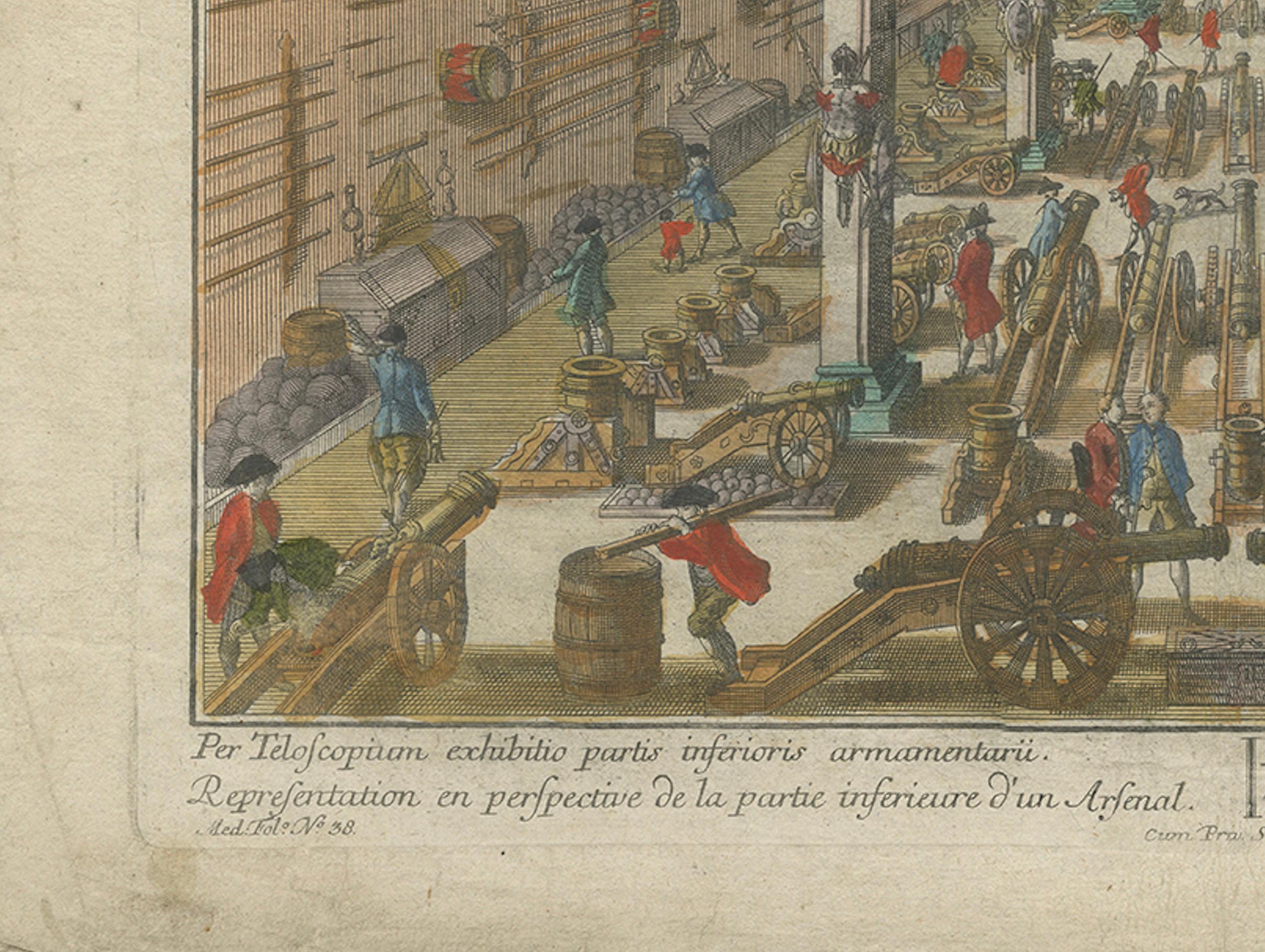
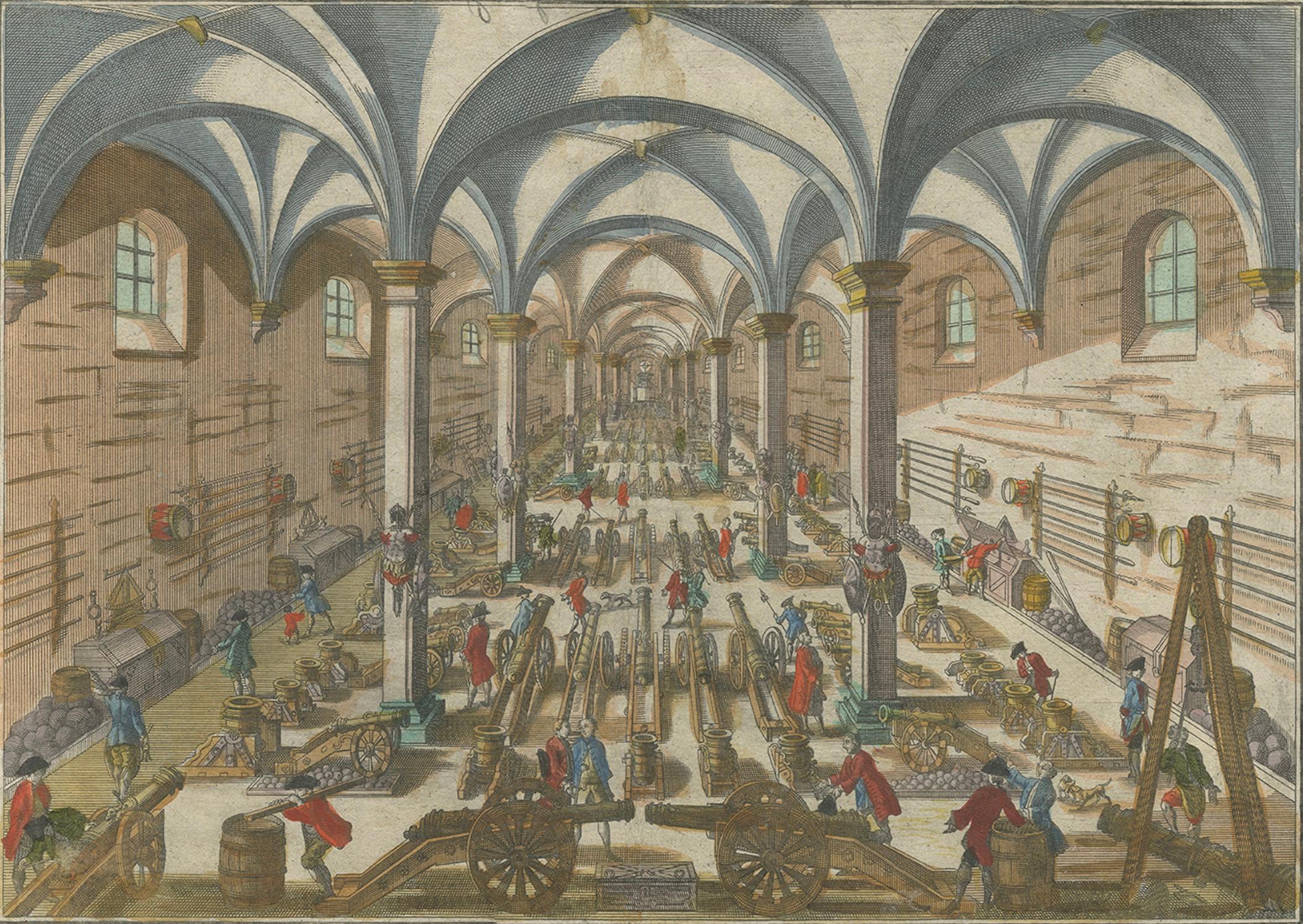
This vivid and highly detailed hand-colored engraving, created for use in a zograscope or optical viewing device, depicts a bustling scene inside a grand vaulted cannon foundry or arsenal. The print, titled in four languages beneath the image, was designed to provide an immersive three-dimensional experience when viewed through a perspective machine—popular in 18th-century salons and parlors. It dates from around 1750–1780 and is attributed to Georg Balthasar Probst of Augsburg, a leading publisher of *vue d’optique* prints.
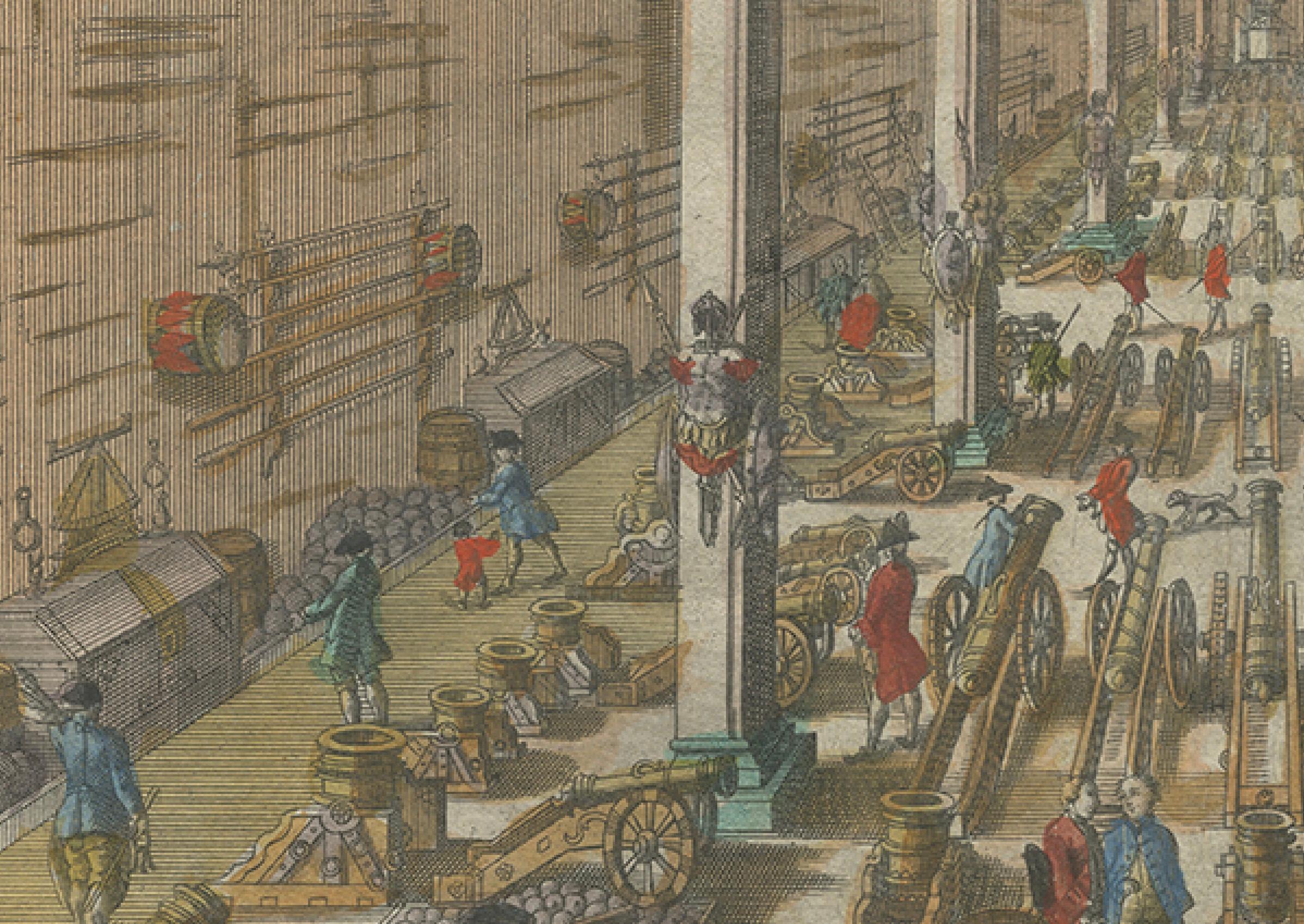
Rendered in dramatic linear perspective, the engraving invites the viewer deep into the interior of an enormous armory. The architecture features soaring arched ceilings and strong vertical columns, creating a cathedral-like atmosphere in which the production of war matériel takes place. Rows of cannons stretch back into infinity, flanked by workers in colorful coats, engaged in manufacturing and assembling weaponry. The scene is filled with lively activity: figures haul powder kegs, polish cannonballs, transport barrels, and prepare artillery pieces.
The visual dynamism is heightened by the intense hand coloring, especially in the bright reds, blues, and yellows of the garments worn by the workers. The exaggerated perspective, a hallmark of *vue d’optique* prints, emphasizes spatial depth and draws the eye toward the vanishing point in the far distance. Originally intended as both entertainment and education, such prints offered 18th-century audiences glimpses into important architectural, military, or urban environments from across Europe.
This particular scene represents the lower level of an armory—“partis inferioris armamentarii” as labeled—and was clearly meant to impress viewers with the scale and power of imperial or royal military production.
Condition: Fair condition with strong coloring and a clear impression. Signs of age, including some handling creases and edge wear, particularly near the corners and middle fold. Minor toning in upper margin and a handwritten annotation in reverse at the top, typical of optical prints intended for mirrored viewing. No major tears or repairs.
Framing Tips: This print looks particularly striking when float-mounted to showcase the full sheet and decorative border texts. A dark frame with gold detailing will enhance the architectural lines and vibrant colors. Use UV-protective glazing to preserve the pigment. Ideal for collectors of military history, 18th-century engravings, or early optical illusions.