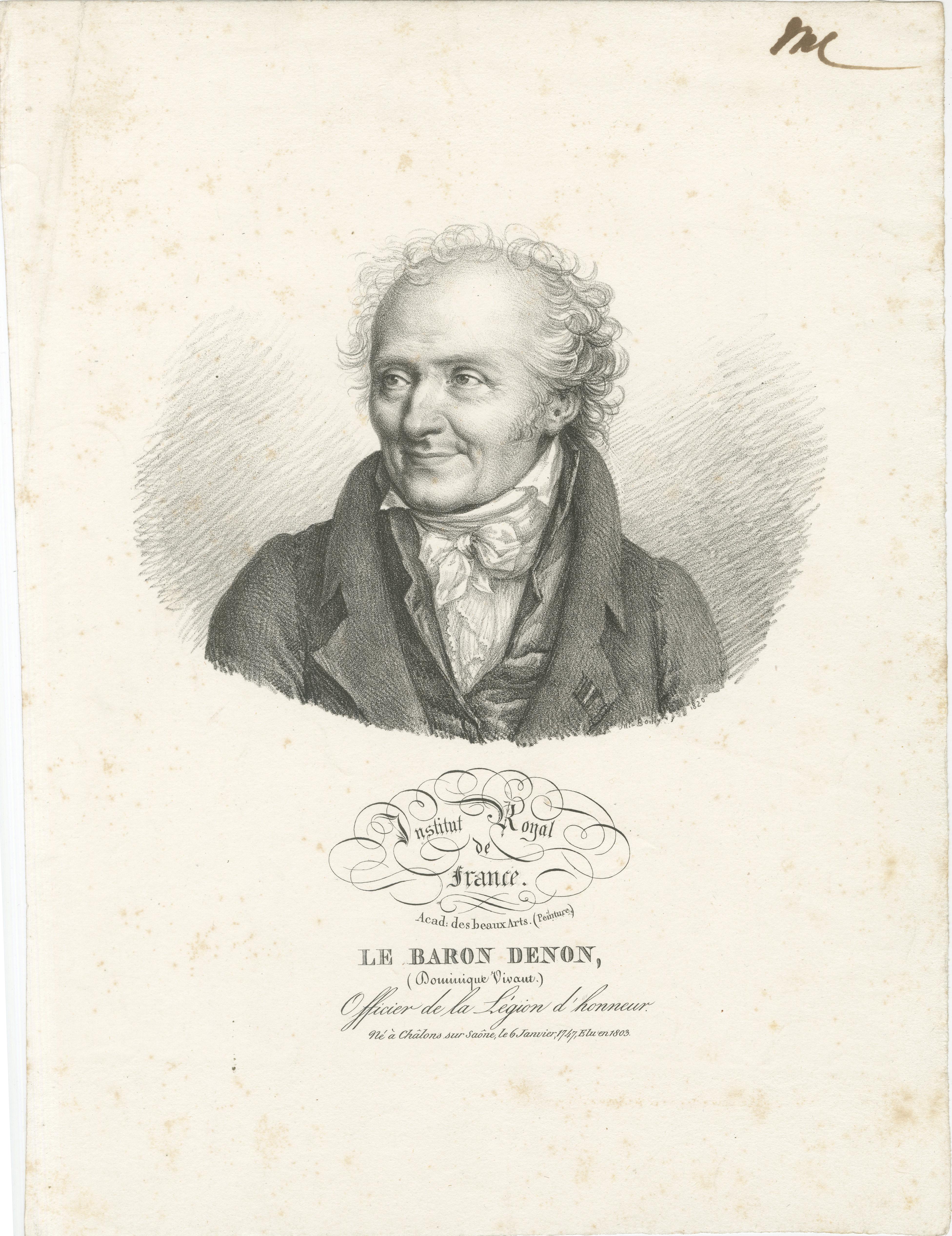
Napoleon’s Louvre Director Vivant Denon – French Empire Portrait Engraving c1820
€ 370
One of a kind: this is the sheet in the photographs. Ships from Langweer, the Netherlands.
Sheet size
35.7 × 26.7 cm (14.1 × 10.5 in)
Condition
Good
Reference
BG-14273-60
Condition
In good condition with age-related toning and scattered foxing visible across the sheet, more pronounced in the margins. The paper remains structurally sound with no significant tears or losses observed. Edges show light wear consistent with age.
About this sheet
Napoleon’s Louvre Director Vivant Denon – French Empire Portrait Engraving, circa 1820 A refined and elegant engraved portrait of Dominique Vivant Denon (1747–1825), widely known as Baron Denon, one of the most influential cultural figures of Napoleonic France. Denon served as the first director of the Musée Napoléon—later the Louvre Museum—and played a decisive role in shaping one of the world’s most important art collections.
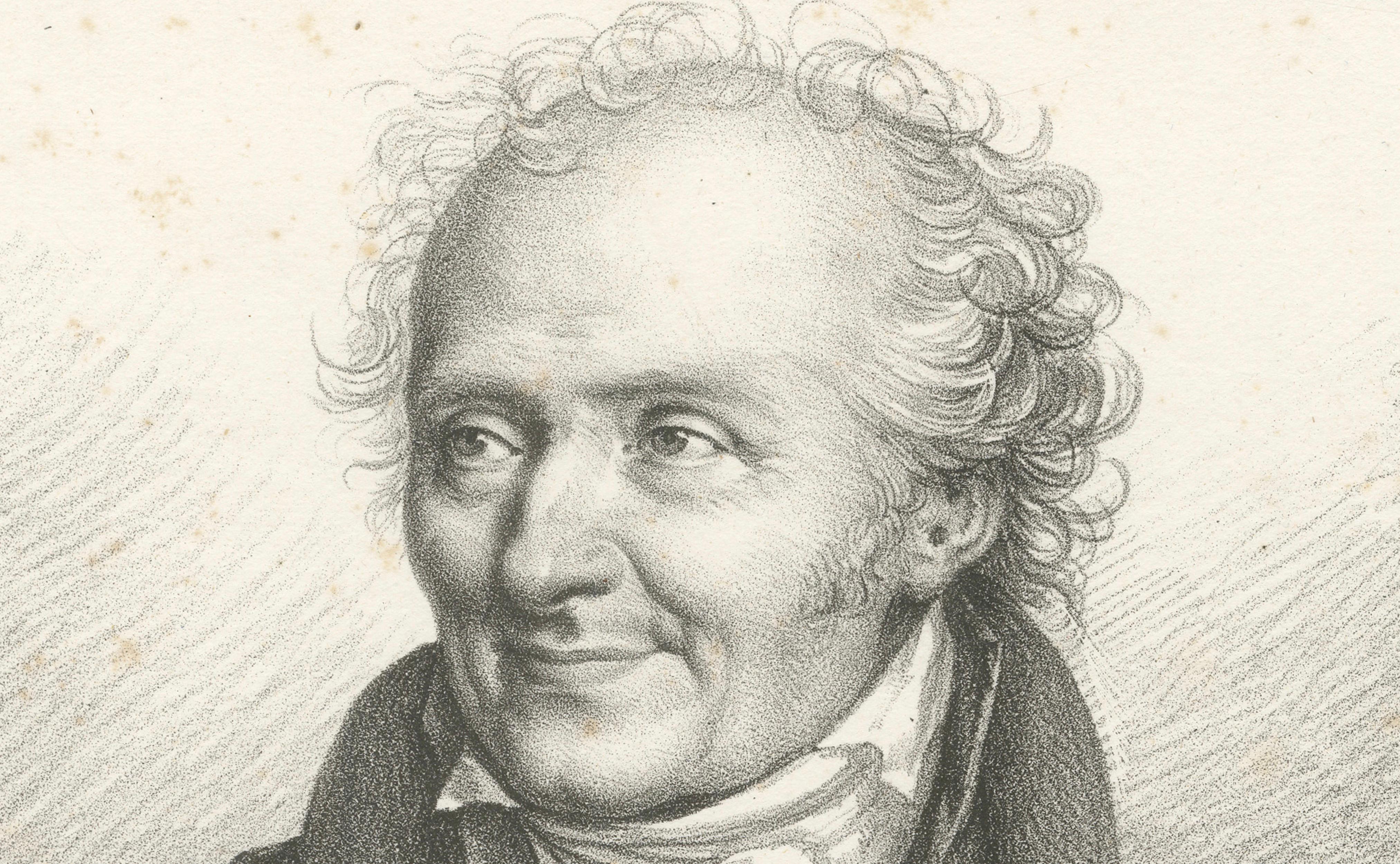
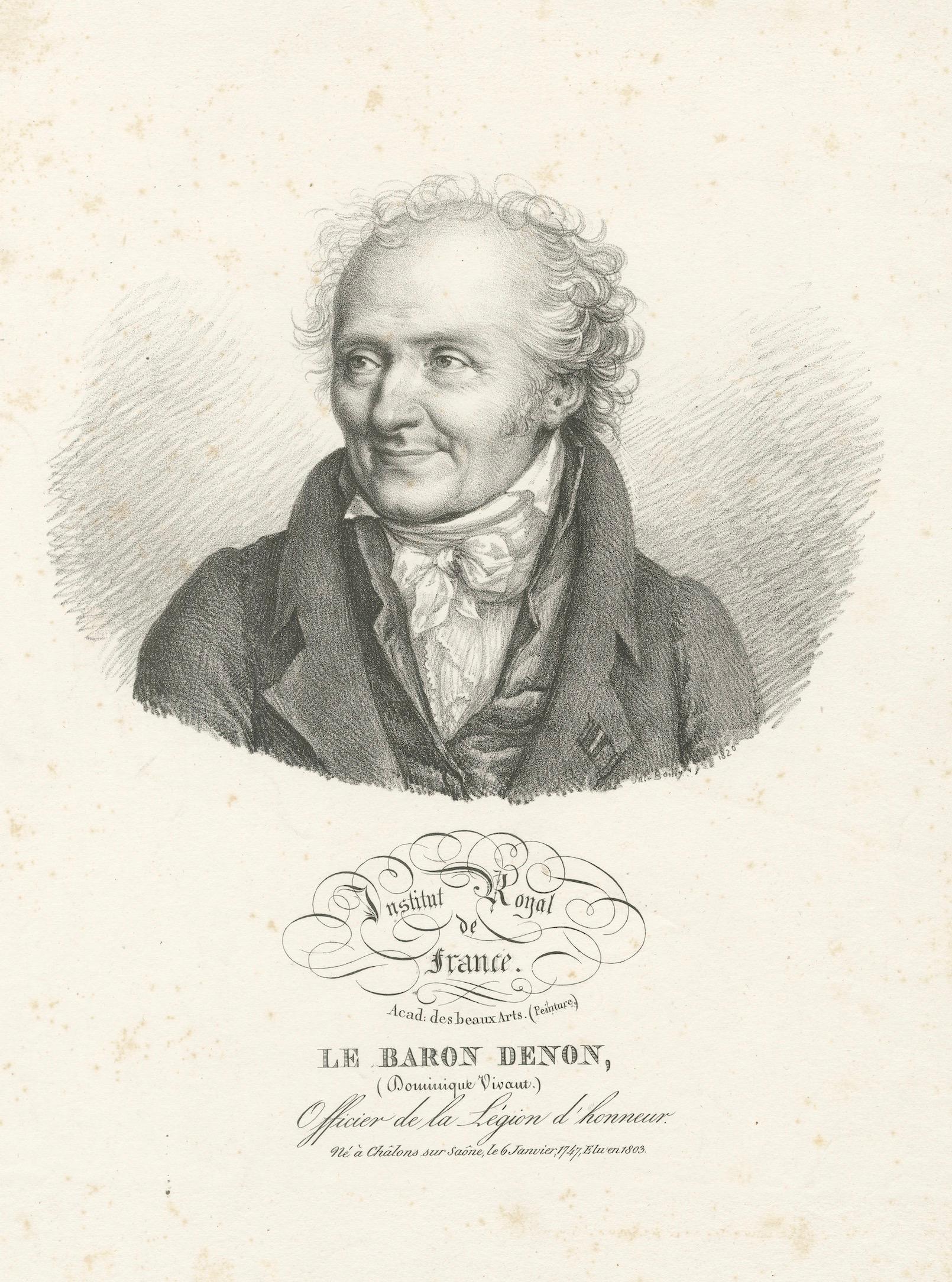
This finely executed engraving presents Denon in a three-quarter profile, rendered with delicate line work and soft tonal shading that highlights his thoughtful expression and intellectual presence. His slightly turned gaze and composed demeanor reflect his reputation as a man of letters, diplomacy, and artistic discernment. The engraving captures not only his likeness but also the cultivated refinement associated with the French Empire’s cultural elite.
Below the portrait, an ornate inscription cartouche prominently features “Institut Royal de France,” referencing Denon’s affiliation with the Académie des Beaux-Arts. The inscription further identifies him as “Officier de la Légion d’honneur,” emphasizing his high standing within Napoleonic society. Denon’s legacy extends beyond administration—he accompanied Napoleon on the Egyptian campaign and was instrumental in documenting and collecting antiquities, contributing to Europe’s fascination with ancient civilizations.
The composition is clean and balanced, with the portrait floating above an open field of paper, giving the work a light and sophisticated aesthetic. This makes it particularly suitable for modern interiors while retaining its strong historical character. The engraving would appeal to collectors of French history, Napoleonic era figures, museum history, and fine portraiture.
Condition report: In good condition with age-related toning and scattered foxing visible across the sheet, more pronounced in the margins. The paper remains structurally sound with no significant tears or losses observed. Edges show light wear consistent with age. A small collector’s mark or inscription is visible in the upper right corner. Plate mark not clearly visible but impression remains strong.
Framing tips: This portrait lends itself beautifully to a refined, museum-style presentation. A dark walnut or ebonized wood frame combined with a wide ivory or off-white mat will enhance the engraving’s tonal depth and give it a distinguished presence. For a lighter, contemporary setting, a simple black or soft metallic frame with a clean white mat will create an elegant contrast and allow the portrait to stand out.
Technique: Engraving Maker: French School, early 19th century