About this sheet
Eighteenth-Century Engraving of a Cannon-Boring Machine from Fonte des Canons
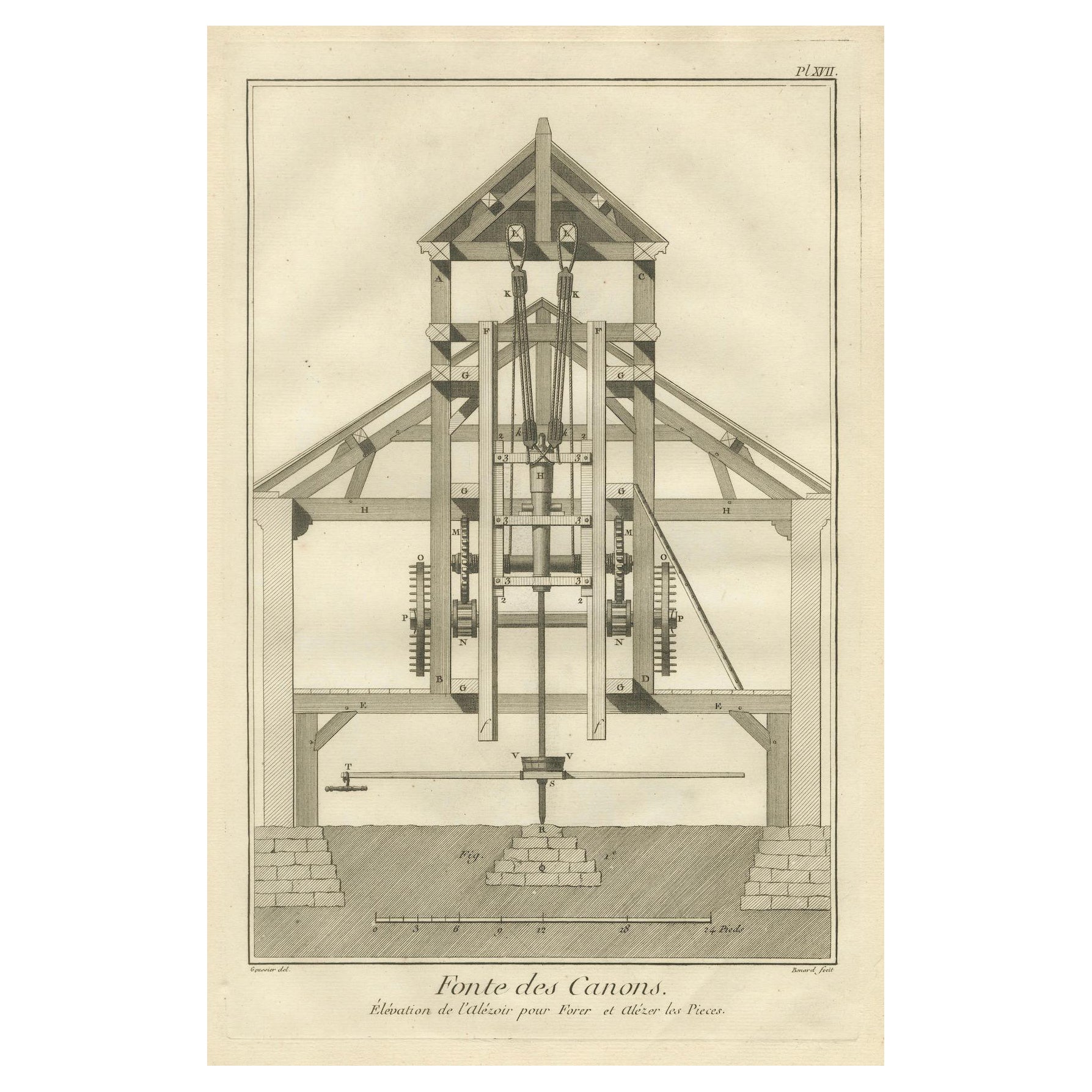
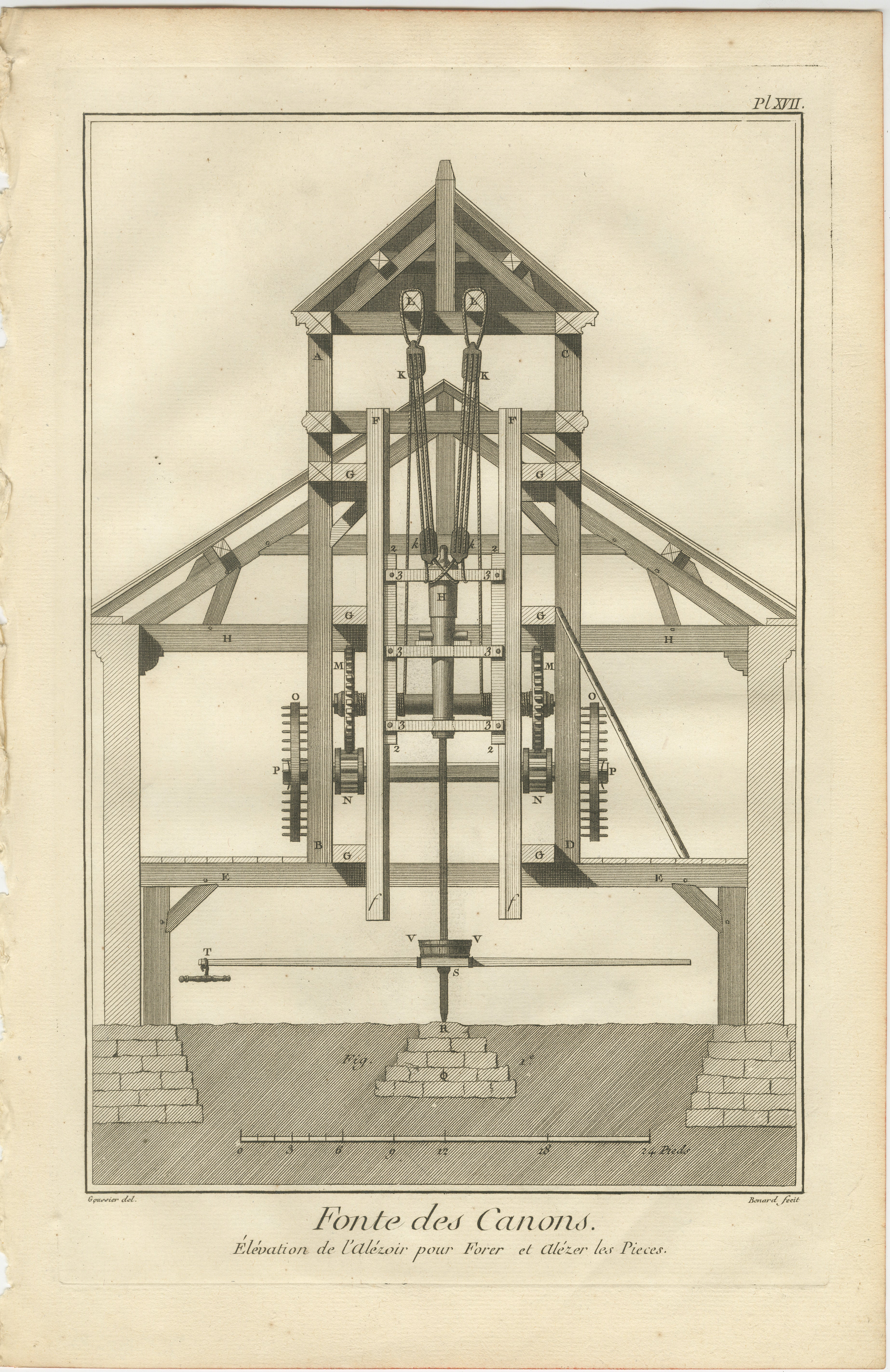
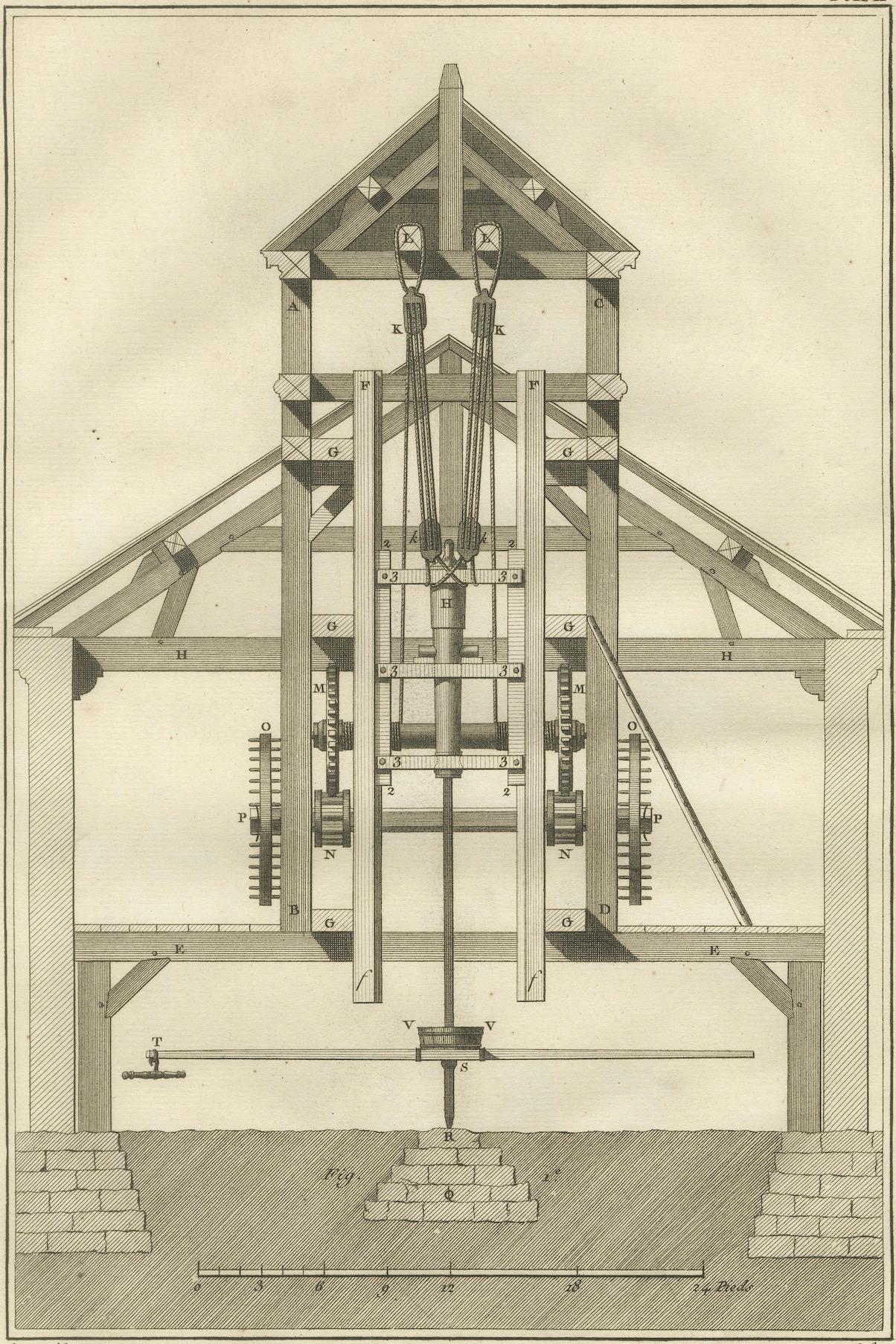
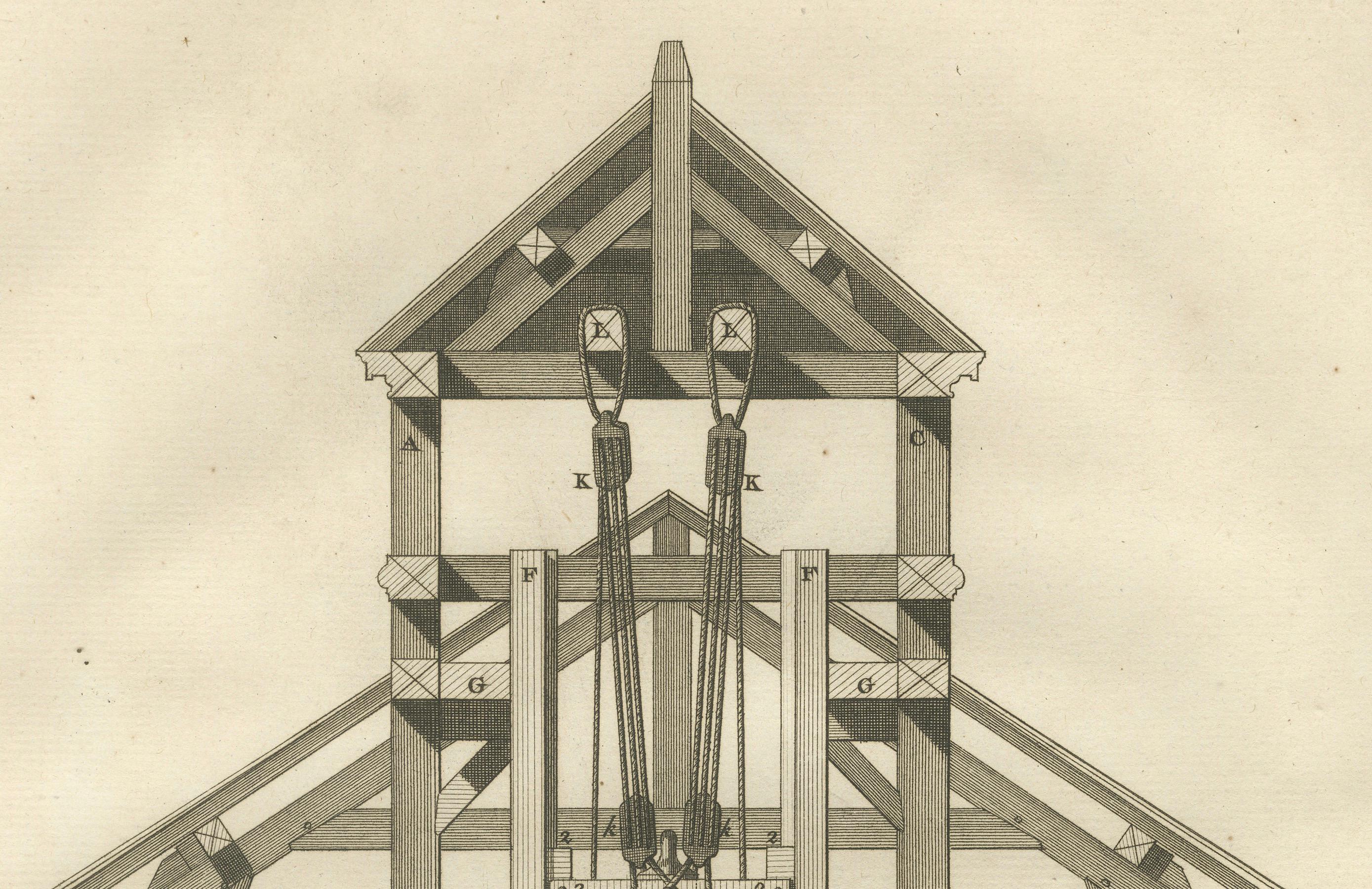
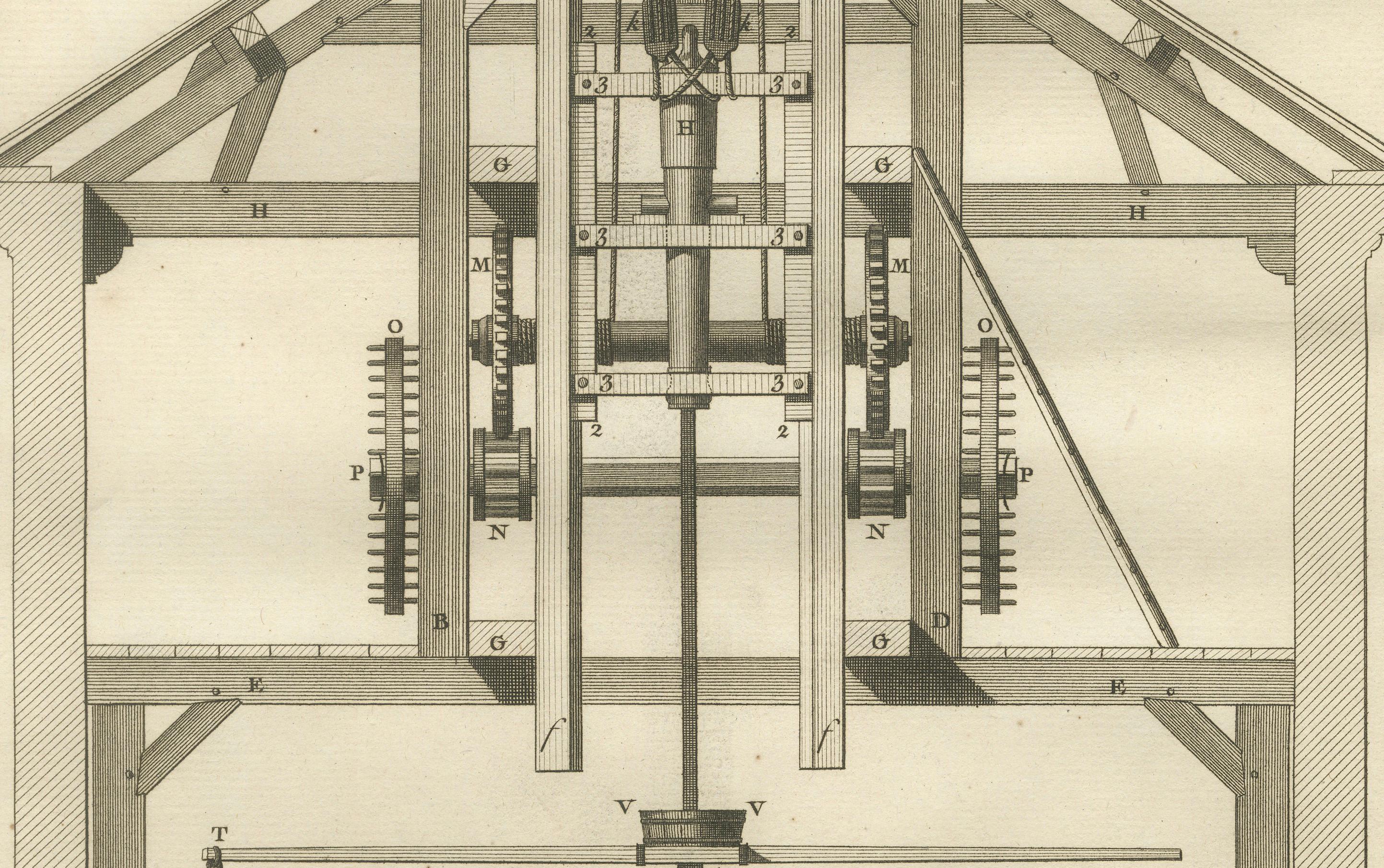
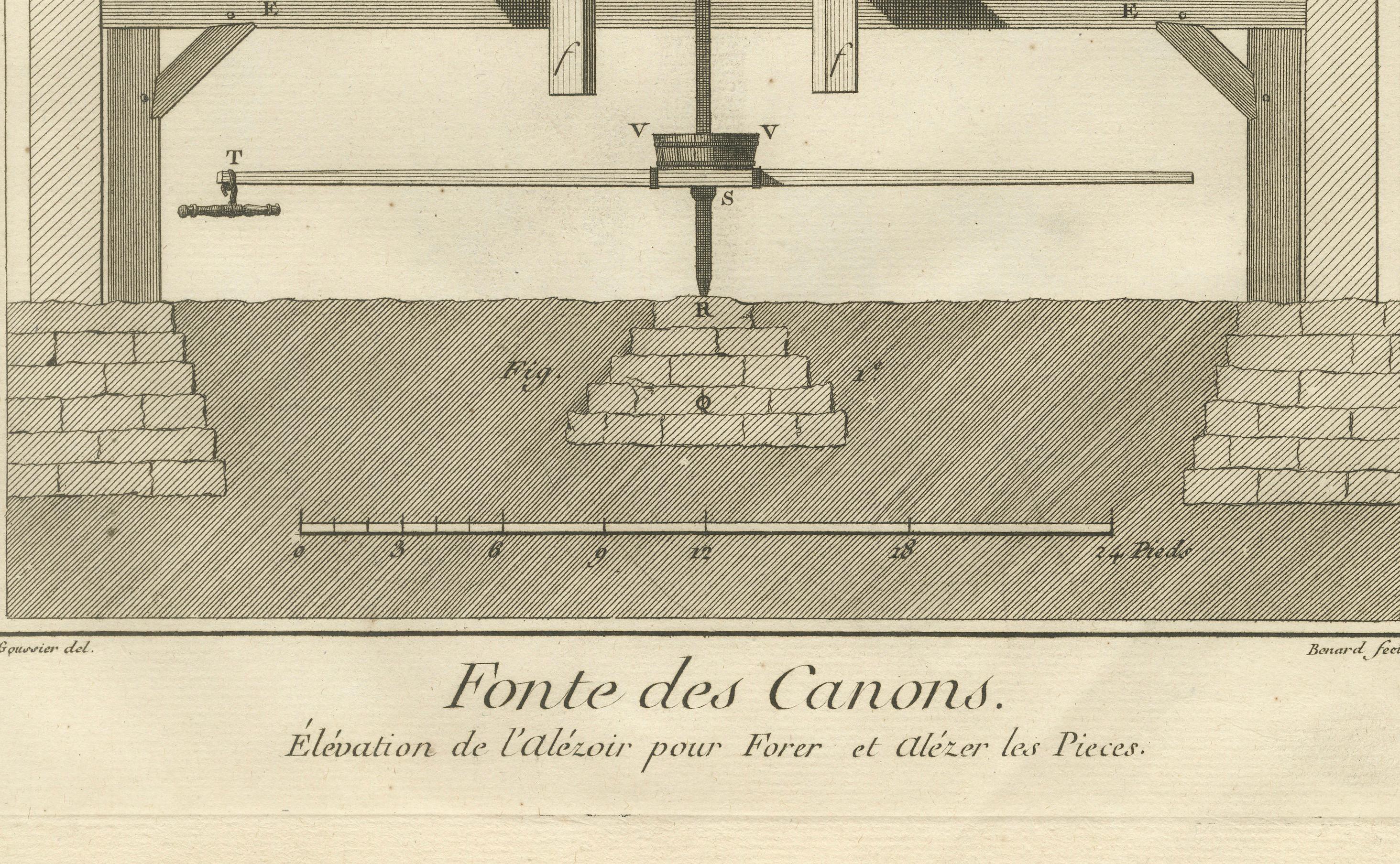
This highly detailed eighteenth-century engraving illustrates a cannon-boring machine used in the production of artillery. It originates from Fonte des Canons, an important work documenting the casting, forging, and finishing of cannons during the early modern period. The print meticulously depicts the elevation of the boring apparatus, showing the mechanical structure, gears, pulleys, and support framework essential for refining the interior of cast cannons.
The engraving is a remarkable example of precision engineering during the Age of Enlightenment, a period characterized by significant advancements in metallurgy, artillery production, and mechanical innovation. The cannon-boring process, crucial for ensuring the accuracy and durability of firearms, involved removing excess metal from the inner surface of cast cannons to achieve a smooth, uniform bore. This development greatly improved the effectiveness of artillery in both military and naval applications.
The level of craftsmanship in this engraving is extraordinary. Fine lines, cross-hatching, and shading techniques create depth and clarity, highlighting the complexity of the machinery. The technical accuracy suggests that the plate was produced by an expert engraver, possibly working for a scientific or military publication. Such prints were often commissioned by governments, academies, and artillery officers to document and disseminate knowledge about cannon manufacturing processes.
This print serves as both an artistic and technical document, reflecting the fusion of art and science in the eighteenth century. It provides valuable insight into historical artillery-making techniques, offering collectors, historians, and enthusiasts a rare glimpse into the technological advancements of the time.
Condition Report:
This engraving is in good condition for its age, with light foxing and minor discoloration typical of eighteenth-century prints. The paper has aged naturally, retaining its original strength and structure. The impression remains sharp, with fine details clearly visible. The margins are well-preserved, though some minor edge wear is present. A central fold is evident, likely from its original placement in a bound volume. No significant tears or losses are apparent. Overall, it presents well and is suitable for display.
Framing Tips:
To best showcase this historic engraving, consider using archival-quality materials for conservation. A neutral or antique-style mat will complement the print while protecting it from direct contact with glass. A classic black or gilded wooden frame will enhance the historical nature of the engraving without distracting from the intricate details. UV-protective glass or acrylic is recommended to prevent fading and further discoloration. If desired, an engraved plaque with the title and date of the print can be added for an elegant and informative touch.