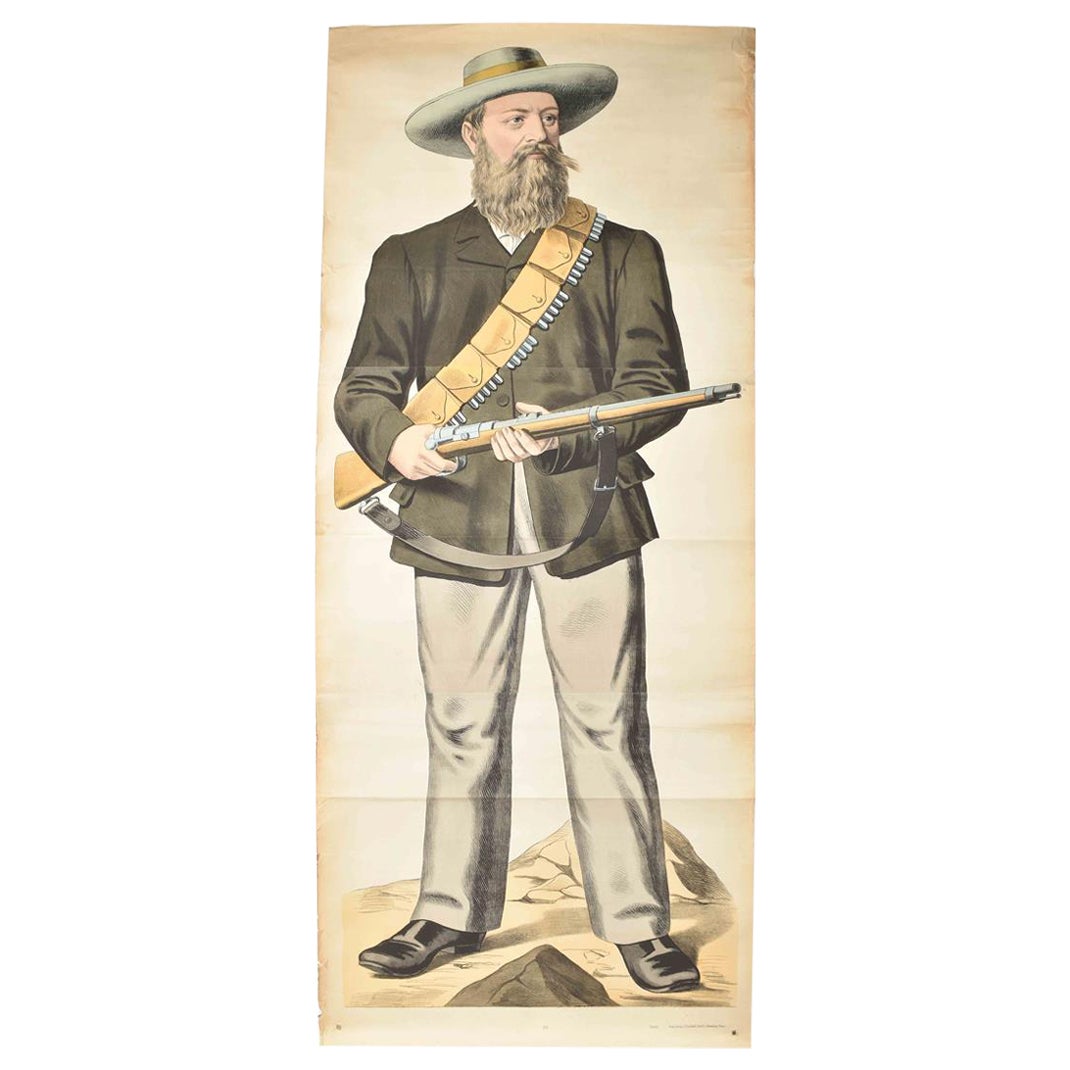
American Soldier in Regalia: A Turn-of-the-Century Chromolithographic Portrait
€ 880
One of a kind: this is the sheet in the photographs. Ships from Langweer, the Netherlands.
Sheet size
162 × 68 cm (63.8 × 26.8 in)
Condition
Good
Condition
Good. Rolling and horizontal folds from storage, a loosening portion in the upper right corner, small tears, fraying, and creases along the blank margins, along with some other small imperfections, but nevertheless an impressive life seize poster.
About this sheet
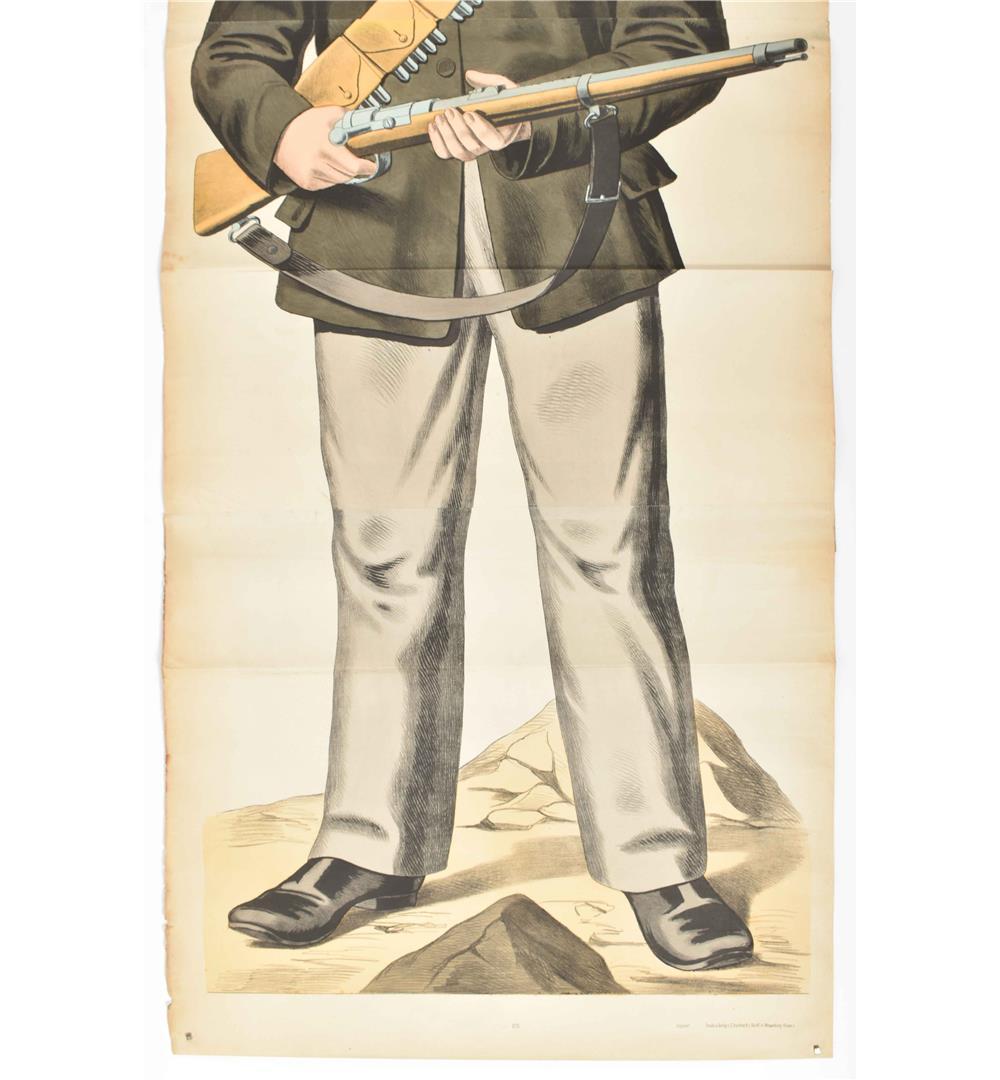
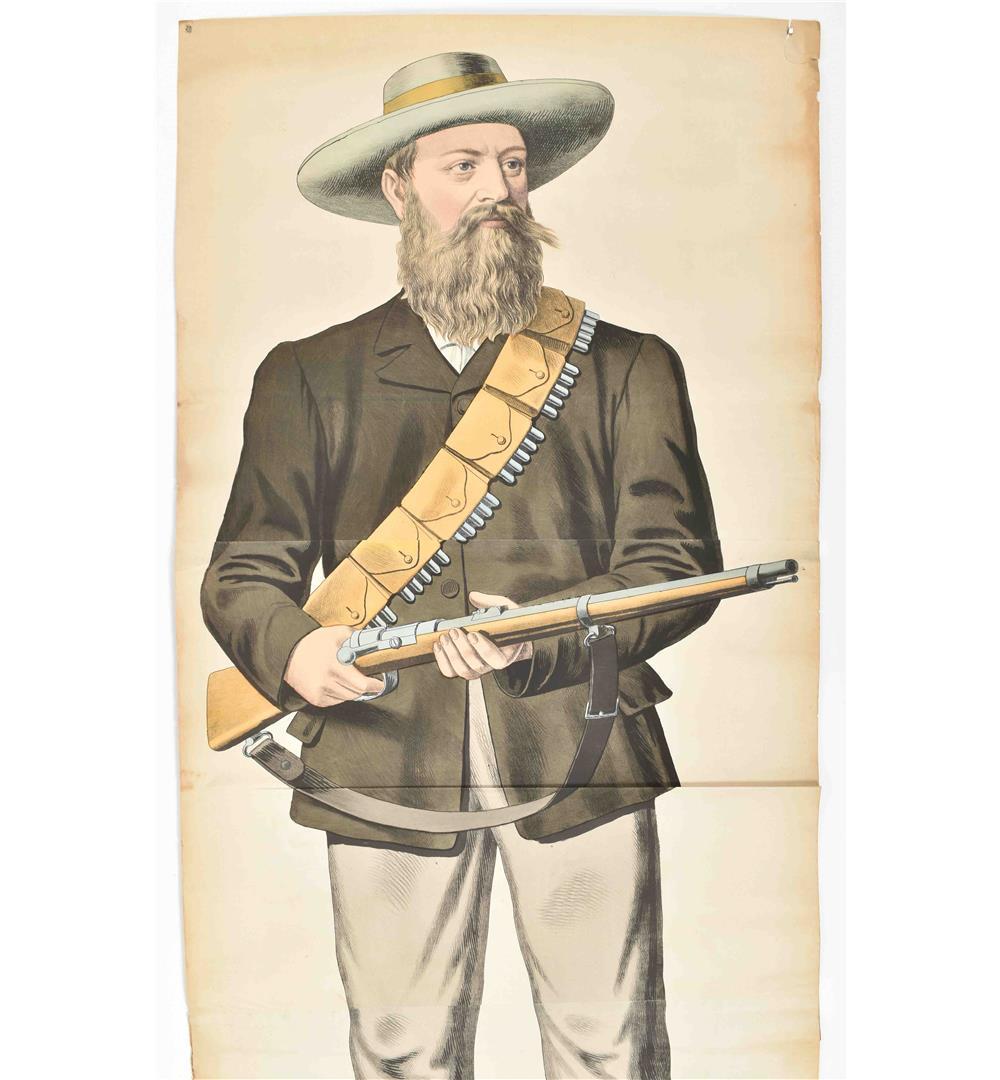
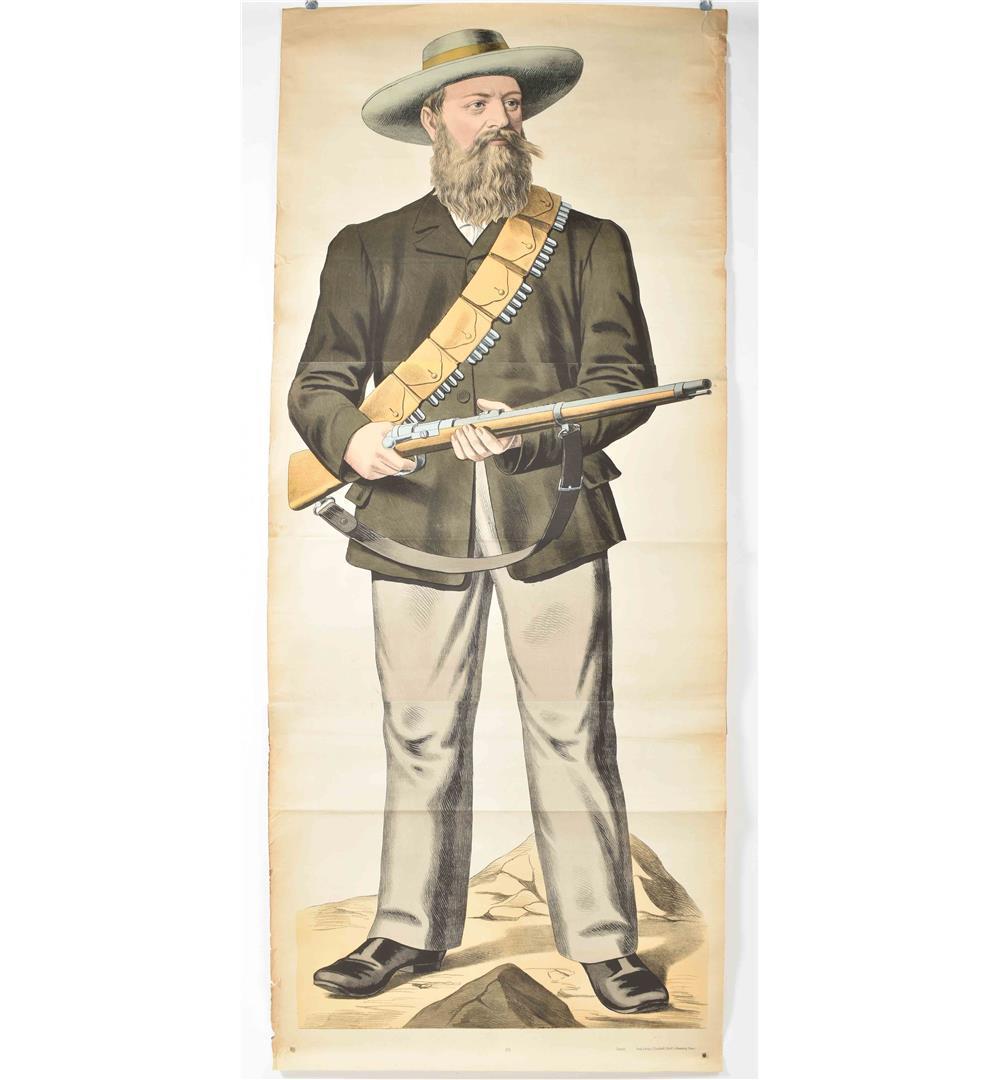
Large original antique chromolithograph poster composed of three attached sheets, measuring 162 x 68 cm in total. It features a figure that seems to represent a military figure, standing in full stature. The individual is dressed in a costume that includes a wide-brimmed hat, a jacket, and trousers, with a bandolier of bullets across the chest and holding a rifle. The style of the clothing and the presence of the rifle suggest a late 19th-century to early 20th-century timeframe, possibly relating to a military theme.
The number "179" below the image indicates that this is one print in a series of chromolithographic costume prints. Chromolithography was a method for making multi-color prints, widely used in the 19th century, known for its ability to produce vibrant and detailed images.
Produced by C. Burckhardt's Nachf. in Weissenburg, the timeframe given (between 1889 and 1906) places this work in a period of rich visual culture where such posters were popular for advertising, art, and educational purposes. C. Burckhardt's Nachf. was a printing firm known for such works, and they likely produced a variety of subjects in this format.
The condition description suggests that, while well-preserved for a piece of its size and age, the poster shows signs of wear typical for paper artifacts: rolling and horizontal folds from storage, a loosening portion in the upper right corner, small tears, fraying, and creases along the blank margins, along with some other small imperfections.
This particular poster, being part of a series, would have been one among several that depicted various costumes, likely meant for educational purposes or as a collectible item for those interested in military history or uniforms. The detailed execution in chromolithography would make it a visually striking piece, and its large size suggests it was intended for display.