19th-Century Hand-Coloured Lithograph of Medieval Plate Armor Components
€ 340
One of a kind: this is the sheet in the photographs. Ships from Langweer, the Netherlands.
Sheet size
23 × 28 cm (9.1 × 11.0 in)
Reference
BG-14009-25
Condition
The lithograph is in excellent condition, with clean margins, finely preserved details, and light foxing consistent with its age. The hand-applied colouring enhances the depth and realism of the armor’s design.
About this sheet
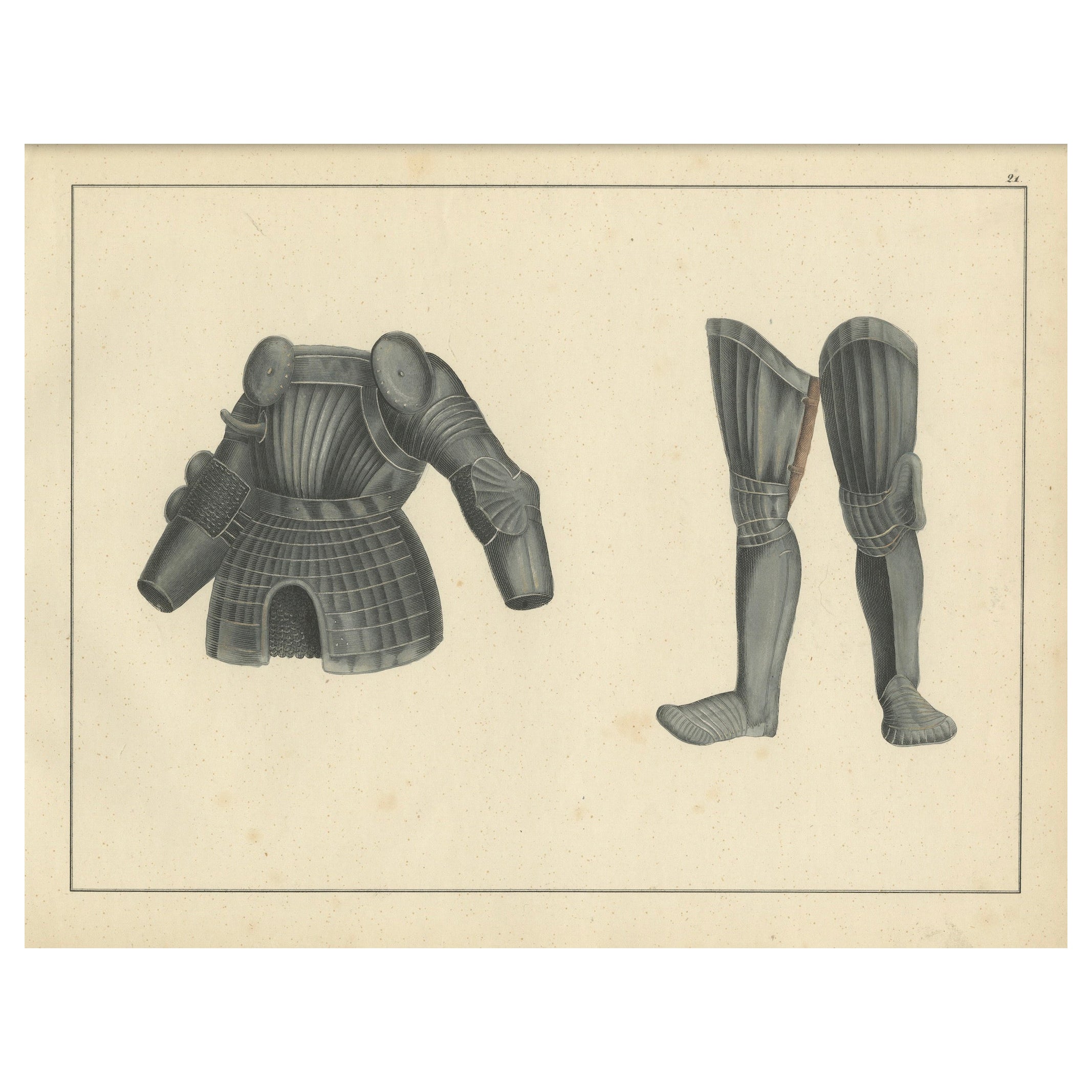
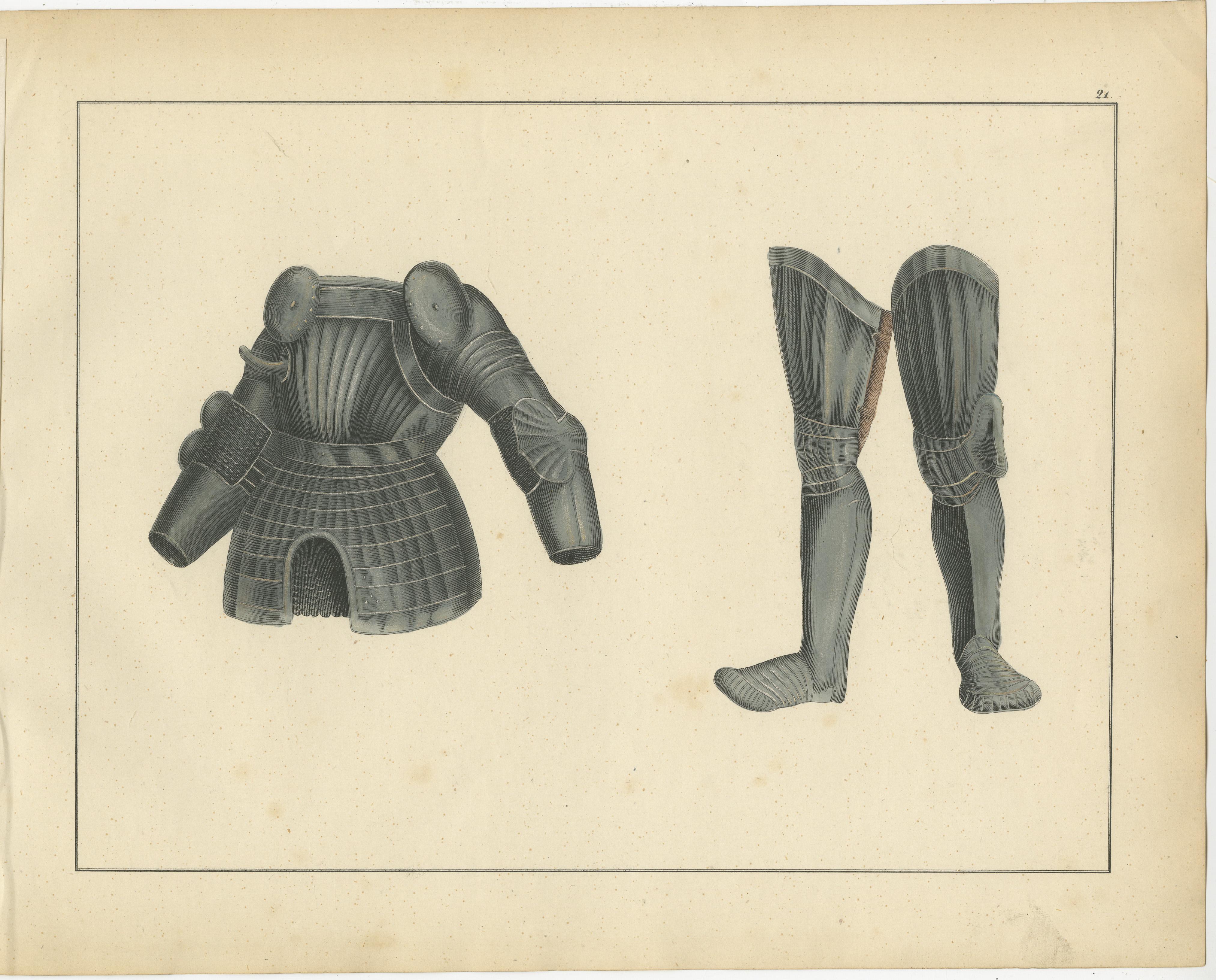
This hand-coloured lithograph presents two meticulously illustrated components of a knight's 'plate armor', offering a detailed look at the advanced design and craftsmanship that characterized European medieval warfare. Taken from the 1842 publication *Der Rittersaal: Eine Geschichte des Ritterthums* by Friedrich Martin von Reibisch and Dr. Franz Kottenkamp, this piece serves as a visual exploration of protective armor used in combat and tournaments.
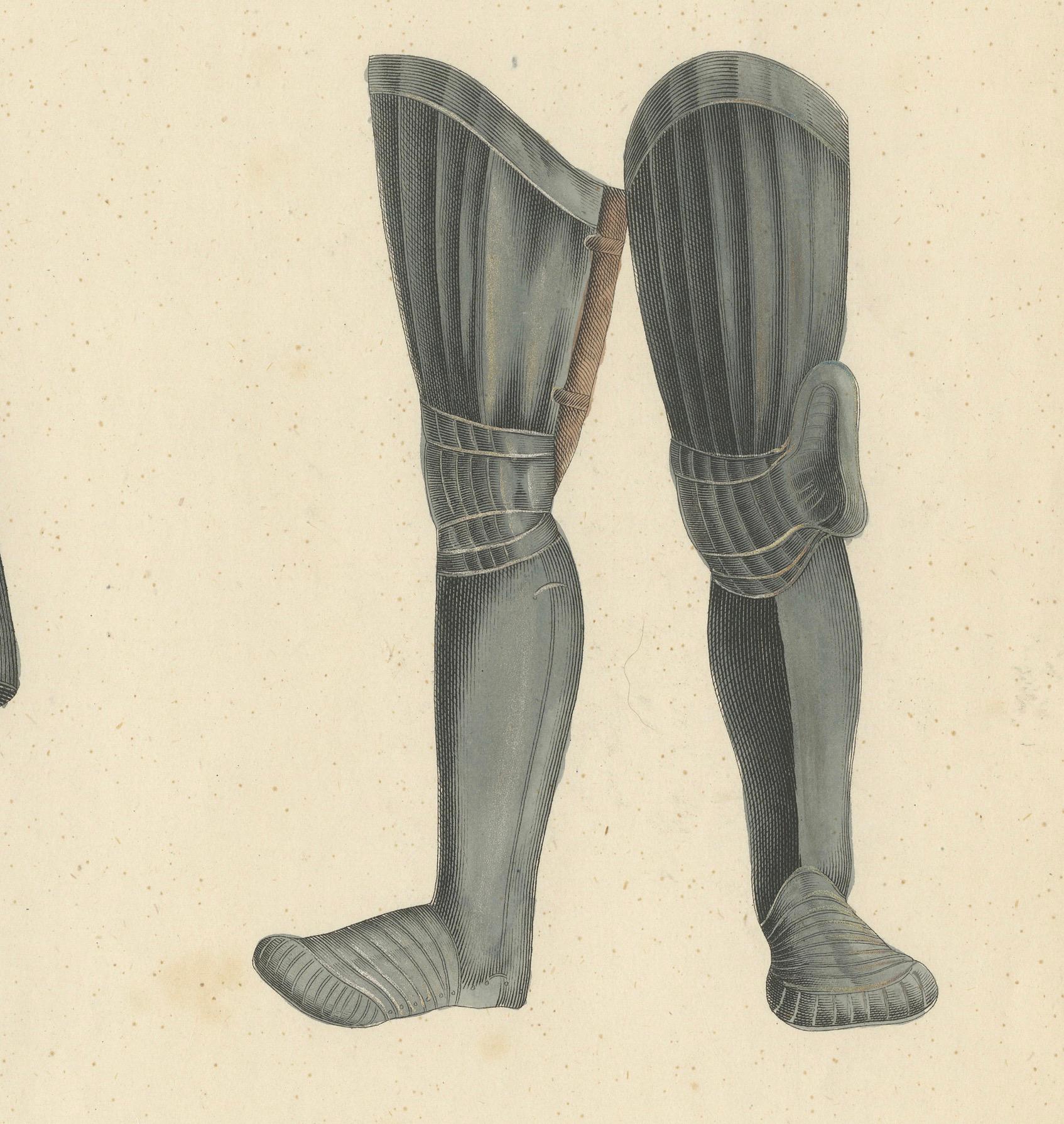
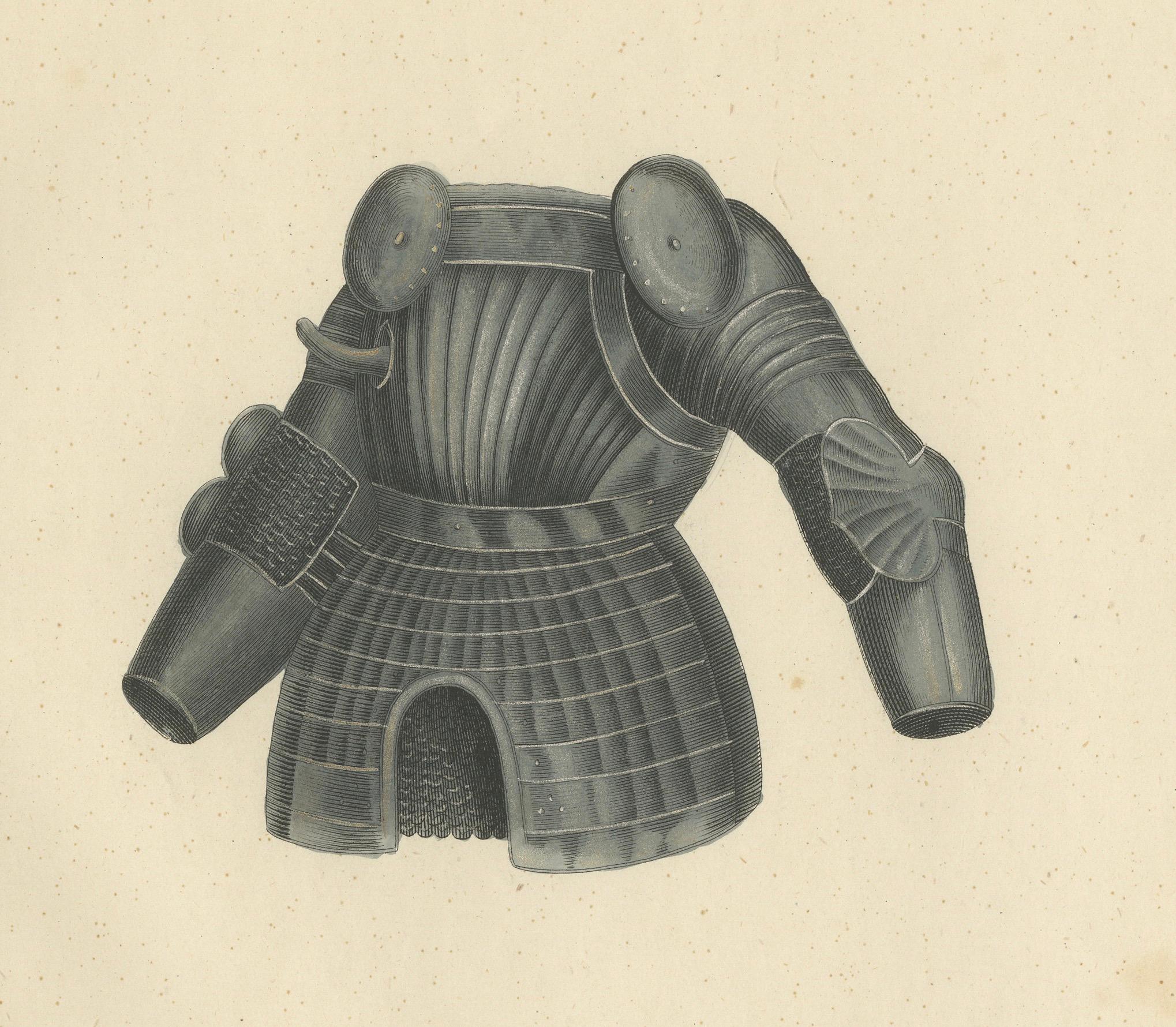
The illustration highlights: 1. On the left, a 'cuirass and upper arm armor' featuring ribbed detailing across the chest and layered plates over the abdomen for superior flexibility and protection. The articulated shoulder plates (pauldrons) and forearm guards demonstrate the ingenuity of medieval armorers in balancing mobility with defense. 2. On the right, a pair of 'greaves and cuisses', designed to protect the thighs, knees, and lower legs. The segmented construction and rounded knee guards (poleyns) allowed knights to move freely while maintaining critical protection in battle.
The artist’s precise shading and detailed rendering bring out the polished steel surfaces and intricate joints of the armor, reflecting both its functionality and aesthetic appeal.
Condition: The lithograph is in excellent condition, with clean margins, finely preserved details, and light foxing consistent with its age. The hand-applied colouring enhances the depth and realism of the armor’s design.
This historical print is an essential addition for collectors of medieval history, European arms and armor, or fine lithographic art. It serves as an educational and decorative piece, ideal for display in a library, study, or curated gallery showcasing the art and craftsmanship of knighthood.