About this sheet
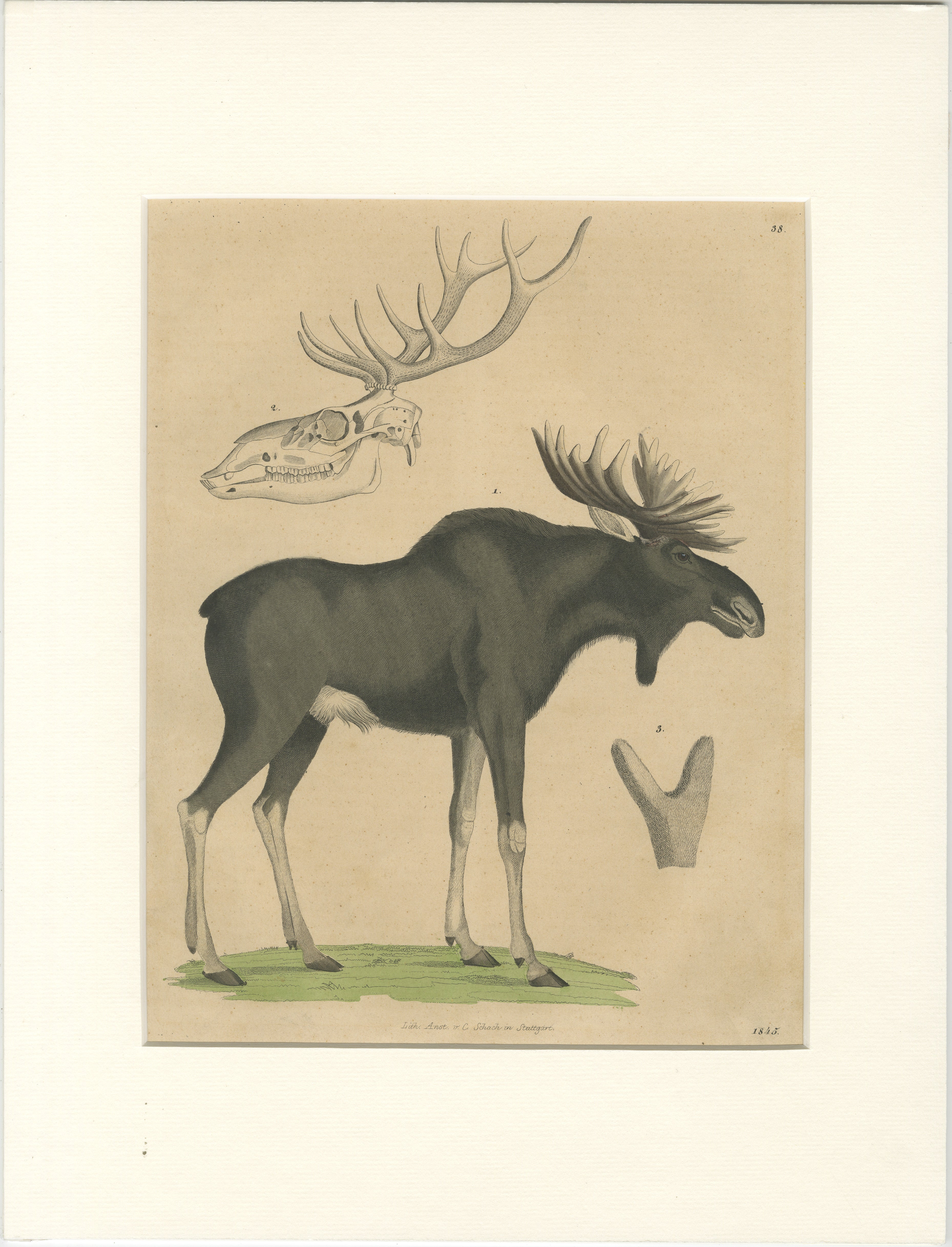
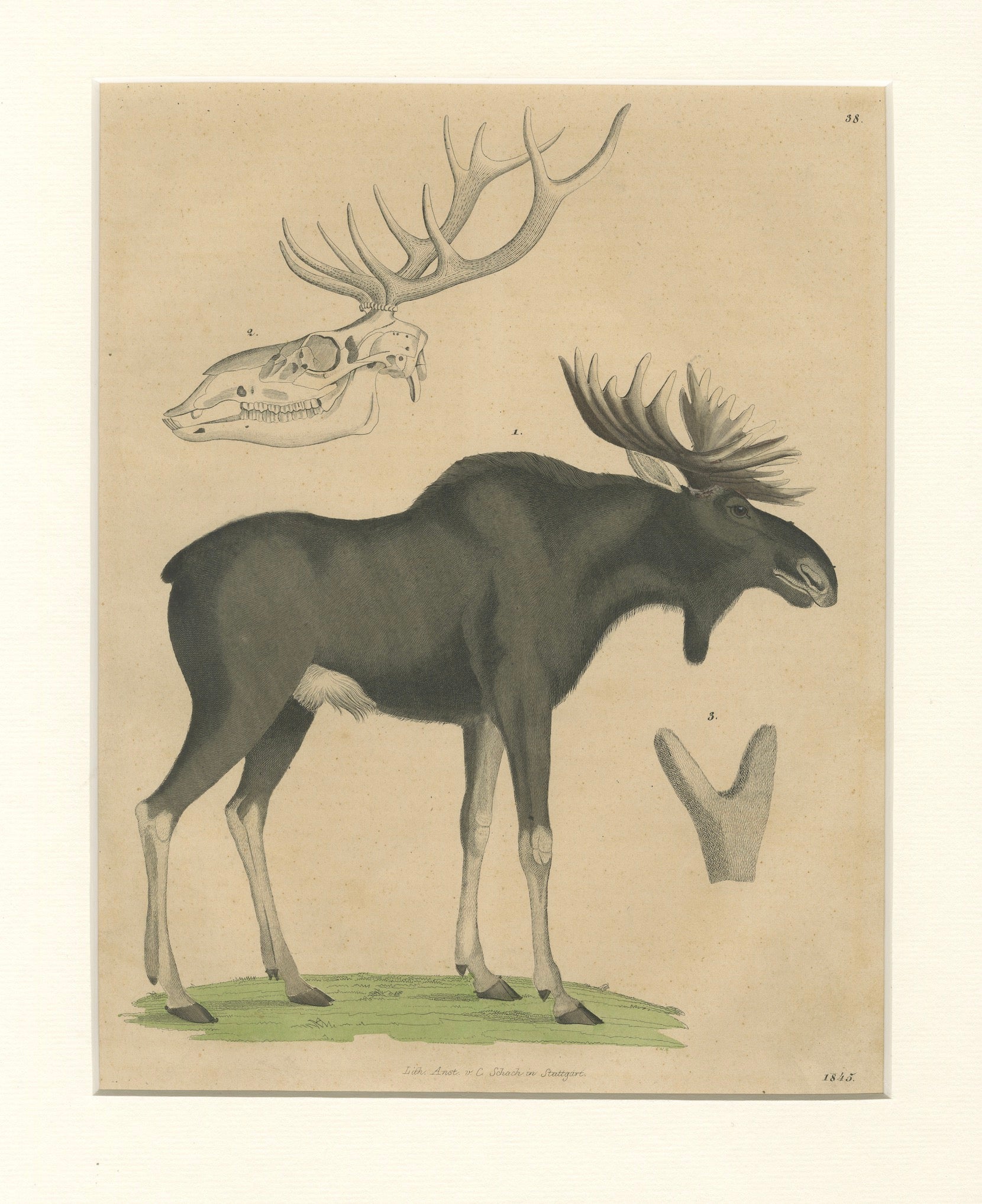
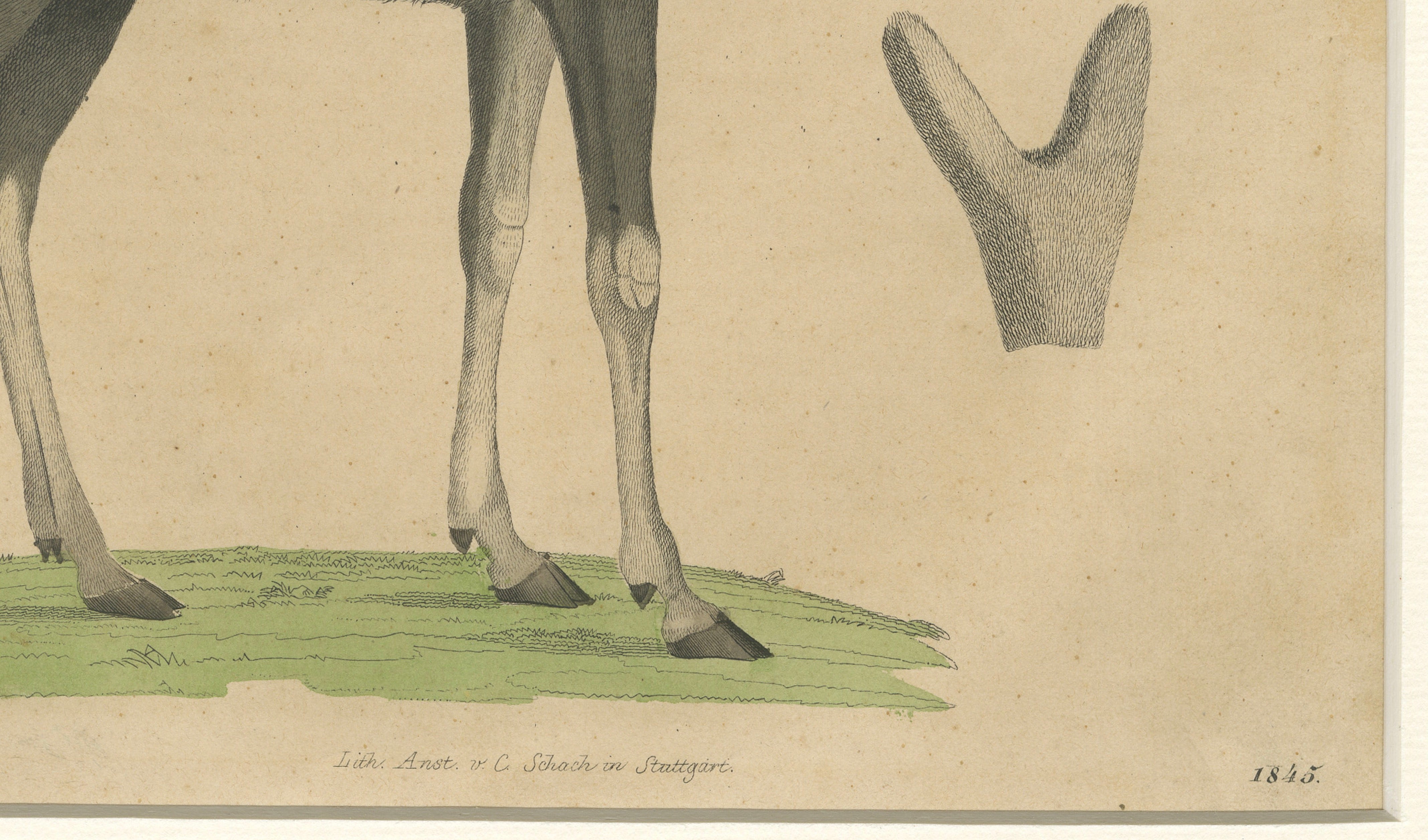
Original antique hand-colored lithograph depicting a magnificent male Moose or Eurasian Elk (Alces alces), accompanied by detailed anatomical studies of its skull, antlers and cloven hoof.
Published in Stuttgart and dated 1845, this striking zoological plate is numbered 38 and was produced by the Lithographische Anstalt von C. Schach, an important Stuttgart lithographic establishment responsible for natural-history illustrations associated with the works of German naturalist Lorenz Oken.
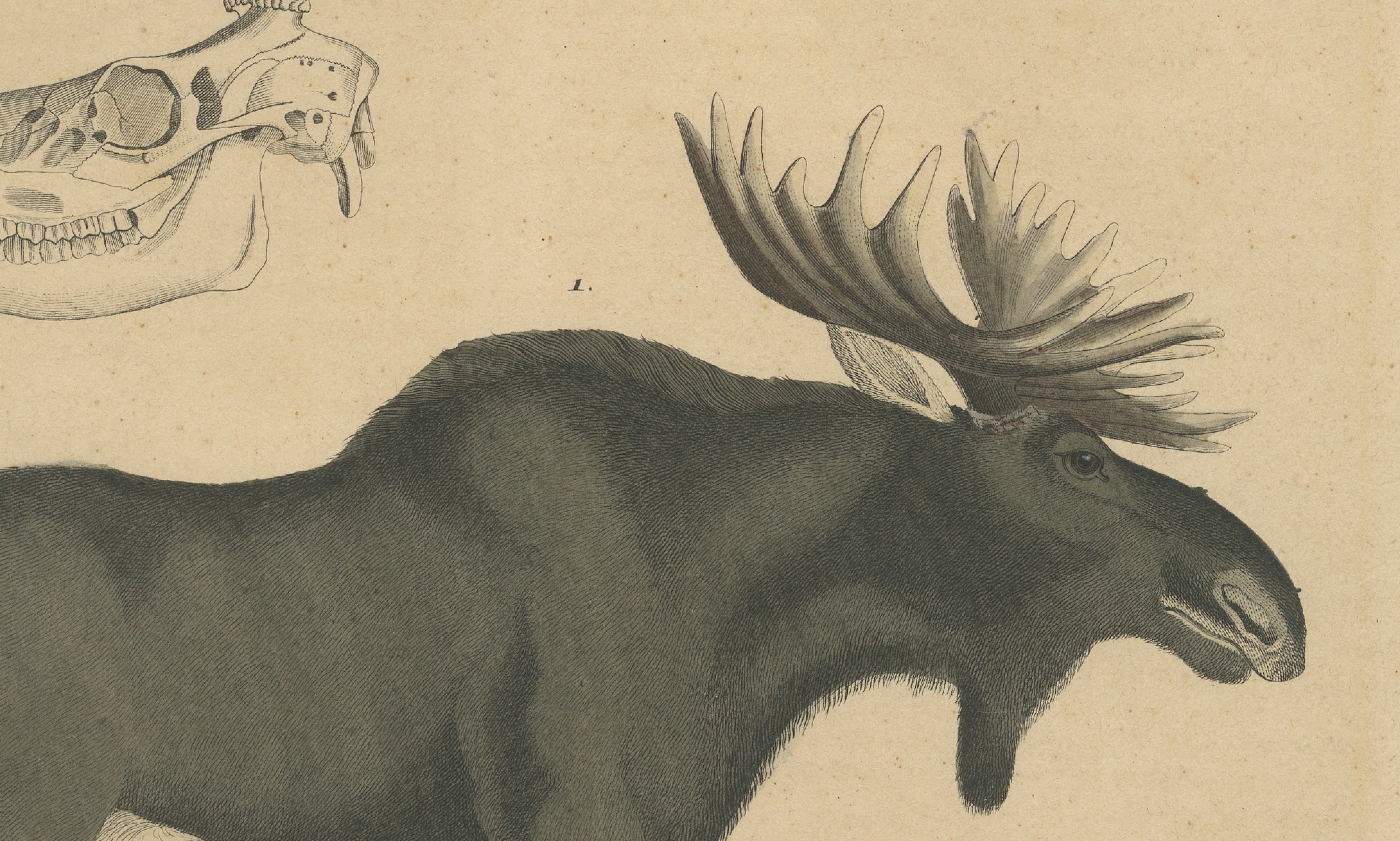
Fig. 1 – Moose / Eurasian Elk (Alces alces)
The large central figure depicts an adult male Moose, known in British and European English as the Elk.
Alces alces is the largest living member of the deer family (Cervidae) and is immediately recognizable by its massive body, long legs, elongated muzzle and the spectacular broad, palmate antlers carried by mature males.
The terminology can sometimes cause confusion: in North American English the animal is called a Moose, while in British English it is traditionally called an Elk. The North American animal commonly called an “elk” is a different species, the Wapiti (Cervus canadensis).
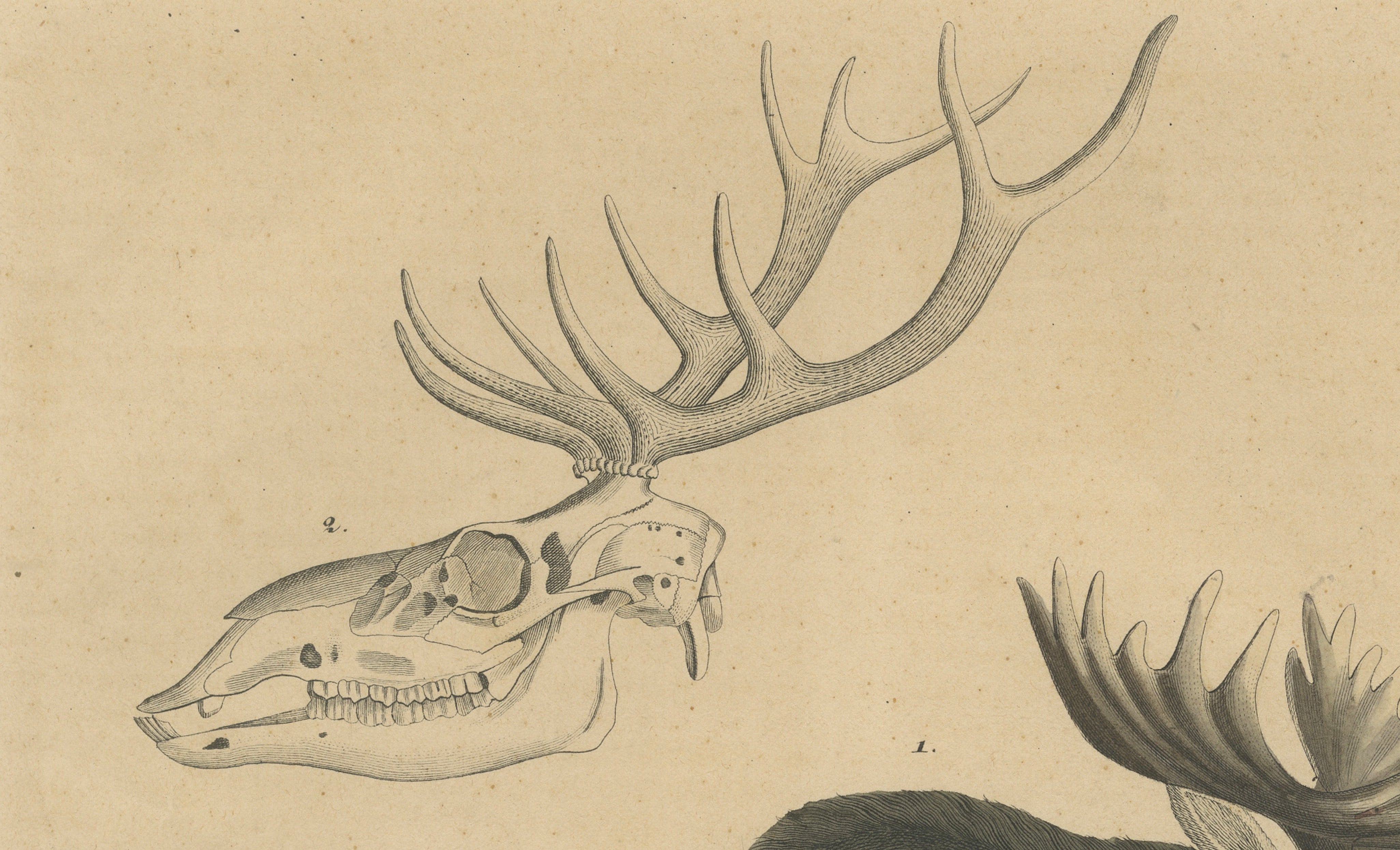
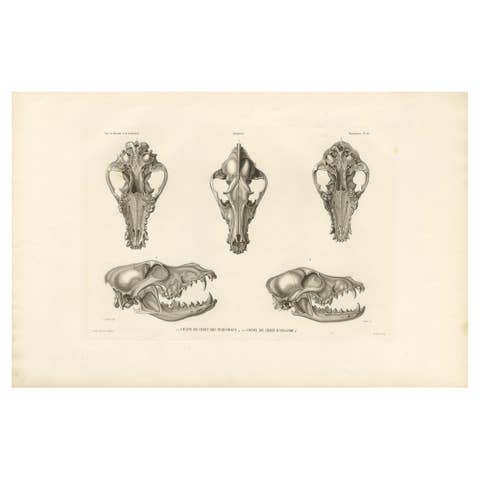
Fig. 2 – Moose Skull and Antlers
Above the main animal is a finely drawn anatomical study of the skull and enormous antlers.
The illustration clearly shows the distinctive broad, flattened or palmate antlers of the mature male, which distinguish the Moose from most other deer species.
Fig. 3 – Cloven Hoof
A separate anatomical detail illustrates the characteristic divided or cloven hoof.
Moose are superbly adapted to forests, wetlands and cold northern environments. Their large spreading hooves help support their considerable weight when moving across soft marshland, mud and snow.
The combination of a complete animal portrait with separate anatomical details reflects the increasingly scientific approach to zoological illustration during the first half of the 19th century.
The lithograph bears the inscription:
“Lith. Anst. v. C. Schach in Stuttgart”
and is dated:
1845
The C. Schach lithographic establishment in Stuttgart produced finely illustrated zoological and natural-history plates during the 19th century. Comparable plates were used in connection with the extensive natural-history publications of Lorenz Oken (1779–1851), one of the most influential German naturalists and philosophers of his generation.
This particularly handsome plate has considerable decorative appeal. The monumental dark silhouette of the Moose, its spectacular antlers and the almost museum-like anatomical studies make it suitable for a country-house, hunting lodge, library, study or natural-history interior.
Technique: Original hand-colored lithograph
Lithographer / Printer: Lithographische Anstalt von C. Schach
Place: Stuttgart, Germany
Date: 1845
Plate Number: 38
Subject: Moose / Eurasian Elk
Scientific name: Alces alces
Family: Cervidae
Additional subjects: Moose skull, antlers and cloven hoof
Condition:
Good antique condition with overall age-related toning and scattered small spots and foxing. Some minor marks and imperfections are present consistent with a lithograph dating from 1845. The original coloring remains attractive, particularly the subtle green coloring beneath the animal. Please study the photographs carefully as they form part of the condition description.
The lithograph is loosely inserted in an acid-free matting board.
Please note: This is an original antique lithograph dating from 1845, not a modern reproduction. The print is sold unframed. Framed images or interior views, if shown, are for presentation and inspiration only.
Keywords: antique moose print, moose lithograph, Eurasian elk, elk print, Alces alces, antique deer print, moose antlers, elk antlers, antler anatomy, moose skull, deer skull, anatomical illustration, Cervidae, wildlife print, hunting lodge decor, hunting print, natural history illustration, zoological lithograph, Lorenz Oken, C Schach, Stuttgart lithograph, German natural history, 1845 lithograph, 19th century zoology, hand-colored lithograph, original antique print