About this sheet
Antique Print of Cusk (Brosme Brosme) with Anatomical Studies – Paris, 1845
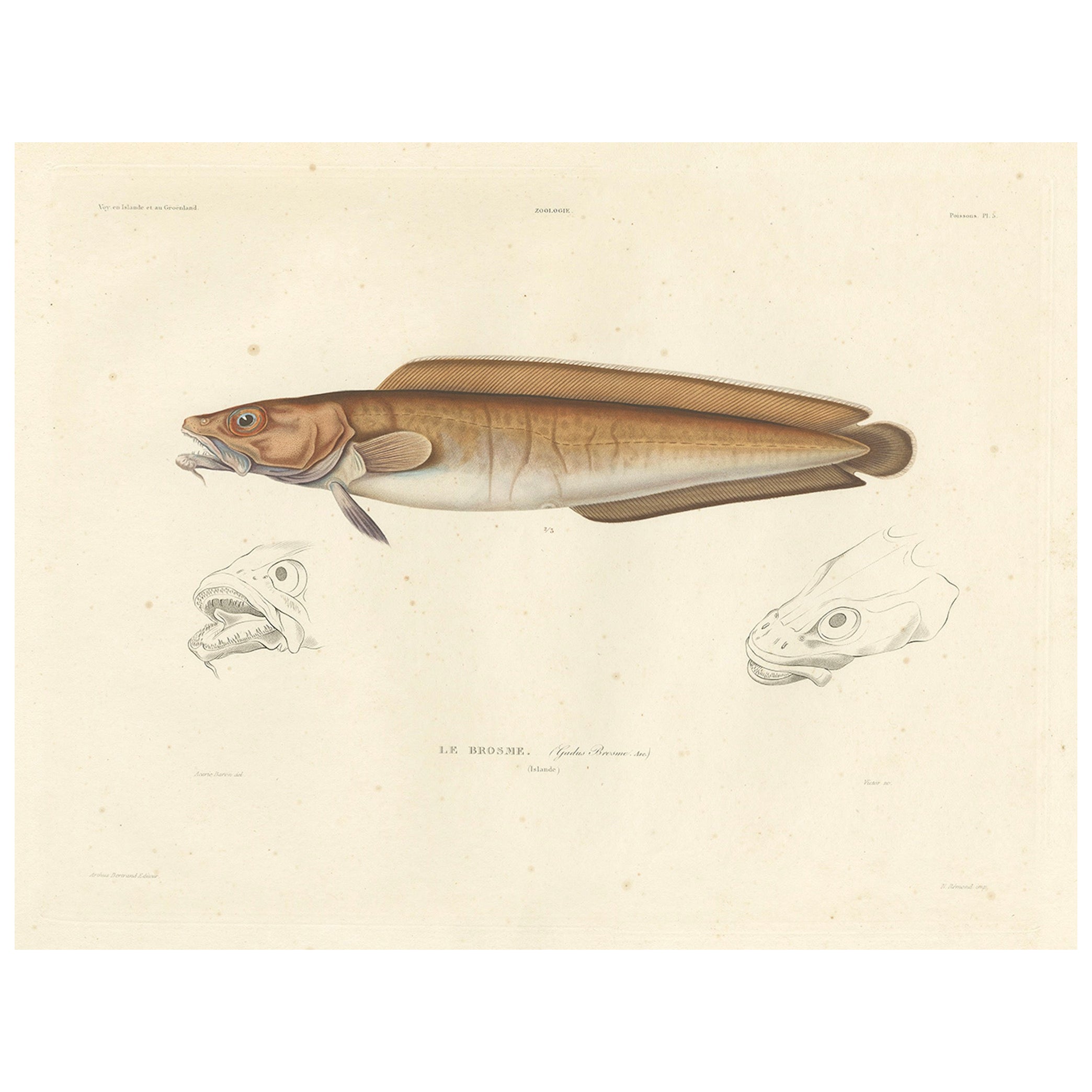
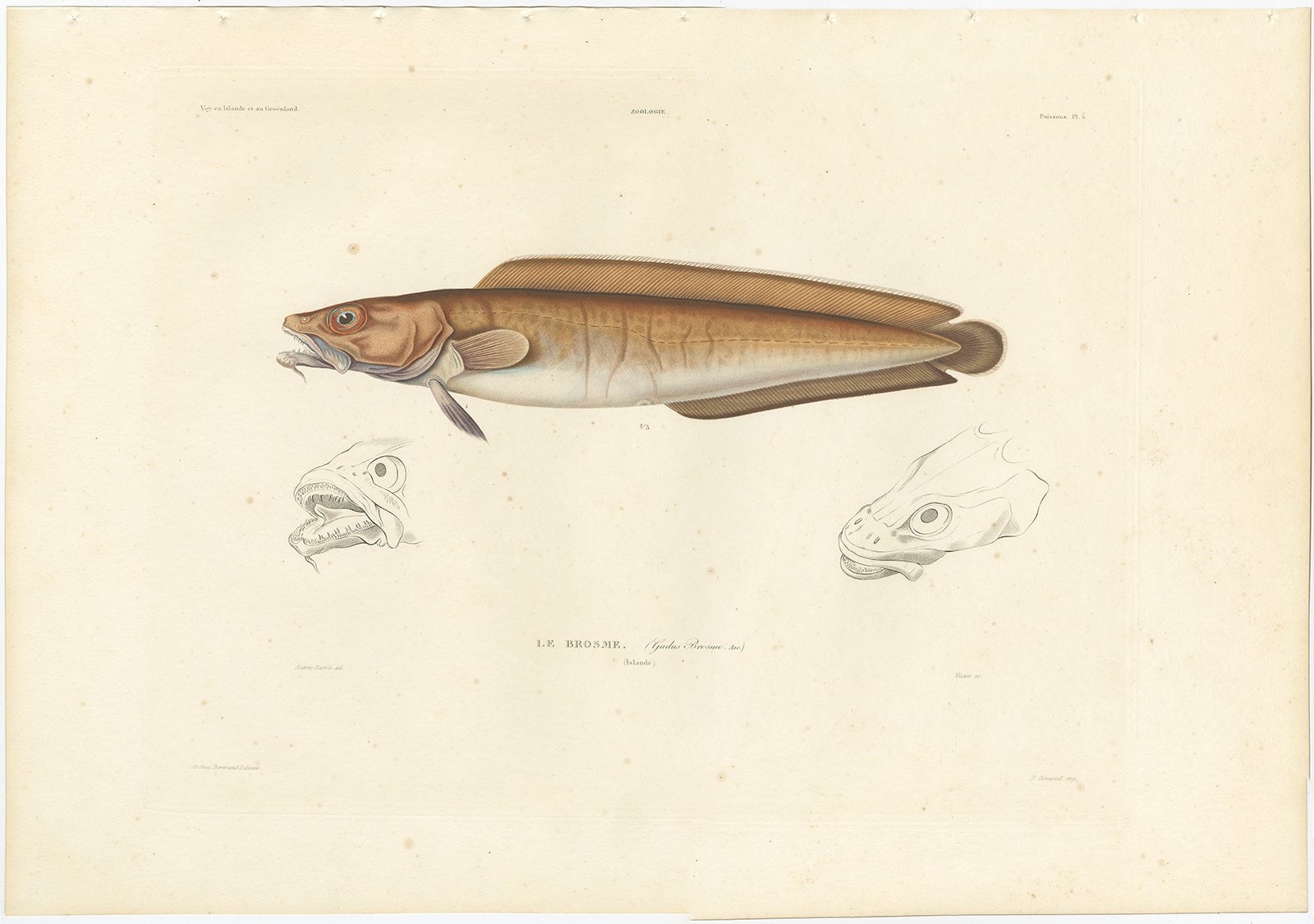
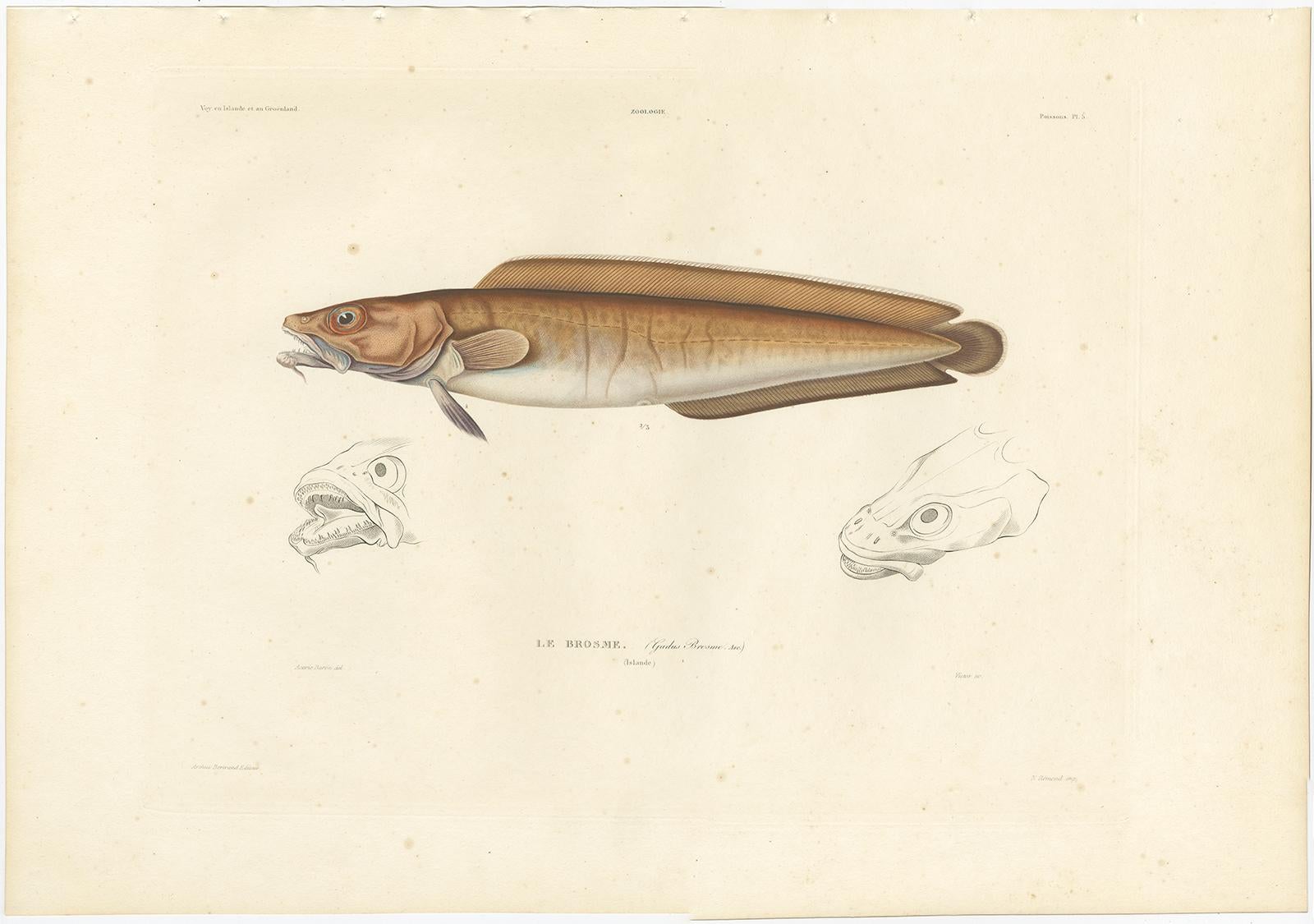
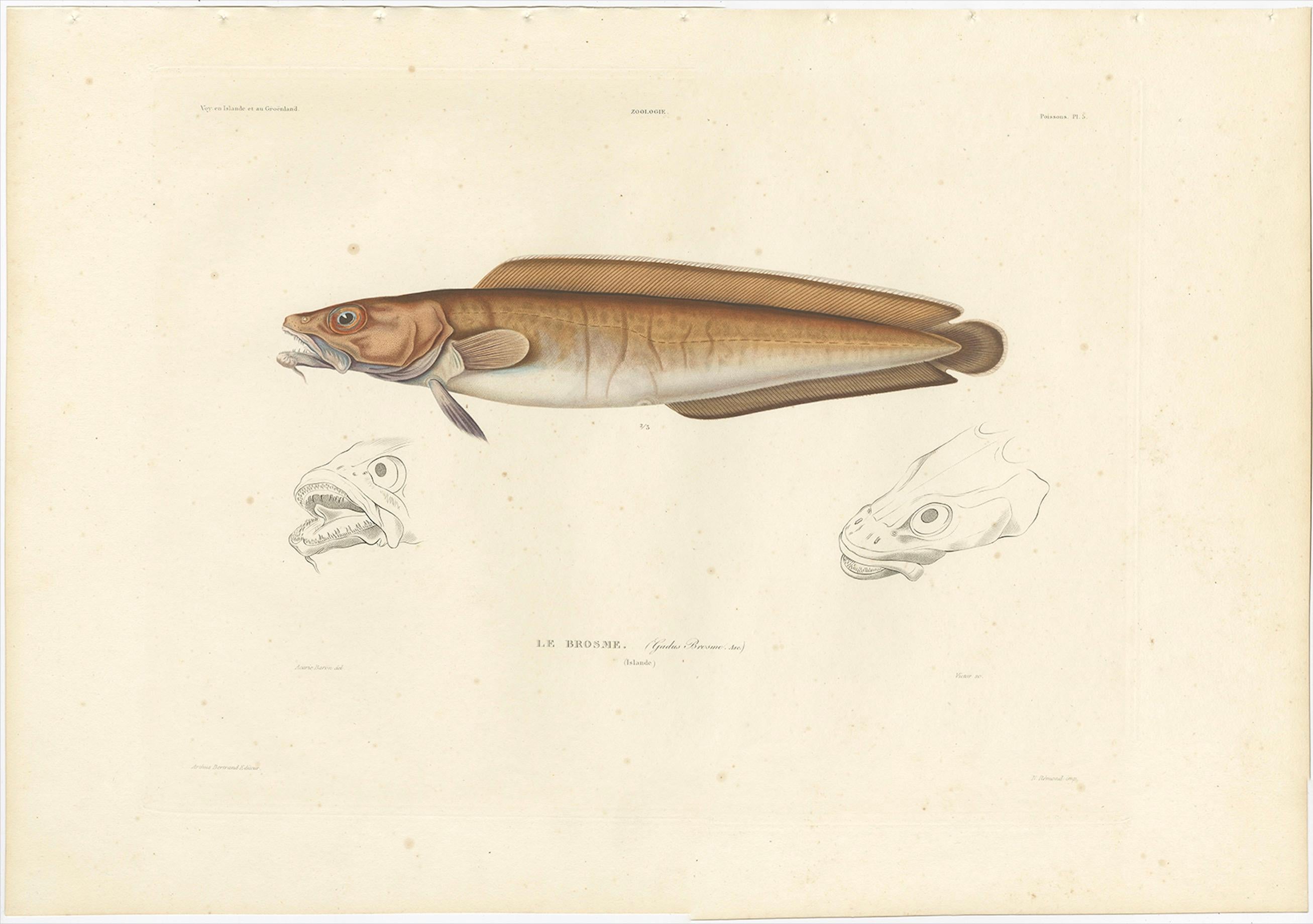
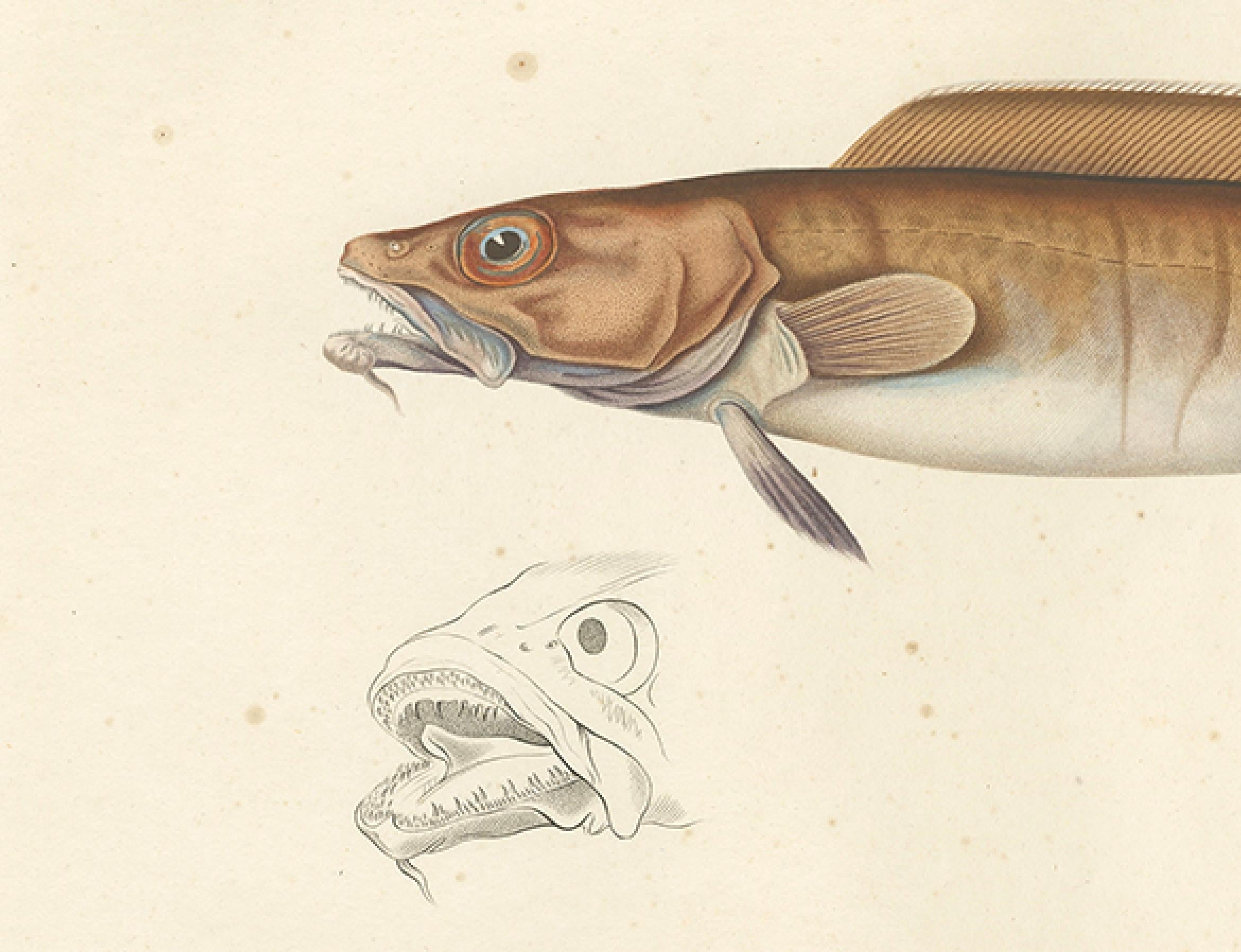
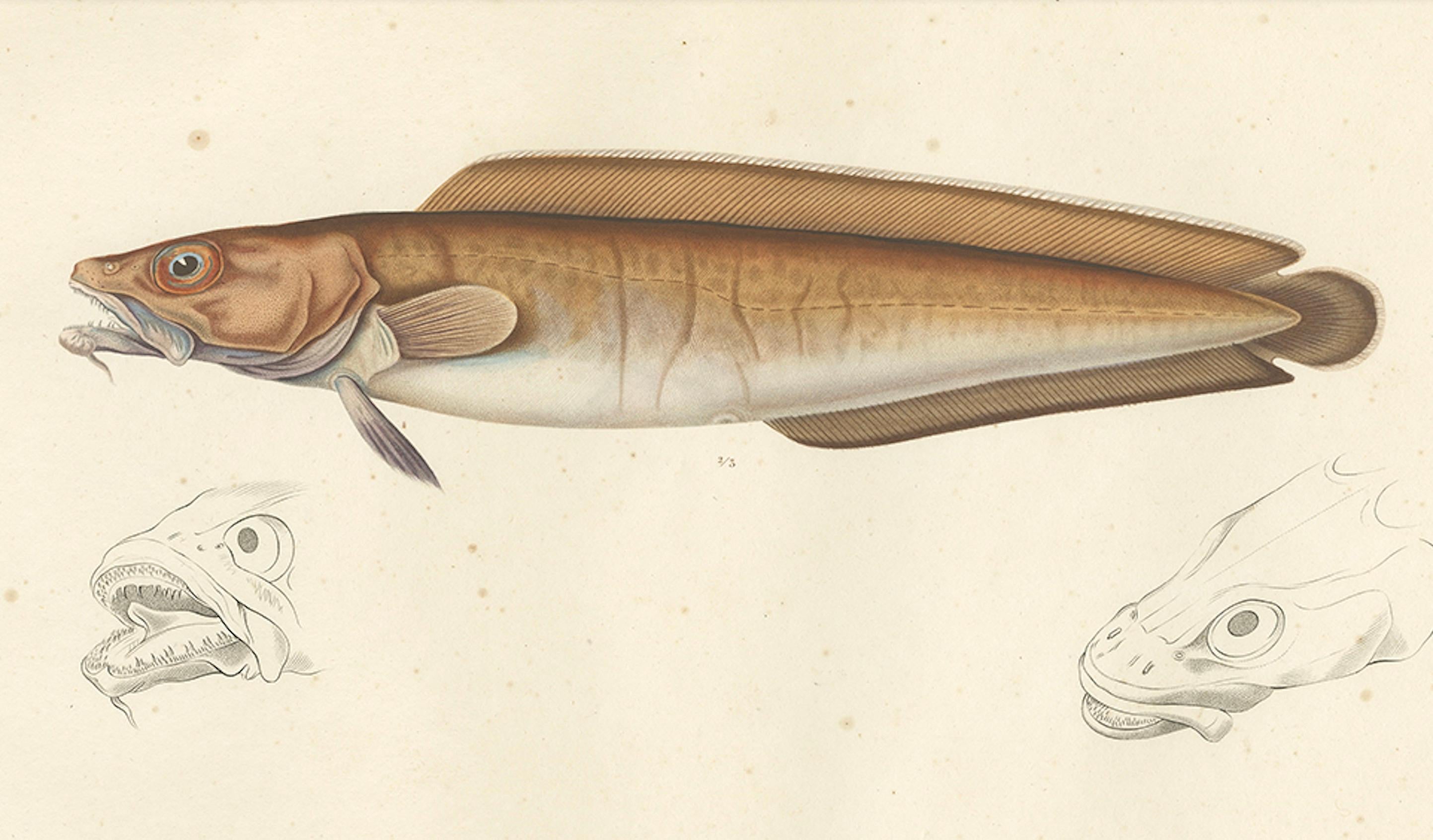
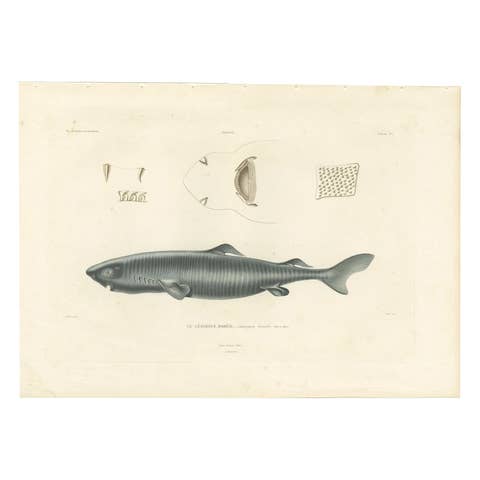
This detailed hand-colored lithograph features Le Brosme (Brosme Brosme), commonly known as the Cusk or Tusk fish, a bottom-dwelling species from the North Atlantic. The illustration was produced for the French scientific expedition *Voyage en Islande et au Groenland* and published in Paris by Arthus Bertrand in 1845.
The Cusk is shown in profile with warm brown dorsal coloring, fading to a silvery white underside, and with its signature long, continuous dorsal fin flowing to the rounded tail. This deep-sea species is known for its thickset body, single barbel on the chin, and preference for cold rocky seabeds at depths ranging from 200 to 1000 meters.
What makes this plate particularly interesting is its inclusion of two anatomical inset studies:
* On the left, a close-up of the open mouth showing the detailed internal jaw and gill structure.
* On the right, a skeletal study of the skull and upper jaw.
These views add scientific value to the artistic rendering, serving as tools for 19th-century ichthyologists to compare and classify species by bone structure and soft anatomy.
This is plate “Poissons Pl. 5” and was drawn by Louis Bévalet and engraved by H. Blanchard. The refined lines, naturalistic shading, and rich coloring are characteristic of the best French natural history illustration of the period.
The *Voyage en Islande et au Groenland* was part of France’s effort to catalog the biodiversity of Arctic waters. The resulting zoological plates, including this one, represent a high point in expeditionary illustration, balancing scientific documentation with artistic composition.
Condition:
Good condition, but some light foxing throughout, mainly in margins, less in image area. Plate mark strong. No restoration noted.
Framing tips:
This print pairs well with a warm wood or black frame, ideally with a cream or natural-toned mat. Its earthy palette and anatomical details make it well suited for marine-themed spaces, academic libraries, or collectors of natural history art. UV glass is recommended to protect the hand-coloring.