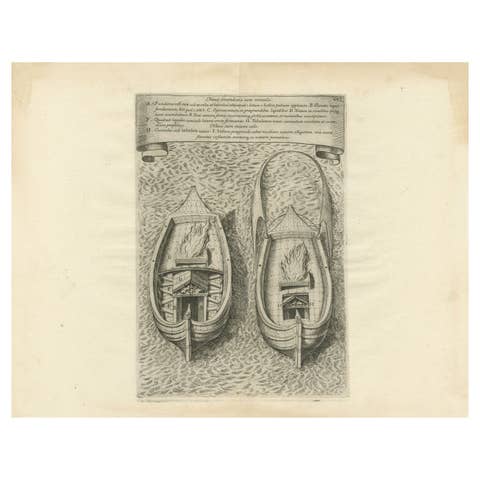
Early Dutch Exploration Scene with Exotic Wildlife and Naval Encounter, 1611
€ 230
One of a kind: this is the sheet in the photographs. Ships from Langweer, the Netherlands.
Date
1611
Sheet size
24 × 18.2 cm (9.4 × 7.2 in)
Condition
Good
Reference
BG-13098-21
Condition
for its age, with toning, mild text show-through from the reverse, and small edge wear consistent with early 17th-century paper. Strong impression with visible plate marks.
About this sheet
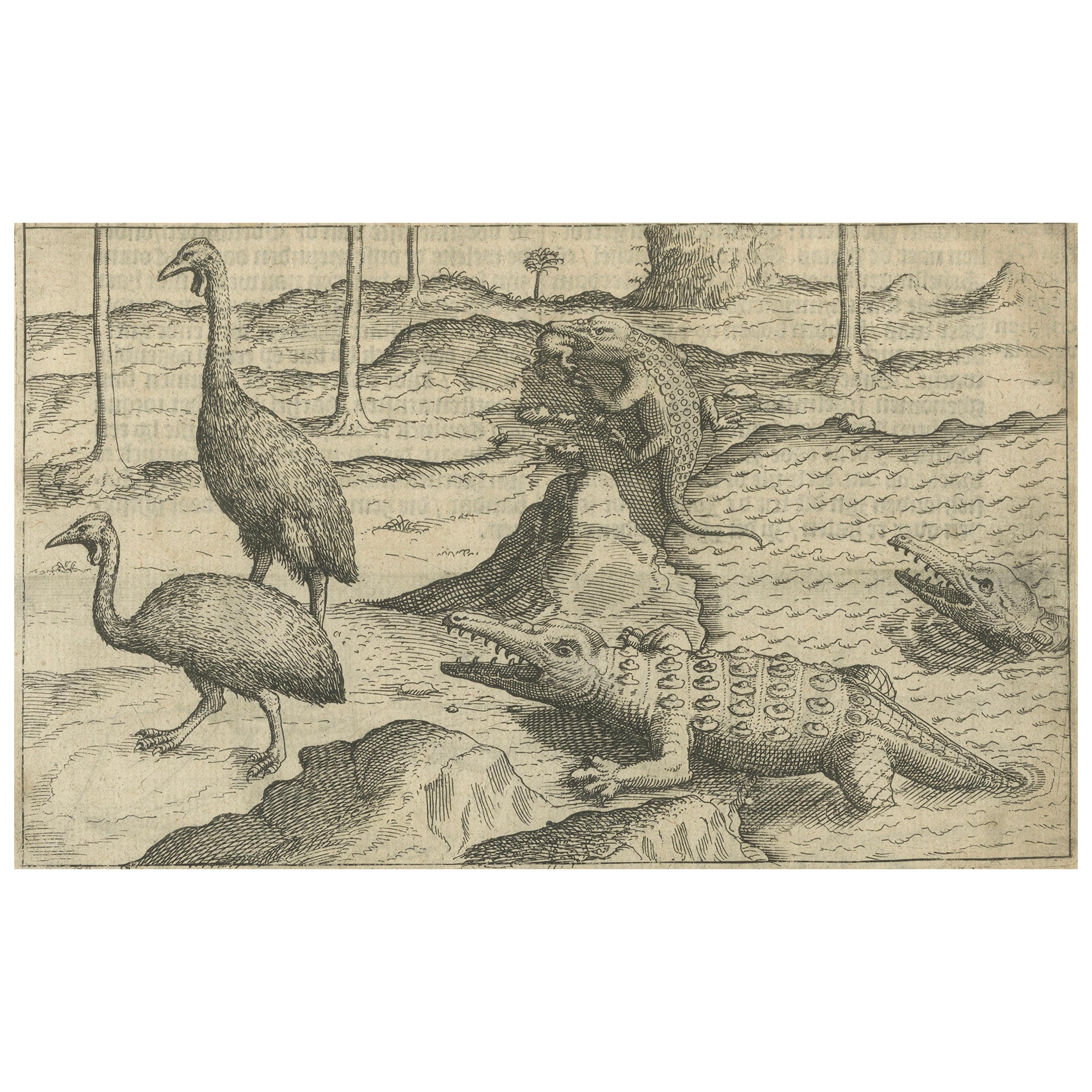
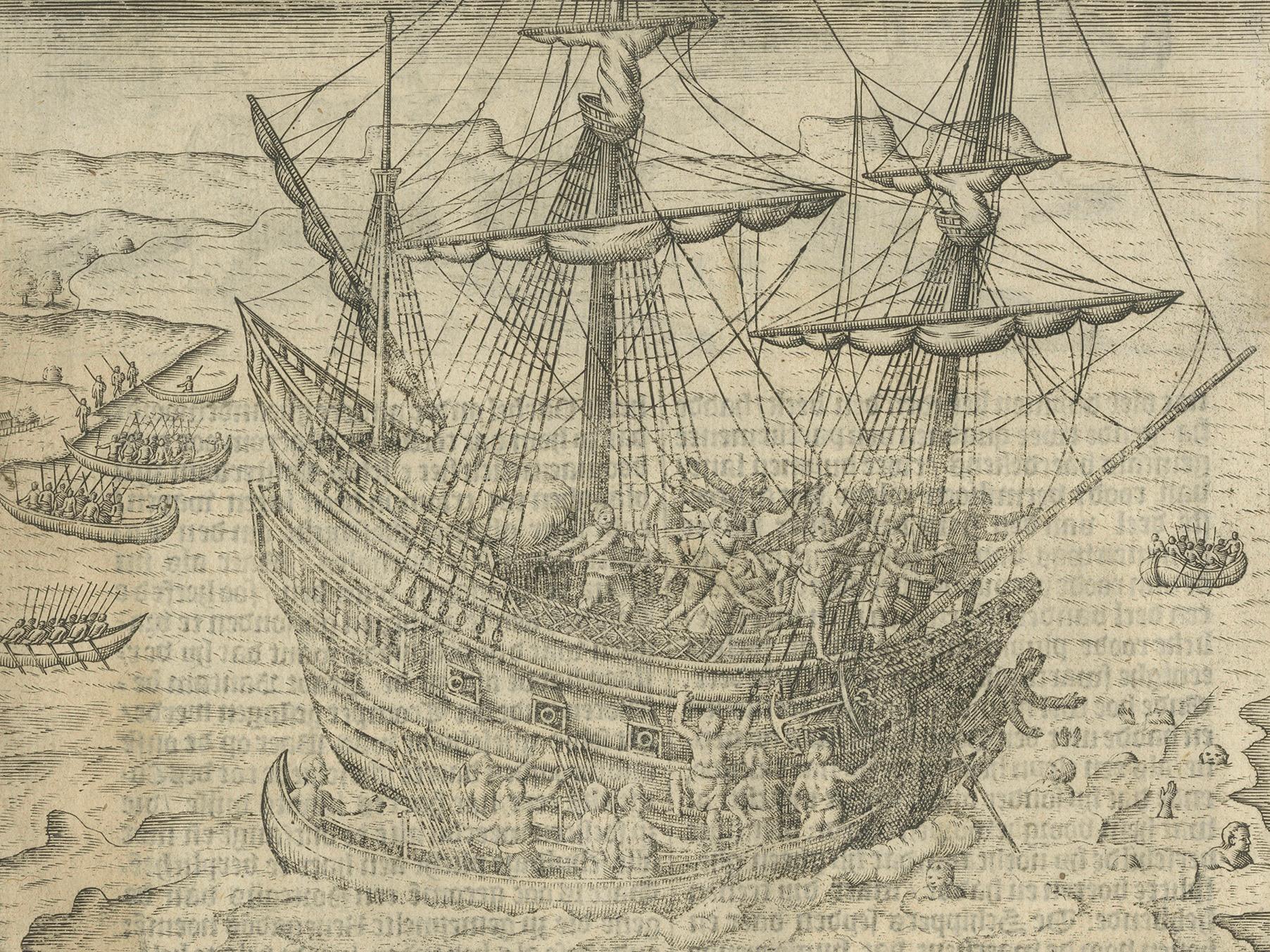
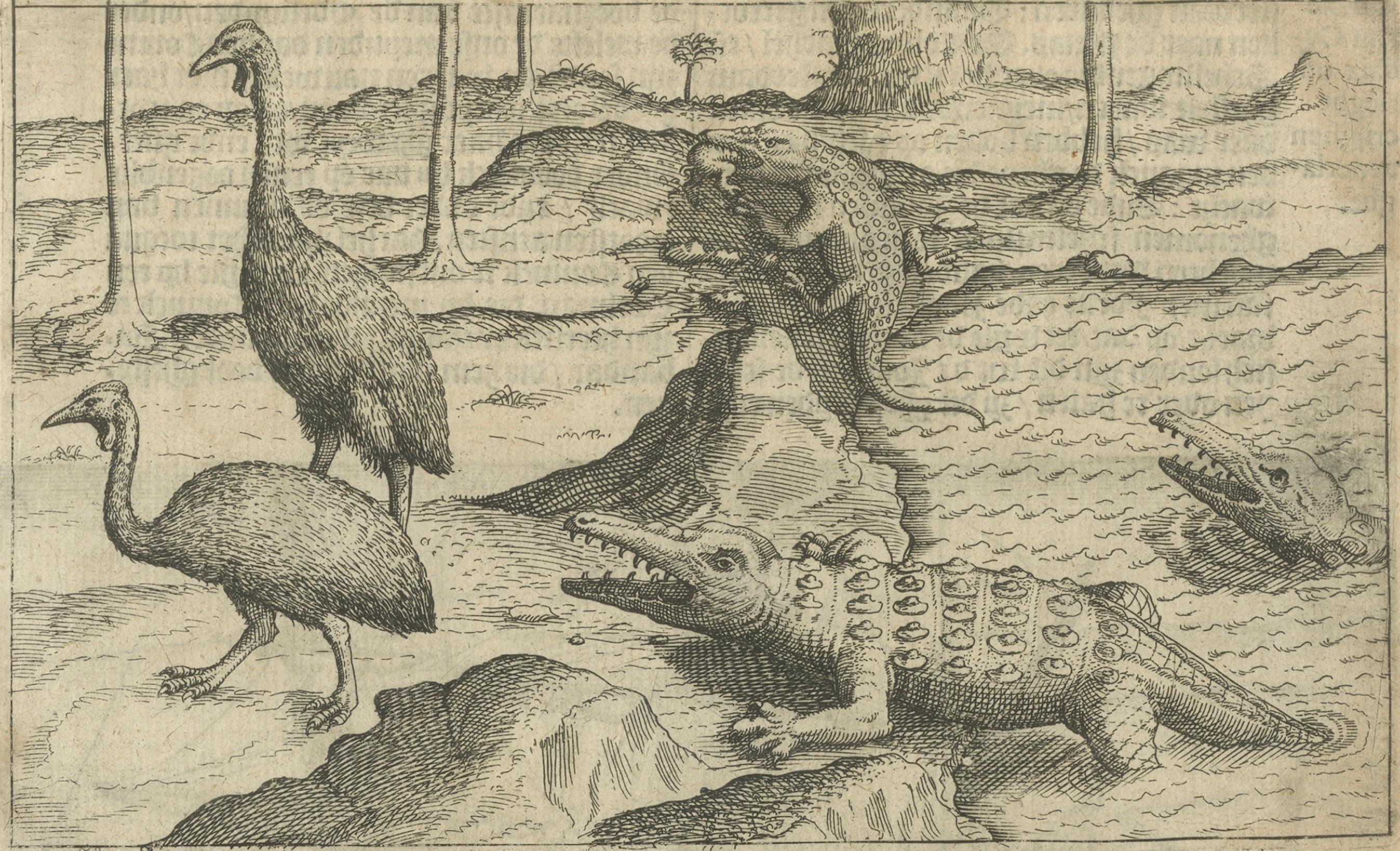
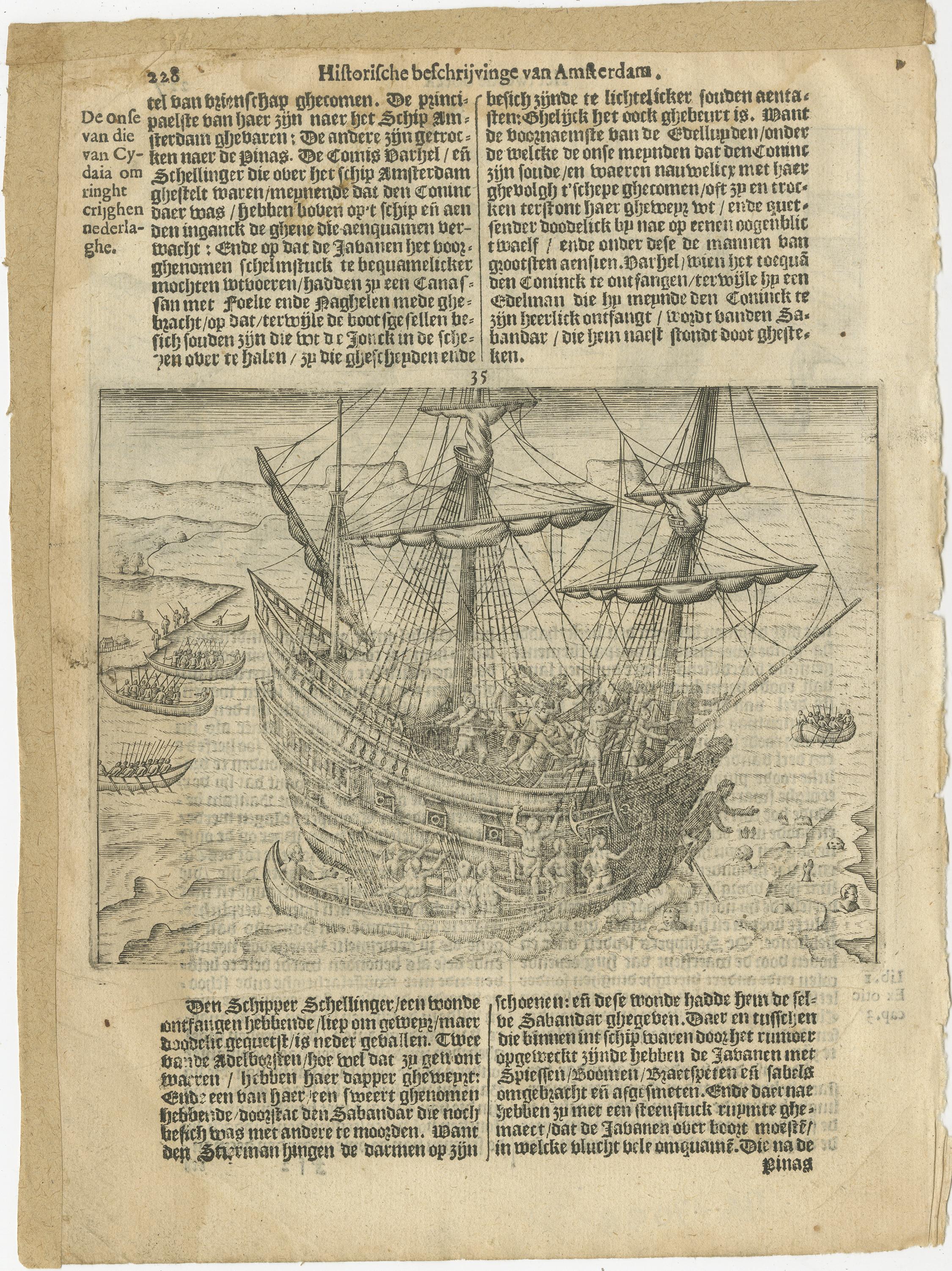
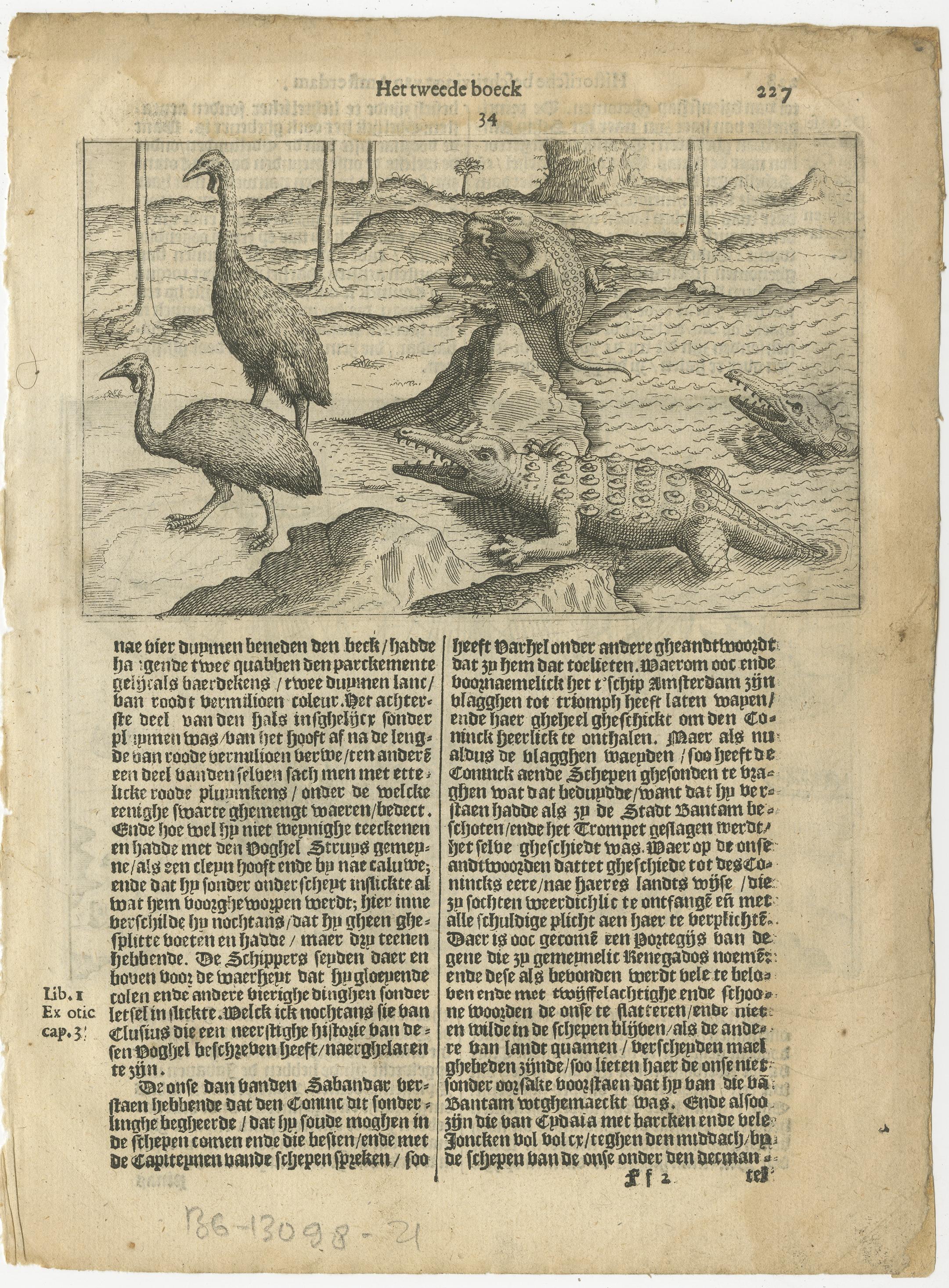
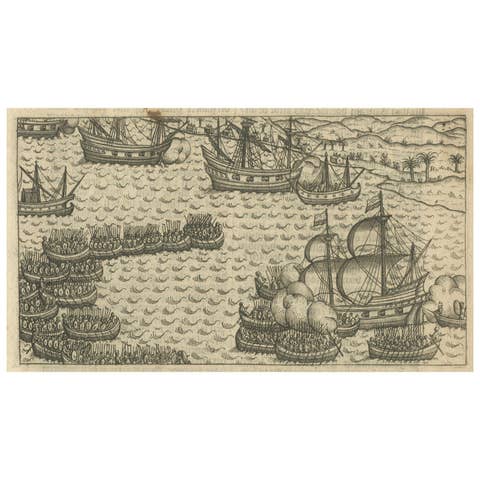
This original 1611 engraving sheet from Johannes Isacius Pontanus’ Rerum et urbis Amstelodamensium historia (History of Amsterdam) presents two compelling scenes from the earliest Dutch voyages to the East Indies and Madagascar. Issued in Amsterdam, this richly detailed print celebrates Amsterdam’s maritime ascendancy and vividly records the wonders and perils encountered by Dutch explorers during the dawn of global trade.
The upper scene portrays a group of crocodiles and two large, flightless birds—possibly early renderings of the extinct Aepyornis or the cassowary—observed on the island of Madagascar. The landscape, populated with trees and rocky outcrops, suggests an environment both fertile and untamed. Such engravings blended direct observation with the imaginative natural history of the era, capturing the curiosity and awe with which Europeans viewed the fauna of distant lands.
Below, a powerful naval encounter unfolds: a large Dutch East Indiaman, its decks crowded with sailors, fends off attacks from local canoes filled with spear-wielding figures. The galleon’s rigging, gunports, and flags are rendered in meticulous detail, showcasing the skill and discipline of the Dutch seamen. This dramatic image likely represents an incident off Madagascar or Java, where Dutch expeditions—such as those of Cornelis de Houtman or Jacob van Neck—made their first contacts and faced occasional hostilities during their early voyages.
Together, these two engravings encapsulate the dual spirit of discovery and confrontation that characterized Dutch exploration at the start of the 17th century. The composition unites ethnographic curiosity, natural history, and naval power—hallmarks of the Dutch Golden Age’s visual culture.
Condition: Good for its age, with toning, mild text show-through from the reverse, and small edge wear consistent with early 17th-century paper. Strong impression with visible plate marks.
Framing tips: Best presented in a double window mat separating the two engraved scenes, using a warm cream or ivory mount and a walnut or dark oak frame. The result highlights both narrative and historical value, ideal for display in maritime or early exploration collections.
Technique: Engraving Maker: Anonymous engraver after designs for Johannes Isacius Pontanus, Amsterdam, 1611