Dutch Voyages to Madagascar – Early Exploration Scene, Pontanus 1611
€ 140
Original antique · The actual sheet photographed · Certificate of authenticity on request · Sold unframed · Worldwide shipping from € 15 (rates)
Date
1611
Mapmaker / artist
Anonymous engraver after designs for Johannes Isacius Pontanus, Amsterdam, 1611
Technique
Engraving
Sheet size
24 × 18.2 cm (9.4 × 7.2 in)
Condition
Fair
Reference
BG-13098-20
What the condition grades mean
Excellent
Bright and clean, with no faults worth mentioning.
Very good
Only light signs of age, such as faint toning.
Good
Normal signs of age for a sheet of this period: toning, some foxing, small marks or neat old repairs.
Fair
Clear faults such as staining, tears or repairs, priced to match.
Every fault we see is written in the condition note, and the whole sheet is shown uncropped in the photos.
Condition
With light toning, marginal fraying, and old repair with tape on the left border. Strong impression with visible plate mark.
About this sheet
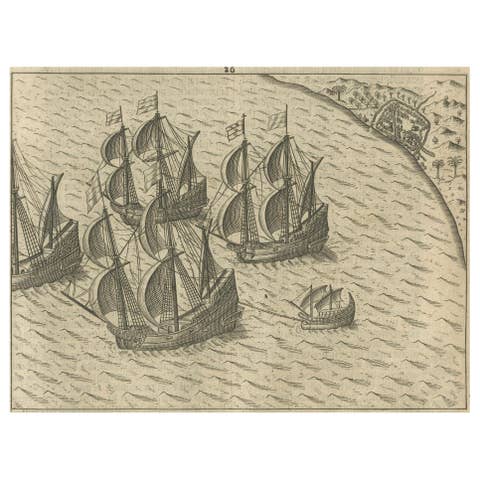
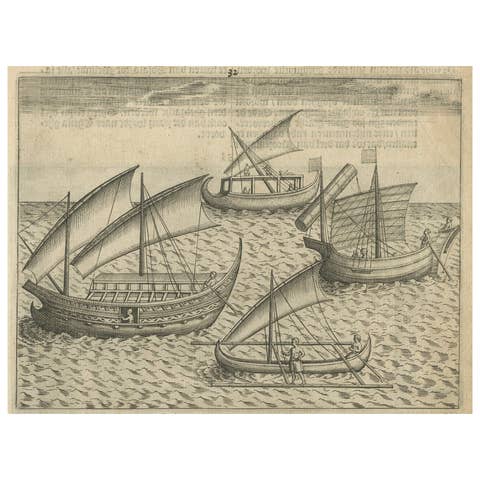
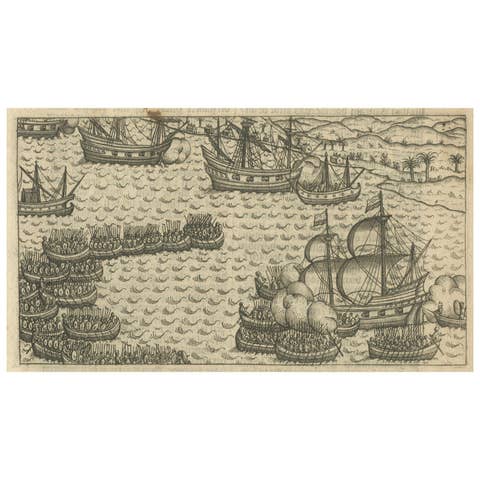
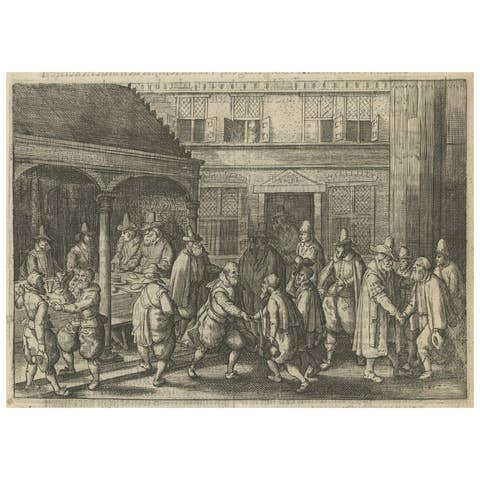
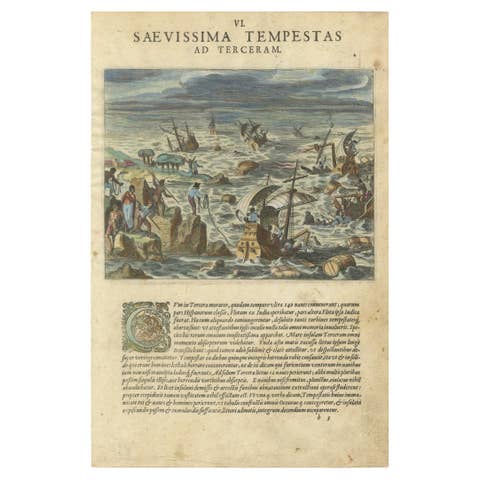
Dutch Fleet off the Coast of Madagascar, from Pontanus’ Rerum et urbis Amstelodamensium historia, 1611
This elegant early 17th-century engraving shows a Dutch fleet sailing off the rugged coastline of Madagascar during the early voyages of the Dutch East India Company (VOC). The image is taken from Johannes Isacius Pontanus’ Rerum et urbis Amstelodamensium historia (History of Amsterdam), printed in Amsterdam in 1611, which chronicled Amsterdam’s emergence as the maritime capital of the Dutch Republic.
In the composition, several large, three-masted Dutch galleons with billowing sails navigate the open sea under dramatic skies, their flags proudly flying. One smaller local vessel with distinctive lateen sails appears near the shore, symbolizing the contact between Dutch explorers and the peoples of the Indian Ocean. The mountainous coastline, rendered in fine linear detail, evokes the island’s strategic and exotic allure—a key stopover for ships en route to the East Indies.
This scene likely refers to the voyages of Cornelis de Houtman or Jacob van Neck in the late 1590s, who used Madagascar as a provisioning point on the long route around the Cape of Good Hope. Such images, reproduced from sailors’ reports, served to glorify the courage of Dutch navigators and celebrate the global reach of Amsterdam’s merchants.
The engraving exemplifies the visual vocabulary of early Dutch exploration: carefully drawn ships, stylized waves, and geographical features meant to both inform and impress. It is a fine example of the engraver’s craft and of early Dutch maritime iconography.
Framing tips: Ideal in a simple dark wood or walnut frame with a soft cream or ivory mat. A narrow gold inner line can emphasize the engraving’s maritime luminosity.