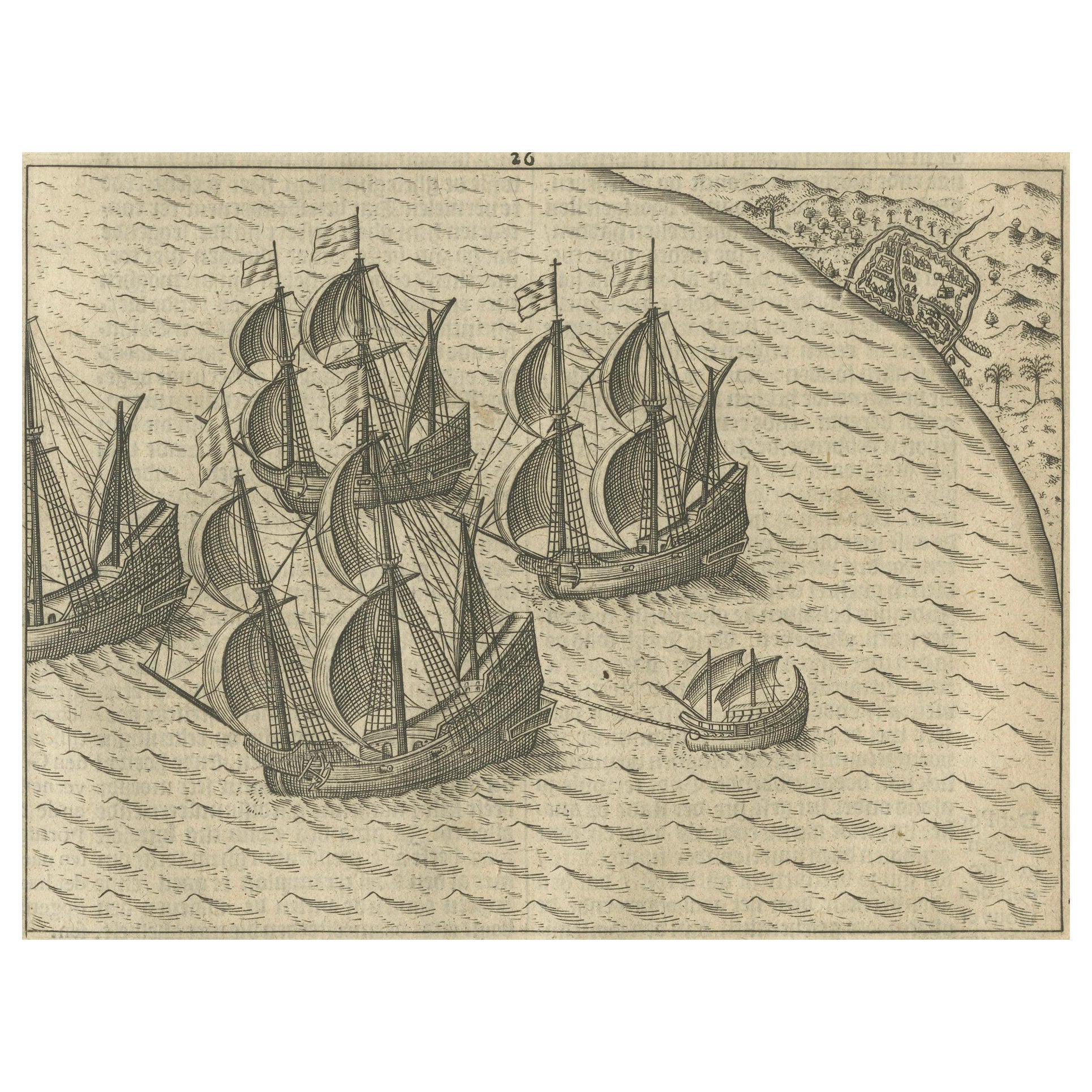
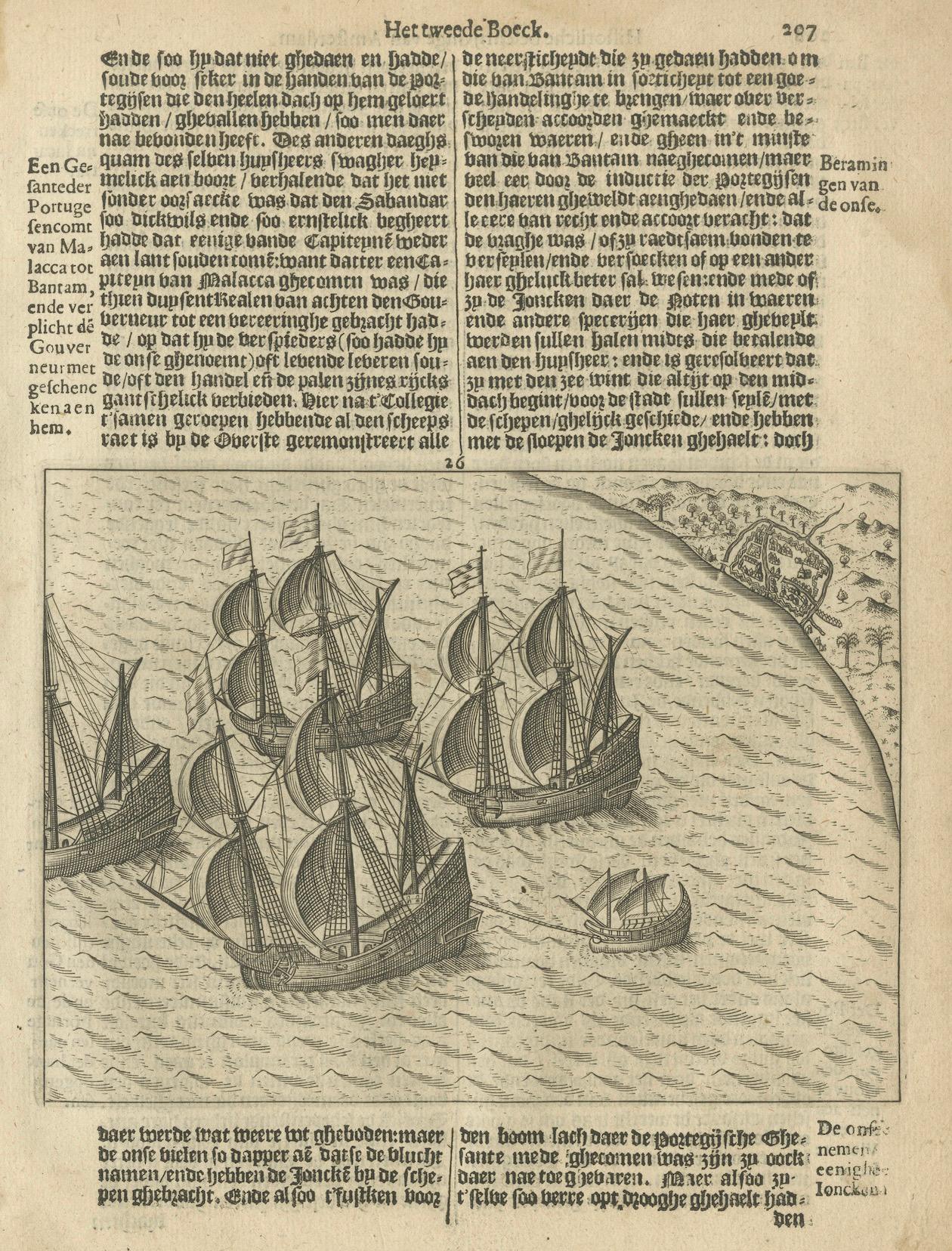
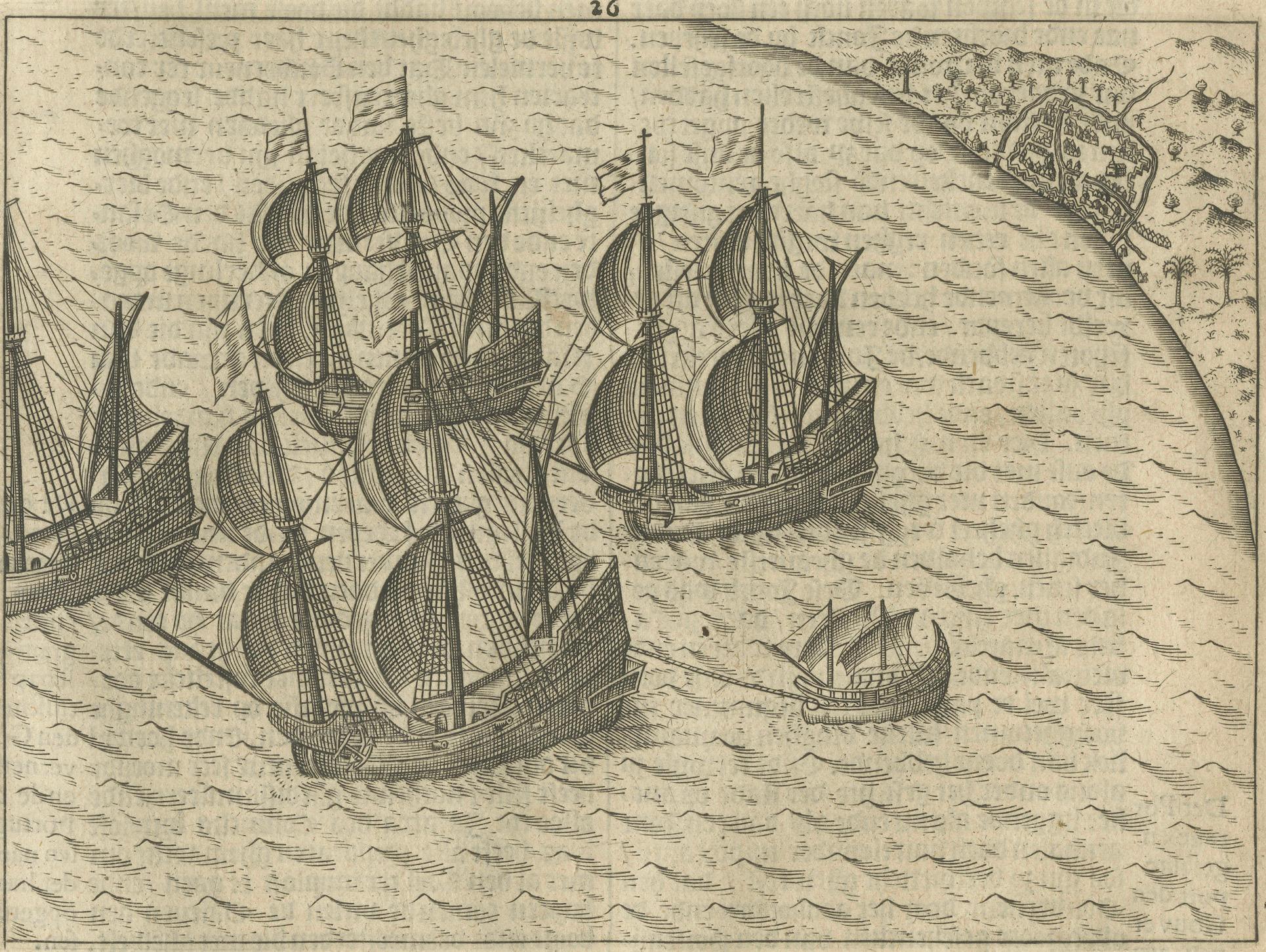
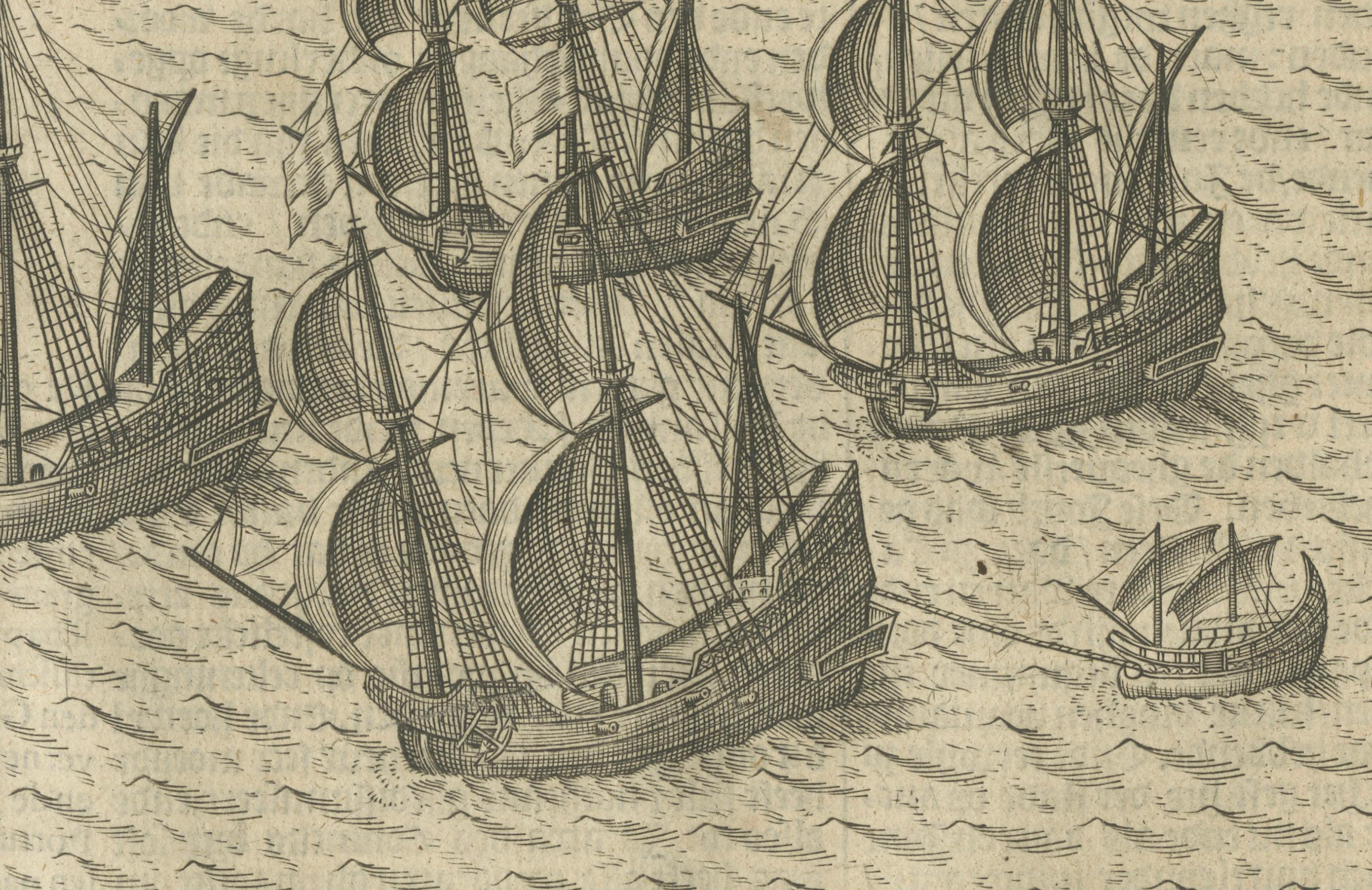
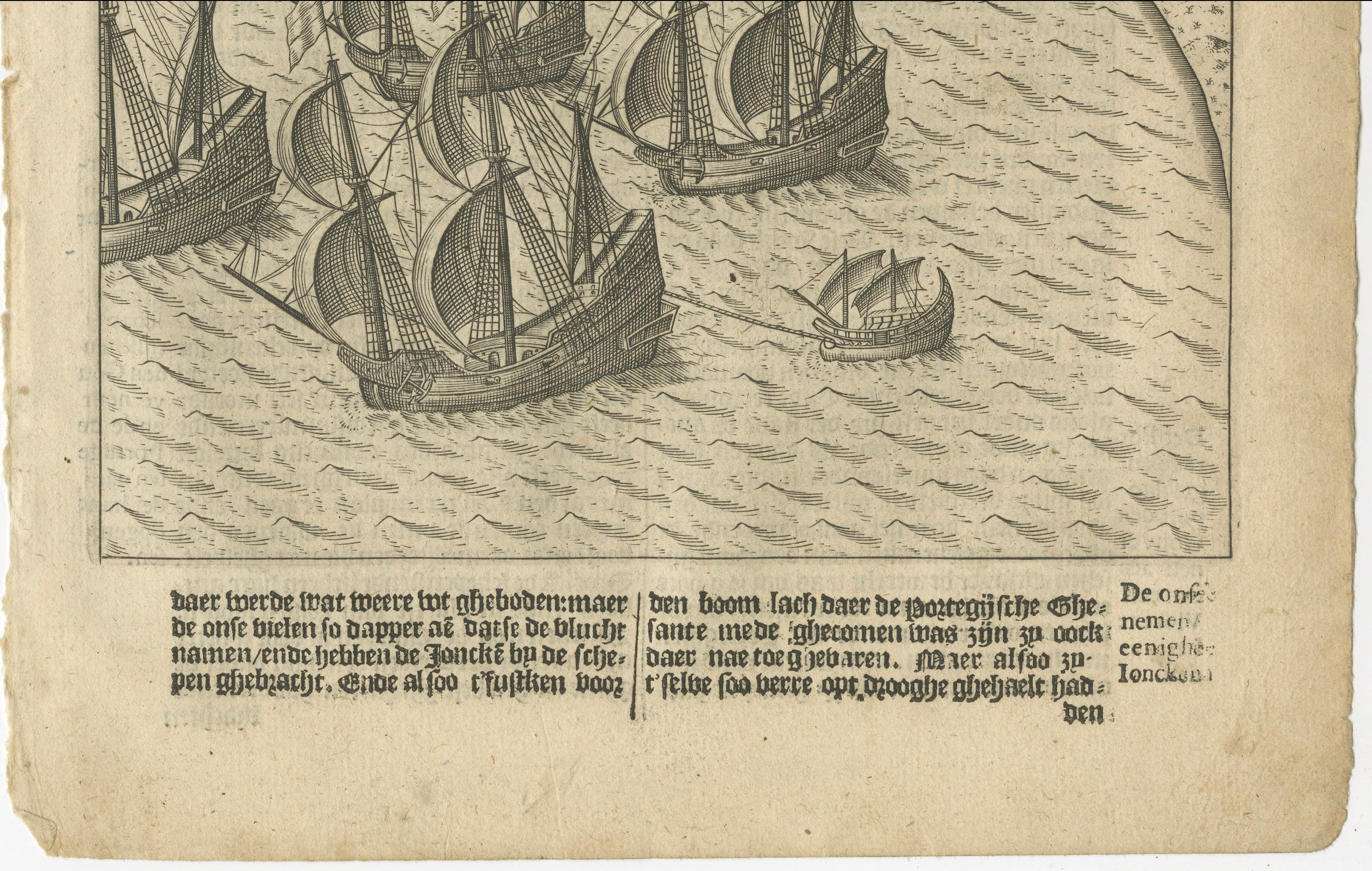
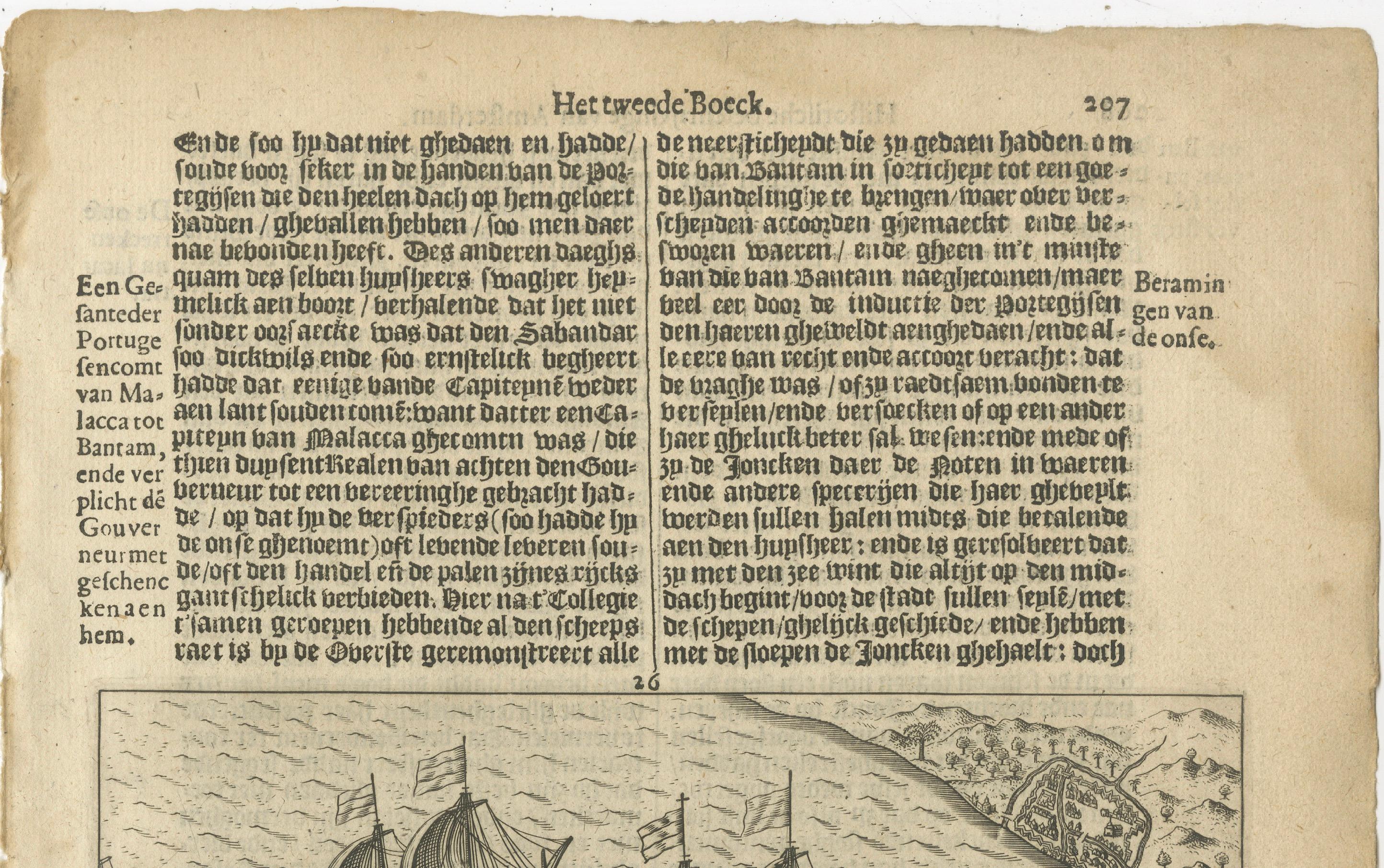
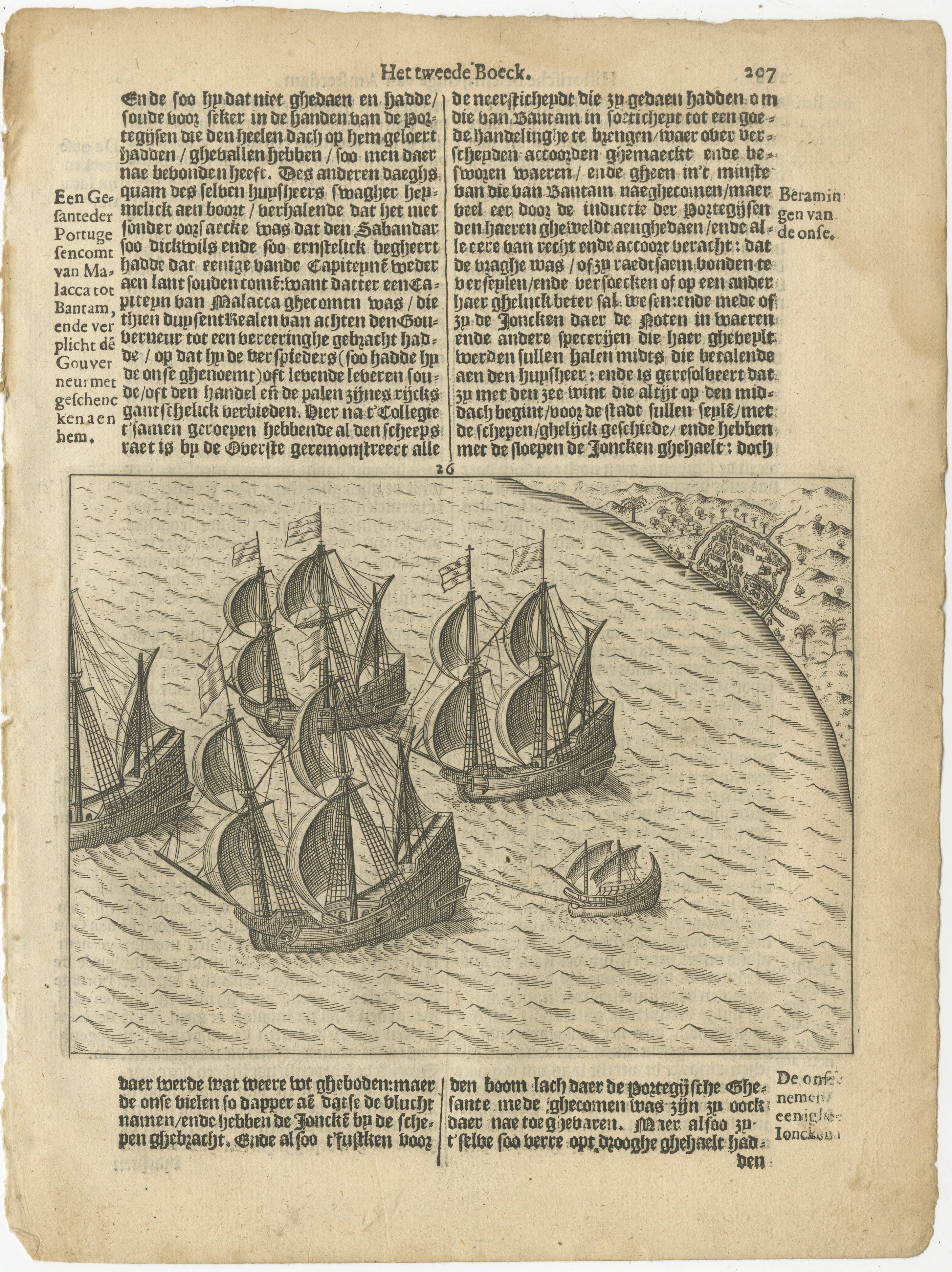
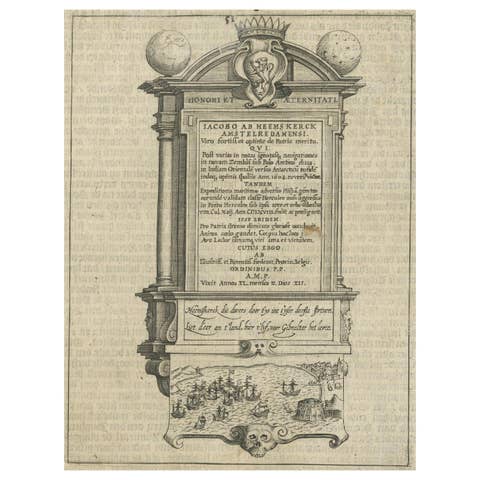
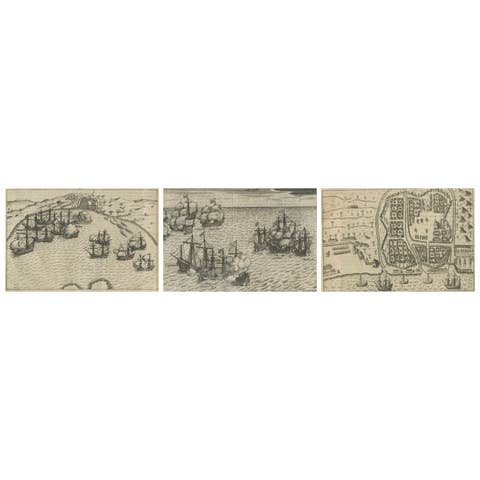
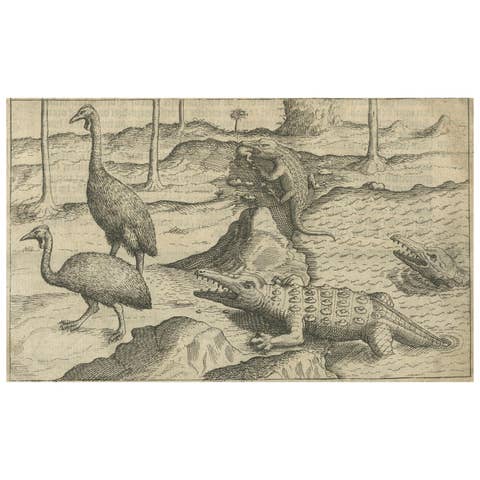
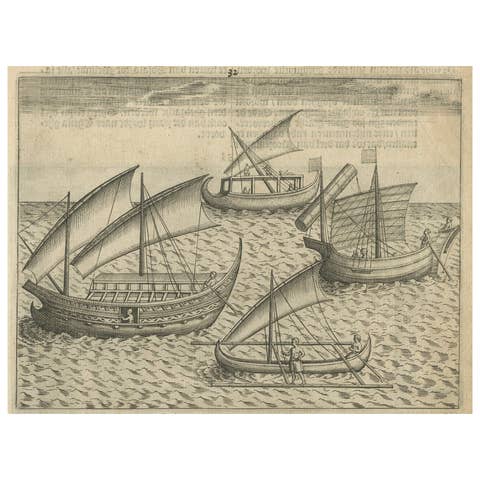
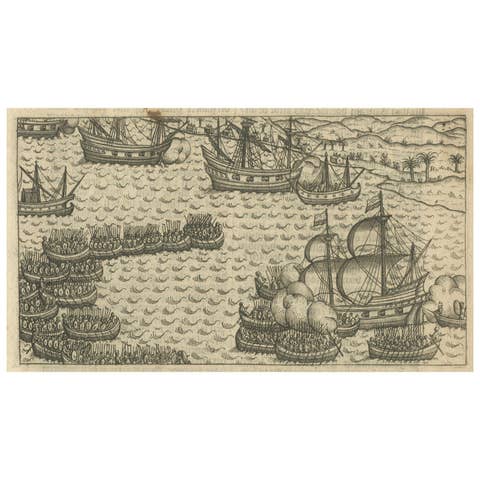
Dutch Fleet off the Coast of Bantam, Java, from History of Amsterdam, 1611
€ 240
One of a kind: this is the sheet in the photographs. Ships from Langweer, the Netherlands.
Date
1611
Sheet size
24 × 18.2 cm (9.4 × 7.2 in)
Condition
Good
Reference
BG-13098-22
Condition
for its age, with light toning, mild text show-through from the reverse, and some edge wear consistent with early 17th-century paper. Strong, clear impression with visible plate mark.
About this sheet
This original 1611 engraving from Johannes Isacius Pontanus’ *Rerum et urbis Amstelodamensium historia* (History of Amsterdam) depicts a striking maritime scene from the second Dutch voyage to the East Indies. Engraved in Amsterdam during the early 17th century, this print captures the Dutch fleet approaching the shores of Java—an image symbolizing the growing naval power and commercial ambitions of the Dutch Republic during its early overseas expeditions.
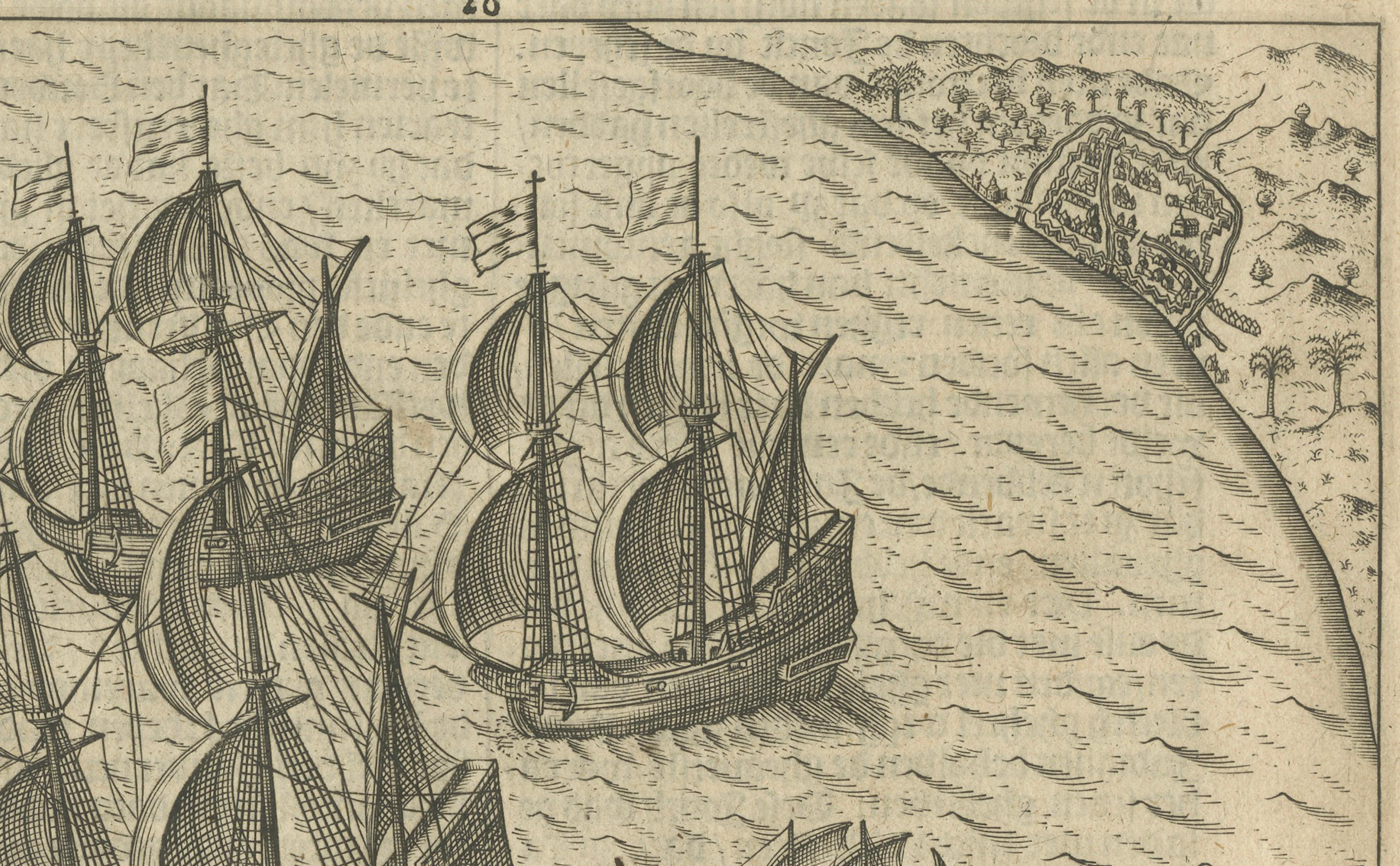
The composition shows several large Dutch East Indiamen, their sails unfurled and flags flying proudly, navigating in formation near the tropical coastline. Onshore, a fortified settlement can be seen amid palm trees and low hills, likely representing one of the early trading stations or coastal fortifications near Bantam, the principal Javanese port where the Dutch established their first foothold in Asia. The fleet’s disciplined arrangement and detailed rigging evoke both the technical mastery of Dutch shipbuilding and the strategic precision of these pioneering voyages under commanders such as Cornelis de Houtman and Jacob van Neck.
This engraving is one of the most evocative visual records of the early Dutch encounters with Southeast Asia, illustrating both the enterprise and resolve that laid the foundations for the Dutch East India Company (VOC). It stands as a fine example of early 17th-century Dutch engraving, combining documentary purpose with the dramatic artistry characteristic of Amsterdam’s Golden Age print culture.
Condition: Good for its age, with light toning, mild text show-through from the reverse, and some edge wear consistent with early 17th-century paper. Strong, clear impression with visible plate mark.
Framing tips: Best displayed in a dark wood or walnut frame with a warm ivory or off-white mat to enhance the tonal contrast and emphasize the fine linear detail of the ships and waves. Ideal for maritime, cartographic, or early exploration collections.
Technique: Engraving Maker: Anonymous engraver after designs for Johannes Isacius Pontanus, Amsterdam, 1611