About this sheet
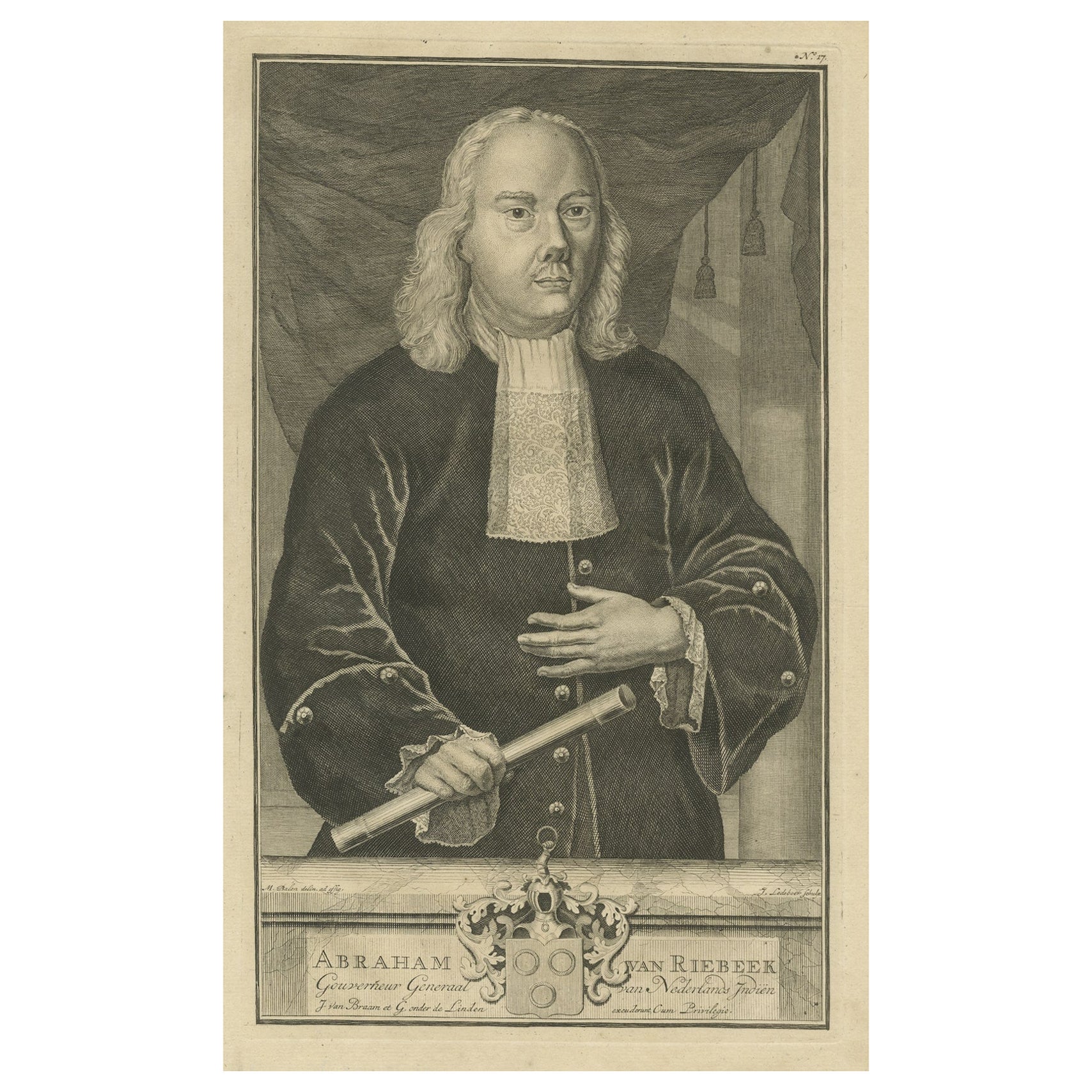
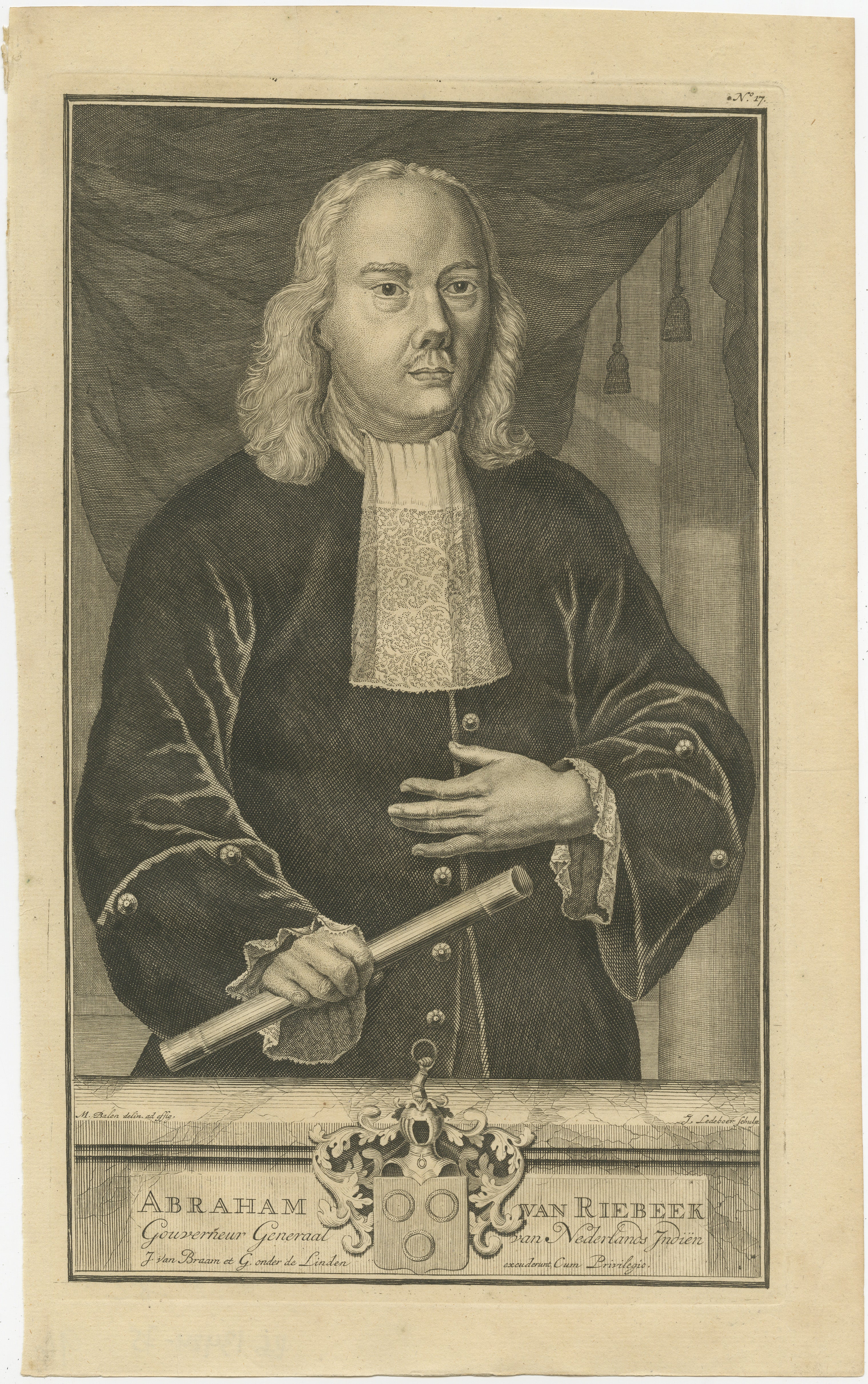
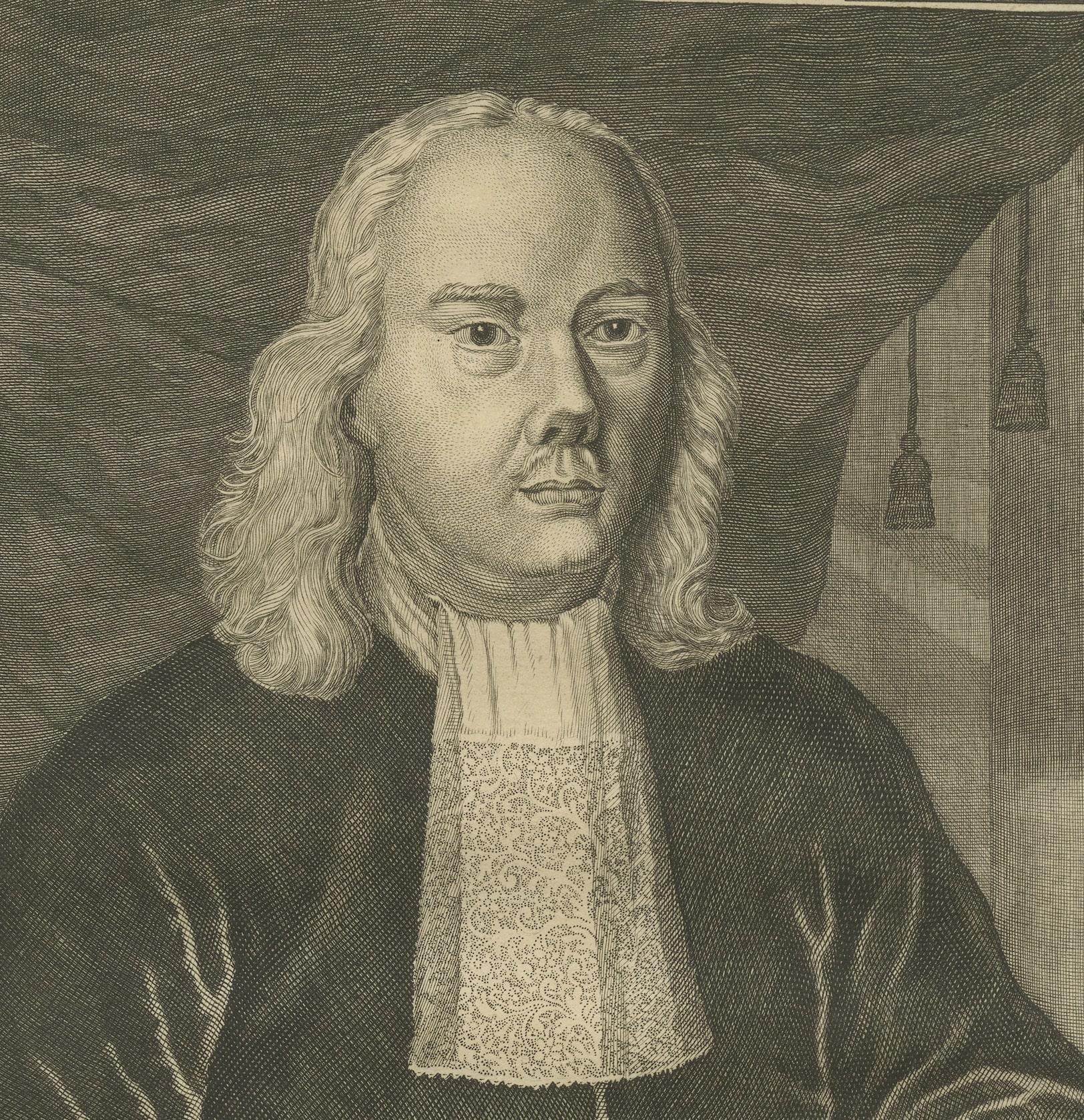
Abraham van Riebeeck was a notable figure in the history of the Dutch colonial era, particularly in relation to the Dutch East India Company (VOC). Here are some key aspects of his life and career:
1. **Early Life**: Abraham van Riebeeck was born on October 18, 1653, in Cape Colony (modern-day South Africa). He was the son of Jan van Riebeeck, a Dutch colonial administrator and the founder of Cape Town, and Maria van Riebeeck.
2. **Education and Early Career**: Growing up in the Cape Colony, Abraham received a good education. He later moved to the Dutch Republic where he continued his studies. Abraham then joined the VOC, following in his father's footsteps in pursuing a career in colonial administration.
3. **Service in the Dutch East Indies**: Van Riebeeck went to the Dutch East Indies (present-day Indonesia), where he held various positions within the VOC. His roles included serving as a merchant and later as an administrator in various capacities, demonstrating his competence and rising through the ranks.
4. **Governor-General**: In 1709, Abraham van Riebeeck was appointed as the Governor-General of the Dutch East Indies, a position he held until his death in 1713. His tenure as Governor-General was significant for the ongoing efforts to consolidate Dutch power and trade in the region. He continued the work of expanding and strengthening the VOC's control over the spice trade and other commercial interests in Southeast Asia.
5. **Legacy and Contributions**: While less is known about the specific policies and initiatives of his governance compared to some other Governor-Generals, van Riebeeck is recognized for his role in continuing the VOC's dominance in the region during the early 18th century. His administration dealt with the complexities of managing distant colonies and maintaining the intricate trade networks that were crucial to the VOC and the Dutch economy.
6. **Personal Life and Death**: Abraham van Riebeeck was married to Elisabeth van Oosten and had children. He passed away on November 17, 1713, in Batavia (now Jakarta, Indonesia).
As a Governor-General during the peak of the VOC's power, Abraham van Riebeeck played a key role in the history of Dutch colonialism in Southeast Asia. His life reflects the broader narratives of trade, politics, and colonial administration that characterized the era.
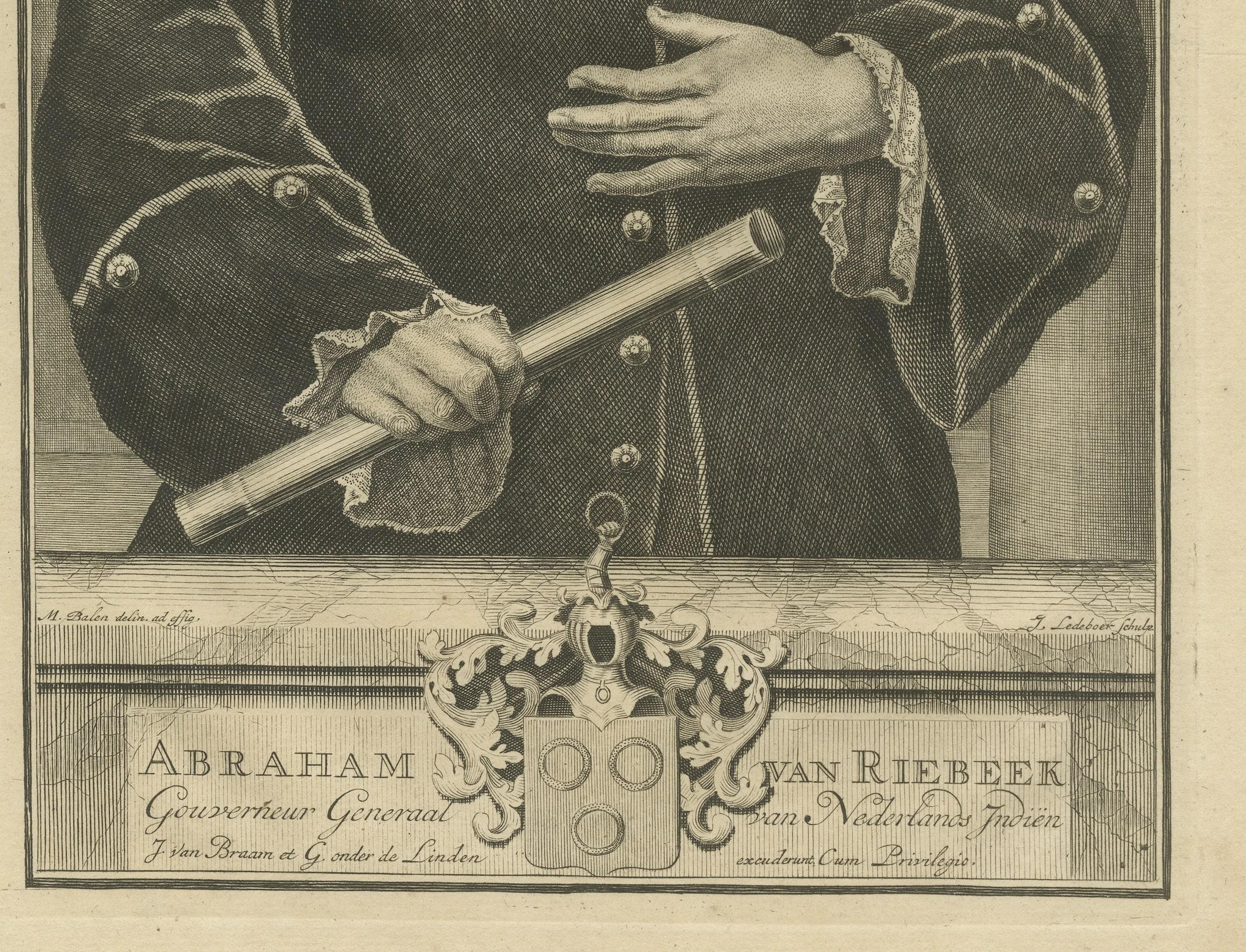
From the monumental work by François Valentyn: “Oud en nieuw Oost-Indiën, vervattende een naaukeurige en uitvoerige verhandelinge van Nederlands mogentheyd in die gewesten”. Dordrecht/Amsterdam: J. van Braam en G. onder de Linden, 1724/1726. (Transl.: Old and new East-Indies, including an accurate and extensive description of Dutch / VOC controlled territories.)