About this sheet
Cavendish’s Ship Desire in Storm near the Strait of Magellan – 18th Century
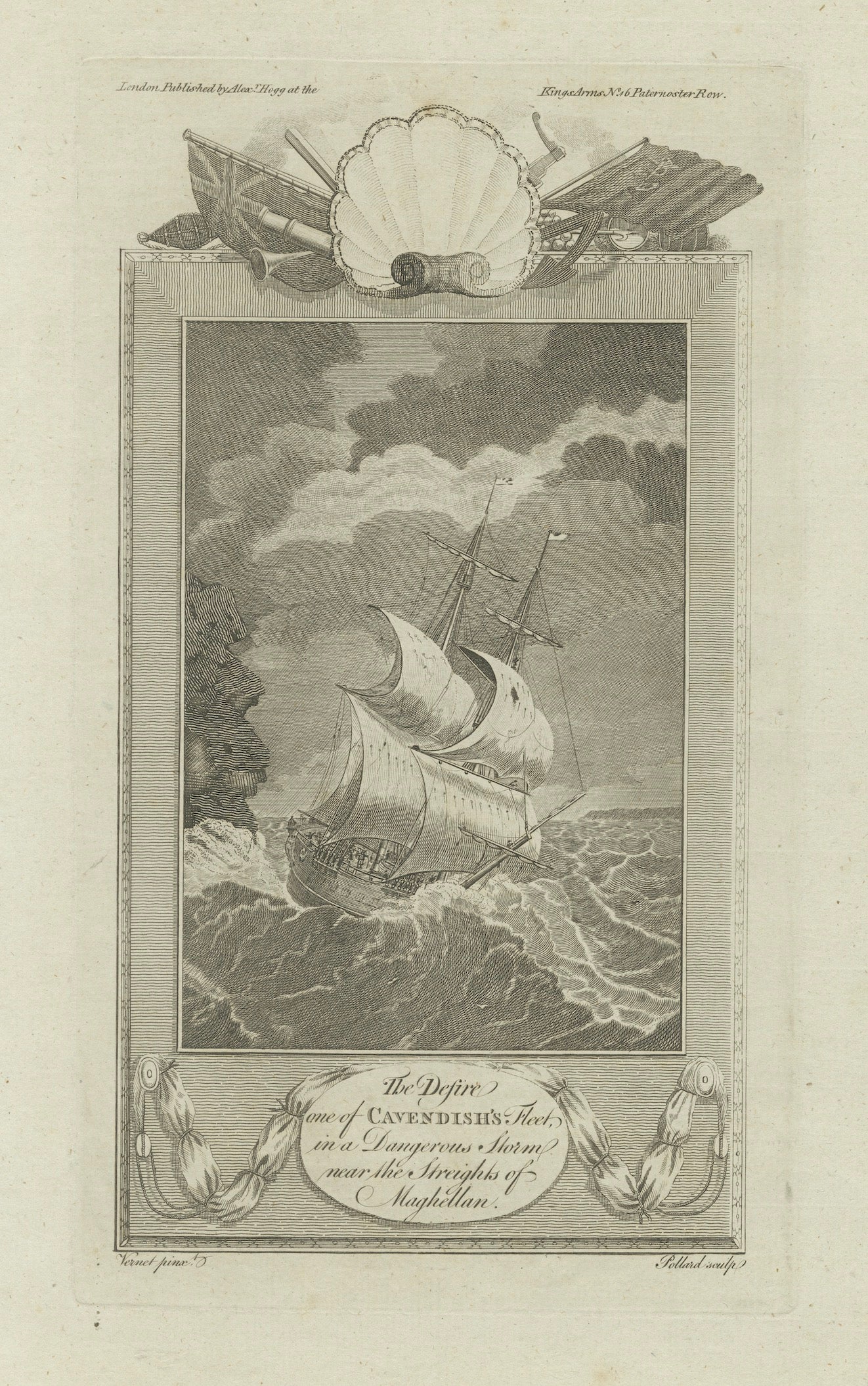
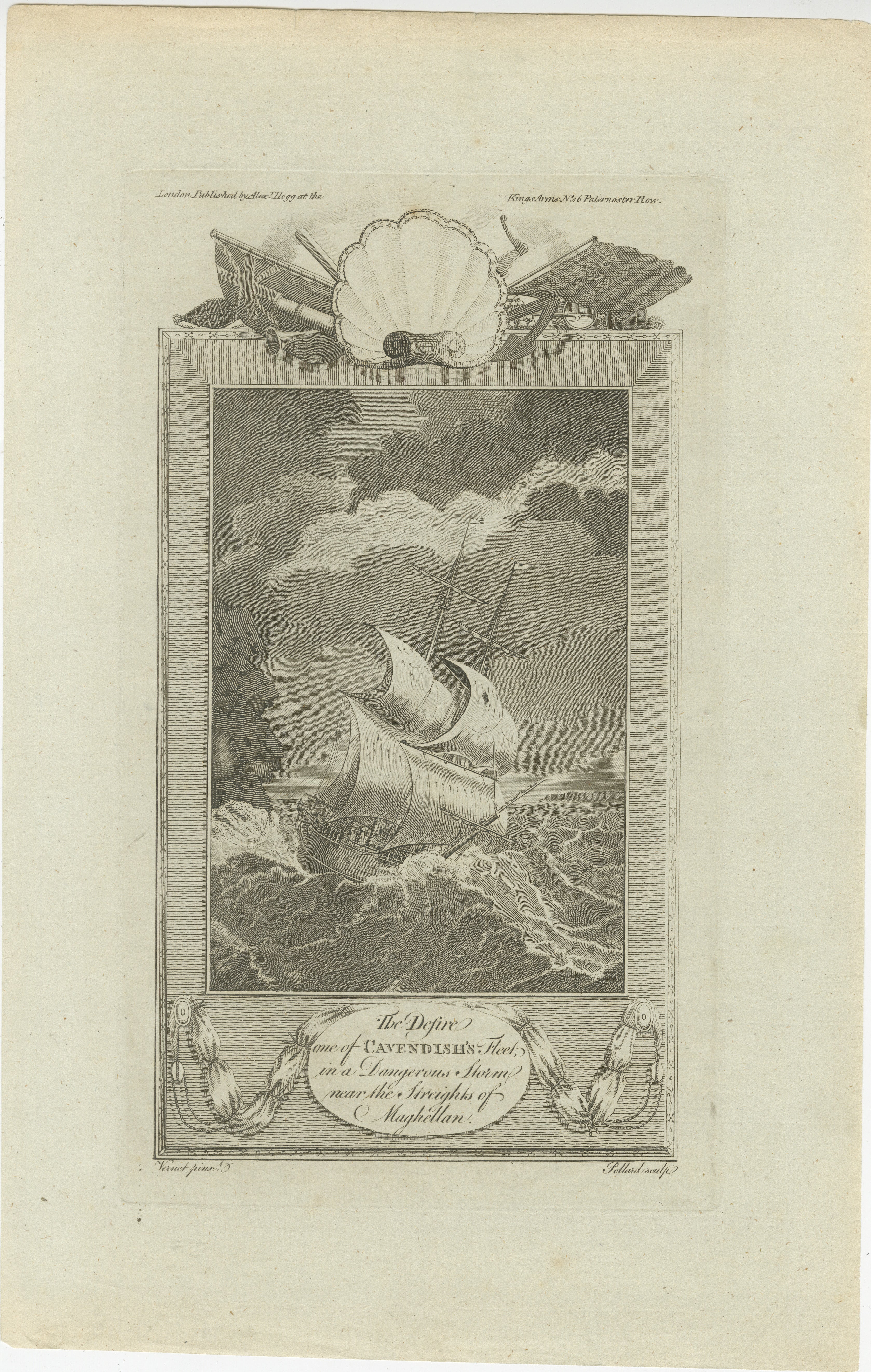
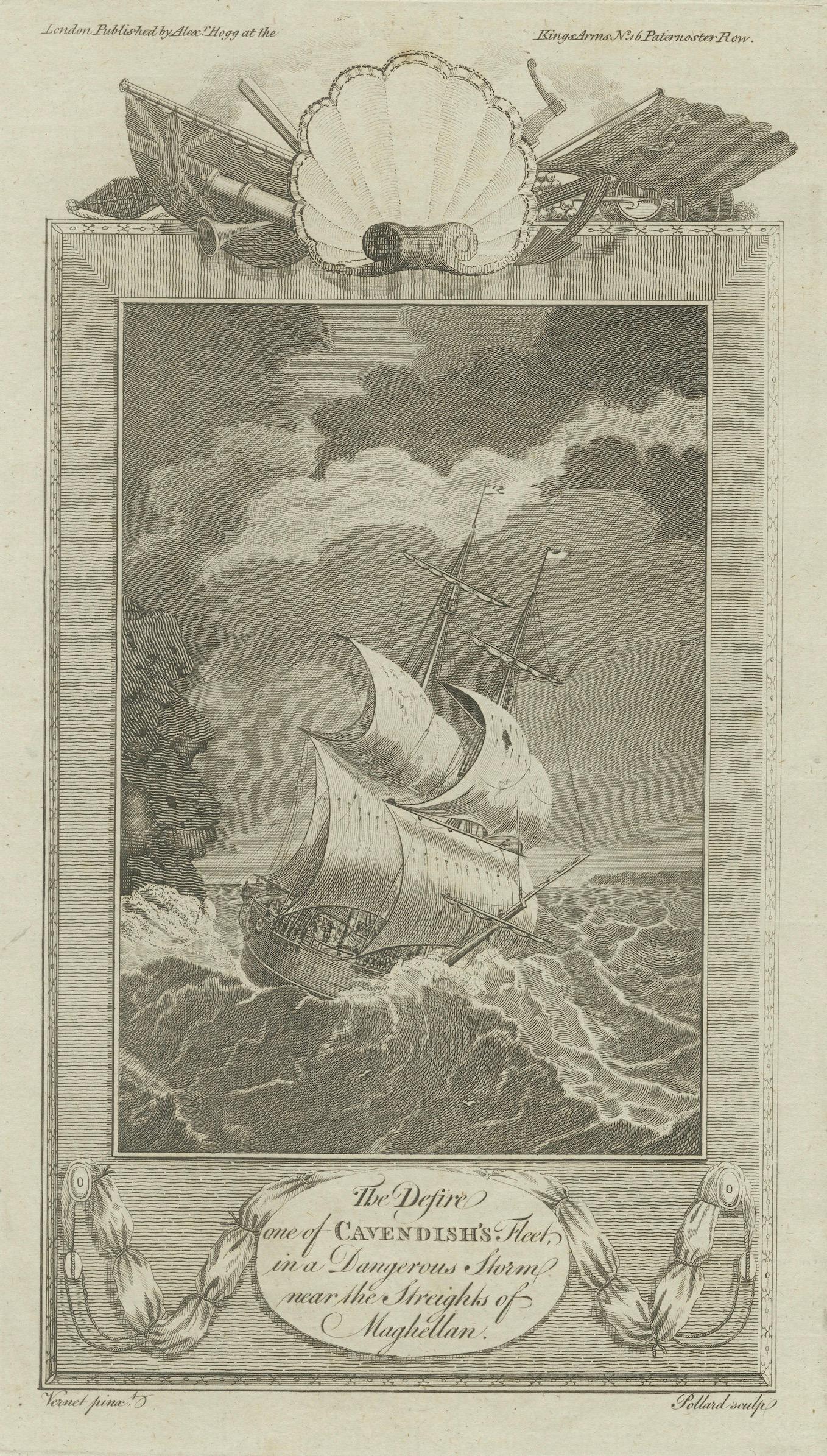
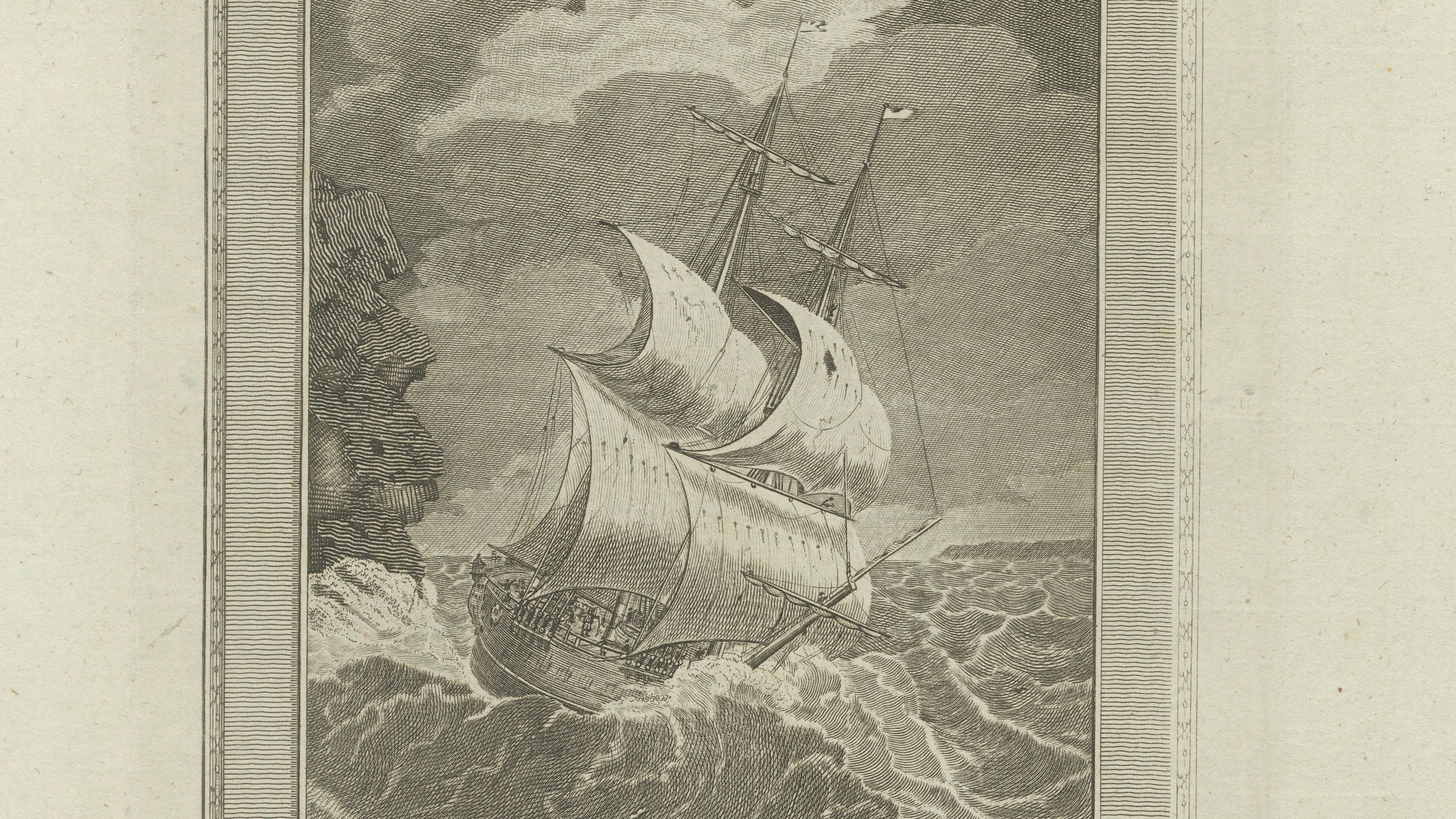
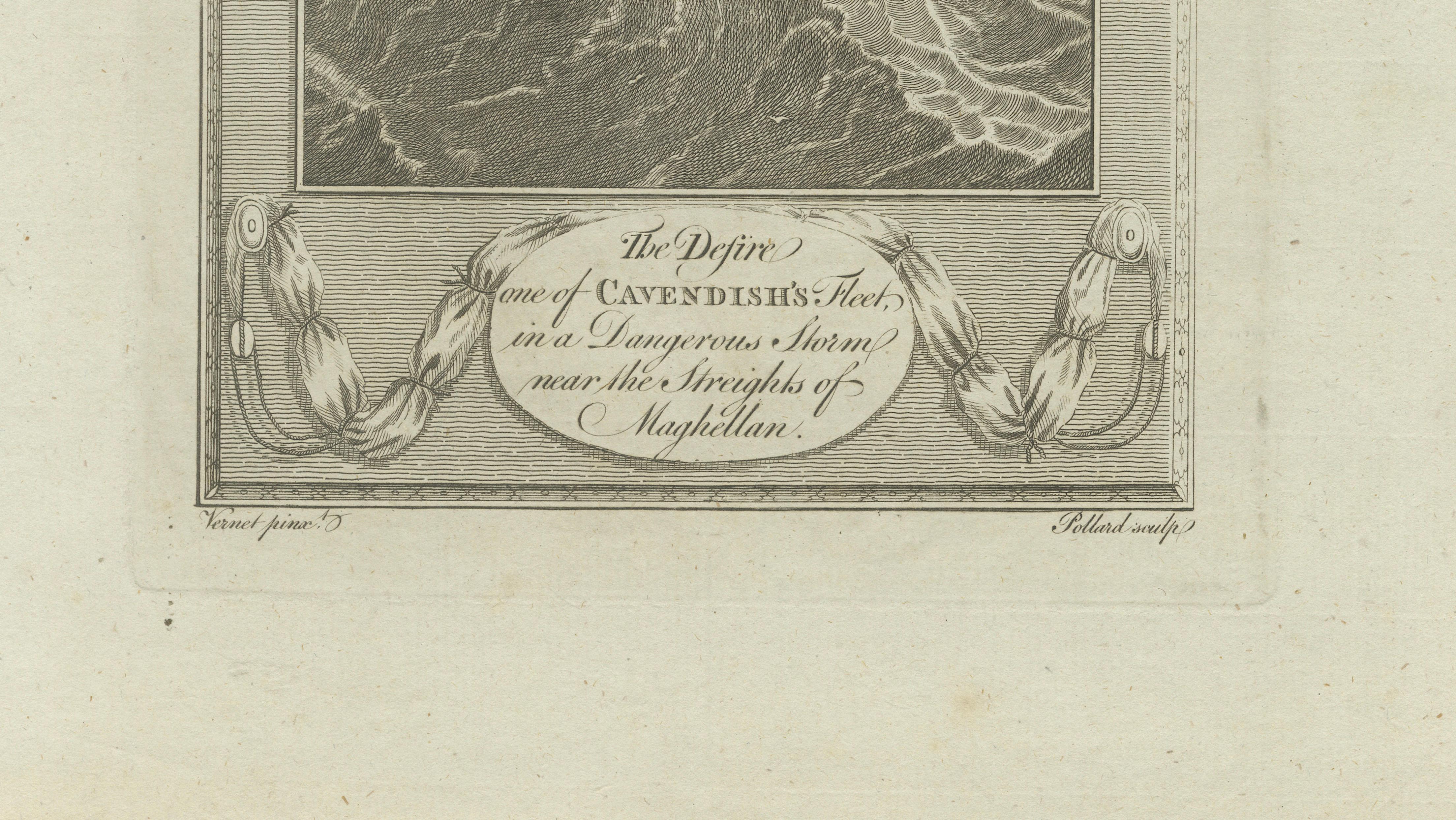
This dramatic 18th-century copperplate engraving depicts The Desire, one of the ships of the English navigator and privateer Thomas Cavendish, battling a violent storm near the Strait of Magellan. The composition captures the perilous maritime conditions encountered during Cavendish’s celebrated circumnavigation of the globe between 1586 and 1588, one of the earliest English voyages to successfully complete the journey around the world.
At the center of the scene the small but resilient vessel pitches heavily in a turbulent sea, its sails strained by strong winds as waves crash against the hull. The ship is shown dangerously close to a rugged rocky coastline, emphasizing the navigational hazards of the southern seas. Dark clouds gather overhead, heightening the dramatic atmosphere and conveying the unpredictability of sailing through the treacherous waters at the southern tip of South America. The Strait of Magellan was notorious among early navigators for its violent storms, narrow passages, and powerful currents, and it represented one of the most dangerous segments of any circumnavigation voyage.
The vessel illustrated here, The Desire, was one of the principal ships of Cavendish’s fleet. Cavendish followed the route of Sir Francis Drake and became only the third captain in history to circumnavigate the globe. His expedition achieved fame not only for the successful completion of the voyage but also for its raids on Spanish shipping along the Pacific coast of the Americas. Such voyages captured the imagination of European audiences eager to learn about distant seas, exotic lands, and the dramatic adventures of maritime exploration.
The engraving itself is richly composed within an elaborate decorative border typical of late 18th-century book illustrations. Above the image appears a maritime trophy motif composed of flags, cannon, and navigational instruments surrounding a large shell cartouche, reflecting the heroic naval themes associated with exploration narratives. The image was engraved after a design by the artist Verelst and executed by Pollard, as indicated in the lower margin. It was published in London by Alex Hogg at the Kings Arms, Paternoster Row, and appeared in the popular travel compilation *A New, Authentic, and Complete Collection of Voyages Round the World*. This influential multi-volume work brought the dramatic stories of global exploration to a wide European readership during the late 18th century.
Today the print remains an evocative visual record of the dangers faced by early navigators exploring the world’s oceans. It combines historical narrative, maritime drama, and fine engraved craftsmanship, making it particularly appealing to collectors of exploration prints, maritime history, and early travel literature.
Condition: Good for age with light age-related toning and occasional minor spotting. Wide margins present. Blank verso.
Framing tips: This print frames beautifully in a dark walnut or black frame with a wide ivory or warm off-white mat. The generous margins allow for elegant presentation, while the dramatic maritime scene makes it particularly suitable for libraries, studies, or nautical-themed interiors.
Technique: Copperplate engraving
Maker: Verelst (designer) & Pollard (engraver), London, late 18th century