About this sheet
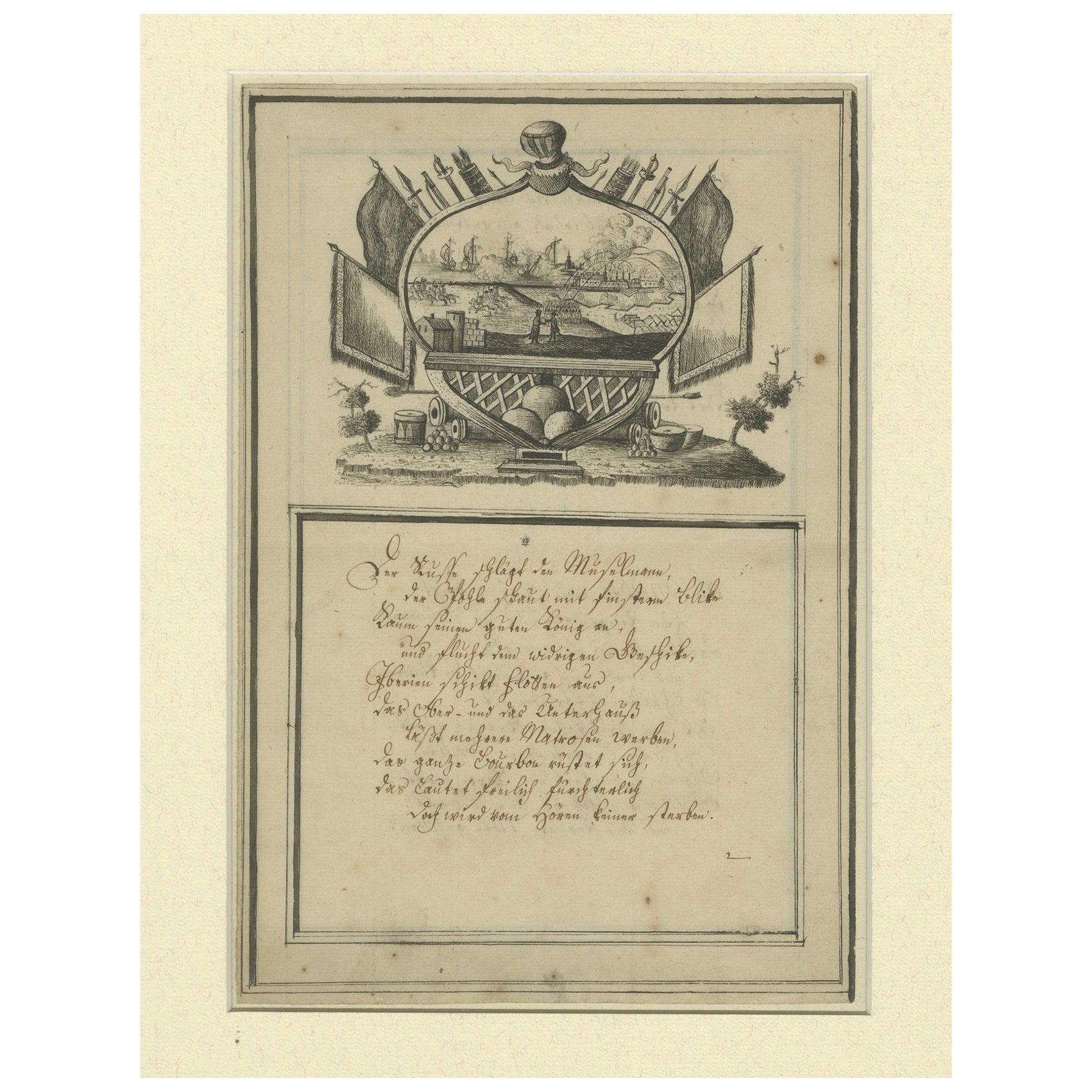
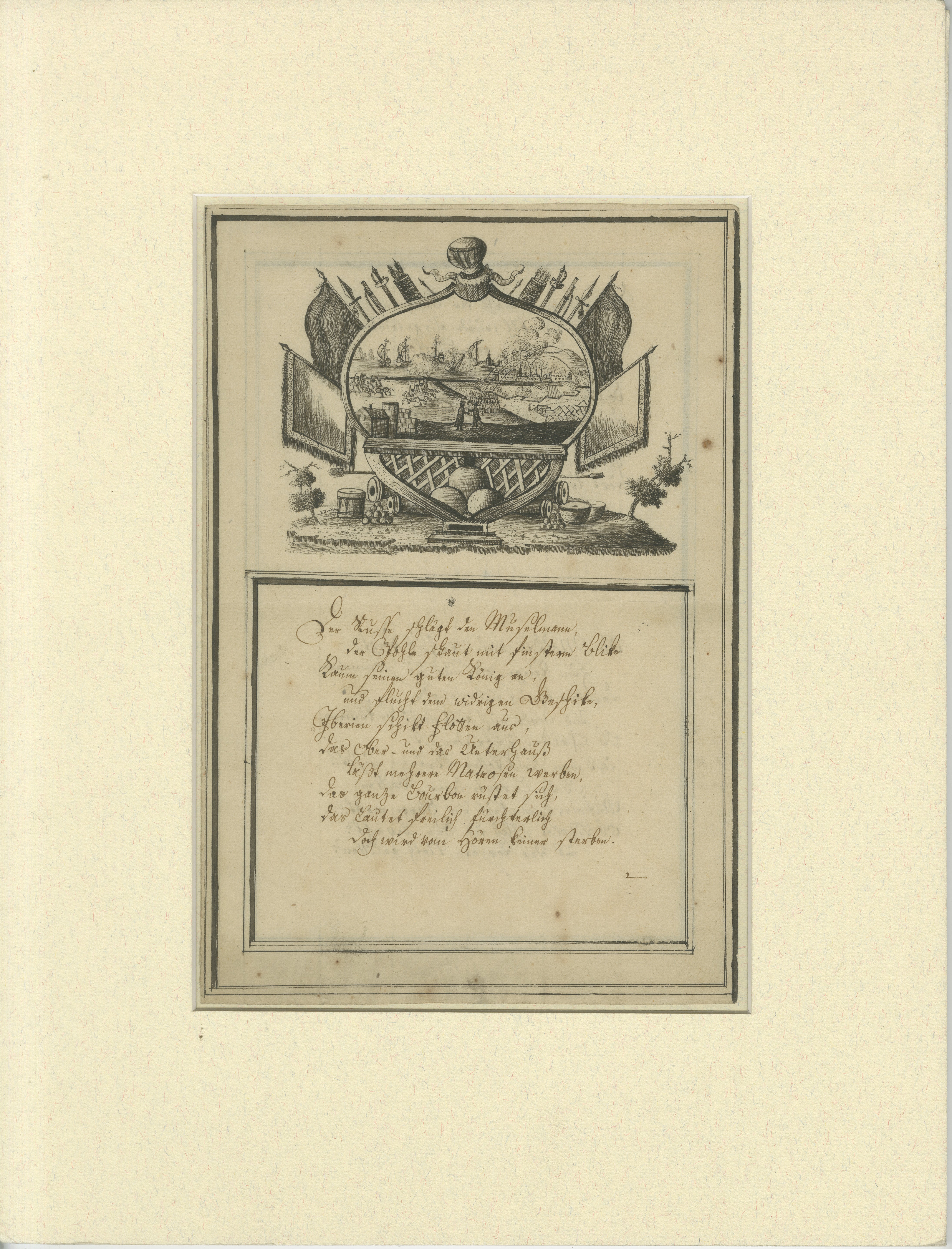
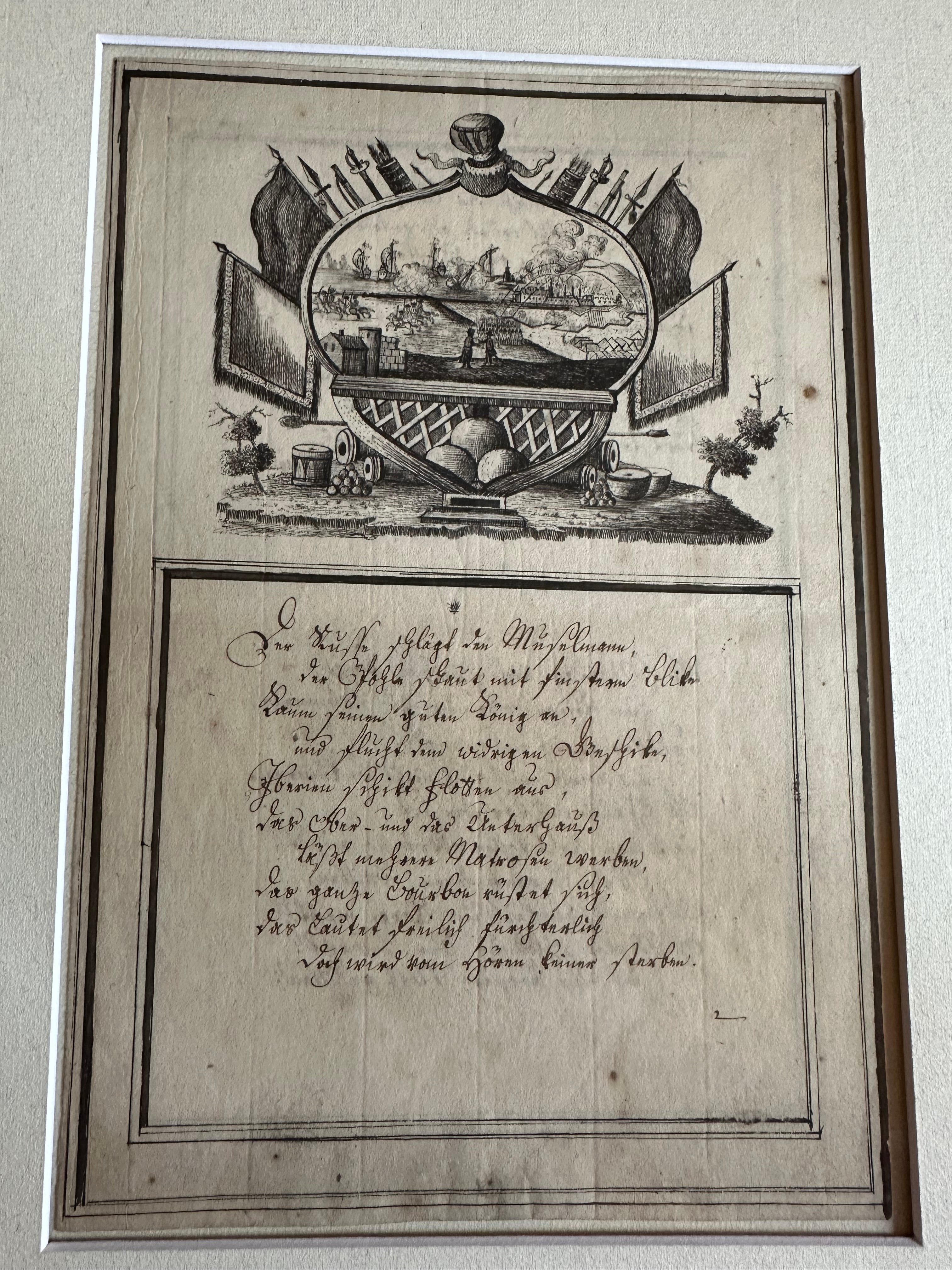
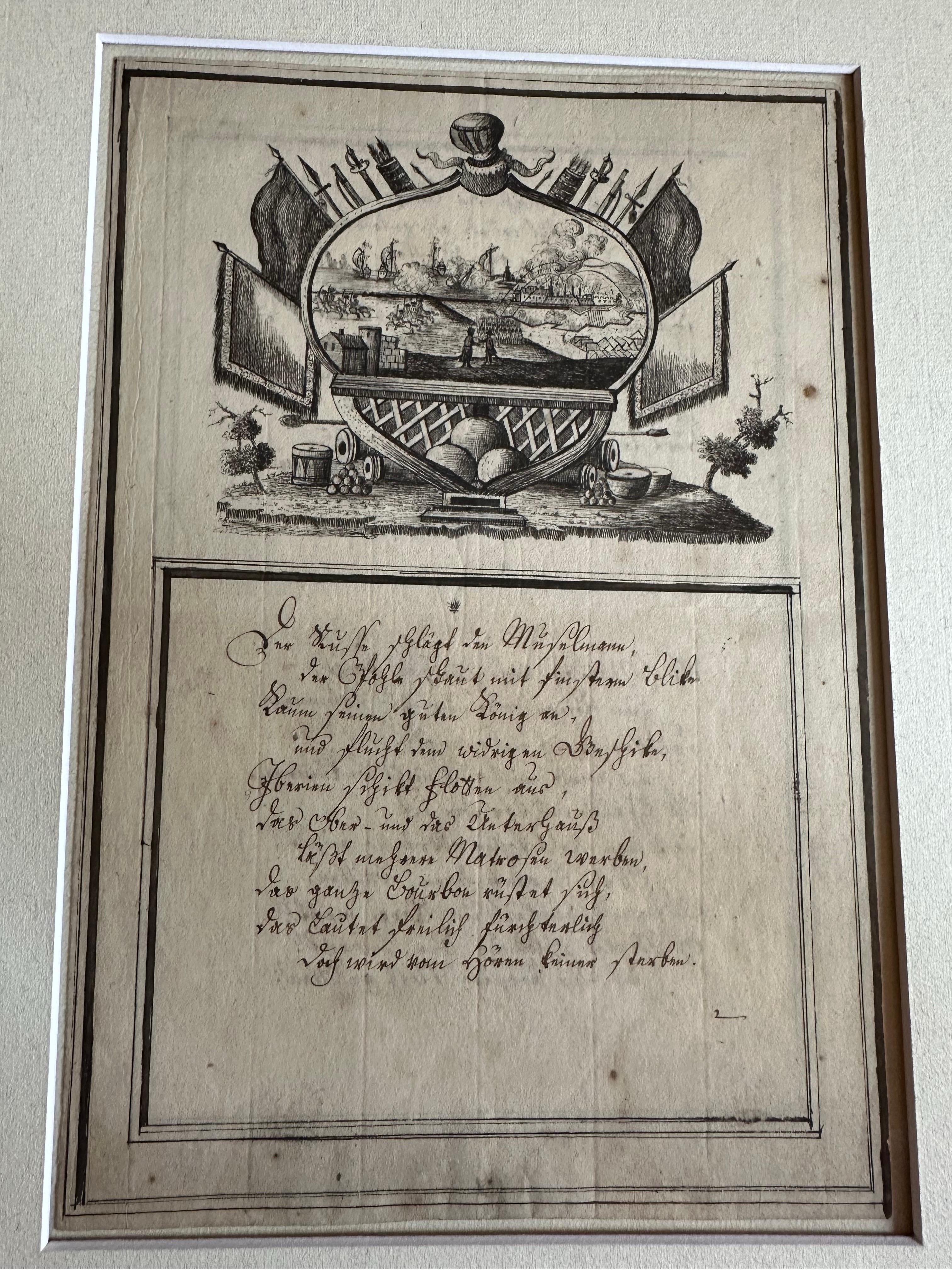
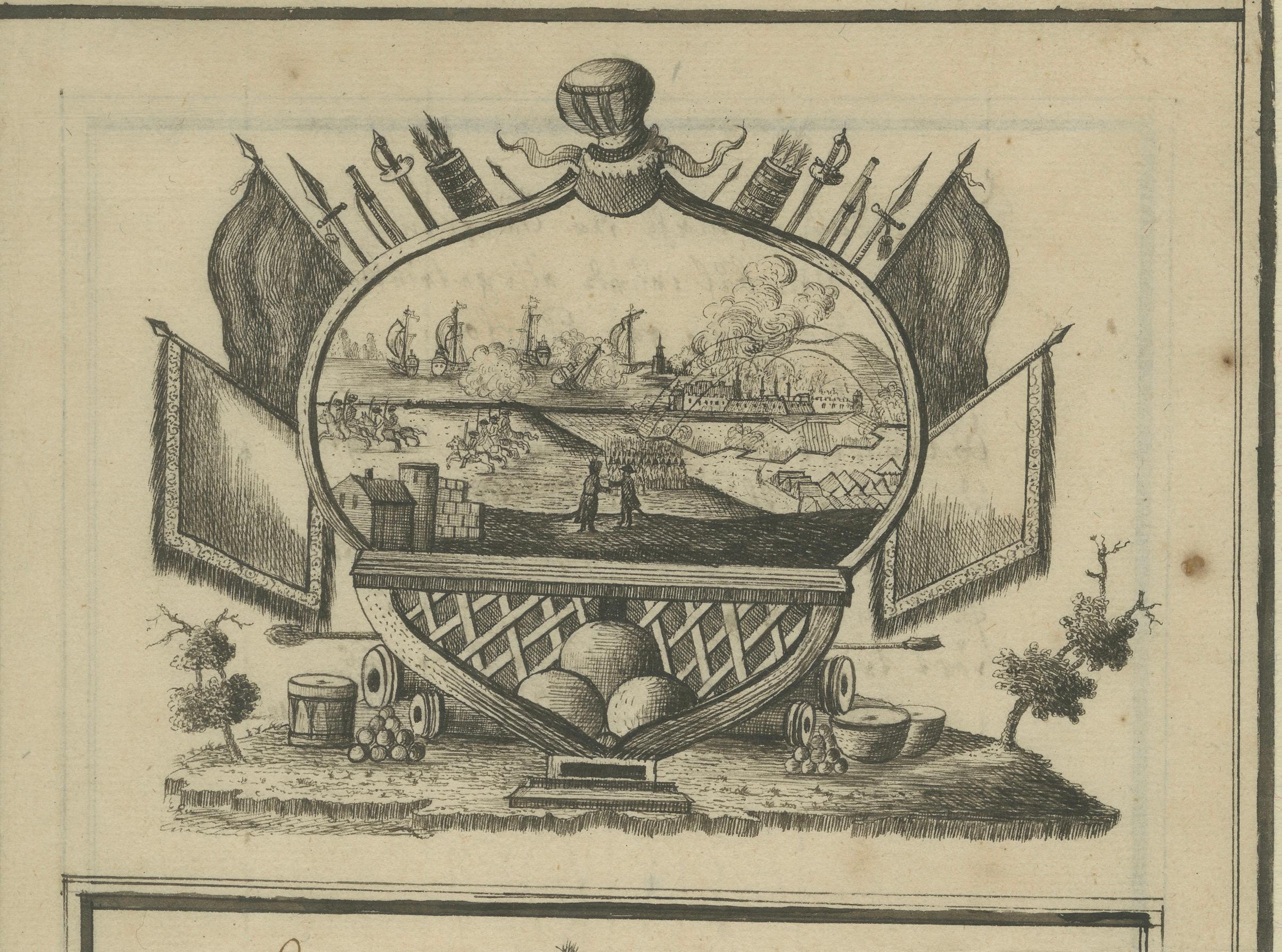
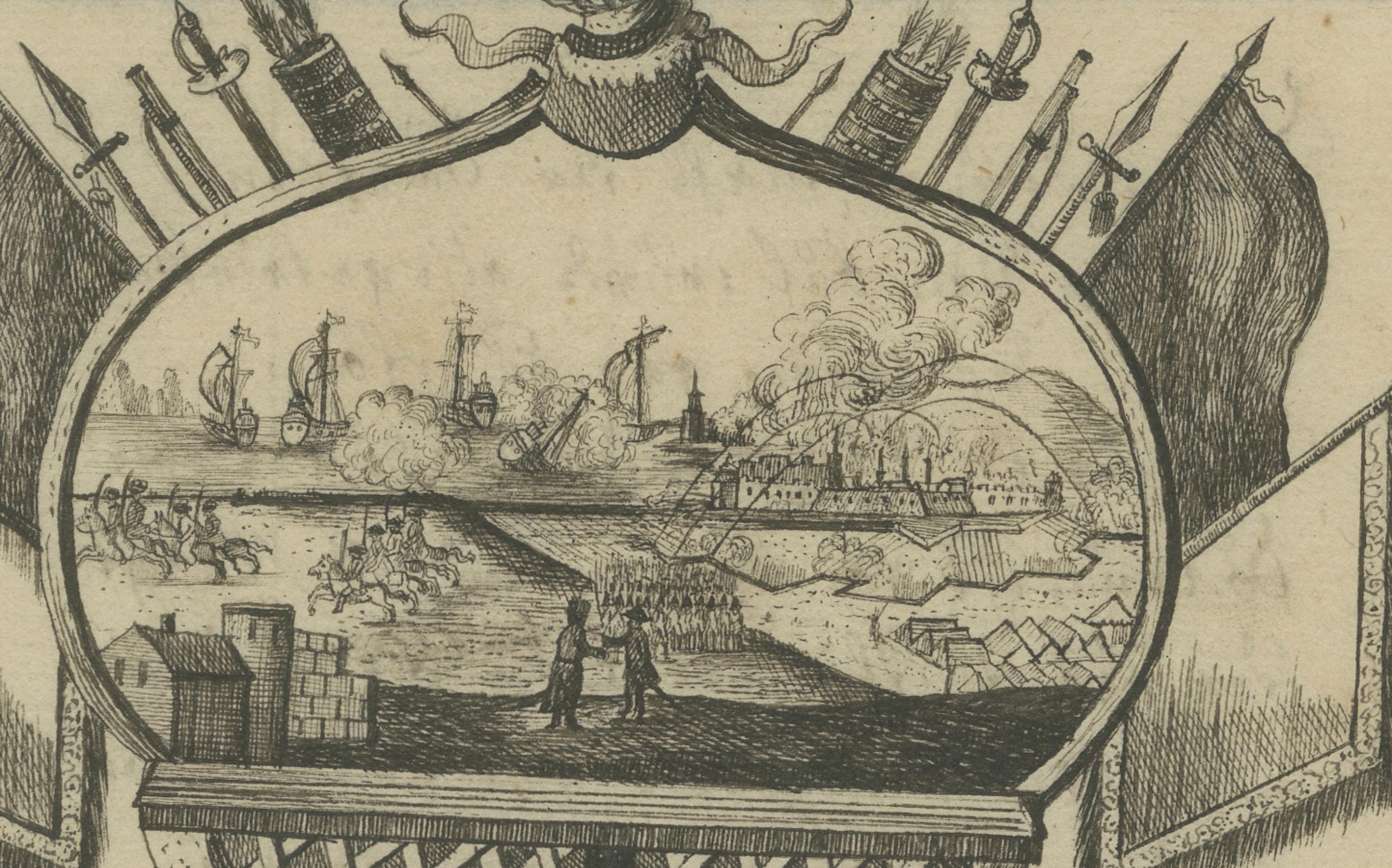
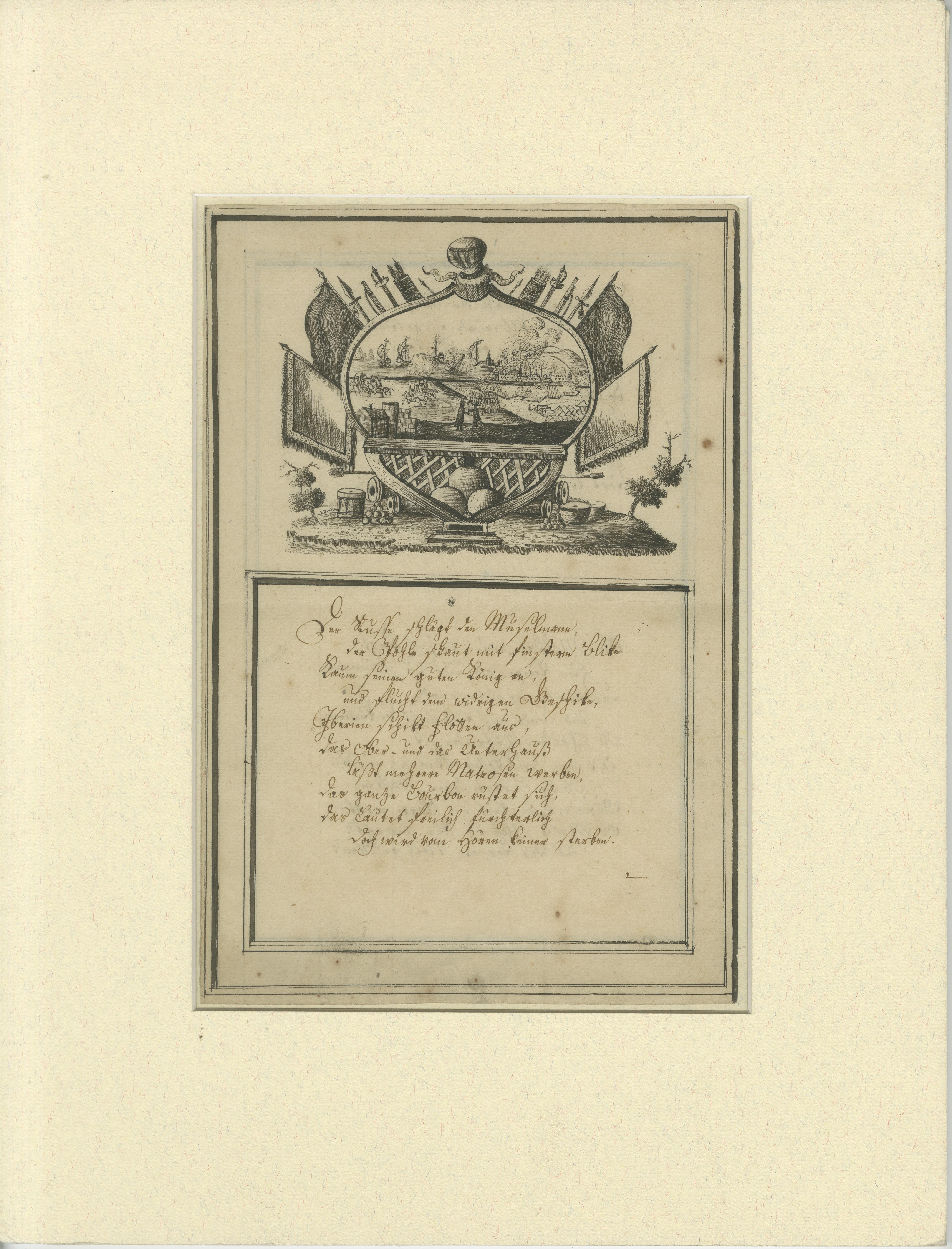
A rare and intriguing 18th-century German engraving combining a finely detailed allegorical scene of naval warfare with a poetic handwritten reflection on military life, ambition, and personal virtue. Likely created in the early 1700s, the piece was produced in the German-speaking world, possibly in the Holy Roman Empire, and is distinguished by its symbolic complexity and the use of Kurrentschrift (German cursive) script.
The upper half of the recto features a powerful composition: a central cartouche frames a bustling port or fortress under siege, with ships, cannons, and fortifications. Surrounding the image are flags, drums, cannonballs, and sabres — iconography rich in military symbolism. Above the cartouche is a crested helmet, enhancing the martial theme. The visual suggests a celebration or commemoration of military strength, possibly linked to a graduation, honorific, or personal presentation within a regiment or academy.
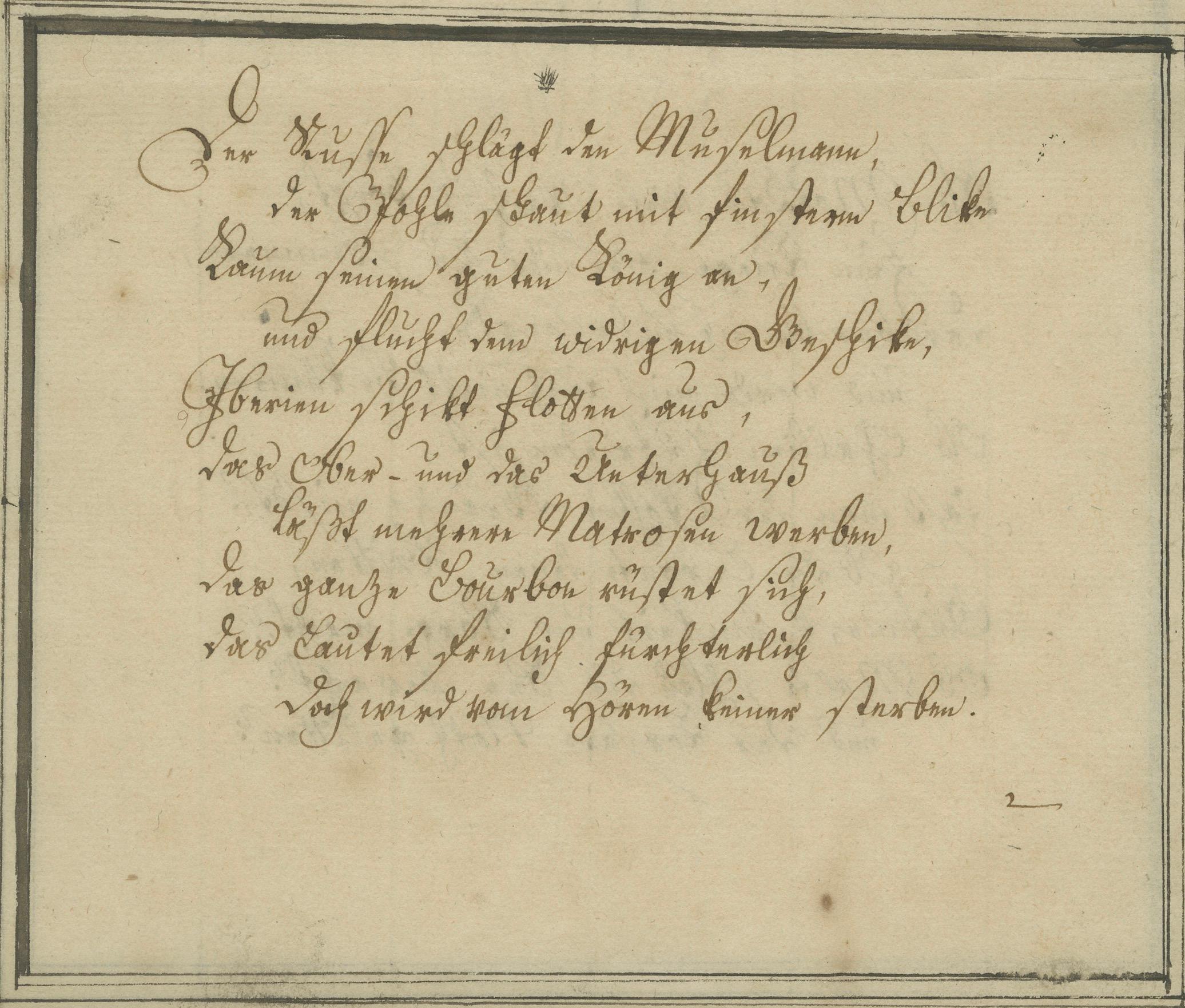
Beneath the illustration, a deeply personal poem reflects on the noble yet grim duties of a soldier. It praises those who serve with integrity and courage, while confronting the inevitability of death. The language suggests Enlightenment ideals — honor, reason, and moral reflection.
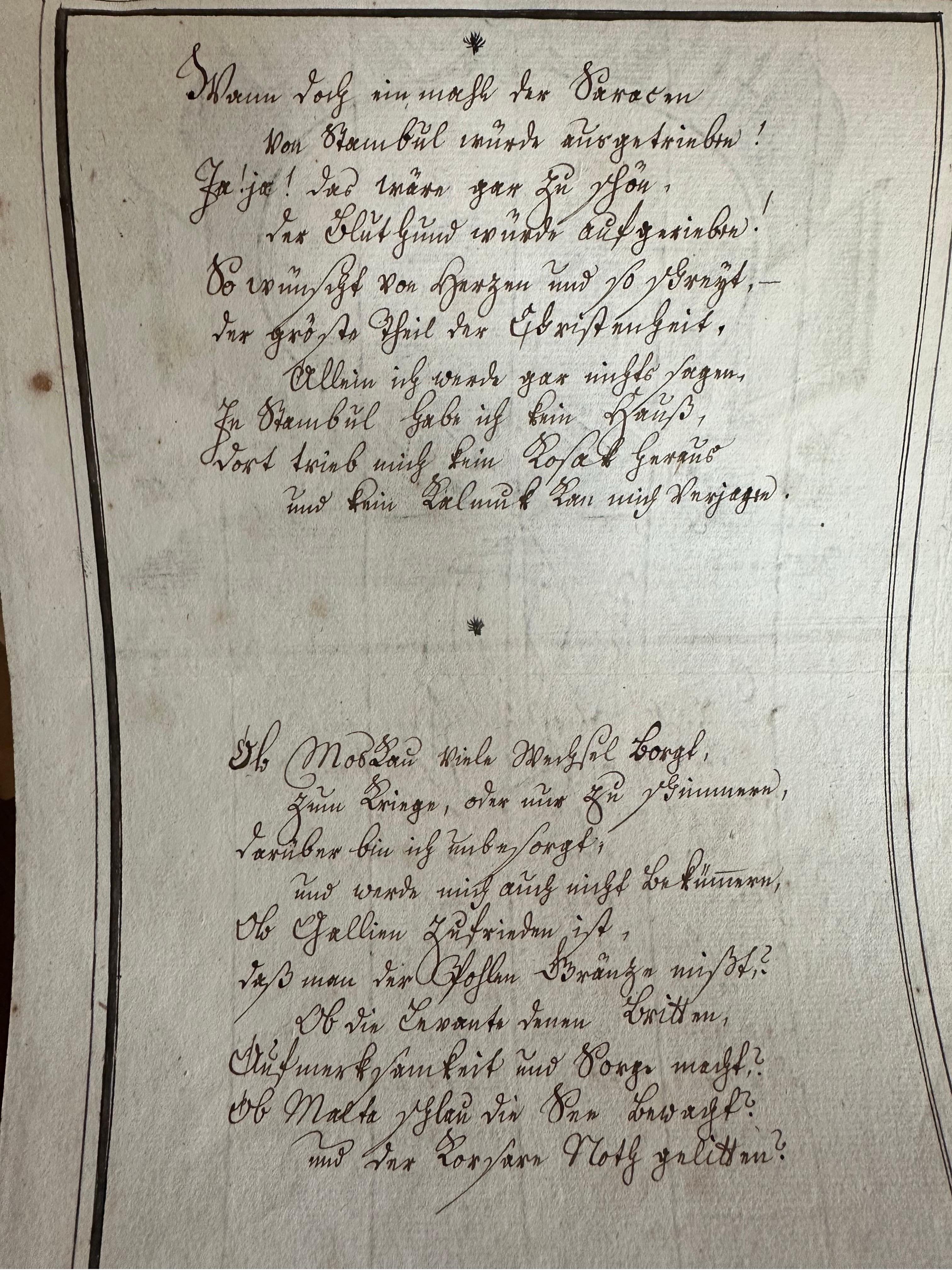
On the reverse is another poetic text, written in the same careful hand. It appears as a more introspective or perhaps ironic commentary on vanity, ambition, and military power. The speaker distances himself from pride or excessive self-display, reflecting on the transience of glory and the tyranny of unchecked power.
Translated excerpt (front):
"Oh, how blessed is the soldier’s life
Who fulfills his duty with a pure gaze,
Who meets the foe with loyal arm
And courage even when few remain..."
Translated excerpt (back):
"Why should I go on writing
Of Braunsfeld’s worries and ambition?
Such things bring so little gain —
The game of honor ends in pain..."
This piece is a fascinating combination of visual art, poetry, and social commentary, ideal for collectors interested in military history, German Enlightenment literature, or early 18th-century decorative engravings. It also holds great decorative appeal with its detailed etching and elegant script.
Condition report:
Well-preserved for its age. Minor age toning and faint foxing spots throughout; a few handling creases and edge wear visible, but no major damage. The handwritten ink remains legible and strong. A fine plate mark is visible. Professionally matted a neutral archival mat.
Framing tips:
The current display uses a light cream mat, which suit the piece well. For a more formal look, consider framing with a dark walnut or ebonized wood frame with a soft gold inner edge, to echo the engraving’s historical tone. Use museum glass* to minimize glare and protect the paper from UV light.
Technique: Engraving with manuscript ink
Maker: Unknown artist, German-speaking regions, early 18th century