About this sheet
Cairo, Babylon & Heliopolis – Antique Map of Ancient Memphis Region, 1776
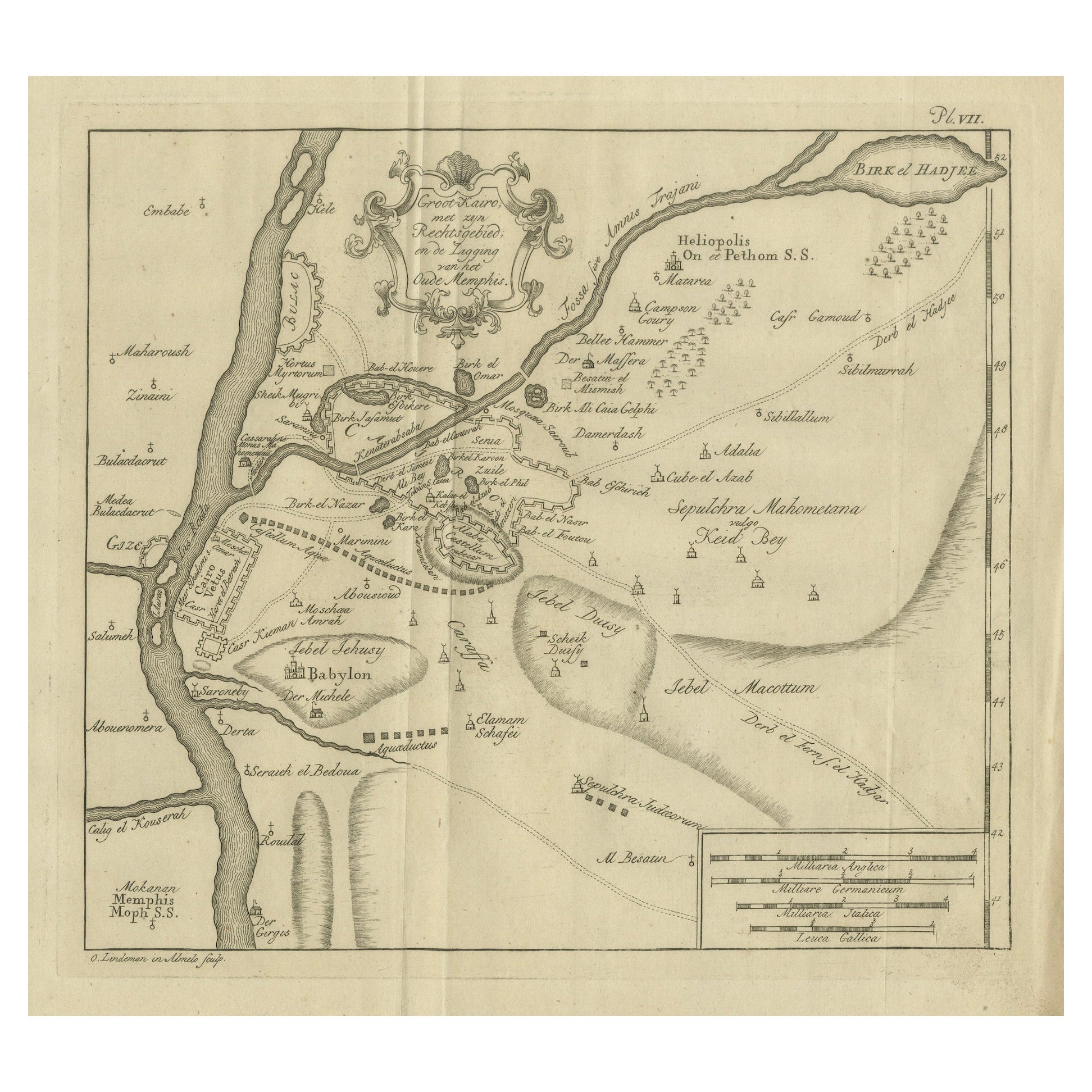
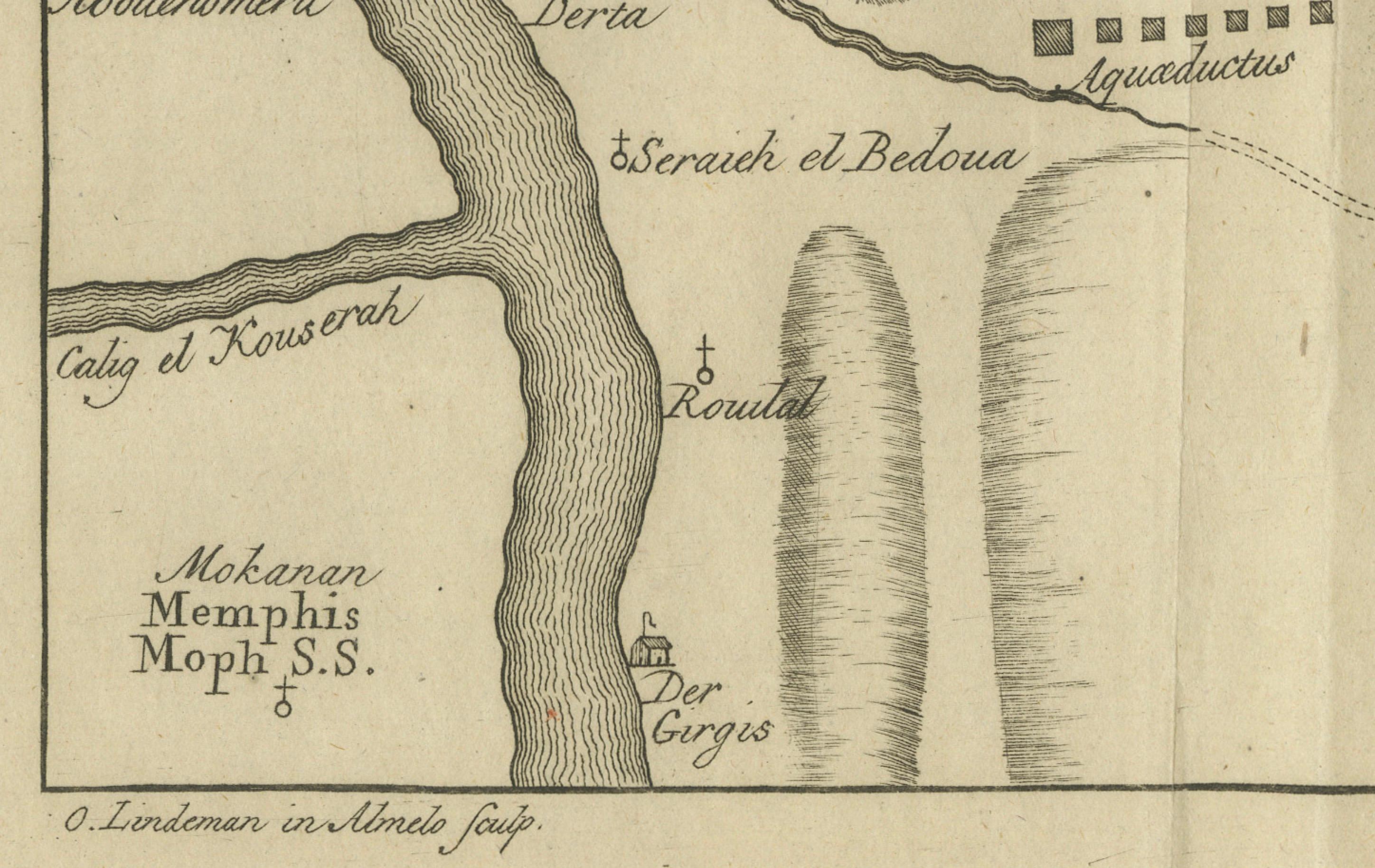
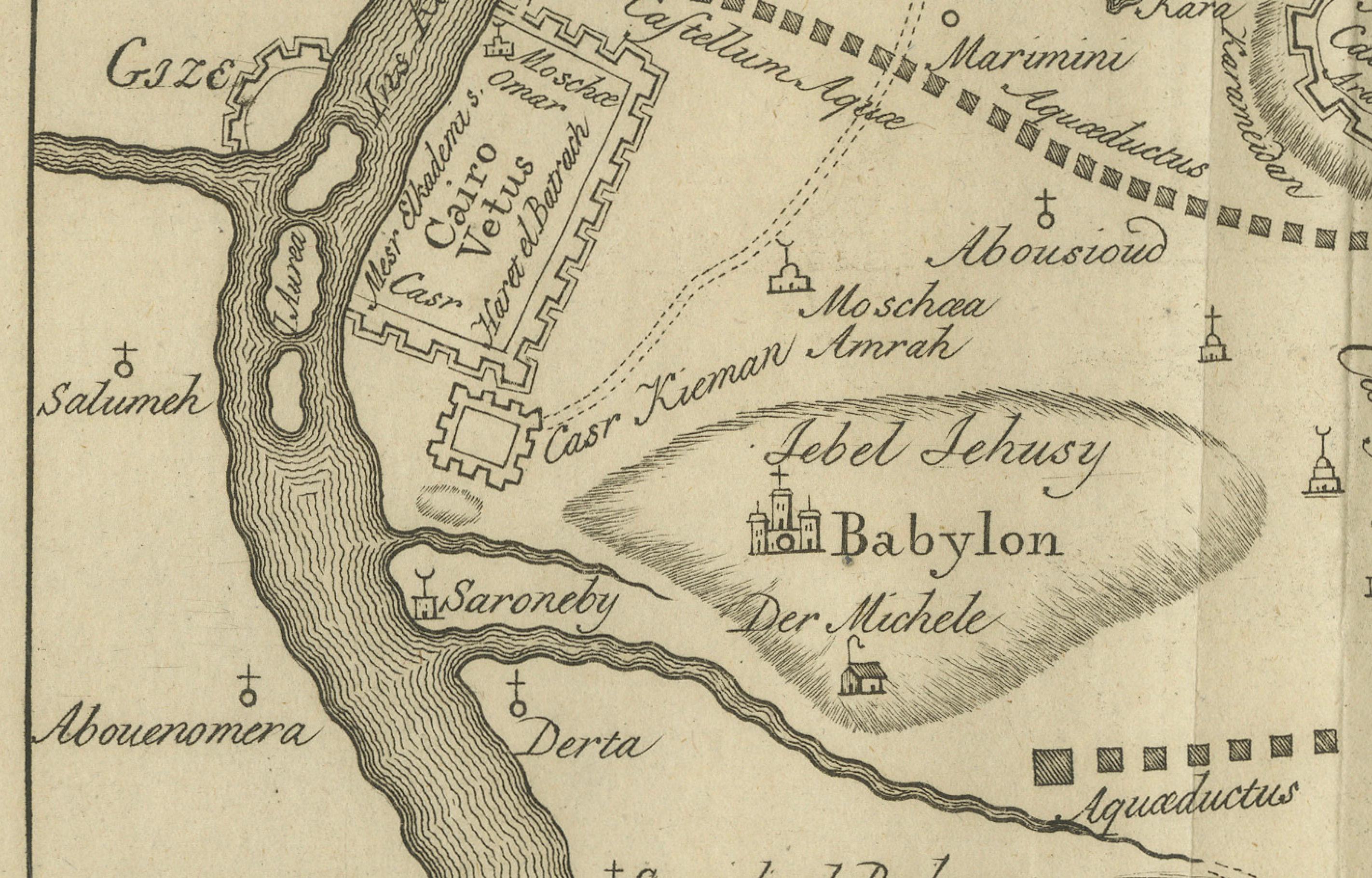
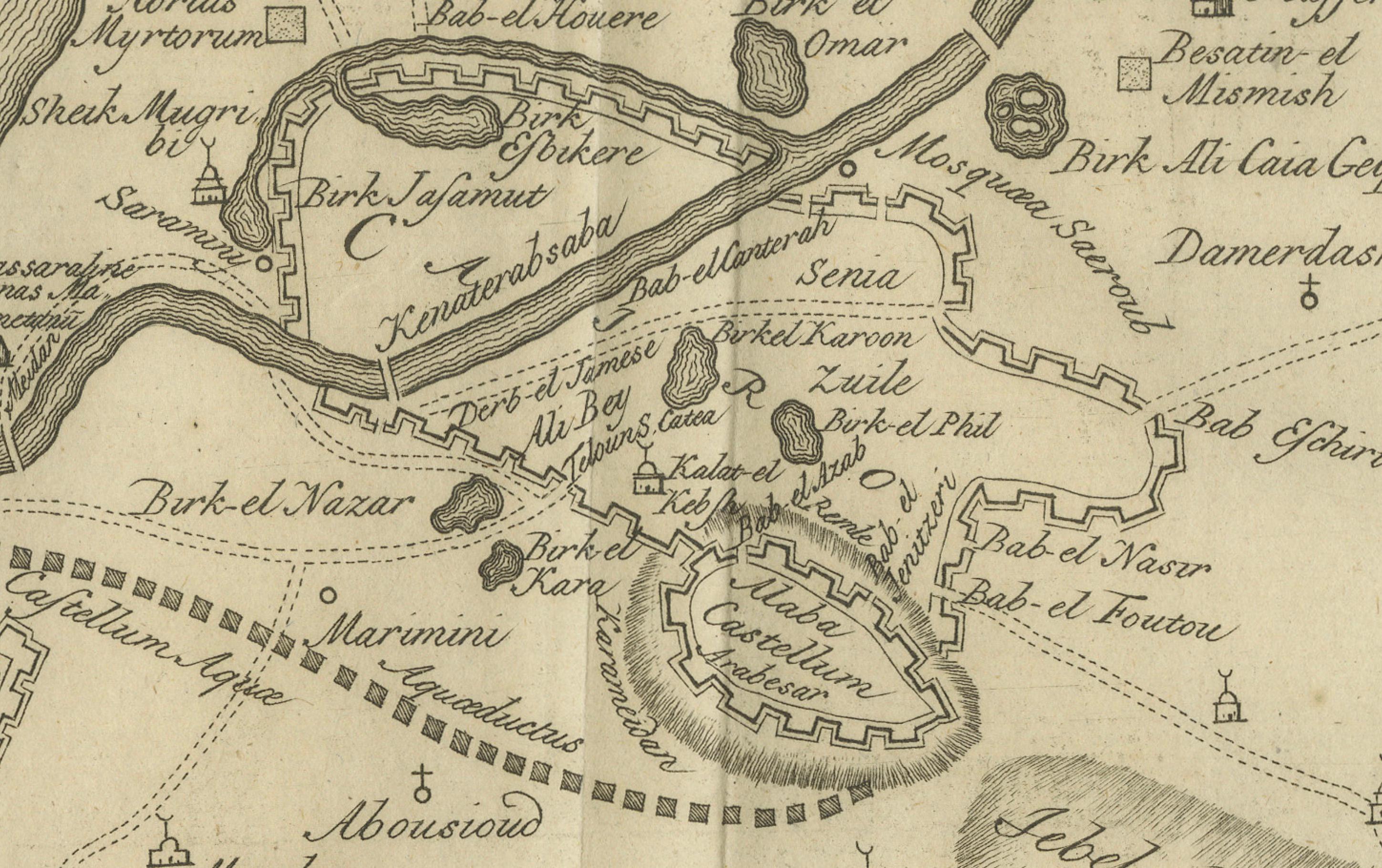
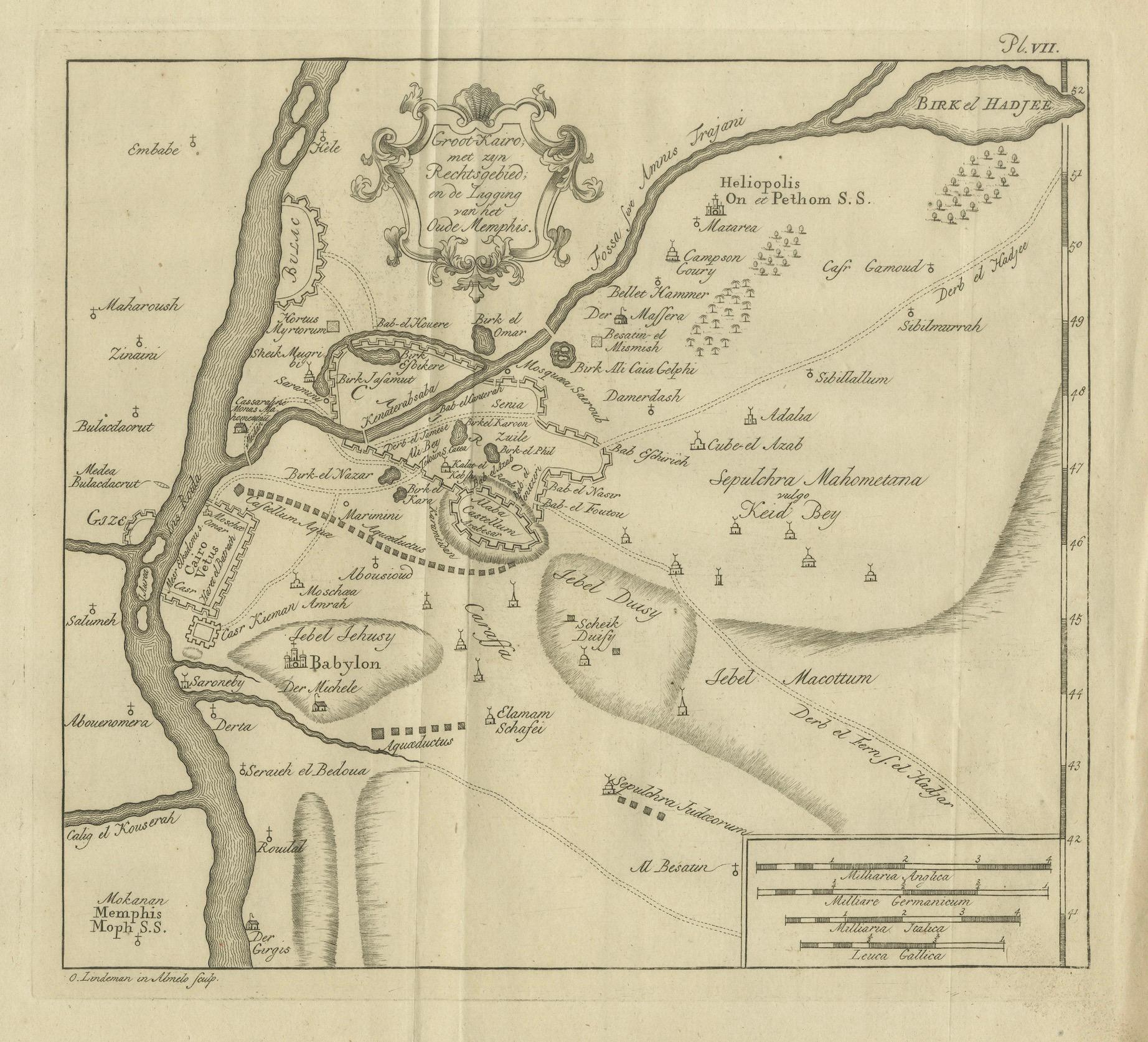
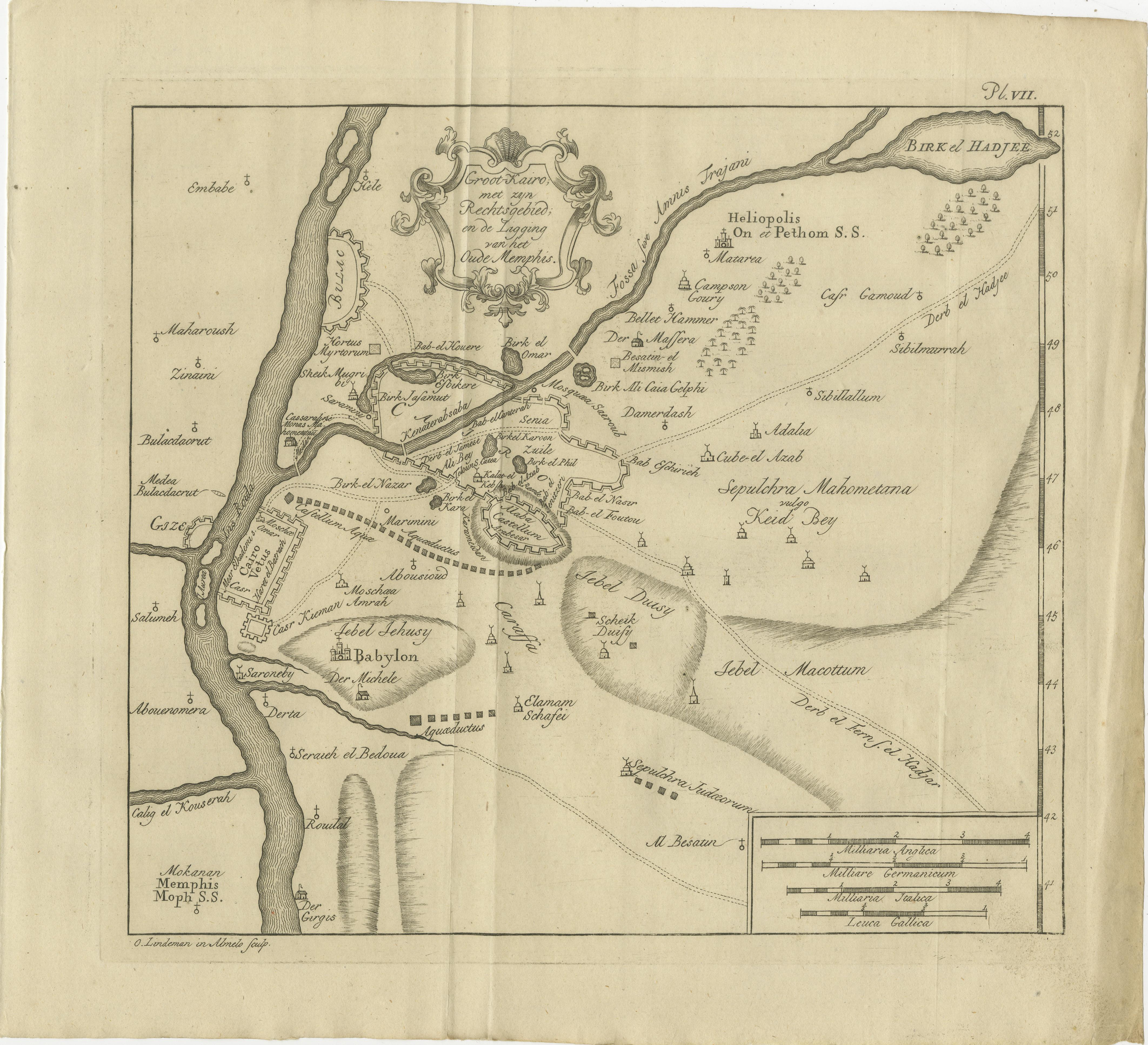
This antique map is an 18th-century Dutch engraving showing the region around ancient Memphis, Egypt, including the cities of Cairo, Babylon (Old Cairo), and Heliopolis. The engraving is plate VII from the rare 1776 Dutch edition of Richard Pococke’s travel account, 'Beschryving van het Oosten' ("Description of the East"), translated and annotated by Ernst Willem Cramerus.
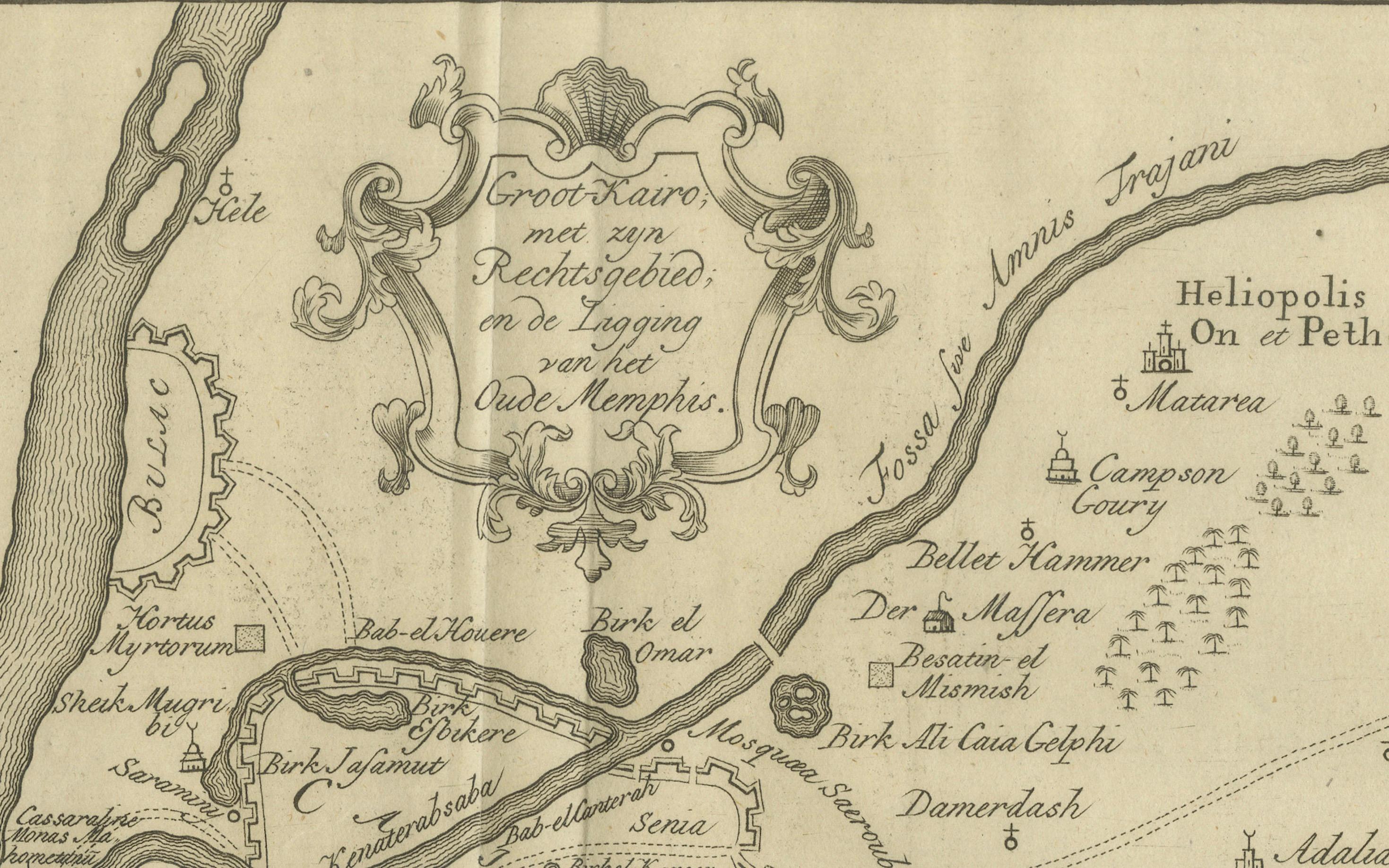
The map bears the decorative title cartouche reading: *"Grondkaart met zyn Rechststelling en de ligging van Oudt Memphis"*, which translates as “Ground map with its justification and the location of ancient Memphis.” It presents an overview of the terrain along the Nile River, including key geographical and historical locations relevant to biblical and classical history. Notable landmarks include:
Babylon (Old Cairo), clearly marked and detailed
Heliopolis and On (biblical cities of religious and astronomical significance)
Birket el Hadji (Pilgrims' Lake)
The Jebel Mokattam and Jebel Druz, hills east of Cairo
Memphis (noted at the lower left, near the modern village of Mit Rahina)
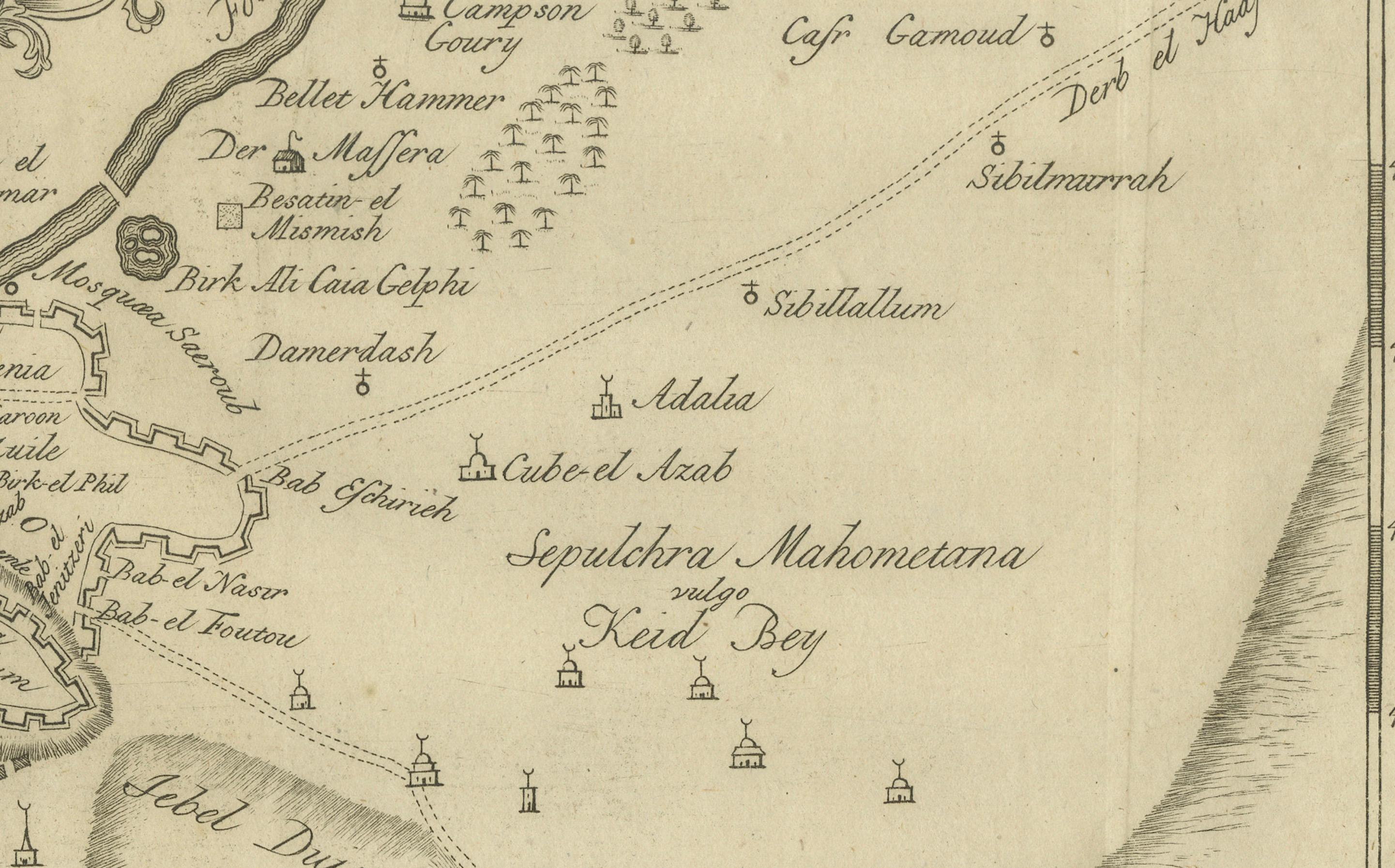
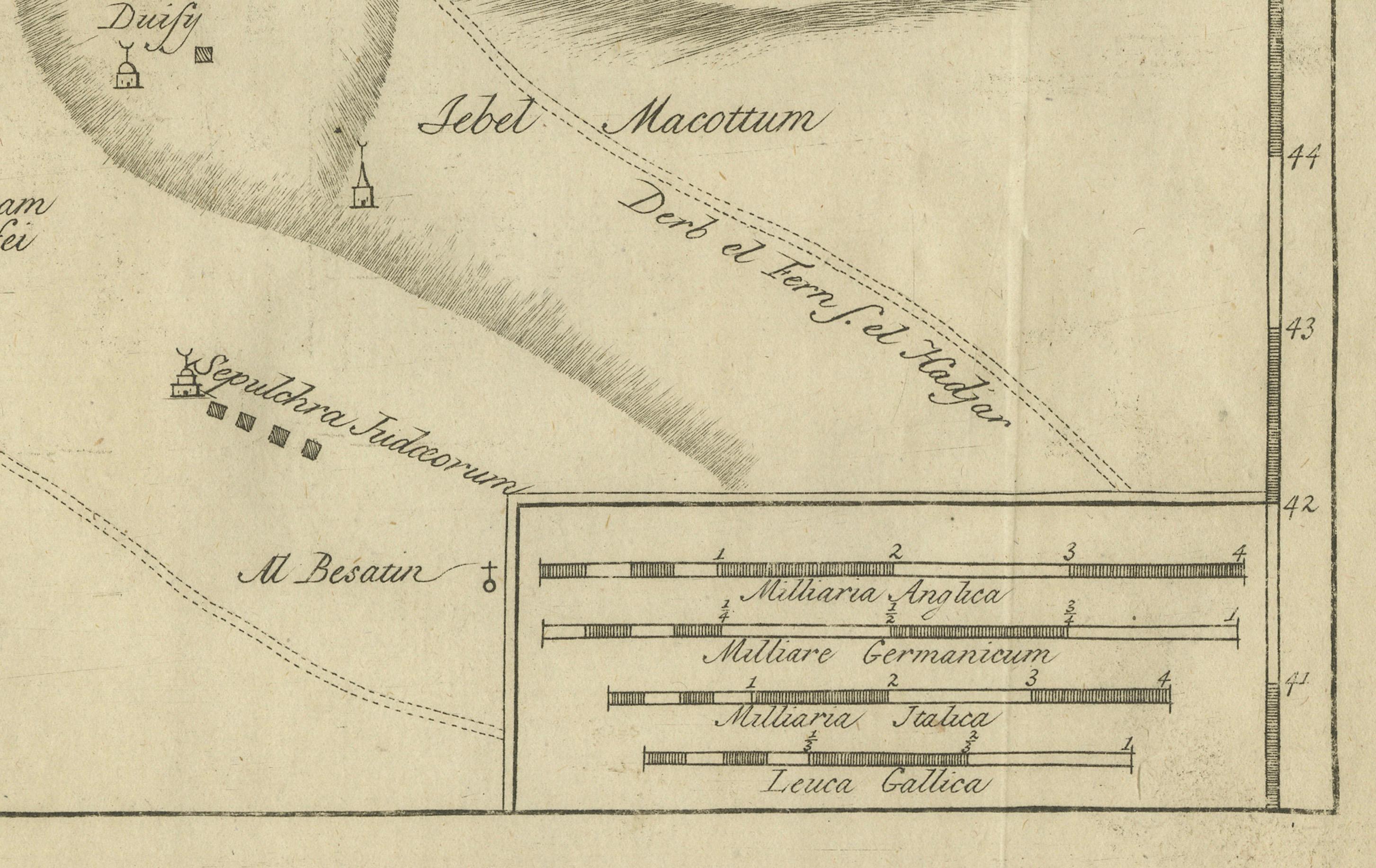
The map is oriented with north toward the right and includes roads, ancient ruins, cultivated fields, pyramids (indicated by triangular symbols), and tombs of Arab nobility (Sepoltura Mahometana). The engraving is finely detailed, and a small legend at the bottom right identifies types of structures, including Christian and Muslim cemeteries, mosques, ruins, and wells.
This piece is a valuable visual resource for understanding the historical geography of Lower Egypt and the Nile valley, particularly as perceived during the Enlightenment by early Western travelers and antiquarians.
Condition report:
Very good condition for its age. Slight age toning, a vertical center fold as issued, and minor edge wear. Paper remains strong and stable. Margins are wide, with the plate mark clearly visible.
Framing tips:
This map would be ideally framed with a soft off-white mat and a thin black or walnut-brown wooden frame to enhance its antique elegance. A non-reflective glass will help preserve its fine engraved detail.
Technique: Engraving
Maker: Richard Pococke, London (Dutch edition published 1776)