Antique Map of Friesland after the Floods of the 13th Century, 1718
€ 355
Original antique · The actual sheet photographed · Certificate of authenticity on request · Sold unframed · Worldwide shipping from € 15 (rates)
Date
1718
Mapmaker / artist
F. Halma, Leeuwarden, 1718
Technique
Engraved
Sheet size
55 × 66 cm (21.7 × 26.0 in)
Reference
BG-04716-26
What the condition grades mean
Excellent
Bright and clean, with no faults worth mentioning.
Very good
Only light signs of age, such as faint toning.
Good
Normal signs of age for a sheet of this period: toning, some foxing, small marks or neat old repairs.
Fair
Clear faults such as staining, tears or repairs, priced to match.
Every fault we see is written in the condition note, and the whole sheet is shown uncropped in the photos.
Condition
Very good for age. Light toning and some spotting to margins, central fold as issued, and minor handling marks. Plate impression strong, colors bright and well-preserved.
About this sheet
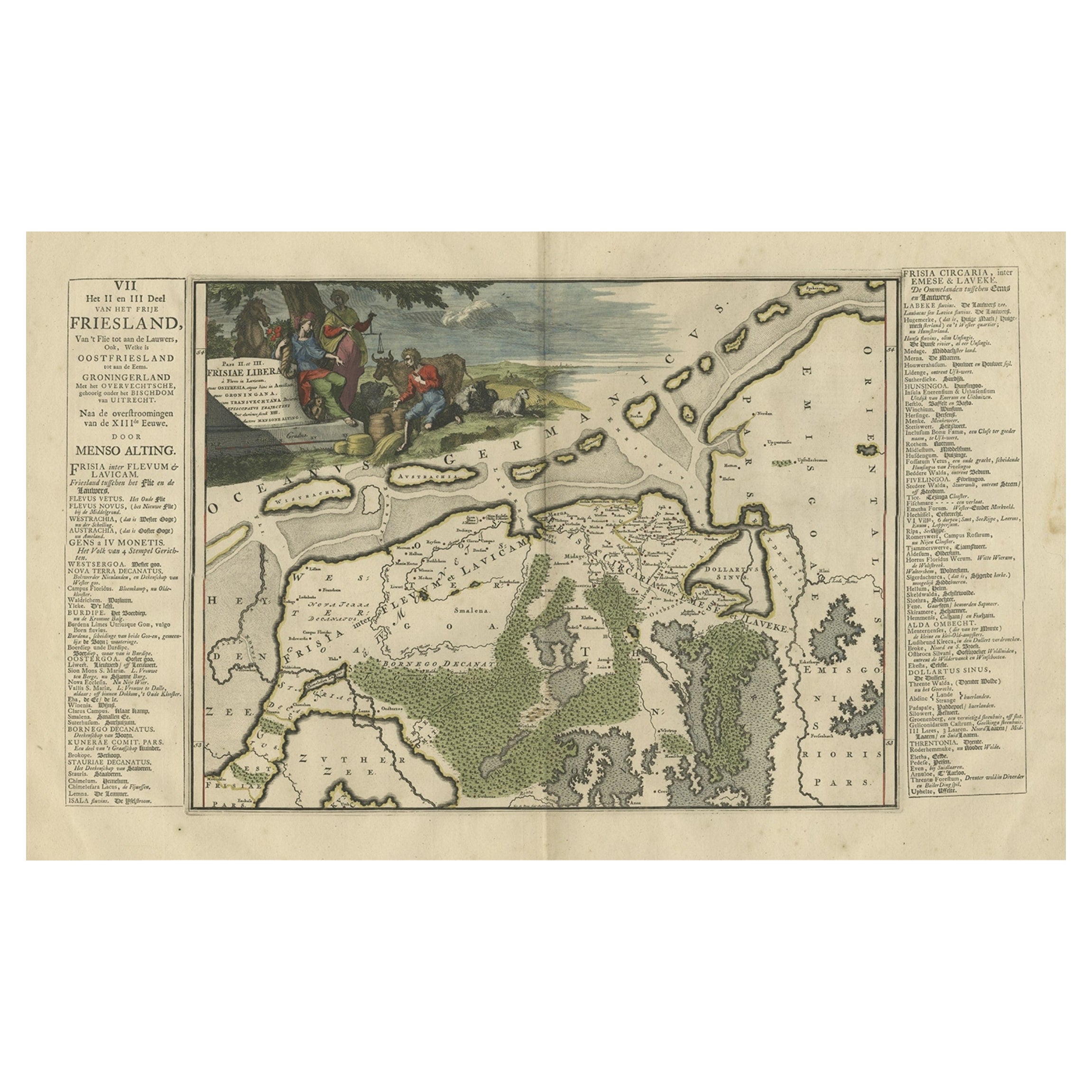
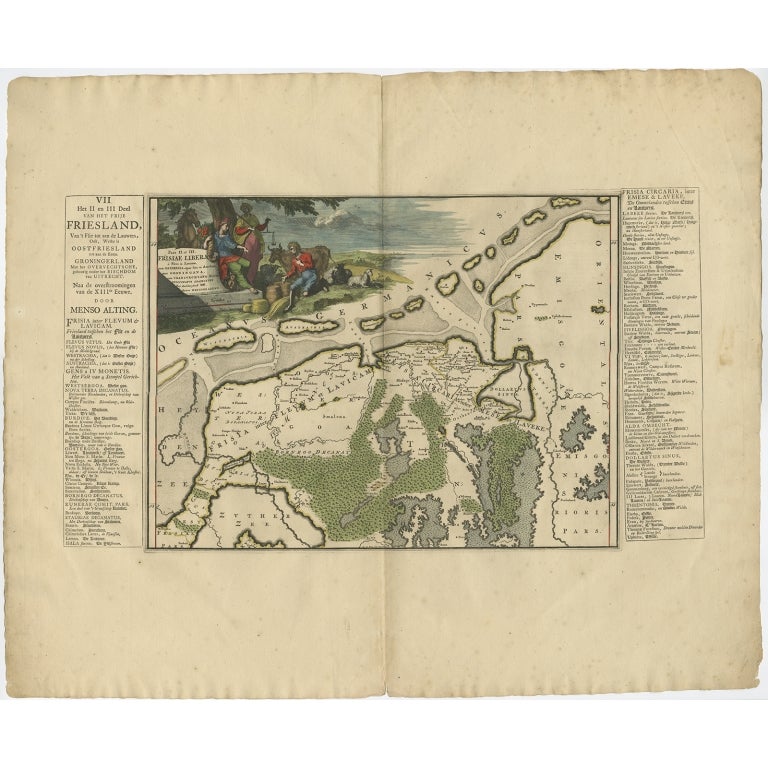
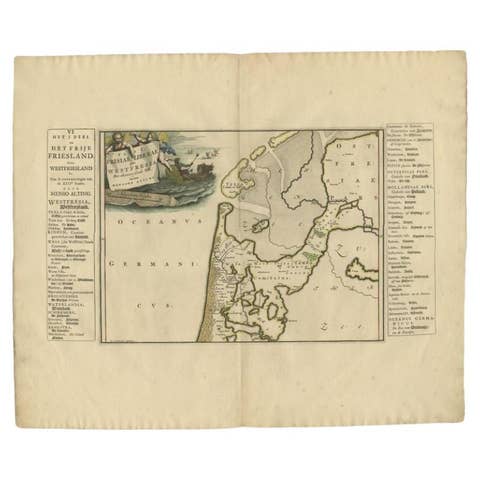
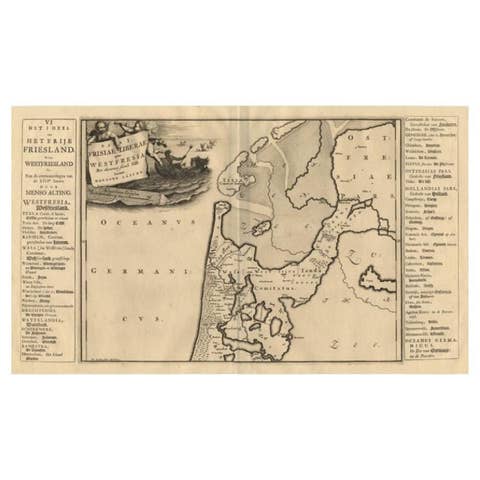
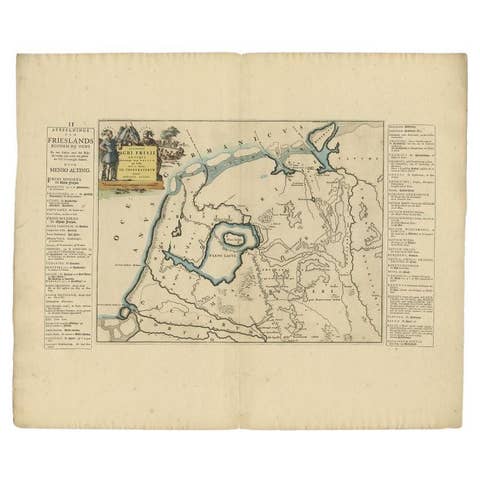
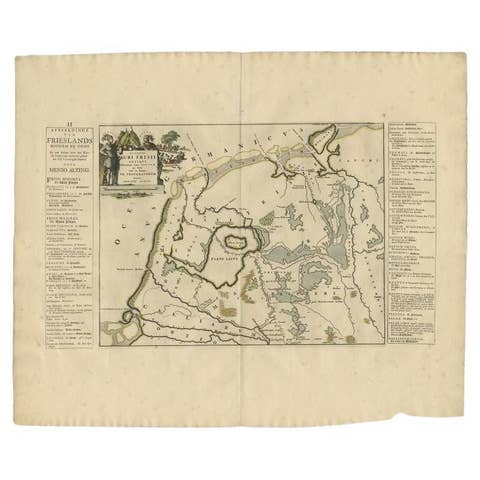
Antique Map of Friesland – “Pars II et III Frisiae Libera” by F. Halma, 1718
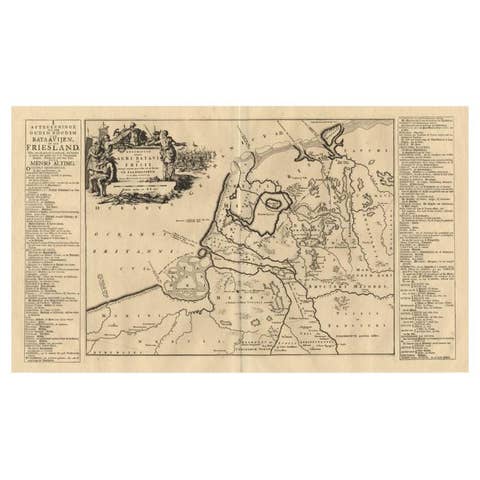
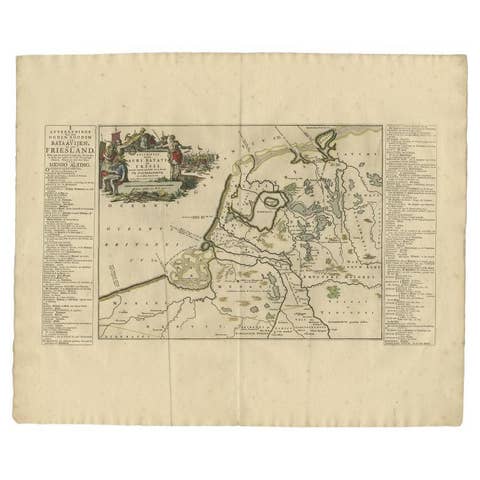
This beautifully hand-colored map titled “Pars II et III Frisiae Libera” presents a detailed depiction of Friesland in the Netherlands, showing the coastal regions and islands after the great floods of the 13th century that reshaped much of the Frisian landscape. The map originates from Bernardus Schotanus à Sterringa’s celebrated atlas Uitbeelding van de Heerlijkheid van Friesland, published in Leeuwarden by François Halma in 1718. This atlas is widely regarded as the finest cartographic work ever produced on Friesland, combining geographical precision with rich historical and heraldic embellishments.
The central panel displays Friesland’s northern coastline, the Wadden Sea islands, and inland waterways, with settlements, dikes, and poldered areas meticulously engraved. The map is flanked by extensive text columns in Dutch and Latin, listing towns, villages, and notable features. In the upper left corner, an elaborate decorative cartouche features allegorical figures in vibrant attire, a cow, and a rural backdrop, symbolizing Friesland’s agricultural prosperity and maritime connections.
The work captures the transformation of Friesland’s geography after centuries of flooding, particularly the catastrophic 13th-century storm surges, which permanently altered its coastline and created new tidal inlets and islands. Schotanus à Sterringa’s maps were not only functional but also served as proud representations of regional identity, produced for both local government and wealthy patrons.
Condition: Very good for age. Light toning and some spotting to margins, central fold as issued, and minor handling marks. Plate impression strong, colors bright and well-preserved.
Framing tips: Best presented in a wide, dark walnut or oak frame with a natural linen mat. A gold fillet can draw attention to the rich hand-coloring of the cartouche and map borders.