About this sheet
Antique German Botanical Atlas Plates, Tafel 17–18, Lilies & Irises, 1885
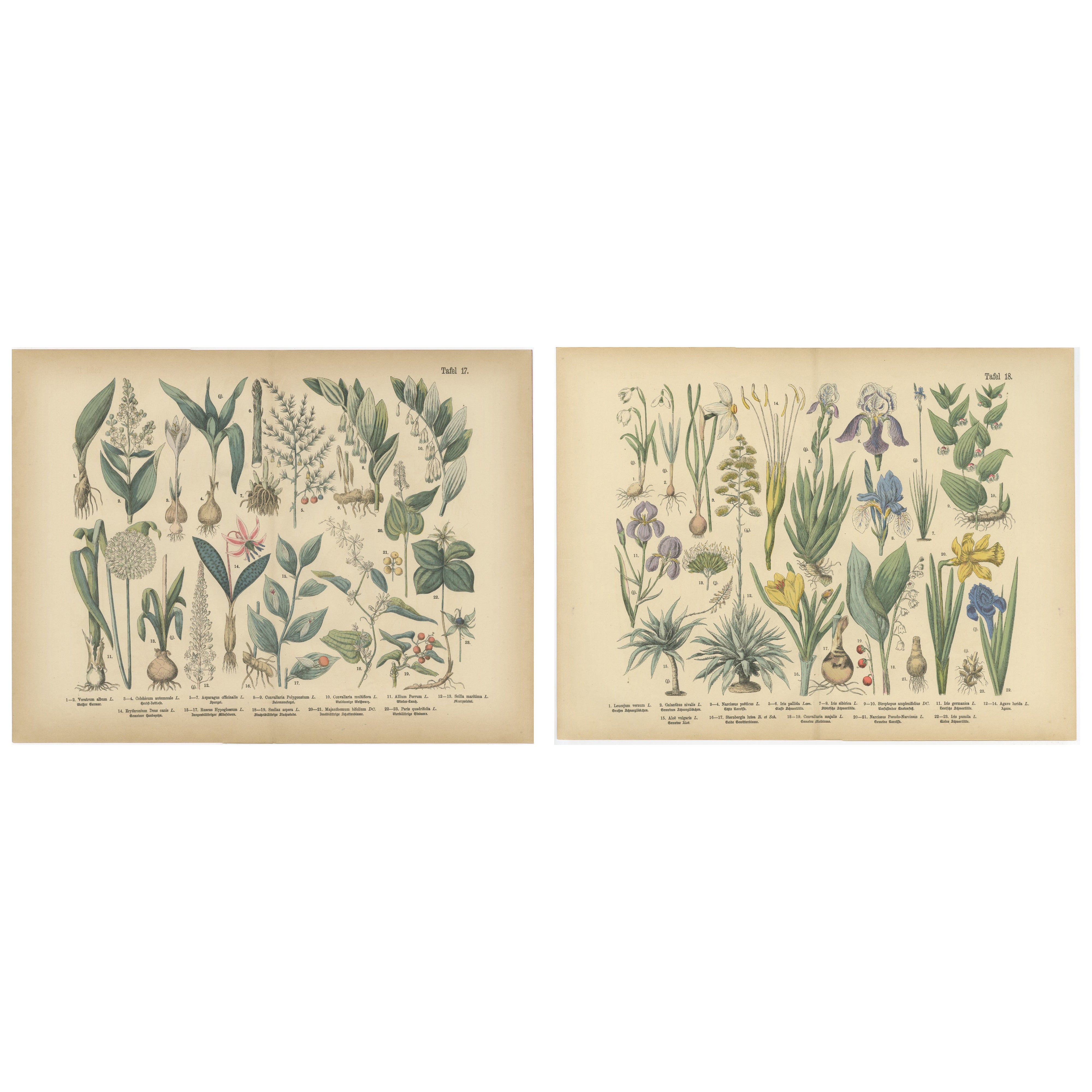
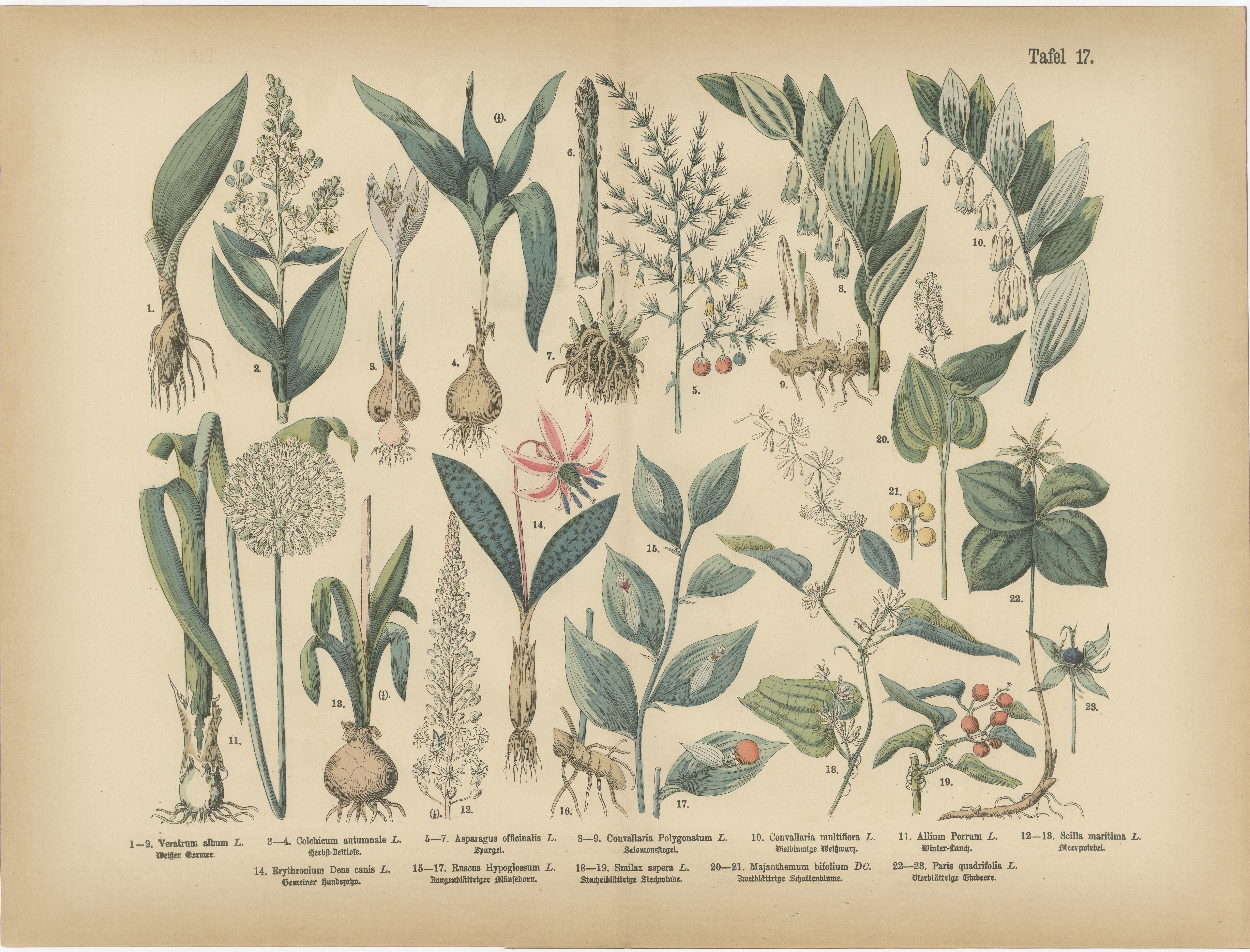
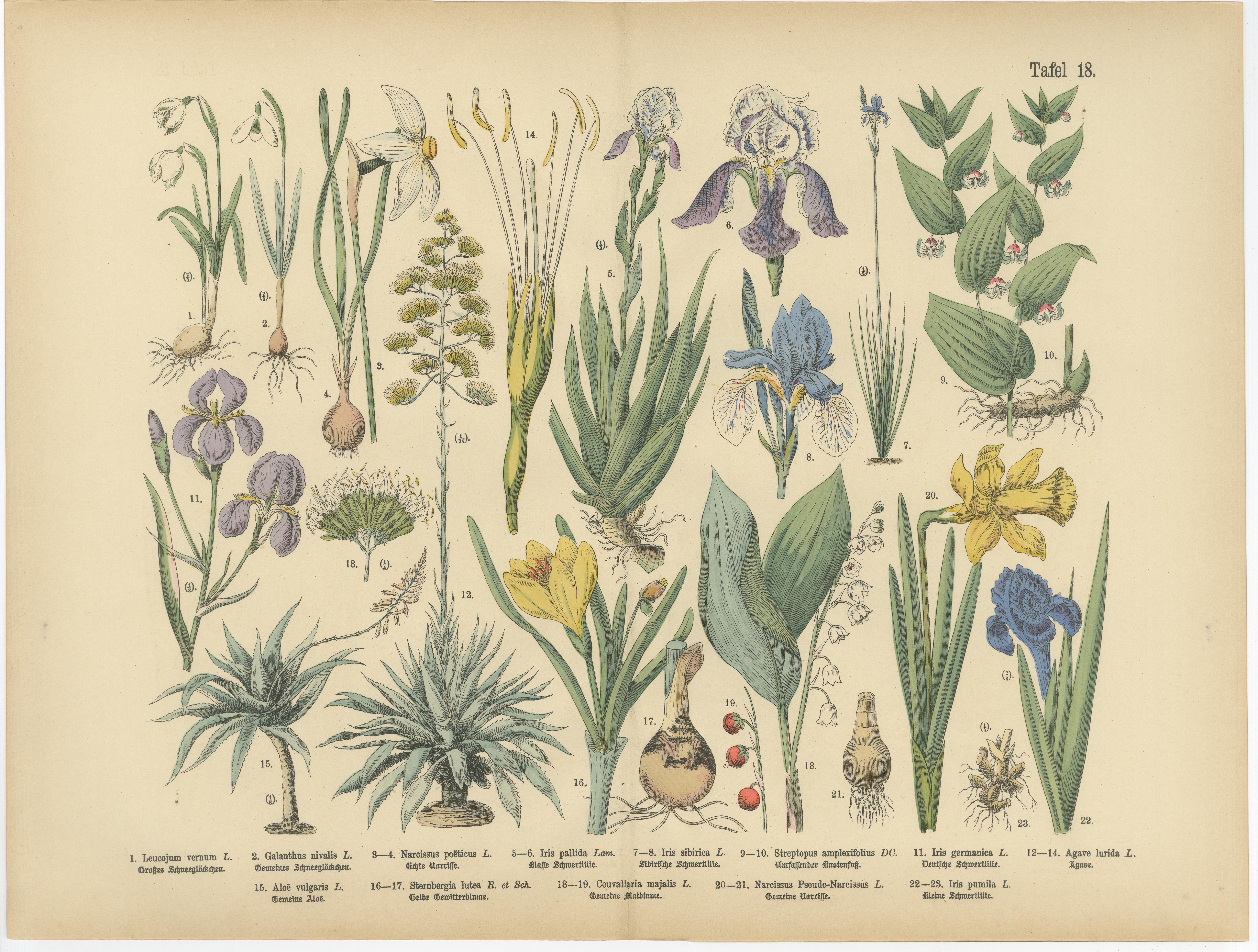
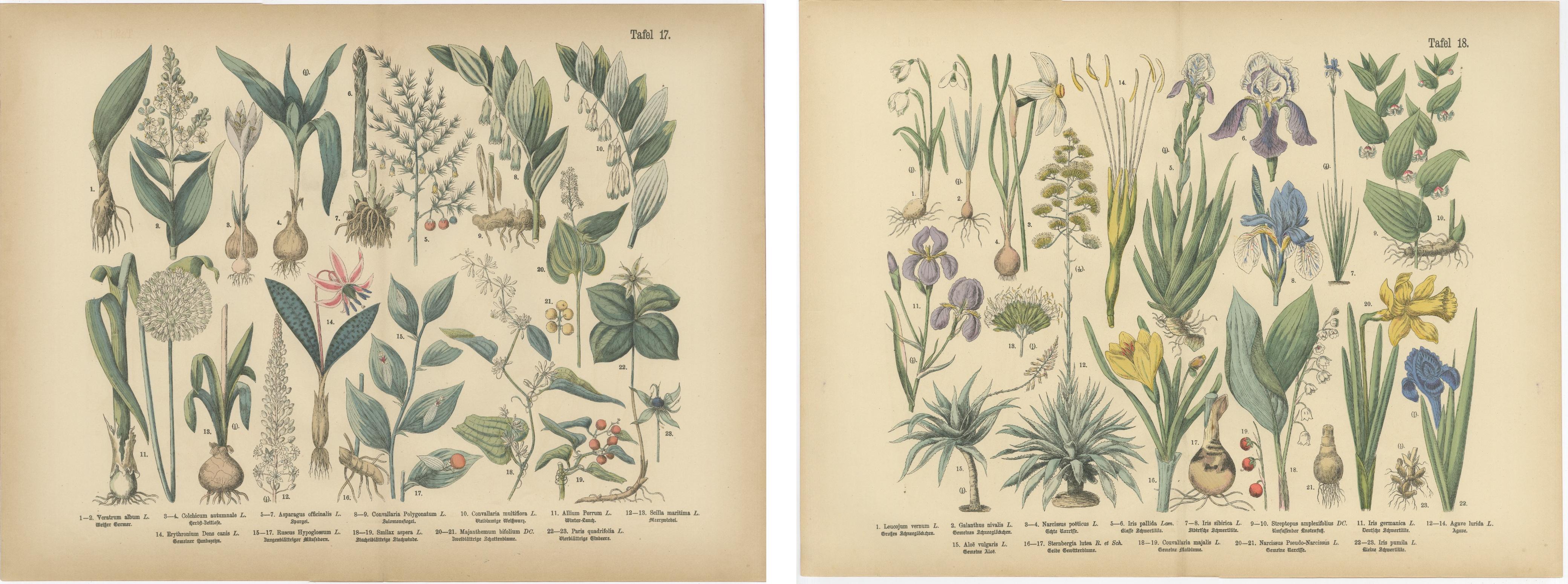
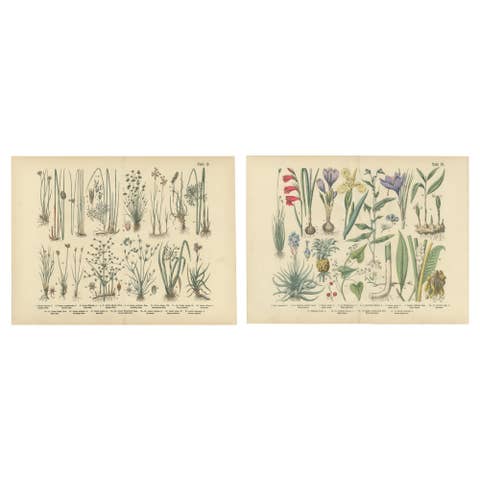
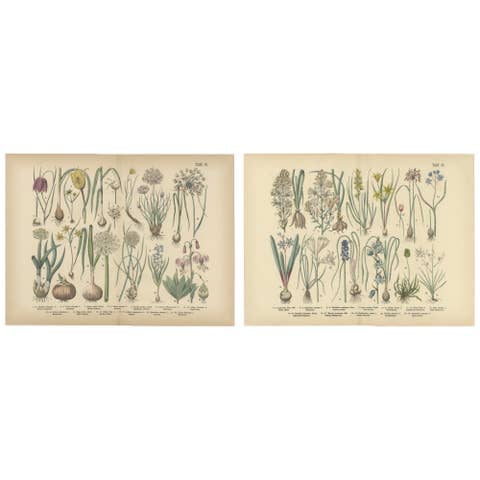
A refined pair of original double-page botanical plates (Tafel 17 and Tafel 18) from M. Fünfstück’s important late 19th-century atlas Naturgeschichte des Pflanzenreichs, published in Stuttgart circa 1885. These plates originate from the fifth edition of this richly illustrated German botanical work, celebrated for combining scientific clarity with decorative elegance.
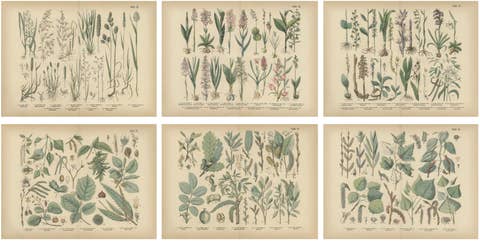
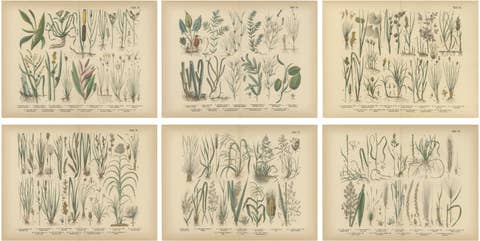
Tafel 17 presents a carefully arranged study of woodland and garden species including Convallaria, Asparagus, Allium, Scilla, Paris quadrifolia, and other herbaceous plants. The composition balances larger specimen renderings with detailed root structures and floral studies, creating visual rhythm across the sheet. Tafel 18 continues the theme with classic ornamental species such as Iris (pallida and sibirica), Narcissus, Galanthus, Leucojum, Convallaria majalis, and Agave. The irises and daffodils in particular introduce vibrant blue and yellow tones that contrast beautifully with the muted greens and natural earth palette.
These are original hand-coloured wood engravings from the year of publication, not later reproductions. The double-page format enhances their decorative impact and makes them especially suitable for framing as a symmetrical pair or integrating into a larger botanical wall installation.
German botanical atlases of this period were designed for both instruction and aesthetic appreciation, and today they appeal to collectors of natural history prints, interior designers seeking botanical themes, and those curating Scandinavian, classical, or garden-inspired interiors.
The prints are offered unframed, enabling custom framing to personal or interior preferences. Any framed images shown are for visual inspiration only.
Condition report:
Very good overall condition with light, even age-toning consistent with late 19th-century paper. Minor marginal handling wear typical of bound plates. Colours remain clear and well preserved. No significant foxing visible.
Framing tips:
A generous warm ivory mat (approximately 6–8 cm) enhances the antique paper tone and protects the plate edges. Dark walnut or matte black frames provide elegant contrast, particularly highlighting the blues of the irises and yellows of the narcissus. These plates pair naturally due to similar layout and botanical theme.
Technique: Hand-colored wood engraving
Maker: M. Fünfstück, Stuttgart, circa 1885