About this sheet
Antique Fossil Prints – Trilobites, Crinoids, Fossil Fish & Coal Measures, c.1880
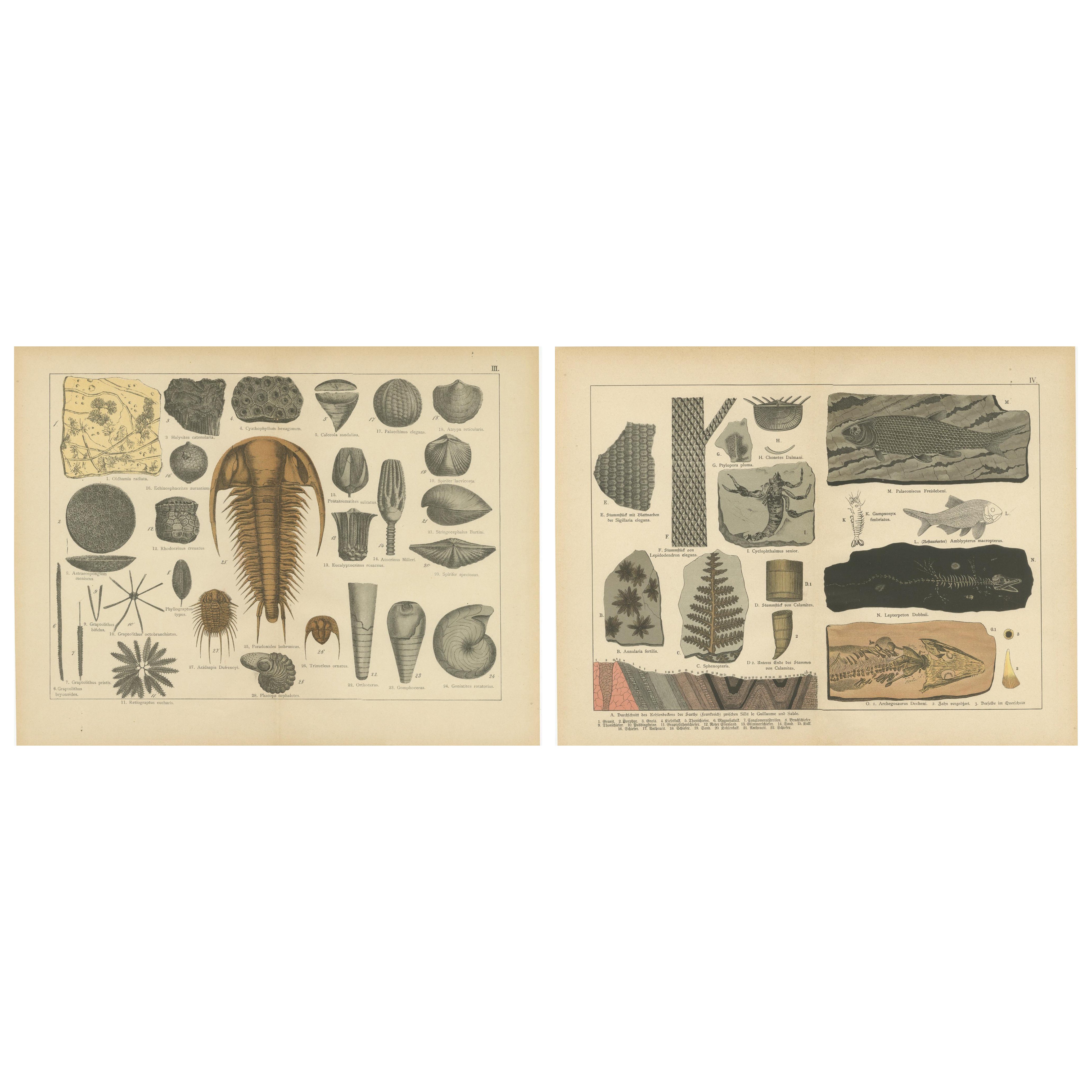
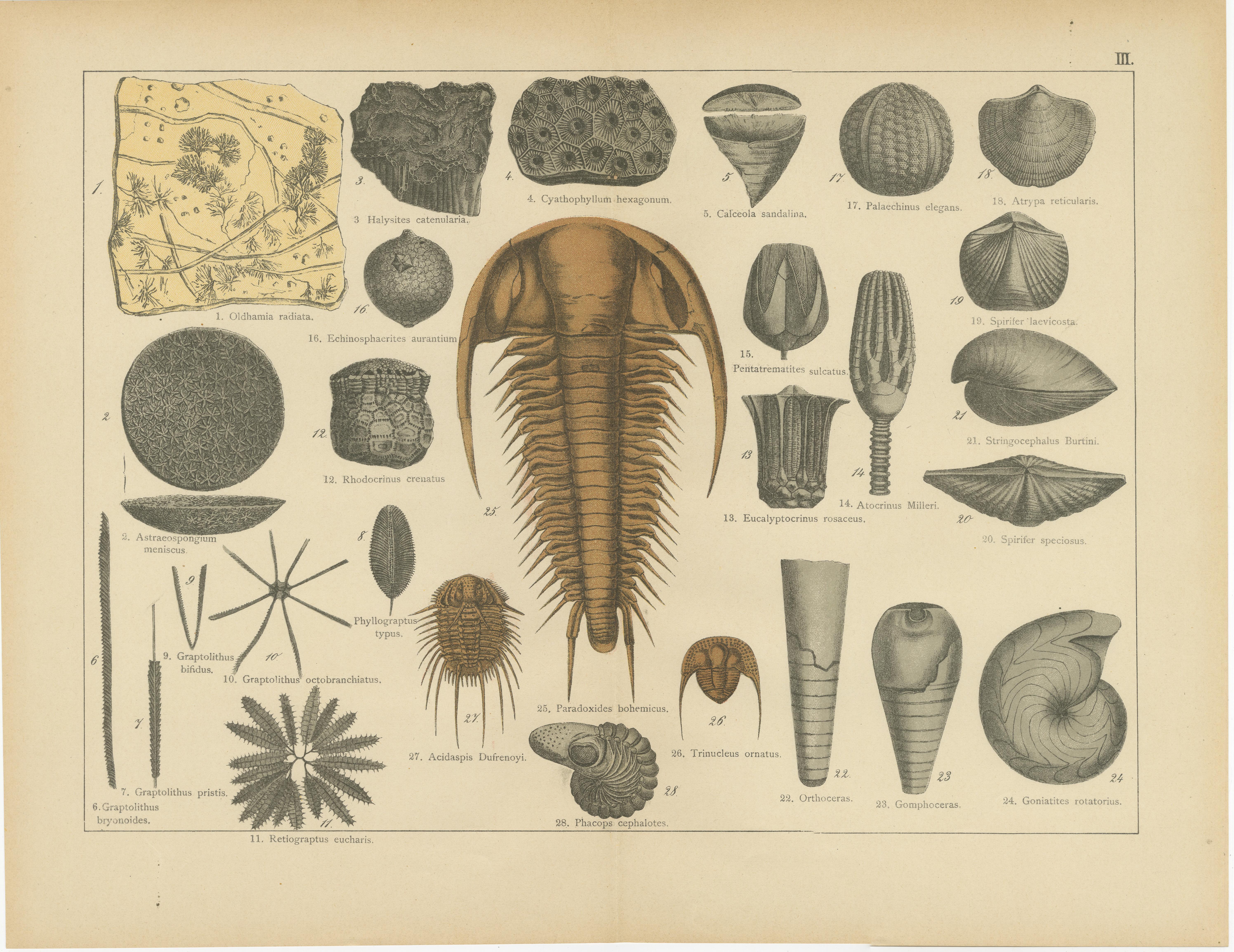
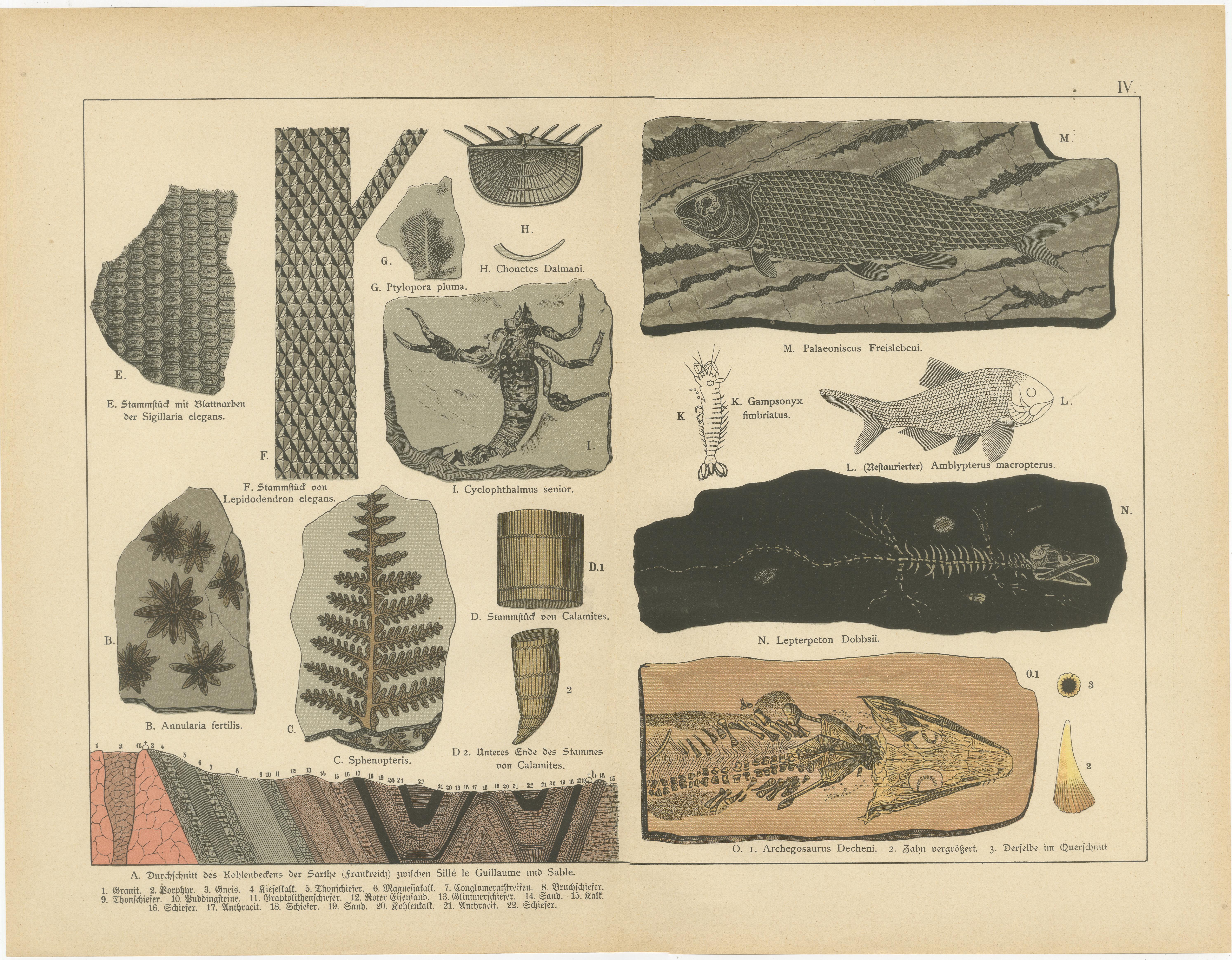
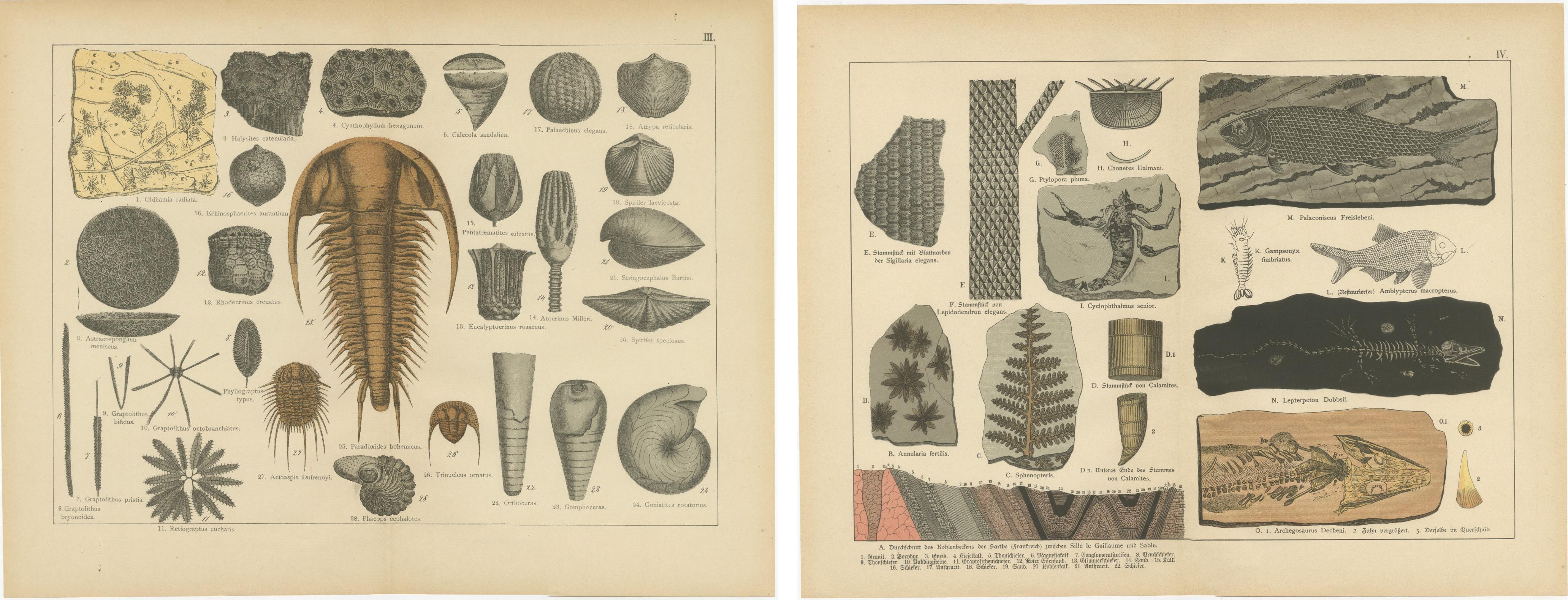
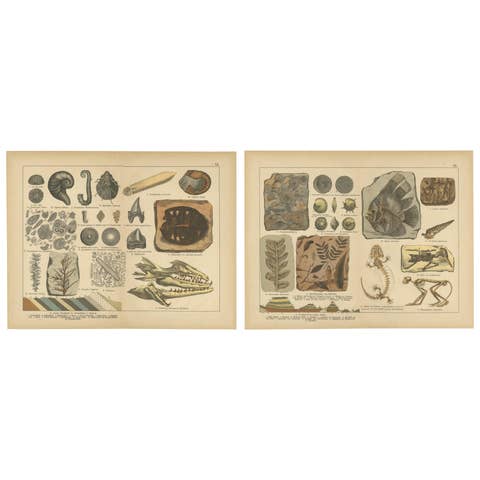
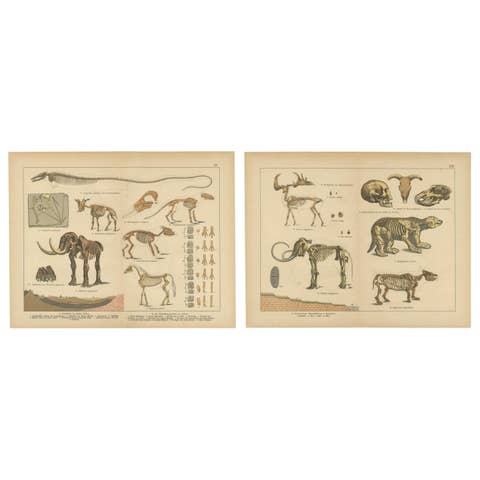
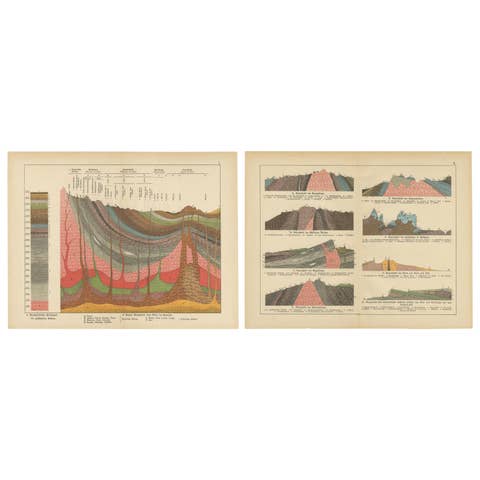
This pair of original lithographs originates from Schubert’s Naturgeschichte, a richly illustrated 19th-century natural history encyclopedia. Together, the plates provide a fascinating overview of paleontological discoveries, depicting both marine and terrestrial fossils with remarkable detail.
Plate III presents an array of Paleozoic invertebrates, including fossil corals (Halysites, Cyathophyllum), sponges, and graptolites; crinoids such as Rhodocrinus, Eucalyptocrinus, and Actinocrinus; numerous brachiopods (Atrypa, Spirifer, Stringocephalus); and cephalopods (Orthoceras, Goniatites, Gomphoceras). A striking series of trilobites is shown, including Paradoxides bohemicus, Acidaspis Dufrenoyi, and Phacops ophthaltes, with a large trilobite as the central focus.
Plate IV widens the scope to include fossil plants and vertebrates. Among the specimens are Carboniferous plants including Sigillaria, Lepidodendron, Sphenopteris, and Calamites; fossil fish such as Palaeoniscus freislebeni and Amblypterus macropterus; and the amphibian Archegosaurus Decheni, an early temnospondyl, depicted with skeleton and enlarged tooth cross-section. Other notable fossils include Cyclophthalmus senior, Leptopeton dobbsii, and Gamponyx fimbriatus. At the bottom of the plate, a geological cross-section of the Saar coal measures shows the fossil-bearing strata in color.
These plates represent the 19th-century ambition to visualize the prehistoric past, combining scientific accuracy with visual clarity. They are both educational and decorative, appealing to collectors of paleontology, geology, and natural history.
Condition report:
Both plates are in very good condition with crisp impressions and minimal toning. Edges show light age wear but no major tears or losses. Coloring of the geological section in Plate IV remains strong and clear.
Framing tips:
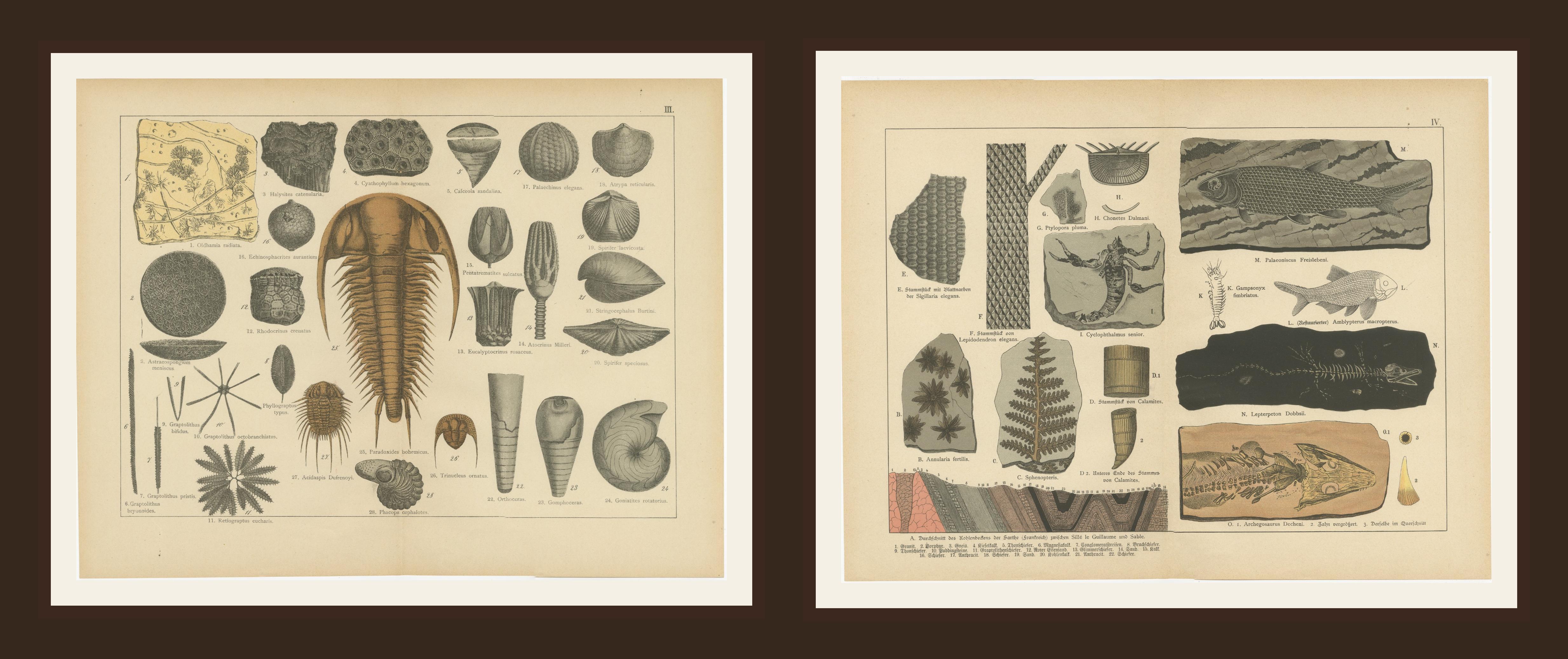
As a pair, these plates work beautifully when framed side by side in matching dark wood or black frames with ivory or cream mats. A double mat with a stone-grey outer border can emphasize the fossil detail. For maximum effect, they may be displayed in a grid arrangement along with other natural history plates.
Technique: Lithograph (partially hand-colored)
Maker: Schubert, Germany, c.1880