About this sheet
Antique Fossil Chromolithographs – Marine Life, Plants & Vertebrates, c.1880
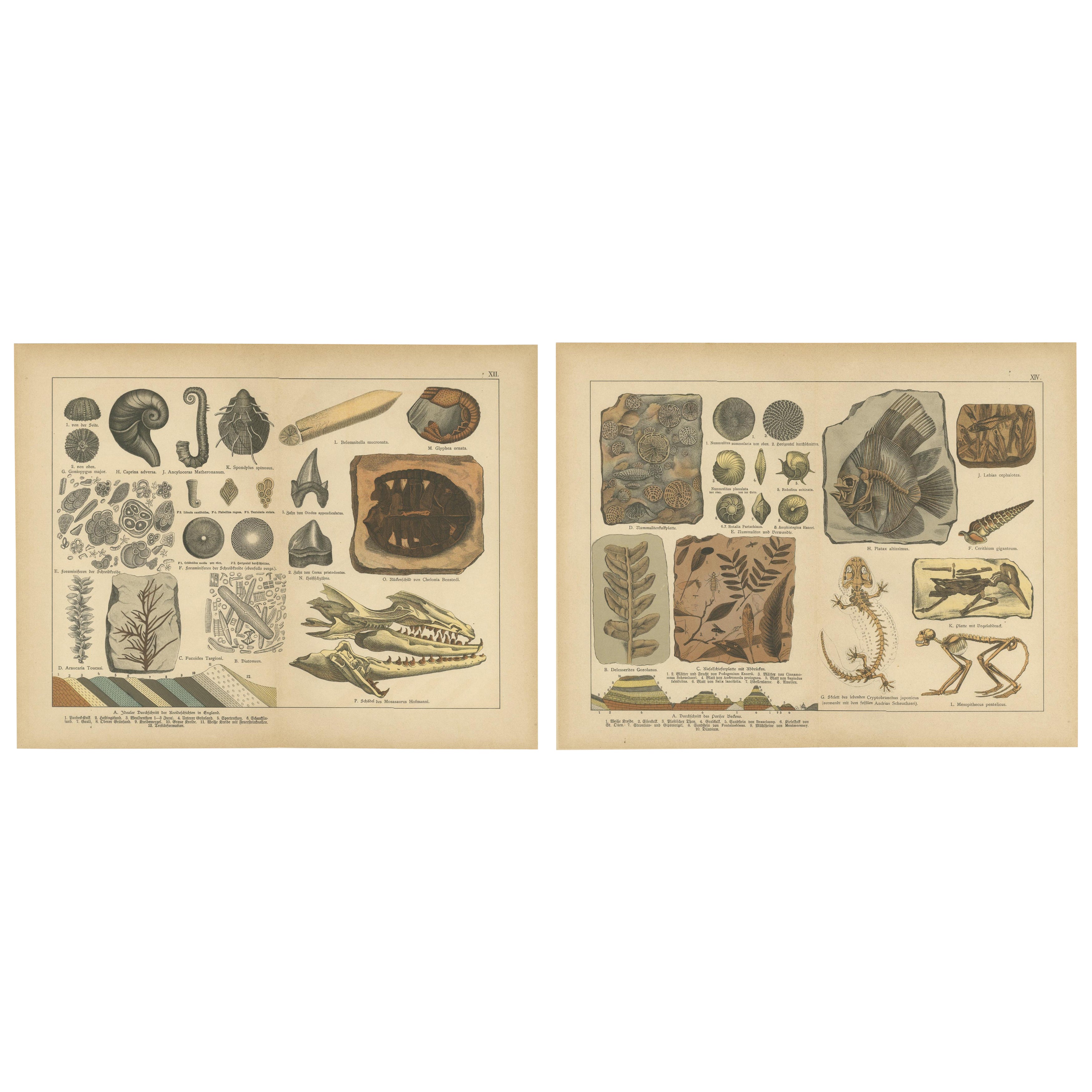
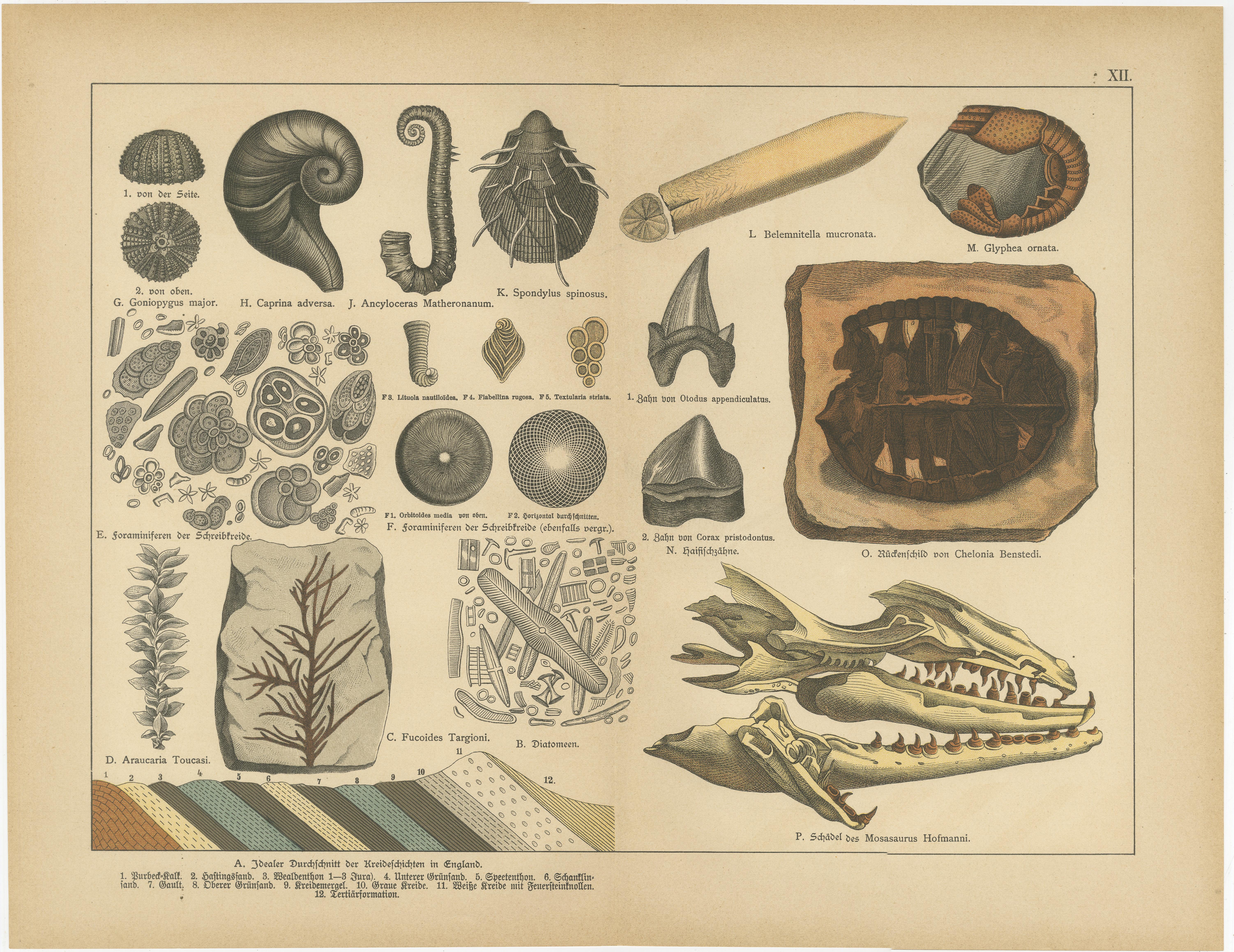
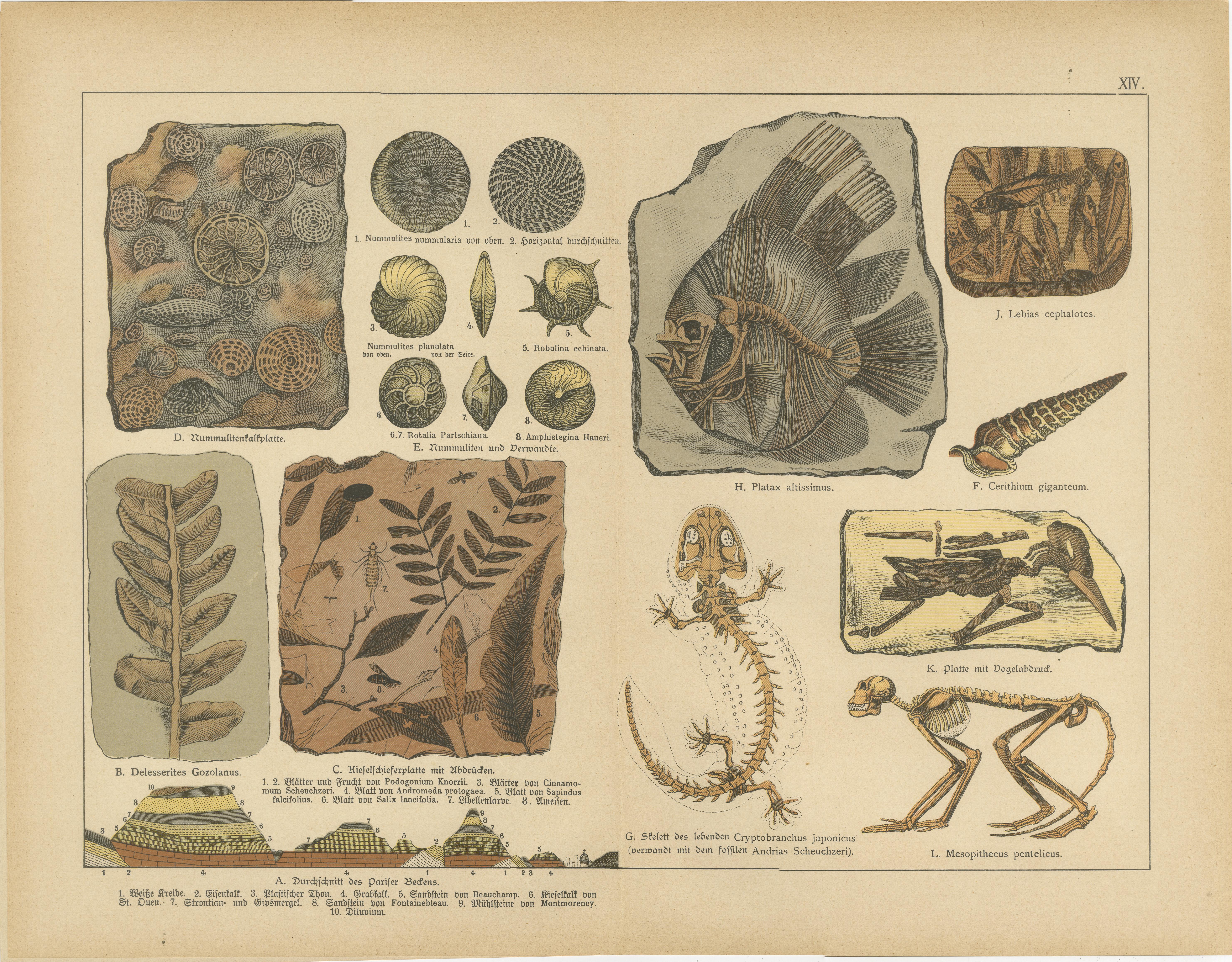
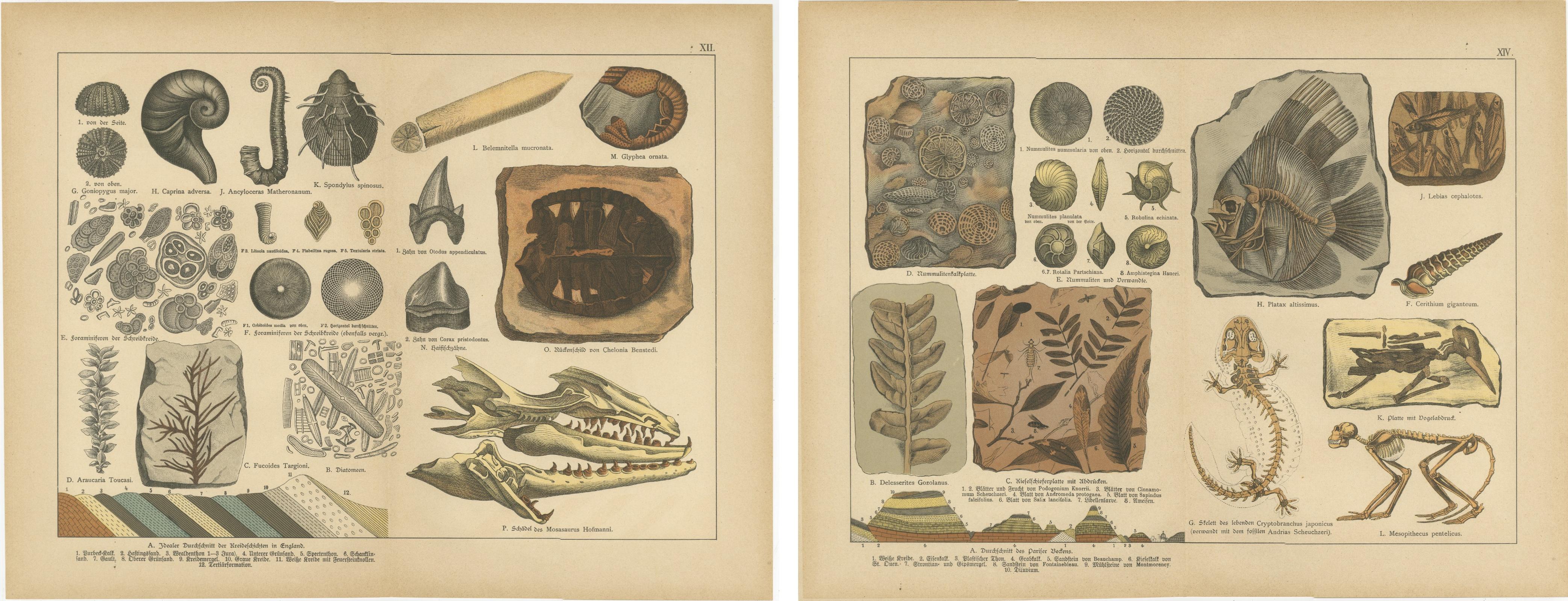
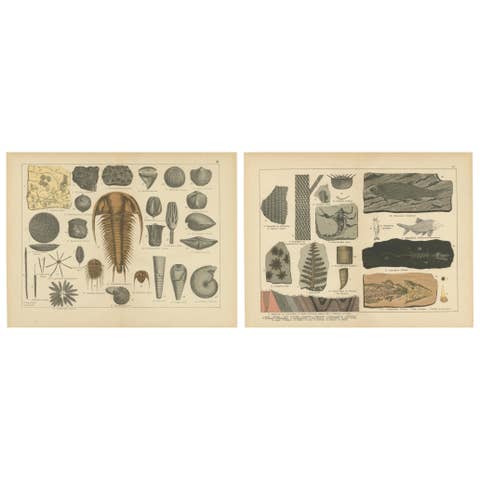
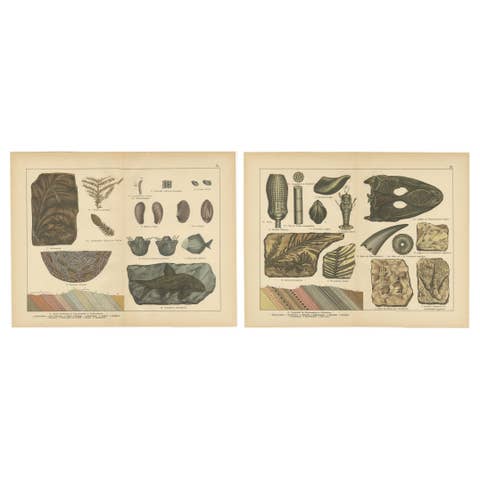
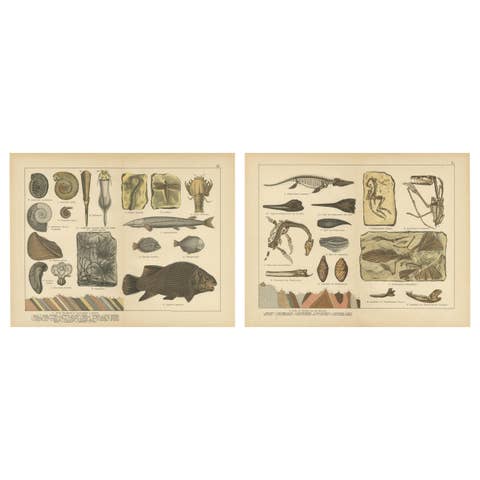
This pair of antique chromolithographs presents a detailed visual survey of fossil specimens from the Cretaceous and Tertiary periods, rendered with scientific accuracy and artistic clarity. Produced in Germany around 1880, they were intended as teaching aids and decorative natural history plates, capturing the fascination of a century when paleontology was rapidly reshaping knowledge of Earth’s deep past.
The first plate (Plate XII) focuses on Cretaceous fossils. It includes ammonites (*Caprina adversa*, *Ancyloceras Matheronianum*), bivalves such as *Spondylus spinosus*, *Goniopygus major*, and *Gryphaea ornata*, as well as belemnites. The plate also illustrates microscopic foraminifera, fossil plants such as *Fucodes Targionii* and *Araucaria Toucasii*, and striking vertebrate remains: the jaws of *Mosasaurus Hoffmanni*, a turtle carapace (*Chelonia Benstedi*), and fossil teeth from *Corax pristodontus* and *Odontaspis appendiculatus*. A stratigraphic diagram below shows the Cretaceous formations of England.
The second plate (Plate XIV) transitions to Tertiary and more recent fossil forms. Fossilized leaves (*Delesserites* and *Kleidothrips*), nummulites and foraminifera, and a slab with fossil insects are carefully illustrated. A remarkable fossil fish, *Platax altissimus*, and a slab with multiple fish (*Lebias cephalotes*) reflect the extraordinary preservation of Eocene deposits. Also included are a fossil sea snail (*Cerithium giganteum*), reptilian remains, and the skeleton of *Mesopithecus pentelicus*, an extinct primate. At the bottom, a geologic cross-section of Paris basin strata provides context for the deposits.
Together, the two plates offer a sweeping overview of marine, terrestrial, and microscopic fossil life, revealing the diversity of forms that defined prehistoric ecosystems. They stand as both scientific documents and decorative works of art, bridging the worlds of research and public imagination.
Condition report:
Both plates are in very good condition, with only light marginal toning and minor spotting typical of age. Coloring remains strong, and plate marks are clearly visible. No major flaws or tears observed.
Framing tips:
For a refined presentation, a double mat with a warm ivory inner border and a muted stone-grey or sepia outer mat will emphasize the fine fossil details. A dark wood frame will highlight the precision of the engravings, while a gilt frame will lend a classic 19th-century feel. Displaying them as a pair enhances their scientific and decorative impact.
Technique: Chromolithograph
Maker: Unknown, German, c.1880