About this sheet
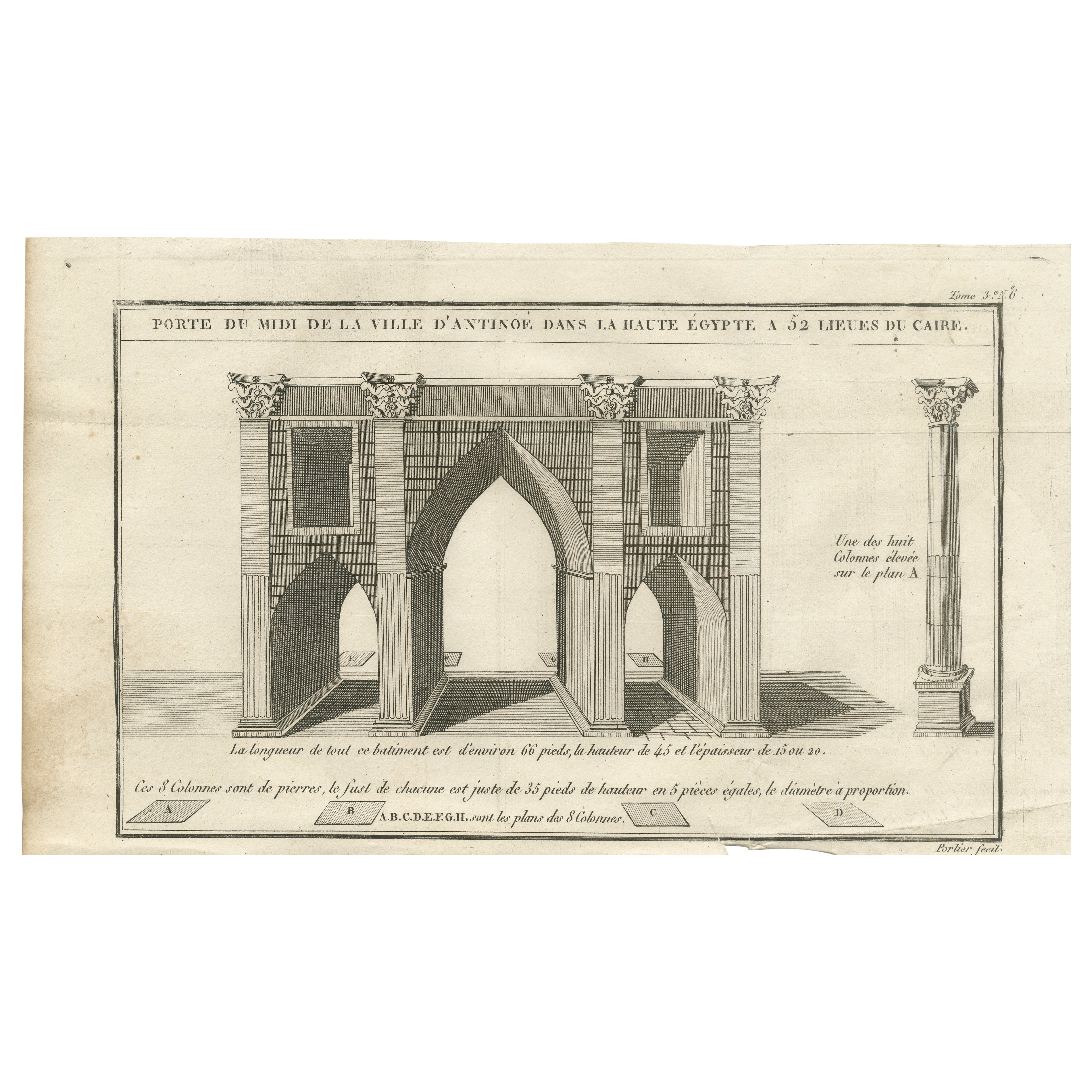
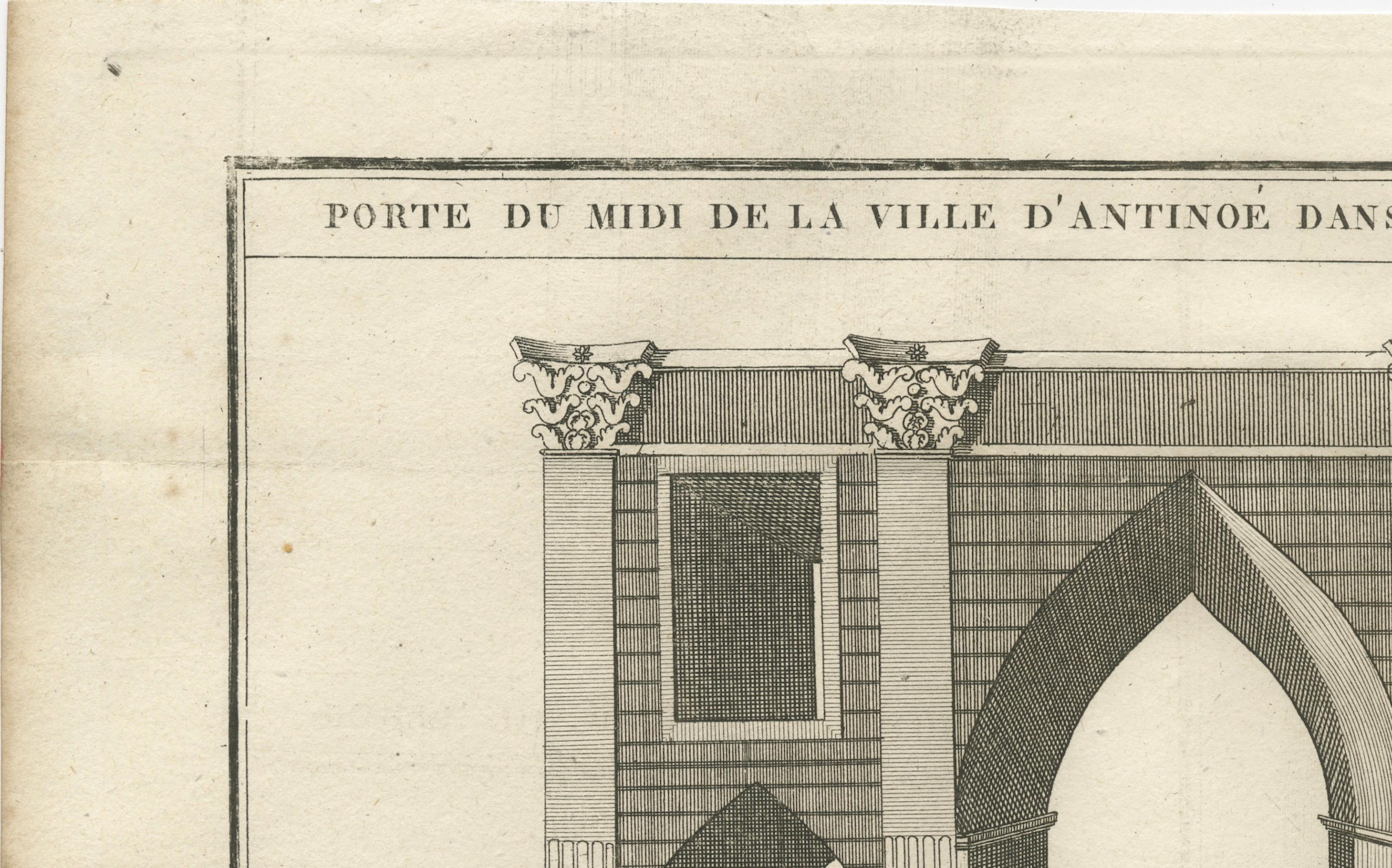
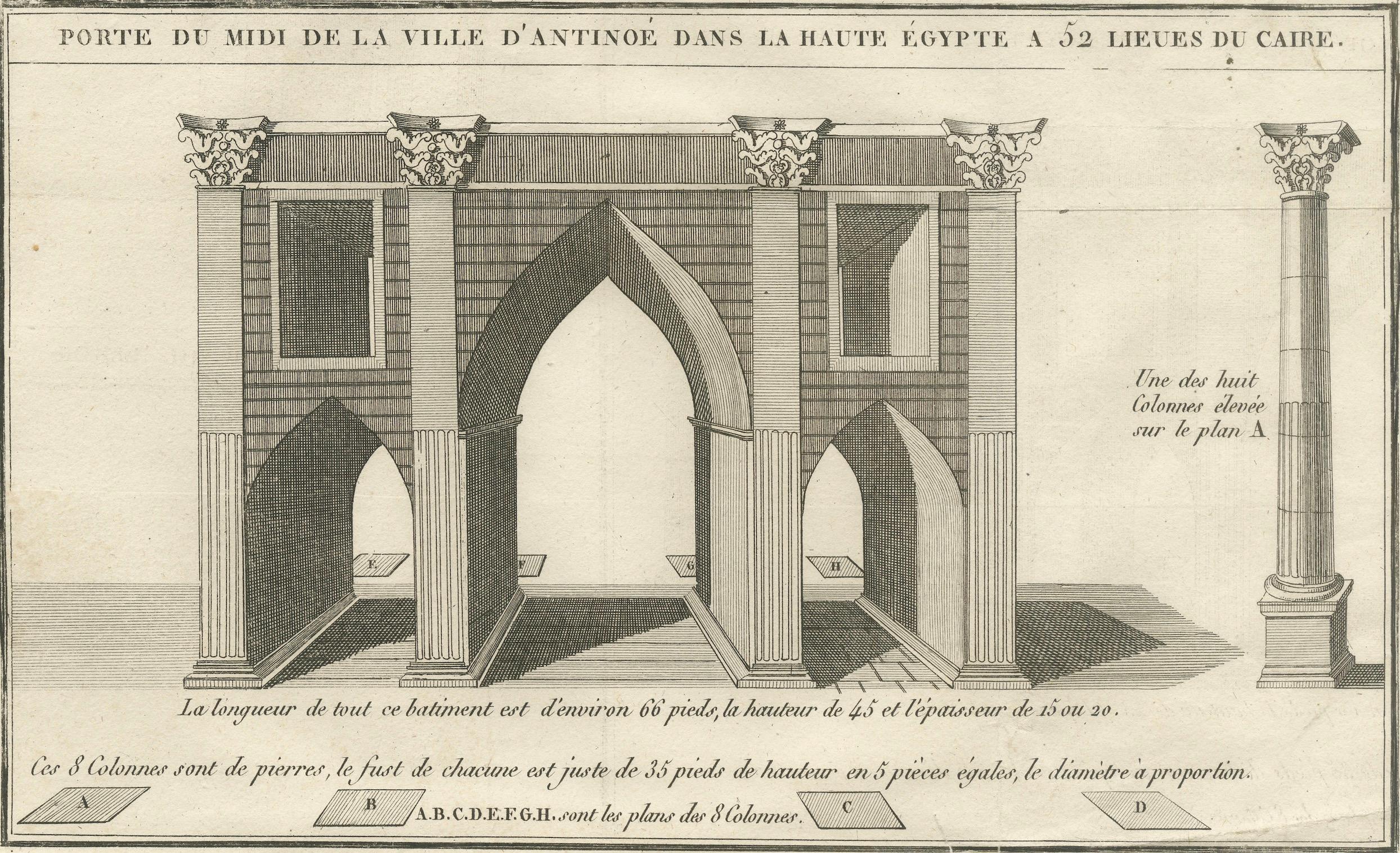
South Gate of Antinoë – Architectural Engraving, Upper Egypt, c.1790
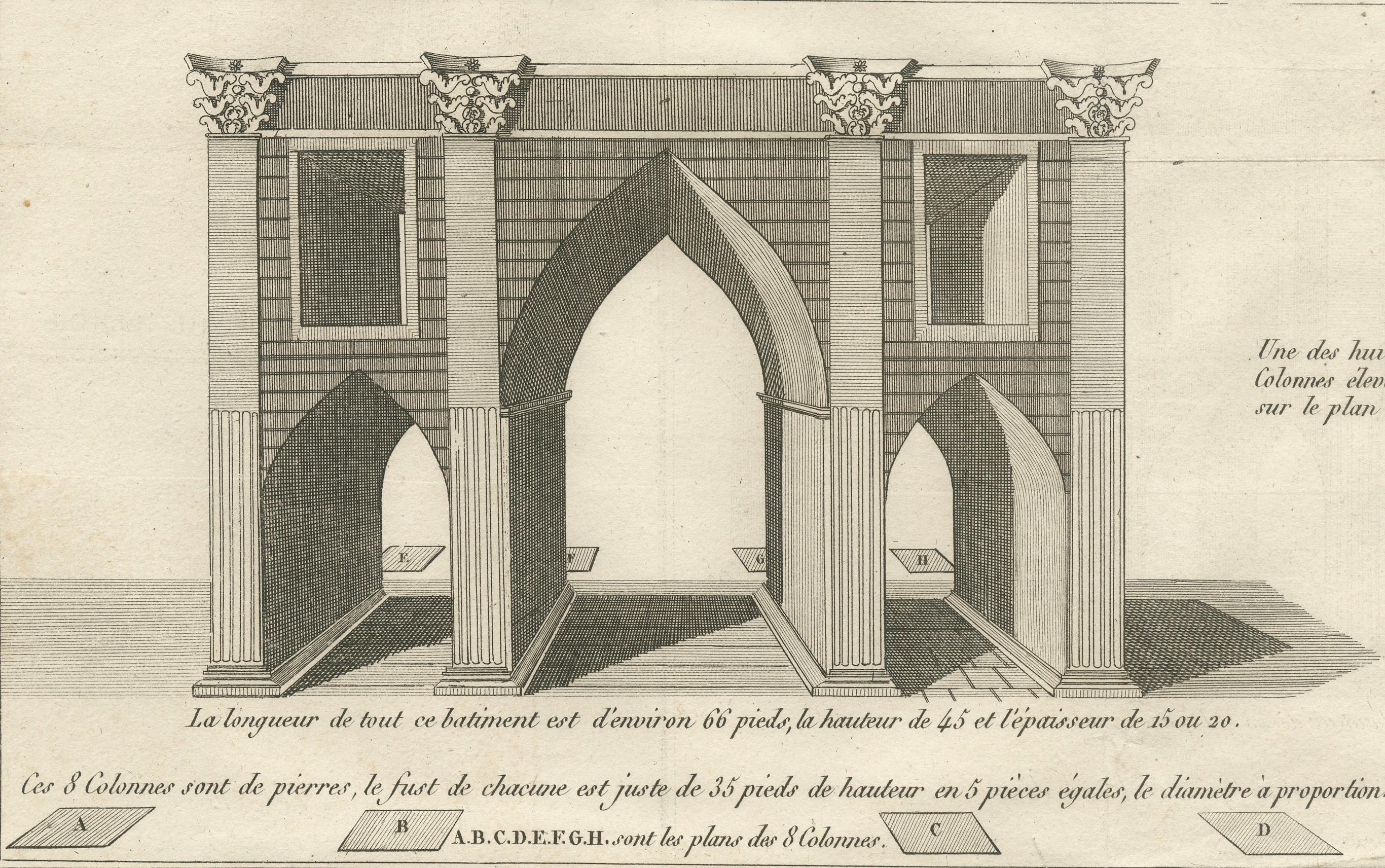
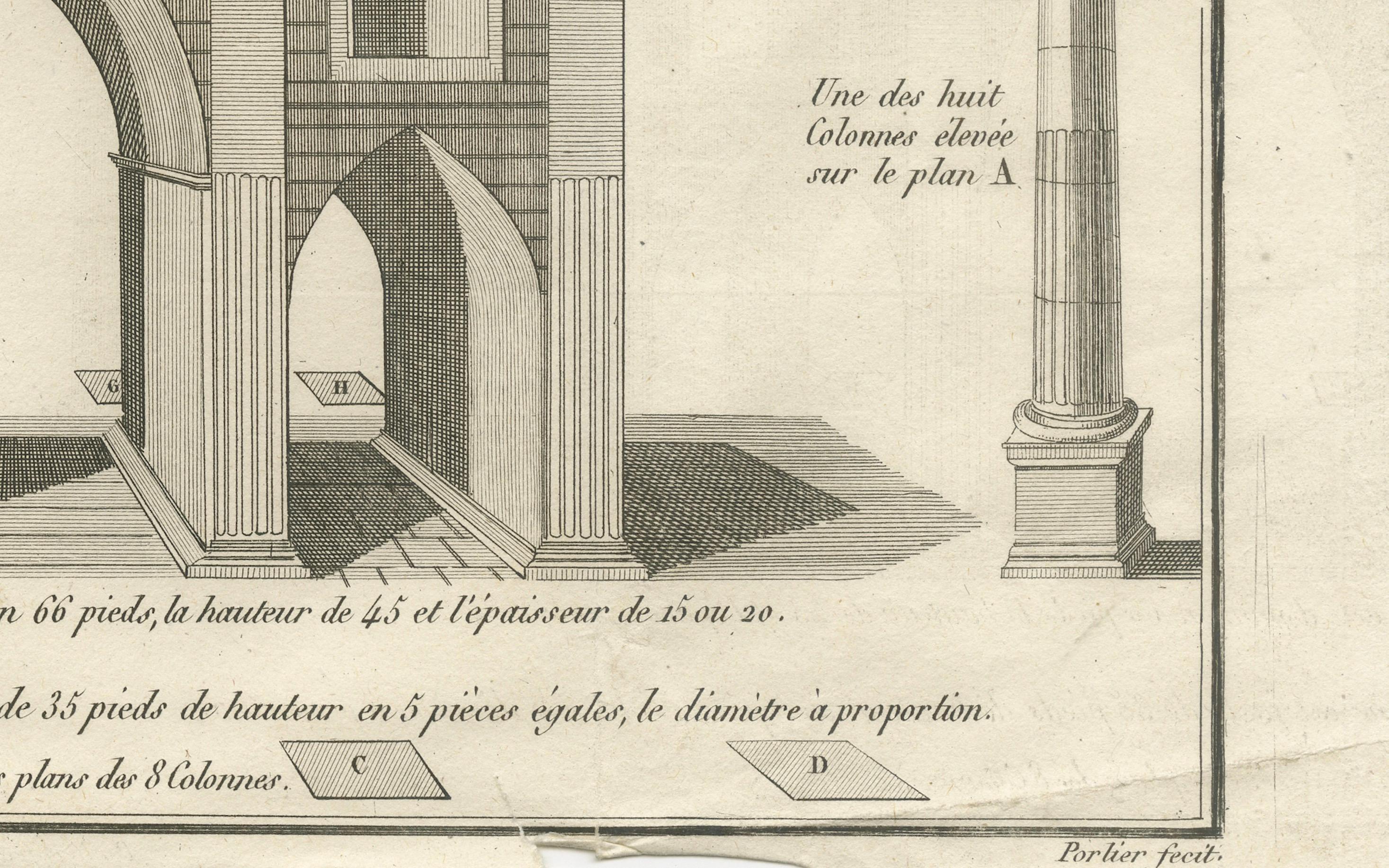
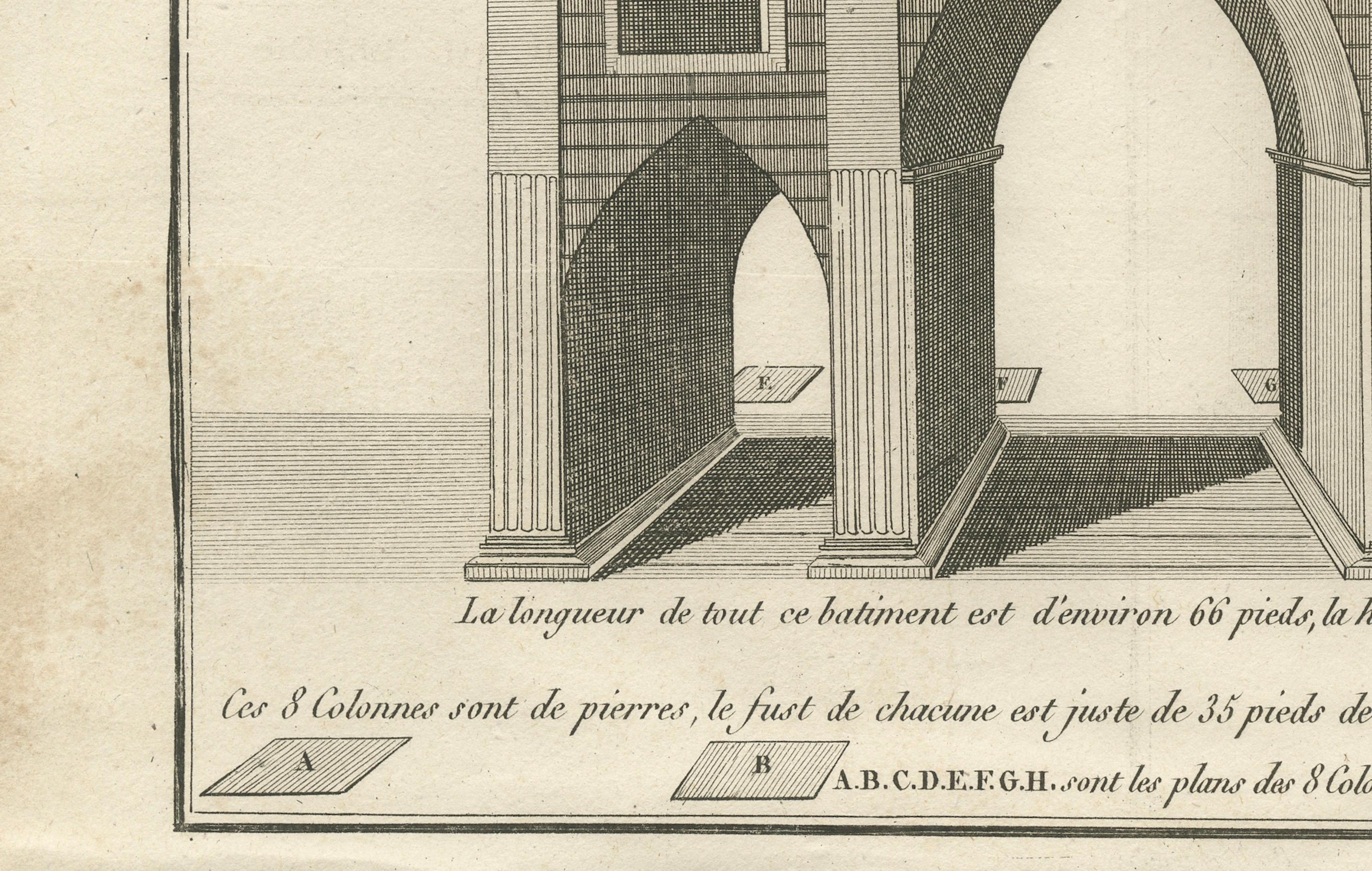
This finely detailed 18th-century copperplate engraving depicts the *Porte du Midi de la Ville d’Antinoë* (South Gate of the City of Antinoë) in Upper Egypt, located 52 leagues from Cairo. The image presents an elevation of the gateway flanked by Corinthian-style columns, with pointed arches and stone masonry carefully rendered in line and stipple shading. One of the eight original columns is shown separately at right, offering a clear view of its full height and proportions.
The accompanying French text provides architectural measurements: the overall building length is approximately 66 feet, with a height of 45 feet and a wall thickness of 15 to 20 feet. The eight columns were of stone, each shaft measuring exactly 35 feet in height and divided into six equal sections, with proportionate diameters. At the bottom, labelled plans (A–H) indicate the base layouts of the columns.
Antinoë (Antinoopolis) was founded by the Roman Emperor Hadrian in AD 130 in memory of his companion Antinous, who drowned in the Nile. During the 18th century, European travellers, scholars, and draughtsmen recorded the surviving remains of the city, which by then lay largely in ruins. This engraving is typical of plates produced for Enlightenment-era travel and antiquities publications, in which measured architectural drawings were combined with precise observation to convey both artistic and scholarly value.
The plate bears the credit Porlier fecit, indicating the engraver’s hand, and the upper margin is marked “Tome 3. N° 6,” showing its place within a multi-volume work on Egypt and antiquity. Such volumes often formed part of grand encyclopedic series, bringing the monuments of Egypt to the attention of European audiences fascinated by the ancient world.
Condition: Far, with a central fold as issued. Light toning and minor foxing at the margins. Lower border a tear, a fold and partly rough, but outside the main image. Strong plate impression with crisp architectural detail.
Framing tips: A black or dark mahogany frame with a soft cream mount would suit the linear clarity of the engraving. For a scholarly or museum-like presentation, consider adding a title plate beneath the image noting the subject and location.
Technique: Copperplate engraving
Maker: Porlier fecit, French school, c.1790