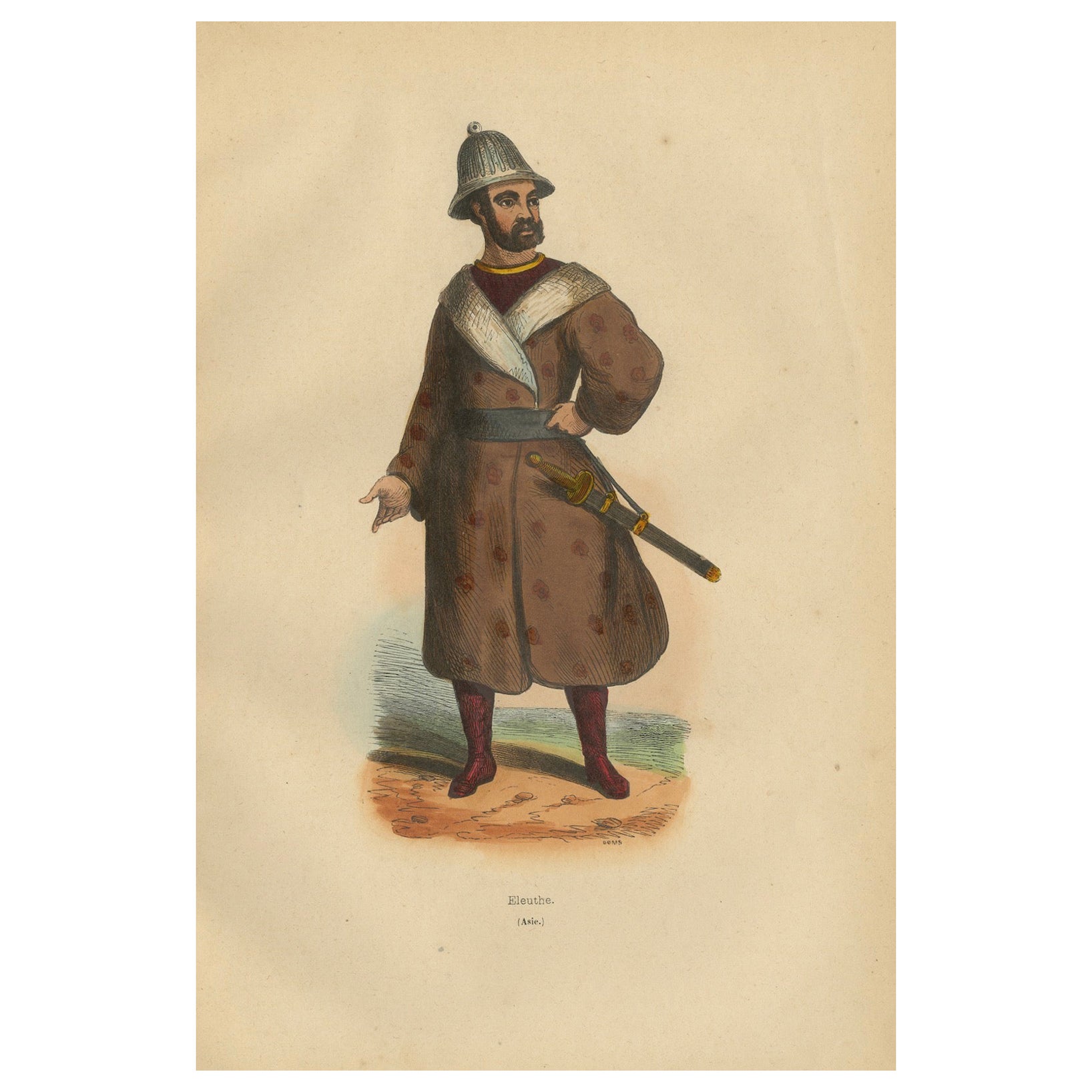
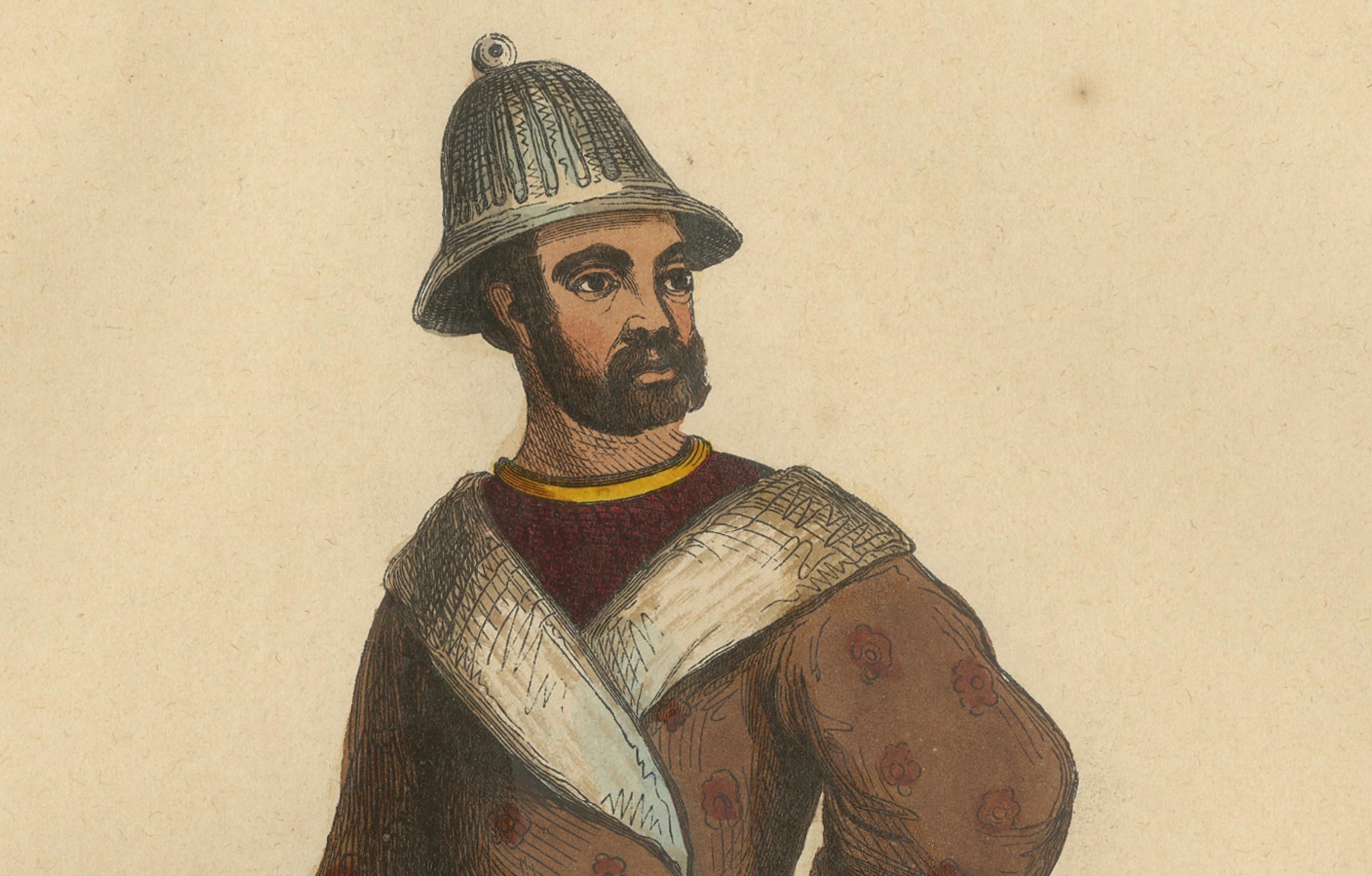
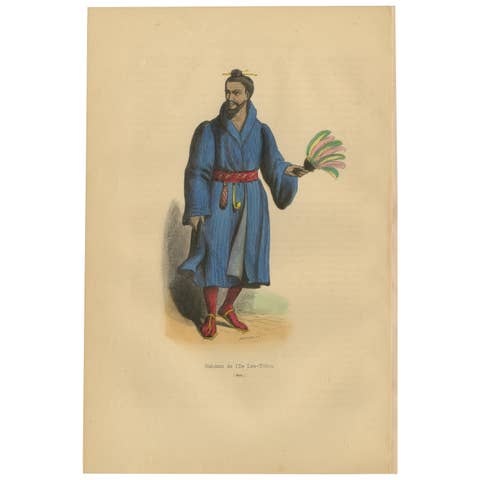
Traditional Eleuth Warrior Attire in 1844 Hand-Colored Lithograph
€ 120
One of a kind: this is the sheet in the photographs. Ships from Langweer, the Netherlands.
Date
1844
Sheet size
25.7 × 17 cm (10.1 × 6.7 in)
Condition
Good
Reference
BG-12722-60
Condition
given age. Faintly browned, and with some small stains. Some glue remains (from binding) in the far left margin (not affecting image). General age-related toning and/or occasional minor defects from handling. Please study the scans.
About this sheet
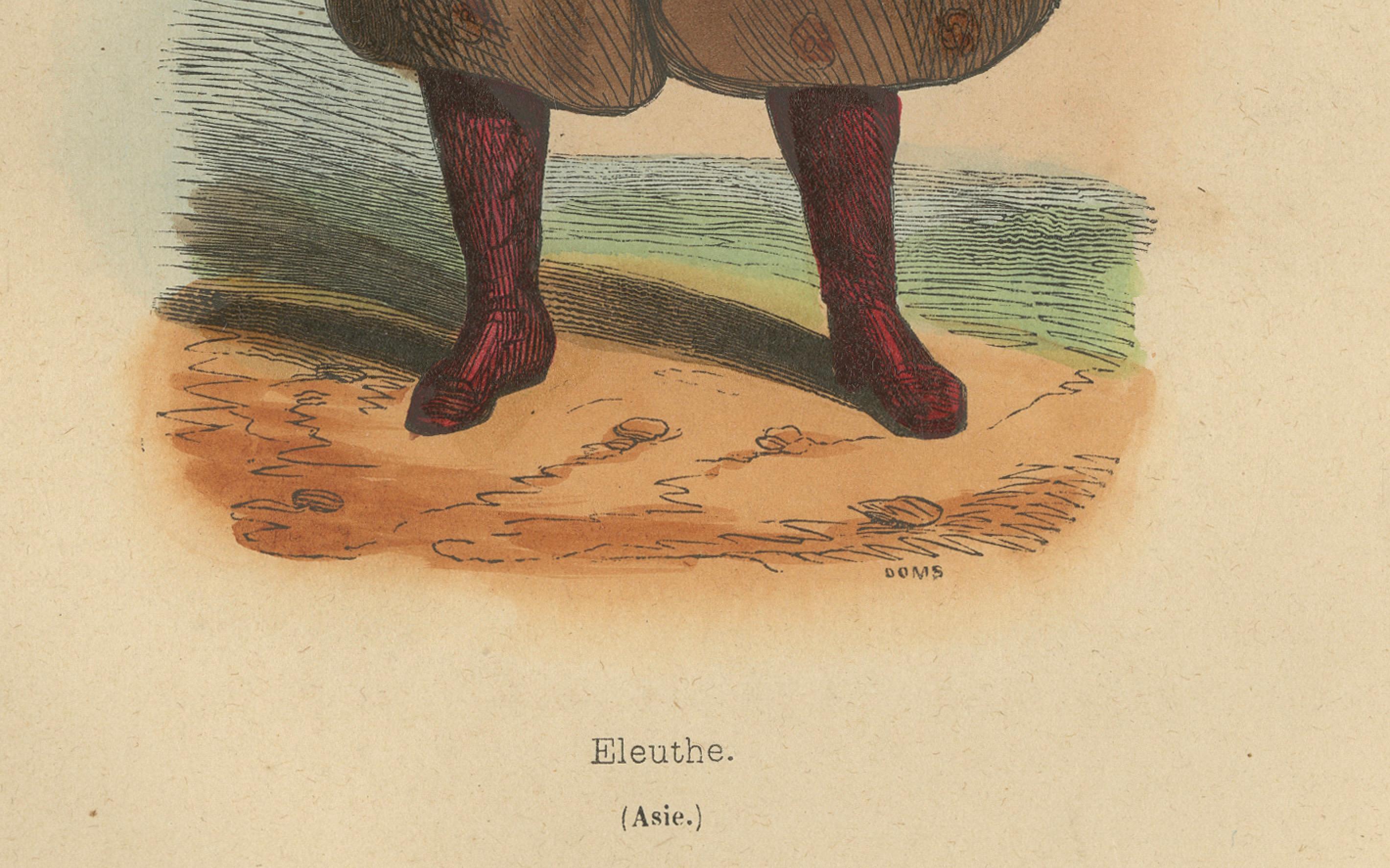
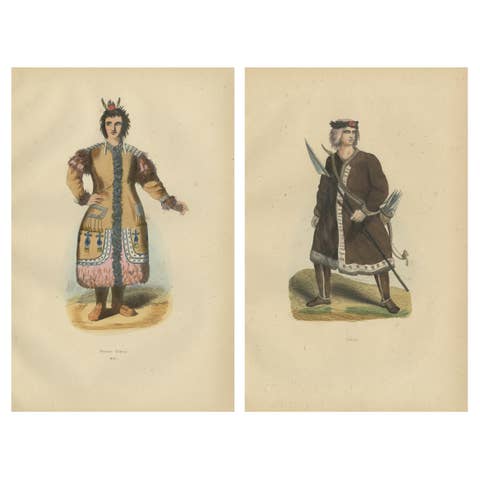
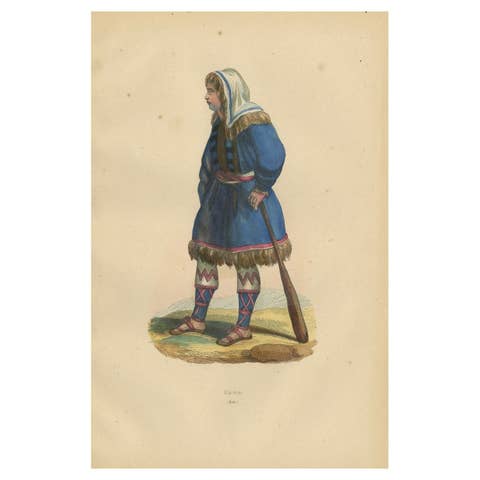
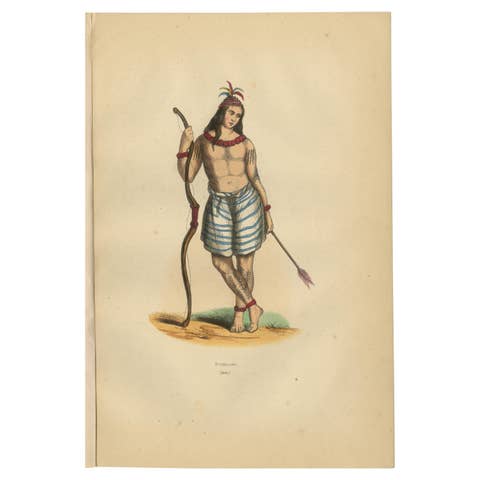
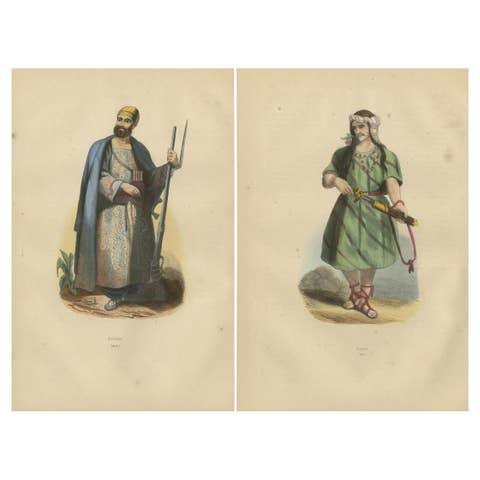
This hand-colored lithograph titled *Eleuthe* (Eleuth) portrays a man from the Eleuth tribe, a subgroup of the Oirat Mongols. The image is part of Auguste Wahlen's "Moeurs, Usages et Costumes de tous les Peuples de Monde" (Customs, Manners, and Dress of All the Peoples of the World), published in 1844.
The print was created by an anonymous engraver after Wahlen's designs, with notable contributions from artists such as Evrard Duverger, L. Markaert, and R. King. The lithograph is enhanced with Arabic gum on vellum paper, adding a bright gloss and deepening the colors.
Notable Features of the Attire:
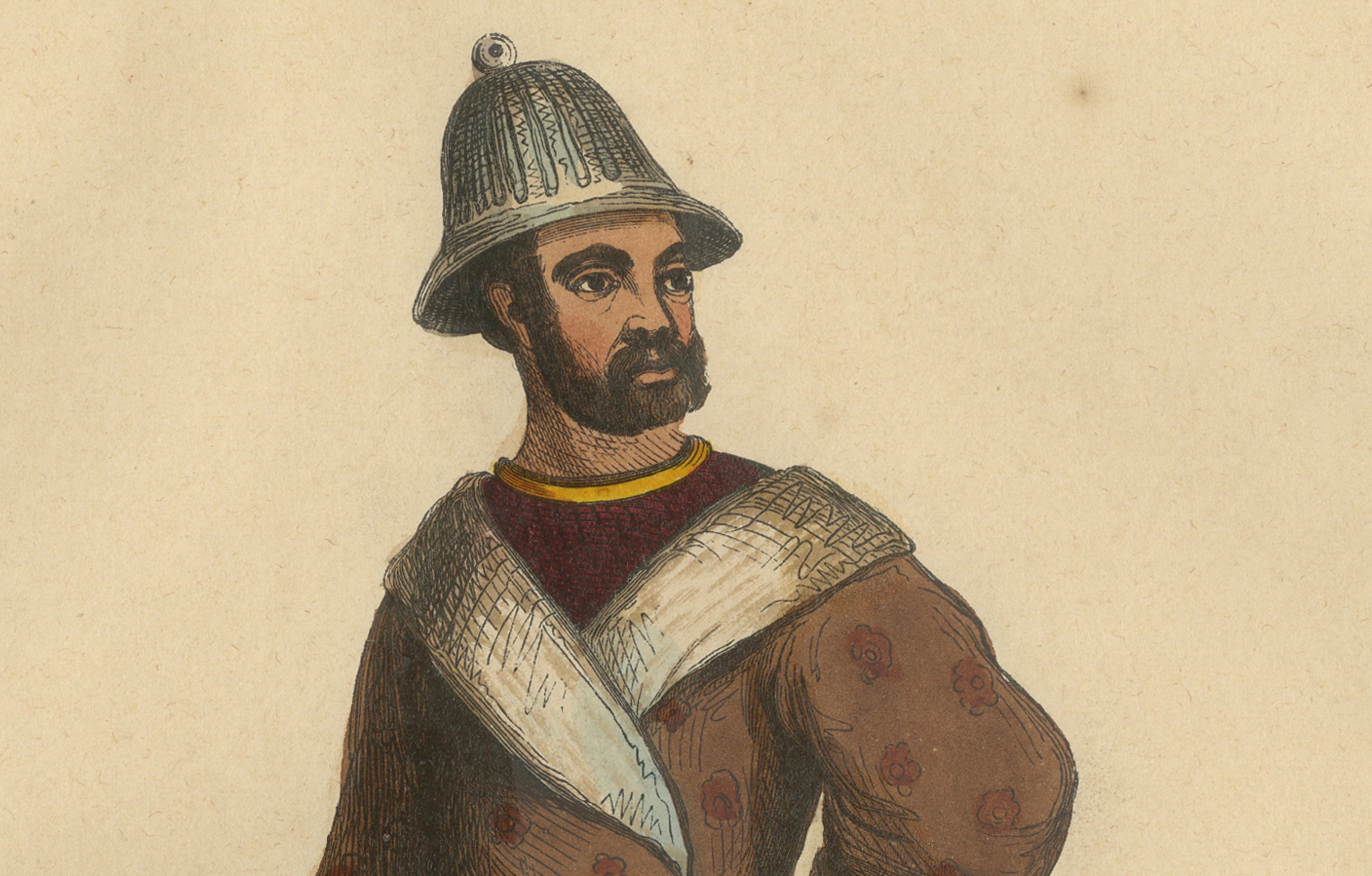
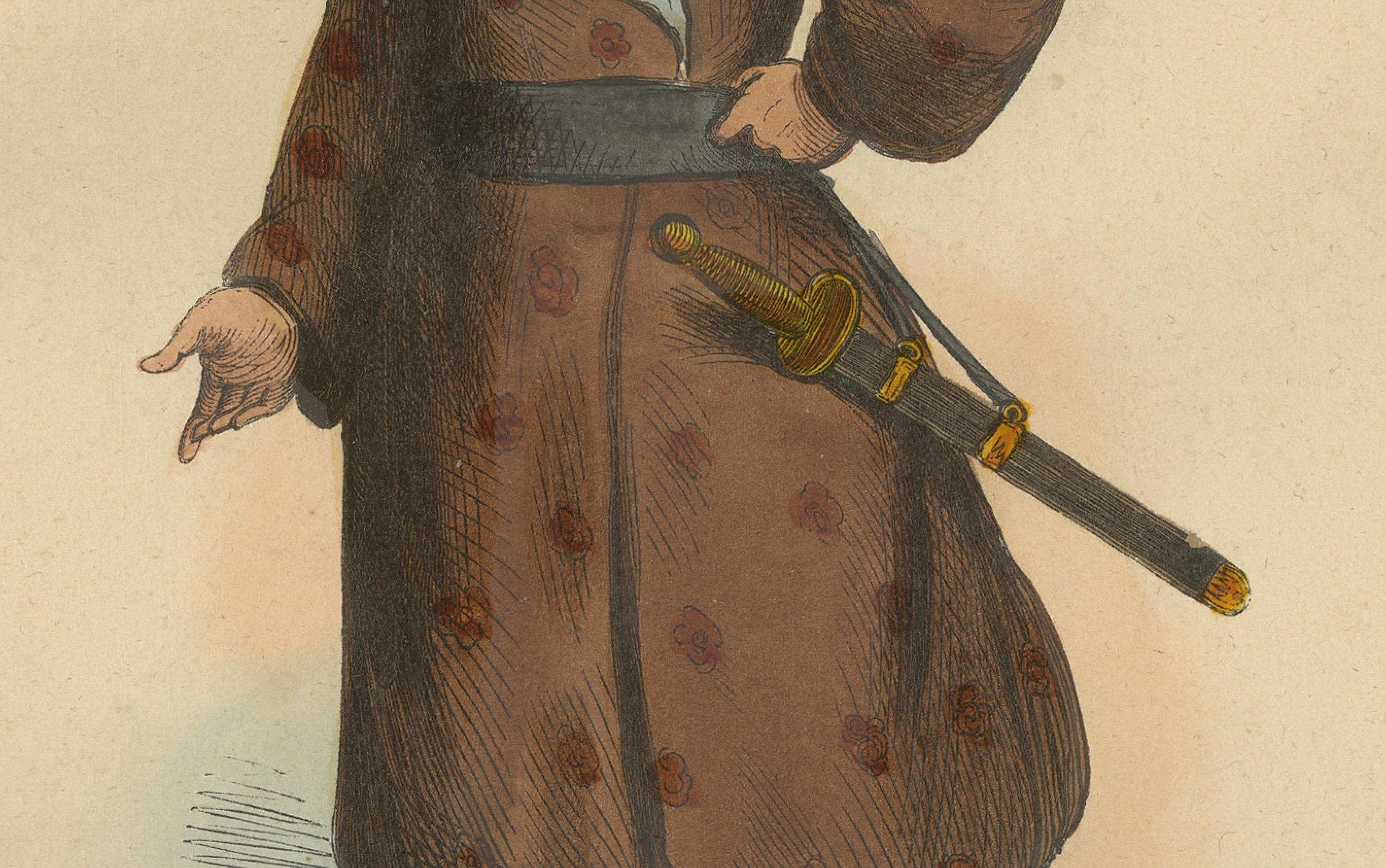
- Helmet: The warrior wears a distinctive helmet, possibly crafted from metal or leather, which suggests a readiness for battle. The helmet design is typical of Mongolian and Central Asian tribes, providing protection while maintaining mobility. - Coat: The long, fur-lined coat is characteristic of the Eleuths, suited to the cold climates of Central Asia. The coat is intricately patterned, showcasing both practicality and status. - Sword: The sword hanging by his side is a symbol of his warrior class. The hilt appears to be ornately decorated, hinting at a higher social rank or experience in battle.
Cultural and Historical Insight: The Eleuth people were part of the broader Oirat confederation of nomadic Mongols who lived in what is now Xinjiang and parts of Central Asia. Their warrior culture was highly developed, and this lithograph captures the essence of a soldier's dress during the 19th century. The attire shown here reflects both the harsh environment and the martial lifestyle that characterized their existence.
Keywords for Searching:
People searching for prints like this might use terms such as "Eleuth warrior lithograph," "Wahlen 1844 Mongolian print," "Oirat traditional attire," "hand-colored historical prints," and "19th-century Central Asian dress." These keywords assist in locating art that depicts the nomadic and martial cultures of historical Asian societies.