1844 Lithograph of a Mingrelian Man in Traditional Georgian Attire
€ 140
Original antique · The actual sheet photographed · Certificate of authenticity on request · Sold unframed · Worldwide shipping from € 15 (rates)
Date
1844
Sheet size
25.7 × 17 cm (10.1 × 6.7 in)
Condition
Good
Reference
BG-12722-42
What the condition grades mean
Excellent
Bright and clean, with no faults worth mentioning.
Very good
Only light signs of age, such as faint toning.
Good
Normal signs of age for a sheet of this period: toning, some foxing, small marks or neat old repairs.
Fair
Clear faults such as staining, tears or repairs, priced to match.
Every fault we see is written in the condition note, and the whole sheet is shown uncropped in the photos.
Condition
Given age. Faintly browned, and with some small stains. Some glue remains (from binding) in the far left margin (not affecting image). General age-related toning and/or occasional minor defects from handling. Please study the scans.
About this sheet
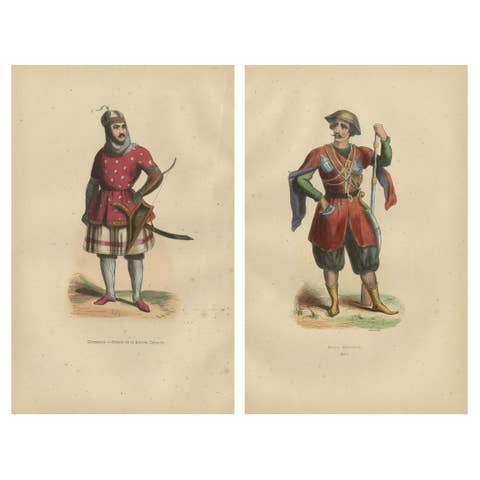
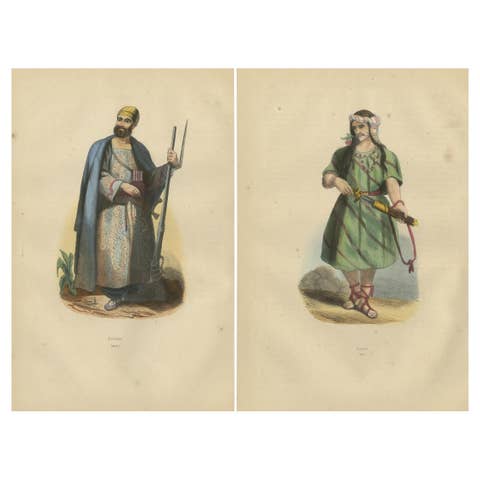
The lithograph titled "Mingrelien" depicts a man from Mingrelia (historically part of Western Georgia), showcasing traditional attire and daily activities typical for the region. Here are some insights:
This 1844 handcolored lithograph captures a Mingrelian man engaged in daily activities, part of Auguste Wahlen’s "Moeurs, Usages et Costumes de tous les Peuples de Monde."
Published in Paris, the print vividly illustrates the traditional dress and lifestyle of Mingrelia, a region known for its rich cultural heritage within Georgia. The man is depicted carrying a basket of grapes, suggesting involvement in viticulture, which is a significant aspect of Georgian agricultural practices. His outfit is practical yet colorful, with a combination of a red tunic, blue leggings, and distinctive footwear, reflecting the traditional clothing style of the region.
The print is notable for its artistic execution using handcolored lithography, a technique that allows for precise detail and vibrant colors, enhancing the visual appeal and cultural accuracy of the depiction.
The depiction not only serves as a beautiful artistic representation but also as an important cultural document, providing insights into the traditional lifestyle and attire of Mingrelian people during the 19th century.