About this sheet
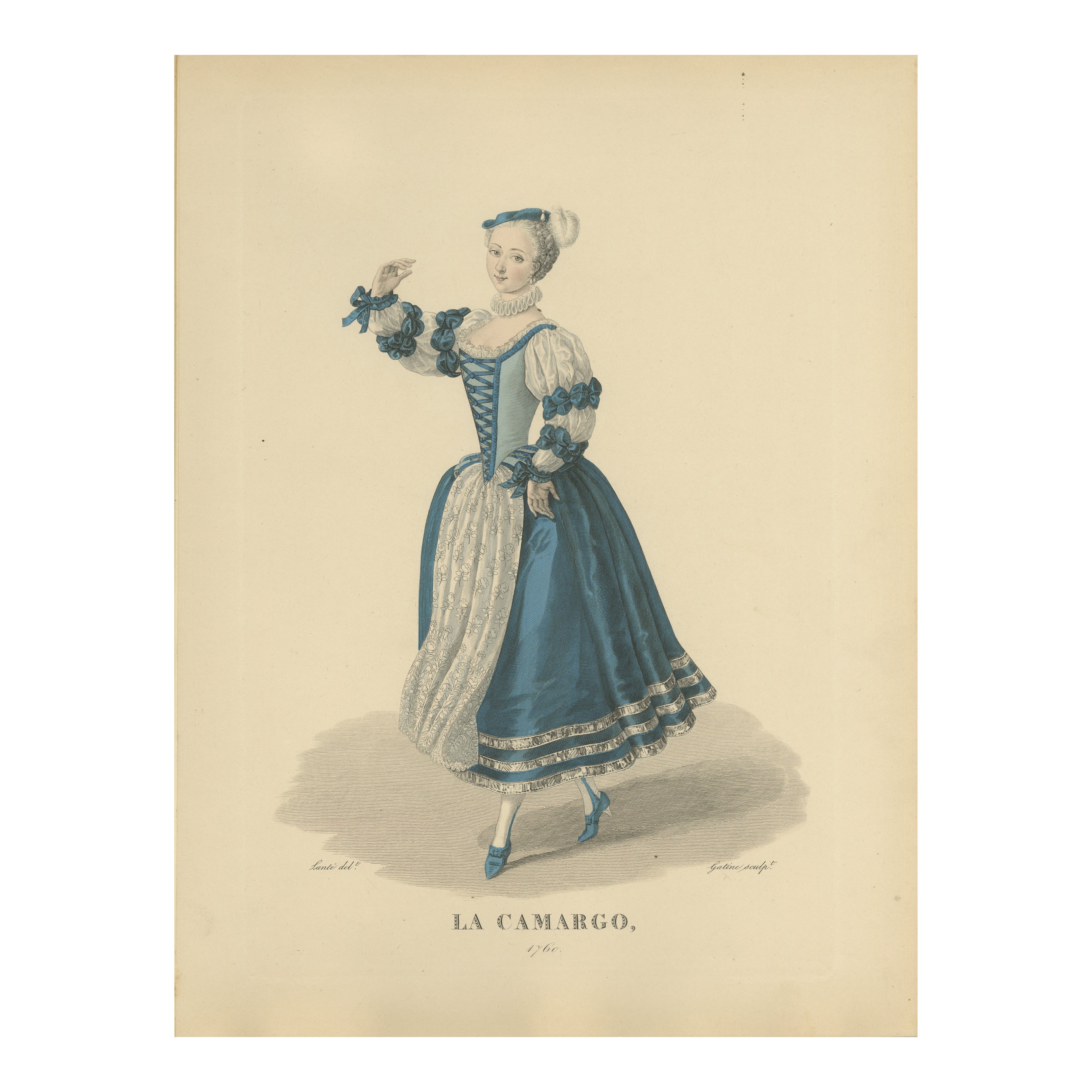
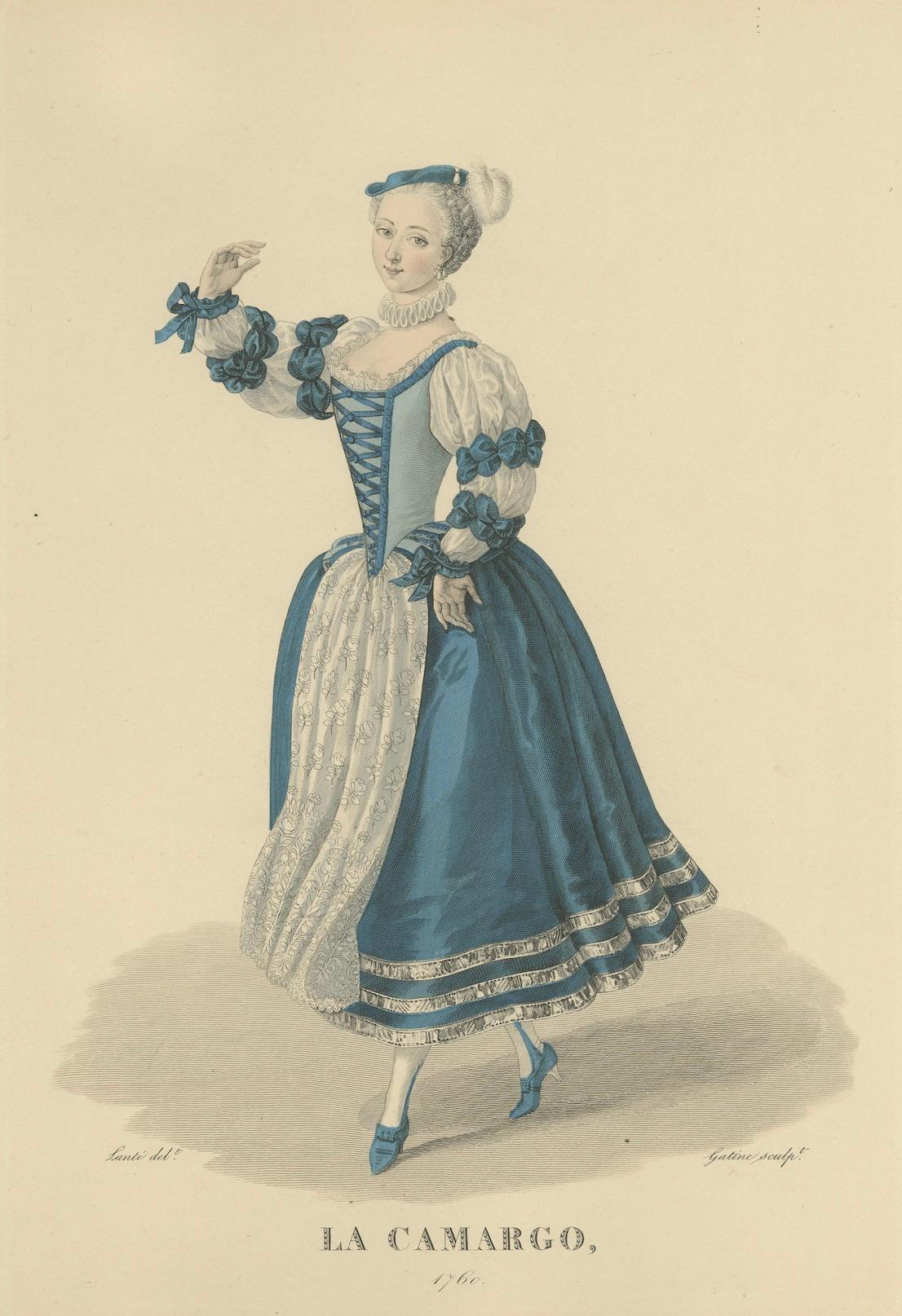
Hand-Colored Engraving of La Camargo, Paris, ca. 1900 edition
This lively hand-colored engraving depicts Marie-Anne de Cupis de Camargo (1710–1770), celebrated ballerina of the Paris Opera, known to history simply as La Camargo. The caption beneath the figure marks the year 1766, situating her at the height of her fame. Camargo revolutionized dance by shortening her skirts to reveal her footwork, adopting slippers instead of heeled shoes, and introducing technical virtuosity into ballet performance. Her innovations made her an icon of 18th-century stage culture and a muse for artists, writers, and composers.
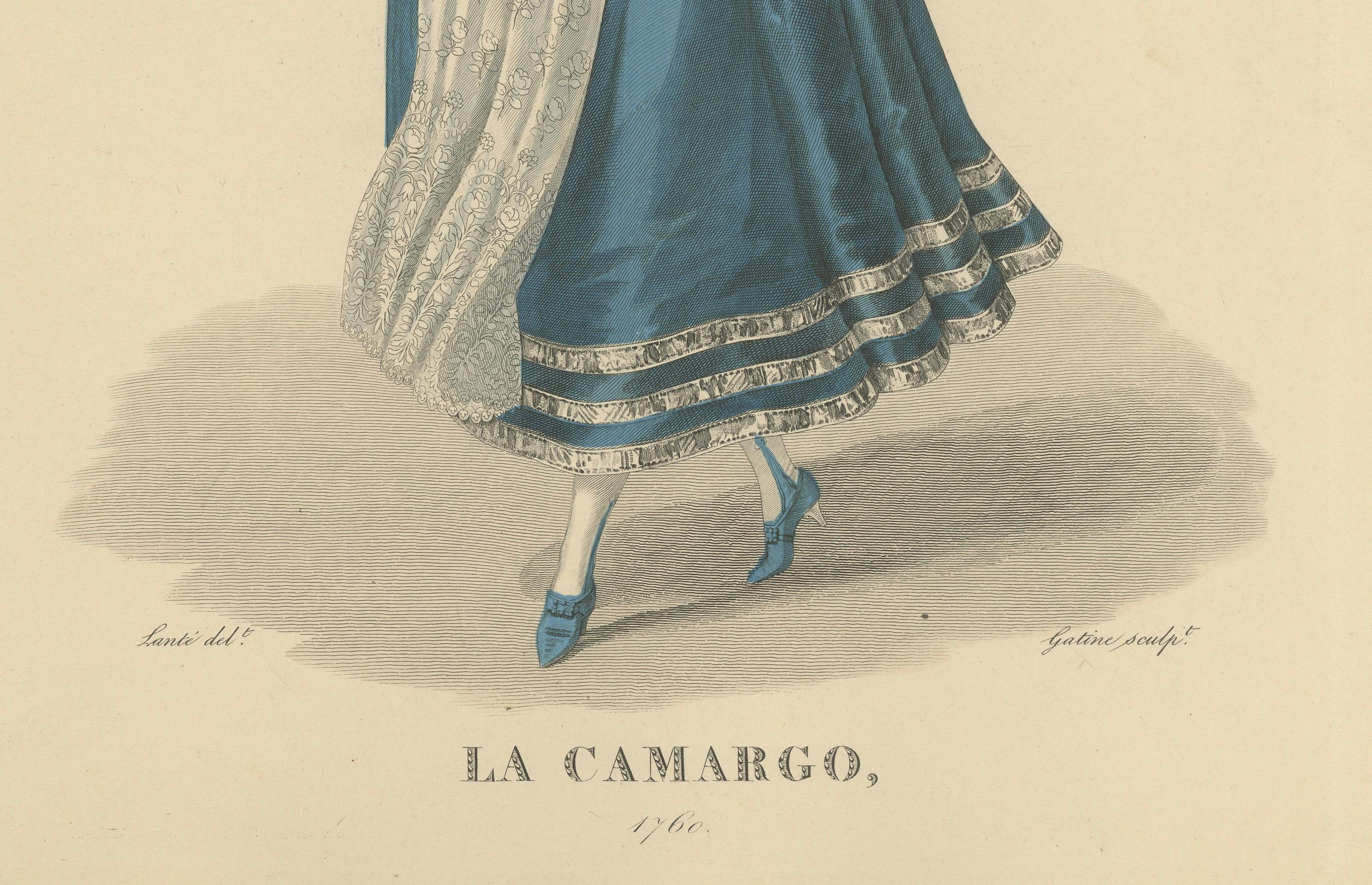
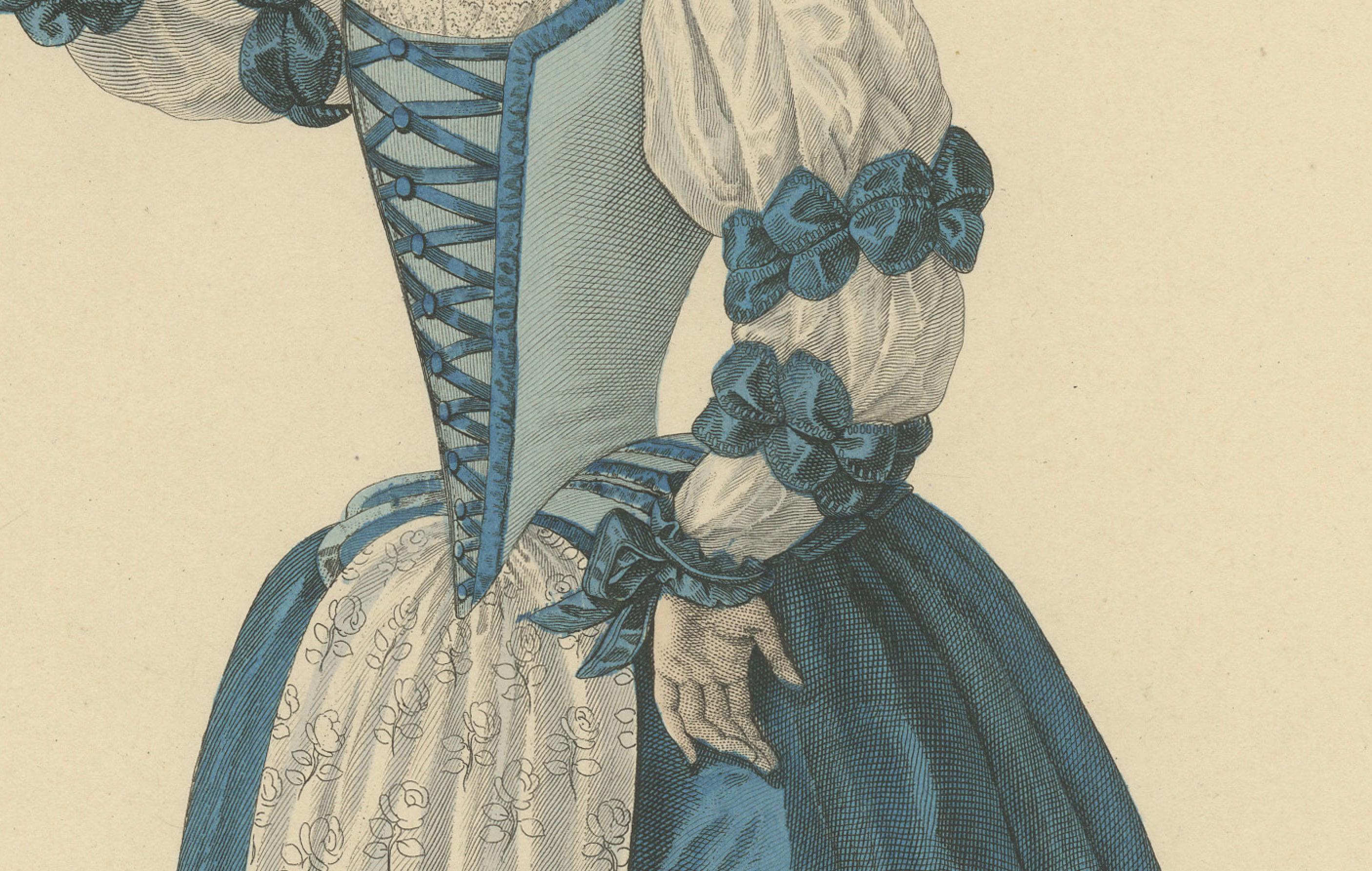
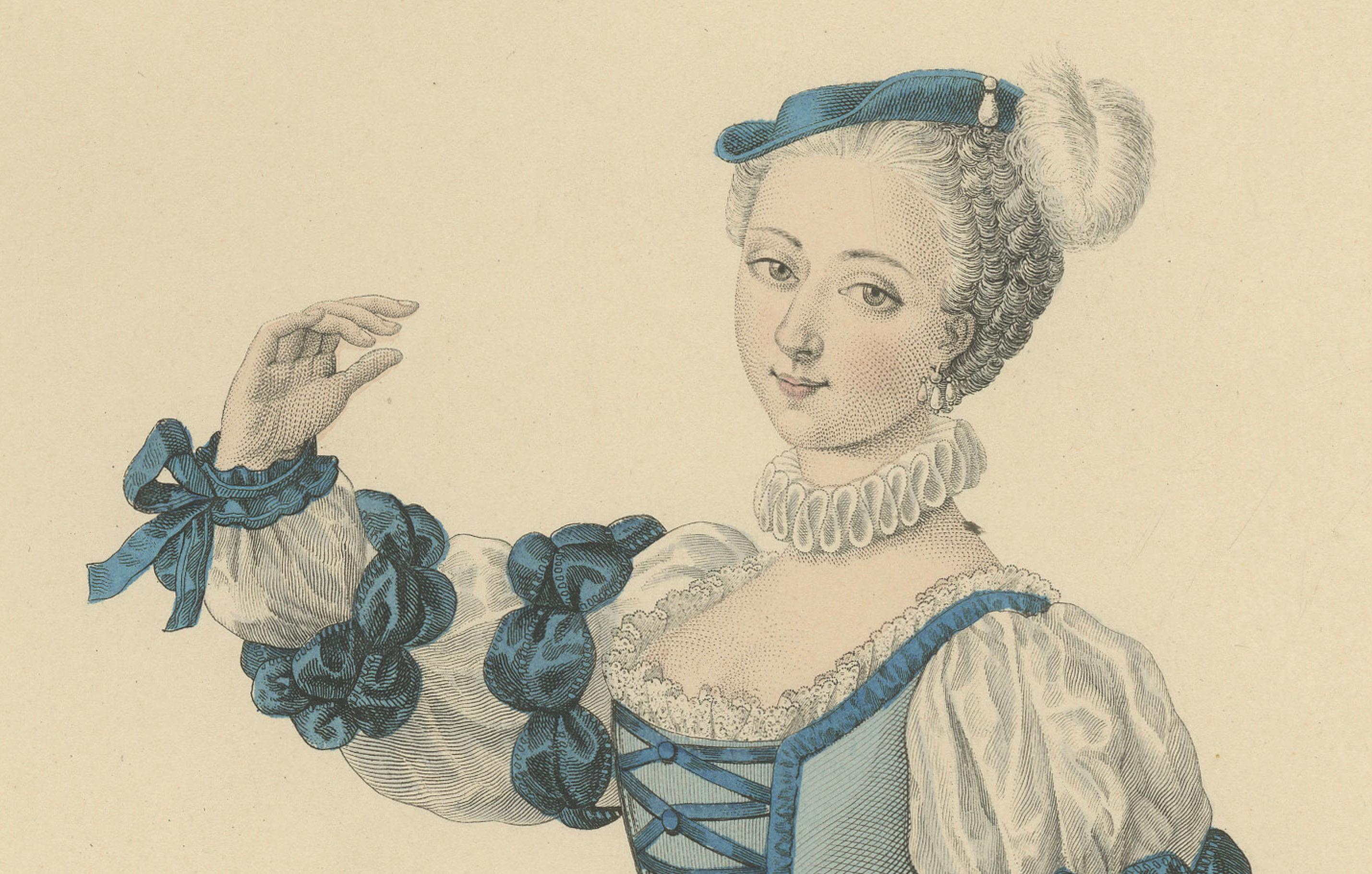
The engraving shows Camargo in a theatrical pose, one hand raised gracefully, the other resting at her waist, conveying movement and elegance. She wears a fitted blue bodice with ribboned sleeves, a full skirt trimmed with silver, and delicate slippers. The costume highlights the lightness and agility that defined her stage presence, while the finely executed hand-coloring gives the figure vibrancy and charm.
This plate belongs to the series Galerie Française de Femmes Célèbres, originally designed by Louis-Marie Lanté and engraved by Georges Jacques Gatine, first published in Paris in 1827. The present example is a later ca. 1900 hand-colored impression, reissued at a time when French historical costume and portraits of famous women enjoyed renewed popularity among collectors and connoisseurs.
As one of the few depictions of Camargo in this renowned costume series, the engraving holds strong appeal for collectors of dance history, 18th-century stage culture, and French decorative arts.
Condition report: Very good condition with rich hand-coloring. Light overall toning consistent with age, visible platemark, blank verso.
Framing tips: A gilt frame with decorative detailing would echo the theatrical brilliance of the subject, while a soft ivory mat would enhance the vivid blue costume. Alternatively, a black frame with silver inner edging would emphasize her elegance and provide a dramatic display.
Technique: Hand-colored engraving (later edition, ca. 1900)
Maker: After Louis-Marie Lanté (artist) and Georges Jacques Gatine (engraver), Paris, 1827