About this sheet
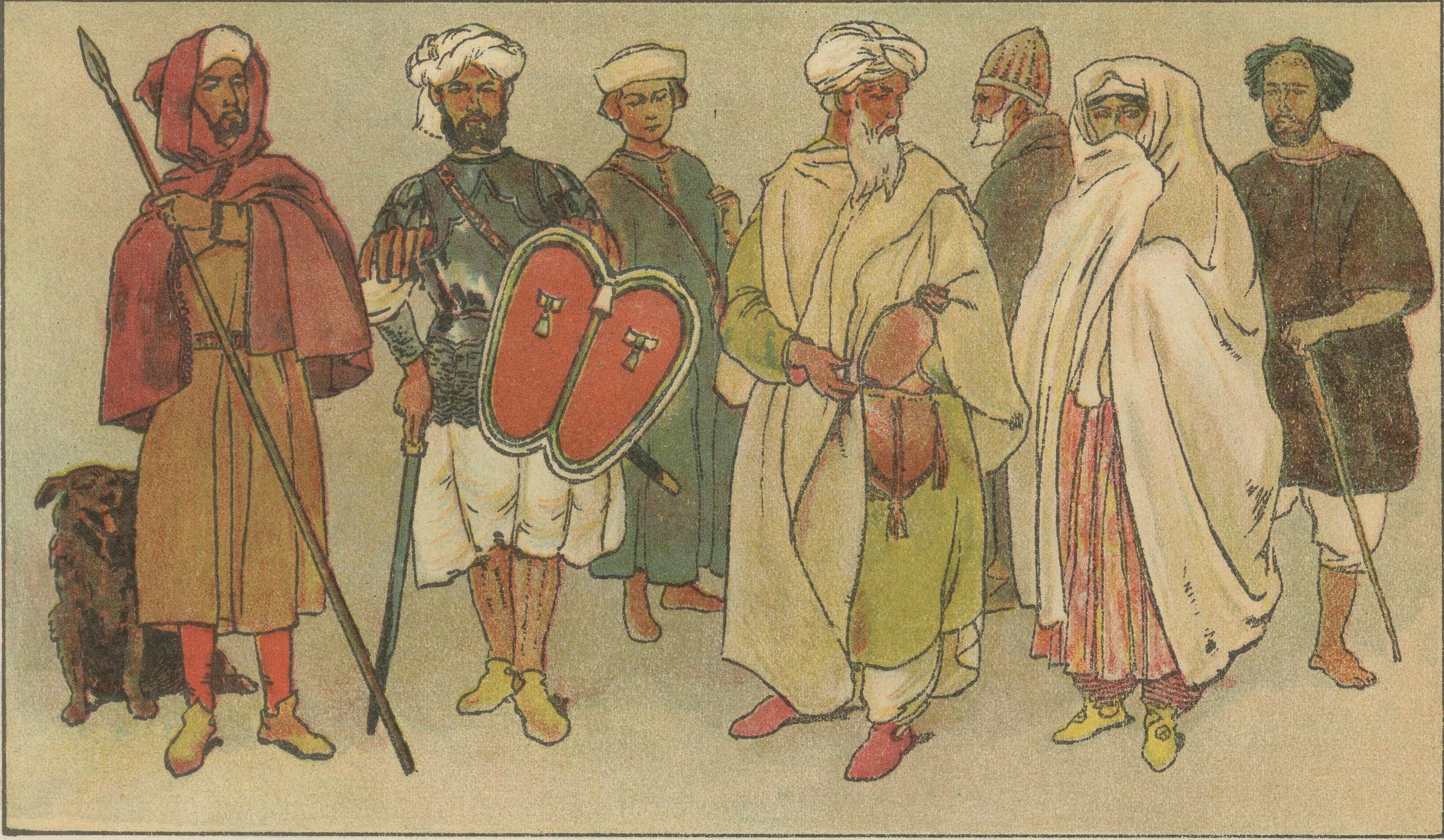
Hand-Colored 1900 Print of Moorish Costumes, 15th Century North Africa
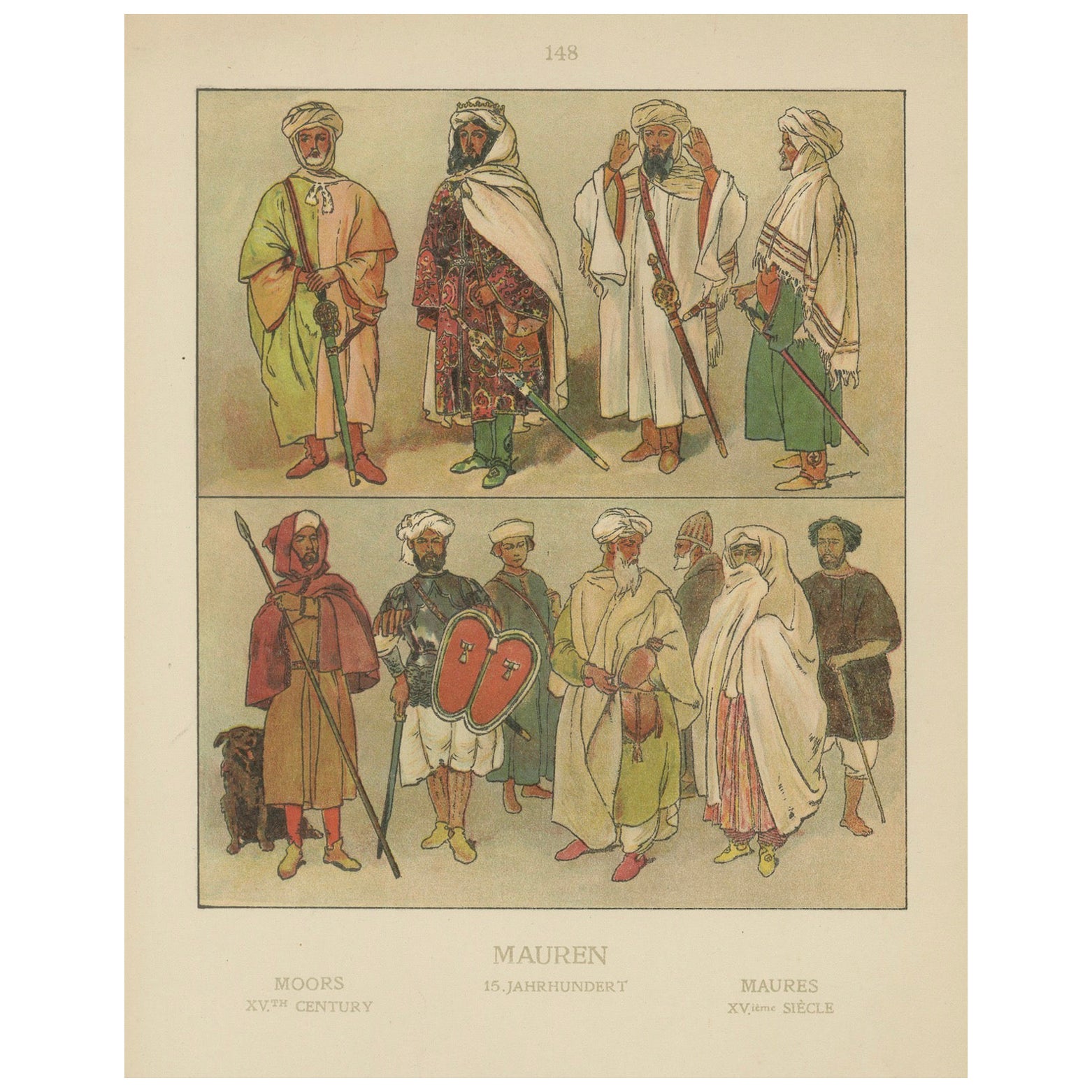
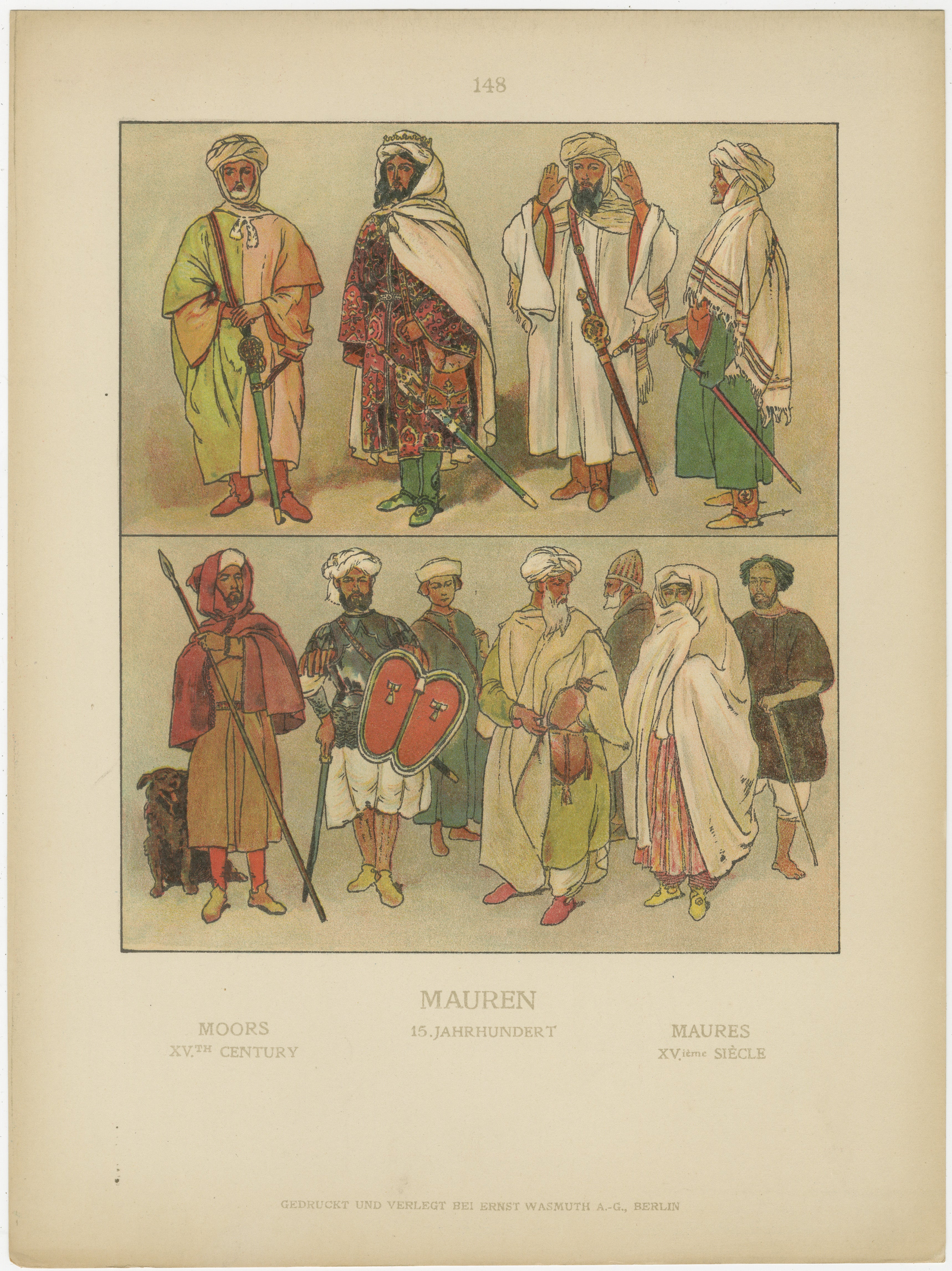
A richly detailed original early 1900s chromolithograph depicting the traditional dress of the Moors (Mauren) in the 15th century. Published by Ernst Wasmuth A.-G. in Berlin, this plate is from the renowned historical costume series illustrated by Max Tilke, one of the foremost specialists in ethnographic and historical dress of the period.
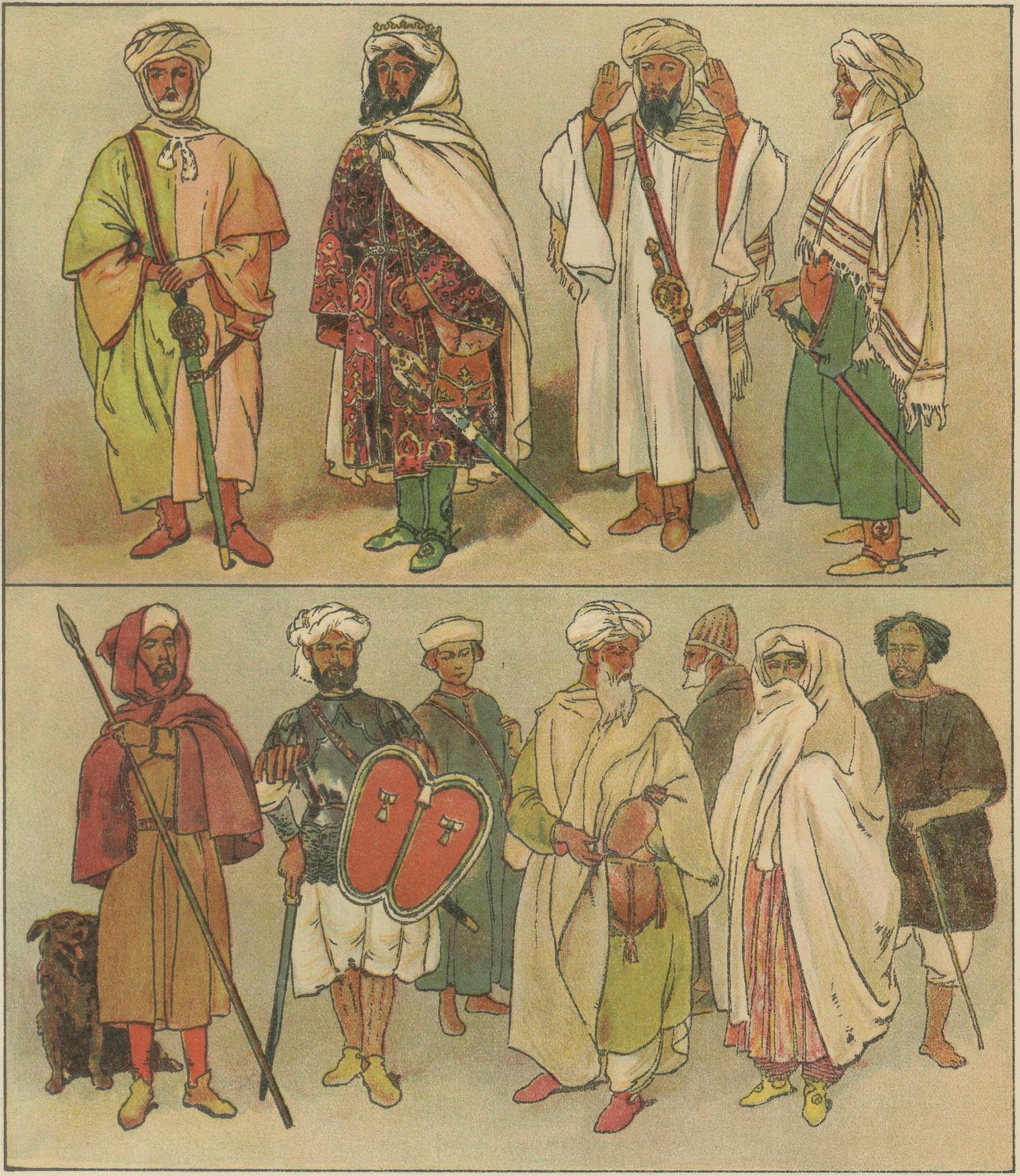
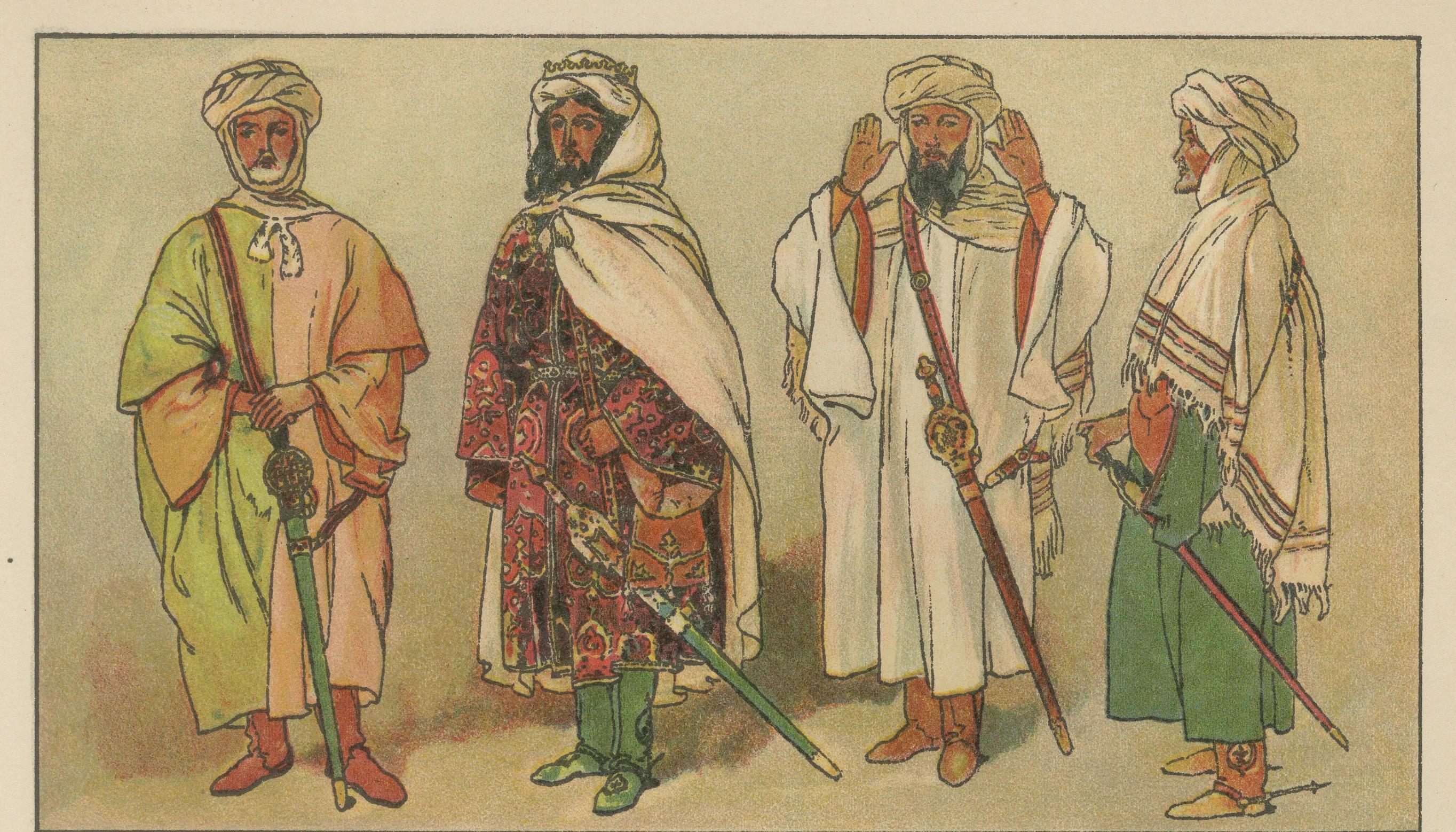
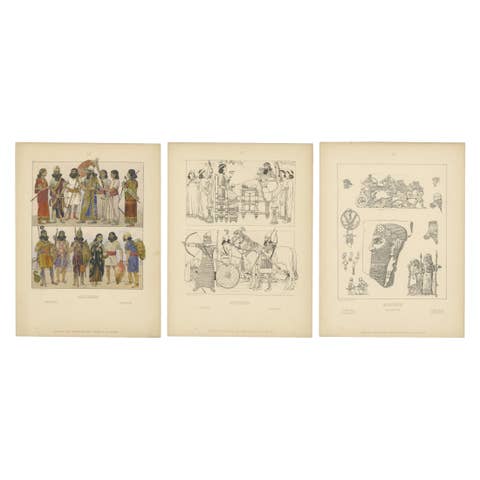
The print presents two horizontal scenes with a variety of North African and Andalusian Moorish figures, each carefully drawn with attention to textiles, weapons, and regional garments. The upper panel shows high-ranking men wearing robes, turbans, ceremonial cloaks, richly patterned fabrics, and curved swords. Their dress reflects both Berber and Andalusi court influences, highlighting the cultural interplay between North Africa and late medieval Iberia.
The lower panel includes soldiers, travelers, and everyday figures, showing layered tunics, kaftans, head coverings, and traditional footwear. Shields, spears, musical instruments, and cloaks illustrate functional garments used in daily life and military activity. The color, posture, and detailing give an accurate impression of 15th-century Moorish dress before and after the fall of Granada (1492).
The chromolithography is crisp, with the rich earth tones and soft hand-coloring characteristic of Wasmuth’s high-quality costume publications. This plate is an appealing piece for collectors of North African history, Islamic art, or historic costume studies, and also works beautifully as interior wall art due to its vibrant composition and balanced layout.
Condition:
Very good overall for age. Light toning to the margins, a few faint speckles, and mild edge wear consistent with early 20th-century paper. The image area is clean, colors remain strong, and the plate mark is visible.
Framing suggestion:
This print is especially striking in a simple natural-wood or dark oak frame with a warm off-white or sand-colored mat. A slimmer mat also works well if aiming for a more modern presentation. The vibrant red, cream, and ochre tones contrast beautifully with neutral framing choices.
Technique: Chromolithograph
Maker: Max Tilke (artist); Ernst Wasmuth A.-G., Berlin (publisher), c. 1900