About this sheet
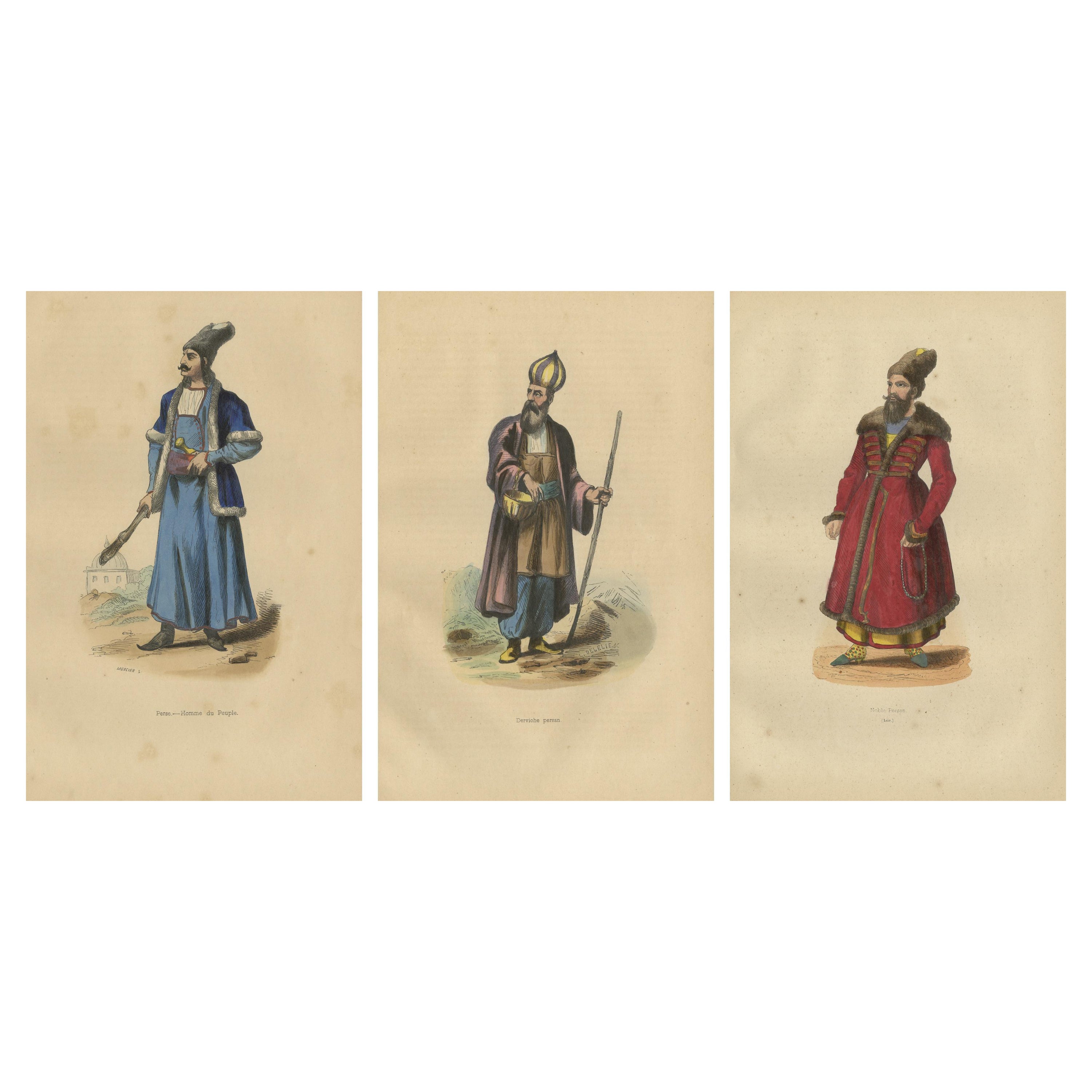
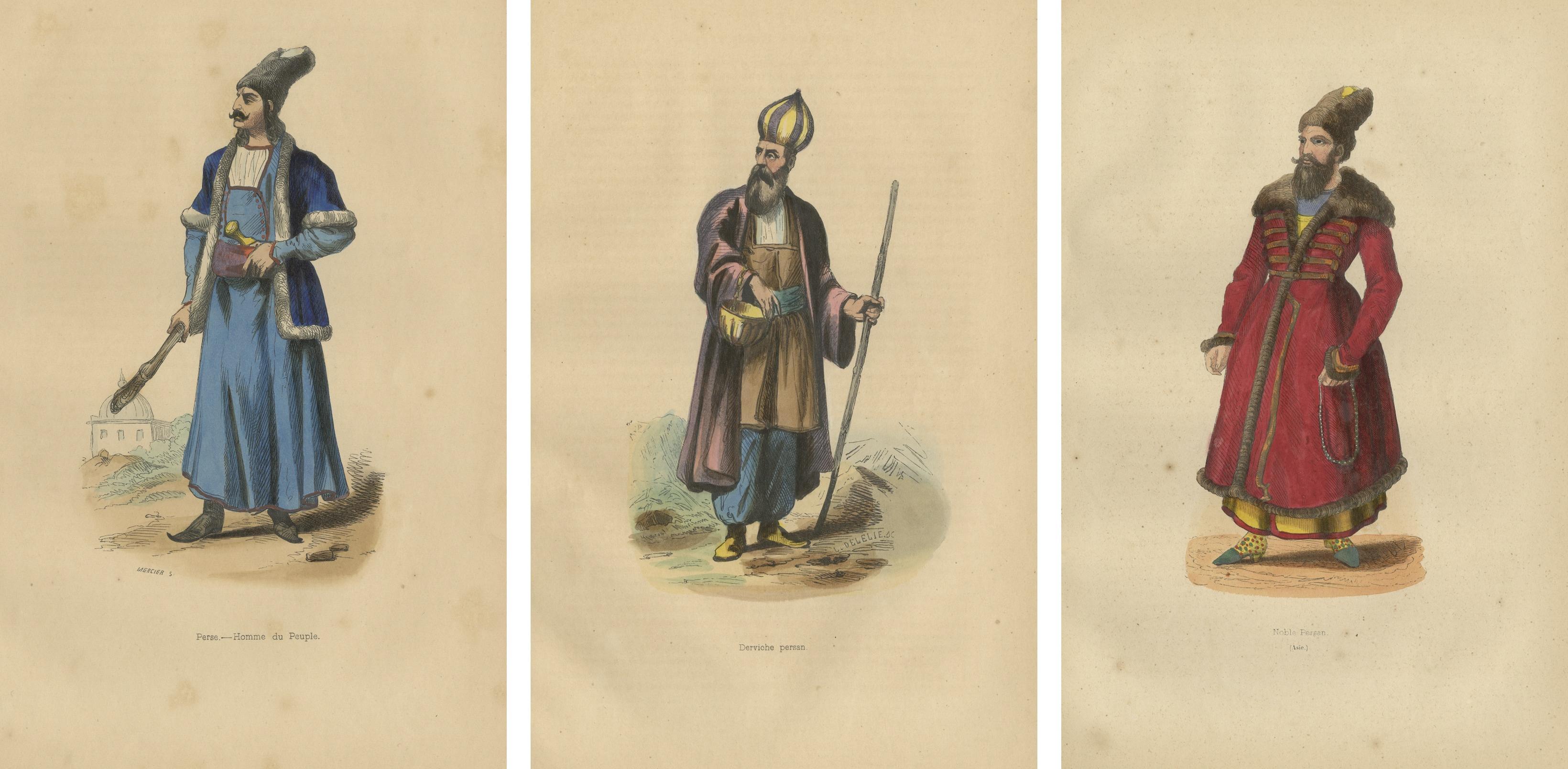
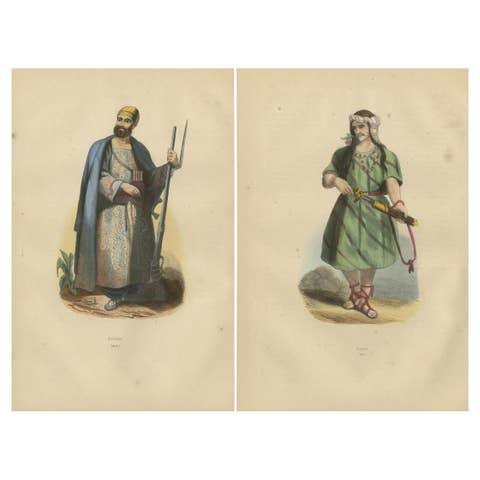
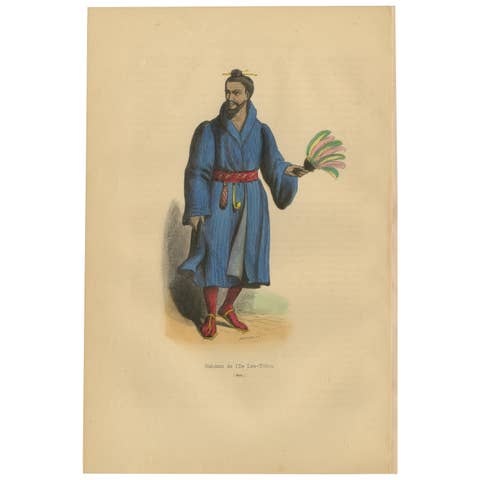
This compilation features three handcoloured lithographs representing traditional Persian figures: a common man, a dervish, and a noble, from the esteemed 1844 collection "Moeurs, Usages et Costumes de tous les Peuples de Monde" by Auguste Wahlen.
Published in Paris, these prints are crafted through lithography, a popular 19th-century technique, and are enhanced with Arabic gum on wove (vellin) paper. The vivid depiction of their cultural attire and the distinct portrayal of each social stratum make these prints particularly captivating. They offer a glimpse into the historical socio-cultural fabric of Persia, making them highly sought after by collectors and enthusiasts of Middle Eastern art and history.
In the three prints you provided of Persian figures, each character holds something distinct that signifies their role or status within their culture:
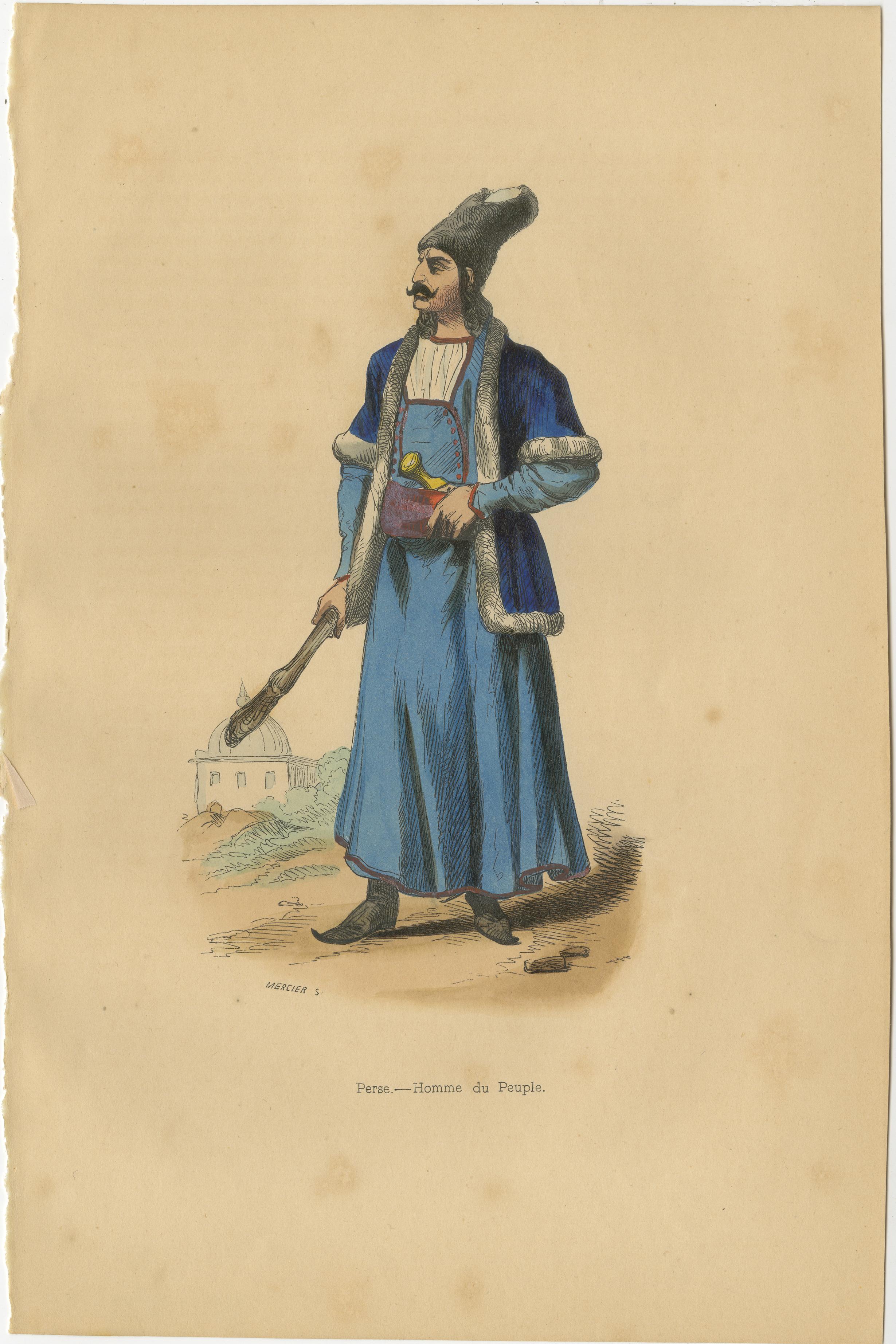
1. Persé - Homme du Peuple (Common Man):
- Holding: This figure holds a walking stick or cane, which is a common accessory that could be used for practical purposes like walking support or herding animals.
- Outfit: He wears traditional attire with a long coat and a large hat, indicative of a common man's clothing in historical Persian society. His outfit and the stick both emphasize his everyday, practical life.
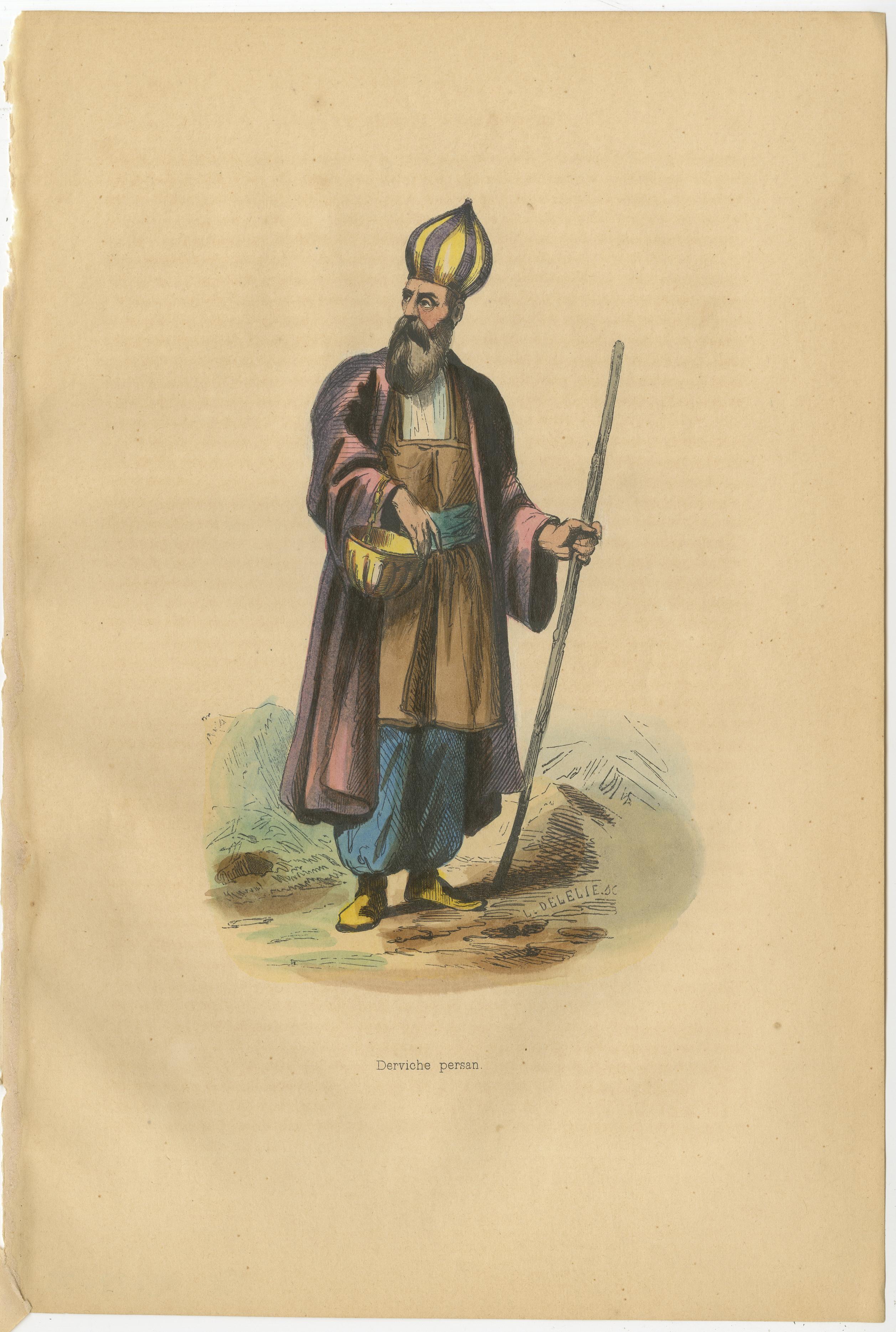
2. Derviche Persan (Dervish):
- Holding: The Dervish holds a stick and a begging bowl. Dervishes are known for their ascetic piety, often connected with Sufism in Islam. The stick (or staff) symbolizes their travels and spiritual journey, while the bowl is used to receive alms, reflecting their vow of poverty.
- Interesting Fact: Dervishes are part of a mystical spiritual ascetic practice within Islam, focusing on the universal values of love and service. Their clothing and accessories reflect simplicity and spiritual richness.
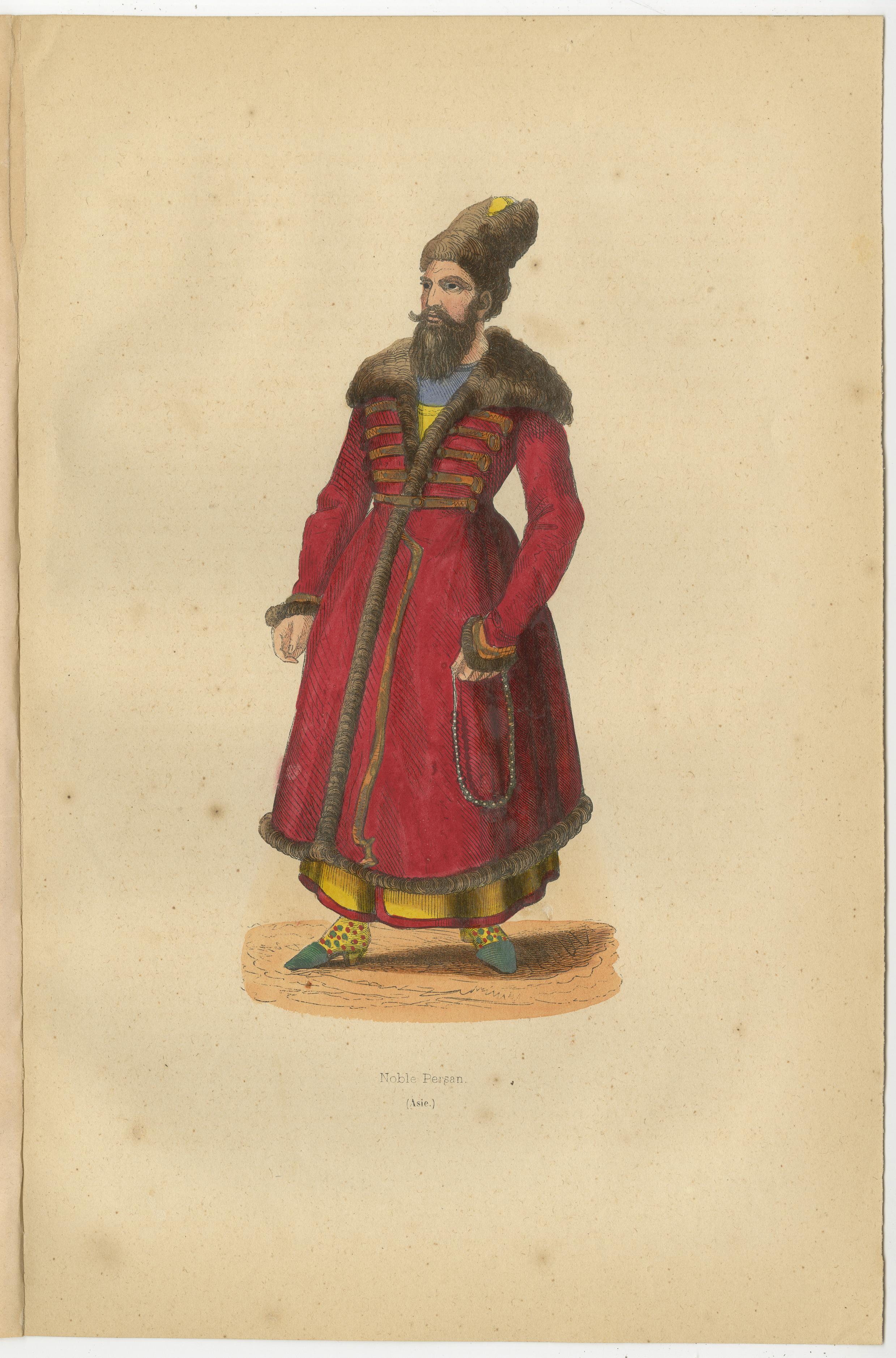
3. Noble Persan (Nobleman):
- Holding: The nobleman carries a sword, which is a symbol of power, authority, and martial prowess. It is commonly featured in depictions of nobility as a sign of their status and ability to command.
- Outfit: His clothing is significantly more elaborate and colorful compared to the others, with fur trim and decorative patterns, signifying wealth and high social status.
These accessories and their attire provide a deep insight into the roles and societal positions of each figure within Persian culture, reflecting a wide range of personal and social identities from the common man to spiritual seekers and the ruling elite. Each element, from the practical walking stick to the symbolically rich begging bowl and the authoritative sword, offers a narrative about their life, status, and societal roles during that historical period.
Keywords:
- Antique Persian prints
- Handcoloured lithographs
- 19th-century Persian culture
- Auguste Wahlen lithography
- Traditional Persian costumes
- Collectible cultural prints
- Historical Persian figures
- Middle Eastern historical art
- Ethnographic lithographs
- Vintage Persian attire prints
These keywords help target collectors and cultural historians who are particularly interested in Middle Eastern historical prints and Persian cultural heritage.