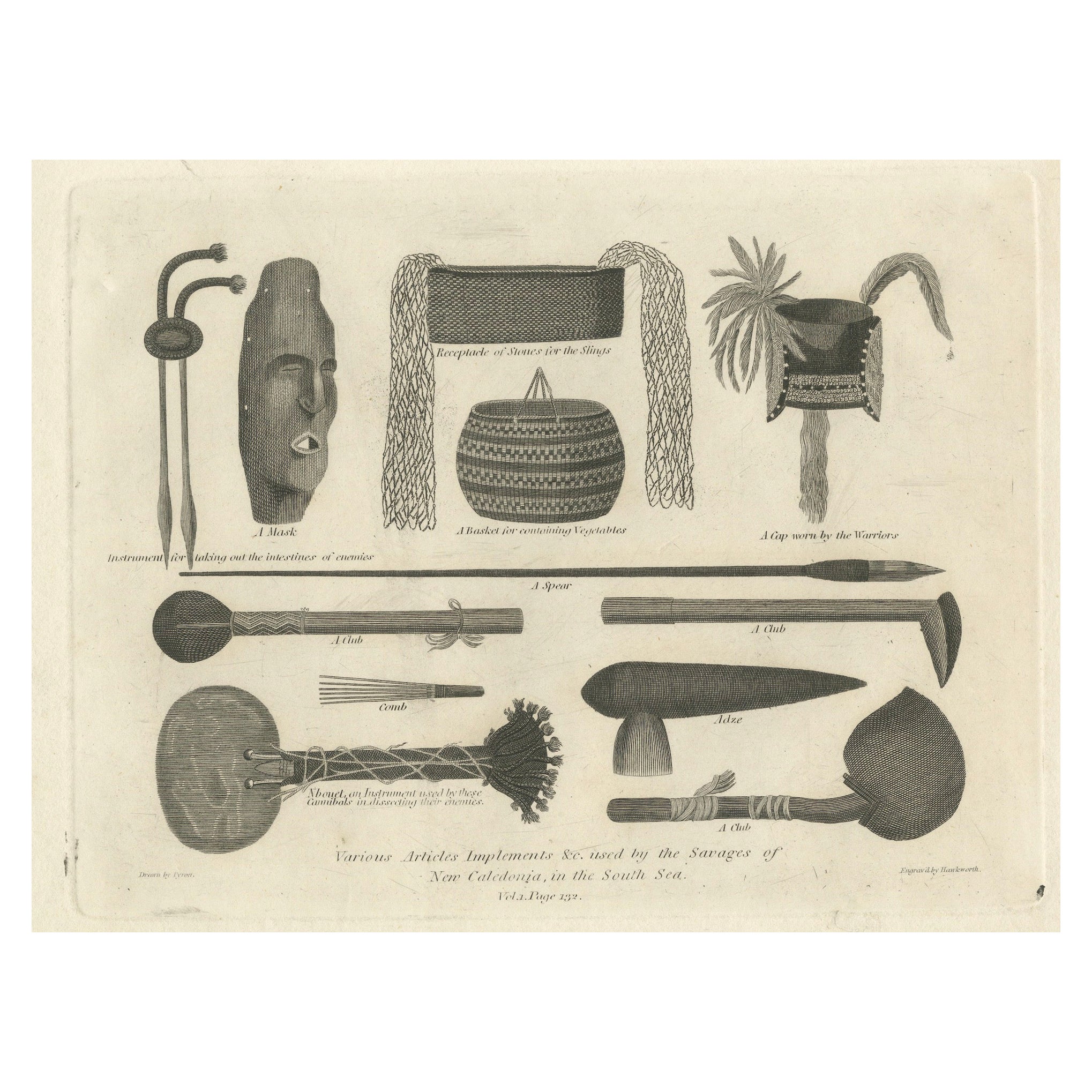
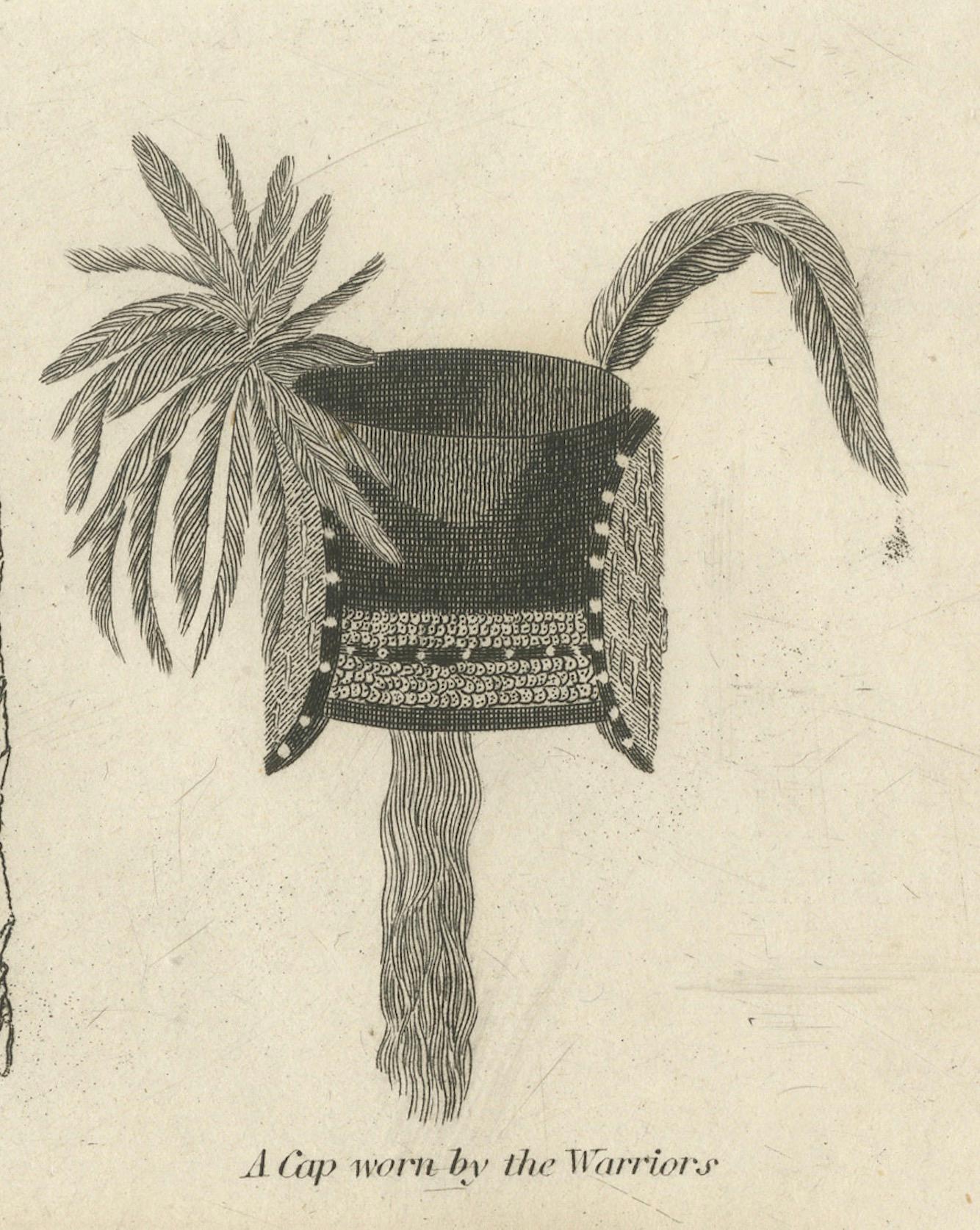
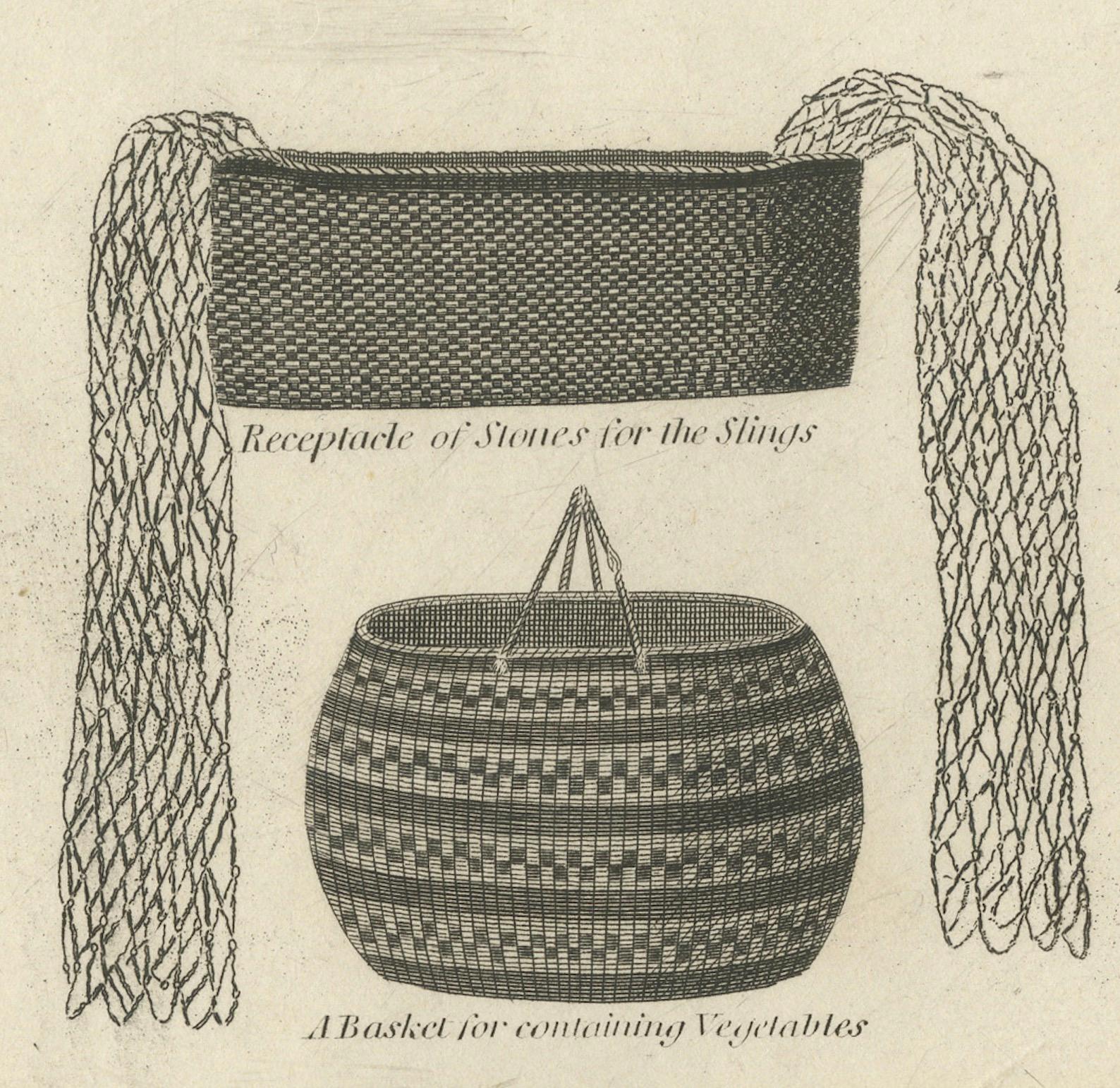
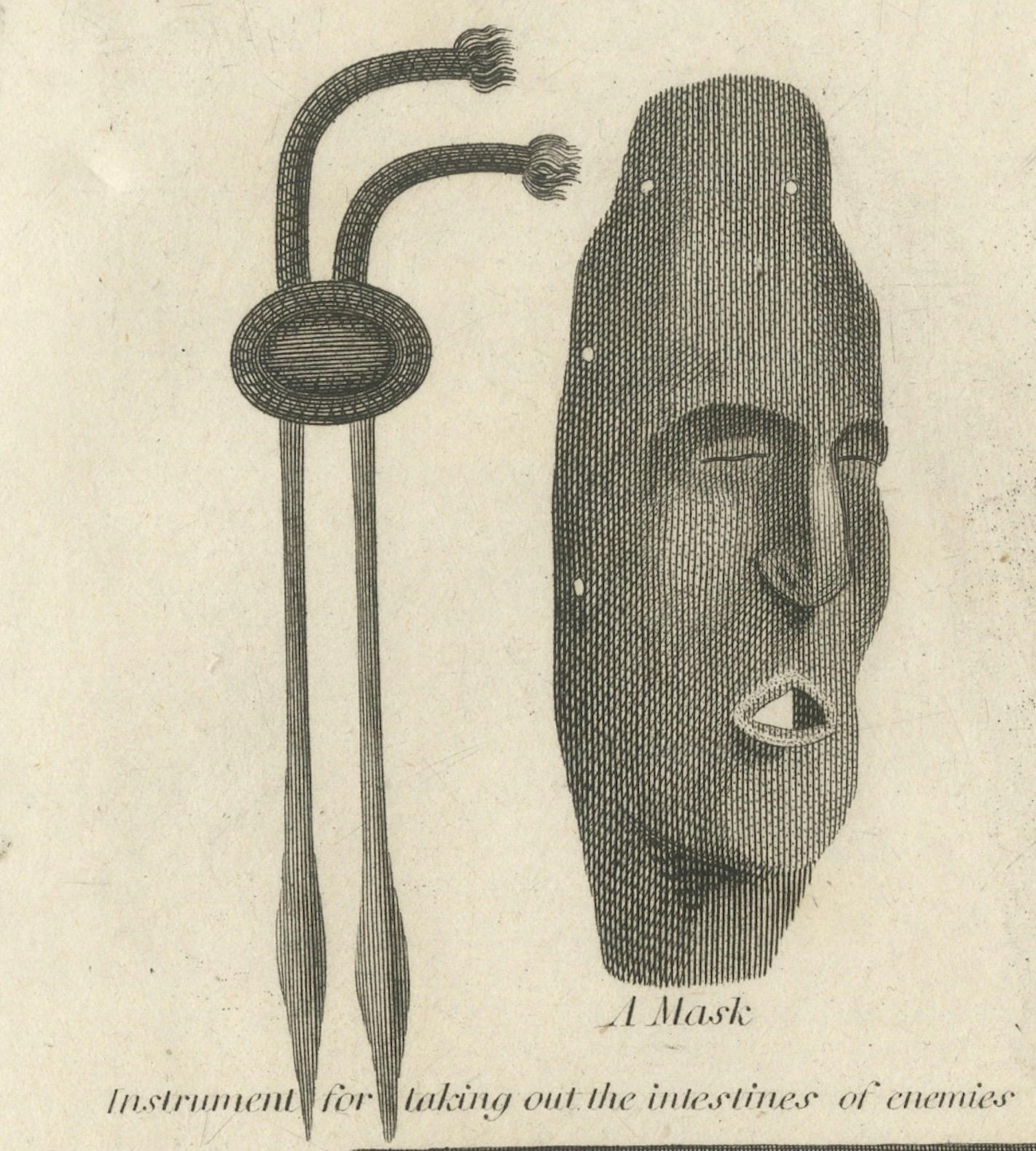
1801 Engraving of New Caledonian Implements and Attire
€ 490
One of a kind: this is the sheet in the photographs. Ships from Langweer, the Netherlands.
Date
1801
Sheet size
20 × 26.5 cm (7.9 × 10.4 in)
Condition
Good
Reference
BG-13597-14
Condition
Very good condition on strong paper. No foxing or other damage. A few small unobtrusive marks due to age or handling over the last few centuries. This is not a reproduction but an original engraving. Study the image carefully.
About this sheet
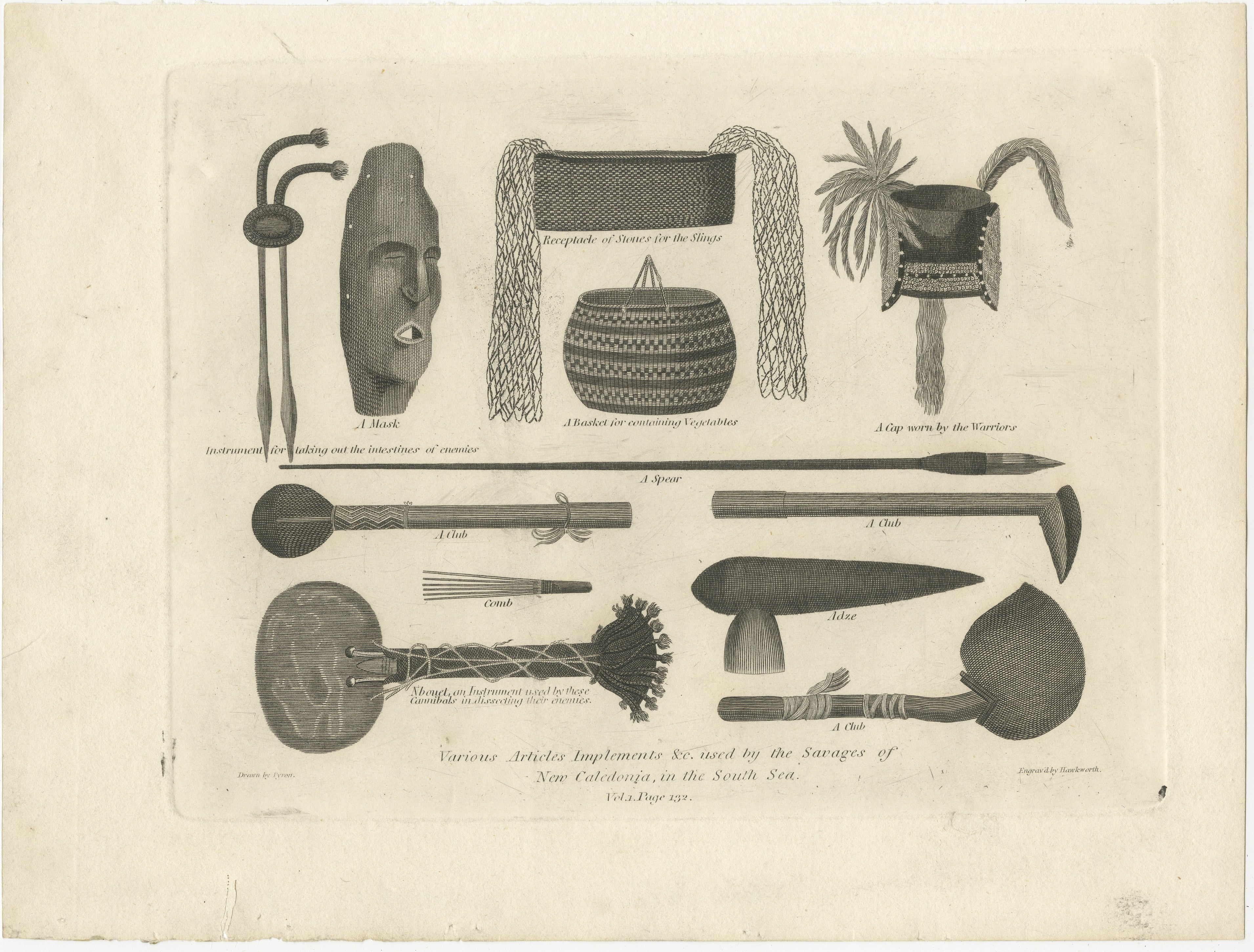
Various Articles Implements And Used By The Savages Of New Caledonia In The South Sea This 1801 copperplate engraving from George Alexander Cooke's "Universal Geography" displays various tools and clothing of the indigenous people of New Caledonia in the South Sea. Items depicted include a mask, a basket for containing feathers, a warrior's cap, instruments for tattooing, a club, a spear, and other artifacts integral to the daily and ceremonial life of the New Caledonian people. The engraving provides a visual documentation of the cultural artifacts encountered by explorers like Captain James Cook during their voyages.
The print includes various items used by the indigenous people of New Caledonia:
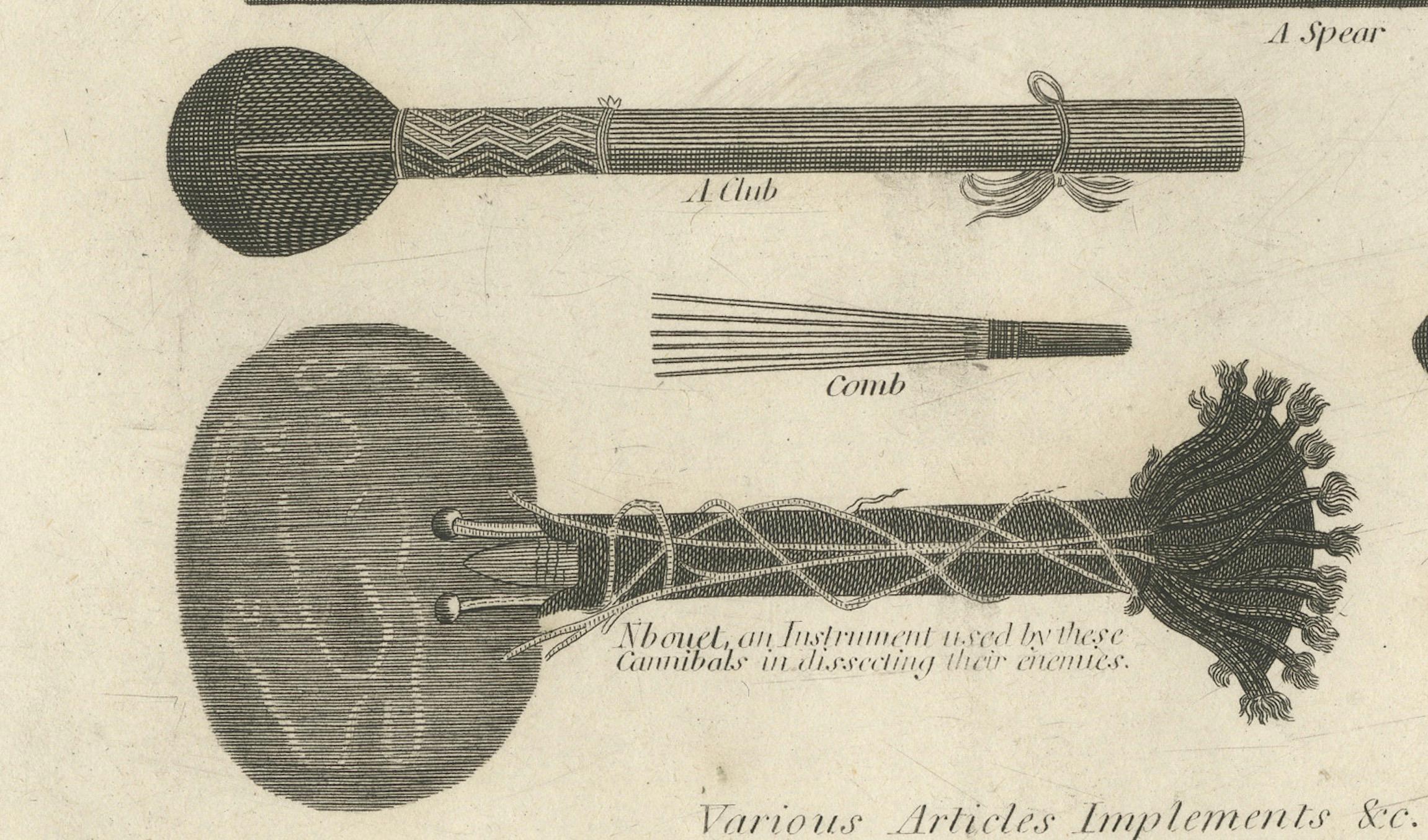
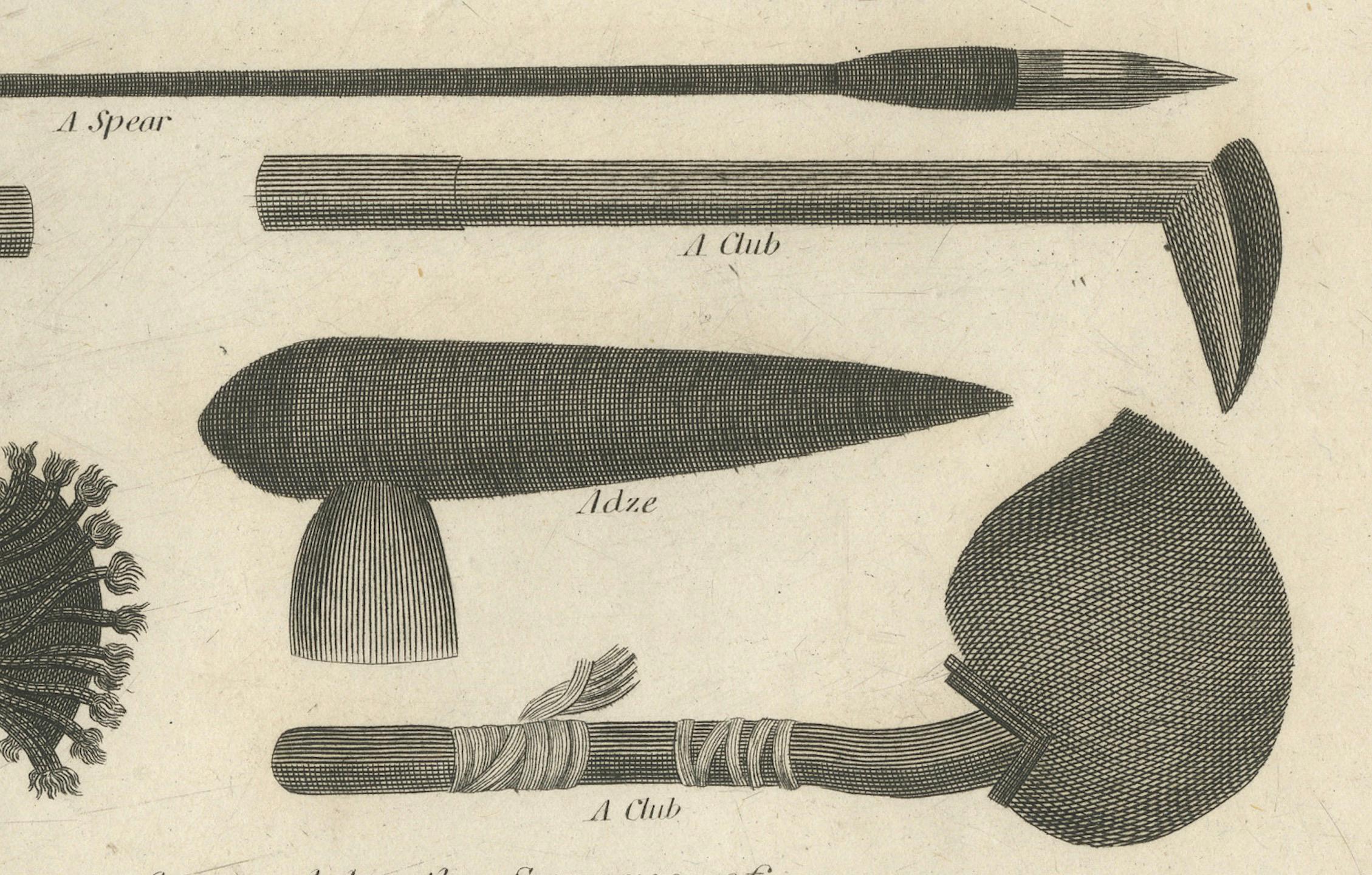
1. A mask, likely used in rituals or ceremonies. 2. A basket for containing feathers, possibly for storage or transport of valuable items. 3. A cap worn by warriors, part of their traditional attire. 4. Tattooing instruments for marking the skin with cultural or status symbols. 5. A club, which could be a weapon or a symbol of power. 6. A spear, used for hunting or as a weapon. 7. An adze, a tool for woodworking or carving.
Each item had a specific purpose, whether in daily tasks, combat, or cultural practices.
More info on its publication: The print is part of George Alexander Cooke's comprehensive work "A Modern and Authentic System of Universal Geography." This book was a significant compilation of geographical knowledge during the late 18th century, offering descriptions and accounts of various parts of the world, influenced by the age of exploration. It includes narratives of famed explorers like Captain James Cook and Ferdinand Magellan, detailing their discoveries and journeys that expanded the European understanding of the globe. Cooke's work served as both a chronicle and reference for the territories and cultures encountered by these voyagers.