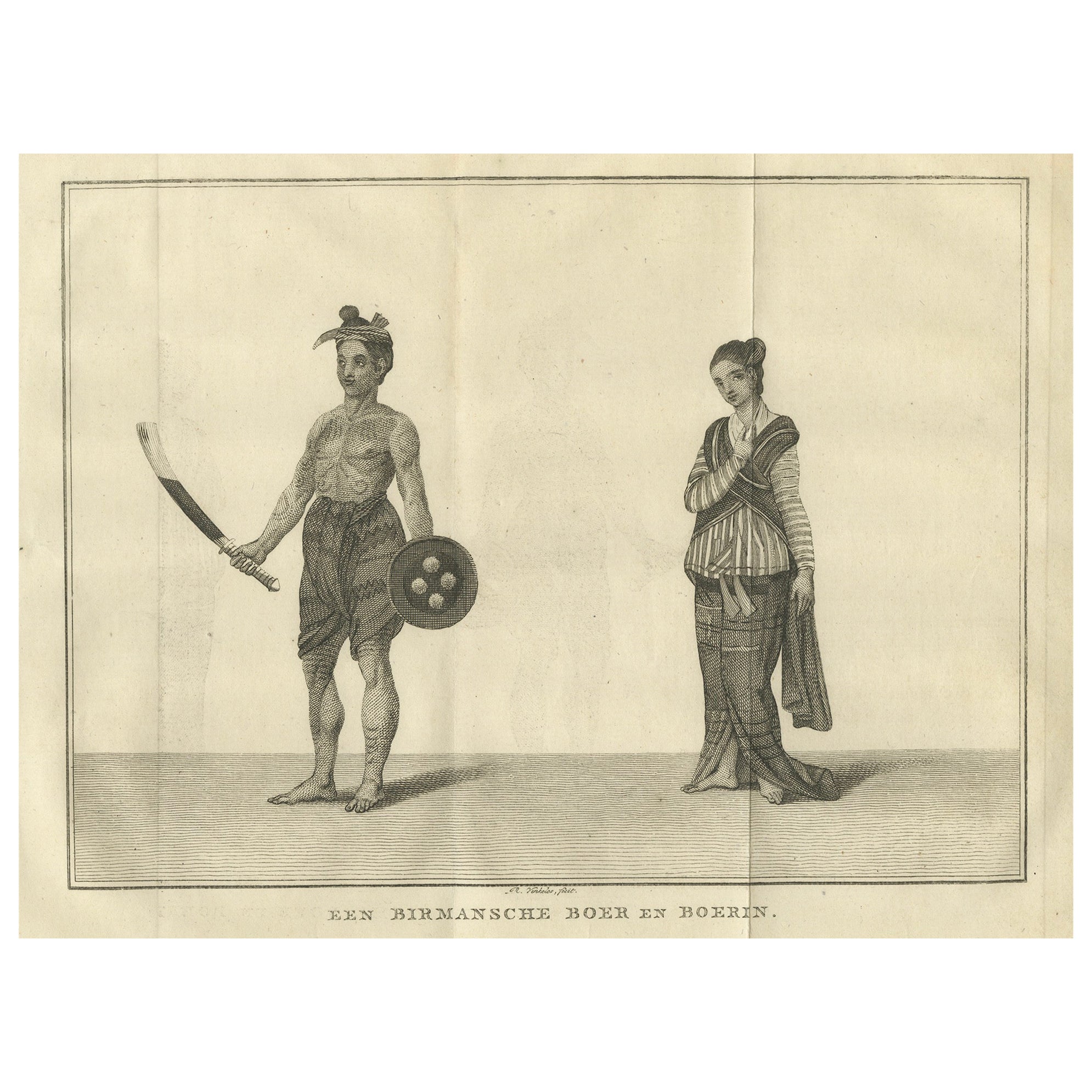
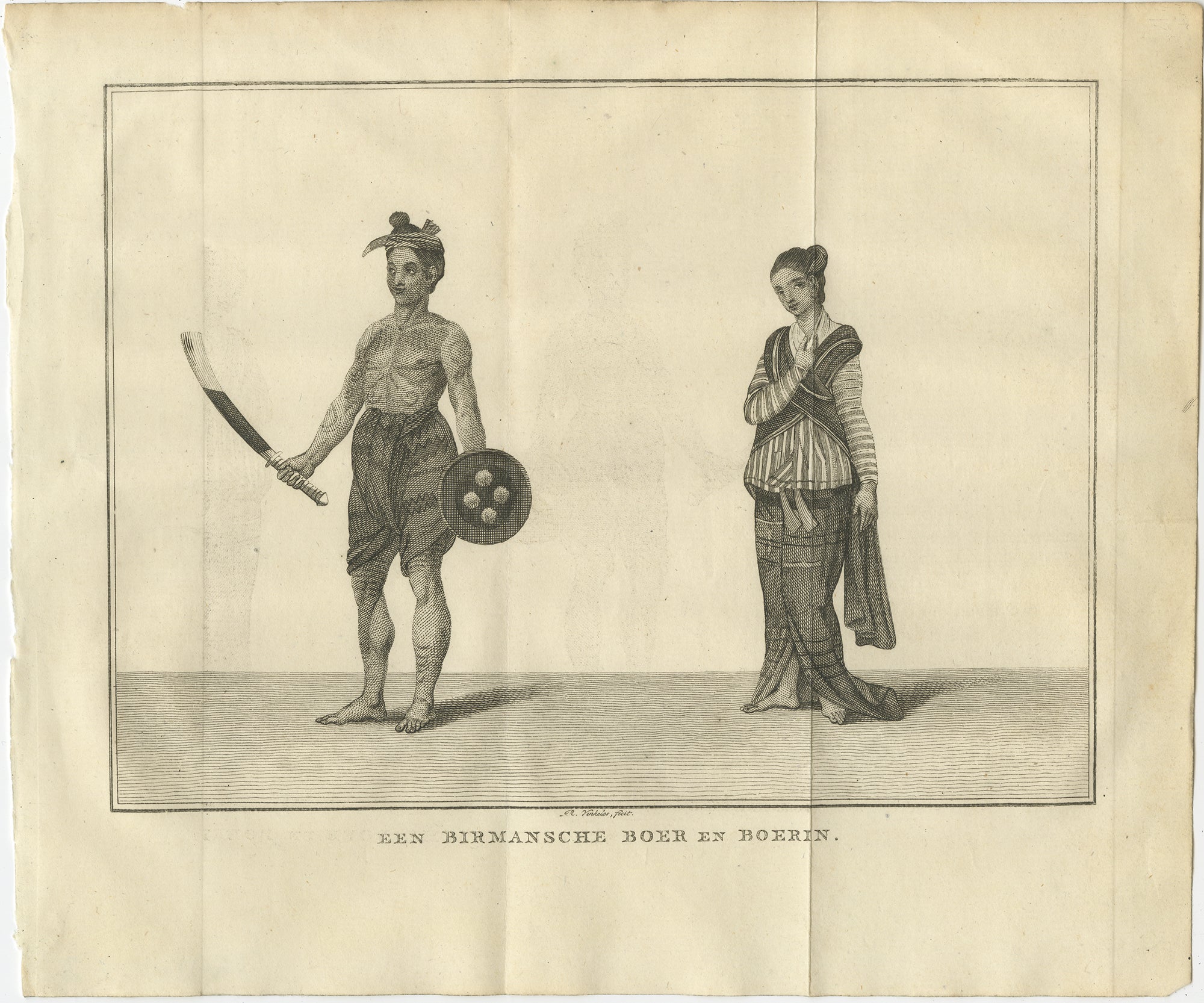
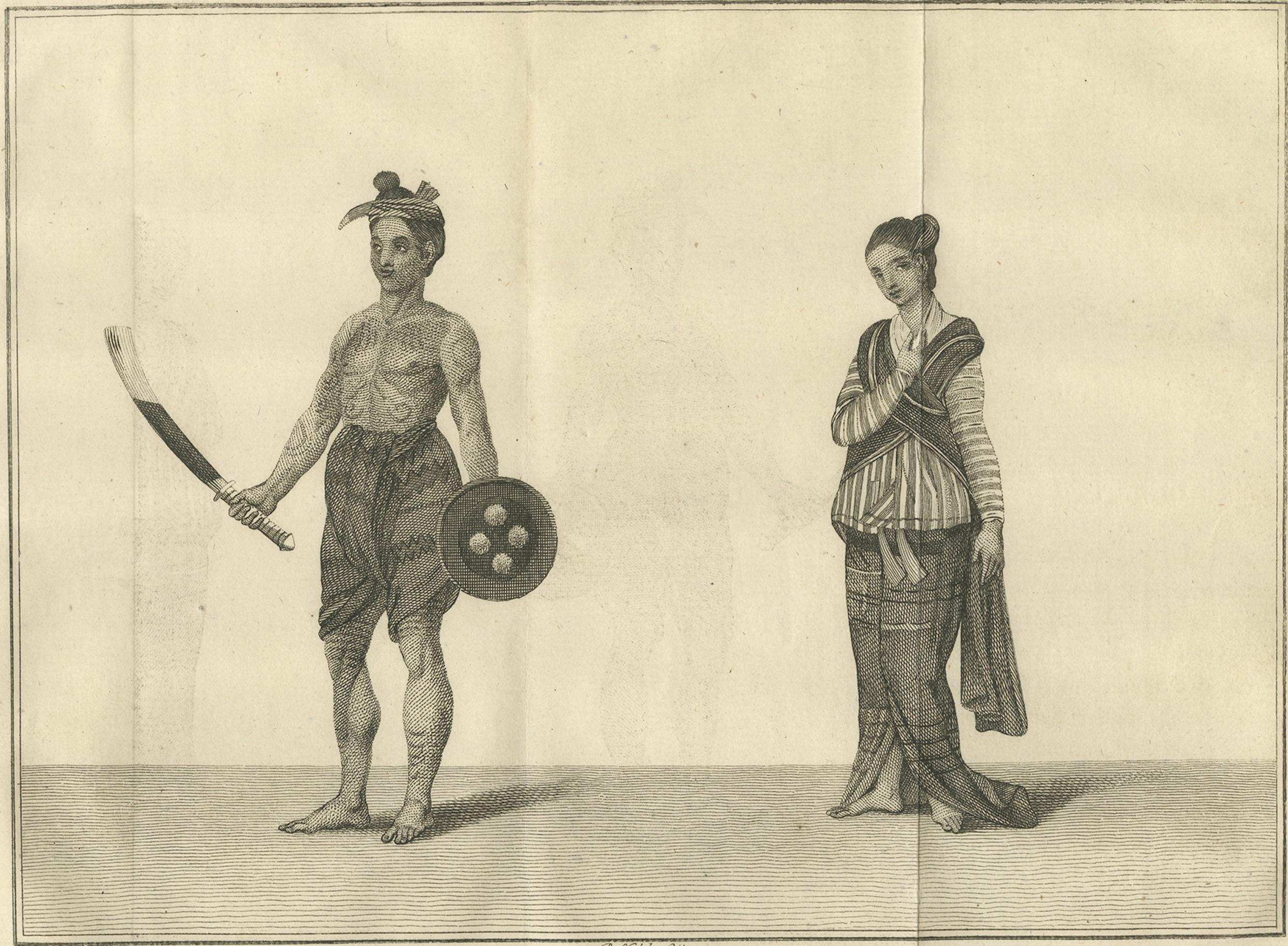
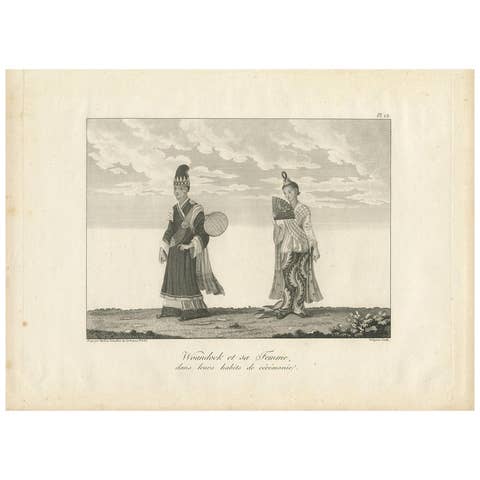
Tattooed Burmese Farmer and His Wife – Antique Costume Print, circa 1800
€ 340
One of a kind: this is the sheet in the photographs. Ships from Langweer, the Netherlands.
Date
1800
Sheet size
20.9 × 24.7 cm (8.2 × 9.7 in)
Condition
Good
Reference
BG-11645-1-3
Condition
impression with strong plate lines. Light toning and several original fold lines. Minor creases in the margin but no tears or significant stains. Paper remains strong and clean.
About this sheet
Tattooed Burmese Farmer and His Wife – Antique Costume Print, circa 1800
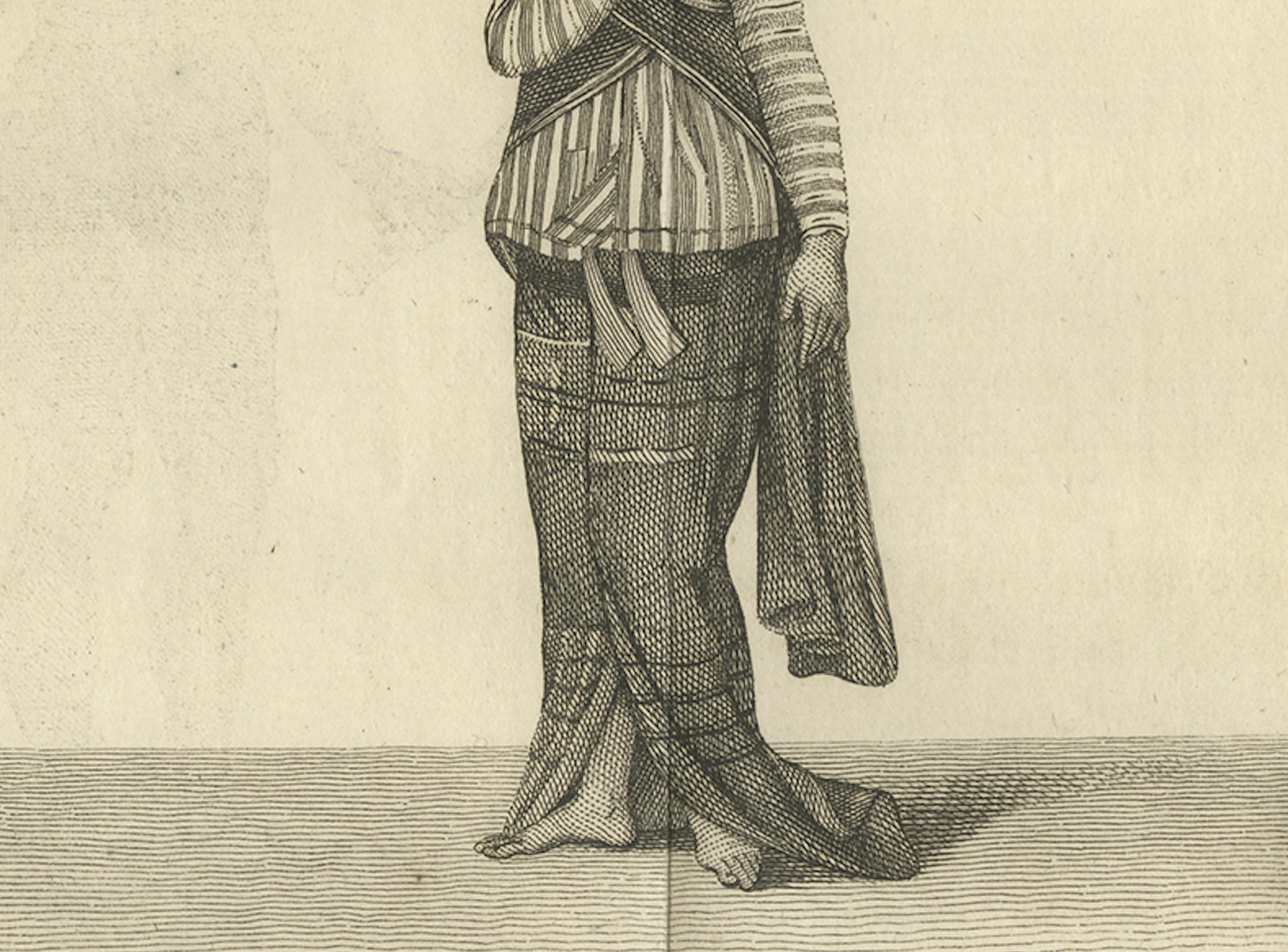
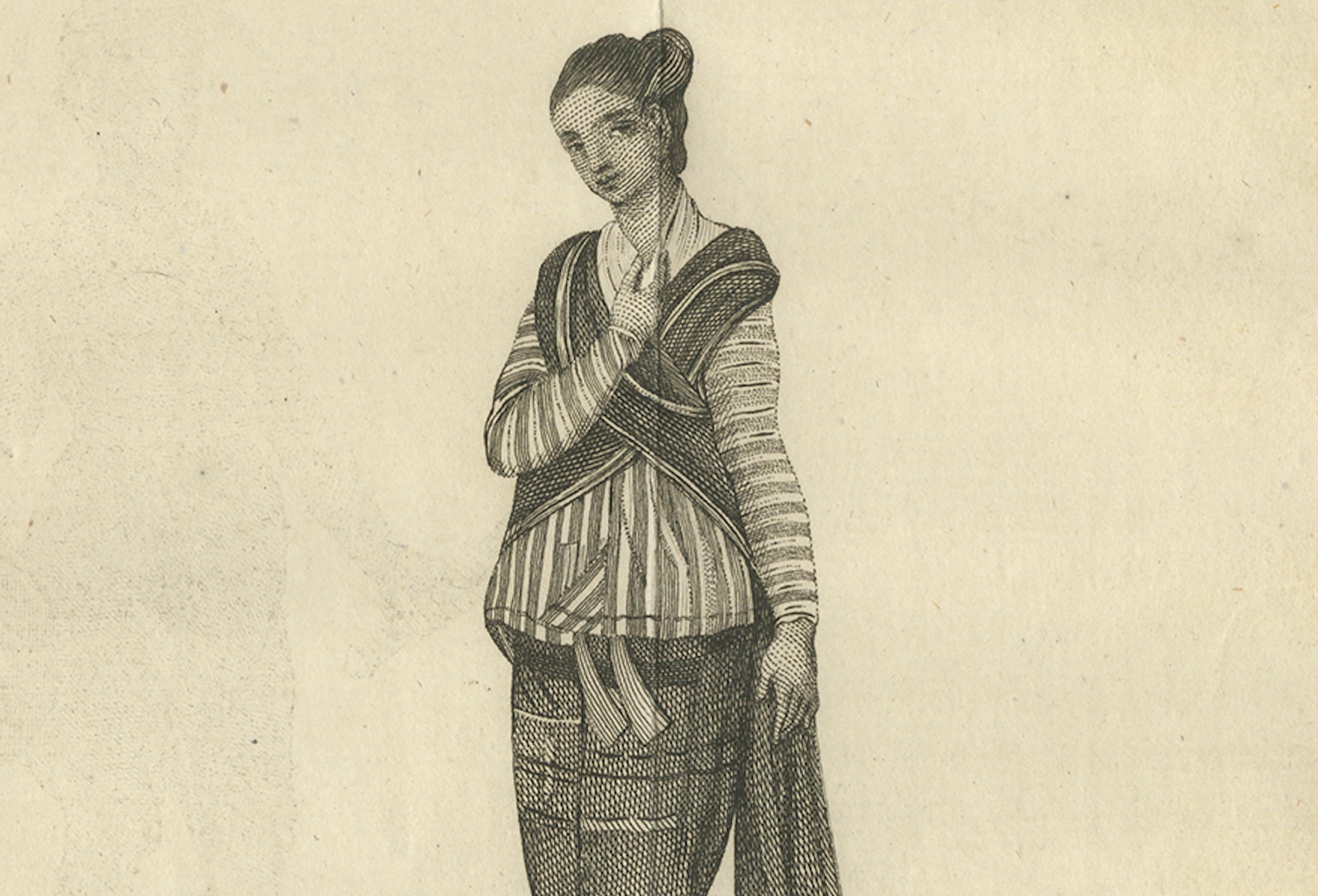
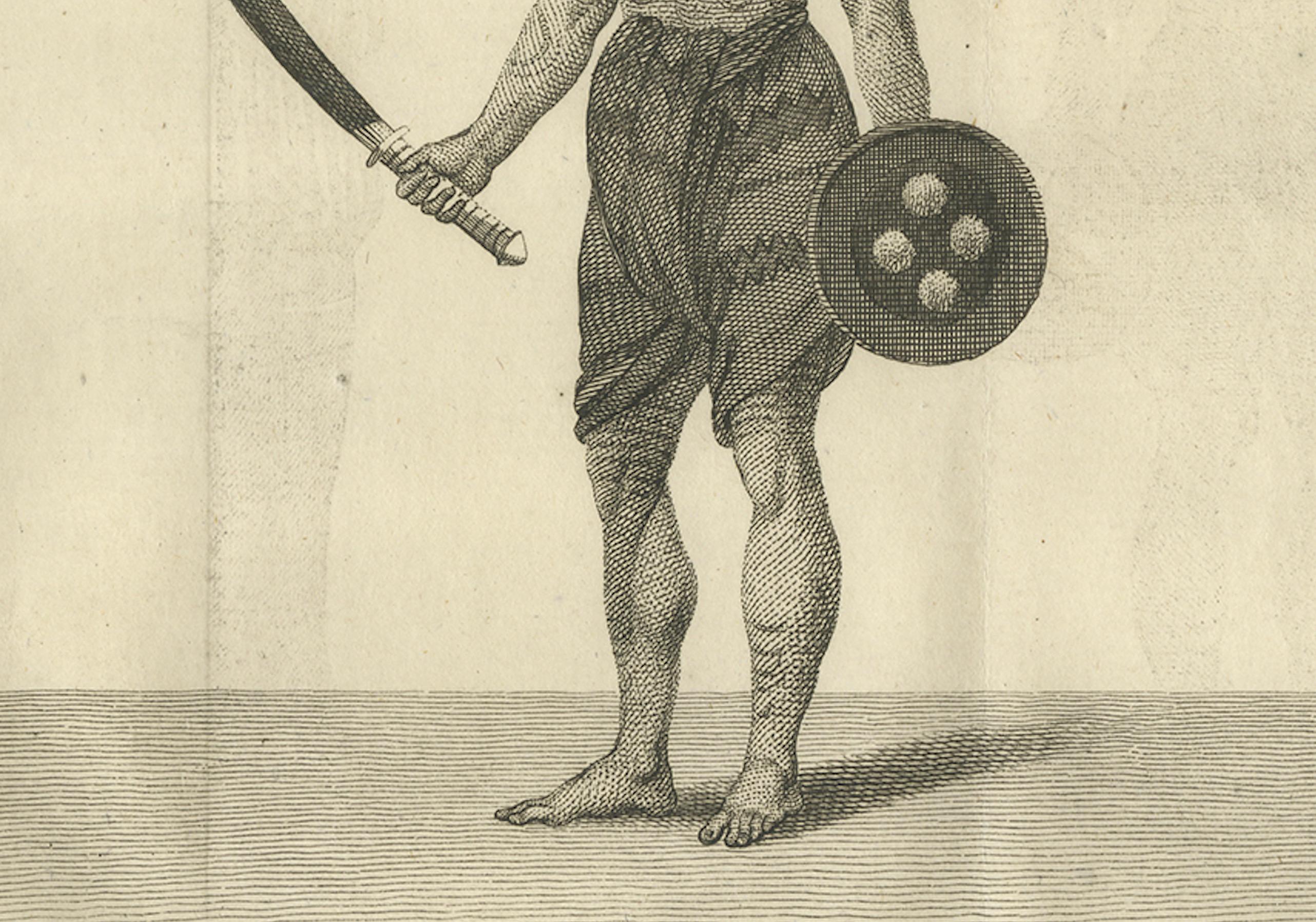
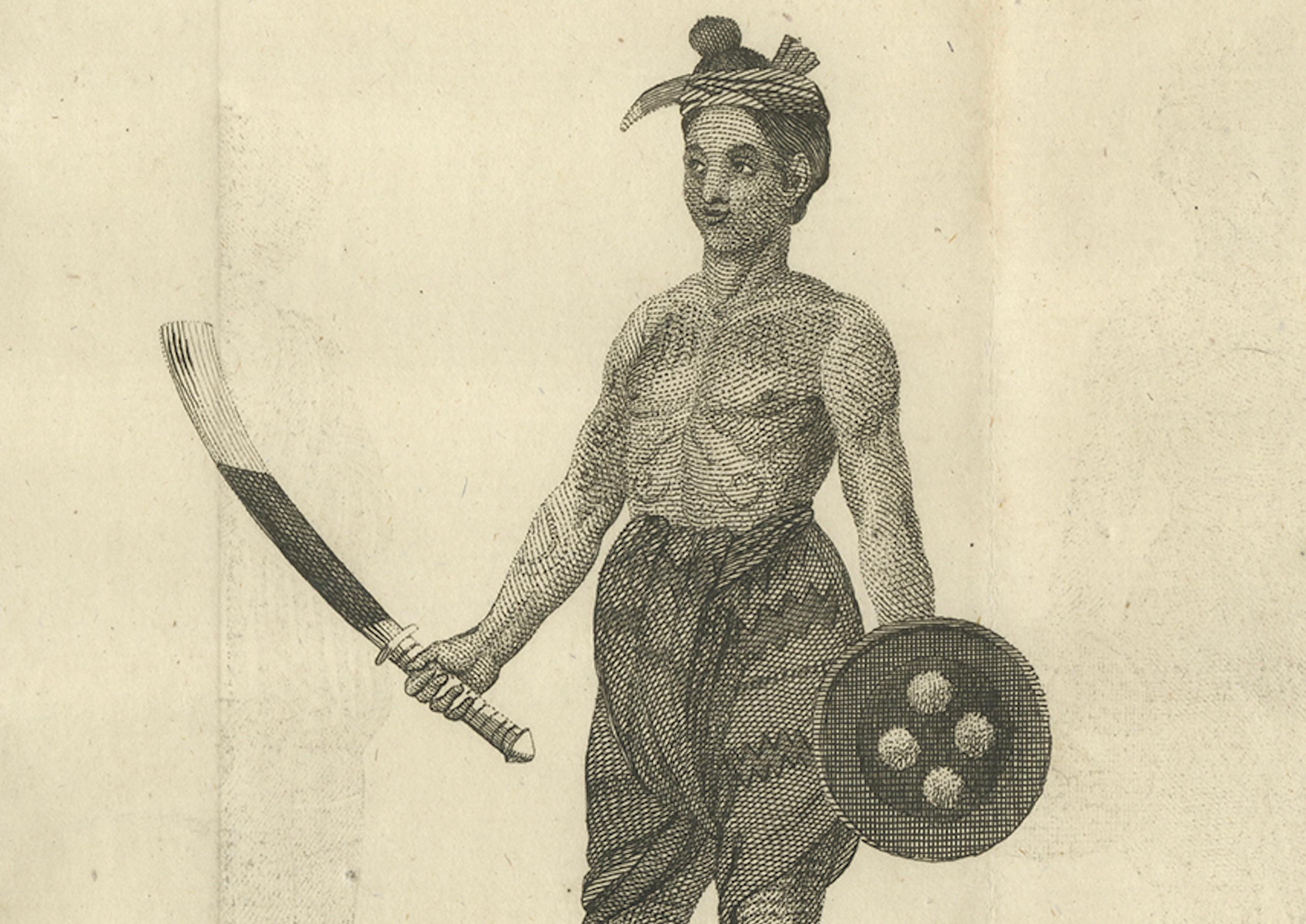
This detailed early 19th-century Dutch engraving titled “Een Birmansche Boer en Boerin” (“A Burmese Farmer and Farmer’s Wife”) presents a traditional Burmese couple in full costume, offering a rare visual record of rural Burmese attire and customs as perceived by European observers. Created around 1800, the print likely originates from a Dutch edition of a colonial travel narrative, such as the account of Michael Symes’s 1795 British embassy to the Kingdom of Ava (Burma), which was widely translated and illustrated.
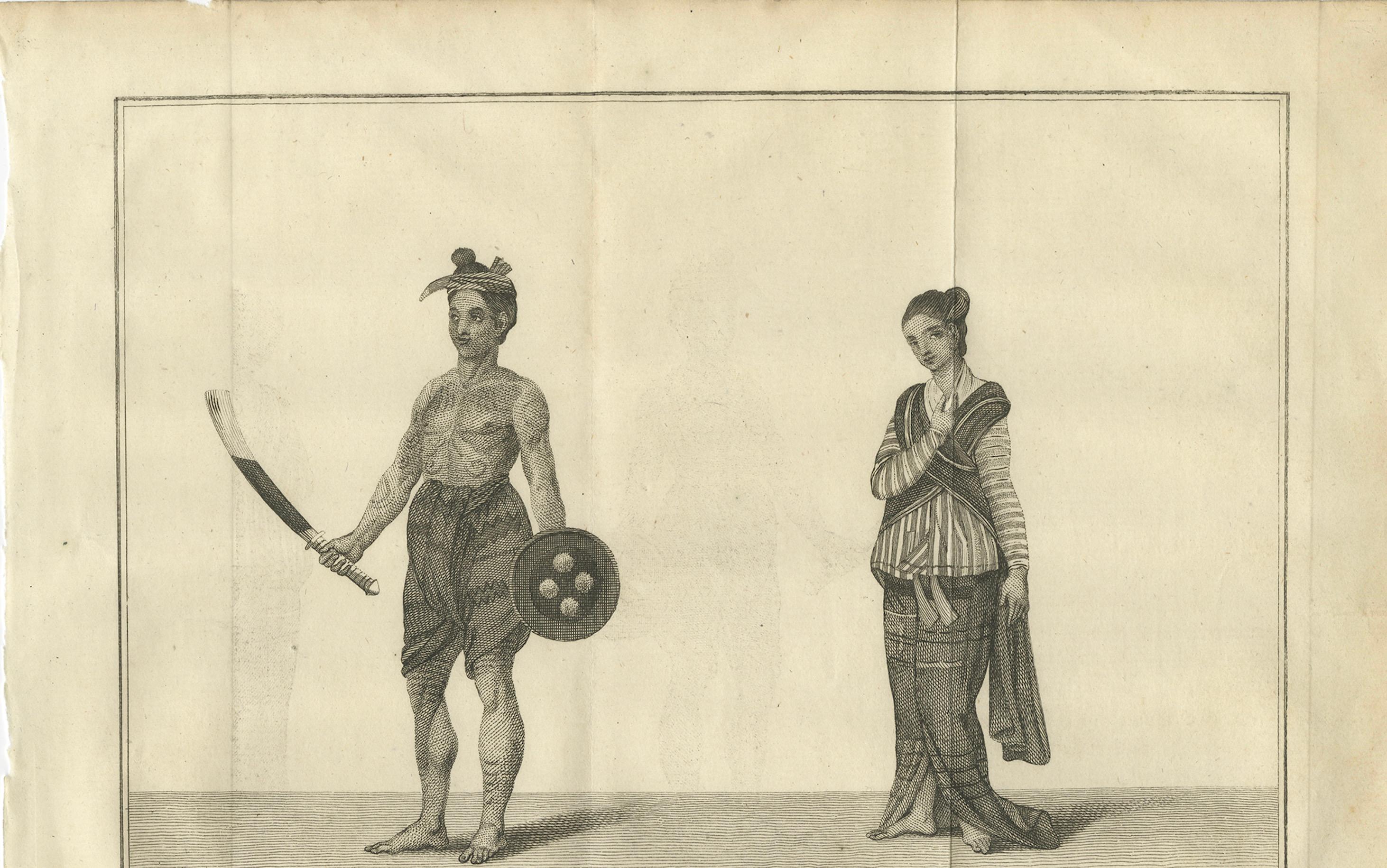
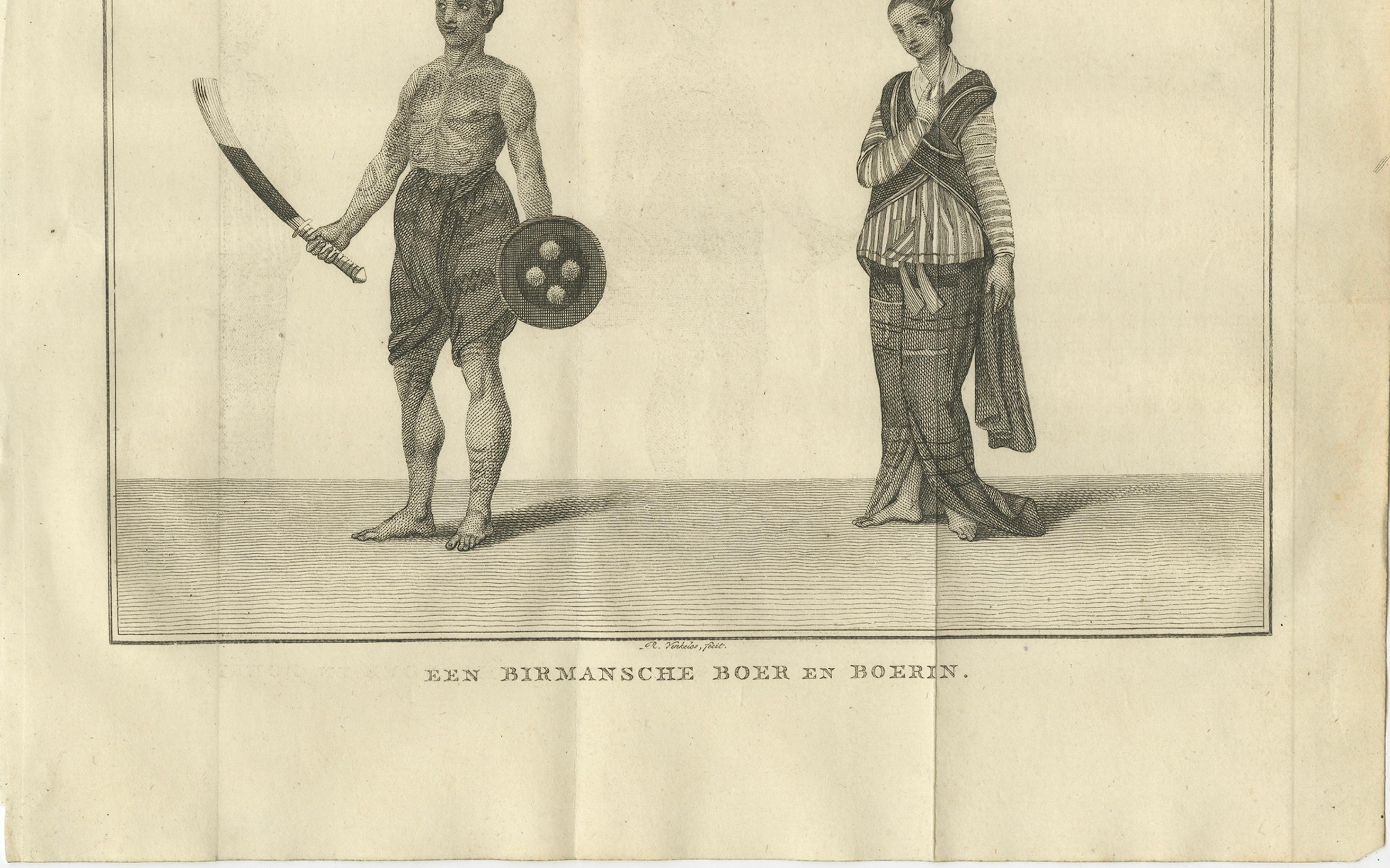
The male figure is portrayed as a muscular, tattooed farmer holding a large curved sword and a round shield. His bare chest and legs display traditional tattoos, which were common among Burmese men and often signified courage or status. He wears a short, wrapped lower garment and a distinctive headpiece with a topknot, giving him a bold and assertive stance that suggests readiness for both agricultural labor and self-defense.
The female figure stands with quiet composure, dressed in a layered costume typical of Burmese women of the time. Her wraparound skirt and striped blouse are complemented by a draped shawl, and her hair is pulled back neatly. The contrast between the woman’s elegance and the man’s martial appearance reflects both gender roles and the European perspective on "noble savagery" prevalent during the colonial period.
This image is part of the broader European tradition of documenting world cultures through costume prints, often with a mix of ethnographic interest and exoticism. Today, it is appreciated for its historical value and as a reflection of early European encounters with Southeast Asian society.
Condition: Good impression with strong plate lines. Light toning and several original fold lines. Minor creases in the margin but no tears or significant stains. Paper remains strong and clean.
Framing tips: A black or dark teak frame with a warm off-white or light grey mat will highlight the fine engraving and create an elegant, museum-quality presentation.
Technique: Copper engraving Maker: A. Vinkeles, Netherlands, circa 1800