Mounted Warrior of the Kassai Region – Antique Costume Print, circa 1800
€ 340
Original antique · The actual sheet photographed · Certificate of authenticity on request · Sold unframed · Worldwide shipping from € 15 (rates)
Date
1800
Mapmaker / artist
C. van Baak, Netherlands, circa 1800
Technique
Copper engraving
Sheet size
20.9 × 24.5 cm (8.2 × 9.6 in)
Condition
Excellent
Reference
BG-11645-1-6
What the condition grades mean
Excellent
Bright and clean, with no faults worth mentioning.
Very good
Only light signs of age, such as faint toning.
Good
Normal signs of age for a sheet of this period: toning, some foxing, small marks or neat old repairs.
Fair
Clear faults such as staining, tears or repairs, priced to match.
Every fault we see is written in the condition note, and the whole sheet is shown uncropped in the photos.
Condition
Early impression with strong detail. Original horizontal and vertical folds, as issued. Minor toning and some creasing along the folds but no tears or stains. Paper is clean, stable, and full-margined.
About this sheet
Mounted Warrior of the Kassai Region – Antique Costume Print, circa 1800
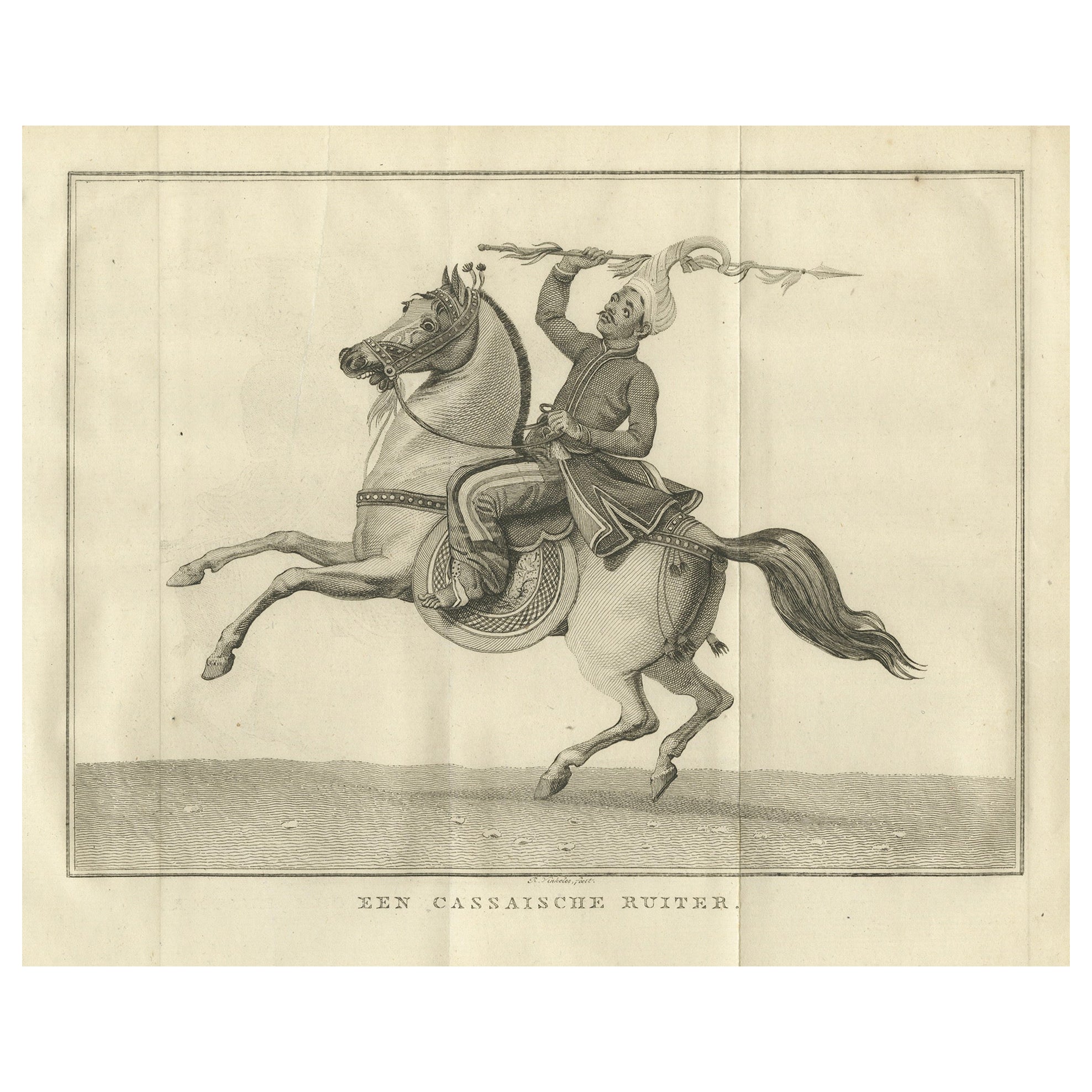
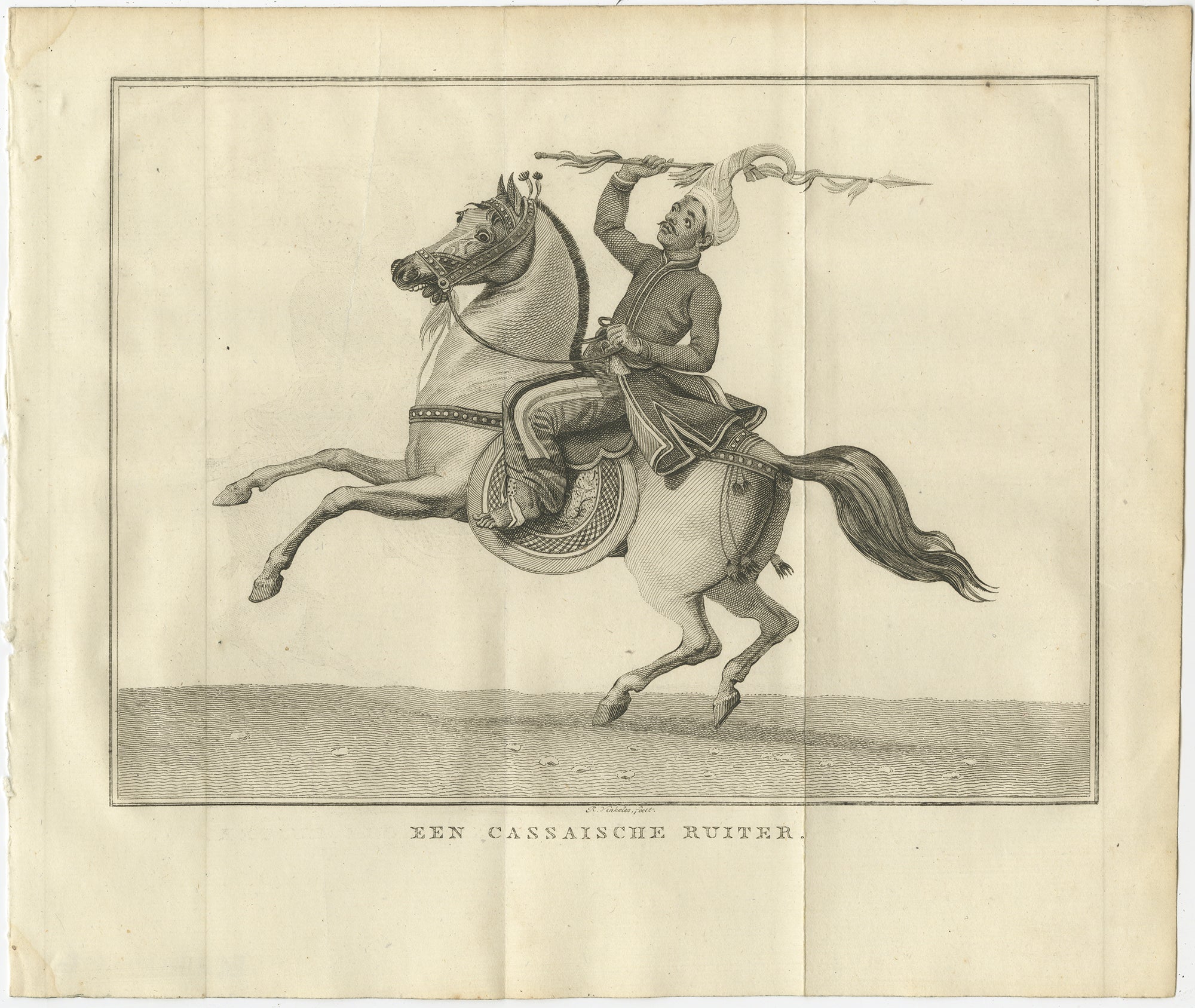
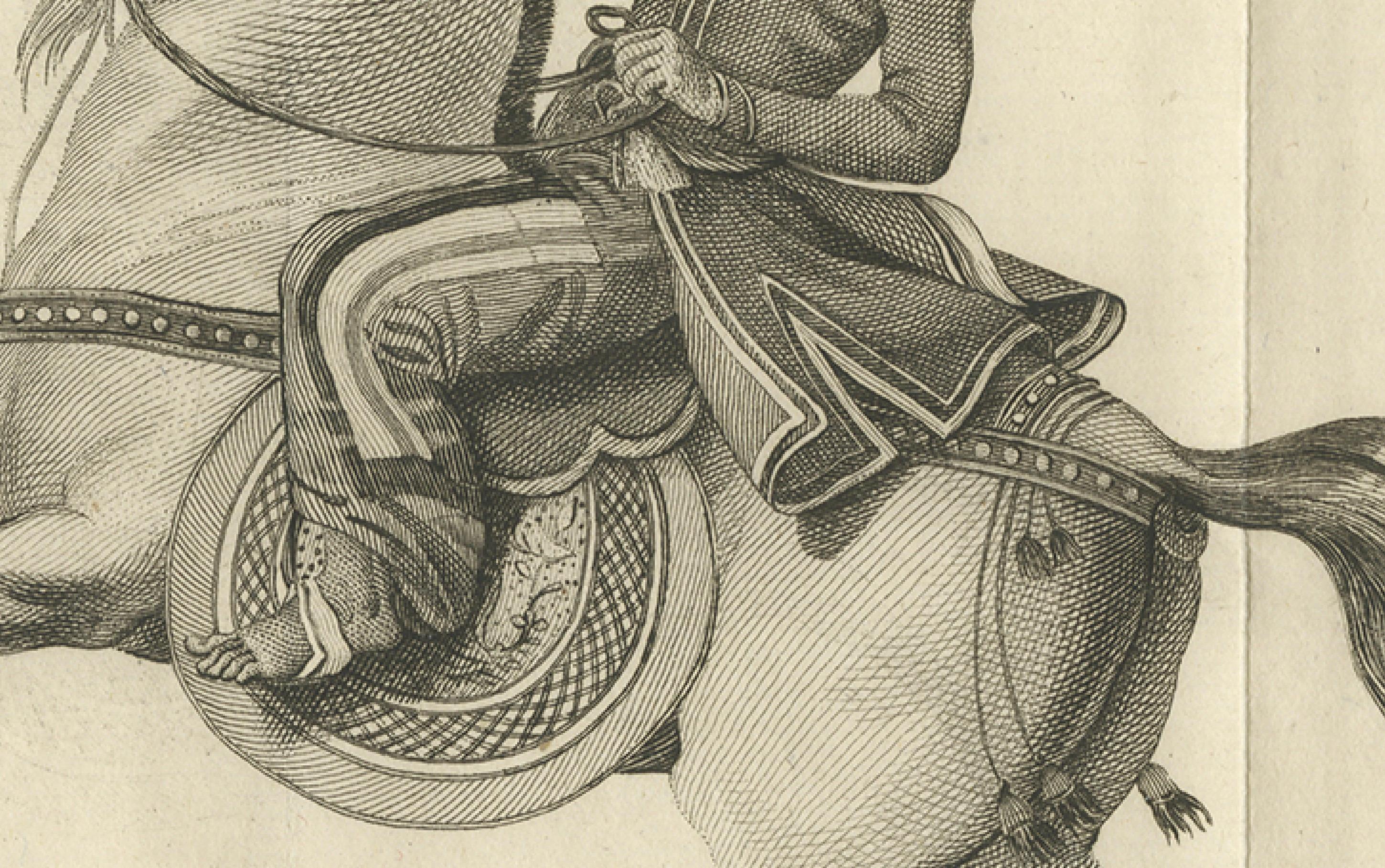
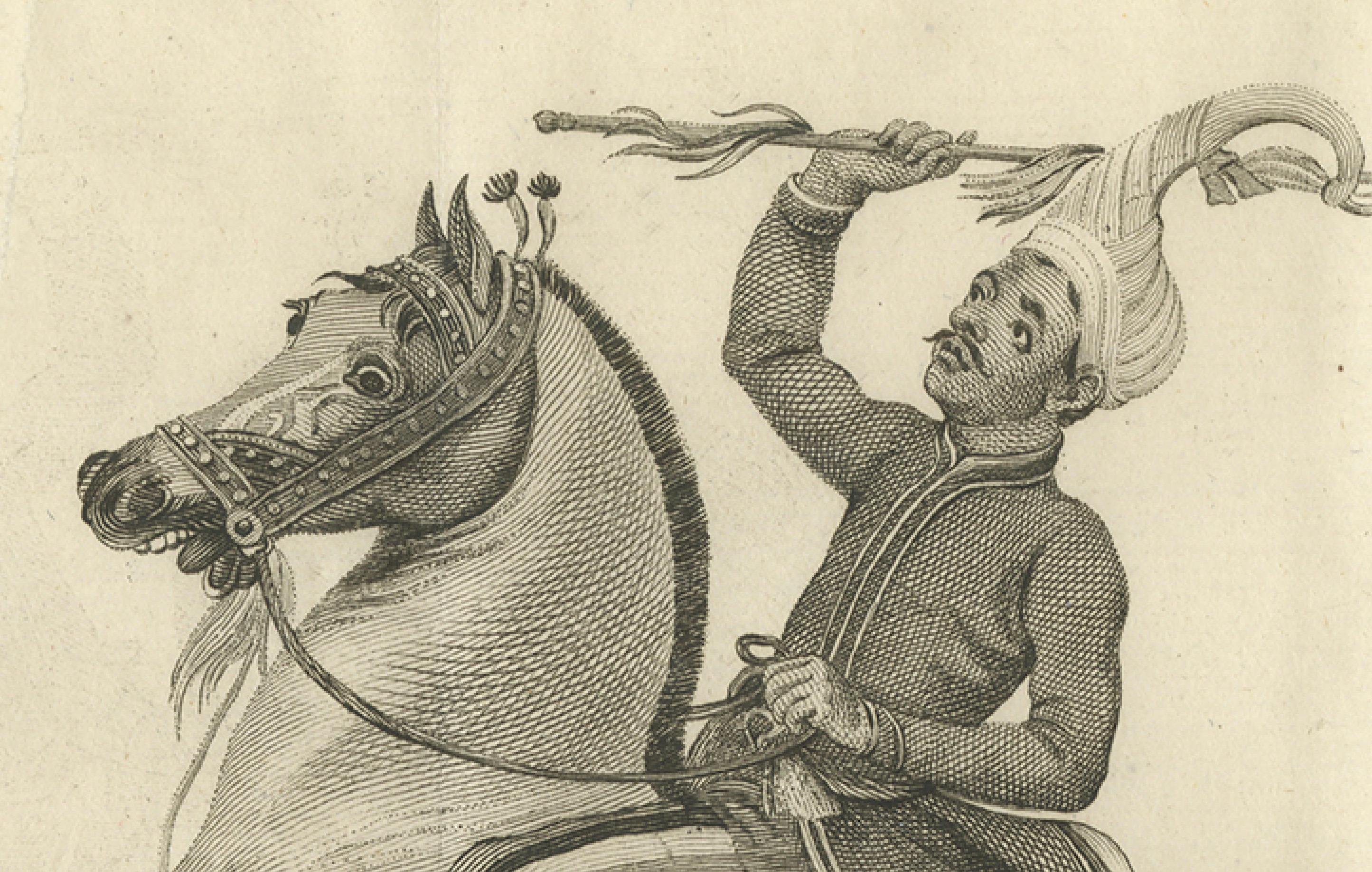
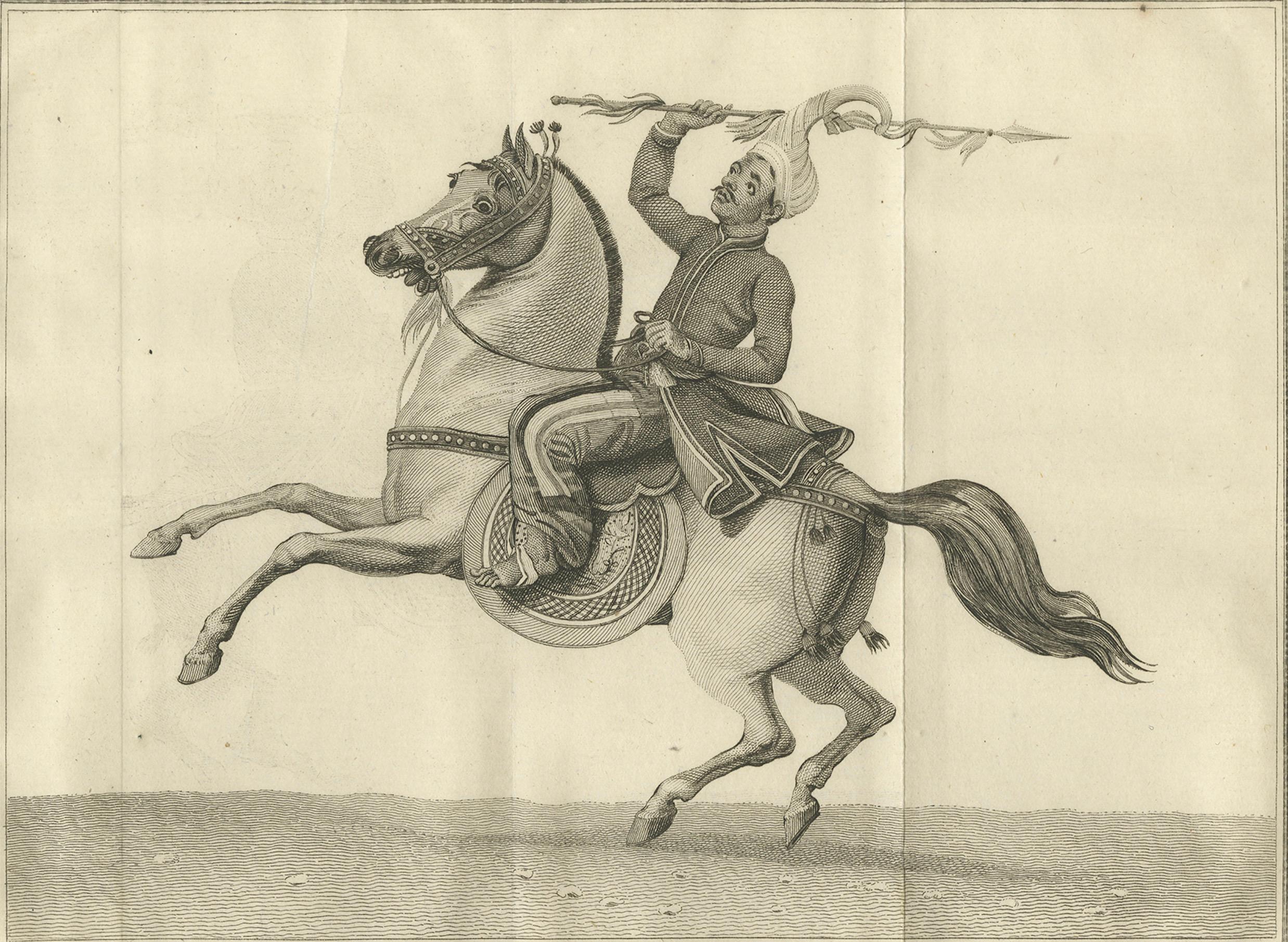
This dramatic antique engraving titled “Een Cassaische Ruiter” (“A Kassai Horseman”) presents a dynamic image of a mounted warrior from the Kassai region, rendered with energy and detail. Produced around 1800 by a Dutch engraver, this print likely appeared in a series of costume and ethnographic illustrations based on European travel accounts of Central or South Asia. While the exact regional reference for “Cassaisch” (Kassai) remains ambiguous, it may refer to an area within the broader Indo-Persian or Central Asian cultural sphere, possibly linked to Kashgar or regions around the Caspian or Khyber area.
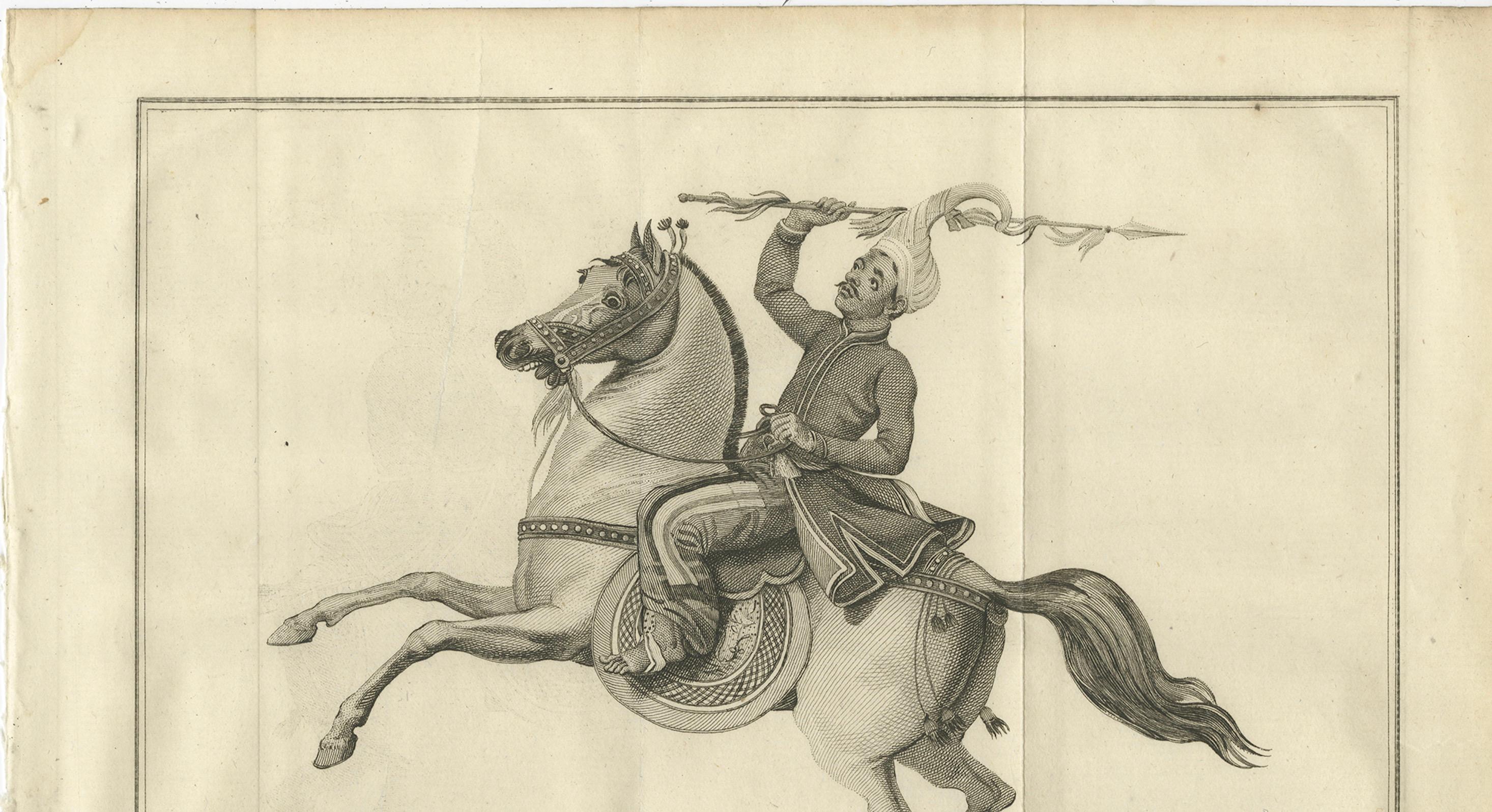
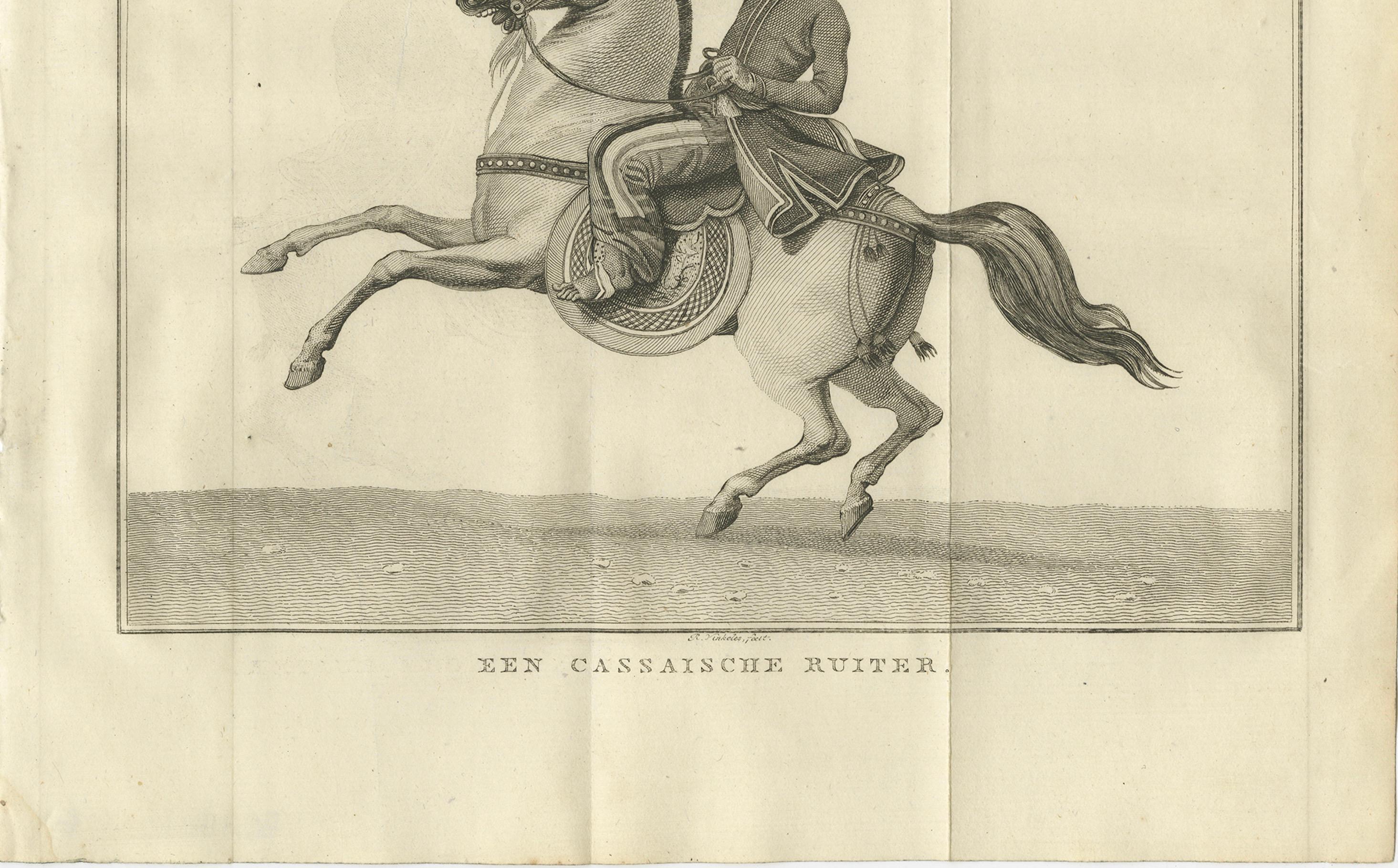
The rider is shown in full gallop, wearing a wrapped turban and richly layered robes with decorative borders. His elevated posture, turned slightly to the side, gives a sense of action and command. With one hand, he tightly grips the reins of a spirited, muscular horse, while in the other he brandishes a long spear or lance adorned with cloth streamers or pennants. The horse is finely harnessed, with an ornate saddle and bridle, and its lifted hooves emphasize speed and agility.
This engraving reflects the European fascination with the martial cultures of Asia during the late 18th and early 19th centuries, especially the image of the noble, exotic cavalryman—a recurring theme in Orientalist visual culture. Such prints were often included in atlases, encyclopedias, or illustrated travelogues aimed at satisfying the Enlightenment-era appetite for knowledge and spectacle.
Framing tips: Best displayed in a dark wood or black frame with a wide ivory or beige mat. A floating mount would highlight the full margins and engraved border while preserving the sense of motion and formality.